
Façades londoniennes derrière un magnolia en fleurs

Where to stay in London? 7 ideas to chose your neighbourhood

The question of accommodation in London comes up very often, so I wanted to bring together all our tips and recommended addresses, hoping to help you choose a neighbourhood for your next family trip to London or romantic getaway. Even before living in England, we went to London twice a year because we have family there and because we love the English capital, where Papa Voyage studied. Since we’ve been living on the English coast, we’re 1 hour 30 minutes from London and we still go there very regularly for a weekend.

After all these London getaways, we’ve had the chance to stay in different neighbourhoods and to try out flat rentals and hotels all over London. Here’s a short list that should help you find your way around London and help you choose where to stay, bearing in mind there isn’t one single answer to the question I’m often asked: “what’s the best neighbourhood to make the most of London?”, “Where to sleep in London?” There are several possible options and it depends on you… I’ll explain why!
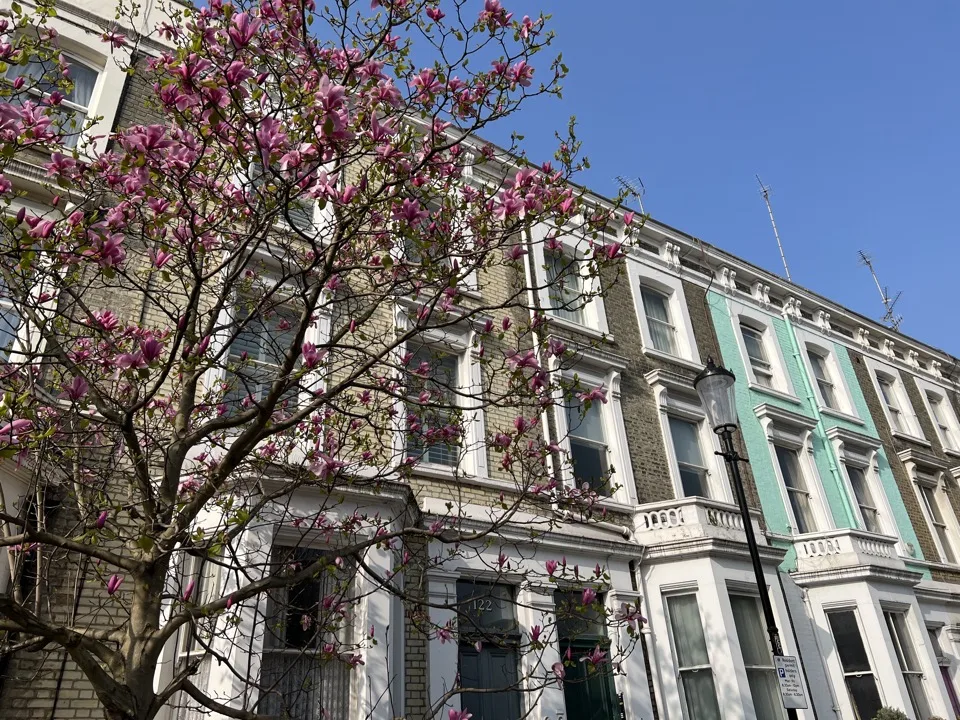
London townhouses behind a flowering magnolia

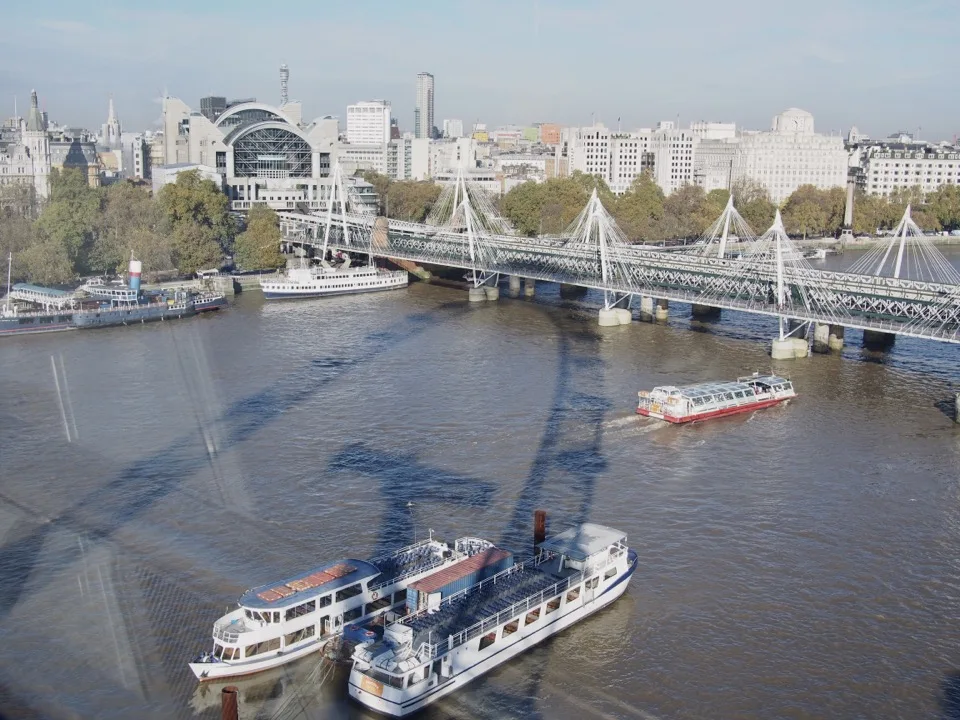
View of the Thames and Hungerford Bridge from the South Bank

Indeed, before going through the list of London neighbourhoods we’ve tested and approved, it’s important to keep in mind that London really is a much bigger city than Paris. So the miracle accommodation next to everything is mission impossible! So I’ll try to guide you by indicating, for each area, the attractions that will be close to your accommodation and those that will require a longer journey. That way, you can choose the neighbourhood that will best suit YOUR sightseeing programme in London.

On the map below, I’ve pinpointed most of the must-see places in London to show you how I prepare a trip: I create a map in Google Maps to visualise the places we want to visit, then I choose accommodation accordingly. So don’t hesitate to create your own map with your little list of London must-dos!

For each neighbourhood, I’ll also share my selection of accommodation: flat rentals for visiting London as a family or with an extended family (we’ve sometimes gone with grandparents or friends), as well as places to stay for a romantic getaway (in that case, more likely hotels).
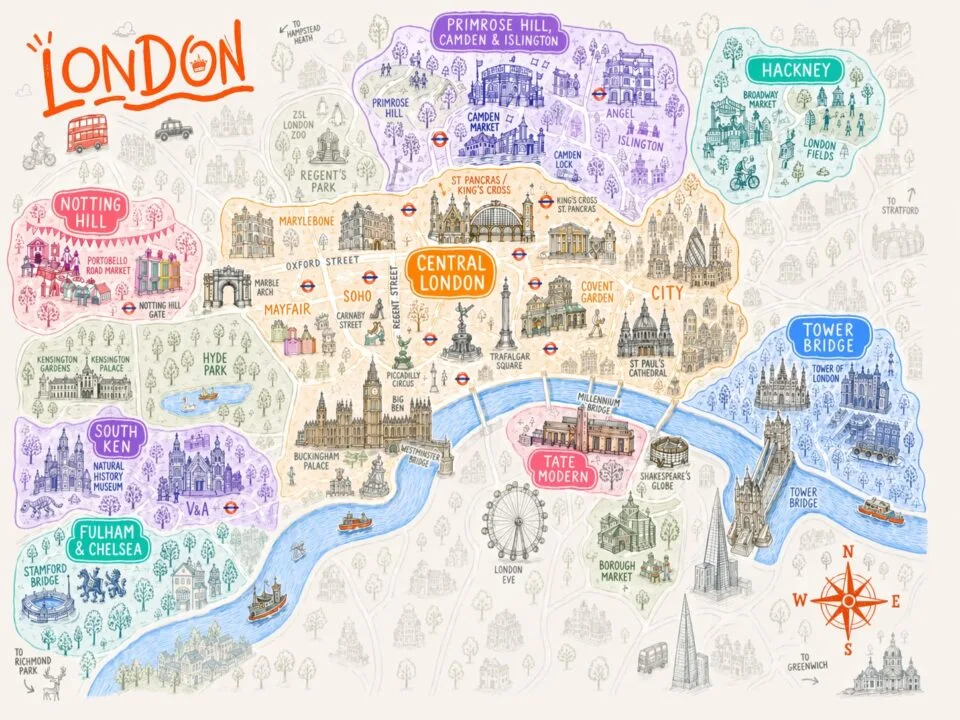
Illustrated map of London neighbourhoods and major landmarks

1: Staying in “South Ken”, in the heart of the French neighbourhood (South Kensington)

For those who don’t know yet, South Kensington is where a large part of the French expat community is based. Now, that may not necessarily appeal to you, but let’s say expats didn’t choose South Ken by chance: it’s a very pleasant, pretty area (with all the typical London streets and mews). South Ken (its little nickname) makes a good base for visiting London. I find that South Kensington is really suited to a family trip. You’ll find houses or large flats on Airbnb.
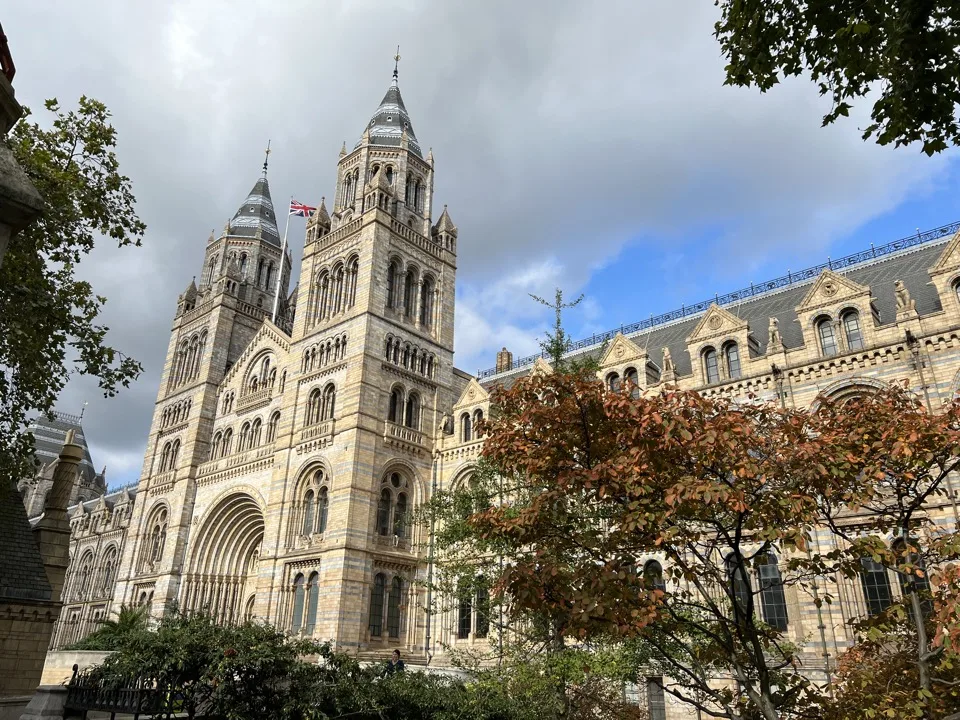
Façade of the Natural History Museum in London

By staying in South Kensington, you’ll get the charm of London architecture, accommodation is a bit cheaper than in the centre because it isn’t the centre, but it’s very well located for enjoying many must-sees!

By staying in South Kensington, you’ll be perfectly placed to visit:

  • The Natural History Museum (a must for children, with the huge skeletons and the dinosaurs! And it’s a free museum…)
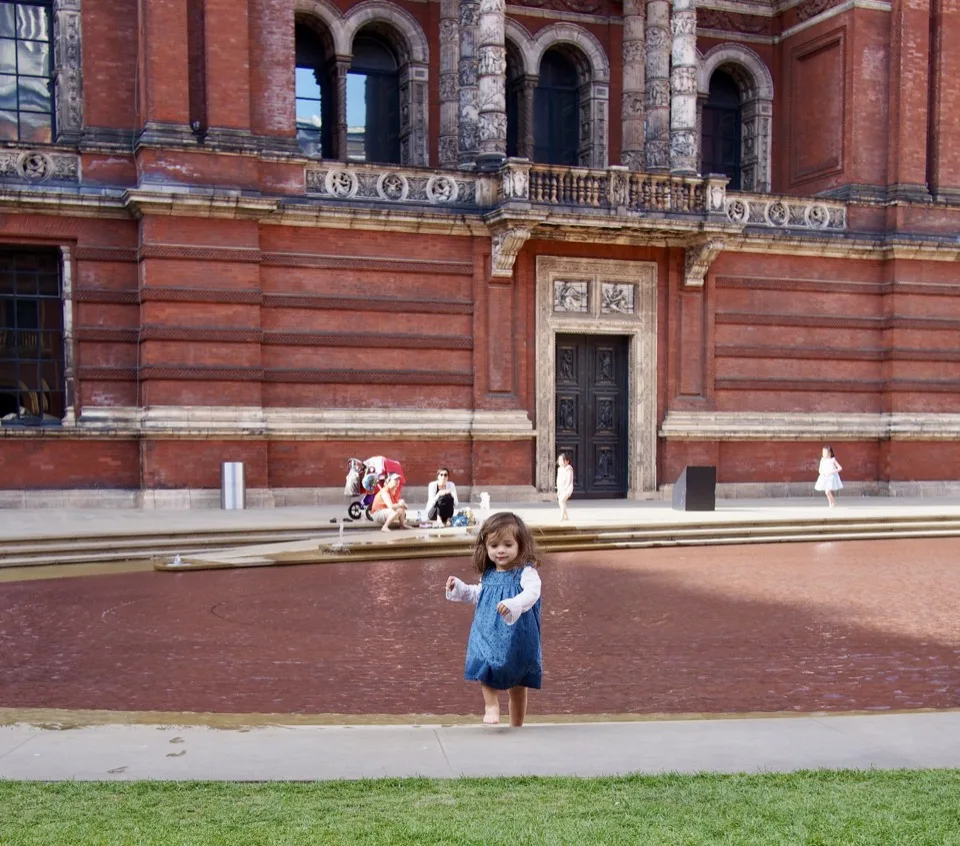
  • The Victoria & Albert Museum (less well known but well worth a visit – the permanent collection is free and there’s a lovely inner courtyard for a drink).
  • Hyde Park (with the Serpentine Gallery and the Diana Memorial)
  • The department store Harrods

A few distance pointers you’ll need to cover:

  • St Pancras International, where you’ll arrive if you come by Eurostar, is 30 minutes by Tube, but at least it’s direct on the Piccadilly Line (station: Gloucester Road)
  • If you want to visit the Harry Potter Studios, you’ll need to get to “Euston Station”, which is also about half an hour from South Ken (it’s next to St Pancras)
  • Thanks to the Piccadilly Line, you can reach Piccadilly Circus (10 min), Covent Garden (15 minutes), Chinatown (17 min) and the British Museum (22 min) without changing.
  • To reach the Big Ben / Westminster Abbey / Parliament area: 20 minutes by Tube (District or Circle line)
  • To reach the famous Notting Hill neighbourhood: 15 minutes by Tube (Circle line).
  • By basing yourself in South Ken, you’ll be quite far (35 to 40 min) from: Tower Bridge, the City, Borough Market… But as I said above, you can’t be next door to everything ;-)… and it’s still doable.
  • The Piccadilly Line is the line that goes to Heathrow Airport in the east (allow 50 min from South Ken).

Note: all the timings I’ve given are from Tube stations. So you need to add the walking time from your accommodation to the Tube.

If the rental prices in South Ken are still a bit high for your budget, you can move a little further out while staying on the Piccadilly Line and aim for Earl’s Court (where there are budget hotels – see further down in the article) or Hammersmith.

Note that South Kensington is not part of the “congestion zone”, so there’s no charge to drive there (unlike the centre – see map of the congestion zone) but you’ll still need to find parking…

Accommodation in South Kensignton (or Kensington):

The City Prime Hotel is west of South Ken station. It offers small apartments with a double bed, sofa bed and kitchenette.

This flat with a small kitchen is also in Kensington. It’s still a good location.

**** When you book a hotel on Booking by following a link on my articles, it allows me to receive a small commission: it does not change the price for you and it helps me maintain the blog. So thank you very much to those who book the hotels we recommend! ****

2 – Staying in Notting Hill (for love at first sight!)

In Notting Hill, there are mainly small places because it’s residential. It’s a fairly expensive area, but less so than the centre. So if you’d like to stay there, it’s best to rent a flat or a house. Architecturally, it’s especially beautiful because there are lots of colourful houses. A perfect neighbourhood for families or couples.
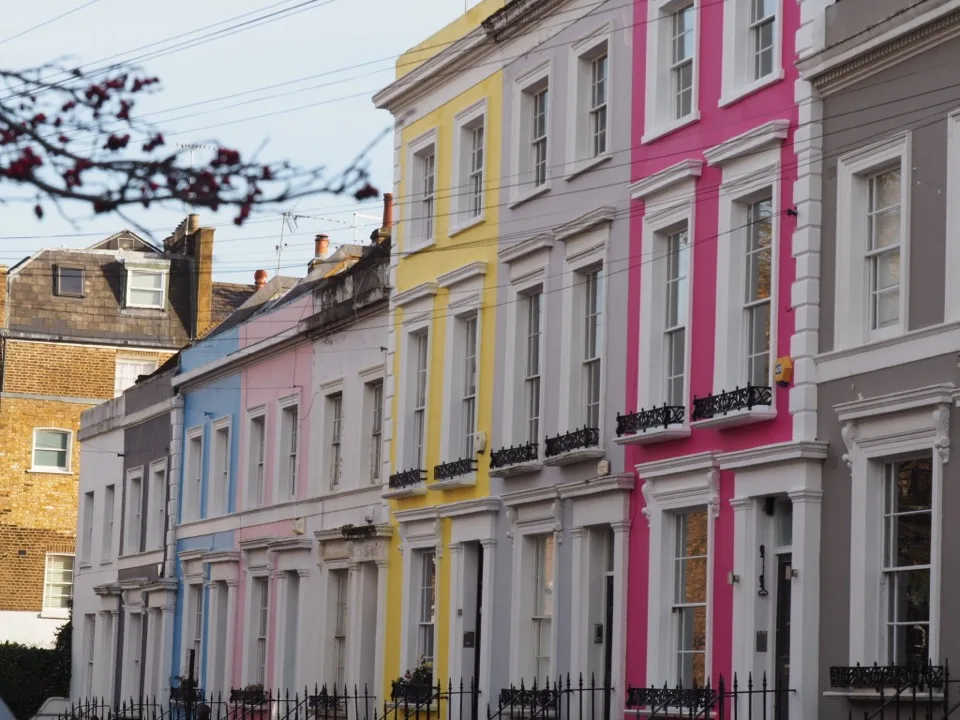
Pastel-fronted houses in Notting Hill

By staying in Notting Hill, you’ll be perfectly placed to visit:

  • The famous street that runs through all of Notting Hill (Portobello Road) and lots of lovely mews.
  • Holland Park: less visited by tourists than Hyde Park or Regent’s Park, but a very beautiful, typical English park with a Japanese corner.
  • Little Venice: the charm of London’s canals and big houseboats… In fact, if you’re staying in this area, I strongly recommend doing the long walk along the canal from Little Venice to Camden (where the market is), passing through Regent’s Park.

A few distance pointers you’ll need to cover:

  • From “Notting Hill Gate” station, you can use the Central Line (efficient and practical), which crosses London from west to east while staying fairly far north, so you’ll often need to add a walk or change lines to reach points of interest that are a bit south of the line. So, with a change or a walk, allow 15 minutes to Piccadilly Circus, 20 minutes to Covent Garden, 22 minutes to St Pancras station.
  • To visit the Natural History Museum in South Kensington, allow 15 minutes by Tube (Circle line).
  • Like South Ken, Notting Hill is in the west, so on the opposite side from Tower Bridge (35–40 minutes by Tube).

Accommodation in Notting Hill:

Ravna Gora: small quadruple room on the Holland Park side:

NB: Notting Hill is outside the congestion zone.

3 – Staying in Chelsea, except on a match night!

I’ll continue with neighbourhoods in west London: Chelsea. Chelsea is known for its chic shops and art galleries, but also its football stadium! We actually stayed just a stone’s throw from the stadium because guess what? Well, it’s cheaper than the chic shopping part of Chelsea. The stadium area is a bit further out, but it’s still a very good location. The one thing to watch: do not book accommodation near the football stadium on a match night! It would be a nightmare in terms of traffic, crowds and noise!
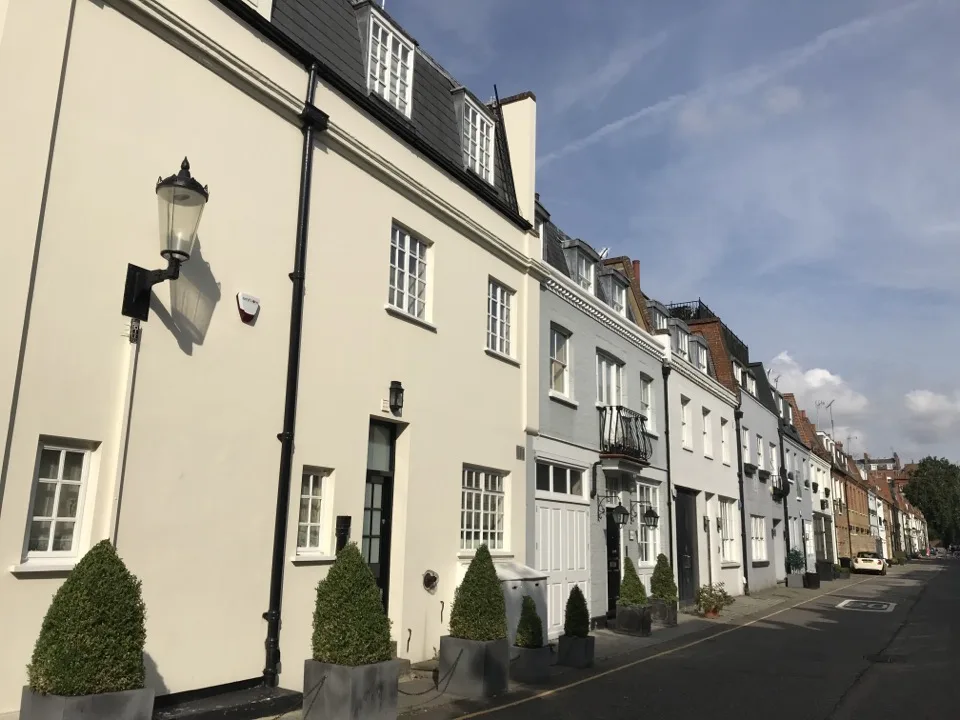
Row of white houses on a quiet Chelsea street

Move a little further out again, just after Chelsea to the west, and you reach Fulham. It’s a good option in terms of value for money; what’s more, it’s a family neighbourhood (especially around Parsons Green station). You’ll be on the District Line, my favourite Tube line. Note that in these western areas you can hear planes going to and from Heathrow a little, but I don’t find it too bothersome.

A few distance pointers:

  • If you’re in chic Chelsea (around King’s Road near the Saatchi Gallery), then for distances, see my section on South Ken as it will be very similar.
  • If you’re near the football stadium, you’ll need to add almost 5–10 minutes to all the distances I gave for South Ken.
  • If you’re in Fulham, you’ll need to add 10–15 minutes… it starts to add up, but it brings accommodation costs down and this area remains very London in its architectural style:
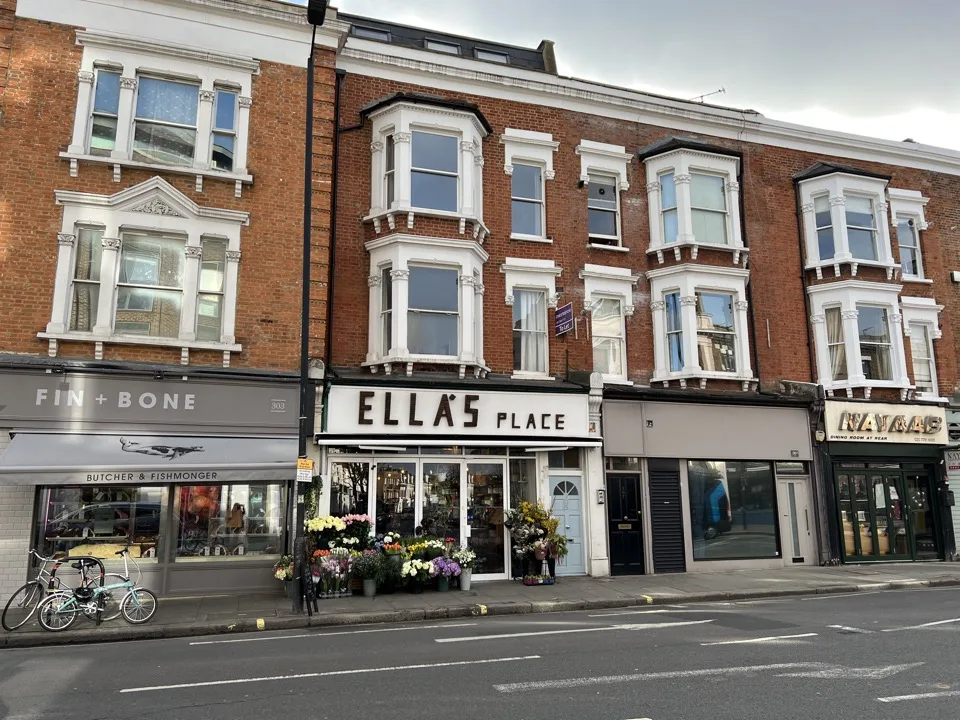
Shops and brick townhouses in Fulham

Accommodation in Chelsea–Fulham–Parsons Green:

As a family, we booked this Victorian flat with a garden for 4 people (2 bedrooms and 2 double beds). Earl’s Court or West Brompton Tube. Earl’s Court is very practical because there’s the District Line and the Piccadilly Line. The location is excellent for visiting London. Bus towards South Ken and the centre.

NB: Chelsea, Fulham and Parsons Green are outside the congestion zone.

4 – Staying near Tower Bridge

By staying near Tower Bridge, you’ll be perfectly placed to visit on foot:

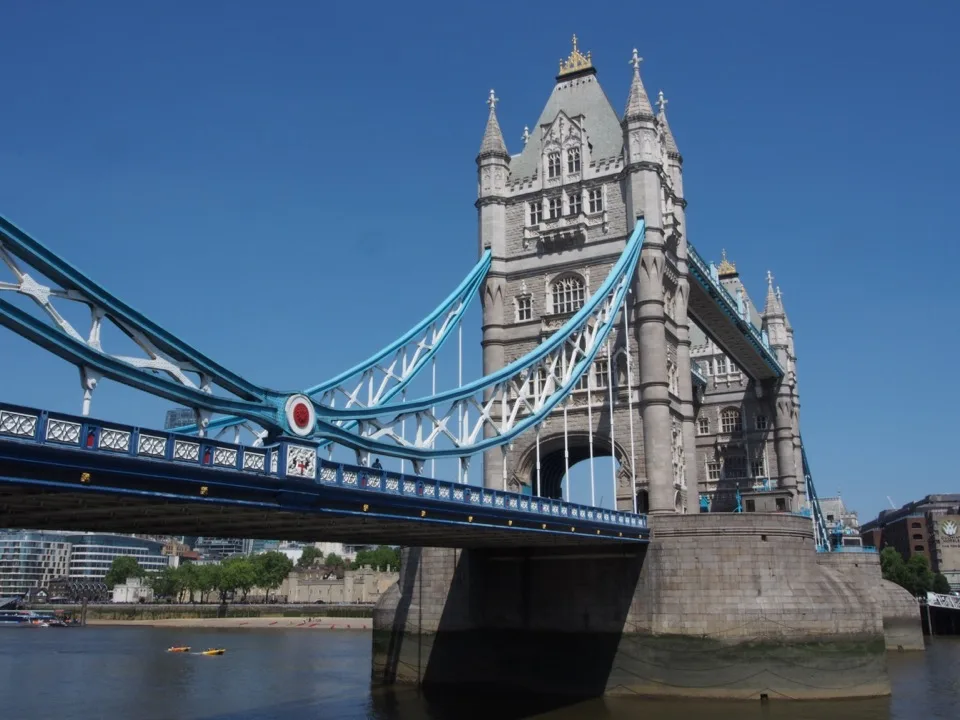
View of Tower Bridge from the Thames riverbank
Tower Bridge
Londres en famille
Ticoeur at the top of The Shard

For attractions further away:

  • If it’s an attraction on the Thames, like Big Ben, Tate Modern, St Paul’s, the London Eye, then I strongly recommend walking, because the landscaped stroll along the South Bank is truly unmissable! I’ve also dedicated a whole article to discovering London along the Thames.
  • Among the attractions on the opposite side from Tower Bridge are the Natural History Museum (33 minutes). You should also allow half an hour to reach St Pancras station. All other journeys should therefore be shorter, so it remains reasonable.

Accommodation near Tower Bridge:

I’ve been lucky enough to sleep several times right on the Thames with a view of Tower Bridge on business trips, but those were fairly expensive business hotels. If you want to stay in this area, I find the best compromise is the Novotel London Tower Bridge: family-friendly, very comfortable and well located.

To bring the budget down, there are many affordable hotels 10 minutes north of Tower Bridge (just before the Shoreditch area, known for street art). It doesn’t have the charm of London’s chic neighbourhoods, but it’s quite practical and more economical. It’s not a family area either, but if you find a place that’s large enough, it can be financially interesting. Personally, we tended to stay there more during our getaways as a couple, especially as it’s not far from our favourite cocktail bars :-).

Other examples of hotels north of Tower Bridge:

Note: this area is in the congestion zone, so it’s better suited if you’re not driving.

5 – Staying south of the Thames near Tate Modern

We’re staying on the Thames but in a more central version than Tower Bridge: there are many modern hotels right next to Tate Modern. It’s a brand-new area with recent developments and therefore towers. It’s a long way from the charm of Victorian houses, but it’s all new, well located, and I find the hotels in this area offer good value for money.
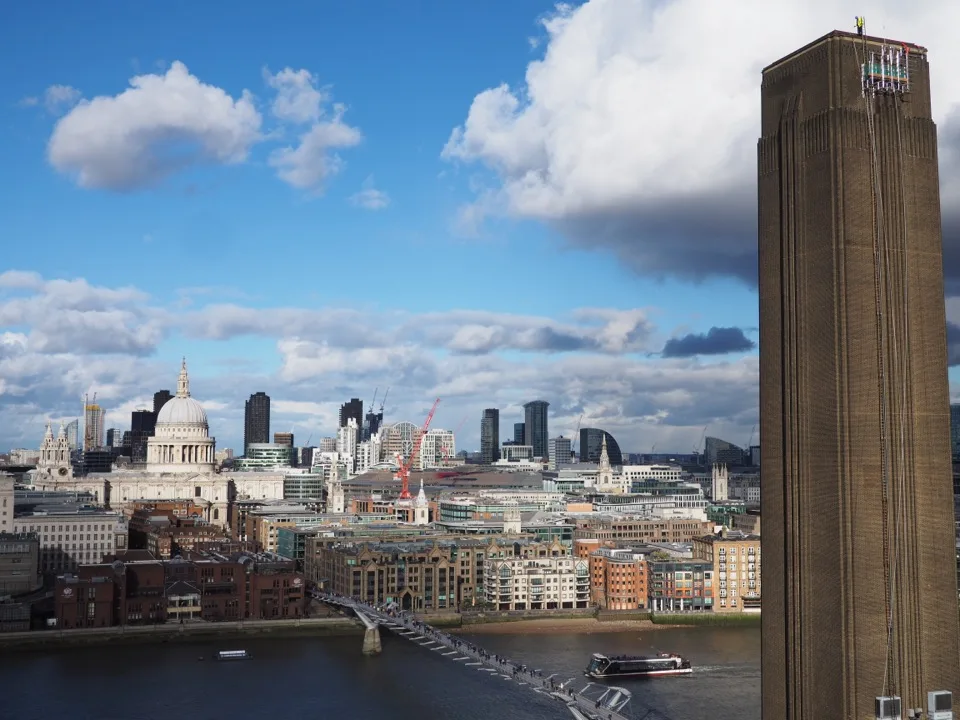
Panoramic view of the City of London and Tate Modern from the Thames
View from the 10th floor of Tate Modern

Advantage of this location:

Despite the lack of charm, it’s a safe and practical area…

  • On the South Bank of the Thames, you have direct access to the pedestrian walk along the river that I mentioned above (South Walk).
  • As Tate Modern is “in the middle”, at equal distance from the points of interest in the west and the east, it means your journeys will be more even in length. In fact, to visit central London, you can do everything on foot by crossing Waterloo Bridge. Allow 30 minutes to get to Covent Garden. Golden Jubilee Bridge is also handy because it’s pedestrian and takes you towards Trafalgar Square.
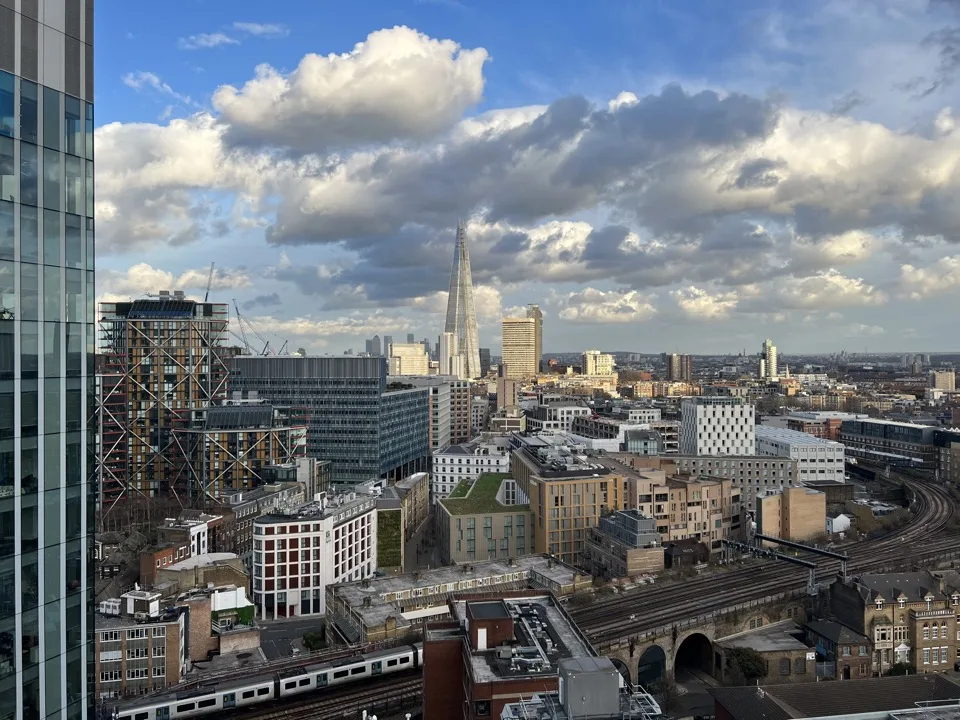
Panoramic view of Southwark and the City from a high viewpoint
View from The Hoxton Southbank hotel

Accommodation near Tate Modern:

We stayed as a couple at The Hoxton Southbank. Very good. Don’t miss having a drink in their top-floor bar: there’s an oysters-and-gin happy hour!

With a friend, we also tried Nox Waterloo (we had a double room with twin beds, but they also have double beds and studios for 4). The hotel is on a lovely little street, just behind Waterloo station:
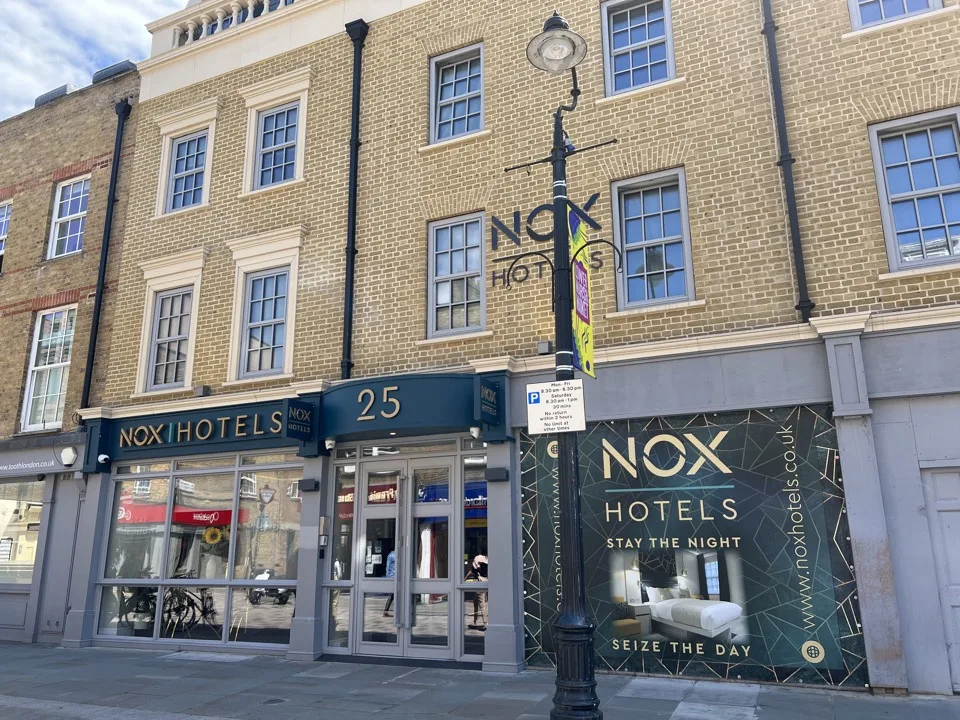
Façade of the NOX Hotel in London

Note: this area is in the congestion zone, so it’s best to be without a car.

6 – Staying north of the centre: Islington, Camden, Primrose Hill

We stayed once in Islington and we liked this neighbourhood for its typical London architecture and atmosphere. You see quite a lot of families there. It’s a lively neighbourhood in its own right, with lots of shops and good restaurants. Islington is a good choice if most of the visits you’re planning are in the northern part of the centre. Note that Islington is large, so to optimise journeys, I recommend choosing accommodation close to “Angel” station.

By staying in Islington, you can easily reach:

  • St Pancras station (for Eurostar) or Euston (for the Harry Potter studios) in 10 minutes by Tube (Northern line)
  • Camden Market in 15 minutes, still via the Northern Line
  • You’ll be very close to the canal (mentioned above), which you can follow towards Camden and then Regent’s Park
  • The British Museum (15 min by bus)

You’ll need to travel further for attractions like the Natural History Museum (35 minutes) or Tower Bridge (25 minutes)

You could also opt to stay in Camden, which would bring you closer to the lovely parks and the views from Primrose Hill or Regent’s Park. See my article on visiting Camden.
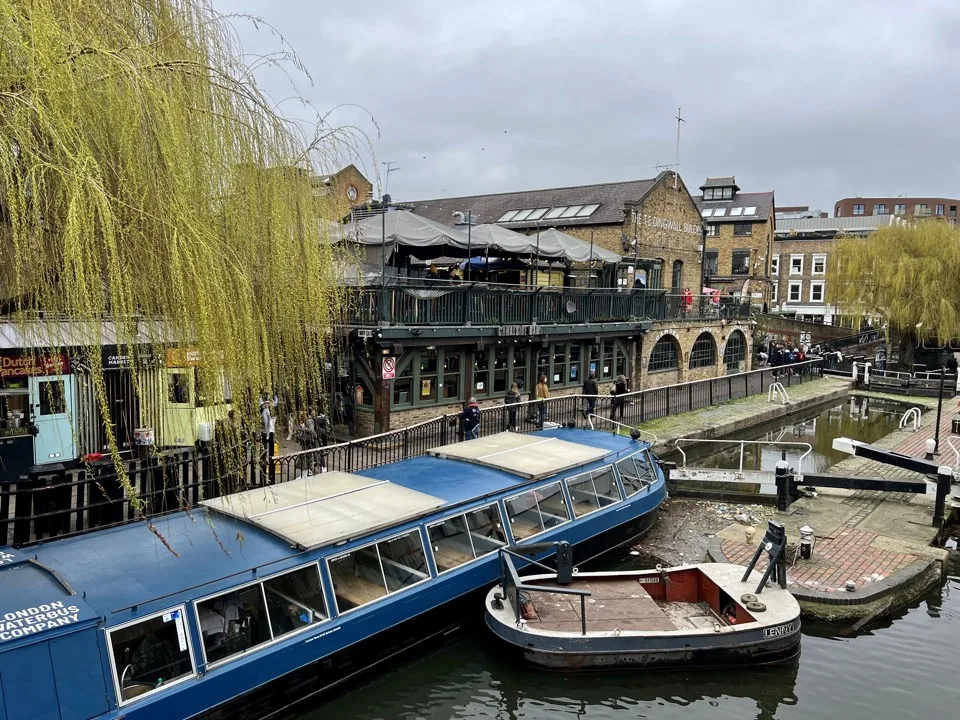
View of the narrowboats and locks at Camden Lock
Camden

Accommodation north of the centre:

  • Charlotte Guest House: quadruple room with en-suite bathroom, also next to Freud’s house.
  • This lovely house near Camden, with a terrace for 6 people (3 bedrooms). More expensive because it’s for 6, but there are last-minute deals.

NB: these neighbourhoods are outside the congestion zone.

7 – Staying in Hackney, off the beaten track

Do you already know London, have you been many times, and would you like to discover a new neighbourhood while saving money on accommodation? I recommend Hackney, in north-east London. Hackney is a large area: some parts are family-friendly and “boho”, others aren’t very recommendable in terms of safety, so I advise staying near Victoria Park, London Fields or Hackney City Farm, and reading accommodation reviews carefully to make sure you’re in a quiet spot.
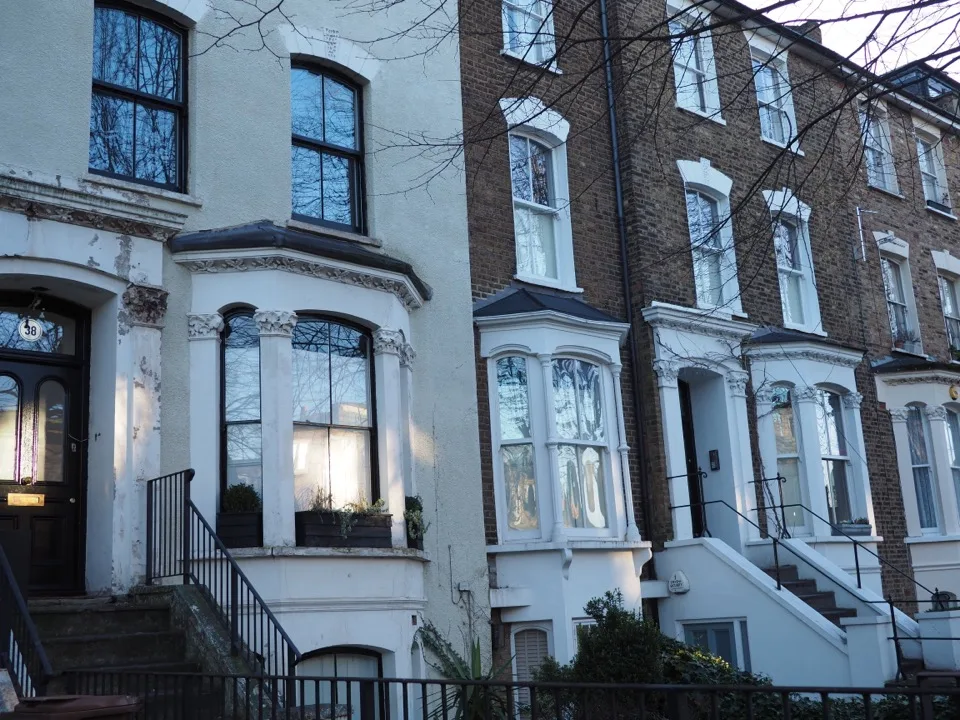
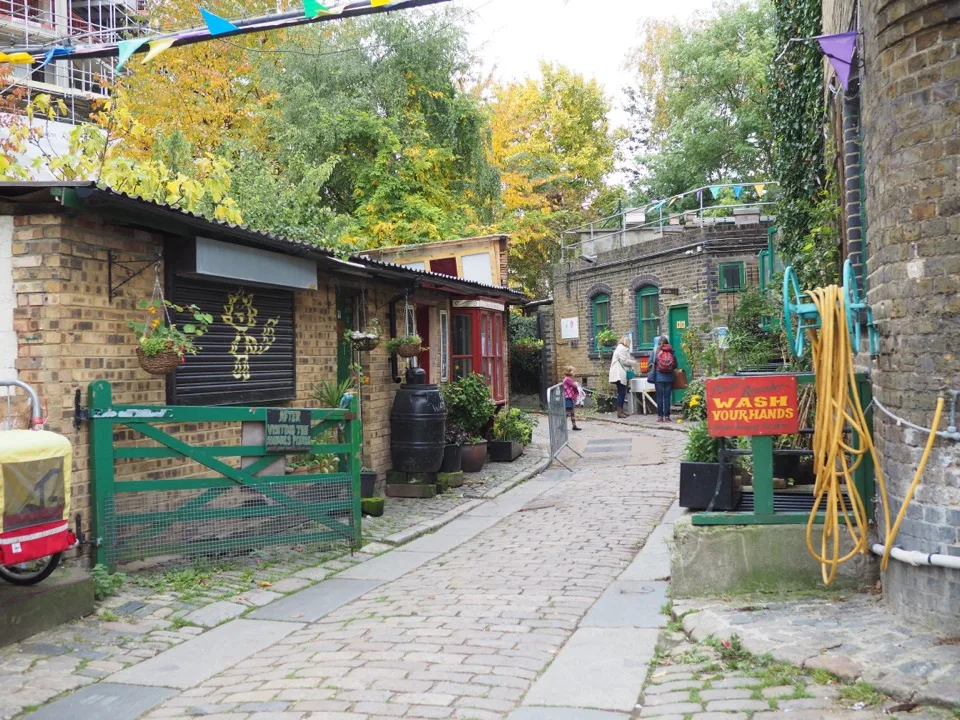
Terraced houses with bay windows in Hackney

Cobblestone yard and colourful workshops at Hackney City Farm

By staying in Hackney, you’ll be perfectly placed to visit:

  • The superb Broadway Market: a gourmet market on Saturday mornings.
  • Victoria Park and its small Sunday morning market
  • The Columbia Road Flower Market (and, why not, look for accommodation around there: it’s more chic than Hackney, so more expensive, but further south and therefore closer to the attractions).
  • The V&A Museum of Childhood: a very nice museum for young children, with collections of toys from every era (free).
  • The little farm: Hackney City Farm (it’s not really a London must-see and it’s tiny, but if you’re staying in Hackney and you have very young children, it’s nice to stop by).
  • Towards the Thames, you’ll pass through Brick Lane and Shoreditch, where there are small flea markets, vintage clothing sellers and street art.
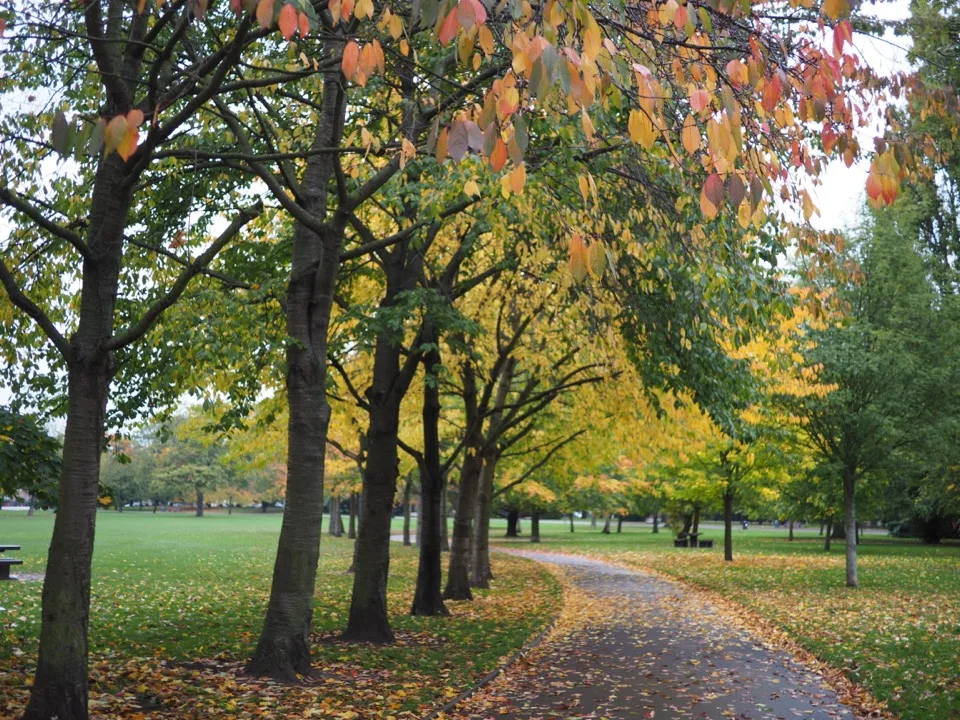
Tree-lined path in autumn colours in a Hackney park

A few distance pointers you’ll need to cover:

Hackney isn’t very well served by the Tube, so you’ll need to use buses or combine walking and then the Tube. Journeys will therefore be around 40 to 45 minutes to reach most of the “classic” sights in the centre, and buses have the drawback of traffic, even though they’re quite nice for seeing the city… In short, Hackney is an option for people who have time, already know London and are looking for good-value family accommodation. We’ve stayed there many times and enjoyed it because it’s different and the atmosphere is nice.

The furthest point will be the Natural History Museum: allow 55 minutes from Victoria Park in Hackney.

Accommodation example in Hackney:

The few times we stayed in Hackney were for trips with grandparents or friends. We then needed accommodation that was a bit larger than usual, so choosing Hackney allowed us to find flats or houses bigger than in the centre.

This flat with a small garden for 4 to 6 people.

The other house we booked is unfortunately no longer available.

NB: Hackney is outside the congestion zone.

***

What about staying in central London?

You’ll have noticed that the very centre isn’t among the areas I recommend in this article. Why?

  • We stayed in the station area (St Pancras and Euston) and found it wasn’t pleasant. Less charm and more noise than other neighbourhoods.
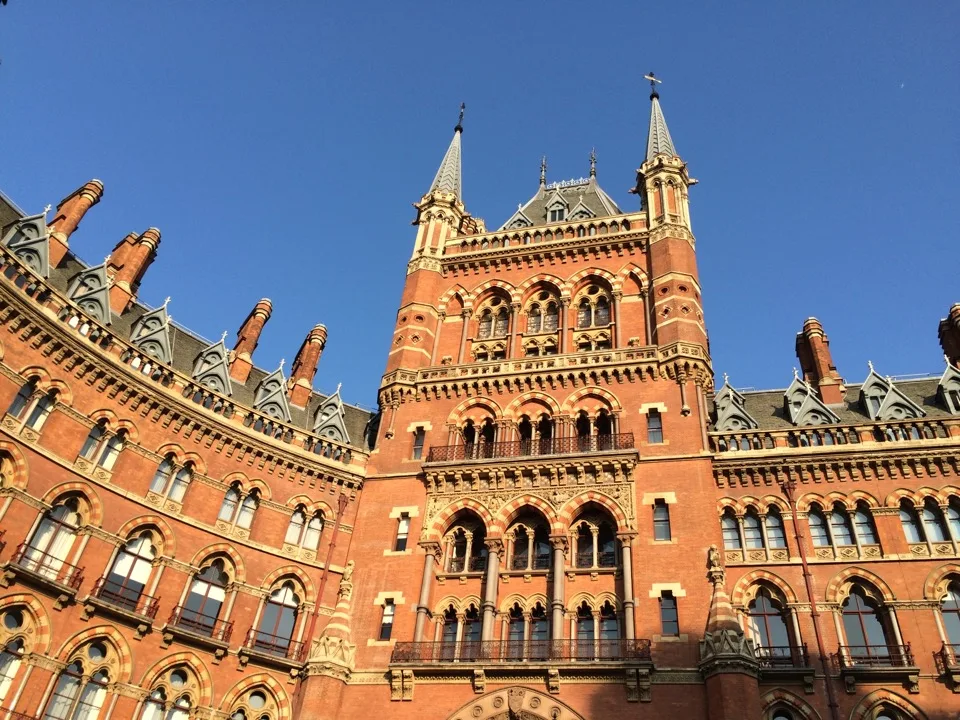
Façade of St Pancras station in London

  • Prices are very high and when we found something within our budget, it was tiny – like a small room with two double bunk beds and nothing else.
  • In the centre, there are lots of “bad Airbnbs”. By “bad Airbnbs”, I mean places that pretend to be hotels but aren’t… People who invest in an entire building and fit it out into lots of small furnished rooms at minimal cost. To me, the real Airbnb concept is staying in a lived-in place – someone’s main or second home that they’ve put on Airbnb to top up their income… You see the idea?
  • In the centre, there are very beautiful hotels, but they’re very expensive. Once, we were lucky enough to stay at the Hyatt Churchill because I’d won a night there! It’s great, but reserved for big budgets.
  • Should you rule out the centre when looking for accommodation in London? No, do still have a look! I’d say avoid the major thoroughfares because of the noise (like Oxford Street and many others), but look in lovely pockets such as around Covent Garden or in the very chic neighbourhoods of Mayfair and Marylebone. You’ll see if you find a gem at an affordable price! And don’t hesitate to share the address with us in the comments!
  • Also read: my guide to visiting central London as a family.
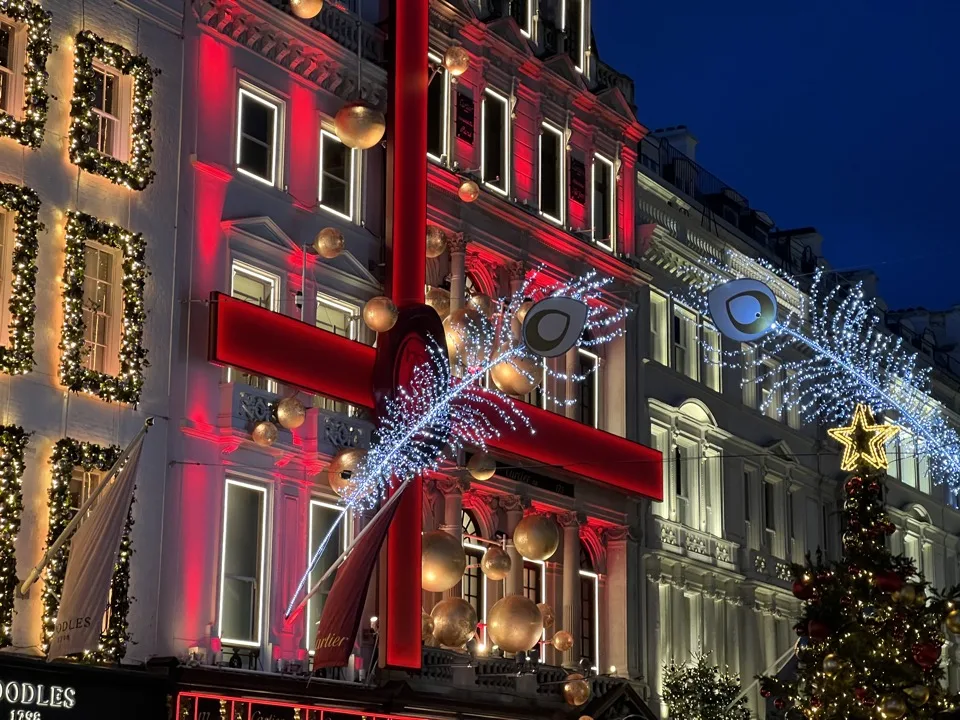
Christmas lights illuminating Mayfair façades

Where to sleep in London? And what about budget?

You’ll notice that I haven’t given prices in this article. The reason is simple: prices vary hugely depending on the period you choose! So accommodation we paid €150 per night for could be €300 per night if you choose a more in-demand week. Prices also change depending on supply and demand, how far in advance you book or, on the contrary, last-minute booking, and finally depending on the number of people. Also, everyone has a different budget (personally, I look in the €100–200 per night range) and everyone has their own criteria (for example, you absolutely want a dishwasher or a coffee machine ;-)). So my main aim is above all to give you a good sense of direction and ideas for neighbourhoods we enjoy in London. For the rest, I’ll leave you to do your research!

I’m also regularly asked what the budget hotel chains are in England, and therefore in London, offering very basic accommodation. We haven’t tried this type of hotel at all because we’ve always found what we wanted in more charming flats within our budget, but here are a few well-known names in the entry-level segment: Travelodge, Premier Inn, Easy hotel, Holiday Inn Express, Best Western, Ibis… (note: sometimes budget hotels are less budget than other higher-quality accommodation, so stay open-minded in your search).

***

I hope this article helps you choose a neighbourhood for your next stay in London, as a family or as a couple! Above all, don’t hesitate to share your good accommodation tips with us in the comments! And to know what to visit, check out our complete guide to visiting London as a family!
See you soon in London? See you soon!

Also worth reading
GuideLondon with kids: All you need to knowOur practical guide to visiting London with children: walks, museums, parks, transport, restaurants, accommodation and family day…
Christmas in London: 20 family activitiesPlanning Christmas in London with children? Discover 20 family-friendly ideas, festive lights, shows, attractions and practical…
Itinerary for visiting central London as a familyA long walk to discover central London with kids
Visiting the Harry Potter Studios as a familyAdvice for visiting the Harry Potter Studios near London: official tickets, booking ahead, visit length, train travel and the…
4 days in Barcelona with our teenagersOur 4 days in Barcelona as a family with our teenagers: itinerary, museum visits and walks neighbourhood by neighbourhood
Edinburgh & Harry Potter: 10 places not to miss!Discovering Edinburgh on the trail of Harry Potter during our mother-daughter weekend!
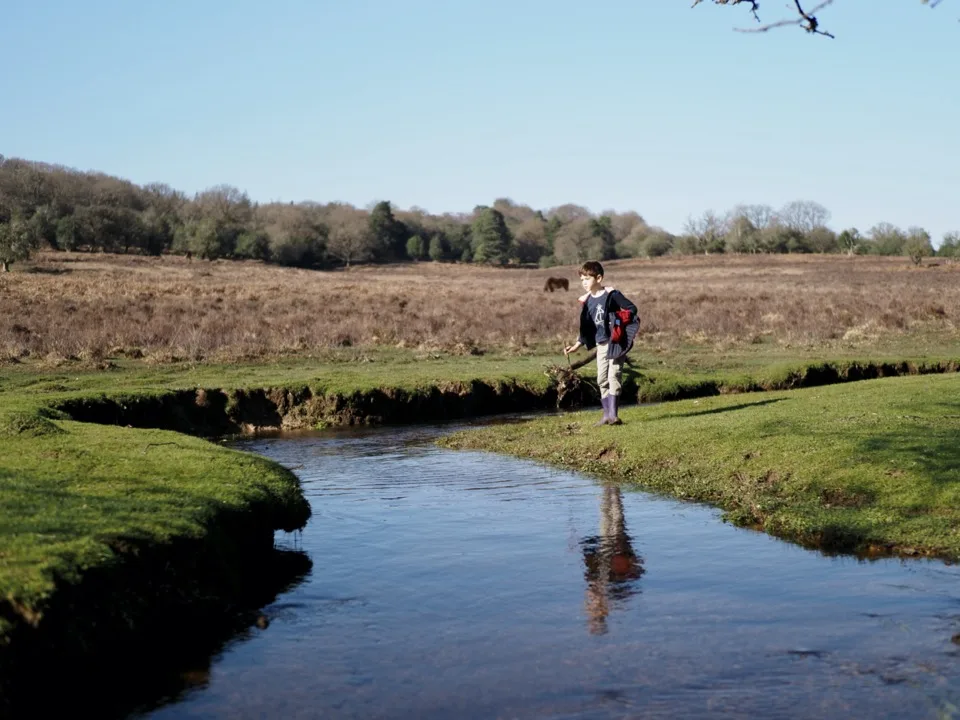
Famille de dos franchissant un ruisseau dans la New Forest

Our favourite spots in the New Forest

As this magnificent English forest is very close to where we live, we go there regularly, so I wanted to share 10 activity ideas for discovering the New Forest as a family.

If you come to the south of England and, more specifically, to Hampshire where we live, the New Forest is a must-see. On a road trip along the English coast, I recommend spending at least one day there, or even better: two days and one night if you have the time. That way, you’ll enjoy the landscapes and the famous New Forest horses. A perfect family stop!

As soon as we moved here, we set off to explore this forest (the largest in England), and we immediately fell in love with a place that feels so alive and so “inhabited”! It’s a chance for wonderful encounters with animals!

A little history to begin with: the New Forest is a royal forest, created by William the Conqueror, hence the adjective “new”… Before that, there were only heathlands in this area stretching all the way to the sea. Basically, William the Conqueror wanted his own forest, particularly for hunting. The capital was once in Winchester (also in Hampshire), so not far from here. Later, wood from the New Forest was used for Navy ships. Today, the New Forest is protected and is home to many animals that you’re bound to come across: fallow deer, red deer, cows, wild pigs, donkeys, sheep but above all thousands of wild horses (also called “New Forest ponies”). Seeing all these horses on our walks is truly magical! The children love it!

Family seen from behind crossing a stream in the New Forest

Here are 10 family programme ideas for visiting the New Forest:

Read more

travelling to france covid

Travelling to France during Covid times

With February half term approaching, you may have planned a trip to France to visit Paris or other beautiful regions or to go skiing in the French Alps of course! Now, you have your train or plane tickets but you feel lost regarding the Covid rules to enter France and the Covid rules in the country? I completely understand! That’s really confusing! As you may know, I am a French mum living in the UK so I can totally agree with your “lost in translation feeling”! My country has really not made things easy! That’s why, with that article, I will try to summarize the main Covid rules you need to know to enjoy your holiday there!

travelling to france covid

What are the Covid rules to enter France?

For France, the UK is an “orange” country. Here are the rules:

  • Show that you’re fully vaccinated. Please note that to enter France your Covid Pass will be valid if you had your booster no later than 9 months after your 2nd dose. But as your Covid Pass will only be valid 4 months after the 2nd jab for the activities you may have in France (visits, restaurants… see below), then it means that between the 5th month and the 9th month after your second dose, yes you can enter France but you won’t be able to do much while in the country.
  • No test needed for vaccinated people since February 12th, 2022
  • Children that are older than 12 years old but not fully vaccinated can travel with their vaccinated parents (no quarantine) but they need to take an antigen test in the 48 hours (or PCR in the 72h) before your trip to France (NHS tests not allowed as proof).
  • For everyone above 12 years old, a paper declaration form must be filled in (you declare you have no symptoms and that you have not been in contact with anyone with Covid in the 14 last days).
  • No travel restrictions for children under 12 years old.
  • Adults that are not fully vaccinated will have to quarantine 7 days and still need to take an antigen test in the 48 hours (or PCR in the 72h) before they travel to France.
  • Please find all the details of the rules to enter France on the French official website or on gov.uk

When travelling back to the UK:

  • No tests needed for fully vaccinated people
  • Fill in the Passenger Locator form
  • no tests needed for children accompanied by their parents (all children under 18 years old).
  • More details on gov.uk.

In France, you’ll need a Covid Pass:

NEW : From March 15th, 2022 you won’t need the Covid Pass anymore for restaurants, museums, transports, cafés…

  • Covid Pass needed: for a lot of activities, you will need a Covid Pass. For instance to eat in a restaurant, to stay in a hotel, to visit a museum, to go to the movie theatre, etc…
  • What is the French Covid Pass? For adults AND for 16 to 18 years old children, a Covid pass is a proof of vaccination OR a Covid recovery certificate. For 12 to 15 years old children, the same proofs are valid but they can provide a negative antigenic test instead. For children younger than 12 years old, there is no Covid pass needed.
  • Be careful: the Covid Pass is only valid during 4 months after your second Covid jab or 4 months after you recovered from Covid (if you had 3 doses, then you’re completely fine!). For 12 to 15 years old children who are using antigen test to get the pass, the validity of their pass is only 24 hours! Therefore, they need to test every day to be able to participate to any of the activities I mentionned earlier. Some examples: 1/ if you had your 2nd Covid jab on November 1st 2021, it will be valid until March 1st. After that, you will need to show you had a 3rd jab. 2/ if you had Covid in January 2022 and got a recovery certificate, then your Covid pass will be valid until May (4 months after the date on your certificate) even if you had no Covid vaccine before. 3/ if you had your third jab on December 1st and you want to travel to France in May 2022 (more than 4 months later), then even if not specified, it’s still ok for the moment because there is no 4th jab campaign in France.
  • How to show your Covid Pass? if you live in the UK, you can show the QR code you got from the NHS (vaccine QR code or recovery certificate QR code). If you live in the EU, your country has also given you a QR code that works in all the EU countries. If you don’t use an app, you can show your QR code on paper. If you prefer, you can also scan your QR code in the French Covid app called “Tous Anti-Covid”. Your choice!

Covid rules on ski resorts in France:

  • Covid Pass needed for ski lifts of any kind: controls can be done when you buy your ski pass or when you take a ski lift or by the ski teacher of children above 12 years. If your 12 to 15 years old children need to test to get their Covid pass, I recommend you book antigen test appointments in advance in a local pharmacy. Cost is 25€ per test. The Covid Pass is also necessary for all the other activities in the resort: restaurants, hotels, swimming pools, spa, etc…
  • Wear a mask in ski lifts queues and on ski lifts: you can use any usual type of Covid mask or buy a warm Covid neckband. If your ski resort is at the border with Italy, be aware that only FFP2 masks are allowed there.

covid rules france ski

I hope you feel ready for your trip to France in Covid times! Bon voyage!

Famille vue de dos sur un sentier volcanique du Teide

A week in the sunshine of Tenerife with the family

During the Christmas holidays, we spent a week under the Tenerife sun as a family. We loved it! And yet, I was a little apprehensive because, in the Canary Islands archipelago, we had already been on holiday in Lanzarote, so the bar was set very high! But we weren’t disappointed. Tenerife is the largest of the Canary Islands; Mount Teide is impressive and, clearly, it’s a perfect destination for hiking lovers, but not only that! So here is an overview of what we managed to do in one week in Tenerife, knowing that it’s far too short for such a large island and that we’ll be going back for more discoveries!

What to do in Tenerife as a family?

Go hiking, of course!

Clearly, if you’re hesitating between several Canary Islands and you’re keen on hiking, Tenerife is ideal! Whether in Teide National Park or in Anaga Rural Park in the north, you’ll find trails of all levels and superb landscapes, sometimes lunar, sometimes very green. See the detailed article on our 5 family hikes in Tenerife.

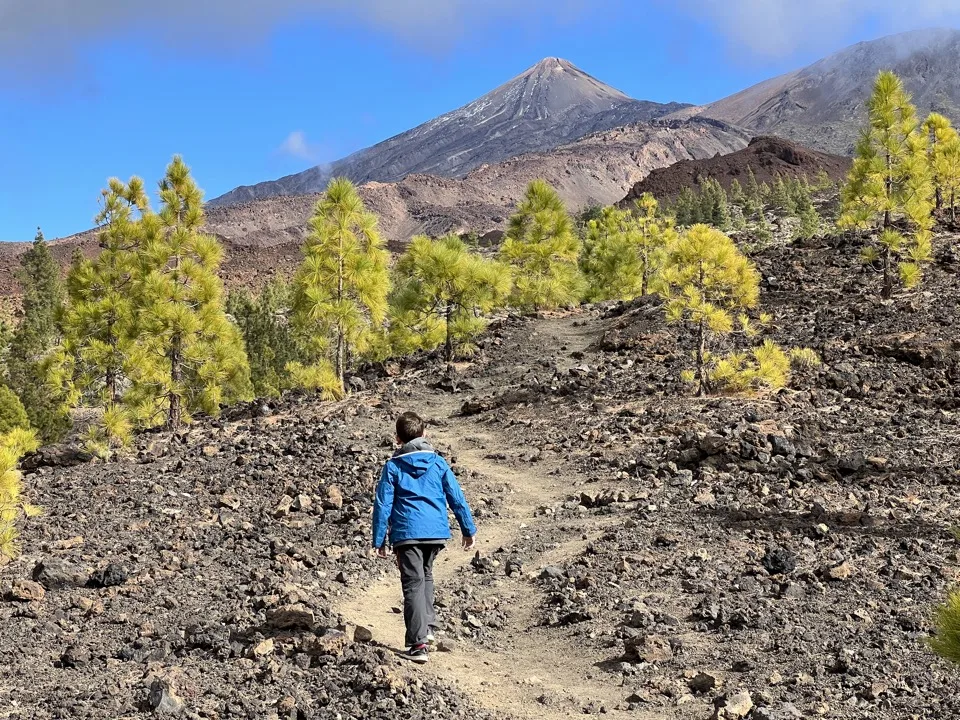
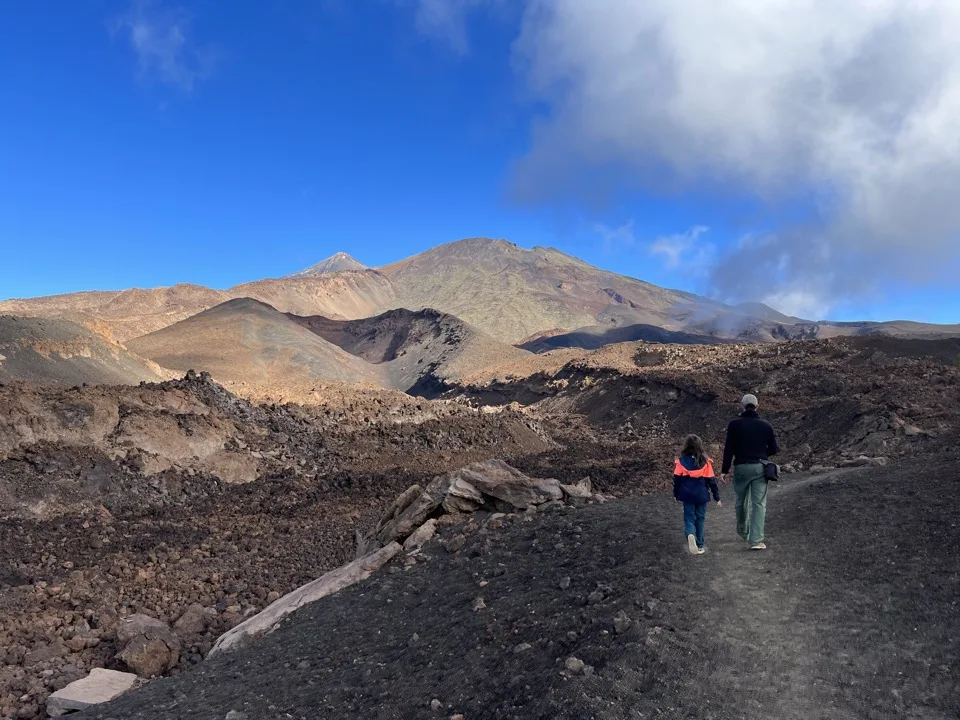
Family seen from behind on a volcanic trail on Mount Teide

Boat trip to meet whales and dolphins:

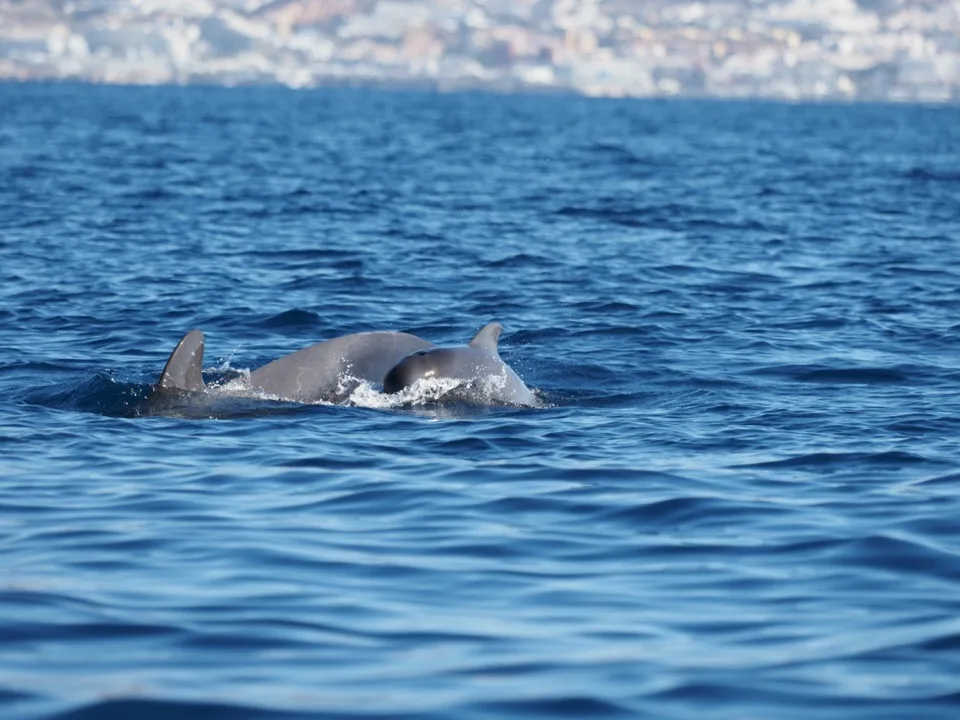
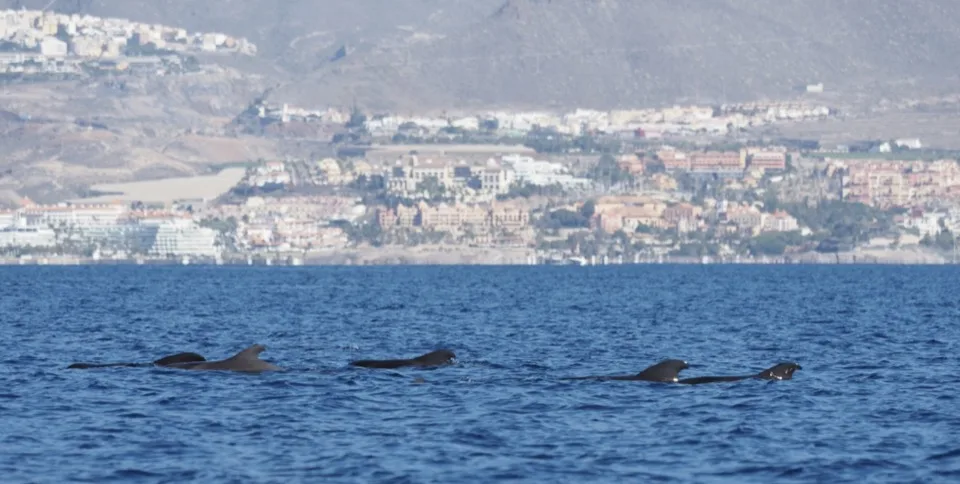
Many families of pilot whales live year-round off the coast of Tenerife. Since the start of the pandemic, they’ve actually been more numerous and happier to see fewer tourists. With this type of outing, you always have to be careful when choosing the provider because there are rules for respecting the animals and restrictions on the number of authorised boats, but unfortunately there are always people who take tourists out without a licence. I recommend Whale Watch Tenerife, with whom we did the two-hour trip at sea. We were on a zodiac (maximum 10 people) with a passionate guide, and we kept our distance from these beautiful marine mammals. So you see them from far away (my photos are zoomed in), but it’s still magical, I assure you! Ticoeur and Titpuce loved it and we learned loads! On the way back, we came across dolphins (there are quite a few, but apparently you don’t see them on every outing, unlike the pilot whales). An excellent memory!

Dolphins swimming off Tenerife

Pod of dolphins at the surface of the Atlantic

Visit a lava tube: Cueva del Viento

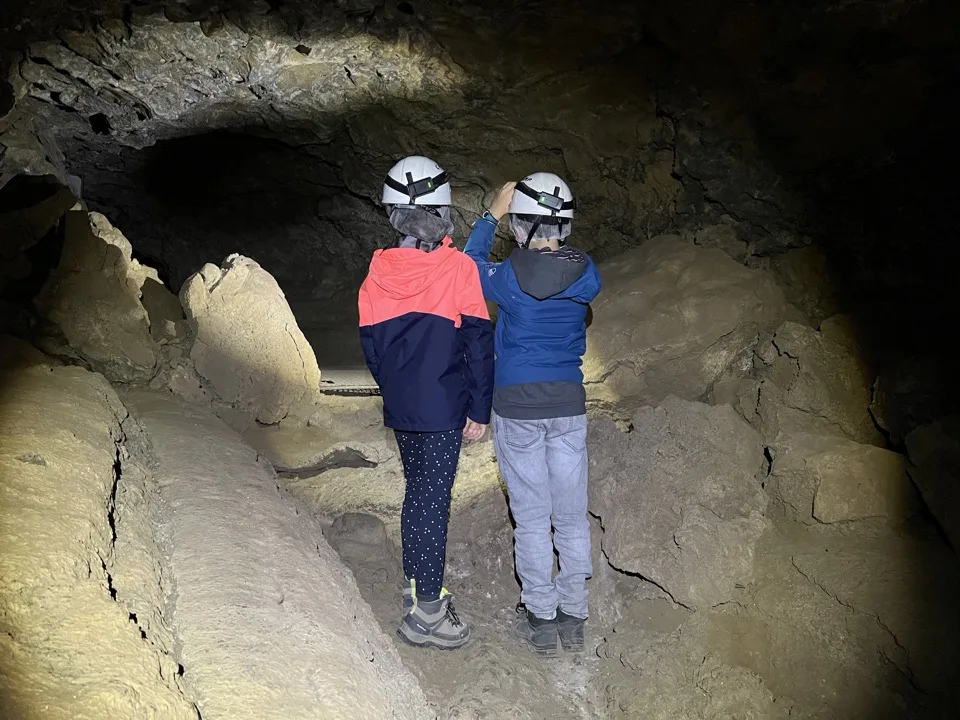
I should warn you: a tunnel formed by a lava flow is not as beautiful as a cave like the ones we’re used to seeing with stalagmites and stalactites. So the visit isn’t for aesthetic reasons. On the other hand, it’s a very interesting, educational and impressive visit when you imagine that we’re walking along the same path the lava took a very long time ago, thankfully. Our guide was brilliant and we learned loads about volcanoes and geology. What’s more, it was part of Ticoeur’s geography syllabus last term, so it worked out well! We recommend this unusual visit because it’s not common to be able to visit a lava tube! (I think it’s also possible on Réunion Island and in Hawaii.) To book, go to the Cueva del Viento website. Oh yes, one more point: when we were there, there were only tours in English, not French. Obviously that doesn’t bother us, but for a wider choice of languages, I imagine it’s better to go in high season.

Family seen from behind inside the Cueva del Viento lava tube

Discover pretty villages, including Masca:

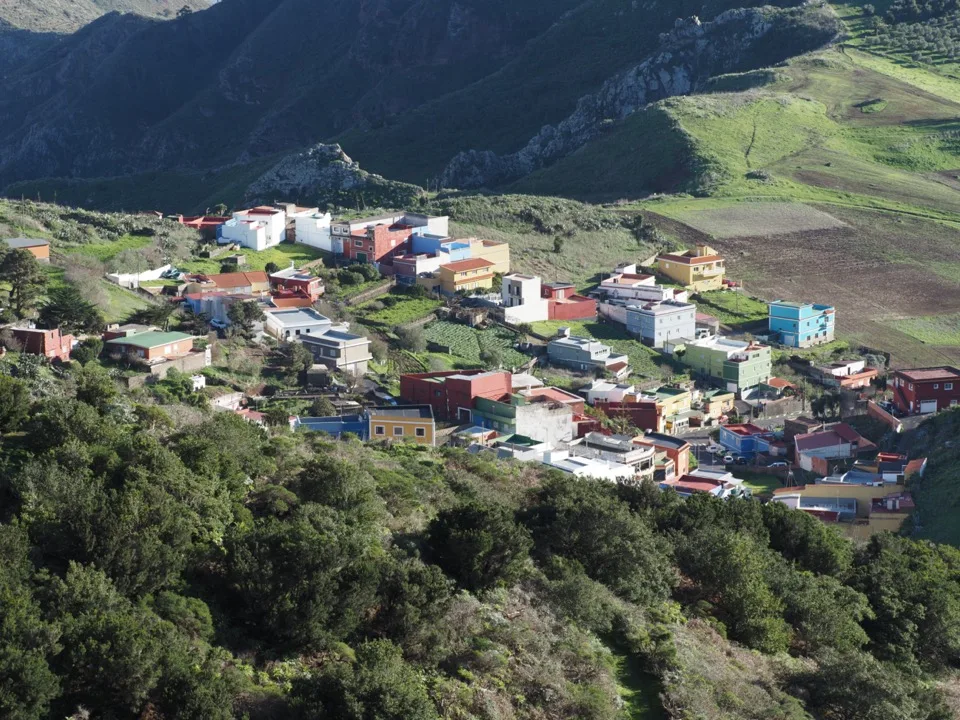
There are lots of pleasant and exotic villages. Sometimes, they’re not especially charming or picturesque, but they have something authentic about them. You can feel that a peaceful and local life unfolds there.

Mountain village in a green Tenerife valley

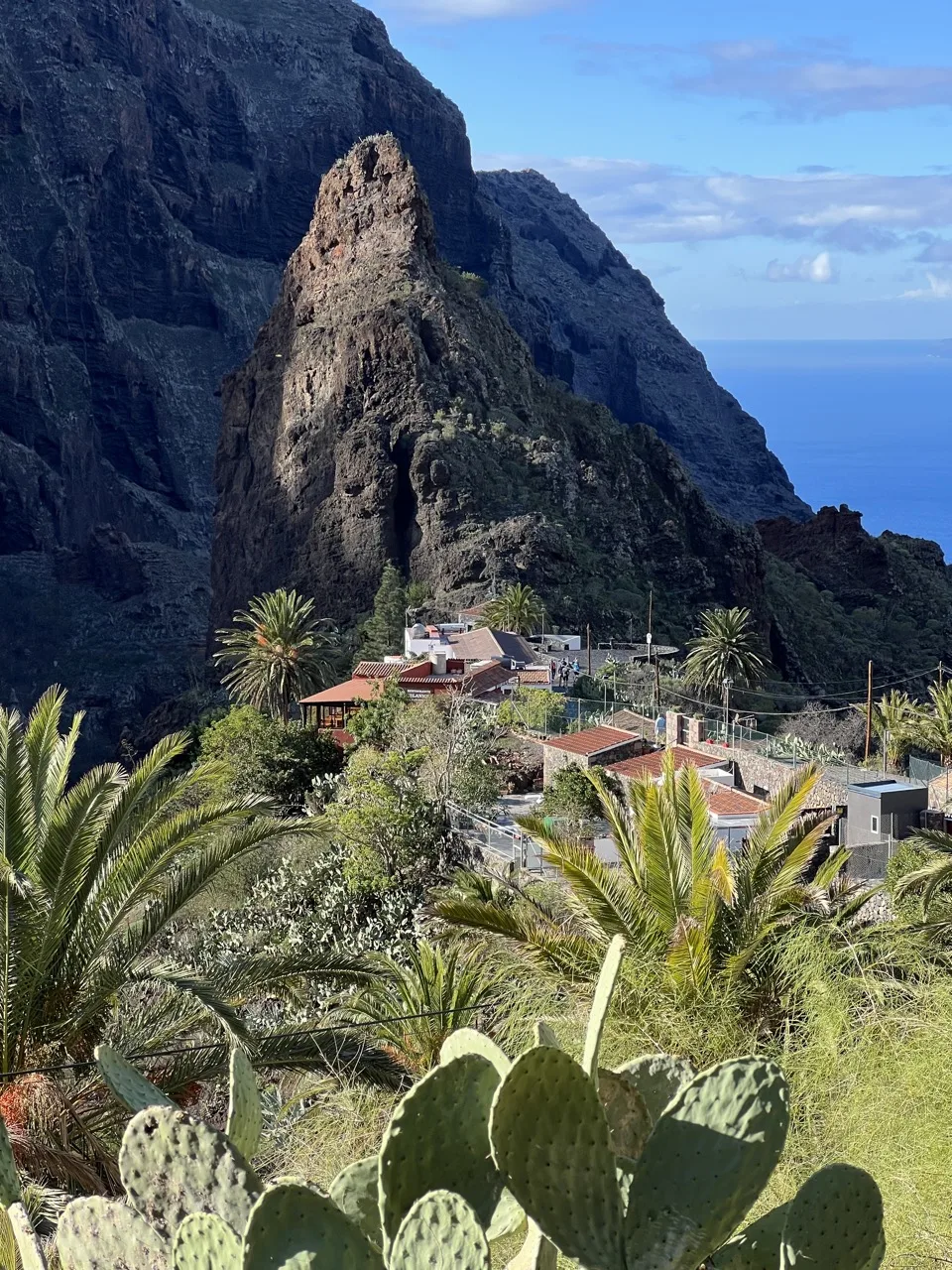
There’s also Masca, a tiny village that is very visited, this time not for the village itself but for its geographical setting and its huge rock, which reminded me a little of Huayna Picchu!

Masca village beneath a rocky pinnacle

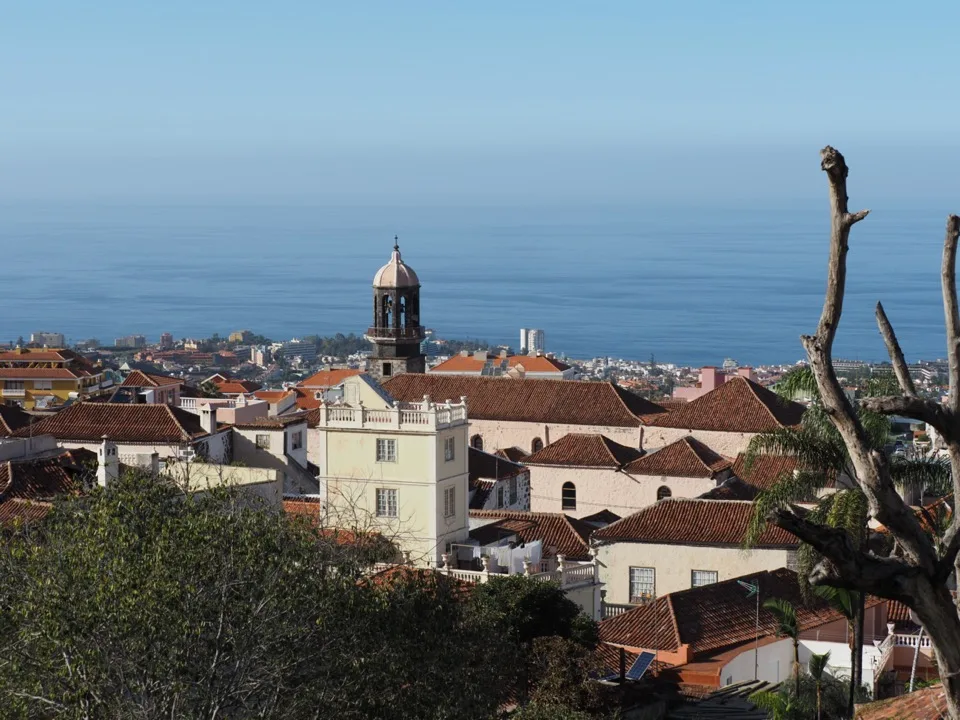
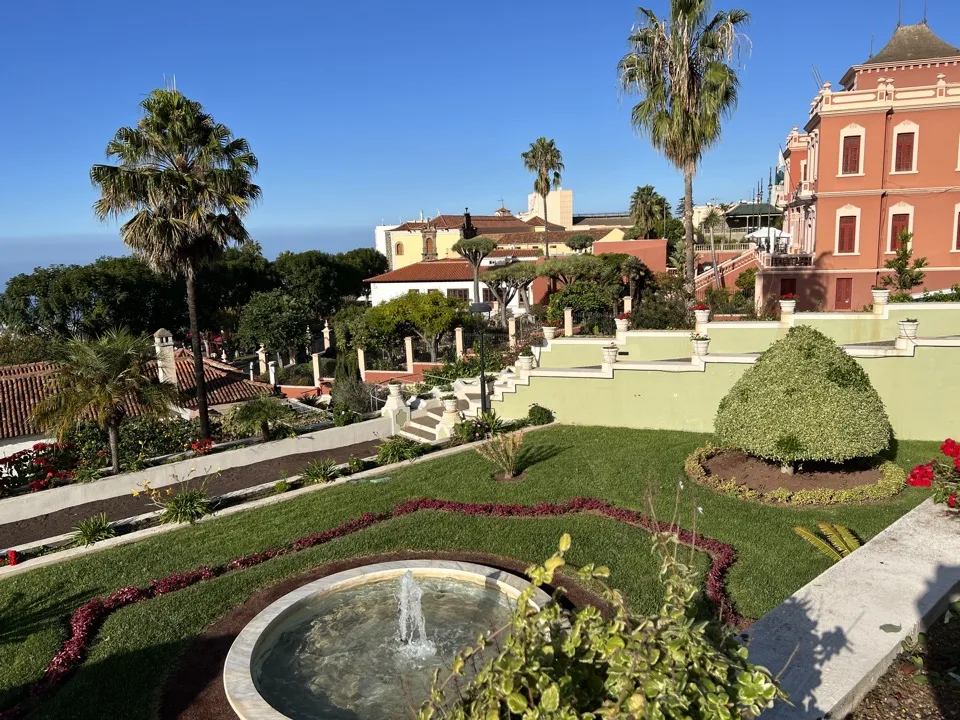
It’s the chance for a short, panoramic little walk. To discover the remote and local atmosphere of the small villages, nothing beats stopping there for a drink or lunch with the local people (in this type of simple inland restaurant, you’ll mainly find grilled specialities). As for towns, we stopped in La Orotava on the way back from Anaga Park: there are some beautiful colourful buildings there. It was perfect for a coffee in the main square.

Tenerife village rooftops overlooking the Atlantic

Garden and fountain outside a Tenerife mansion

We didn’t have time to see San Cristóbal de La Laguna or Santa Cruz de Tenerife, so that will be for next time! Our stay was more focused on nature than towns.

Swimming in natural pools:

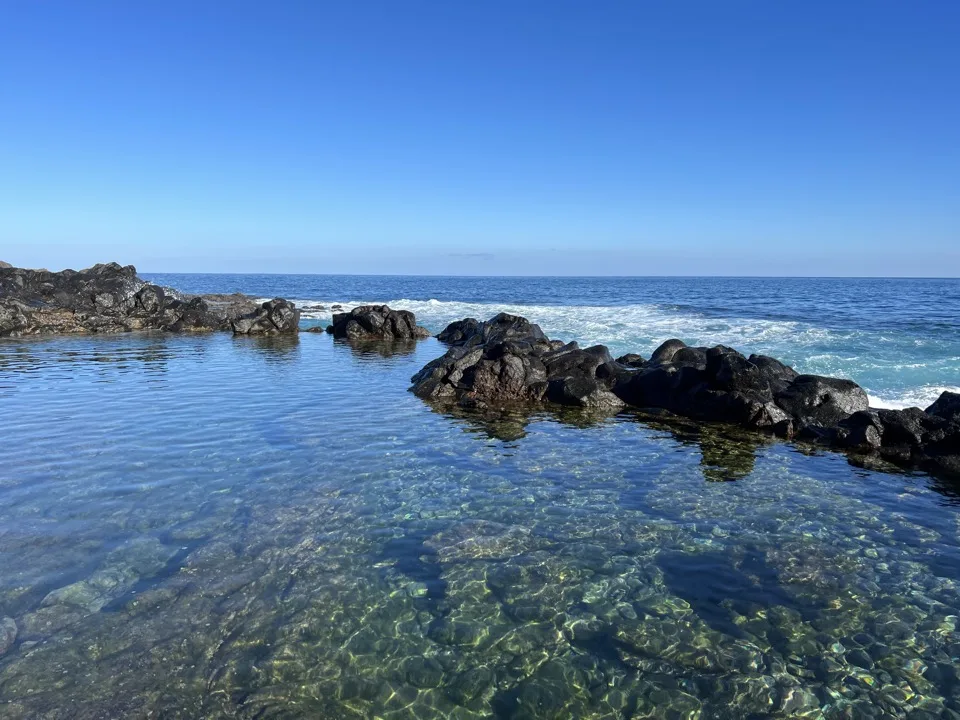
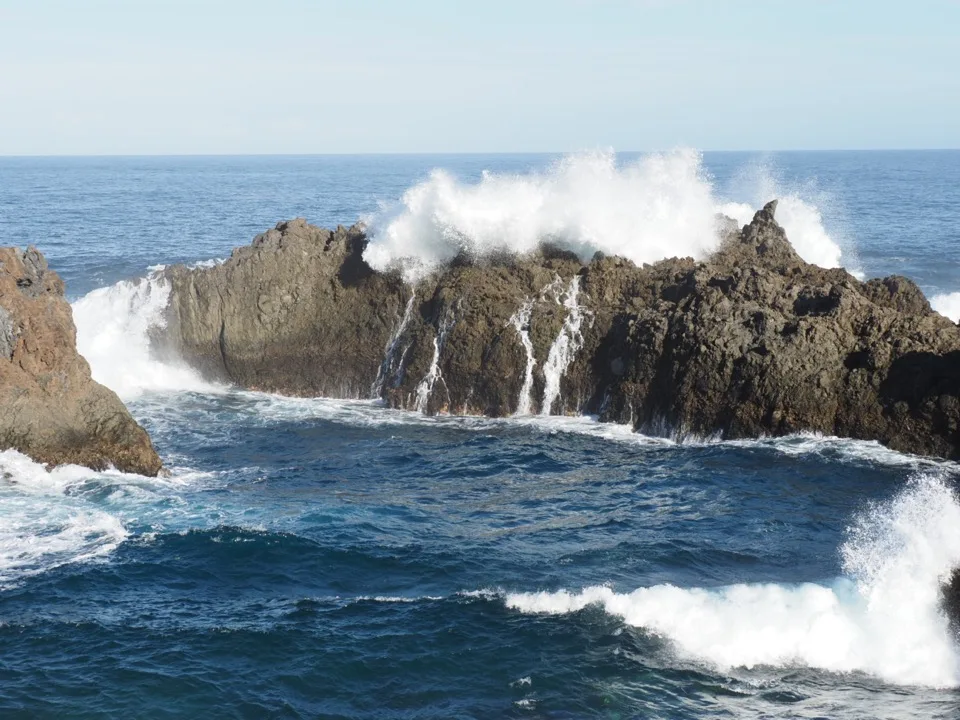
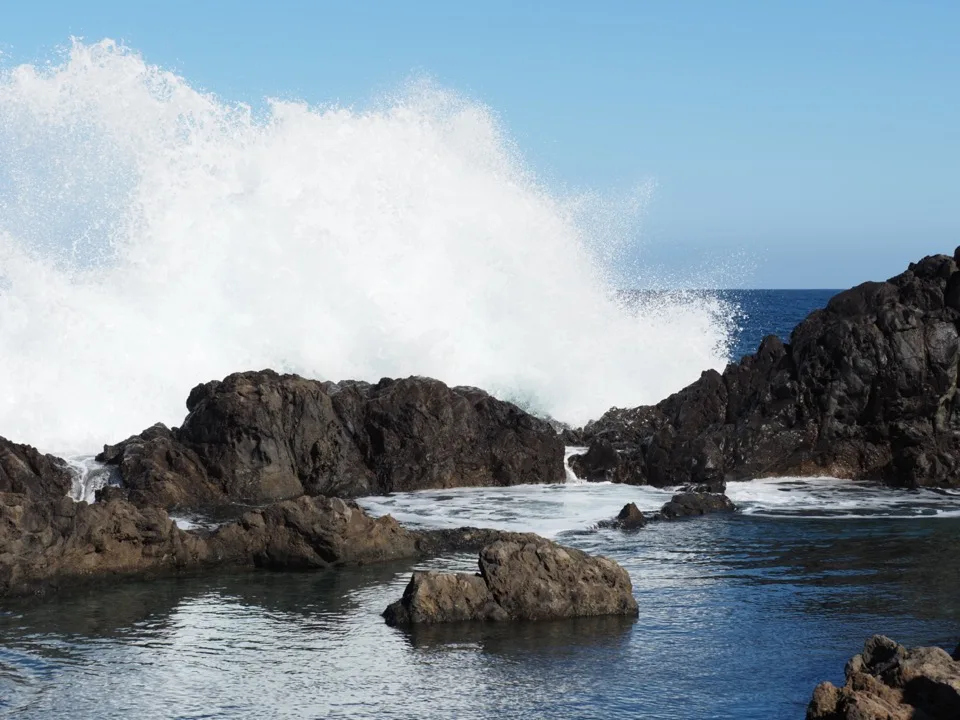
Here is another popular activity in Tenerife! There are lots of natural pools which, in theory, allow you to swim sheltered from the big Atlantic Ocean waves. I say “in theory” because apart from one morning when we were able to swim, the other times the waves were so huge that they were even washing over the rocks of the natural pool, so we didn’t feel sufficiently sheltered! Let’s say it depends on the swell. In any case, they are beautiful landscapes and lovely seaside walks.

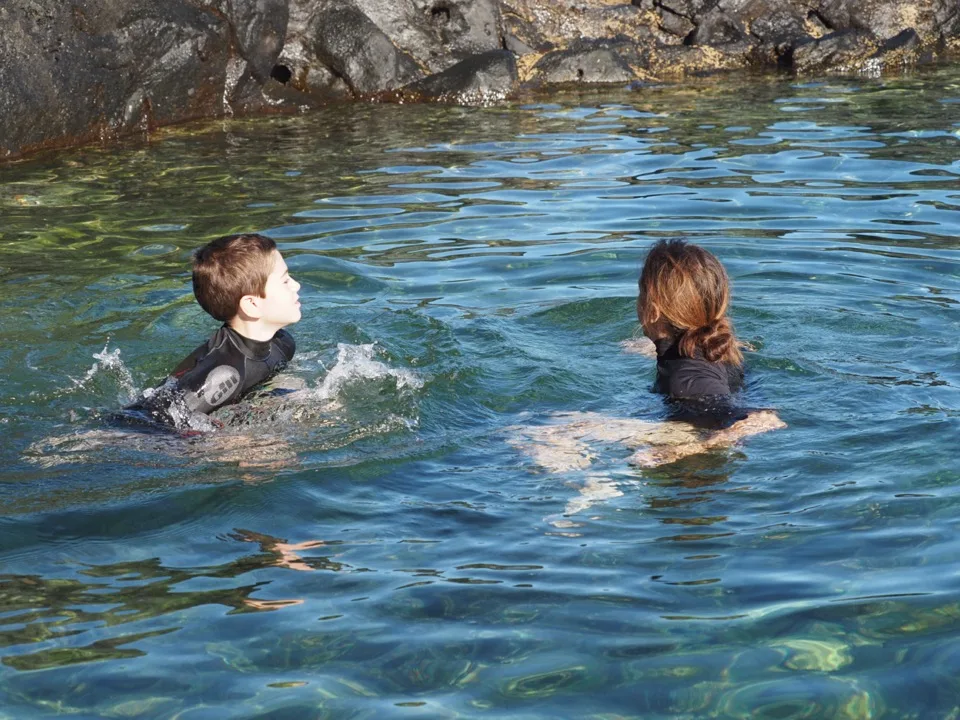
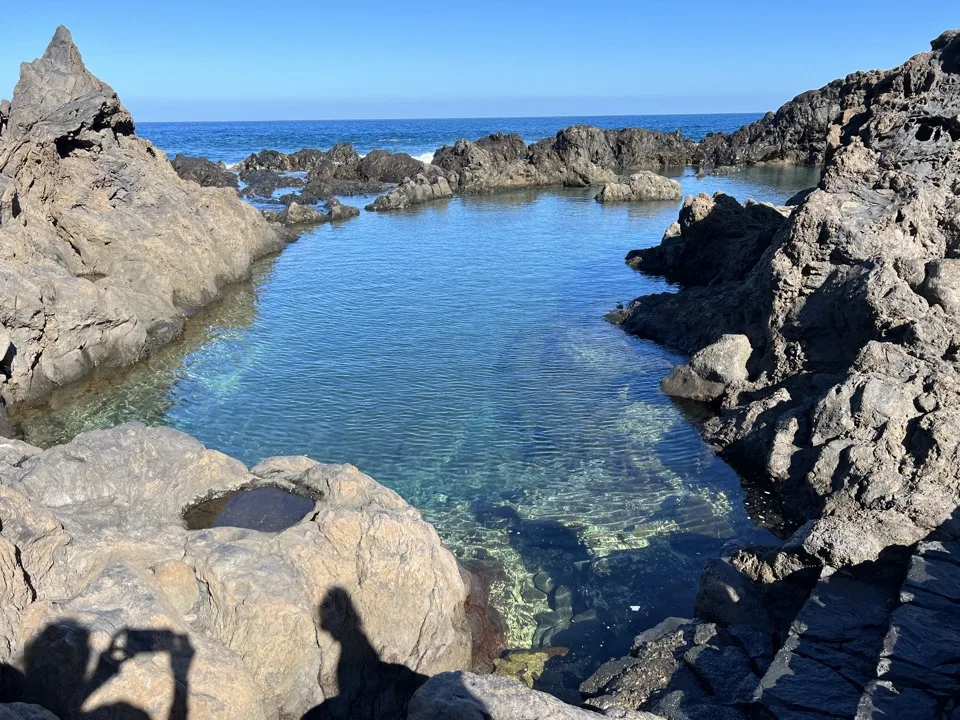
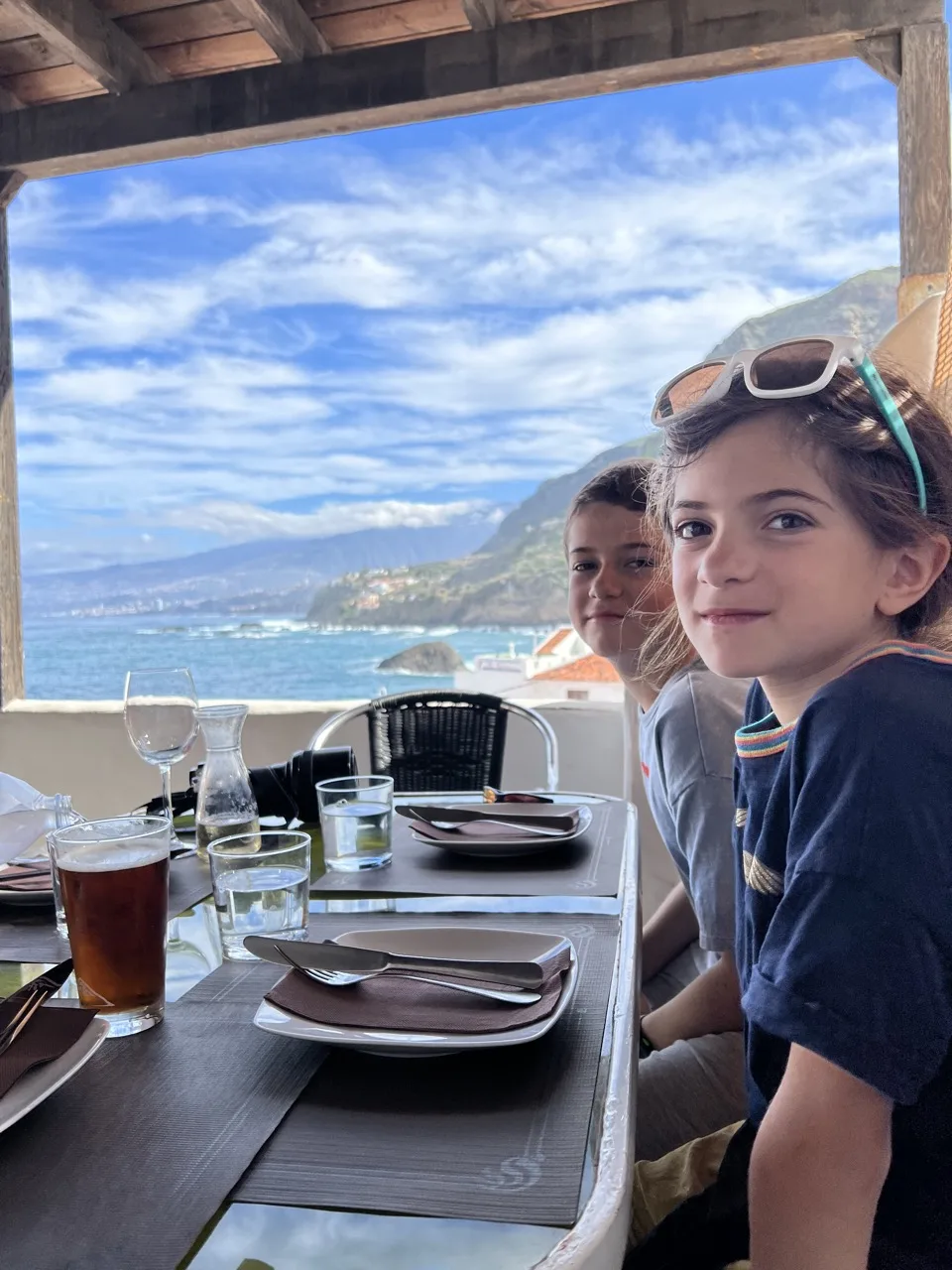
We mostly tried the natural pools around Garachico. El Caletón was closed, so we moved on to the Charco Los Chochos natural pool, which we loved. Ticoeur and I swam there (the water was 19–20 degrees, so too cool for Papa Voyage and Titpuce). Then we went on to the natural pools of Charco Las Mujeres (very beautiful as well!). On another day, we stopped at Charco del Viento and Charco de la Laja, but the ocean was too rough! All the natural pools I’ve just mentioned are located on the north coast of Tenerife.

In photos, when the natural pools are calm, it looks like this:

Rocky natural pool beside the Atlantic

Tenerife en famille

Clear water in a Tenerife natural pool

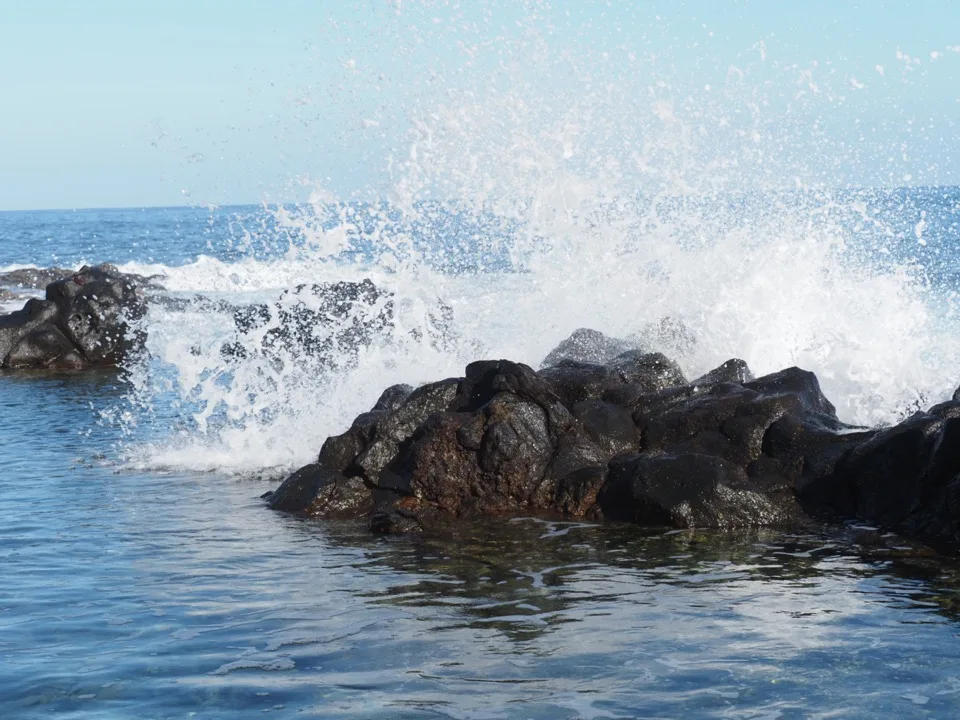
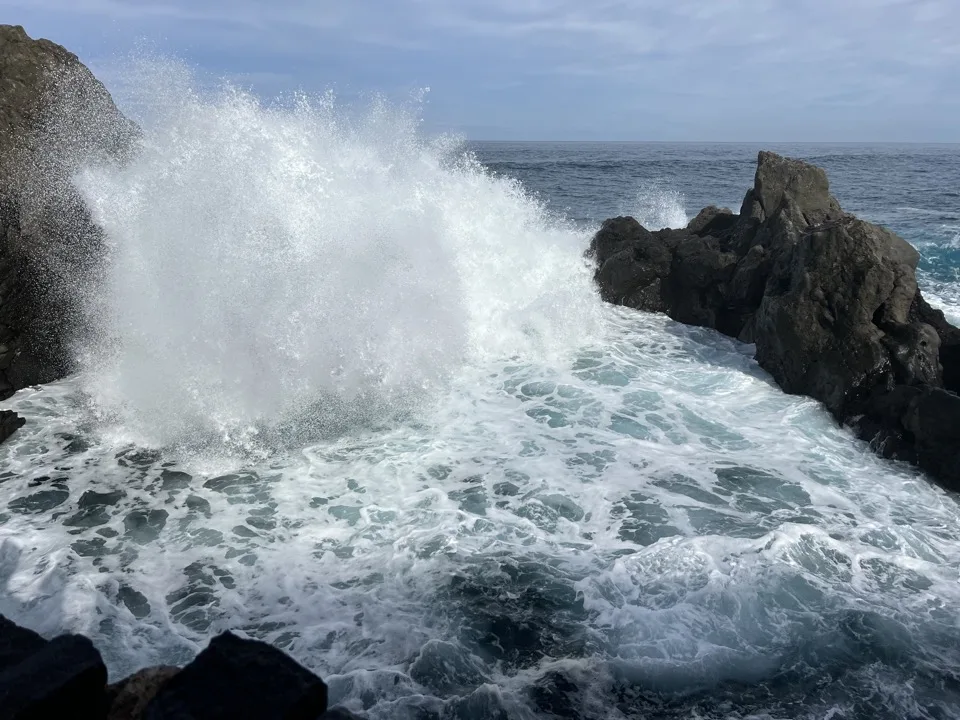
And when the pools are submerged by the ocean, it looks like this:

Waves breaking over Tenerife's volcanic rocks

Wave crashing against rocks beside a natural pool

Wave crashing over Tenerife's black rocks Black-sand beach and huts beside the ocean

Swimming in the sea?

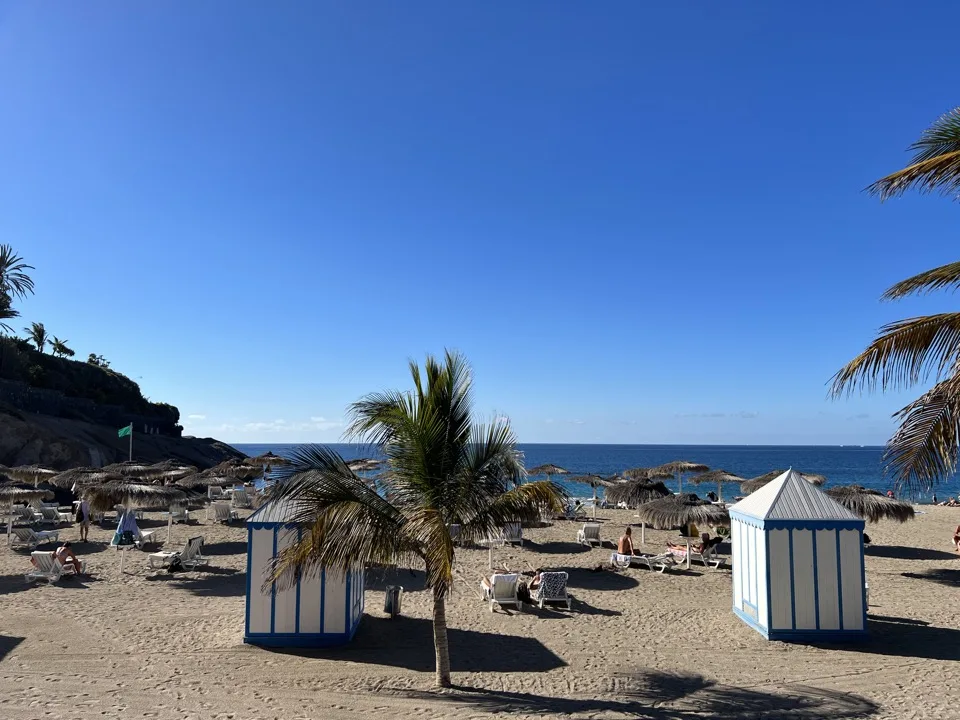
So you may be wondering whether there are any calm beaches for swimming with children. Yes, there are large beaches in the south-west. The ocean is calmer there BUT it’s the most touristy area of Tenerife. Since we were there out of season, those beaches were empty anyway, but the large hotel complexes spoil the natural setting. Not our kind of place! The rest of Tenerife has far more to offer. We still stopped at the large El Duque beach because it wasn’t far from the departure point for our whale trip. The children enjoyed this beach break and building sandcastles.

Tenerife beach backed by steep cliffs

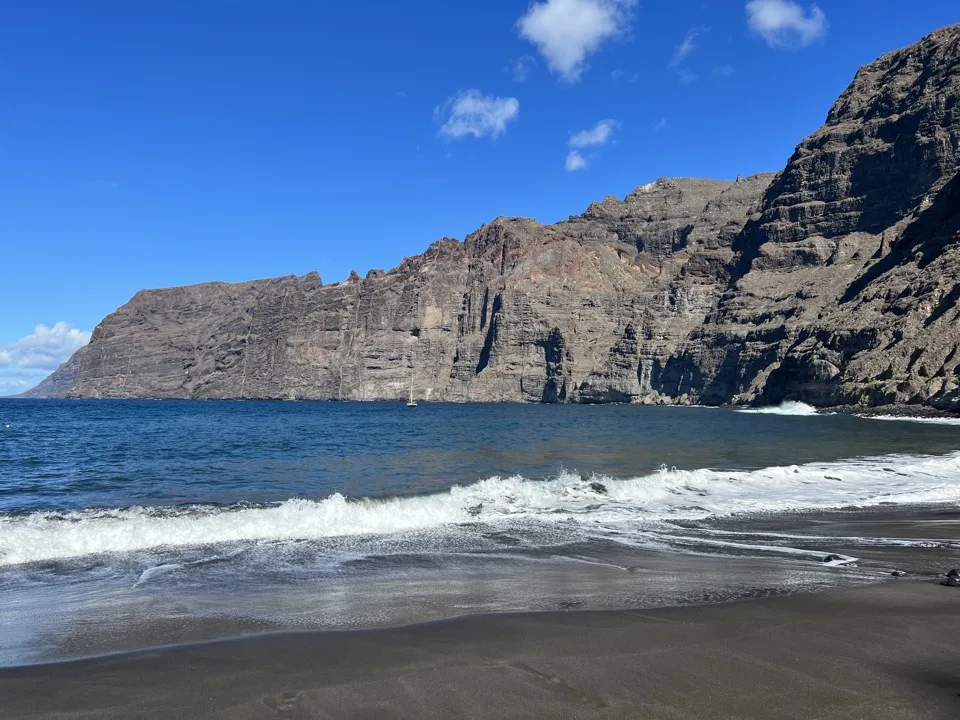
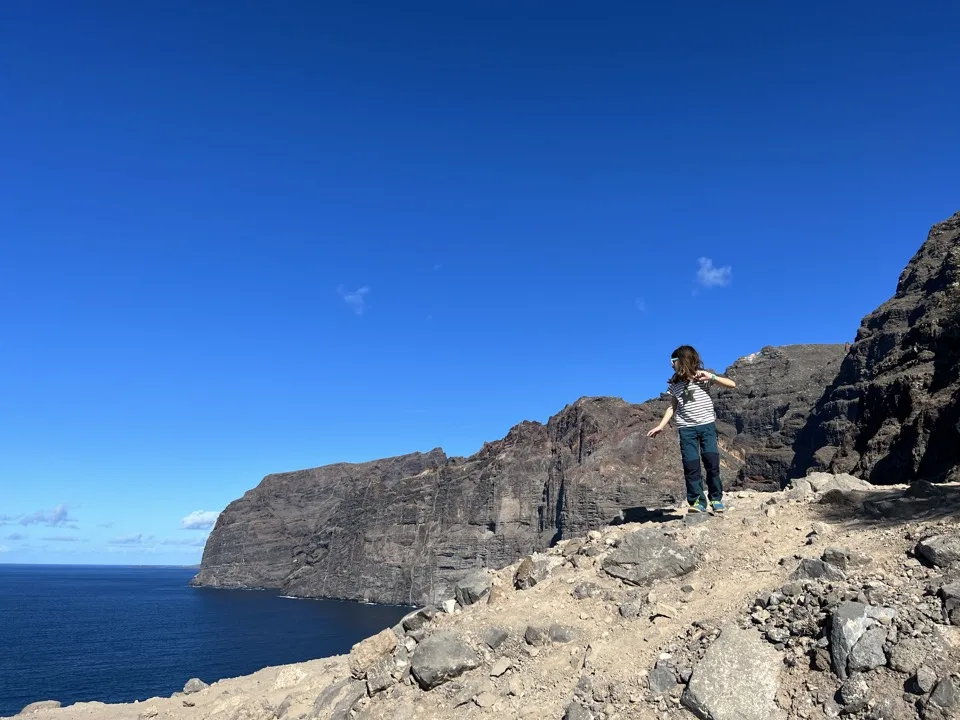
On another day, we stopped at the black sand beach of Los Gigantes: even if it’s not for swimming, it’s worth it for admiring the cliffs!

Black-sand beach facing the Los Gigantes cliffs

Tenerife en famille

In any case, the water is cool all year round, which doesn’t bother me, but I prefer to warn those who feel the cold. To conclude, when it comes to swimming, we preferred Lanzarote. 

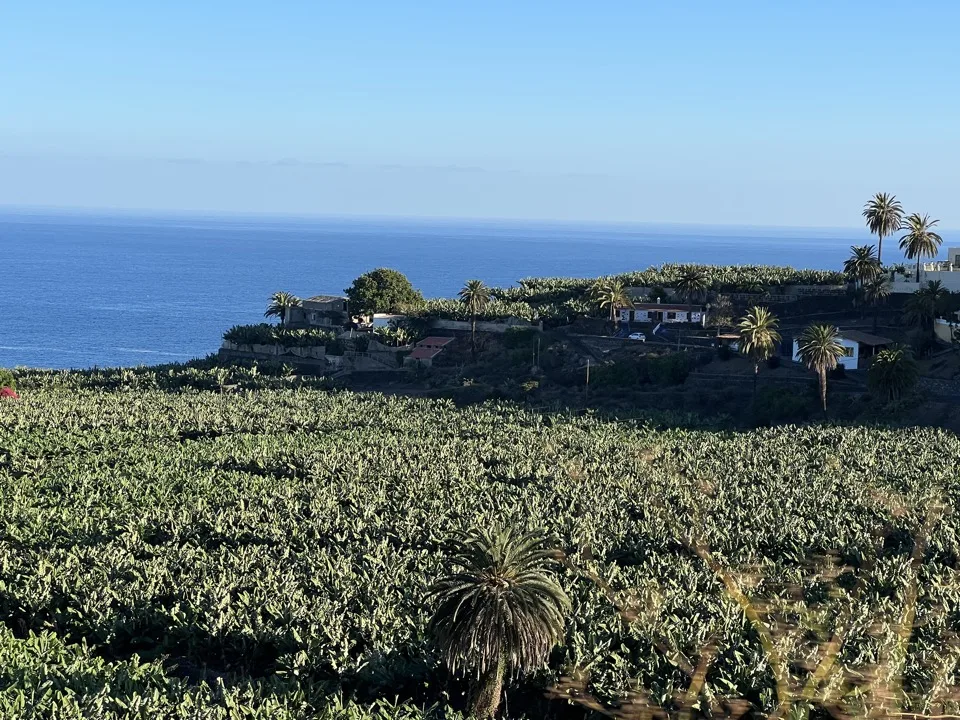
The banana plantations of Tenerife

I’ll finish with the banana plantations: there are so many banana plantations that they will remain etched in our minds! They are clearly part of the island’s landscape. I had actually spotted that it was possible to visit one, Finca Las Margaritas, but sadly the opening hours didn’t fit with our already very full schedule! So that too will be for next time! On the other hand, we were able to taste Tenerife bananas, and they were excellent!

Banana plantation near the Tenerife coast

***

Where to stay in Tenerife for a family holiday?

Many of you asked me where the best place was to base yourselves for a week when staying in Tenerife as a family. We were in Icod de Los Vinos, but the choice of village was down to chance, following the choice of house we had found. We could have stayed elsewhere. My main criterion was to avoid the touristy and overbuilt-up area around Costa Adeje and Los Cristianos—I mainly looked on the north coast. Wherever you stay, you’ll need a car, and you’ll often need to drive one or two hours because the island is large. The roads offer superb scenery, so it’s not wasted time! Especially when you cross Teide National Park! You’ll want to stop frequently to take photos.

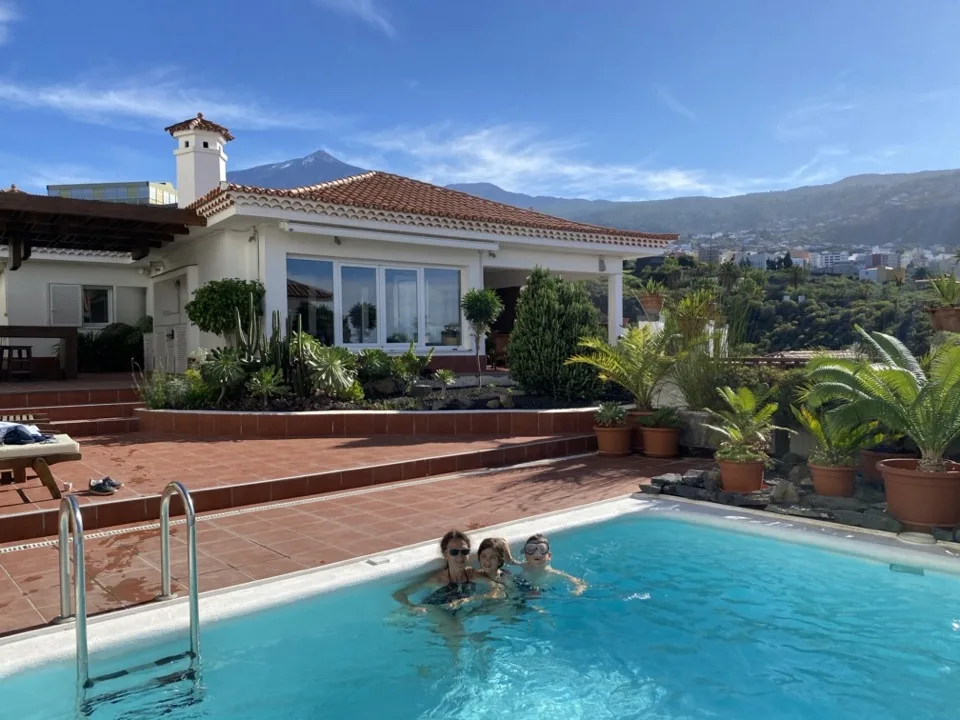
If I go back to our accommodation: it was a villa for 4 people, with a terrace and a pool. The view towards the sea in the distance was superb. The children made use of the heated pool every day. We found it magical to be able to have dinner on the terrace every evening in the middle of December! (With a light jumper, all the same.)

In short, a very good address that offered several similar villas or flats (some with pools and others without), but unfortunately, for now I can only see this flat without a pool. I should point out that the villas or flats are semi-detached. Out of season, we weren’t bothered, but potentially you could end up with noisy neighbours. Apart from that, it was perfect!

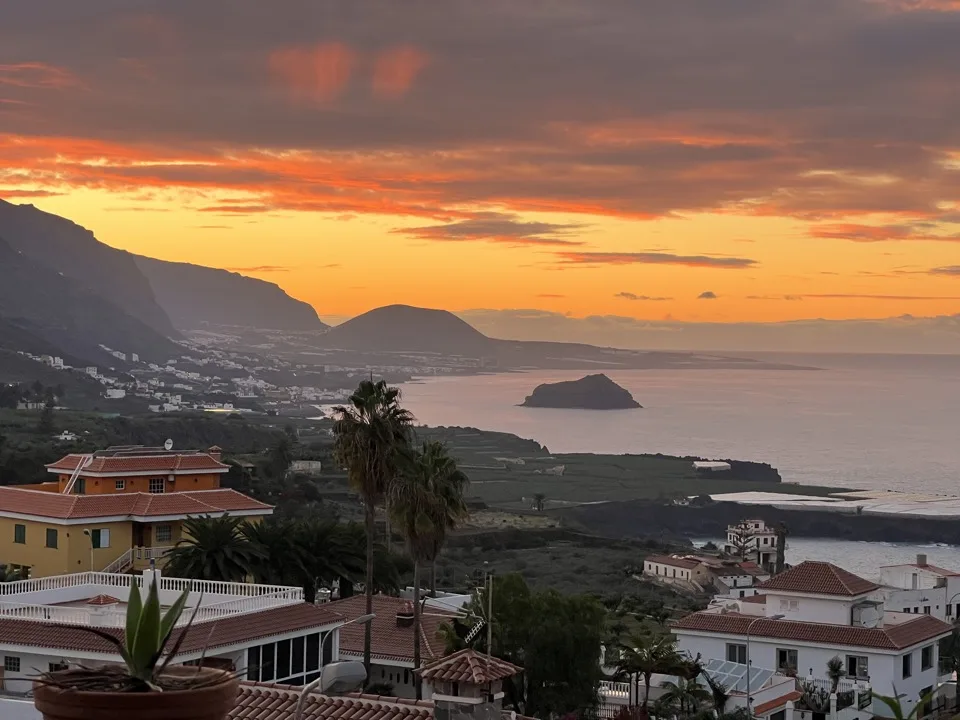
Sunset over a coastal village in Tenerife

**** When you book a hotel on Booking by following a link on my articles, it allows me to receive a small commission: it does not change the price for you and it helps me maintain the blog. So thank you very much to those who book the hotels we recommend! ****

Recommended restaurants in Tenerife:

Restaurant Tas-K in Los Gigantes: delicious and a great welcome! Very fresh, high-quality produce. Be warned: the terrace is tiny, so you need to arrive right at the start of service to have a chance of getting lunch there.

Mesón Casa Mi Madre: the catch of the day takes centre stage! A place recommended by Clo & Clem, who by chance were in Tenerife at the same time as us, and whom we had the good fortune to meet in real life!

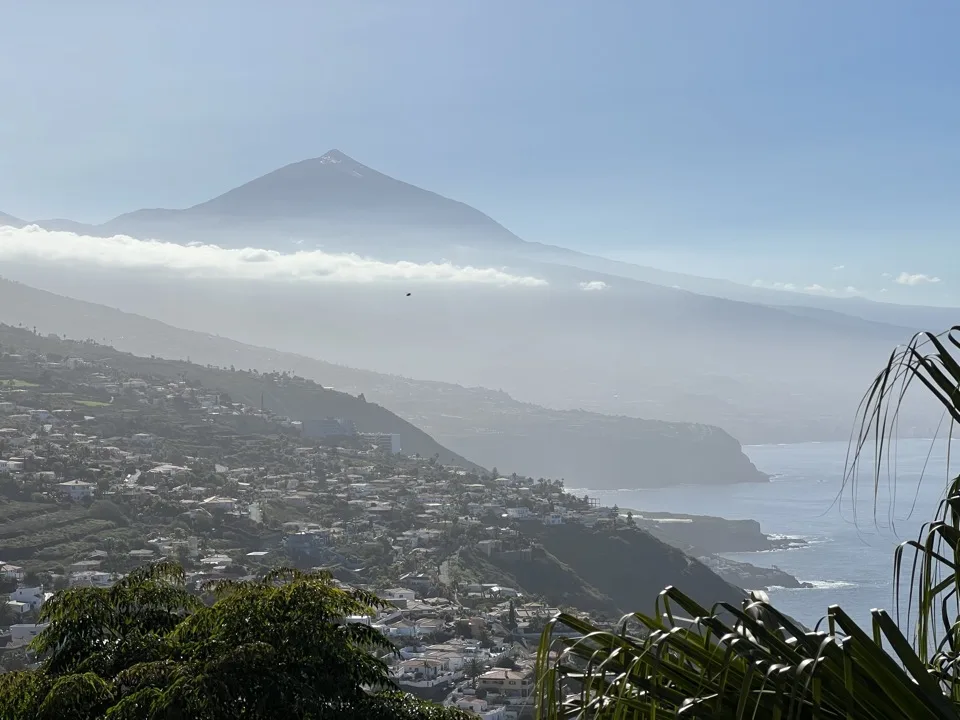
Terrazas del Sauzal: the terrace of this bar-restaurant offers a breathtaking view over the sea and Teide. We had a drink there at sunset. Superb!

Mount Teide rising above a sea of clouds

***

Car hire in Tenerife:

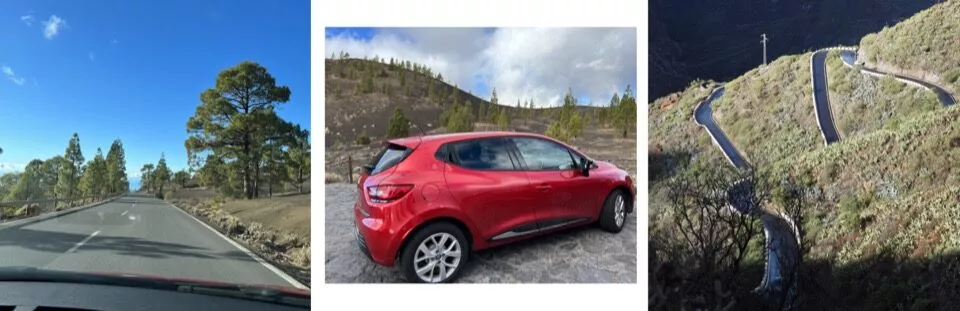
We hired a car from the airport. We had a Renault Clio and it was perfect for getting around easily on Tenerife’s roads. We paid €36 for the week. Check the comparison site DiscoverCars. Each time, we choose one of the cheapest options, but making sure to choose:

  • a rental company with good ratings
  • a “full-to-full” fuel policy
  • free cancellation.

Montage of roads and a hire car in Tenerife

***

In conclusion, coming back to the question I’m often asked: Lanzarote or Tenerife? We liked both for different reasons. I recommend Lanzarote as a family for the sea and the artistic visits linked to the presence of César Manrique’s works; and I recommend Tenerife for the hikes, Teide, the whales. Lanzarote is smaller, more arid, with less relief and fewer buildings. Tenerife has more contrasting landscapes, more vegetation and more housing. In both cases, you’ll enjoy magnificent volcanic scenery!

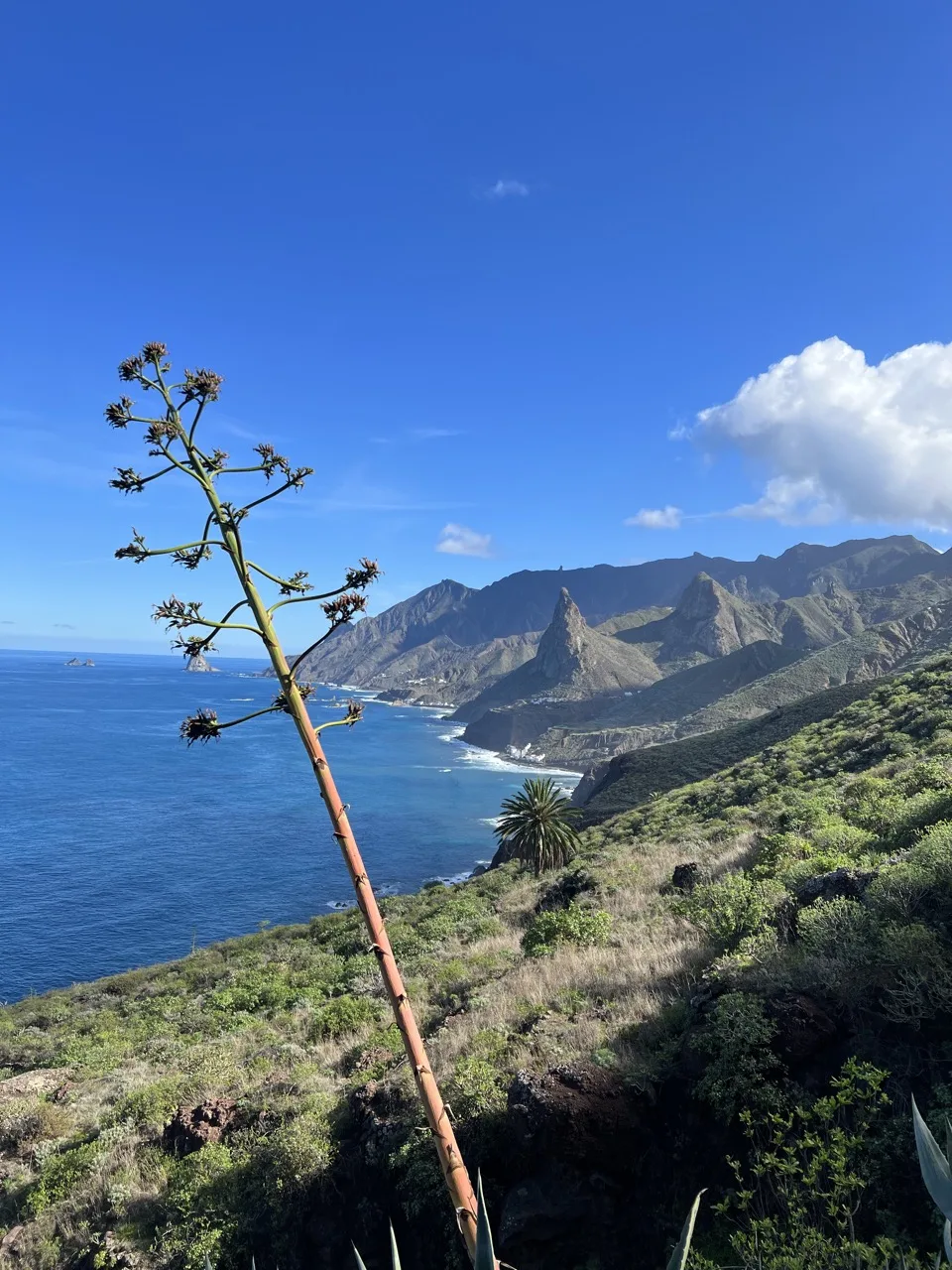
Agave against Tenerife's mountains and ocean

Volcanic cone of Mount Teide beneath a clear sky

So, tempted by a family trip to Tenerife?

Also worth reading

5 hikes in Tenerife with the kidsOur family hikes in Tenerife in the Teide and Anaga national parks
One week in Lanzarote with childrenDetails and program of our week-long family trip in Lanzarote
Our 10 family hikes in AragonA week of hiking with the children in Aragon during our campervan road trip in northern Spain
Trip to Andalusia with the kidsItinerary for a week in Andalusia with children
10 days in Madeira: our practical guideMadeira with kids: our trip during the Easter holidays
Road trip in Scotland with a babyHikes in the Highlands with a baby on a 10-day holiday in Scotland: walks, sightseeing and also city breaks in Edinburgh and…
rando Tenerife

5 hikes in Tenerife with the kids

In December, we spent a week in Tenerife as a family in the Canary Islands. Our aim was to go hiking with the children because we really love it! Titpuce and Ticoeur are real little hikers who are already used to walking a lot. They manage really quite well for their age (9 and 12), so I’ll specify the level of our hikes in the details of the article. You’ll see: we chose hikes of very varied levels, so rest assured, there will be something for everyone!

Tenerife is the largest of the Canary Islands. It is known for its Teide National Park, and it was this vast volcanic area that made us want to go there! Teide is a volcano that is still active and very closely monitored. Fortunately, it is resting at the moment, and has been for more than a century now (unlike the one on La Palma!). Teide is also Spain’s highest mountain, at an altitude of 3,715 metres. You can also read my full article on our week in Tenerife as a family, but to begin with, I wanted to focus on our hikes since that was the main purpose of our trip!

Our 5 family hikes in Tenerife:

As an introduction, I’d like to point out that there are hundreds of possible hikes in Tenerife, so whatever the length of your stay, you’ll find lovely trails to explore. In one week, we had to make choices. We loved our 5 family hikes, and it made us want to go back to do others! In the meantime, I’m sharing the details of our five discoveries… The durations given are our own times, not an average, so they are only indicative. I’ll remind you that we are used to hiking, so if you have less experience, you may need to allow more time.

1/ Samara (Teide National Park) – easy – duration: 1 hr 30 – 250 metres of elevation gain

Samara is clearly a hike for families. We are at the foot of Mount Teide. The landscapes are superb: you can see the volcano, the lava scenery and the famous Canary Island pines. It is a loop. It goes up and down a little throughout the hike, but really nothing too serious, and it’s a good length for children who are not yet used to walking for a long time. The start of the hike is at an altitude of 1,875 metres.

rando Tenerife

Read more

Venice with kids: our 10 essentials

How I longed to return to Italy! My second home! So I organized a stay in Venice as part of our holiday itinerary, after leaving Croatia. We had already been to Venice as a couple, a few years ago. I was delighted to discover Venice with my family: Ticoeur and Titpuce were really charmed and surprised by this city, so different, so atypical, with all its canals and the absence of cars. Magic ! A journey through time and history…


This summer, Venice was less crowded than usual… Effect of the current context, the new bans on large cruise ships and the non-resumption of international tourism. A chance to see this city without the crowds (except at the Rialto where everyone seems to meet). Several times in the morning, we even felt alone in St. Mark’s Square! Not to mention the Doge’s Palace which we had not managed to visit during our previous trip to Venice and in which this time we crossed vast, almost deserted rooms. We will not forget this Venetian break with the children! I would also like to point out that the city was extremely clean, with an impressive work by the garbage collectors who crisscross the streets and canals. No unpleasant smell either! In short, I hope you see Venice as we saw it this summer and of course, I will now detail our little, totally improvised program on site…

Venice for the family: our 10 essentials:

1: The Grand Canal: you might as well start with the Grand Canal as soon as you arrive because it gives an excellent first overview of the city. With our suitcases, we simply took the vaporetto from Piazzale Roma (point of arrival on the island) to get to our accommodation which was located a stone’s throw from St. Mark’s Square. This made us enjoy the whole canal! The journey is not cheap (7.50 euros) but it should be seen as an attraction in itself, like a riverboat ride :-). Free tickets for children under 6 years old. To remember these magnificent views from the water, we also took the vaporetto again at the end of our stay before leaving Venice. During our stay, we crossed the Grand Canal several times at the bridges and we never tire of the changing light… Venice is so beautiful at any time of the day!

Grand Canal and Santa Maria della Salute in Venice

Read more

Ibiza en famille

Ibiza and Formentera during the autumn half-term

Here is the story of our week-long family holiday in Ibiza and Formentera. We loved it! We recommend these islands during the autumn half-term: unlike in summer, there were few visitors, mainly families, and we could really enjoy the beaches because both the air and sea temperatures were 23°C. Of course, the weather is always unpredictable, but the Mediterranean has never disappointed us at this time of year. The landscapes were wonderfully green and wild.

I know many people think of Ibiza only as a party island, but that is far too simplistic. It is a large island with something for everyone. Some of its famous clubs are around Sant Antoni, although Ibiza’s nightlife is not confined to that town. Elsewhere on the island, you will find plenty of very peaceful places. As is often the case in the Mediterranean, avoid mid-July to the end of August if you want to escape the crowds. Papa Voyage often visited Ibiza and its little sister Formentera in his youth, with his parents or friends, and never saw so much as a DJ :-). In short, Ibiza has everything you need for a wonderful holiday with children!

Ibiza with kids: the beaches

I will start with the beaches we enjoyed. They were particularly accessible because, as you may know, Ticoeur had a broken ankle. His crutches led us to choose beaches close to car parks. Fortunately, we were travelling out of season, as these easy-to-reach beaches are very popular in summer. Here are our most child-friendly beaches:

Cala d’Hort

This beach lies in southern Ibiza, and we particularly loved the view of the huge rock!

Ibiza en famille

Portinatx beach

Ticoeur and Titpuce’s favourite! It is in the north of the island. Nearby, we had excellent fish and squid for lunch at a small family restaurant. The setting is not particularly appealing, but the warm welcome, good food and low prices make it worthwhile: Don Quijote.


Turquoise water and a small rocky cove in Ibiza

Benirràs beach

A famous beach renowned for its sunset. It really is an ideal place to enjoy the last rays of the day. Behind the beach, the landscape is very green and undeveloped, giving it a particularly wild feel. In summer, members of the island’s hippy community gather here and dance to drums at sunset. During our off-season visit, there were only a few drummers and about twenty people on the beach, which gave us the perfect bohemian, musical moment without the crowds. For dinner, we had very good pizzas at La Pizzeria on the beach.

Boats moored in an Ibiza bay at sunset

Cala Comte

On the west coast. It was a little busier than the previous beaches and is probably one of the most popular with visitors. The setting is magnificent and it is another perfect sunset spot.

Sandy beach facing a rocky islet in Ibiza

Cala Salada and Cala Saladeta

Cala Salada, on the west coast, is a pretty wild beach very close to the car park. My absolute favourite in Ibiza, however, was its little sister, Cala Saladeta, a cove reached after 10 to 15 minutes of climbing up and down. Cala Saladeta is not suitable for pushchairs or crutches, but otherwise the route is not too difficult and is absolutely worthwhile.

Cala Saladeta framed by pine trees in Ibiza

Our take on Ibiza’s beaches

At every beach, the sand was very fine and the sea crystal clear, so we could easily see lots of small fish, especially sea bream. Ticoeur and Titpuce love snorkelling and were delighted. I also liked the style of the fishermen’s huts on all these beaches:

Rocky cove and waterfront houses in Ibiza

When I say these beaches are accessible, I really mean it: they work well for pushchairs, children or young people with an injury like Ticoeur, because there are often small wooden walkways between the car park and the beach (see the photo below). We were lucky, as we did not yet know that Ticoeur would be on crutches when we booked our Ibiza holiday!

Family carrying boards along a walkway towards the beach

There are, of course, many other beaches and coves in Ibiza. I do not know whether we saw the most beautiful ones, but we certainly loved them and will return to discover more!

Watch out for jellyfish!

You will notice that we did not swim at beaches on the island’s east coast, because there were jellyfish all along that coast during our stay. More specifically, they were Pelagia noctiluca. Their stings are not usually dangerous, but they can be very painful. If you are stung, seek local first-aid advice; seawater rather than fresh water is generally recommended for rinsing. On the east coast, we visited the large beach at Cala de Sant Vicent but did not swim. Without the jellyfish, this broad beach is very suitable for families. Jellyfish seem to arrive in waves, so check the local situation when you arrive.

Cala de Sant Vicent

Ibiza, a green and wild island:

I think many people are surprised by just how green, hilly and natural Ibiza is. That is precisely why we liked it so much!

Blue bay and wooded hills in Ibiza

Path through Ibiza's Mediterranean vegetation

We also stopped at the Ses Portes del Cel viewpoint on the west coast.

Wooded cliffs dropping into the sea in Ibiza

As you cross the hills, you will pass small white villages such as Santa Gertrudis, Santa Agnès de Corona, Sant Joan and Sant Miquel. They are very quiet during the autumn half-term; in summer, you will find attractive local markets there.

Whitewashed church with thick walls in Ibiza
Sant Miquel

In Santa Gertrudis, we enjoyed a glass of wine and a few slices of Iberian ham at Bar Costa.

White Ibiza church framed by two trees

After crossing the hills, we reached Santa Eulària, where we admired the church of Puig de Missa, before continuing to Es Canar beach for a simple, inexpensive canteen-style lunch at Solimar.

Ibiza Town

In Ibiza Town, called Eivissa in Catalan, the old centre is the most charming part. It is worth exploring Dalt Vila, the upper part of the old town inside the fortress, before walking back down to enjoy the pretty squares at the foot of the citadel. Half a day is enough. After wandering through the maze of lanes, we recommend lunch at El Zaguán, an authentic tapas bar serving a wide choice of hot and cold pintxos – small bites served on sticks, with the bill based on the number of sticks. The children found this fun! It reminded us of our family holiday in Barcelona.

View over the white houses of Dalt Vila in Ibiza
Dalt Vila, Ibiza

White Ibiza lane lined with bougainvillea

Our accommodation

We stayed above the coast in the north-west near Sant Miquel de Balansat. This house is not currently available for holiday rentals (in 2026). Today we would probably choose a traditional finca like the agroturismo Can Fuster.

**** When you book a hotel on Booking by following a link on my articles, it allows me to receive a small commission: it does not change the price for you and it helps me maintain the blog. So thank you very much to those who book the hotels we recommend! ****

Two nights on Formentera

We had booked two nights on Formentera to discover this small island. We loved the famous Ses Illetes beach and its magnificent strip of sand. In the photo, everyone is on the left because there were jellyfish on the right, eastern side – but none on the other side, thankfully!

Sandbar bordered by turquoise water in Formentera
Ses Illetes, Formentera

Formentera has many striking giant fig trees:

Large fig tree with branches supported by posts in Formentera

Stone windmill on the island of Formentera

We enjoyed lunch at the kiosk on Migjorn beach. Do not be in a hurry – but with a setting like this, why would you be? 😉

We also swam at Ses Platgetes by Es Caló. It is very pretty and feels a little like a paddling pool, so I recommend it for families with very young children.

We especially enjoyed our two days on Formentera because our accommodation was superb: surrounded by nature, with an incredible view over the sea and a perfect sunset spot.

Setting sun over the sea in Formentera

I am sharing the address of this Airbnb, but it will not suit everyone: the El Pilar house is not connected to mains water or electricity. Rainwater is provided for washing and cooking, so it must be used sparingly and is not drinkable; our hosts supplied a container of drinking water for our stay. Electricity comes from solar power and is therefore also limited. But if, like us, you enjoy wild, natural places, this is a charming address with lovely hosts. Check the current listing and facilities before booking.

Stone house covered in greenery in Formentera

PS: I have not shared our Ibiza address because it was fine but nothing special, apart from the view. I can tell you that it was in the north-west, which is a beautiful part of the island. I would favour the north over the south.

Practical information for an Ibiza holiday

How to get there: the flight from Paris takes about two hours.

Car hire: at the time of our trip, we found rentals from €50 per week – yes, per week! We chose one costing €100 per week because we needed a little more room for Ticoeur’s leg. These historical prices are unlikely to reflect current rates. I do not like recommending individual hire companies because prices change constantly. We compare offers on a comparison website, such as DiscoverCars, and choose the best value available at the time.

Restaurants in Ibiza: of all the Balearic Islands, Ibiza is where we saw the largest number of fashionable and rather expensive restaurants. At first, we thought we would not find the simple, friendly little places we like, but they do exist – you just have to look ;-). All our good-value addresses are included in this article. If ultra-stylish, chic restaurants are your thing, however, you will be spoilt for choice! I like attractive interiors, but sometimes worried that the food might not live up to the price. Do share your favourite addresses in the comments.

Ferries between Ibiza and Formentera: we travelled with Trasmapi. Our crossing took 45 minutes, although current fast services may take around 30 minutes. Some ferries carry foot passengers only, while others also carry vehicles. Vehicle access to Formentera is regulated during the summer, so check the current dates and obtain any required authorisation before travelling. Also make sure your car-hire company permits you to take the vehicle to Formentera. Otherwise, you can hire a vehicle on the island. Many visitors instead take a day trip from Ibiza by catamaran or motorboat. We will try that next time!

Formentera lighthouse with Es Vedrà in the distance
During the crossing…

Scuba diving in Ibiza:

That was our original plan. We had given Ticoeur a ‘voucher for a diving course’ for his birthday, but his accident meant that we could not do it. Ibiza has attractive underwater scenery and very clear water, making it well suited to discovering scuba diving. We will save it for another time! Do recommend any diving centres in Ibiza.

Clear water and rocks on the Formentera coast

***

To discover more of the Balearic Islands, read about our week in Menorca with kids and our trip to Mallorca with kids.

Would you like to visit Ibiza with your family outside the summer season?

Also worth reading

A week in MenorcaAll you need to know to spend your family holidays in Minorca !
One week in Lanzarote with childrenDetails and program of our week-long family trip in Lanzarote
Our one-week family itinerary in southern SardiniaOur 8 day family roadtrip through southern Sardinia
The Bassin d’Arcachon : 12 things to do as a familyOur "best of" around the Bassin d'Arcachon: discover, hike, beaches and activities with the kids Nos coups cœur autour du Bassin…
Our 2 weeks in northern Sardinia: beach paradiseFamily holidays: our "best of" beaches in northern Sardinia from Bosa to Posada
Family holiday in Crete: our road trip through the western part of the island10 days in Crete with the kids during the Easter holidays
Maisons en pierre de Trogir au bord de l'eau

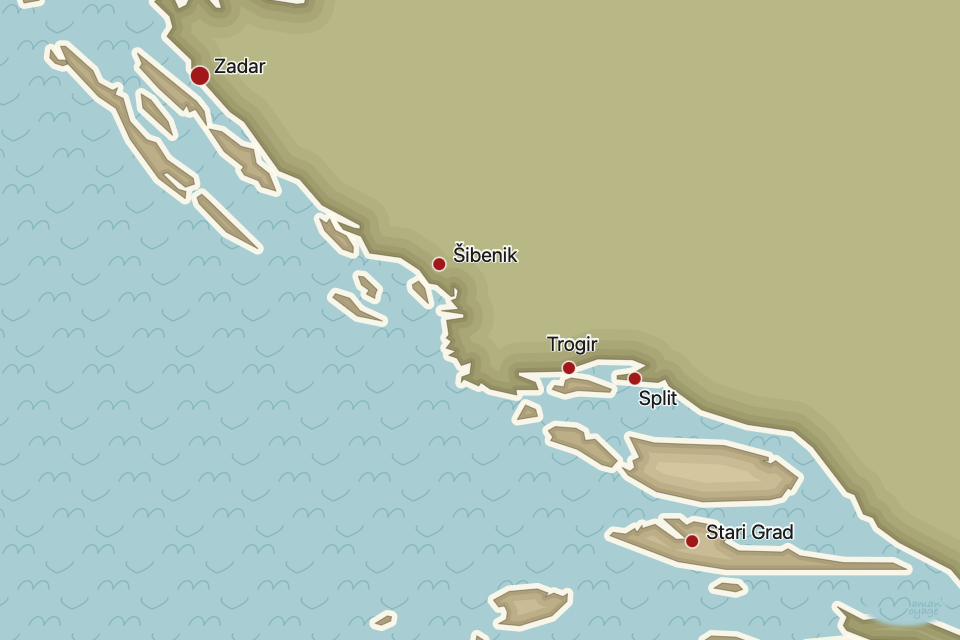
Our 5 stops from Zadar to Split in Croatia

Here are the 5 stops between Zadar and Split that we chose during our family road trip in Croatia, along the Dalmatian coast. We had already taken other trips to Croatia, but we hadn’t yet explored this part of the coast – which is nonetheless probably the most famous!

It was in Zadar that our journey through Dalmatia began, along the Croatian coast, all the way to Split. On this 5-stop itinerary from Zadar to Split, our two favourites were Trogir and the island of Hvar. Yes, I’m giving away the suspense already :-).

Overall, what we enjoyed most on our trip to Croatia was the good balance between visiting beautiful towns with a rich cultural heritage and lovely swimming spots, on the coast or on the little islands. As for accommodation, we hadn’t booked anything in advance (except for Zadar). That’s quite a challenge in summer! But we always found something at the last minute.

Time of year: from mid-July to the very beginning of August 2021

Age of our children: 9 (Titpuce) and 11 (Ticoeur).

So here are the 5 stops on our Croatia itinerary…

1 – Zadar as a family

Zadar was the first stop on our Croatia itinerary.

We visited this town, which we found rather pleasant (mid-July). We spent our first night on land there after our week at sea. A stay of one day and one night seems to me the perfect length to visit the old town and walk along the sea at sunset, admiring the Adriatic. We liked the Bruschetta restaurant. The cuisine has certain similarities with Italian food, which Ticoeur and Titpuce certainly didn’t mind!

We climbed to the top of the cathedral bell tower, which you can see in the photo above. The views are pretty good:

Red rooftops of Zadar and the Adriatic Sea seen from above

Narrow lane and tiled roofs in Zadar

In the evening, after wandering through the alleys of the old town, we walked along the seafront promenade like everyone else. At the end of the promenade is the Sea Organ, an installation that “sings” to the rhythm of the waves thanks to 35 pipes located under the water. We were lucky to visit Zadar in July when the town was still quite calm. Nonetheless, at sunset there were plenty of people listening to the Sea Organ and having fun with the lights of the installation! (So probably a spot to avoid in August.)

Sun setting over the Adriatic Sea in Zadar

From Zadar, we hired a sailboat to discover the Kornati islands and other islets located off the coast of Zadar. After a week on the sailboat, we came back to Zadar.

Then we made a detour inland to visit the Plitvice Lakes. An absolute must! A wonder of nature! We spent a night there, then came back to sleep one more night in Zadar before starting our road trip south along the coast, all the way to Split.

For accommodation, I had booked an apartment for 6 because a friend and his son had joined us in Zadar to spend the week on the sailboat with us.

2 – Šibenik on the way

A beautiful town where we stopped twice. One night on the outward leg of our north-south journey and one night on the way back. There are numerous alleys, squares, stairways and slopes in the old town. So it’s a great opportunity for a lovely walk (leaving the car in the car park). We wandered around St James’s Cathedral and then climbed up to the Kastel (which we didn’t visit). We also walked along the town’s seafront ramparts. The accommodation we found in Šibenik, in the old town, was our favourite of our road trip along the Dalmatian coast.

**** When you book a hotel on Booking by following a link on my articles, it allows me to receive a small commission: it does not change the price for you and it helps me maintain the blog. So thank you very much to those who book the hotels we recommend! ****
Family seen from behind on a stone square in Šibenik

Note that Šibenik is the ideal base for those who want to visit Krka National Park. This time, we’d chosen to visit Plitvice Park, so we didn’t combine it with this second park, but Papa Voyage, who went there a few years ago, really liked it.

3 – Our favourite: Trogir

We think Trogir is the prettiest little town on the Dalmatian coast! The medieval part is pedestrianised and has a lot of charm, by day or by night. In the evening, we had a wonderful time on the terrace of the Kristan restaurant (excellent pizzas and calamari!).

We spent a night in Trogir, on the Otok Čiovo peninsula (easier for parking). You walk to the old town by crossing the bridge. Our apartment was okay, nothing more, but clean and practical, a 15-minute walk from the old town. I’ll put the link here, but I think you can find better.

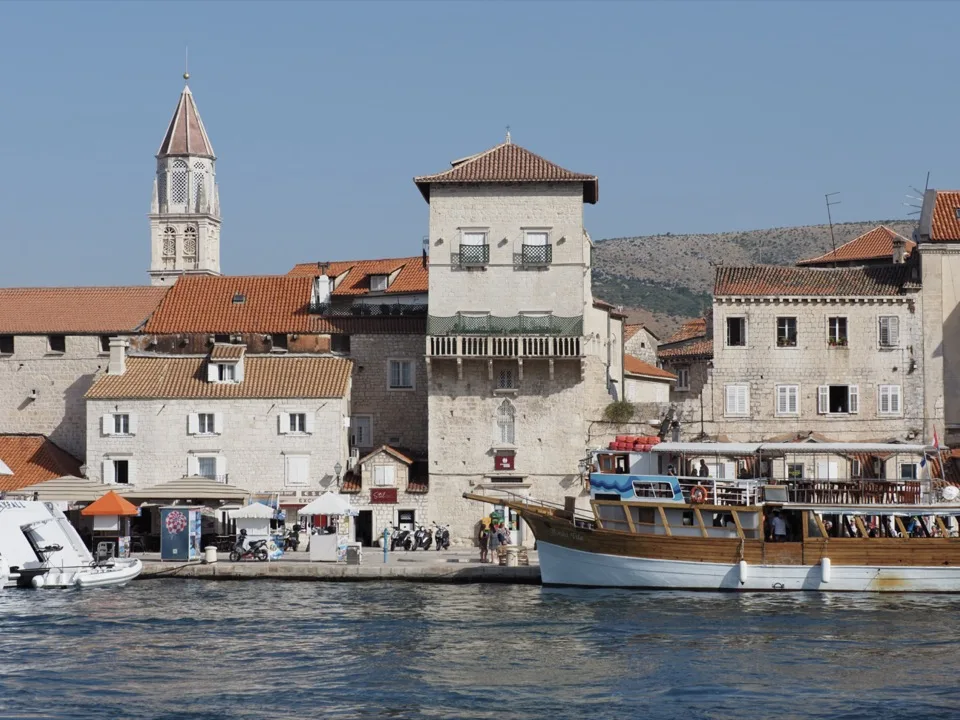
Stone houses of Trogir beside the waterfront

Paved square and historic buildings in Trogir

View of Trogir and its waterfront

Colourful umbrellas suspended over a lane in Trogir

For a swimming break, we drove along Otok Čiovo (the peninsula opposite Trogir) and swam at the last beach (Kava beach):

***

The Kaštela Riviera:

Between Trogir and Split, we followed the “Kaštela Riviera” and made two very nice little stops:

The first stop in Kaštel Stari, where we swam and had a coffee:

View over a bay and houses on the Croatian coast

A second stop in Kaštel Gomilica. It’s tiny but pretty, and apparently it’s one of the filming locations of Game of Thrones. Well, I didn’t watch that series (too violent for me!), so it didn’t mean much to me, but I really enjoyed the break!
Stone bridge and moored boats in a Croatian coastal town

4 – A few days in Split as a family

We settled in Split for several days because Papa Voyage had to work remotely. So I visited the old town on my own with the kids. In Split, compared to the previous stops, there are more sites to visit because the town is bigger: it’s the capital of Dalmatia. In short, for us, who stayed longer, that worked out well. If you’re passing through, I’d recommend staying two nights. Beware, in August it’s crowded! Go for July or an even quieter month.

First of all, we visited the Roman part of Split (a UNESCO World Heritage Site). The heart of the historic part is Diocletian’s Palace, surrounded by fortified walls.

Historic façade framed by trees in Split

Historic façade and statue on a square in Split

With the kids, we climbed to the top of the bell tower for a lovely view over the town.

Split rooftops seen through the arches of a bell tower

For swimming, I took Ticoeur and Titpuce to Firule beach in the morning, and I liked having a coffee at Dvor for the view.

Cup of coffee on a terrace overlooking the sea in Split

Flowering agave and cove on the coast near Split

Of our whole trip to Croatia, Split was where we were hottest. Yes, it’s further south, but there was also a heatwave of around 30 degrees. I know it could be worse, but for the “Brits” we’ve become, that’s already a lot. So we enjoyed visiting the cellars of Diocletian’s Palace for their coolness. There’s also part of the underground area with free access, with arts and crafts stalls. We bought some watercolours as a souvenir.

At the end of the day, it was nice to walk up into the Marjan district, through Park Vidilica, which you can see in the background in this photo:

View over Split's rooftops and harbour

In the park, we sat on a terrace at sunset, admiring the view towards the old town:

Panoramic view of Split with mountains behind the city

Our favourite spots in Split? The ice creams at Ela’s. And also the fish restaurant Duje, which was recommended by our hosts. It’s a restaurant frequented by locals and located outside the old town – not a great setting, but great food!

The view as we left Split by ferry:

Split bell tower and palm-lined promenade

5 – The magnificent island of Hvar!

From Split, we booked a ferry to the island of Hvar (to the port of Stari Grad). We bought tickets for the four of us + the car. Many tourists only spend a day on Hvar. In that case, foot-passenger tickets or organised tours are more suitable, but we really recommend staying several days on Hvar (3 nights, for example). The island has so much more to offer than its little main town, where all the day visitors disembark! Hvar has many small coves. It’s perfect for wonderful swims away from the crowds. Clearly a favourite for us! Given the size of the island, and to reach all the coves, you need a car, hence our choice.

The little town of Hvar on Hvar, in the morning, before the excursion boats arrive…

Paved square and stone houses on Hvar island

The kind of idyllic, peaceful little coves you’ll find on the island of Hvar:

Turquoise cove edged by rocks and trees on Hvar

There are also really cute villages:

Rocky coast and small blue bay on Hvar island

Bay surrounded by wooded hills on Hvar island

The little town of Jelsa:

Right, I’ll give you a few cove names as examples, but just look at the map – they’re all lovely! Zukova Bay, Dubovica Beach (with a nice little beach bar), Piscena Beach, Brizenica Bay. Watch out for sea urchins! Remember to bring water shoes!

Šibenik with kids

As for good places to eat, we had a favourite on Hvar: the restaurant Konoba Santa Marija (in Dol), where we had dinner several times. It’s a farm located inland (you need a car). The setting was super pleasant and we ate very well. As for accommodation, we were in the north-east, near Stari Grad, a pleasant town that’s less touristy than Hvar.

***

For the return journey, we went back up the same route, from Split to Zadar, more quickly, sleeping one more night in Šibenik.

***

Road trip in Croatia: practical information

Transport: we had our own vehicle, since we’d reached Croatia by driving through Germany and Austria. For such a long stay, it was clearly the most economical option. And to get from Split to Hvar, we took the ferry (a 2-hour crossing), booking the day before.

Car hire: if you are arriving by plane, the ideal option for this road trip is to hire a car at Zadar airport.

Season: since we travelled across July and August, we clearly saw the difference in visitor numbers between the two months! Suddenly, at the start of August, there were lots of tourists! Especially in Split! So we’d advise you to go in July. As for the weather, we had ideal conditions, around 30 degrees but no more. No heatwave. Of course, that’s a bit down to luck. We were lucky.

Travel guide: we had the French Guide Evasion Croatia.

Campervan parked beside the sea on the Croatian coast

***

So? Tempted by a road trip in Croatia?

Carte : Zadar, Šibenik, Trogir, Split et Grad Stari Grad

Also worth reading

A week in MenorcaAll you need to know to spend your family holidays in Minorca !
10 days in Madeira: our practical guideMadeira with kids: our trip during the Easter holidays
Our one-week family itinerary in southern SardiniaOur 8 day family roadtrip through southern Sardinia
Family holiday in Crete: our road trip through the western part of the island10 days in Crete with the kids during the Easter holidays
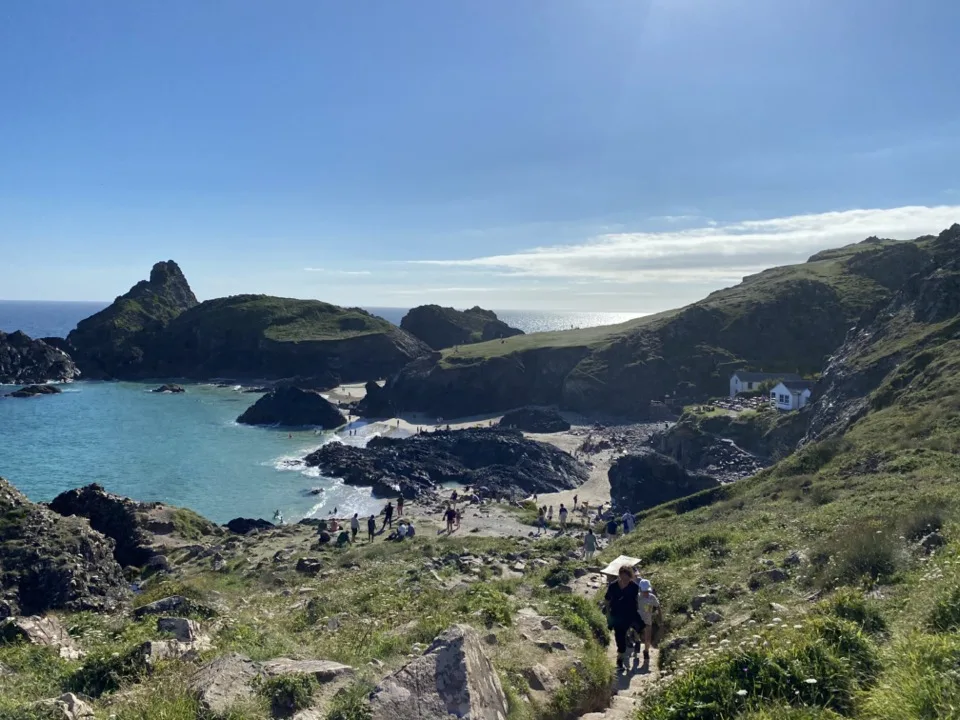
Our one-week Cornwall road-tripOur family holiday in Cornwall: Nos vacances en famille en Cornouailles : dream coves, vanlife and wild coast
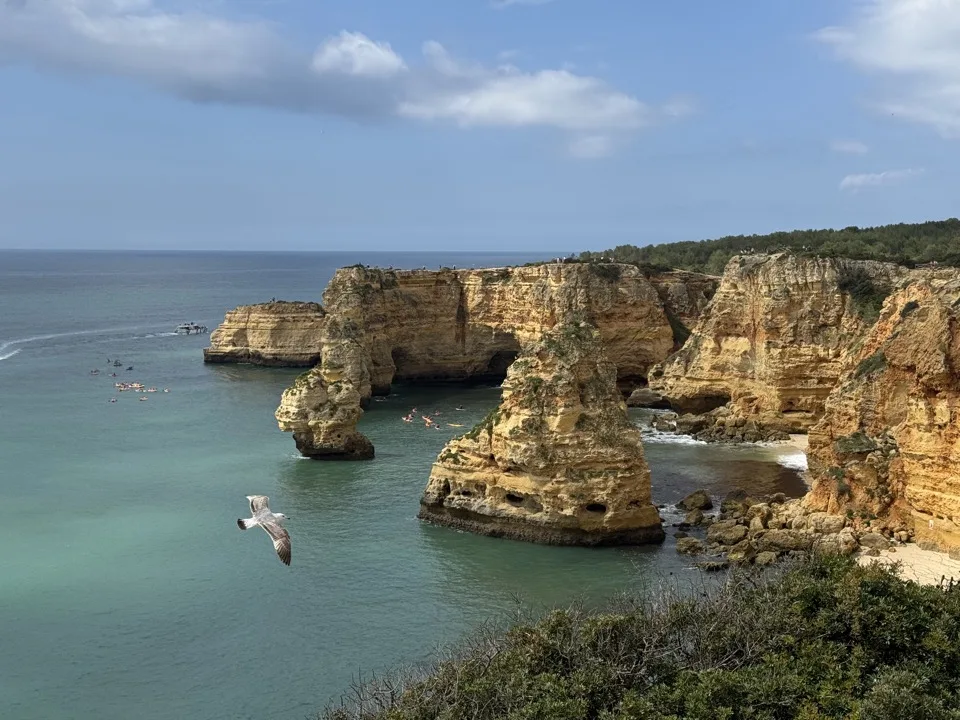
The Algarve as a familyOur trip to the Algarve in Portugal with the children

Baies et montagnes des îles Ioniennes vues depuis Céphalonie

One week on the Greek islands of Ithaca and Kefalonia

We were delighted to discover Kefalonia and its little sister, Ithaca, during a one-week family holiday. These two beautiful islands belong to the Ionian Islands, west of mainland Greece. Kefalonia is the largest of the Ionian Islands and offers a varied landscape of beaches and mountains.

I had, of course, heard of Ithaca in an excellent travel guide that everyone knows: The Odyssey! Yes, this is the island of Odysseus—and Ithaca really does exist! The name Kefalonia, on the other hand, meant nothing to me. The two islands lie very close together. You fly into Kefalonia, the larger island, and most visitors spend a day—or two, if they have time—on little Ithaca, reached by a short ferry crossing.

Children’s ages: 9 and 11

When we travelled: one week in late October. We had magnificent weather and the sea was pleasant for swimming.

Bays and mountains of the Ionian Islands seen from Kefalonia

We chose two bases and therefore two places to stay: the first in the centre of the island, inland from Agia Efimia, and the second on the south coast near Vlachata. I found both locations ideal for exploring Kefalonia. We travelled around in a hire car booked through DiscoverCars.

**** When you book a hotel on Booking by following a link on my articles, it allows me to receive a small commission: it does not change the price for you and it helps me maintain the blog. So thank you very much to those who book the hotels we recommend! ****
Read more

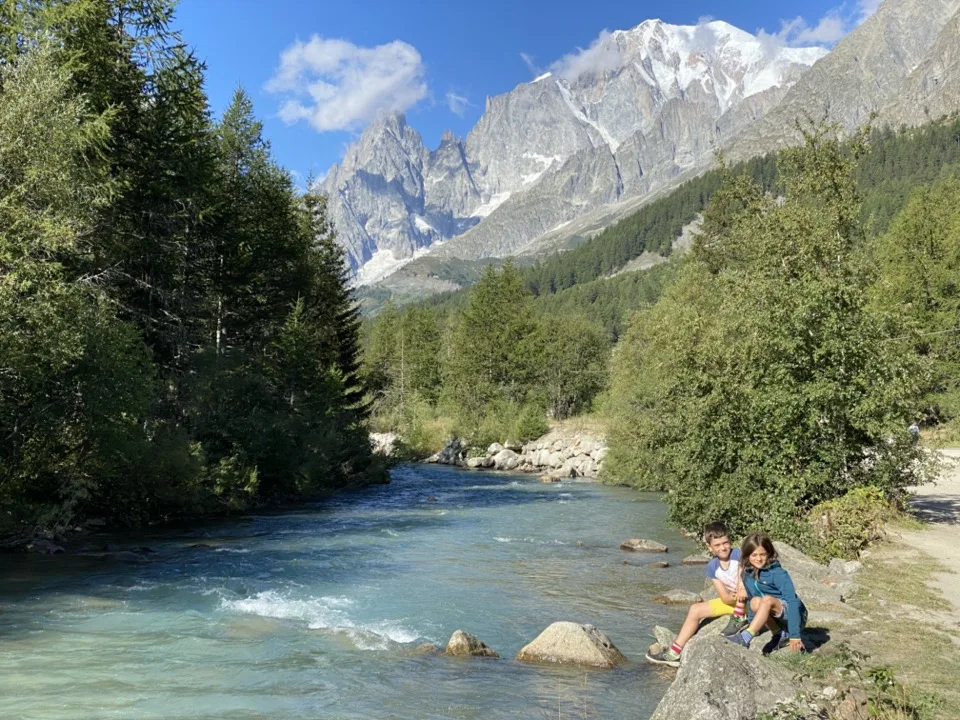
5 family hikes in the Aosta Valley

At the end of August, we set off to discover the Aosta Valley in the Italian Alps. I love exploring Italy, the country of my origins. I only knew the Aosta Valley in its snowy version, as we had skied near La Thuile on the French border during our ski week in La Rosière. This time, we discovered the Aosta Valley in summer — the perfect opportunity for some wonderful family hikes!

Even though this region is just a stone’s throw from the French Alps, it offered us a real change of scenery. The mountain landscapes are different — as are the villages and, of course, the food! All along the valley, we spotted many small hilltop castles, typical Valdostan constructions from the Middle Ages, and we even travelled back to Roman times through the ancient remains in Aosta, the region’s capital (which, by the way, offers much more than just its famous ham!).
For us, the aim of this holiday was to go hiking with the children (Ticoeur almost 11 years old and Titpuce 8 and a half). I should mention that they are used to hiking and are happy to walk — especially when it’s not too easy! 🙂 We went on hikes of very different levels, and here are all the details.

Our 5 family hikes in the Aosta Valley:

1 – Courmayeur: the Val Ferret hike

Read more