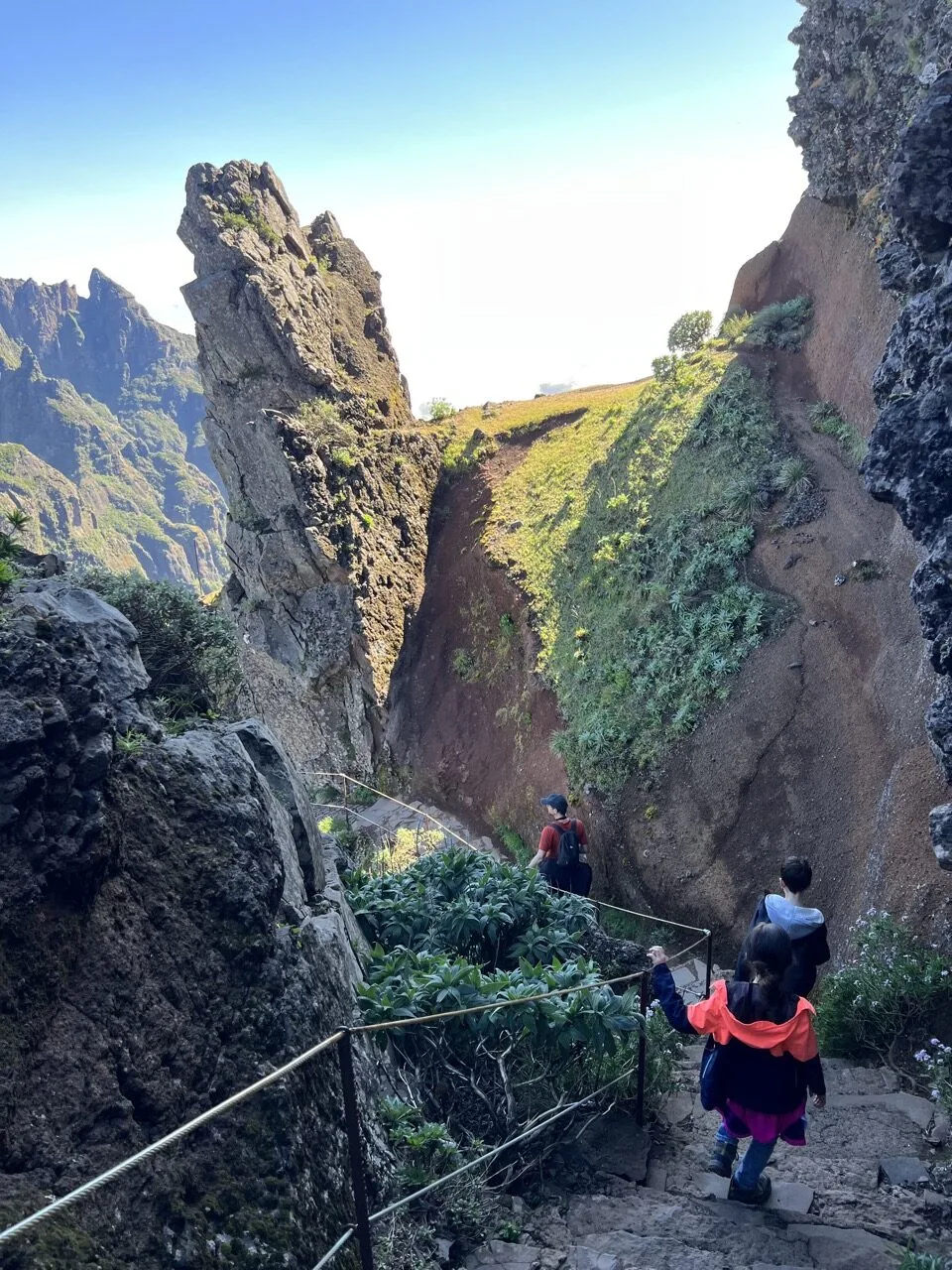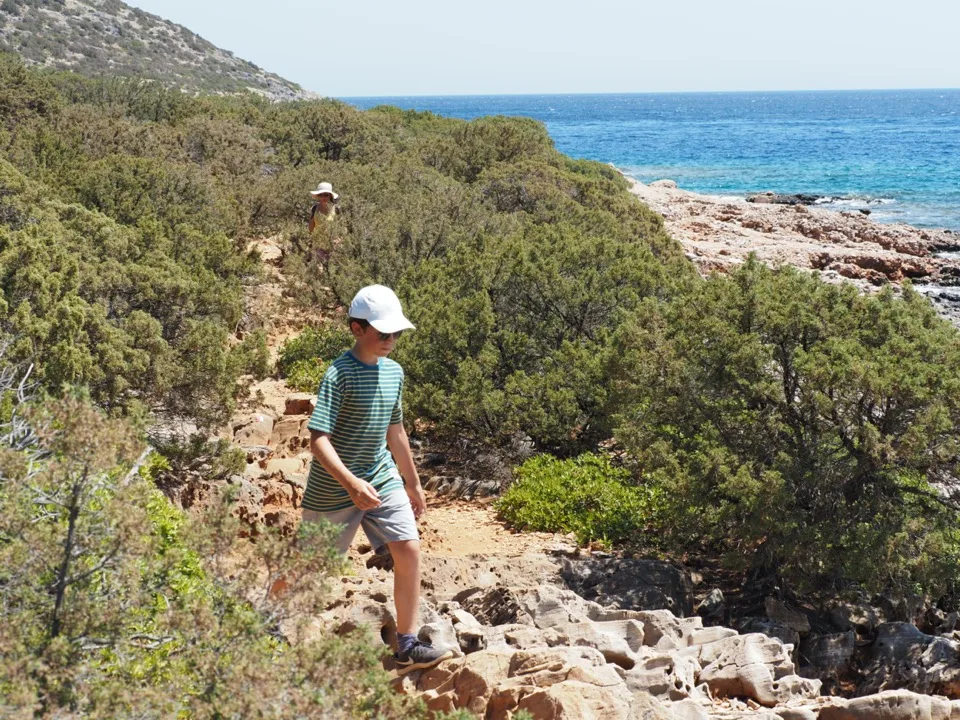

Adolescente sur le sentier montagneux entre Pico do Arieiro et Pico Ruivo

12 family hikes in Madeira

During the Easter holidays, we spent 10 days with the family in Madeira as we were looking for a destination suitable for hiking. So, we did a lot of walking during this holiday! Hikes of all levels that I wanted to describe here to help you choose among the many trails on the island. For those who don’t know us yet, I should mention that our children are good walkers with quite a bit of experience. At the time of this trip to Madeira, our Ticoeur was 13 years old and our Titpuce 11 years old. Here is the detail of our 12 family hikes in Madeira:

Hiking in Madeira: the classics

These hikes are must-dos and real classics because they allow you to discover the island’s most beautiful landscapes and their diversity. They are all quite different in terms of scenery and in terms of the walking level required. They are the most popular hikes with tourists visiting Madeira, so this is where you will encounter the most people. Hence the importance of getting up early or starting them late in the afternoon (I’ll give you the details below). Avoiding peak season is always a good choice as well. We were in Madeira at the beginning of April, which was quieter than during the French Easter holidays and quieter than at the time of the famous Flower Festival in May.

Warning! Since January 2026, you have to pay access fees (from age 12) and book your time slot several days in advance to hike on Madeira’s popular trails. More information and prices on the official website. Book all your hikes at the same time as you will benefit from a better-value package.

1/ From Pico Ariero to Pico Ruivo

Very sporty hike – duration: 4h50 – 1250 meters elevation gain

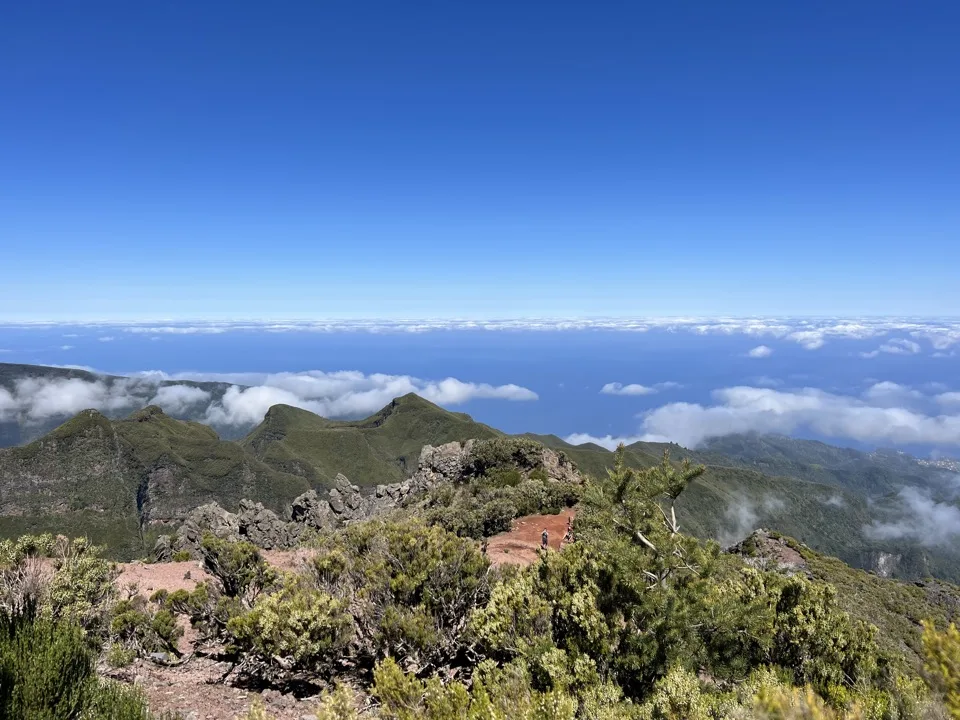
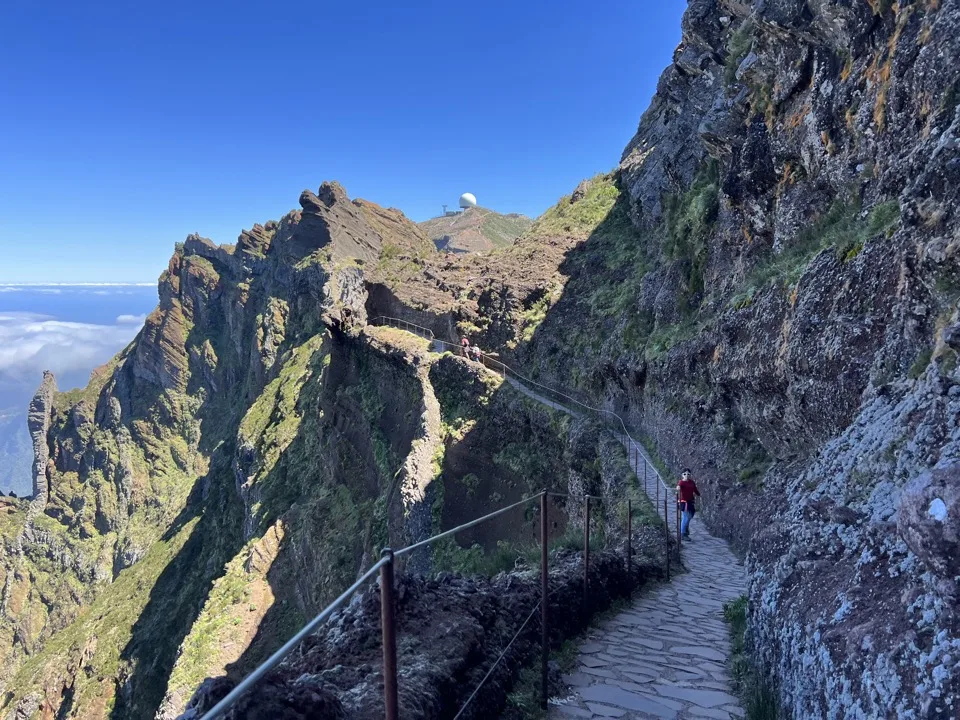
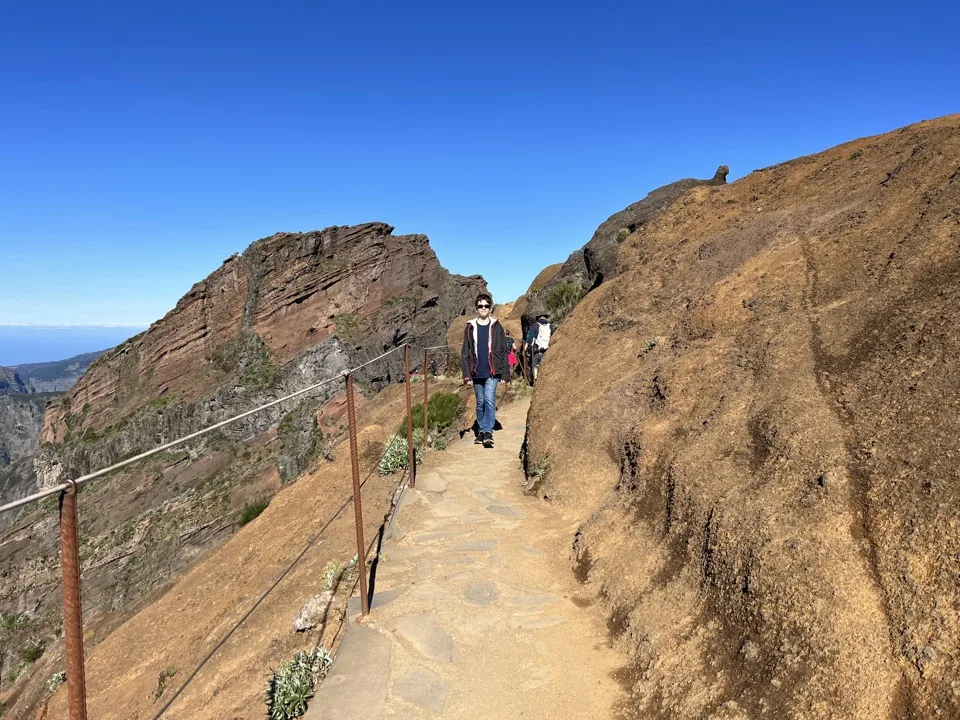
We did this hike at the start of our stay in Madeira because I knew it would require quite a bit of energy. On the first sunny day, we set off for this sporty hike. It is important to check the weather as there can be quite a few clouds and uncertainties around the island’s highest peaks. This is not a loop but an out-and-back between the two peaks. If you get tired along the way, you can turn back before reaching Pico Ruivo. I would say the first half of the route is the most beautiful, and the big climb before Pico Ruivo is long and tiring! We met people who were very exhausted and out of breath. No need to push yourself. Turn back if needed, and you will still enjoy very beautiful scenery. Also, it is possible to go to Pico Ruivo another day with a shorter hike. Returning to the trail from Pico Ariero to Pico Ruivo: it’s the essential hike that will suit families used to hiking without any problem. I classify this hike as sporty because even though the two peaks are roughly at the same altitude (just over 1800m), between the two summits you have to descend and ascend a total of +1250m and -1250m. It’s tough! We took 2h20 to go there, then 1 hour break at Pico Ruivo, then 2h30 for the return. The trail is very well maintained and very safe. You can buy drinks and a few snacks at Pico Ruivo, to recharge your sugar levels and enjoy a cold drink before setting off again.

For parking, we were parked in the large car park below Pico Ariero, about 15 minutes from the start of the hike.

Since 2026: booking required (PR1). And for this one, you need to plan well ahead as it is in high demand (around a week in advance). The access fee is also more expensive than for the others.
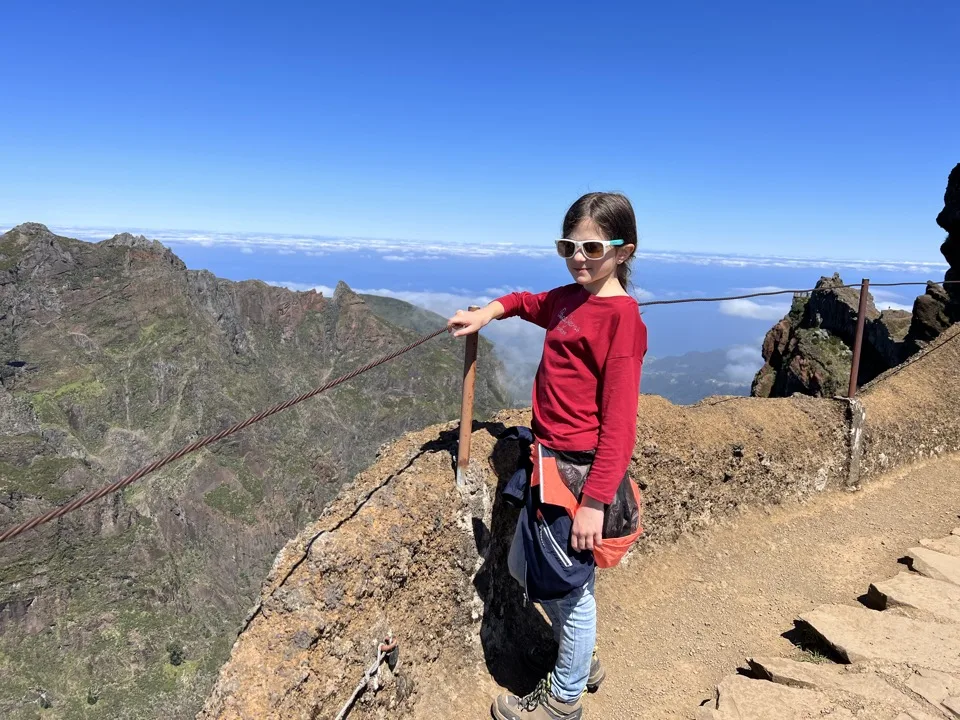
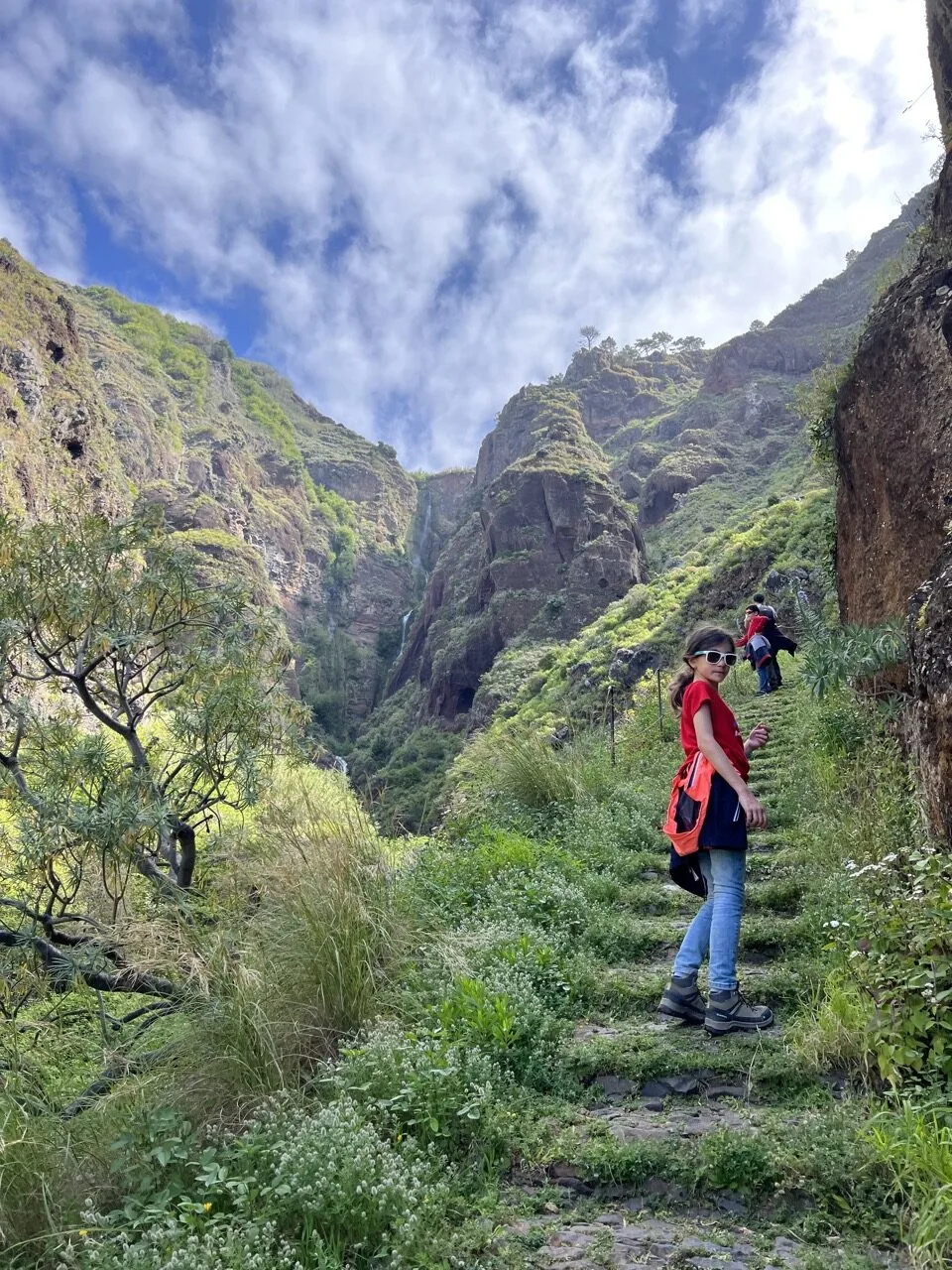
Teenager on the mountain trail between Pico do Arieiro and Pico Ruivo

Hikers on a steep ridge between Pico do Arieiro and Pico Ruivo

Protected trail through a rocky gorge near Pico do Arieiro

Madeira peaks rising above a sea of clouds
Cliff-cut trail between Madeira’s mountain peaks

2/ Mirador de Sao Lourenço

Easy hike – duration: 2h30 round trip – elevation gain: 430m

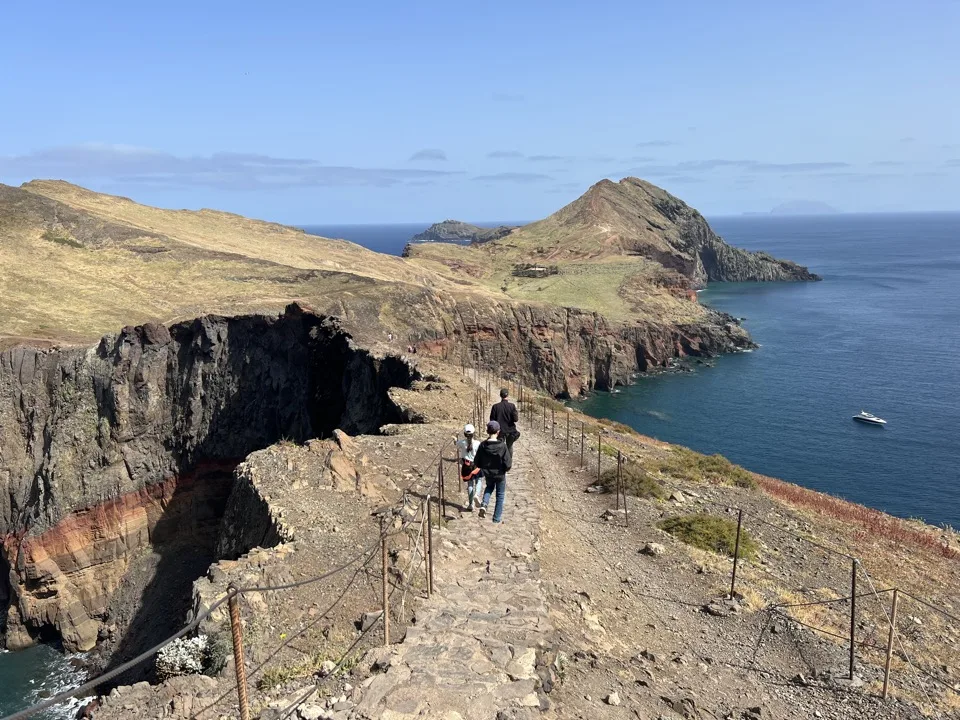
The most beautiful hike in eastern Madeira! A real favourite! We started it late in the afternoon, at 4 p.m., and it was really ideal because the other hikers were finishing, leaving the area deserted. In addition, the light was magnificent. We recommend this time of day. No problem finding a parking space since tourists were leaving. This is an out-and-back hike to the tip of a peninsula. There are numerous stops with panoramic views and a small climb towards the tip. The trail is very well maintained and marked. In summary, it’s an easy hike for families who enjoy walking.

Since 2026: booking required (PR8).
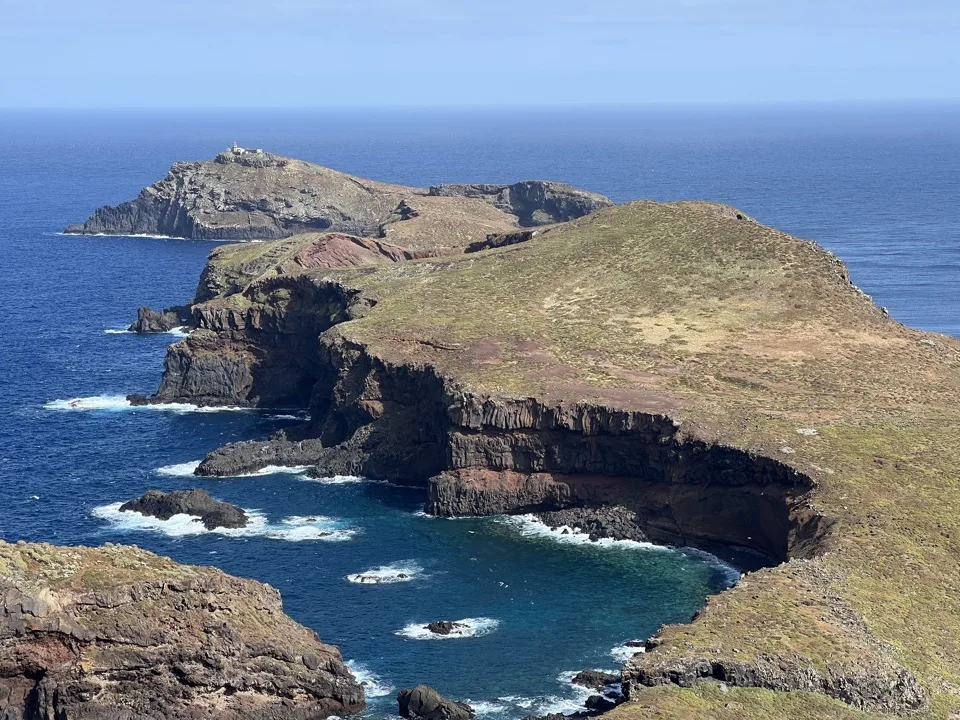
Volcanic cliffs on the São Lourenço peninsula
Hikers on the São Lourenço peninsula trail

3/ Mirador des Balcoes

Very easy hike – duration: 40 minutes round trip – flat

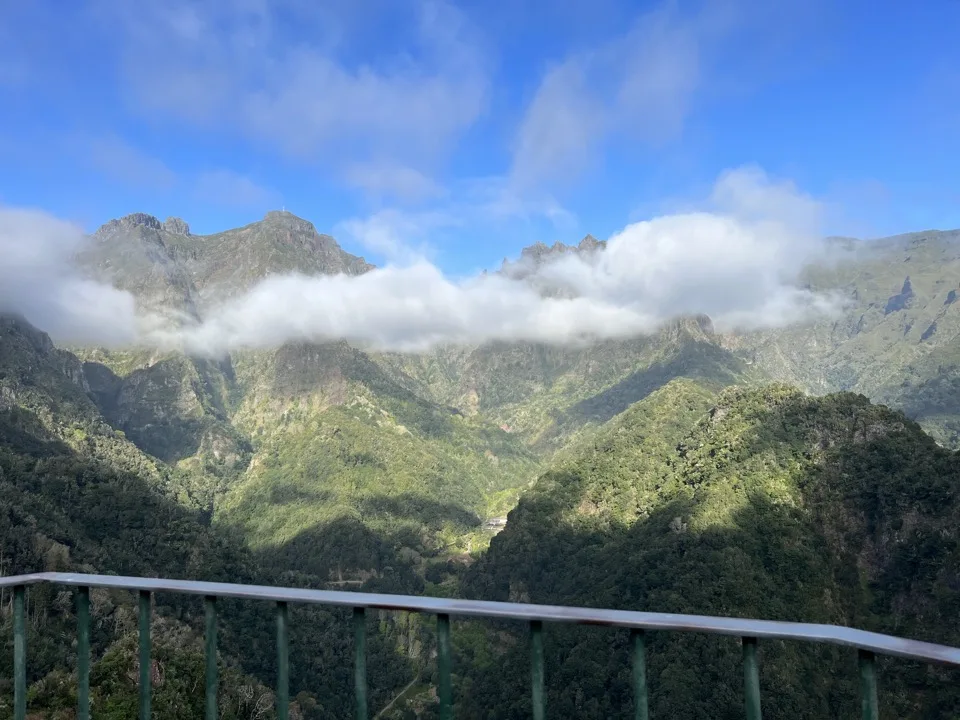
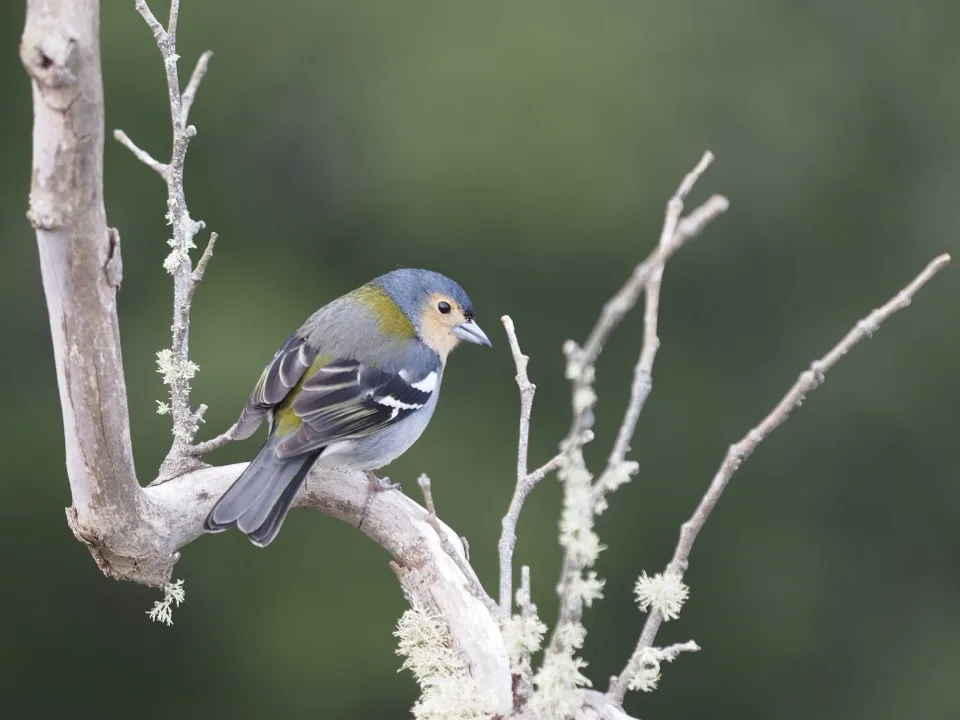
A very popular place but in the early morning, there was almost no one! Walking along an old levada is short and very easy. We were there at 9 a.m. and stayed for an hour, waiting for the clouds to leave the peaks. In the meantime, we were accompanied by Madeira’s blue chaffinches.

We parked at the roadside near John’s Poncha bar.

Since 2026: booking required (PR11).
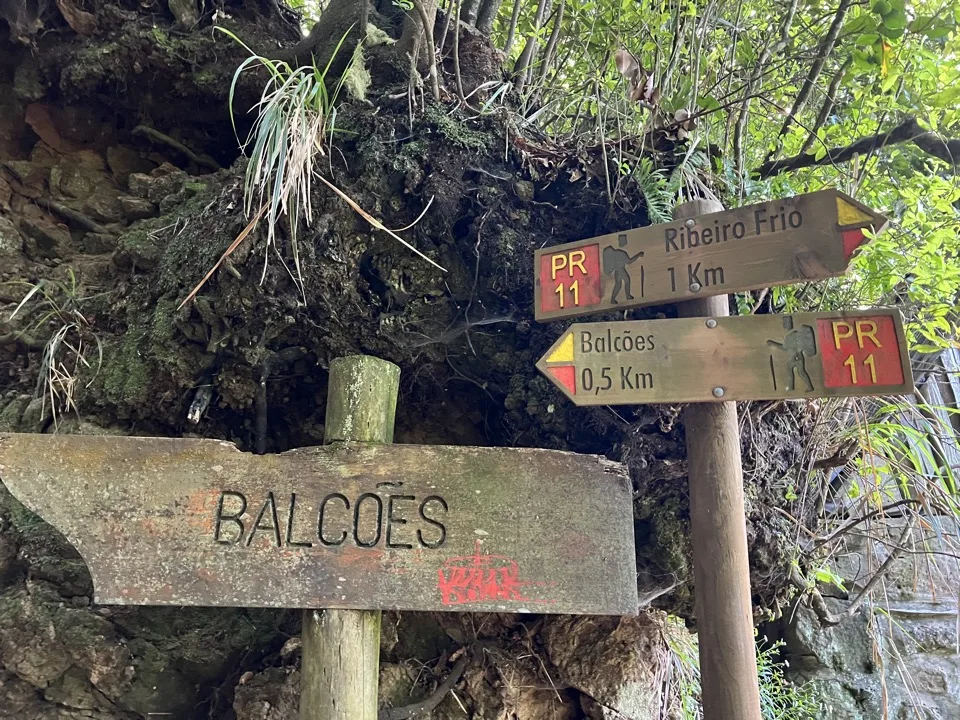
Signpost to the Balcões viewpoint on the PR11 trail

View of green mountain peaks from the Balcões viewpoint

Madeira blue chaffinch perched on a branch

4/ The Fanal

Very easy – duration variable according to your wishes.

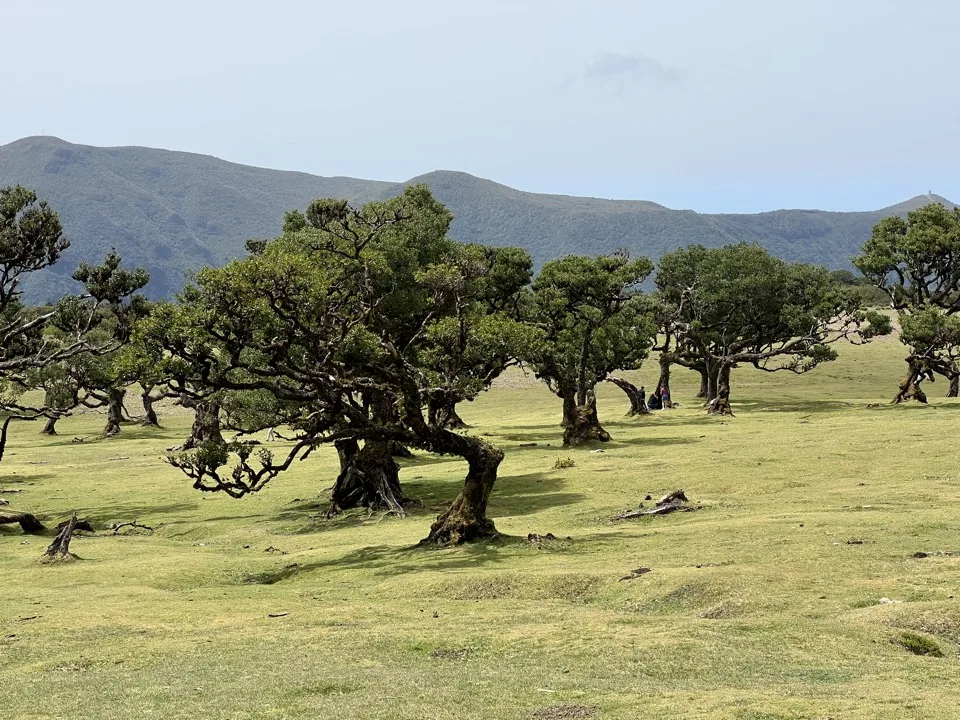
The Fanal is an area located in the highlands in the west of the island, in the heart of the primary forest. There is a group of laurels dating back to prehistoric times. These ancient trees inspire the imagination. This laurel forest is often misty, making it even more mysterious. It is more of a long walk than a hike. In any case, it’s very easy and family-friendly. We stayed there for a good two hours. At weekends, locals come here for picnics. There is a large car park on site.

Since 2026: it is no longer possible to wander freely among the trees. You have to follow a short walking circuit that goes around them.
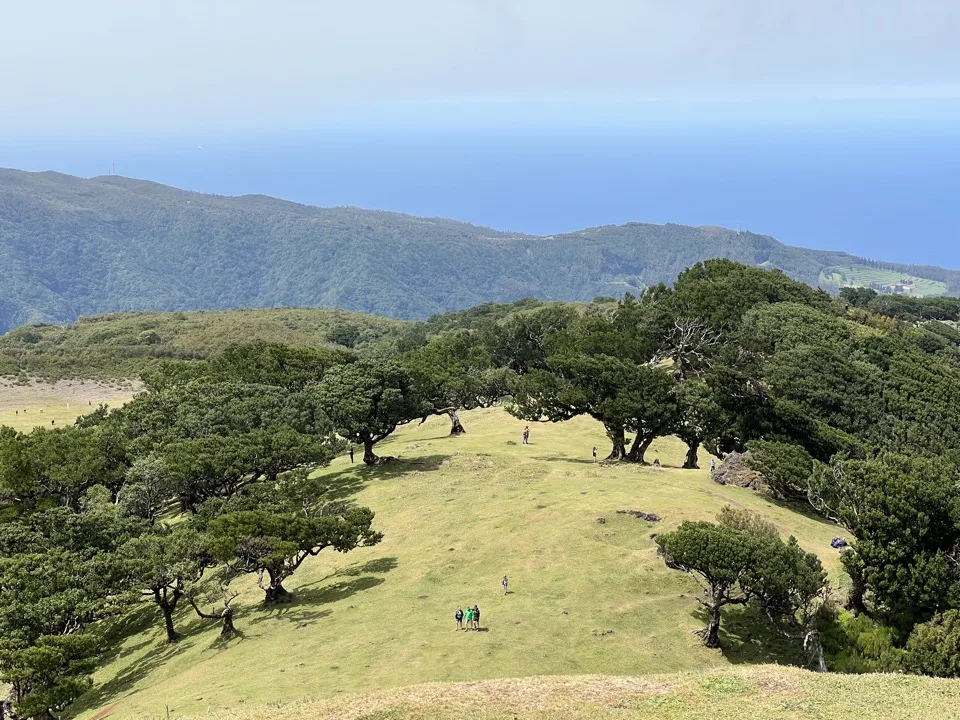
Fanal clearing surrounded by ancient laurel trees

Gnarled laurel trees in the Fanal forest

Be aware of very changeable weather!
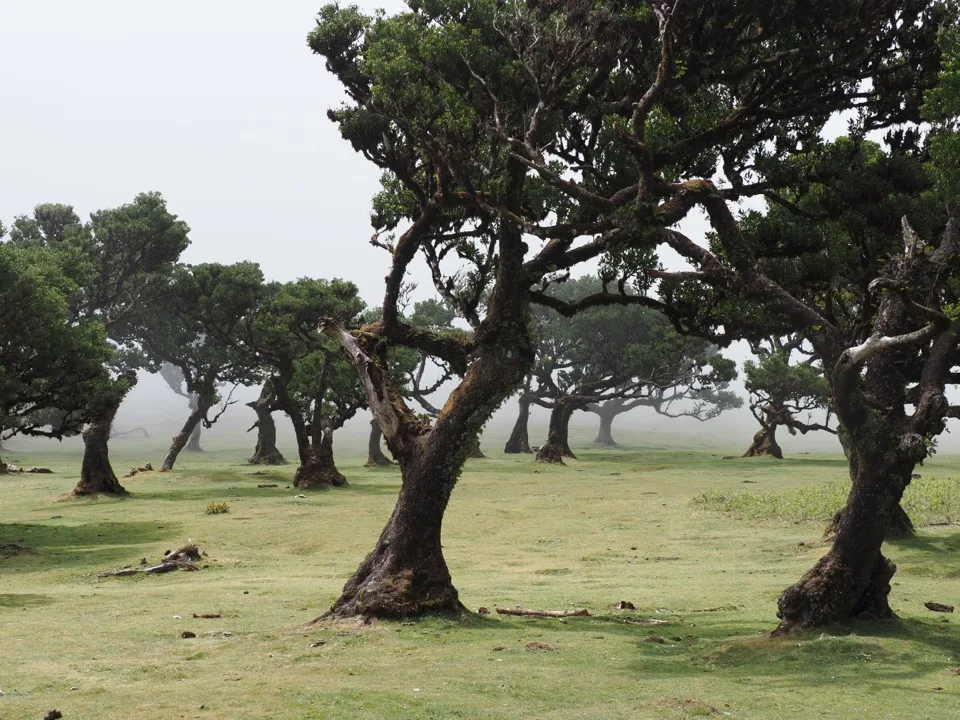
Ancient laurel trees in the misty Fanal forest

5/ Levada das 25 Fontes

Easy, with optional variants adding some elevation – duration: 2h30 round trip to the 25 springs (4h if you include the Alecrim levada variant).

The 25 Springs is the hike I had heard a lot about in terms of crowds. Once again, by arriving at 8:30 a.m. at the car park (on ER 105), we hardly met anyone. However, since it’s an out-and-back along a levada, the risk was passing people on the return leg. To avoid this, Papa Voyage decided to extend the hike by combining it with the Levada do Alecrim via Paul da Serra. This allowed us to see other landscapes and be alone on the link between the two trails. At the end, we looped back to return to the car park at the start of the 25 Springs hike.

The 25 Springs waterfall, the main goal of the hike, is really very beautiful, surrounded by primary forest. We reached it in 1h15. We stayed to admire the large waterfall for quite some time before the first groups arrived. So clearly, it’s worth it, and we just advise being early risers. From the waterfall, you can simply retrace your steps along the same route or take a variant. There is no difficulty on the 25 Springs levada or the Alecrim levada, but there is a greater elevation gain (400 m steep climb) if you want to link the two.

Since 2026: booking required (PR6).
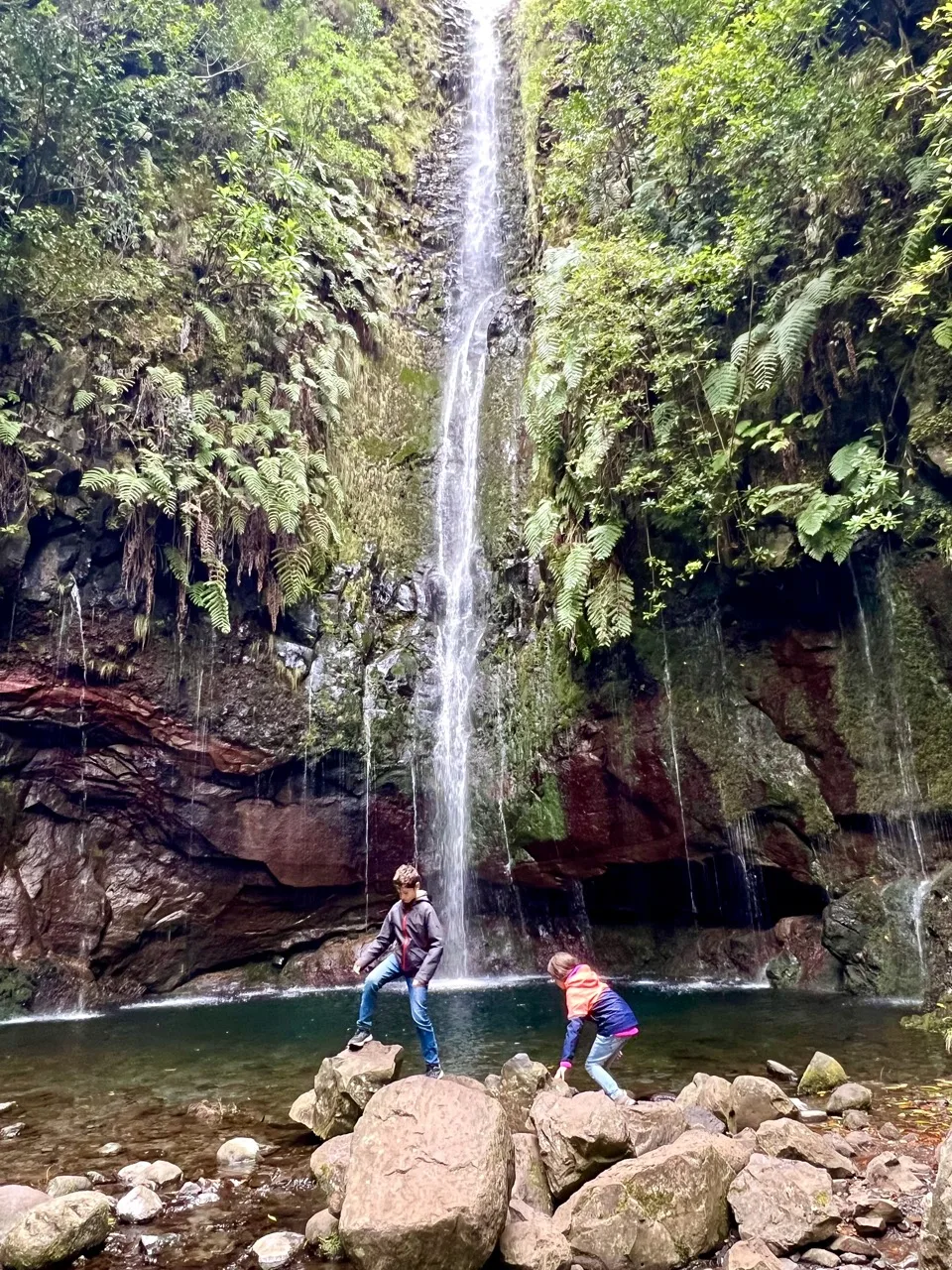
25 Fontes waterfall in the heart of Madeira’s forest

The path to reach the 25 Springs is very easy:
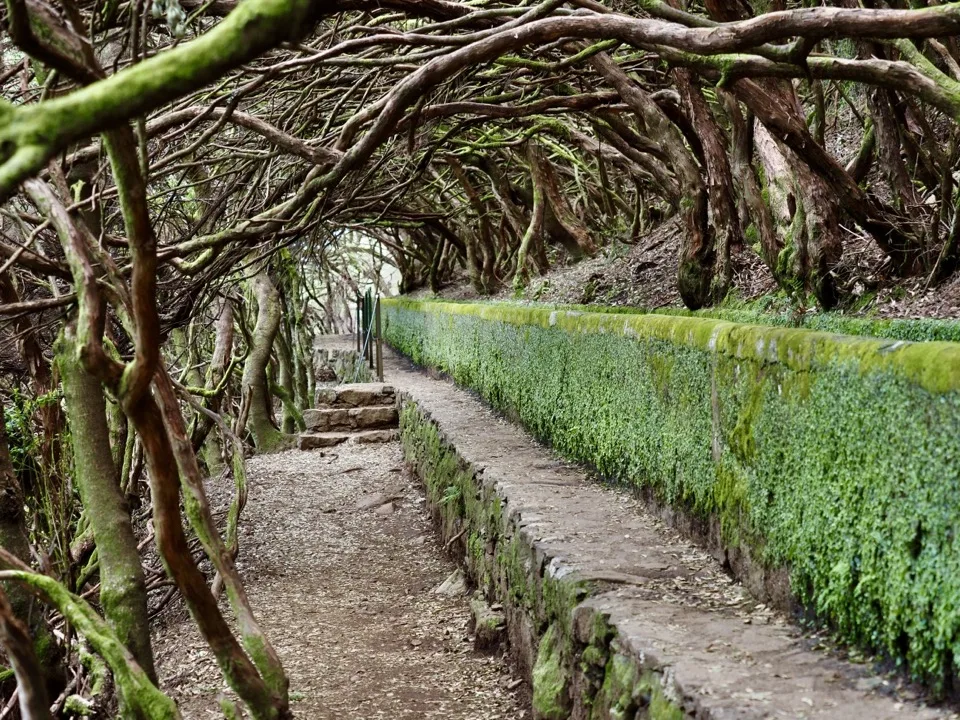
Path beside a levada beneath an arch of trees

However, on our return variant, we had a good climb to this viewpoint (Paul da Serra) before joining the Alecrim levada.
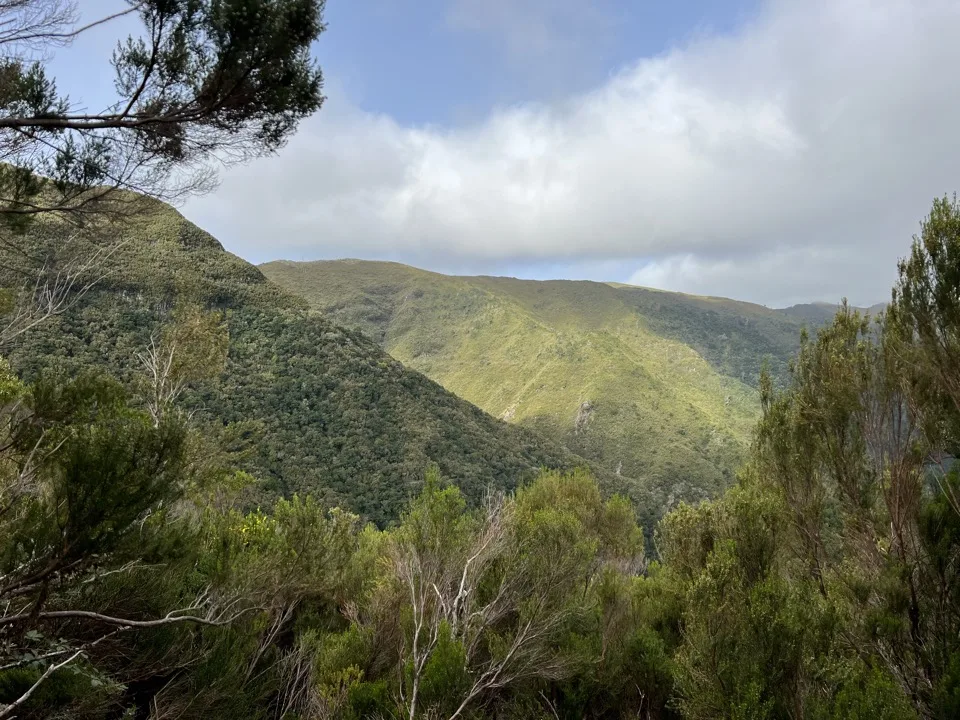
Mountain panorama viewed from Paul da Serra

Easy hikes to continue exploring Madeira with the family:

6/ Levada Ribeira da Janela

Easy – duration: 2h15 round trip.

A typical Madeira hike, flat along a levada with eucalyptus trees. You pass through a few tunnels, but they aren’t too long. Very classic. Not our favourite hike, and the small waterfalls didn’t have much water, but it’s nice if you’re in the area (northeast) and looking for an easy route. There were beautiful green walls. This combines well with a visit to the pools of Porto Moniz.

Since 2026: booking required (PR15).
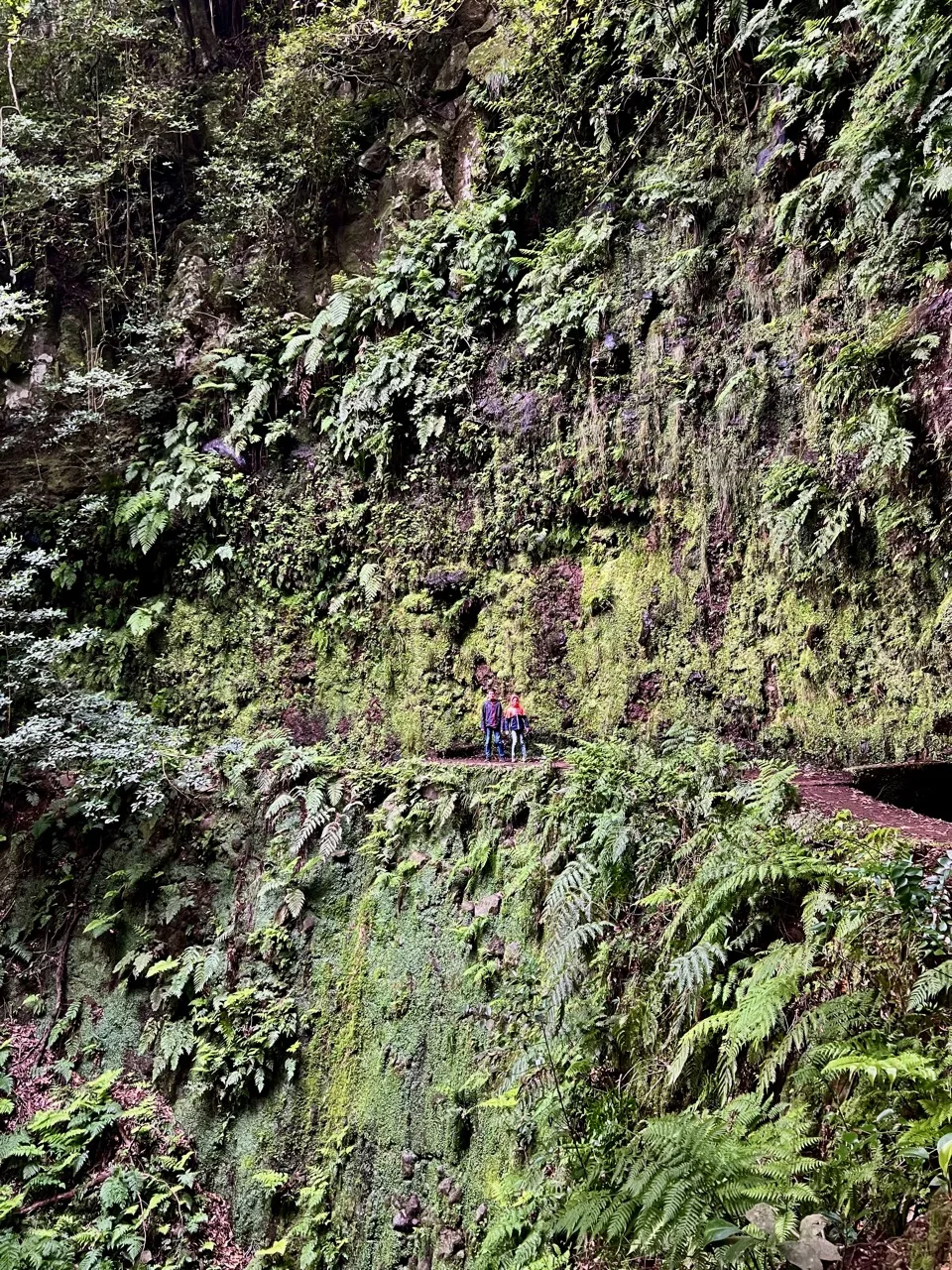
Fern-covered wall beside the Levada Ribeira da Janela

7/ Lombada da Ponta do Sol: the Nova and Moinho levadas

Easy – duration: 2 hours round trip.

Another very easy and very safe hike, similar to the previous one, with a small waterfall along the way.
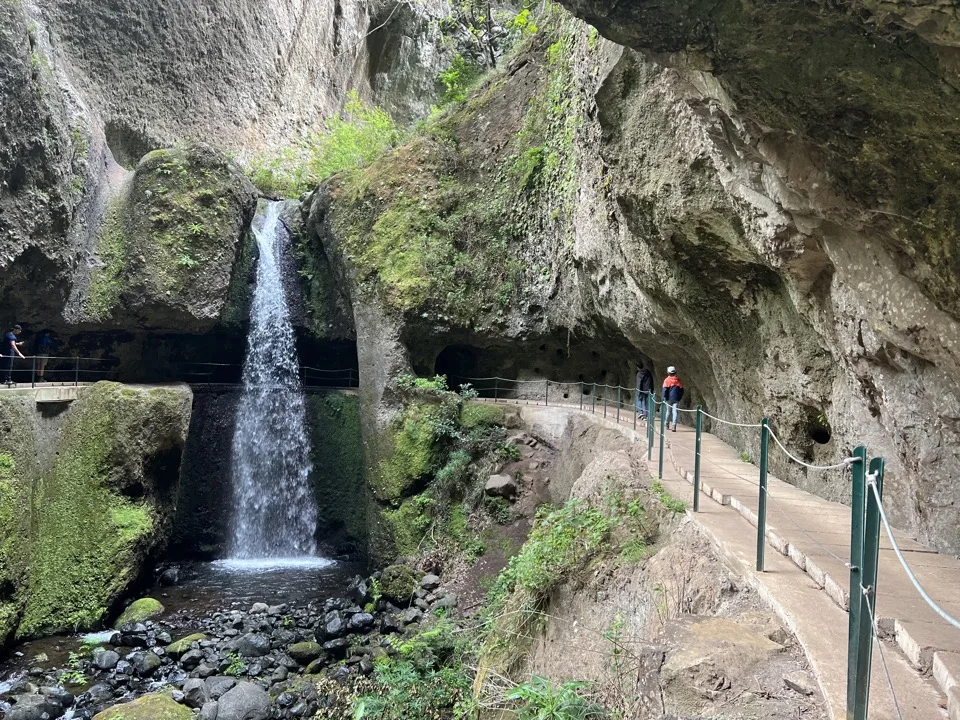
Waterfall crossing the Levada do Moinho trail

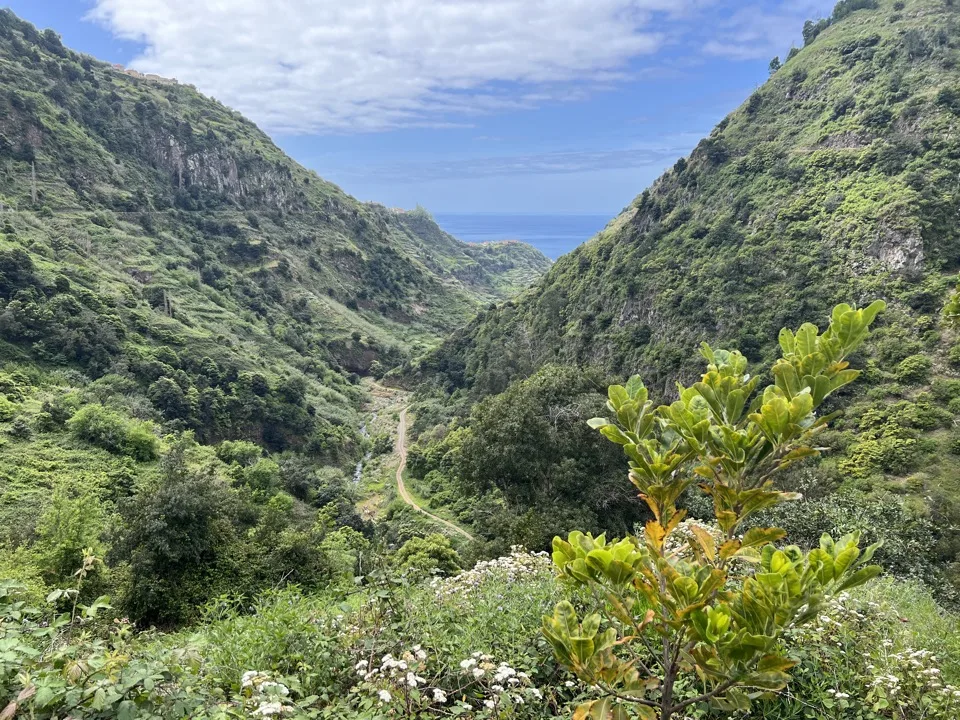
Green valley viewed from the Ponta do Sol levadas

8/ Levada Faja do Rodrigues

Moderate difficulty – duration: 2h round trip.

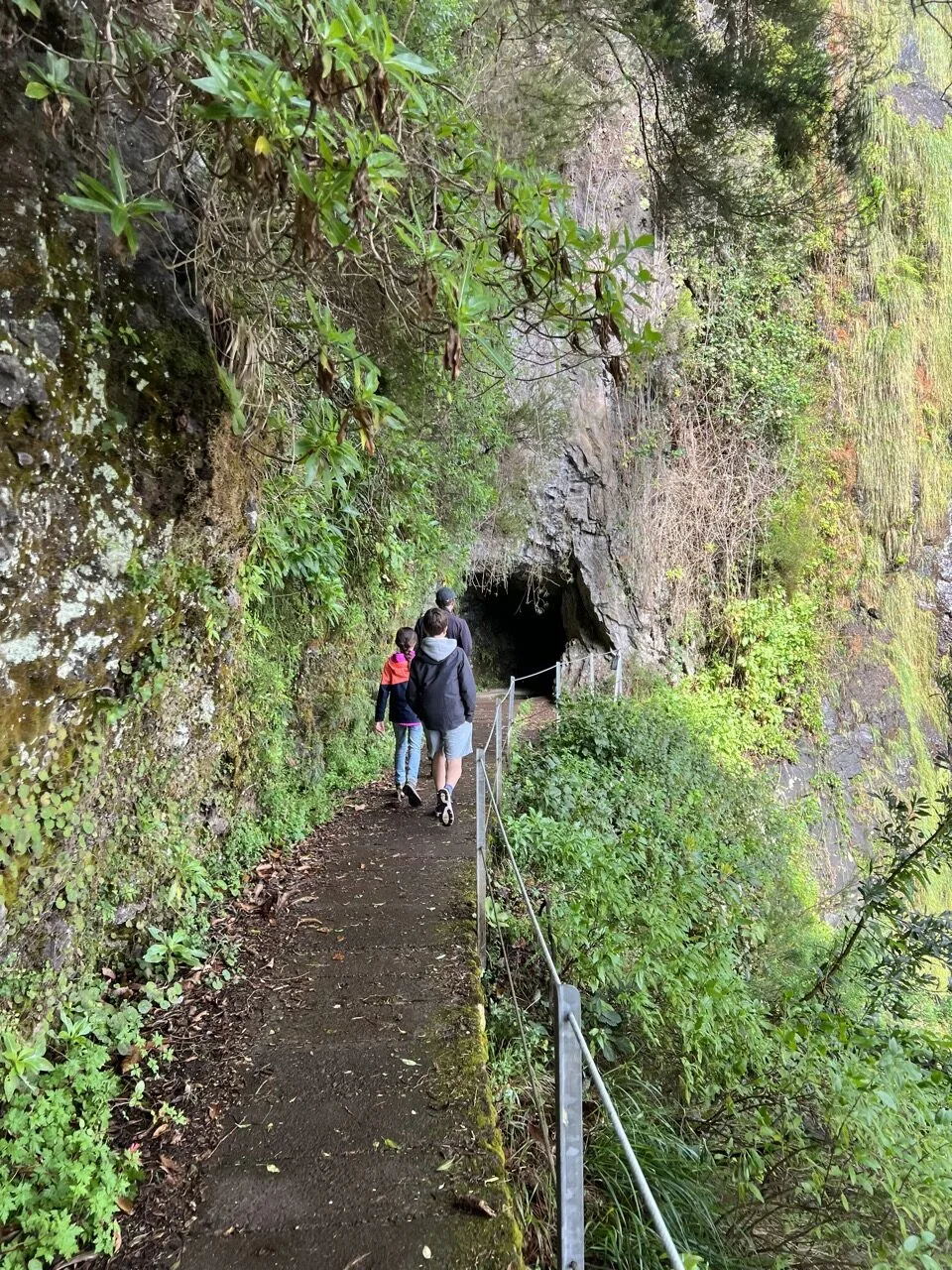
Compared to the previous levadas, I rated this as moderate difficulty because the tunnels are really long, dark, narrow, and damp! You need to concentrate to avoid falling into the canal. And above all, you must not be claustrophobic! Normally, I have no problems, but here I must admit I was really looking forward to seeing the end of the tunnels, especially the one over a kilometer long! Another issue with a long tunnel is that it’s very difficult to pass other people. We only met three couples, but passing each other along the canal edge was tricky!
Finally, in this part of Madeira (the north), the climate is wetter, so the weather does not always make this hike easier! In short, it’s more for the adventurous, even if the terrain is flat! The brave will be rewarded with extremely lush vegetation, a jungle-like atmosphere!

Since 2026: booking required (PR16).
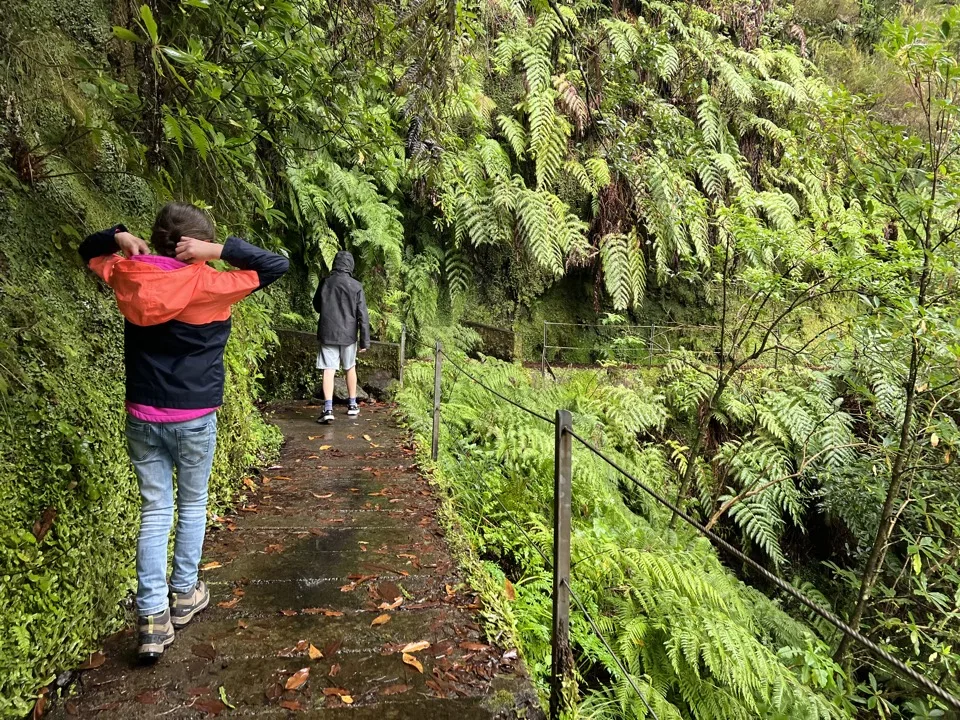
Family walking beside the Levada Fajã do Rodrigues

Tunnel entrance on the Levada Fajã do Rodrigues
As often in Madeira, you walk through eucalyptus forests! They smell so good!
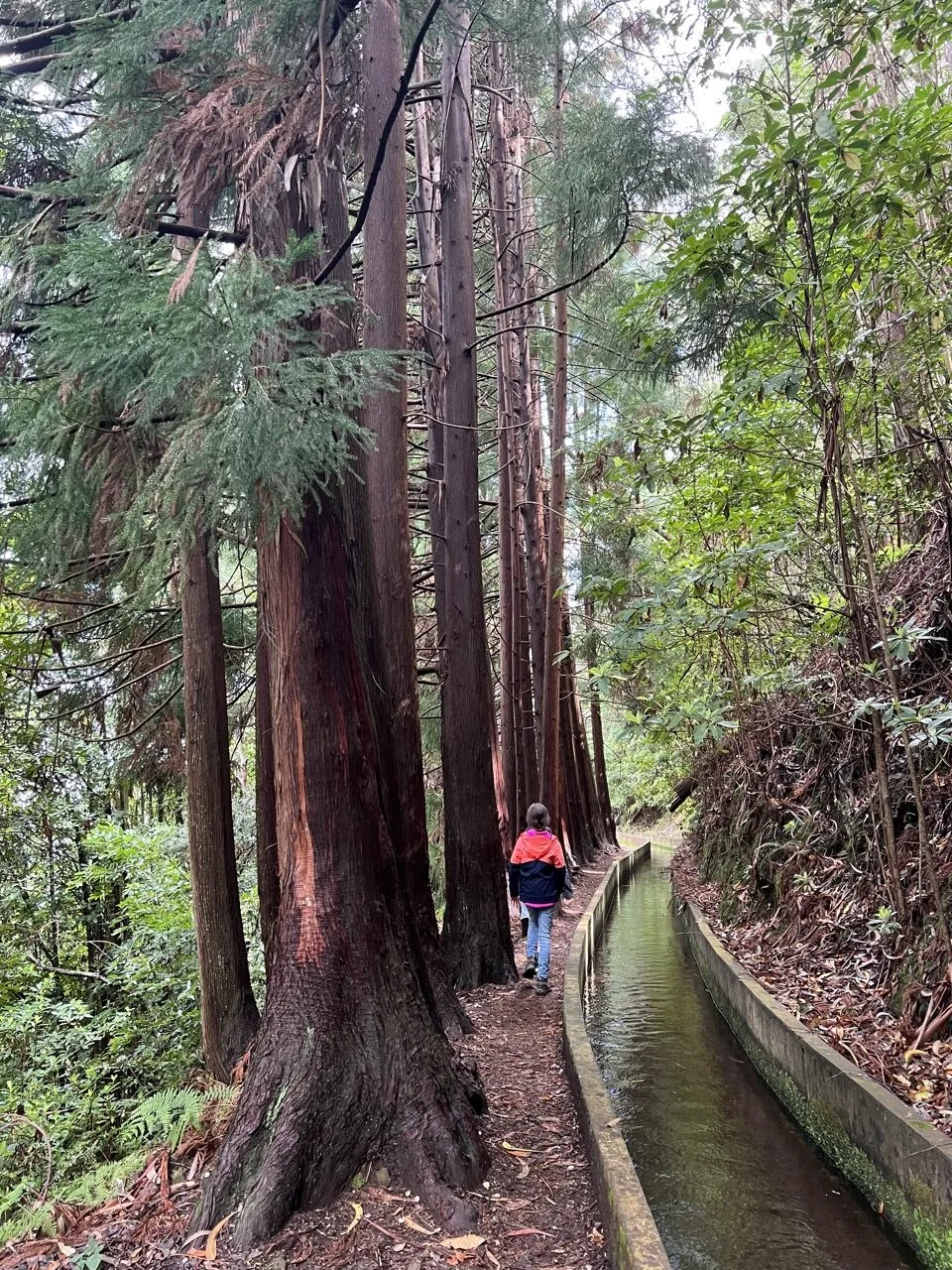
Hiker beside a levada in a eucalyptus forest
In the next photo, you can get an idea of the inside of a tunnel, and even then, there are passages where the edge is narrower. You need to watch your balance. I sometimes had to steady myself by putting my hand on the opposite wall.
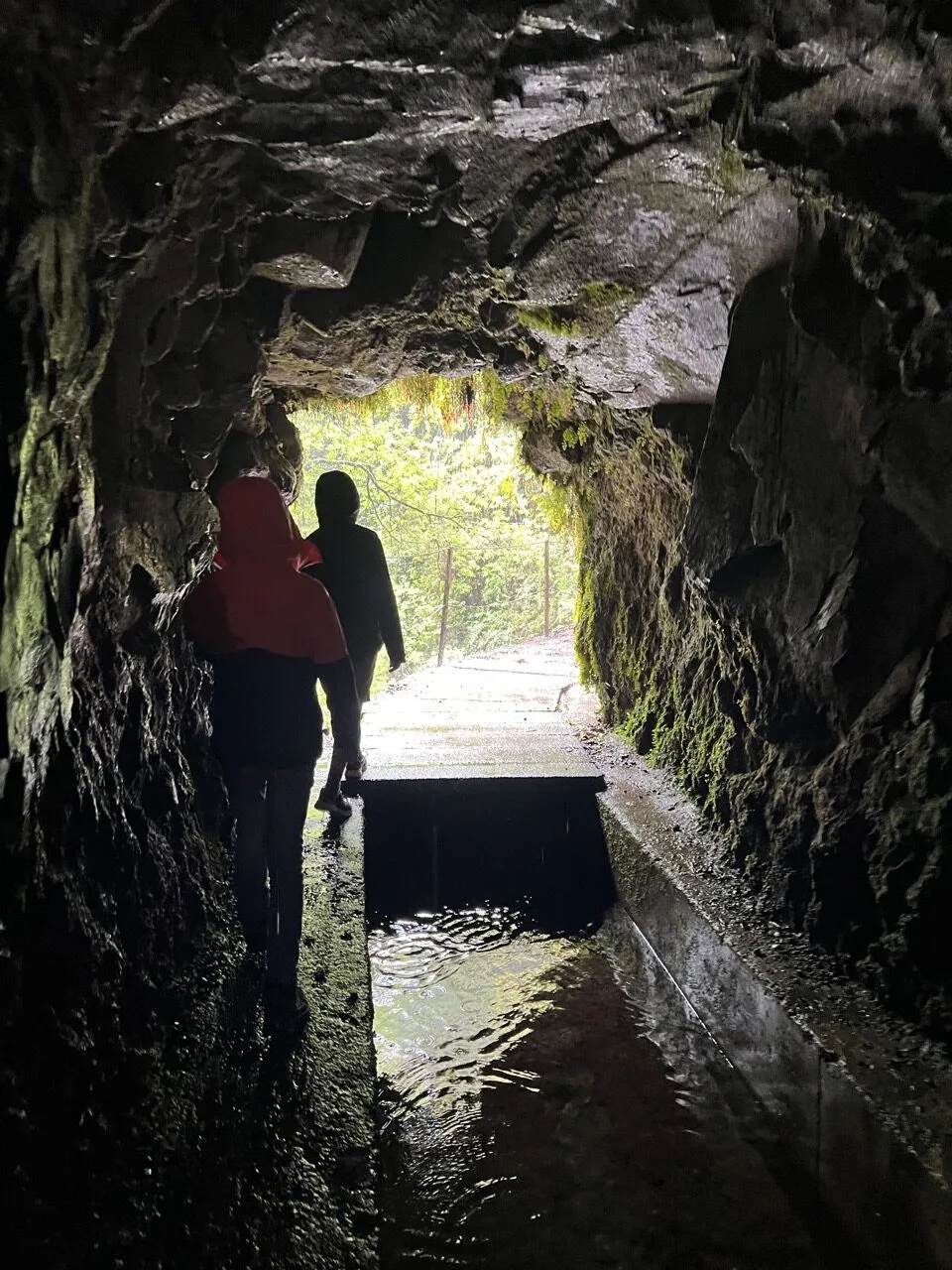
Hiker inside a narrow tunnel on the Levada Fajã do Rodrigues

When you’re not in a tunnel, there are beautiful views 🙂
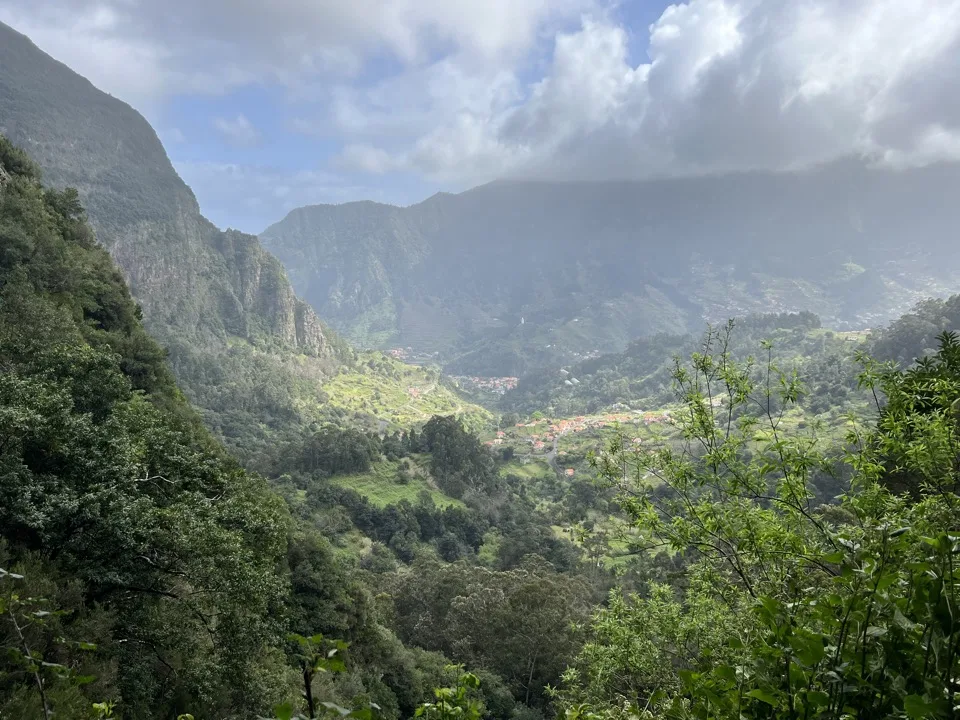
Lush mountain valley viewed from the Levada Fajã do Rodrigues

9/ La Ponta do Poiso

Very easy – duration: 30 minutes round trip.

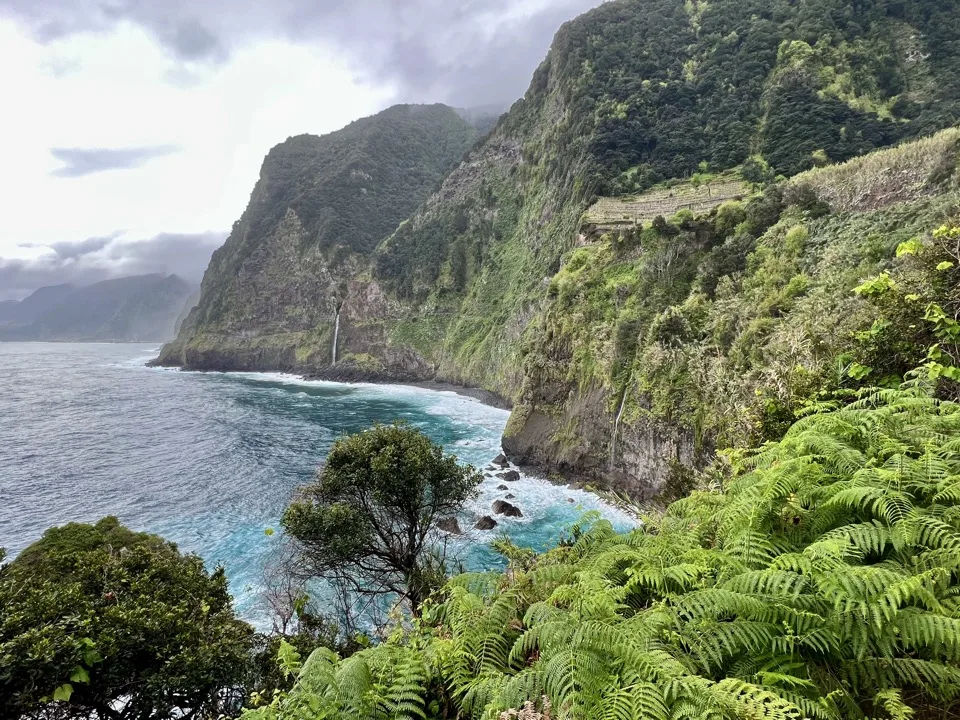
It’s a mini hike on a maintained path offering views of the Veil of the Bride waterfall. Not essential, but if you happen to be nearby along the north coast, why not!
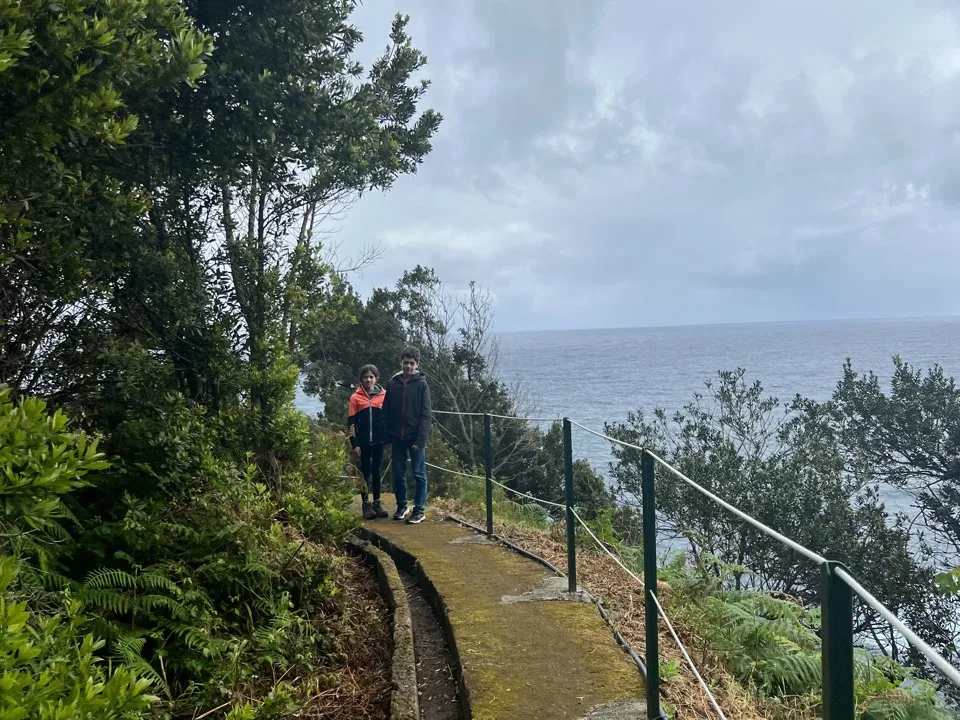
Family on the maintained path at Ponta do Poiso
Madeira’s steep coast viewed from Ponta do Poiso

Hiking in Madeira: off the beaten track

10/ Camino Real Mirador de Sao Cristovao Boaventura

Easy to moderate hike – duration: 2 hours round trip.

I classify it as “off the beaten track” because we were alone there! Perhaps this hike is further from tourist spots. We started at the Sao Cristovao restaurant, where we had a light lunch and left the car. The view from the restaurant terrace is very beautiful. Then, we climbed onto the trail along the sea, up to the café-restaurant O Arco.
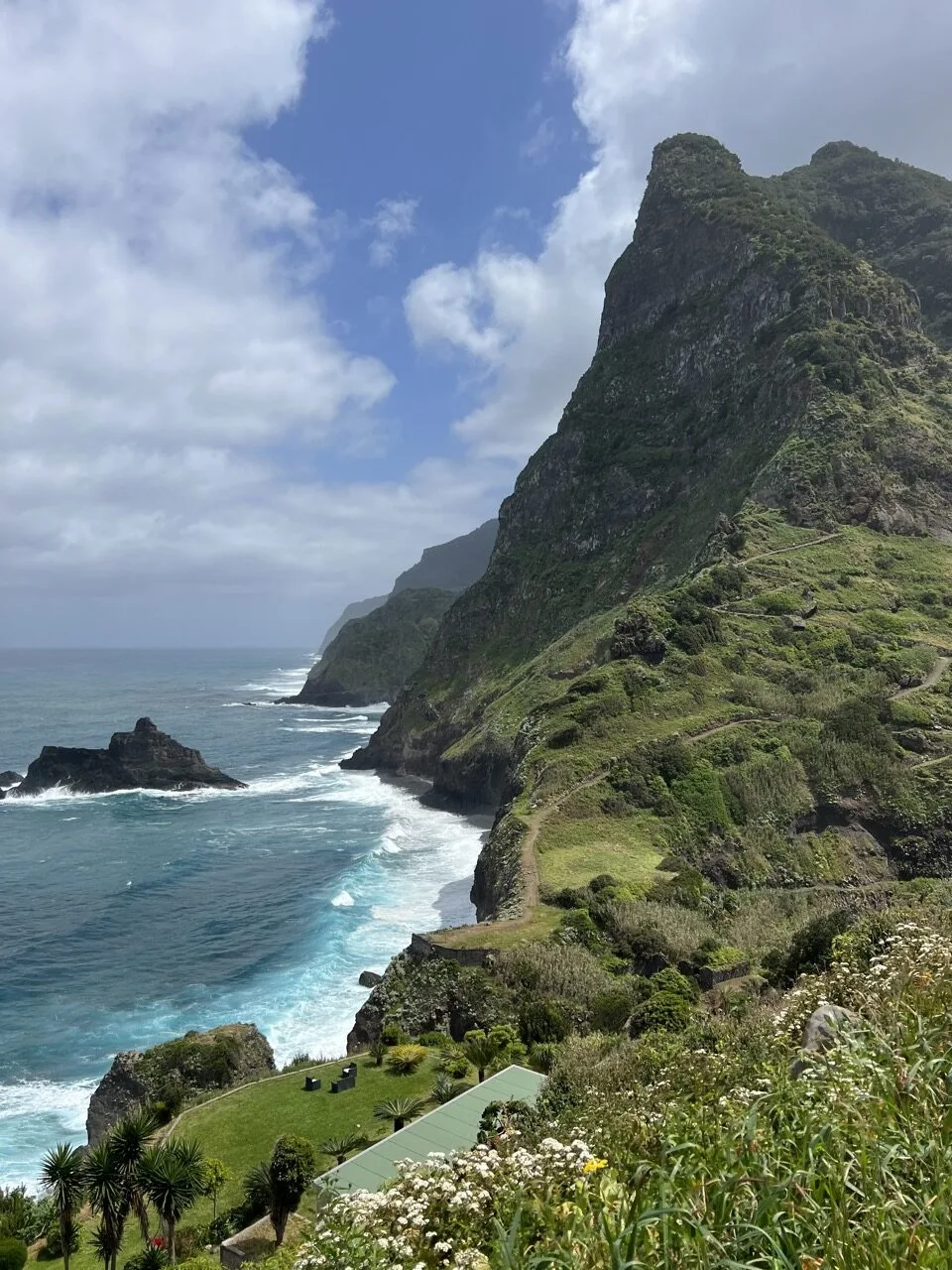
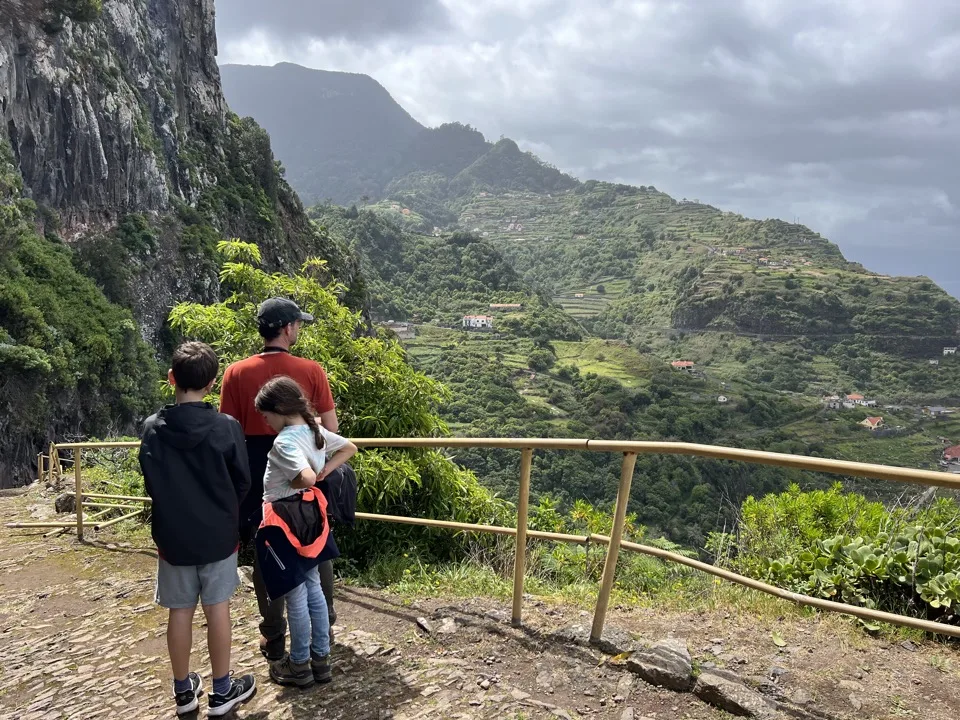
Camino Real trail above Madeira’s north coast

Family from behind on the Camino Real (Madeira)

Green headland dropping into the ocean in northern Madeira

Family looking across the mountains from the Camino Real

11/ Loop near Paul do Mar

Sporty hike – duration: 5-hour loop.

A beautiful hike in southwest Madeira. It was highly recommended by our Airbnb host. The difficulty is the elevation gain and exposure to the sun. Additionally, from our accommodation, we almost started at the highest point (in Faja da Ovelha), so the beginning was easy with a steep descent to Paul do Mar. It’s tricky when you start with the easiest part! Once at Paul do Mar, by the sea, you have a tough, very sporty climb. We didn’t meet anyone on this route. A bit long and exhausting but with varied, beautiful viewpoints. Normally, we would have found snack bars at several points on the route, but we had forgotten that everything was closed on Good Friday!! We had enough water and a few biscuits but were starving at the end!

Since 2026: booking required (PR19).
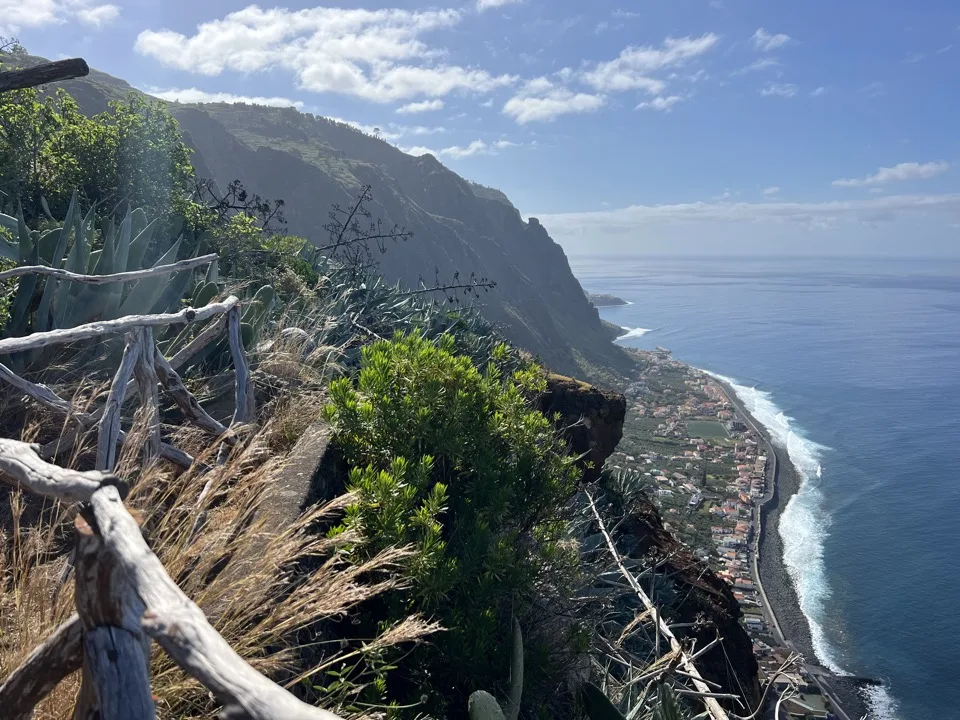
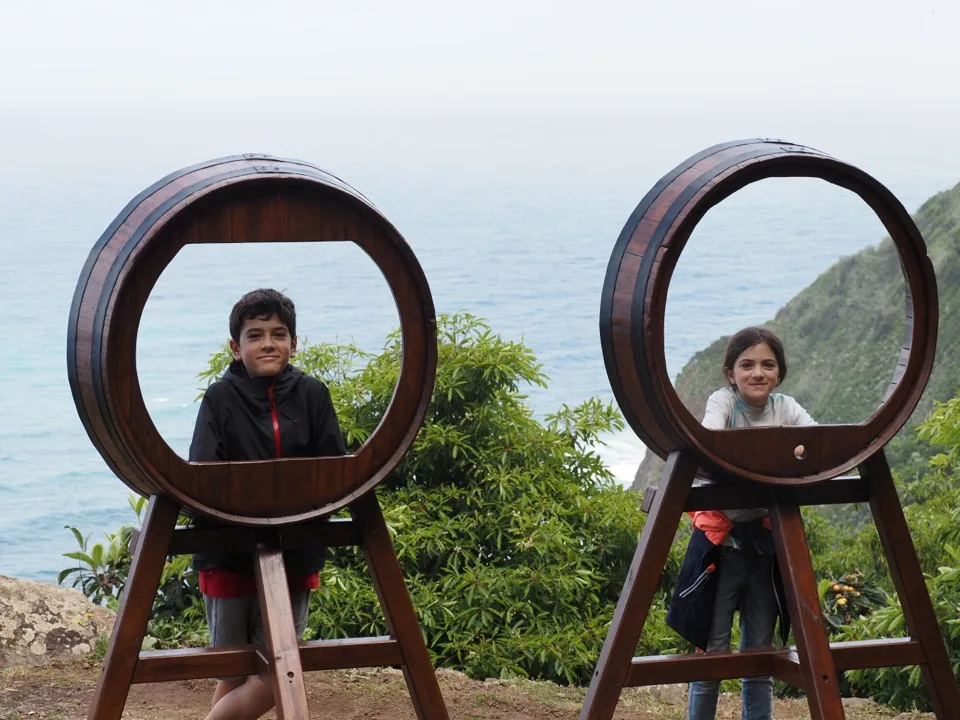
Children sitting in circular seats near Paul do Mar

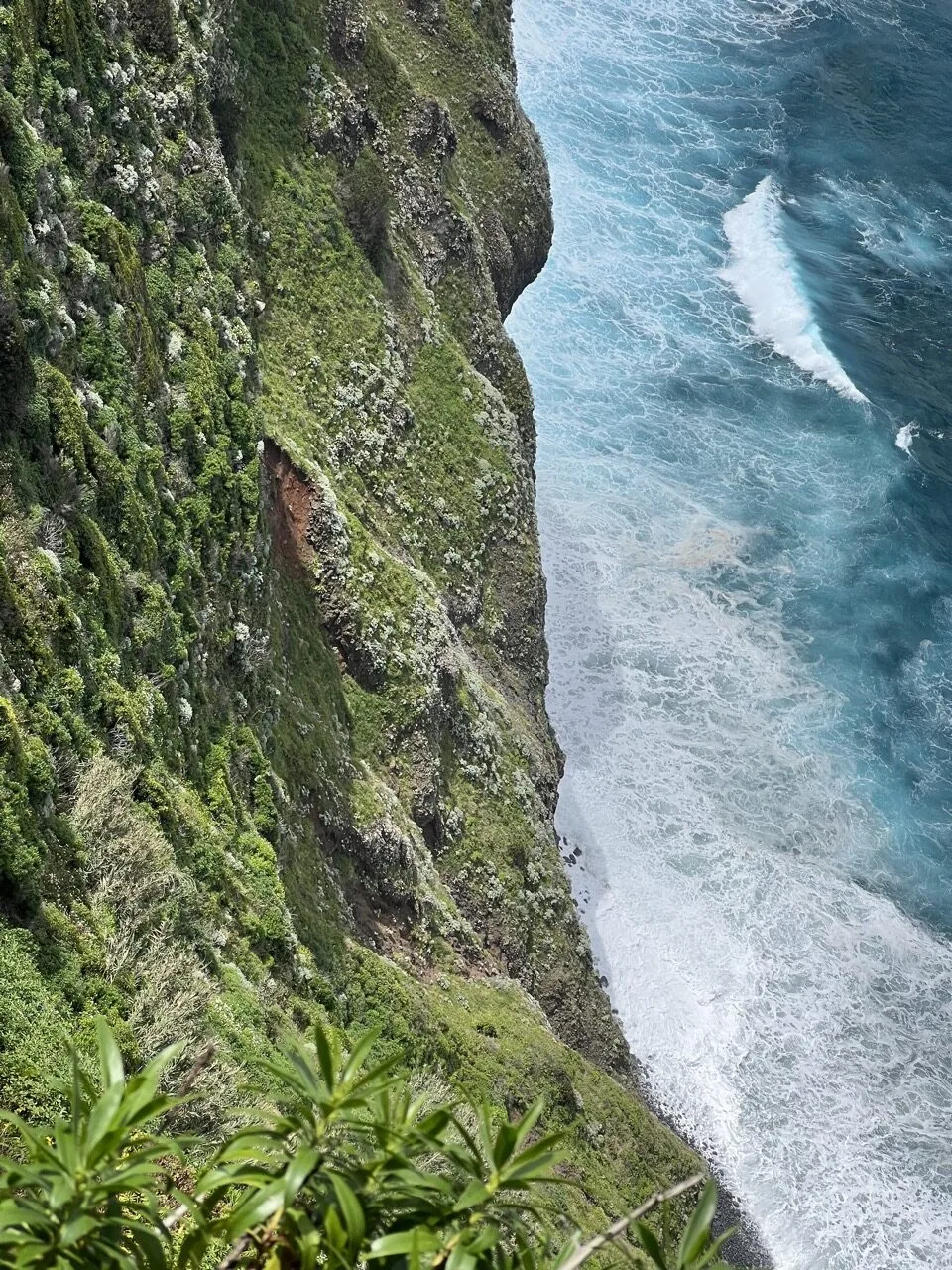
Steep trail overlooking the ocean near Paul do Mar
When it’s time to climb back…
View down to Paul do Mar from the coastal trail

12/ Verada do Lorano hike

Level: moderate – duration: variable round trip.

A very beautiful coastal path, perched on a cliff. The views are incredible! But this hike is not that easy and clearly off the beaten track. We started just above Porto da Cruz and followed the fairly narrow and unsecured path for an hour before turning back. It’s not narrow enough to be risky, but you have to watch your step, so it’s not suitable for young children who wouldn’t be careful. Ticoeur and Titpuce are attentive and careful. We mostly walked in single file. The panorama is worth it, but take care! From what I read online, some hikers go much further along the coastal path and take a taxi back to their starting point.
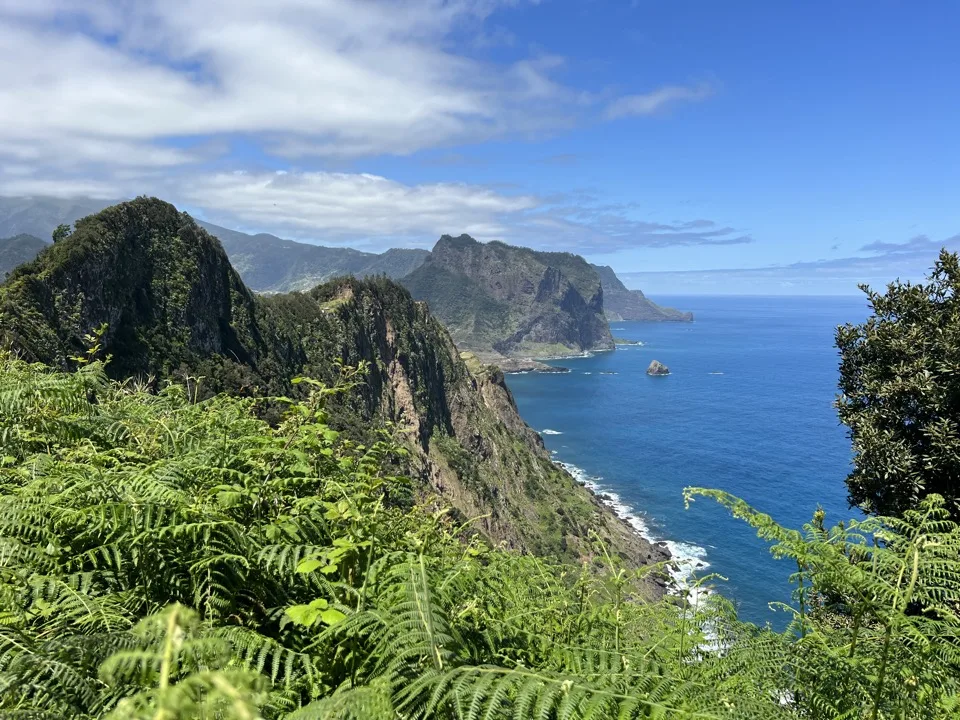
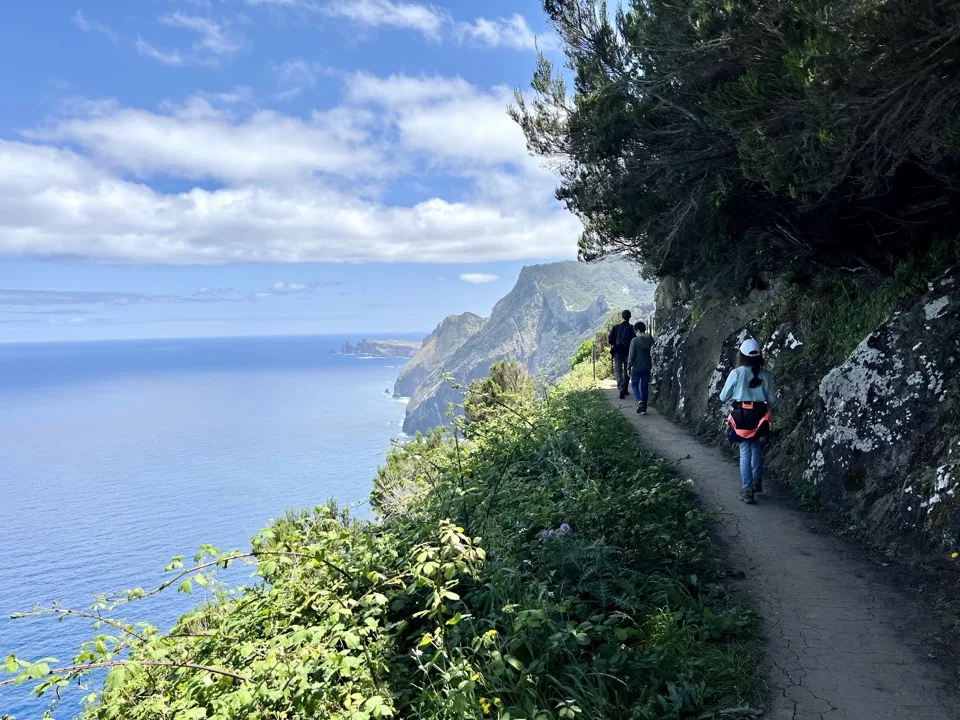
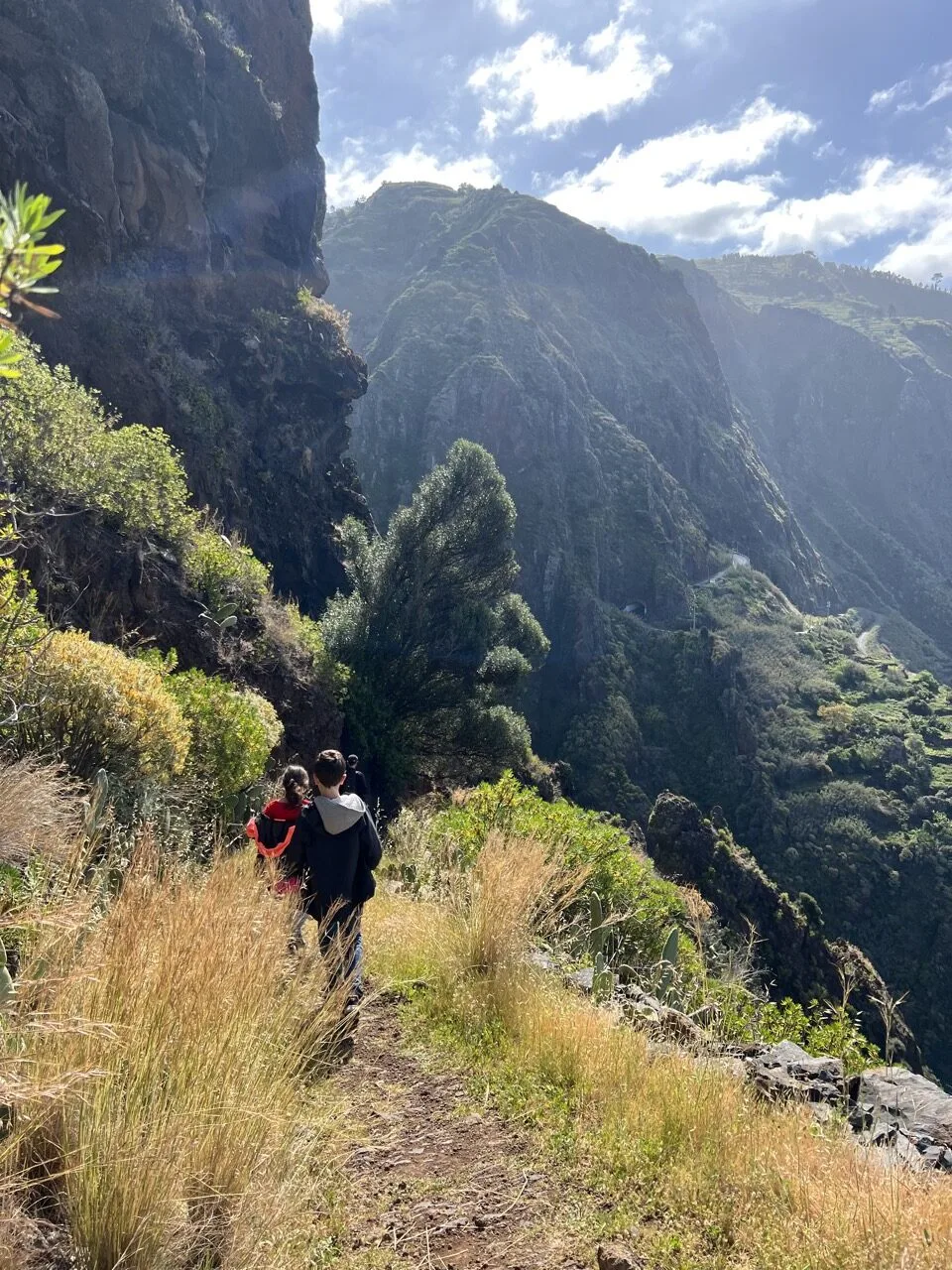
Hikers on the mountain path of the Vereda do Larano
Vereda do Larano coastal path above the ocean

What equipment for hiking in Madeira?

In addition to the usual hats, water bottles, and sunscreen, it is important to have with you:

  • Head torches: crucial! An essential accessory for hiking in Madeira as there are so many tunnels! For short tunnels, visibility is enough, but for long tunnels, you are in total darkness, and a mobile phone is not enough as it doesn’t illuminate well and could fall into the water if you lose your balance along a canal (which is entirely possible!).
  • Hiking shoes: trainers are fine; hiking boots are better as they are often more waterproof.
  • Windbreaker: important as the risk of rain, especially in the north, is significant.
  • Change of clothes: If caught in a shower, having dry clothes in the car is important and at the very least always have a spare pair of dry socks 🙂
  • The Rother Madeira guide is really the bible for hiking in Madeira!

Where to stay in Madeira?

We had 3 bases:

Our accommodation in the north of Madeira:

Near Sao Vicente in the north: we stayed at Granny’s Farm in the house with 3 bedrooms. It was perfect, with a lovely garden.
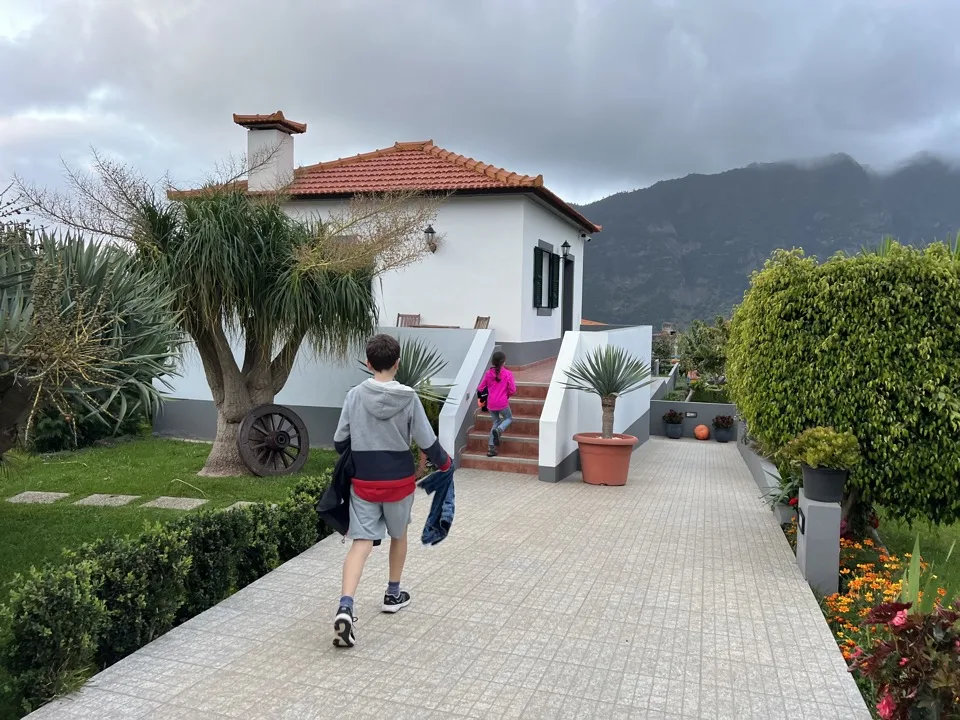
From this accommodation, we did the following hikes:

  • Levada da Faja do Rodrigues hike
  • Camino Real hike near the Mirador Sao Cristovao Boa Aventura
  • Walk at Ponta do Poiso
  • hike from Pico Ariero to Pico Ruivo

Our accommodation in the south of Madeira:

Near Paul do Mar in the south: we stayed at Quinta Sao Lourenço in a traditional house with sea views.
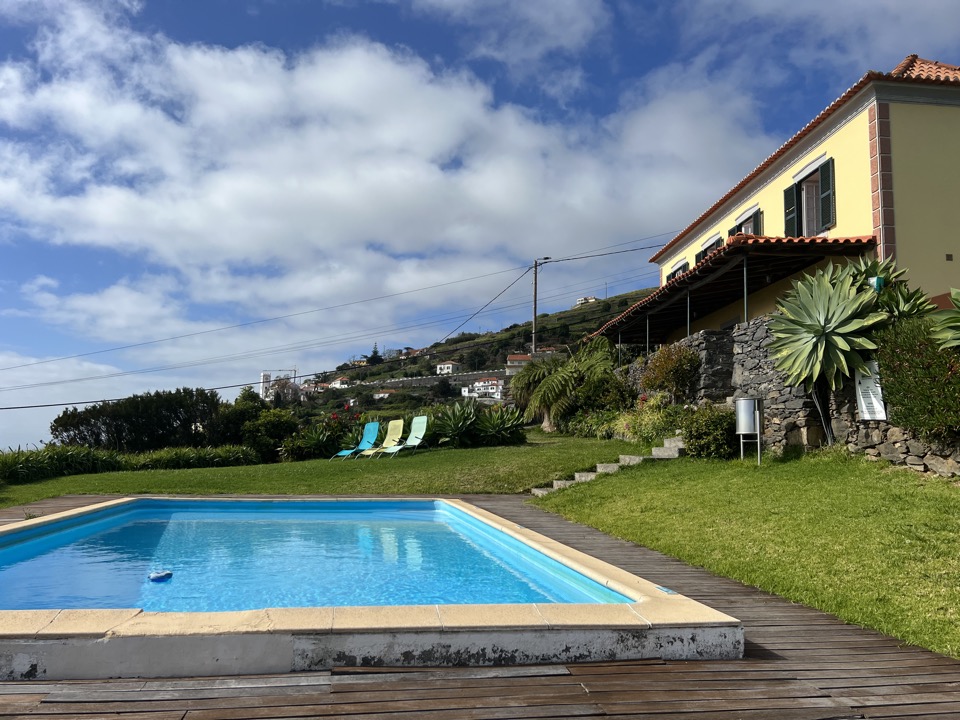
From this accommodation, we did the following hikes:

  • loop hike around Paul do Mar
  • Lombada da Ponta do Sol hike
  • 25 Fontes hike
  • Ribeira da Janela hike
  • Fanal

Our accommodation in Funchal:

Near the capital, we rented Villa Sao Paulo: a large house with a pool by the sea.
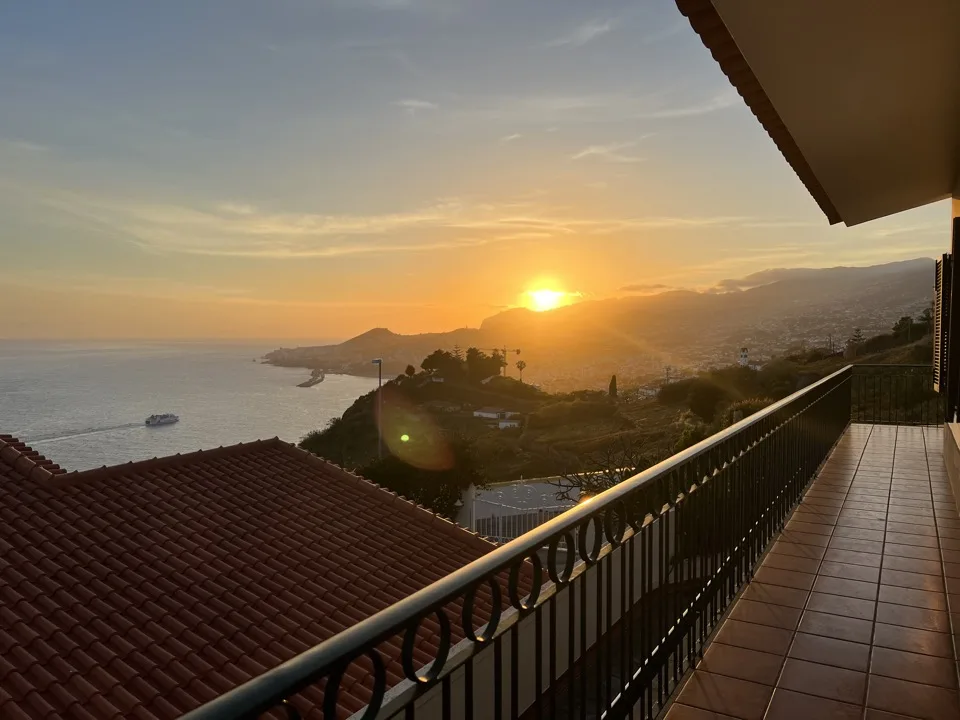
Sunset viewed from accommodation in Funchal

From this accommodation, we visited Funchal and did the following hikes:

  • Sao Laurenço Point hike
  • Balcoes hike
  • Verada do Lorano hike

***

So? Tempted by a hiking holiday in Madeira?

Also worth reading
10 days in Madeira: our practical guideMadeira with kids: our trip during the Easter holidays
The Algarve as a familyOur trip to the Algarve in Portugal with the children
2 days in Lisbon with our teenagersRevisit Lisbon as a family with teenagers : our discoveries over 2 days
7 family hikes in MallorcaOur 7 hikes as a family in Mallorca during the autumn term-break
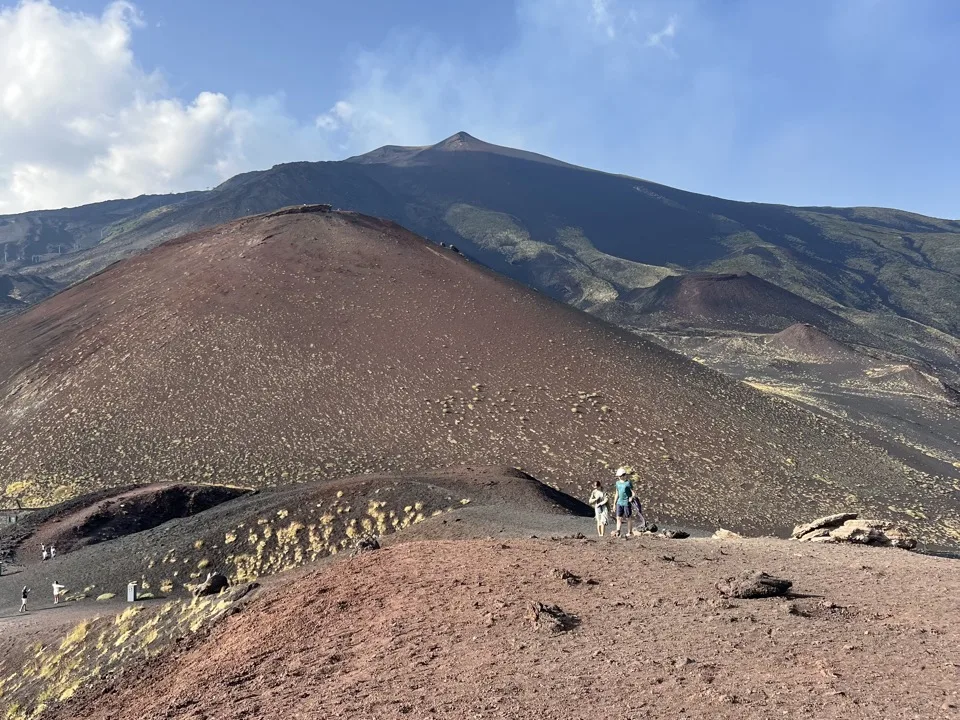
Sicily as a family: 10 days in 3 must-see stopoversSicily with children: Mount Etna, the temples of Agrigento, the Baroque towns and our swims!
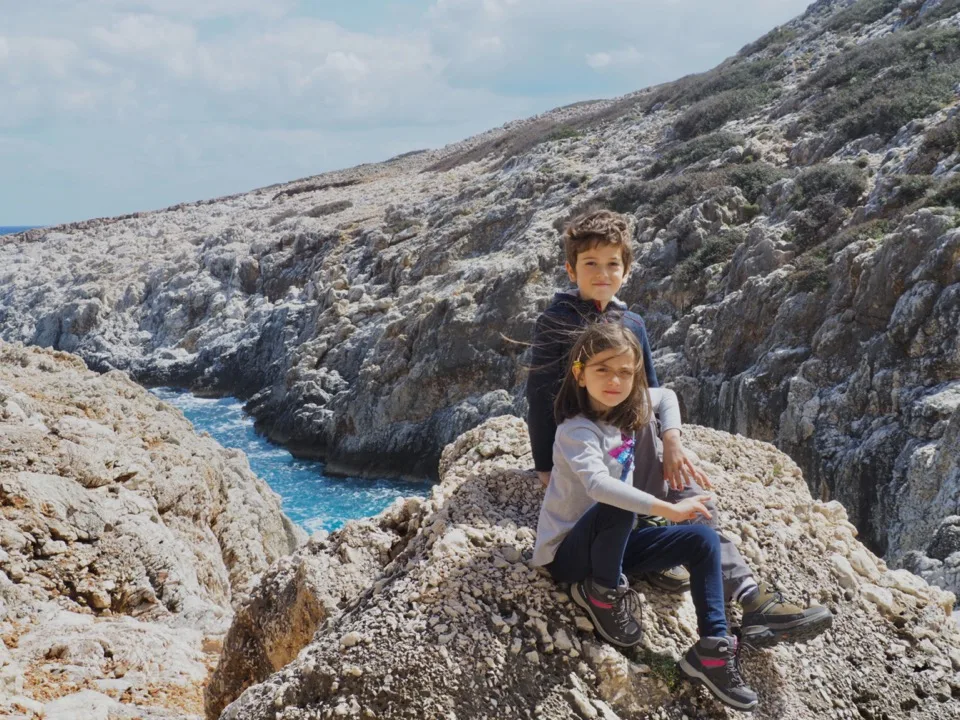
Our 10 hikes in Crete with the childrenOur family hikes in western Crete
Sentier de levada sur une falaise verdoyante à Madère

10 days in Madeira: our practical guide

We have just returned from 10 days in Madeira with kids and we have green stars in our eyes! Indeed, it’s crazy how luxuriant the vegetation is on this island! It’s lush! Clearly, for an immersion in green landscapes, this is the ideal place! A natural destination as we like them, perfect for recharging your batteries and also for hiking (which was our primary objective). On the other hand, a warning to all those who prefer beach holidays: Madeira is not the island for you! I will elaborate further below. You also don’t have to be afraid of the rain! And yes, all this vegetation isn’t there by chance ;-). Madeira is located in the Atlantic Ocean, off the coast of Portugal, just above (exactly northwest of) the Canary Islands. But we found Madeira very different from the Canaries, wetter, greener. Perhaps a little resemblance in decor to what I described to you in the north of Tenerife. And in terms of size, it’s similar to Lanzarote but it has absolutely nothing to do in terms of landscape! In short, Madeira is Madeira! And if I continue with the similarities, I rather had the impression of being on Reunion Island, between the vegetation, the mountains, the waterfalls, the hiking possibilities and the rum! But it’s still different (and so much closer!)… Let’s get into the heart of the subject. If you are thinking about Madeira for your next family vacation, I will tell you below what you can do there and you’ll find practical advice for getting organized: accommodation, drop-off points, transport, weather.

***

Ages of our children during this trip: Ticoeur, 13 years old and Titpuce 11 years old. Travel period: the first 10 days of April

What to do in Madeira? 10 activities for the whole family:

Here are 10 things we discovered in Madeira during our stay.

1- Hike along the levadas:

Levadas are the numerous irrigation canals found throughout Madeira. There are more than 2000 km of levadas! These canals were essential for agriculture on this island with its strong reliefs. Many hiking trails allow you to follow these typical Madeiran levadas with the advantage of being level paths! By the way: have a look at my post about our family hikes on Madeira. Walking along the levadas is one of the great attractions of the island! 

We followed the levada of the 25 springs and the levada do Alecrim (both combined), the levada Faja do Rodrigues, the levadas Nova and Moinho (in one combined hike near Ponta do Sol), levada Ribeira da Janela near Porto Moniz . For children, these paths are real little adventures because we come across tunnels, narrow paths and waterfalls. Often, the canals pass through eucalyptus forests to the delight for our nostrils!

Warning! Since January 2026, you have to pay access fees (from age 12) and book your time slot several days in advance to hike on Madeira’s popular trails. More information and prices on the official website. Book all your hikes at the same time as you will benefit from a better-value package.

Levada trail along a lush cliff in Madeira

Read more

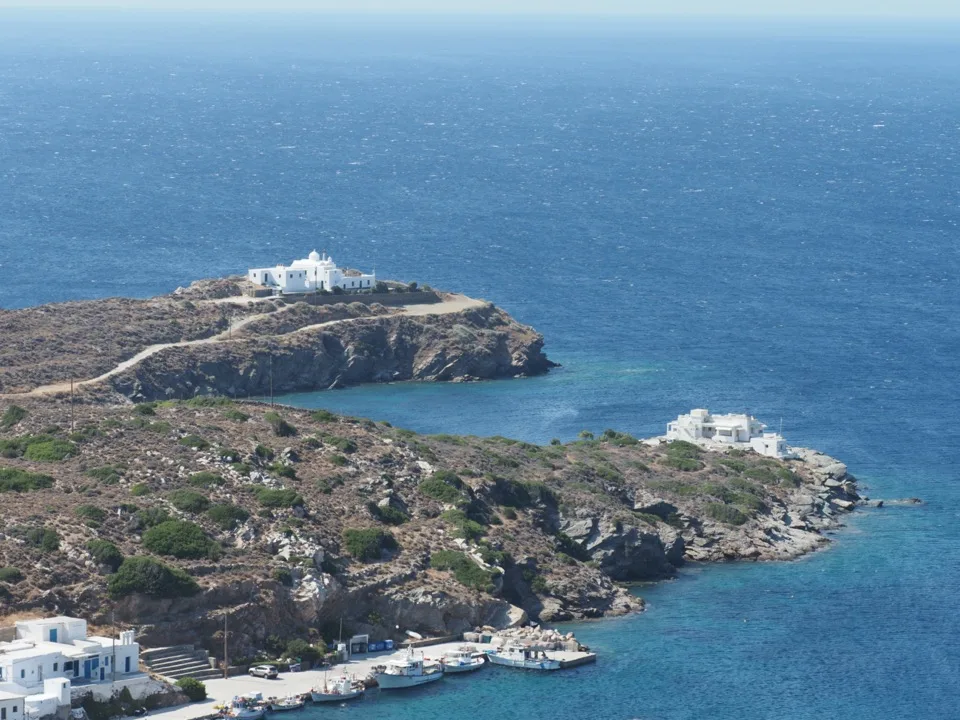
Vue de la chapelle des Sept Martyrs sur son promontoire rocheux à Sifnos

4 days in Sifnos with children, on foot and by bus

To finish our family trip through the Cyclades, after Santorini and Milos, we spent four days on the island of Sifnos. Sifnos proved to be a lovely island for hiking, with traditional villages and plenty of opportunities to swim at child-friendly beaches. There were fewer visitors than on Santorini and Milos, although almost all the other tourists seemed to be French — perhaps it was fashionable! Here is our day-by-day itinerary, together with our advice about transport, walks and accommodation to help you enjoy Sifnos with children. We chose to explore the island entirely on foot and by bus, and I will share all the practical details.

Children’s ages: 10 and 12

Travel dates: late July. The weather was beautiful, at around 26°C. Fortunately, the meltemi wind often helped cool us down.

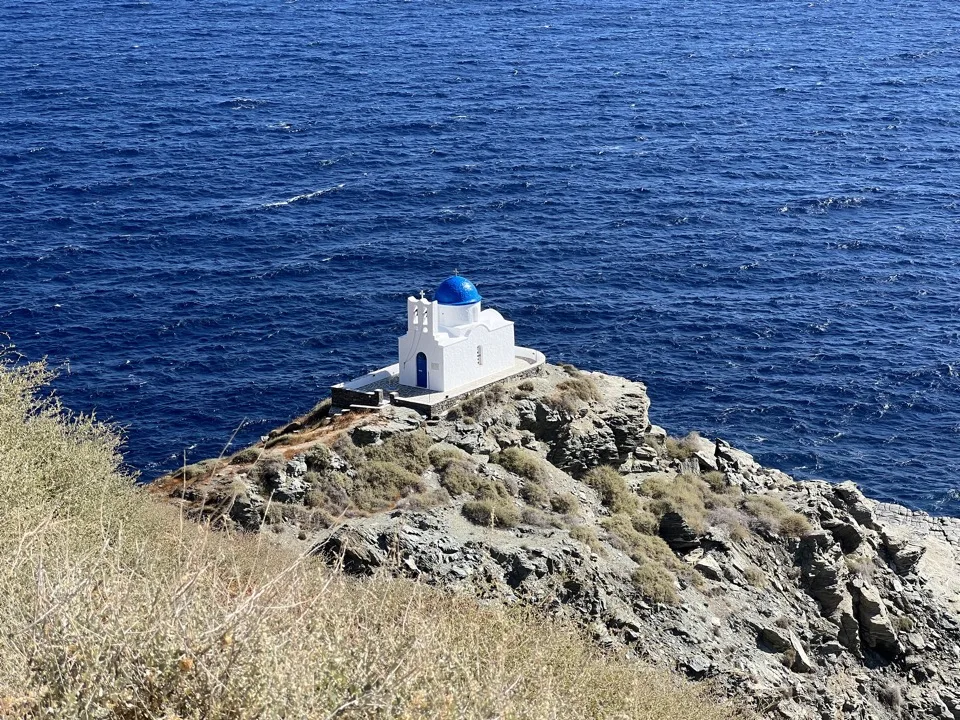
View of the Church of the Seven Martyrs on its rocky headland in Sifnos

Four days discovering Sifnos with children

Day 1 in Sifnos: arrival and discovering Kastro

After our four days in Milos, we caught a SeaJets ferry to Sifnos at around midday. The crossing took two hours. Having just disembarked in Kamares, we took a bus to Apollonia, then another to the village of Kastro, where we had booked our accommodation.

Kastro ❤ is a beautiful village of narrow, paved and sometimes covered lanes. Its little houses are white with blue shutters, as they so often are in the Cyclades. Its position on a headland adds greatly to its charm. In short, we fell in love with this hilltop village! After leaving our bags, we walked down to swim in a cove below the village. It was excellent for snorkelling, especially as the sea was very calm. We ended the day with a superb dinner overlooking the sea at Kaptain George, a taverna run by a fishing family. Highly recommended!

View of the white village of Kastro overlooking the sea
Kastro, Sifnos
Whitewashed vaulted lane in Kastro on Sifnos
Kastro, Sifnos

sifnos en famille

View of a rocky cove below Kastro

Across Sifnos, as elsewhere in the Cyclades, you often come across old windmills:

Blue-roofed windmills on the hills of Sifnos

Evening in Kastro

Collage of sunset scenes in the lanes of Kastro

Read more

Sentier de randonnée sur la caldeira de Santorin

Santorini as a family, on foot and by bus

This summer, we visited Santorini as a family during our trip exploring three Cycladic islands. I had some concerns about Santorini as everyone seems to love it but often finds it too crowded. So, first, we aimed for the start of the school holidays in July and second, we decided not to hire a car. We spent 4 days/3 nights in Santorini, as a family, getting around on foot and by bus. When we made the decision to go “car-free in Santorini”, I struggled to find information about whether getting around on foot and by bus would allow us to fully enjoy the island. I found a few articles by solo or couple travellers who had explored Santorini without a car, but I didn’t find any accounts of family holidays. With kids, I didn’t want logistics to become a nightmare. Anyway, let me remove all suspense right now: visiting Santorini as a family, on foot and by bus is totally doable! We really enjoyed this approach.

Why visit Santorini on foot and by bus?

  • Avoid parking issues in touristy areas (especially Oia)
  • Reduce pollution on an already natural island which has to deal with a number of cruise ships leaving their engines running 24/7! (Luckily, the number of ships has dropped significantly).
  • Save a considerable amount of money: just check car hire prices during school holidays and you’ll see!
  • Take your time, get a new perspective, and go off the beaten track.
Hiking trail along Santorini's caldera
Hiking along the Caldera, between Fira and Oia

Now, I’d like to share some information that may help you plan a car-free stay in Santorini. Of course, this means you need to walk, enjoy walking, and have children who are old enough to walk (or young enough to be carried). In our family, walking is a true joy, and you know that Ticoeur and Titpuce have long been little adventurers… If you also love walking, then my tips are for you!

On foot and as a family in Santorini:

First, a quick note about the weather: we had around 26°C during our stay in Santorini. So it wasn’t too hot for walking, especially as we had the meltemi blowing (a north wind). Obviously, if it had been hotter, that would have changed our hiking plans, but bear in mind that the Cyclades usually don’t get as hot as the mainland in summer. We’re not fans of extreme heat and were drawn to the Cyclades for their climate. Still, as always with weather, expect the unexpected.

The hike between Oia and Fira:

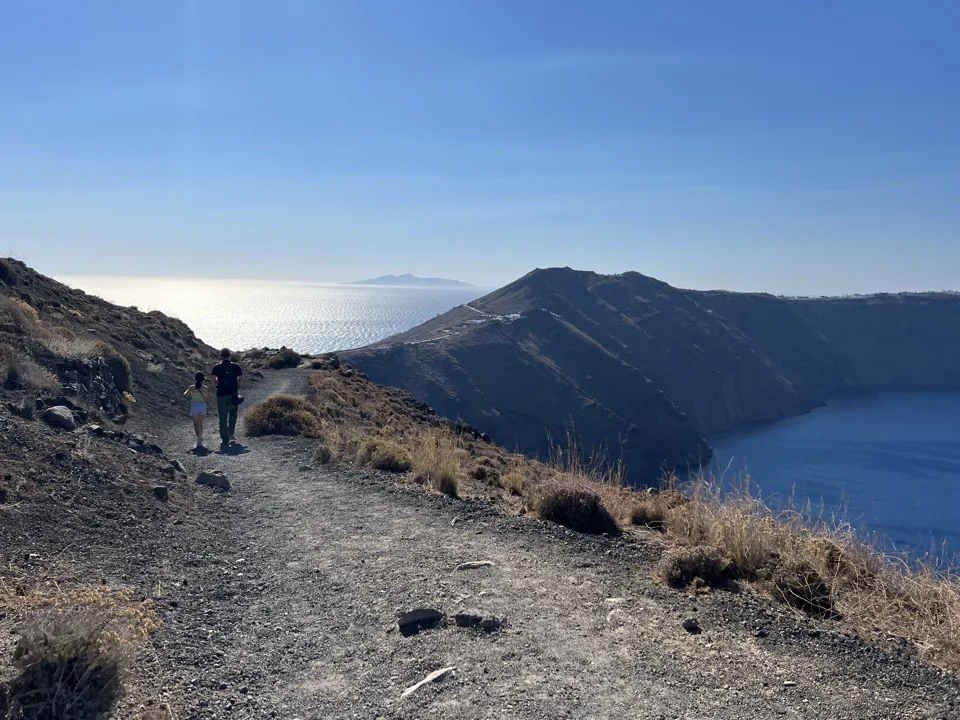
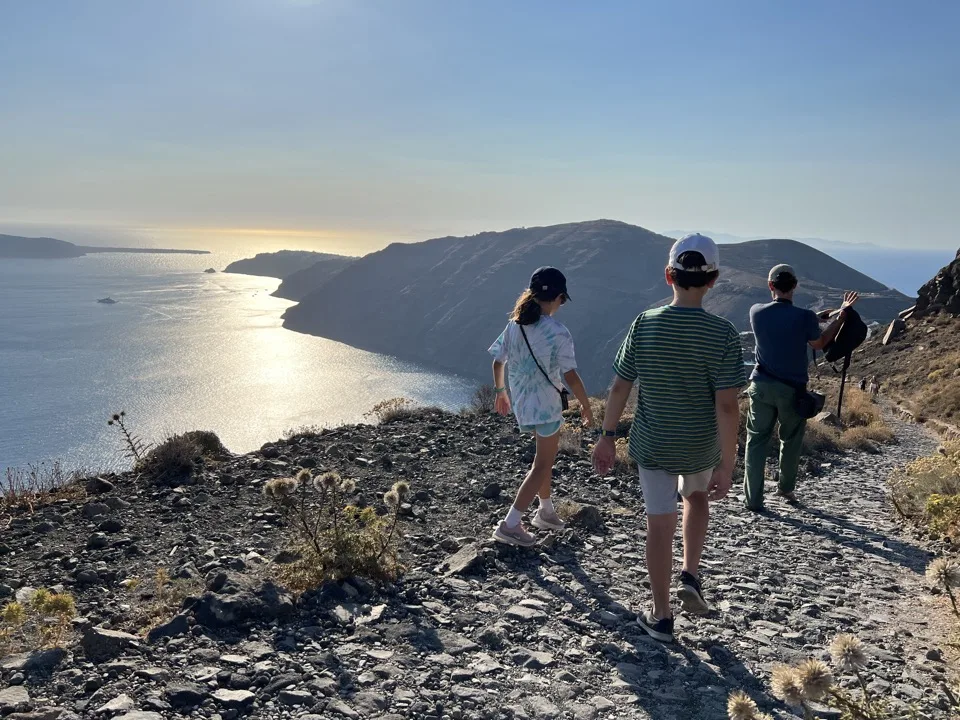
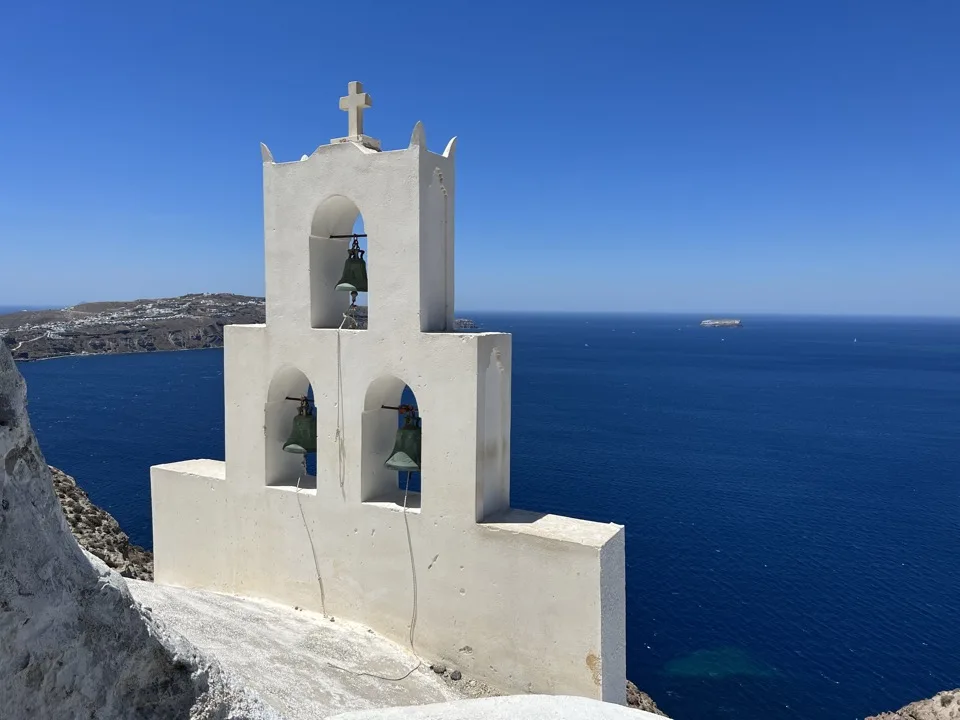
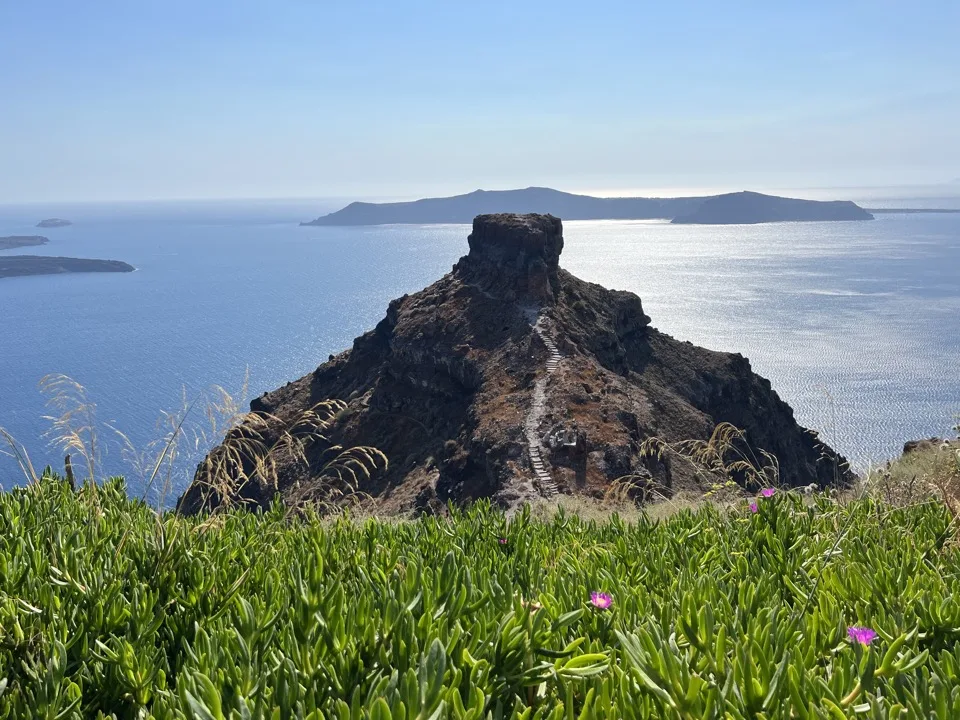
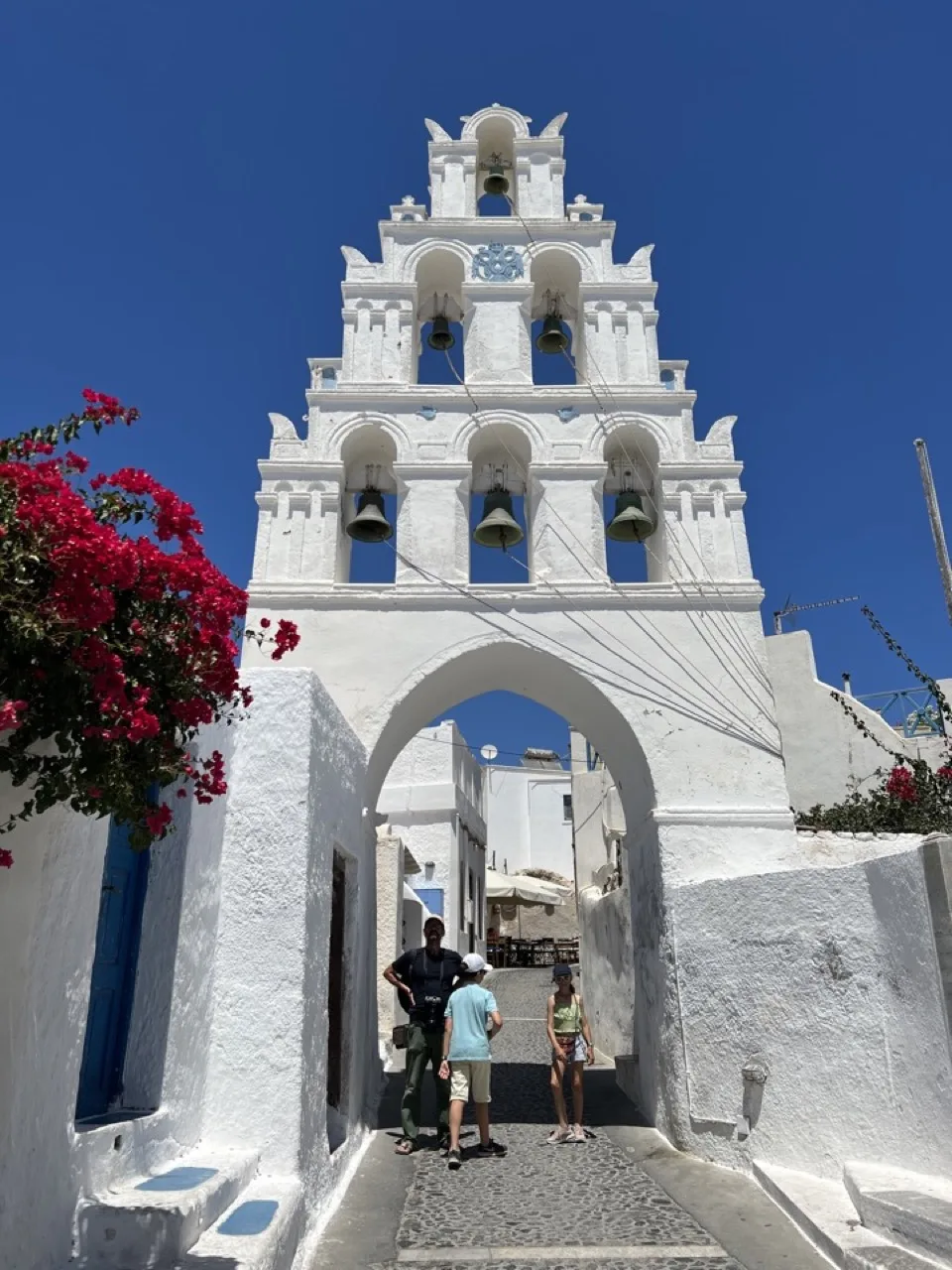
This was the highlight of our trip! Clearly the must-do experience on the island! Allow 3 hours one way. It was so magical that we did it twice! The first day from Fira, and the second day from Oia to Fira. And it was the kids who asked to do it again! The whole thing is done 100% on foot! We loved it! Family seen from behind on the coastal trail between Oia and Fira White bell tower overlooking Santorini's caldera Along the route, we made a detour to Skaros Rock. It adds a bit of time, but it’s well worth it: Rocky promontory beside Santorini's caldera

Our other walks:

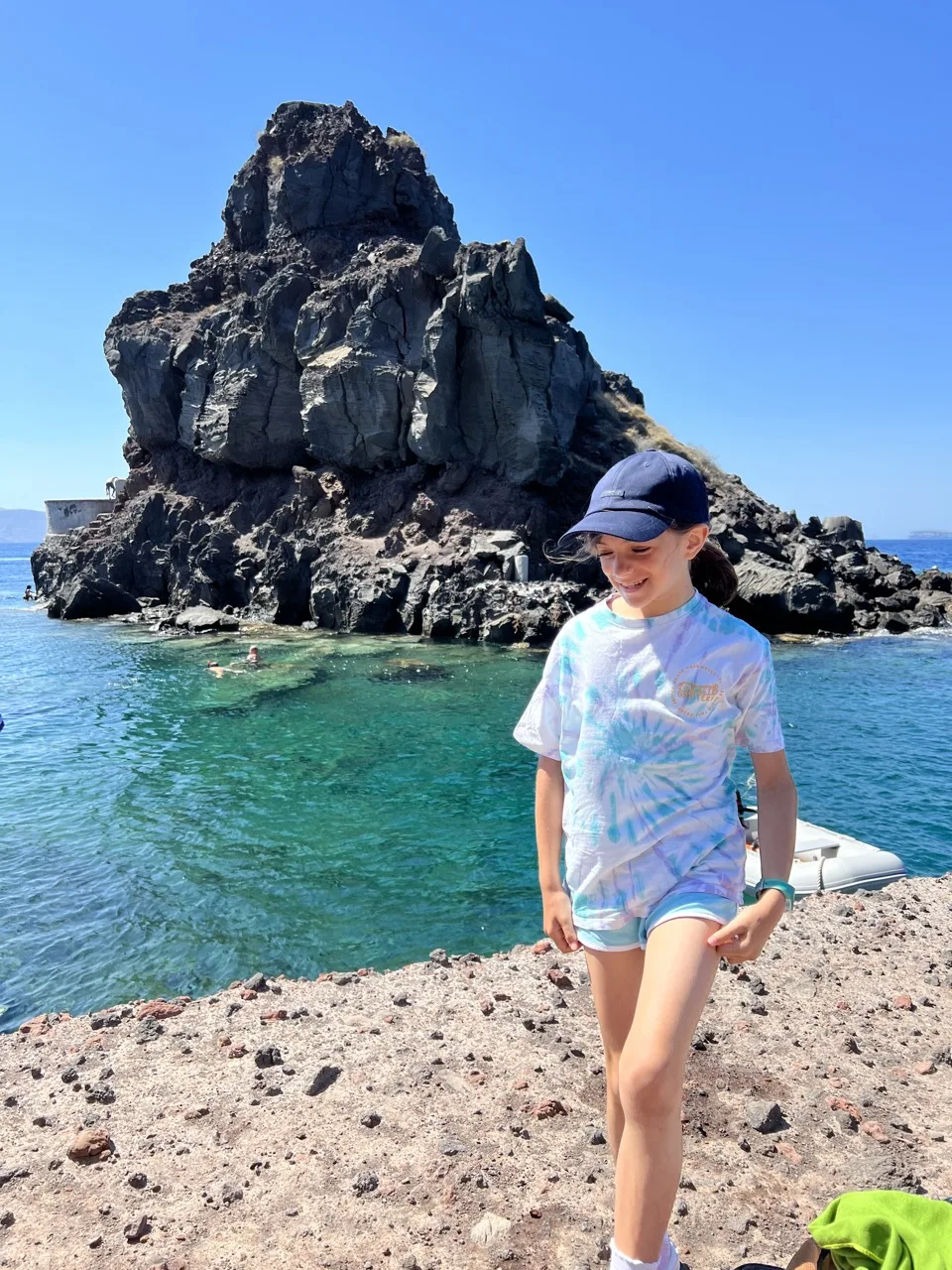
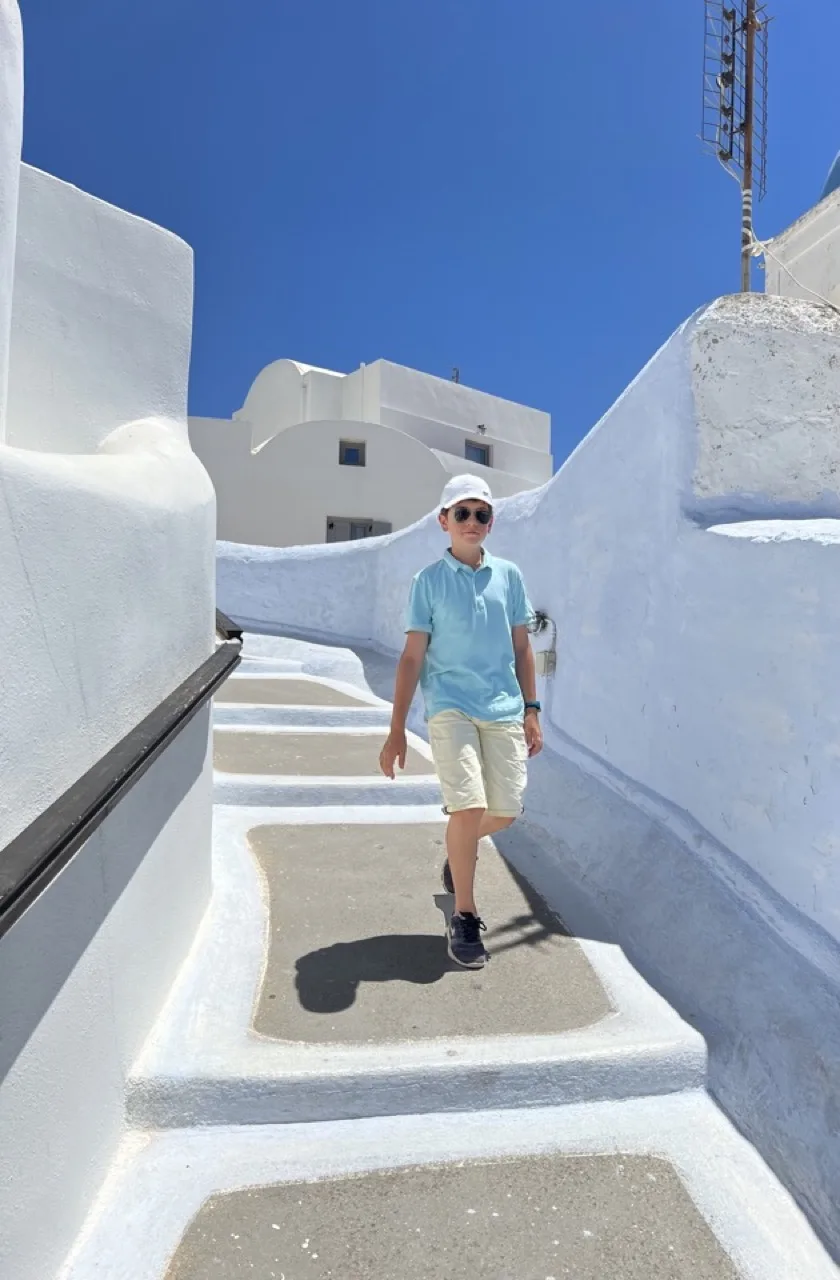
  • From Finikia (the village where we stayed) to Oia: 20 minutes each way. Oia is very quiet in the morning. We went almost every day just after breakfast for a peaceful swim. I was really worried about the crowds in Oia, but it’s only in the late afternoon that tourists arrive en masse to stroll and watch the sunset from the Old Castle. We preferred to go against the flow. For our morning swim, we walked down the 278 steps from the heights of Oia to Amoudi, a little cove where we swam (the water was around 20°C – quite refreshing!). Between the steps and the swim, it was a proper workout! We loved this little morning ritual!

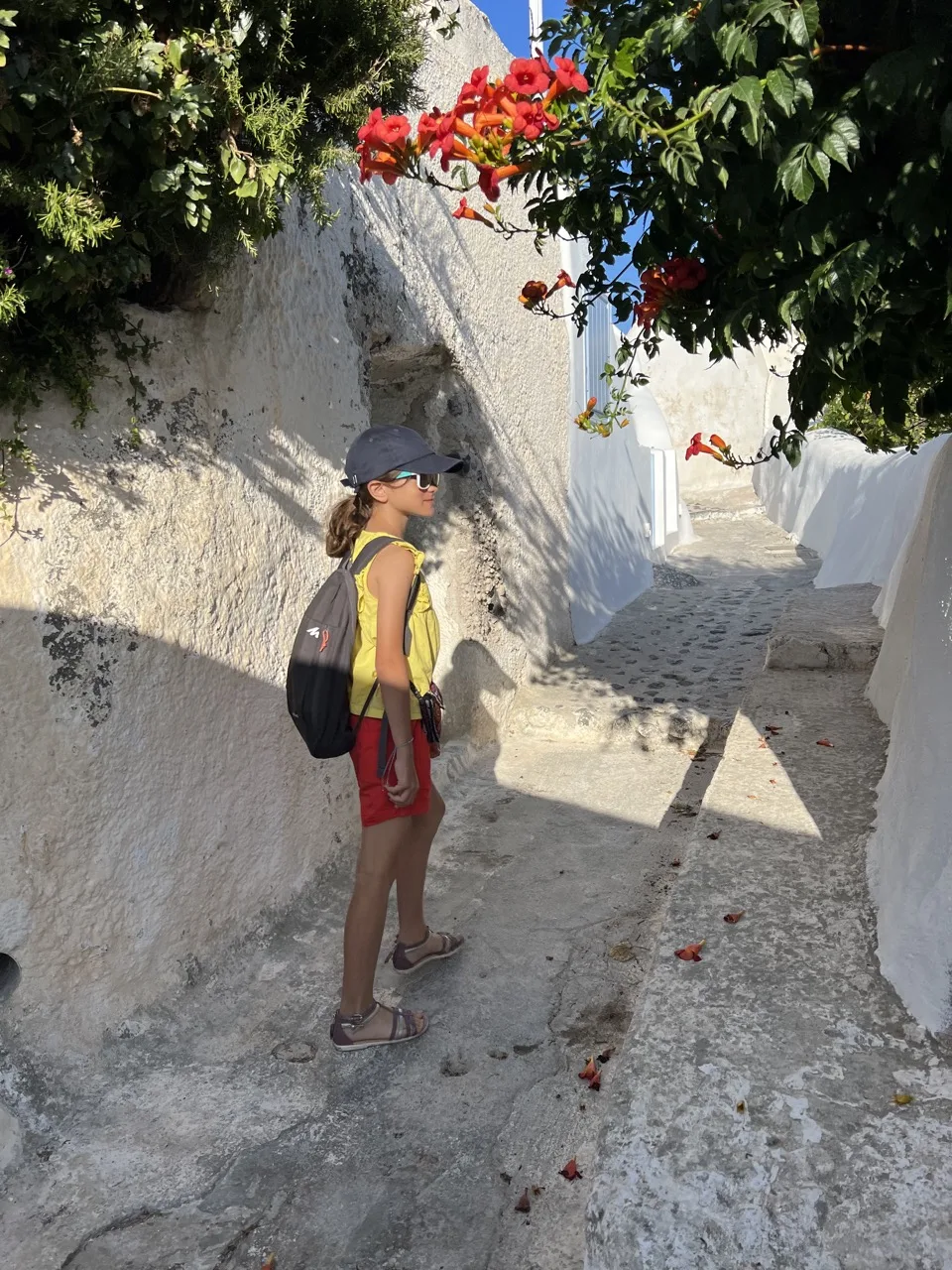
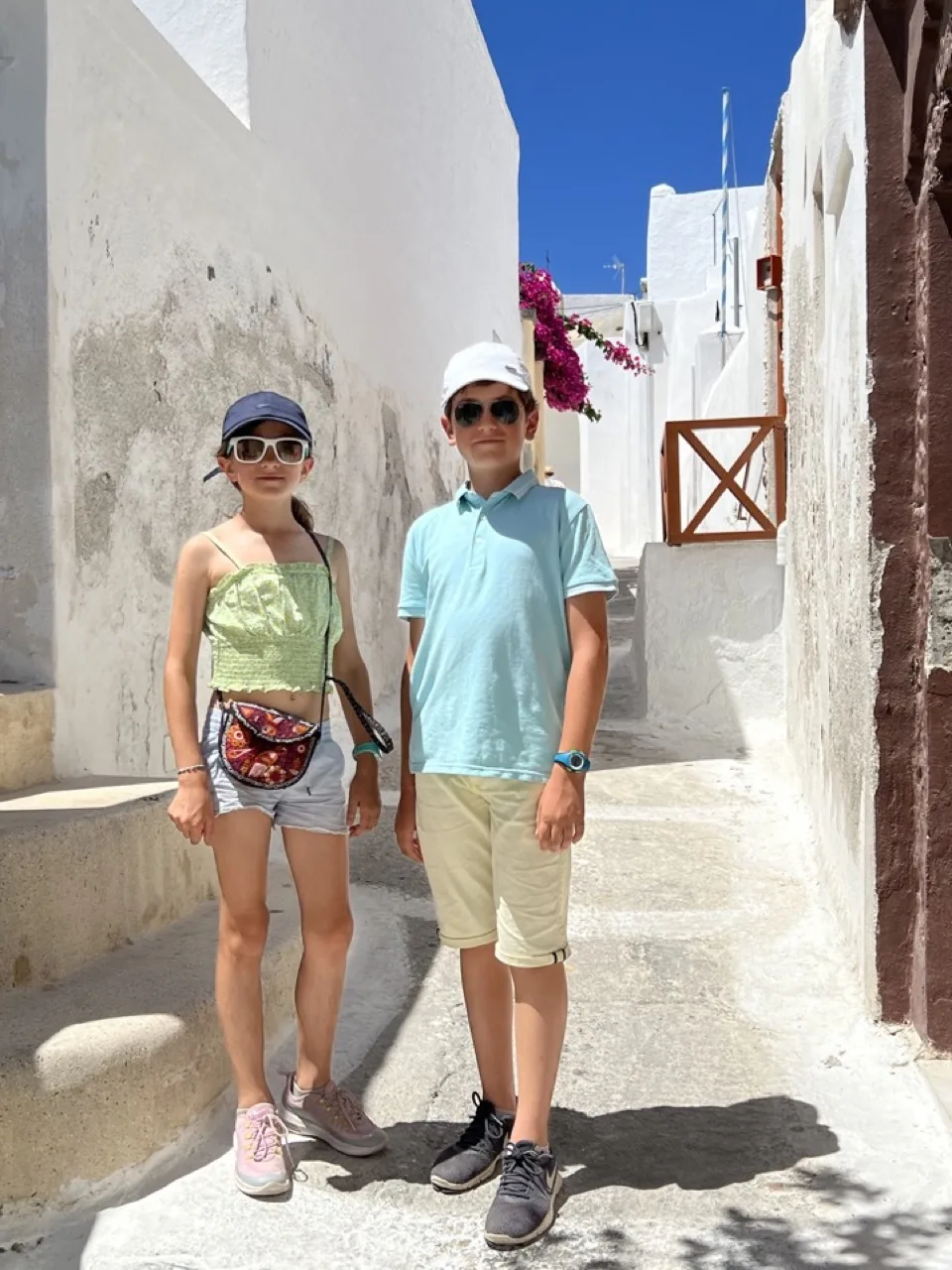
Whitewashed lane lined with flowers in SantoriniThe alleyways of Finikia

White houses clustered on the cliffs of Oia
Oia

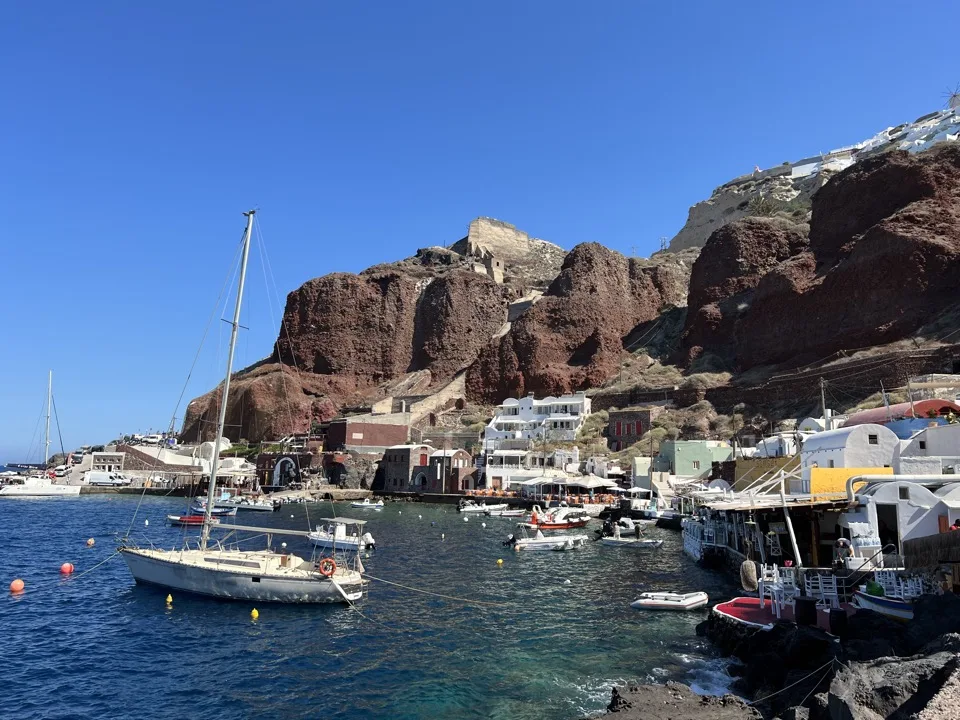
Our swimming spot after walking down all the steps:

Amoudi Bay
Boats in Ammoudi harbour below red cliffs
Amoudi Bay
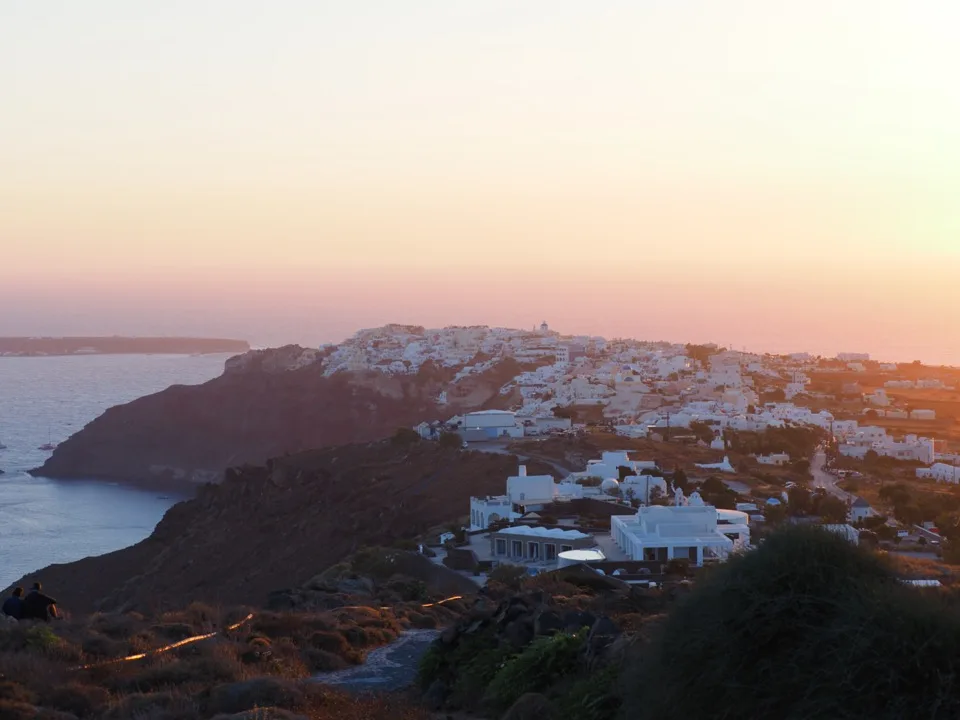
  • Sunset walk above Finikia, near the church of Profitis Ilias for a panoramic view. No regrets about skipping the crowds in Oia!

Finikia village at sunset

  • From the village of Megalochori to Red Beach: after a morning hike along the Caldera, we took a bus from the central station in Fira (a grand name for a small station ;-)) hoping to get to Red Beach in the south. We should have taken a bus to Akrotiri but accidentally boarded one that stopped at Megalochori. No worries! This village, which didn’t look that exciting from the road, turned out to be very charming and lively: santorin a pied en bus et en famille

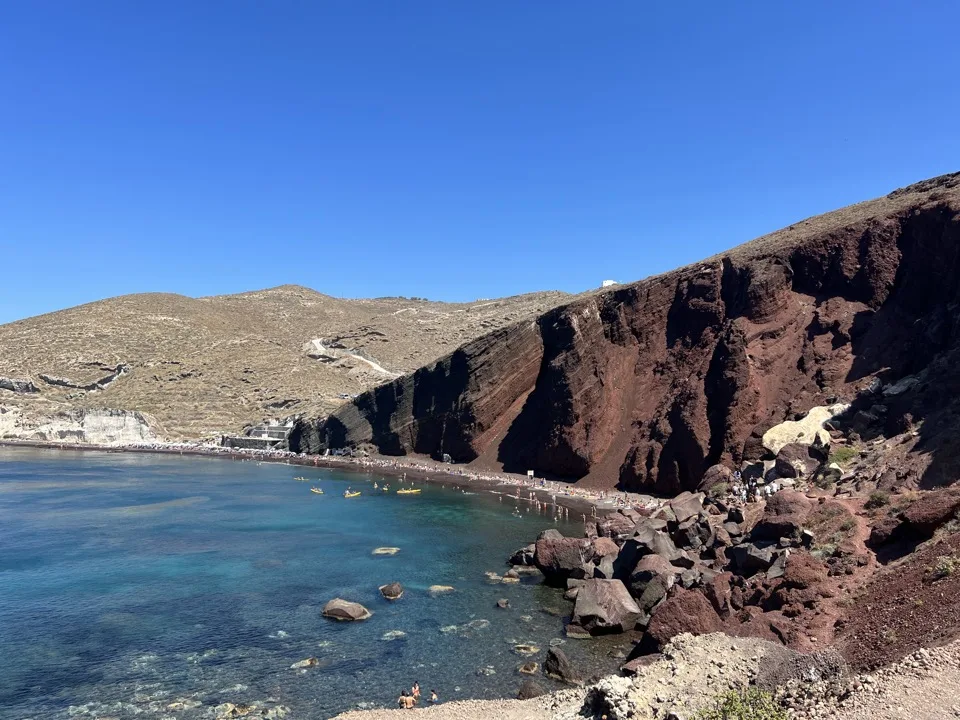
  santorin a pied en bus et en famille After wandering around Megalochori, we caught another bus towards Akrotiri. To get to Red Beach, the final stretch is on foot. It’s not far. The beach is pretty thanks to the red rock formations. In high season, it must be very crowded as it’s quite narrow. The sea was 22°C when we were there, and not many people were swimming.

Cove edged by red volcanic rocks in Santorini
Red Beach

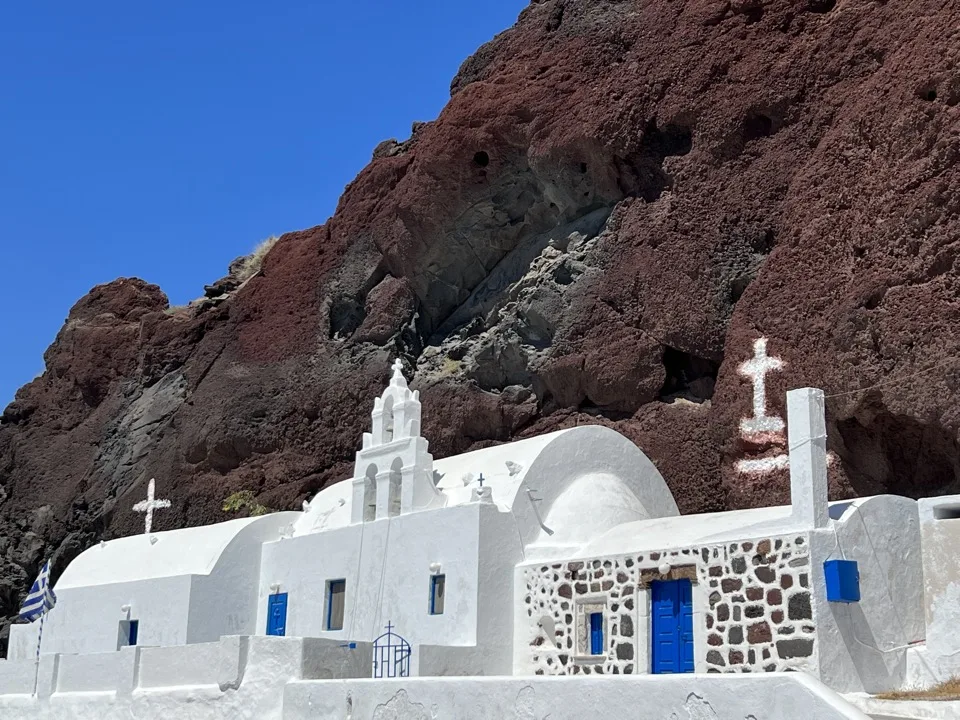
White chapel beneath Santorini's red cliffs

  • From the village of Megalochori to Pyrgos: after returning from Red Beach, we walked along the roadside to Pyrgos, a lovely hilltop village that we recommend for a stroll. We had a drink at Brusco bar and wrote a few postcards to the grandparents.
Pyrgos
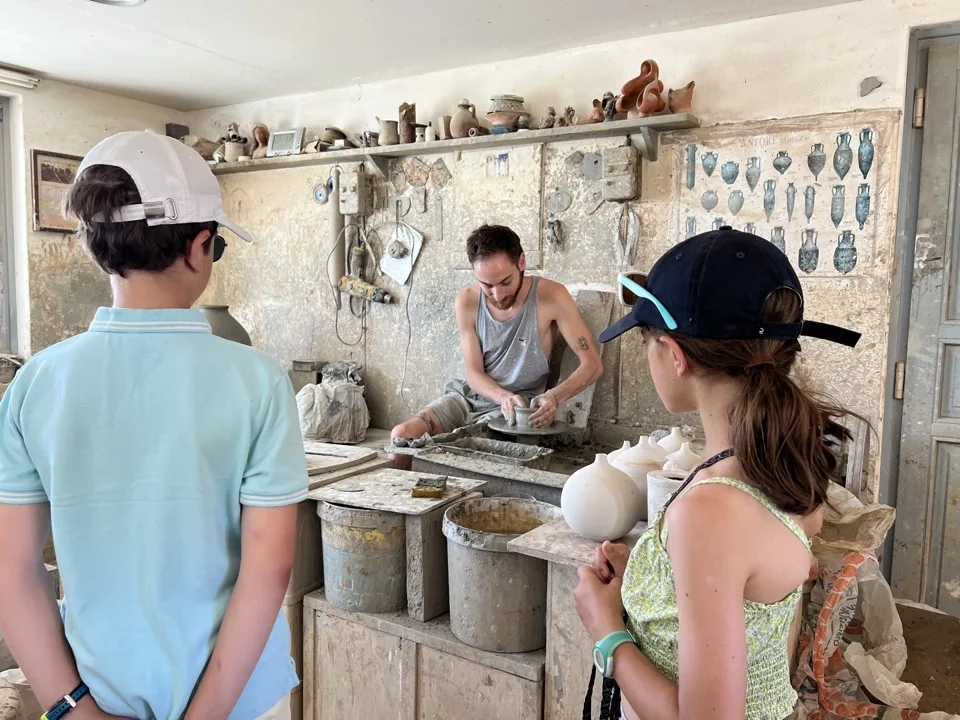
  • From Megalochori to the natural arch “The Heart of Santorini”: the next day, we returned to Megalochori, by bus from Fira which we reached on foot from Oia (are you still with me?). After a short stroll and an ice cream in the village, we walked to the natural arch. It’s not a must-see, but it’s a pleasant walk. On the way back, we stopped by the potter “Earth and Water” who gave us a warm welcome and let the children try the pottery wheel.

White three-bell tower in a Santorini village People seated in an alcove overlooking the sea in Santorini  

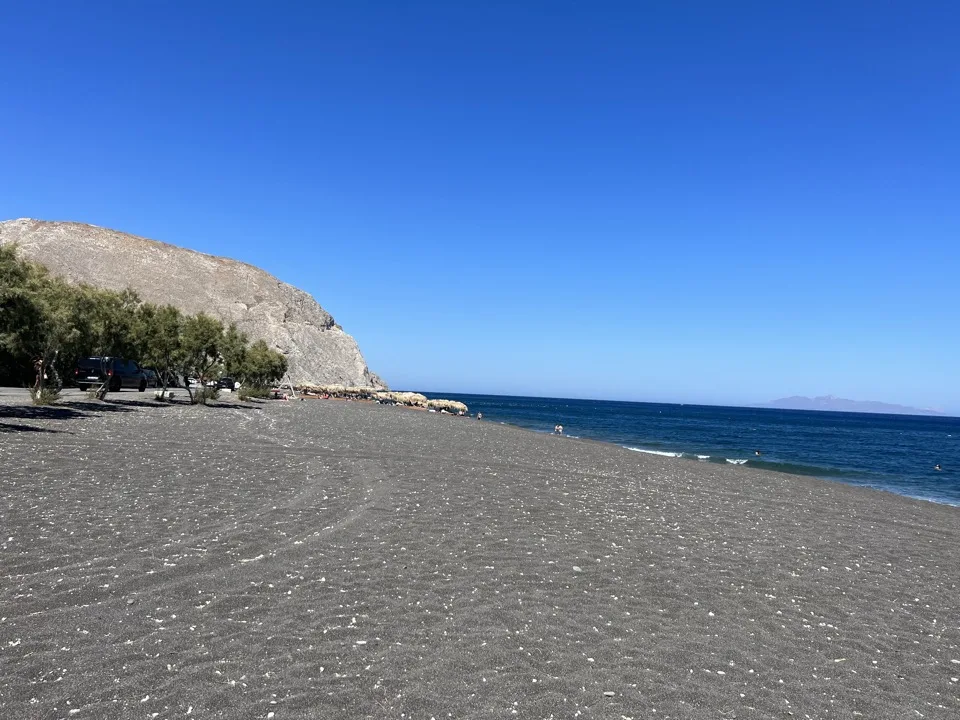
  • From the village of Emporio to Perissa Beach: after our visit to the potter, we took a bus to Emporio, a deserted village when we arrived in the afternoon. After exploring the alleyways, we walked to Perissa Beach (about 30 minutes). It’s a long black-sand beach (7 km) where we strolled before enjoying a drink by the sea. The water was 22°C. Ticoeur and I were fine with that, but we didn’t swim, as we prefer the coves below Oia. We took the bus back to Fira, visited a few art galleries, then another bus to Oia. Then walked back to Finikia.

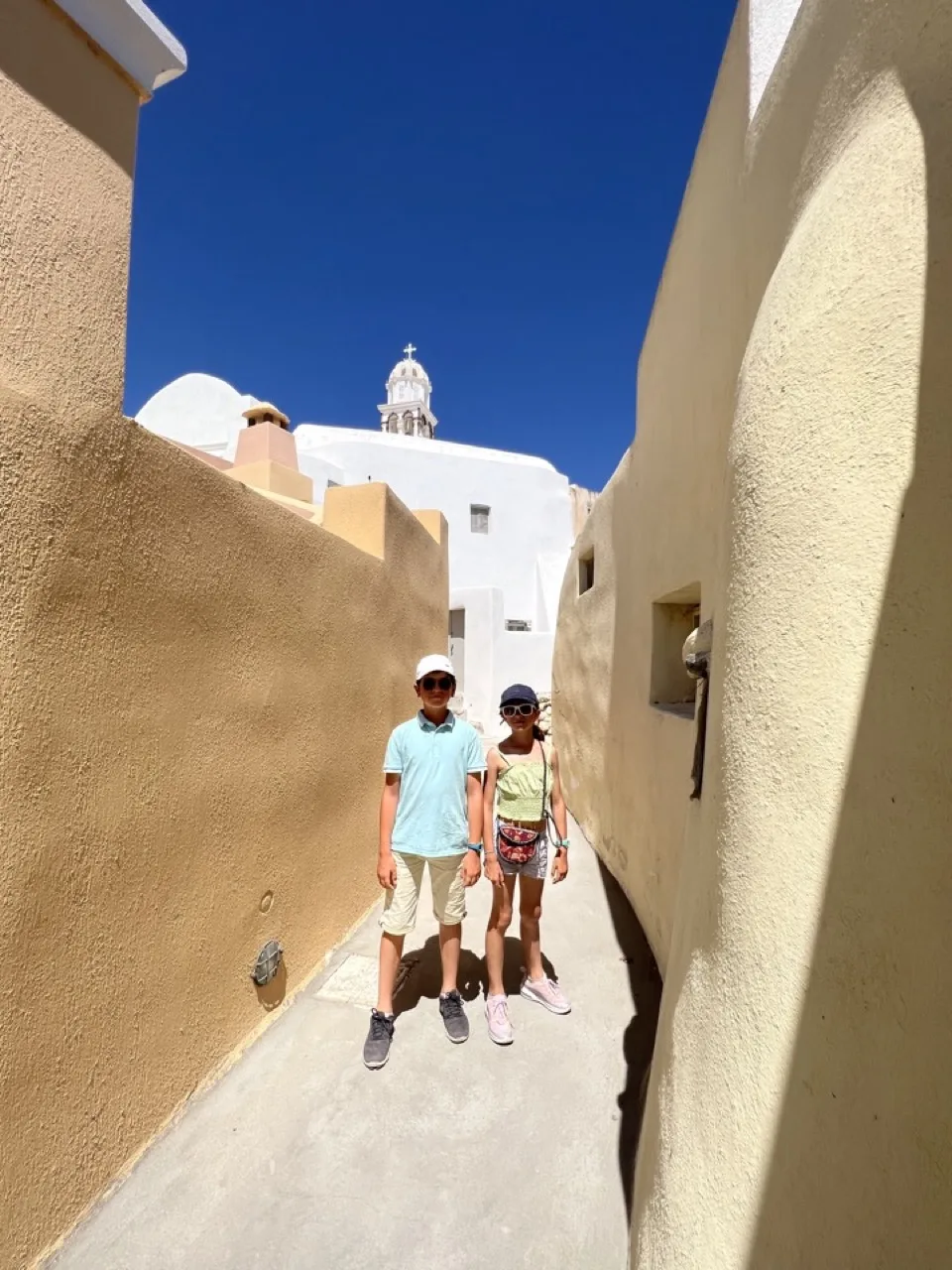
Family seen from behind in a narrow Santorini lane
Emporio
Black volcanic sand beach on Santorini
Perissa Beach

By bus and as a family in Santorini:

For some of the outings and walks described above, we started by taking the bus. Here’s some useful info to help you get organised:

  • A bus ticket costs €1.60 to €2.50 (edit in 2026), and children pay from age 7.
  • Don’t rely on the posted timetables! Buses seemed to leave when full (which happens quickly, at least in July).
  • For reference, here’s the link to the bus company’s website, KTEL. It’ll give you an idea, but don’t trust the times too much.
  • Don’t rely on the bus route map either – it’s not accurate. It’s better to ask locals where the bus stops. Just because you’re at a bus stop doesn’t mean it’s actually in use!
  • There are often eucalyptus trees at bus stops – great for shade!
  • Despite these tips, you’ll still get lost – but that’s a chance to discover new places ;-).
  • From the port or airport, there are also buses that take you to Fira first. On arrival, just stay calm – the bus will come when it comes. But when leaving, especially early, consider a taxi for the last leg.
  • Fira is the island’s main bus hub. You’ll often have to change buses there to get around. Staying in Fira is convenient for buses, but we chose a quiet little village in the north because we fell in love with the accommodation. So we often changed buses at Fira.
  • Most of the other bus passengers were young people, but there were also other families.
  • And again: we were in Santorini at the beginning of the school holidays. Later in the season, getting around by bus might be tough (crowded, no seats…). But you know what? It’s not just the buses I wouldn’t recommend at that point – it’s Santorini altogether. Personally, I wouldn’t attempt it in August…

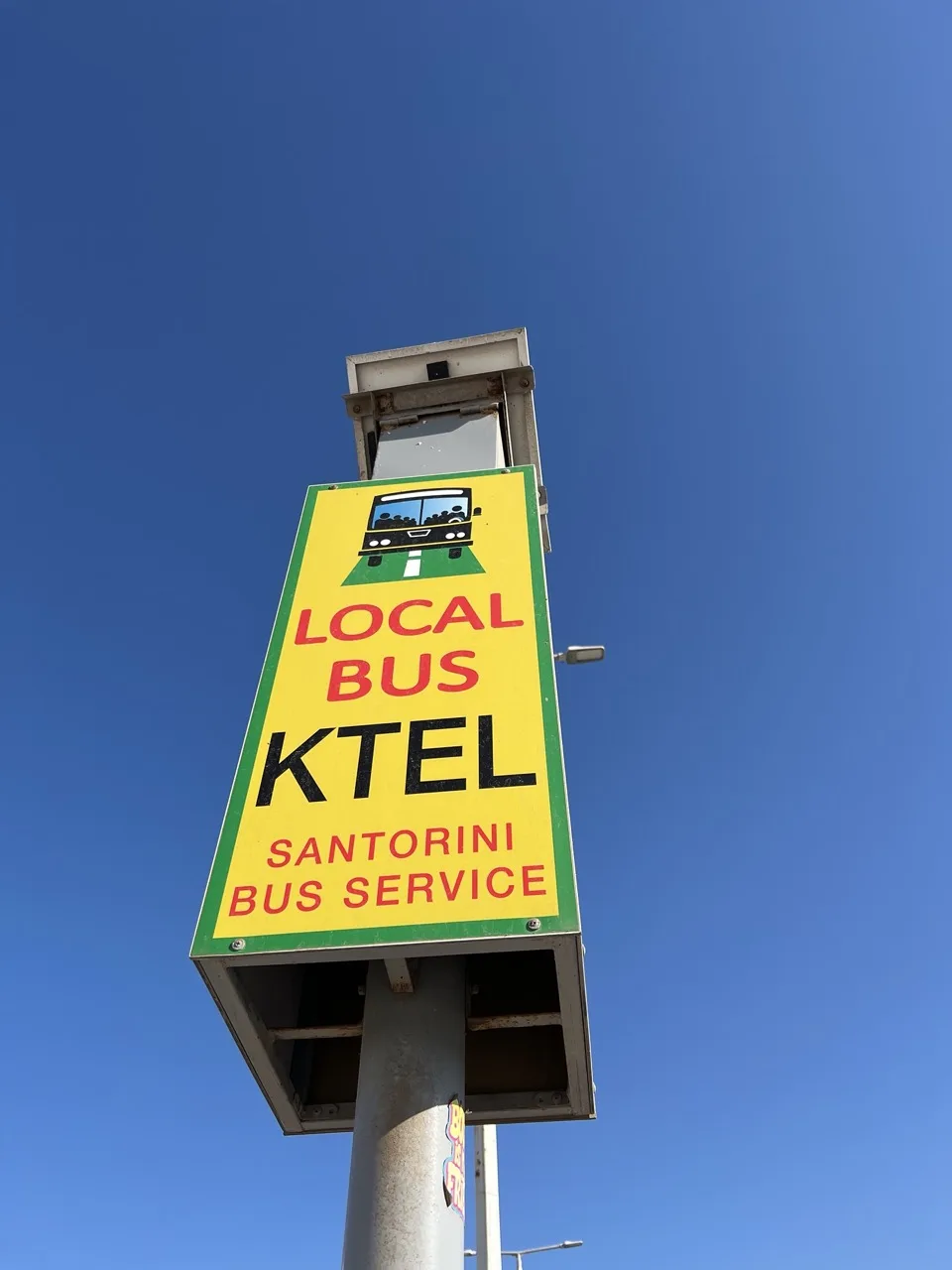
Local bus stop sign in Santorini

***

There you go! I hope this article has inspired you to discover Santorini as a family, on foot and by bus! For a broader view of our adventures in these Greek islands, check out my article: The Cyclades with kids: Santorini, Milos, Sifnos. You’ll find our tips and favourite places to stay and eat!    

Also worth reading

Family vacation in the Cyclades: Santorini, Milos, Sifnos12 days as a family on 3 of the Cycladic Islands
4 days in Sifnos with children, on foot and by busFour days in Sifnos with children: hiking, beaches, Cycladic villages and practical tips for exploring the island on foot and by…
Our 10 hikes in Crete with the childrenOur family hikes in western Crete
Greece: the Vikos Gorge hike as a familyHikes and viewpoints in and around the Vikos Gorge in norther Greece
7 family hikes in MallorcaOur 7 hikes as a family in Mallorca during the autumn term-break
Sicily as a family: 10 days in 3 must-see stopoversSicily with children: Mount Etna, the temples of Agrigento, the Baroque towns and our swims!

South Wales, as a family and in a campervan

Ah, Wales! It was the only country in the United Kingdom we hadn’t set foot in yet! In 2022, we went there twice, in road trip mode, with our campervan. I’ll start with the story of our first one-week itinerary, last April, discovering south Wales. But first, a little weather introduction. You know how you sometimes (often) make fun of the weather and the rain in England? Well, in England, the English sometimes, often, but kindly make fun of the weather in Wales! It’s supposedly the rainiest and most changeable weather in Great Britain! All that to say that by choosing to travel in April, it was very (too) optimistic of us! That said, you’ll also notice that we chose to focus on south Wales. That turned out to be a good choice because the weather would have been worse in north Wales! In short, you’ve got it: for once, we had a bit of a hard time with the elements. It had to happen to us one day! Since we’ve been travelling by van, we’ve always been very lucky with the weather. Wales came along to remind us that sometimes, it’s otherwise. We had snow, hail, rain and sunshine! It’s almost as if we experienced the four Welsh seasons in a single week! Actually, pretty classy! As for landscapes, it was magnificent, and we recommend all the places we discovered and that I’m going to tell you about now but… maybe come in summer instead ;-).

Our stops in south Wales (one week):

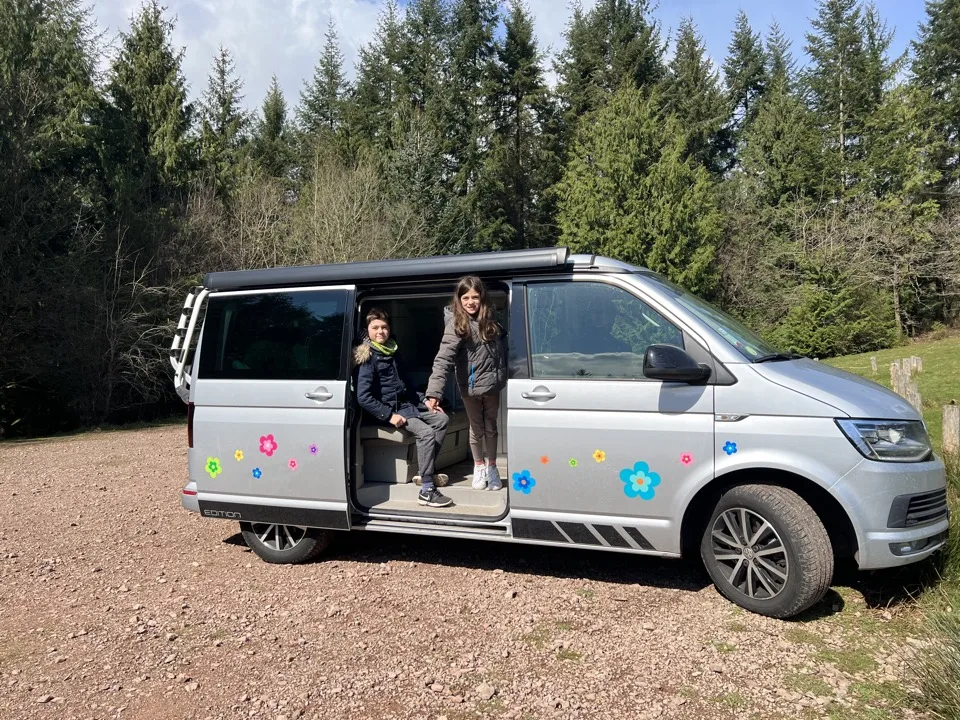
As I mentioned in the introduction, we were in a campervan, but of course you can take inspiration from the same itinerary if you come by car… For nights, we mostly slept at campsites. I’ll give you the addresses below.

The Gower Peninsula: a start that really wows you!

A mum from school recommended the Gower Peninsula to me, and it was excellent advice! What a great introduction to discovering the beauties of the south Wales coast. On the peninsula, we did two stops:

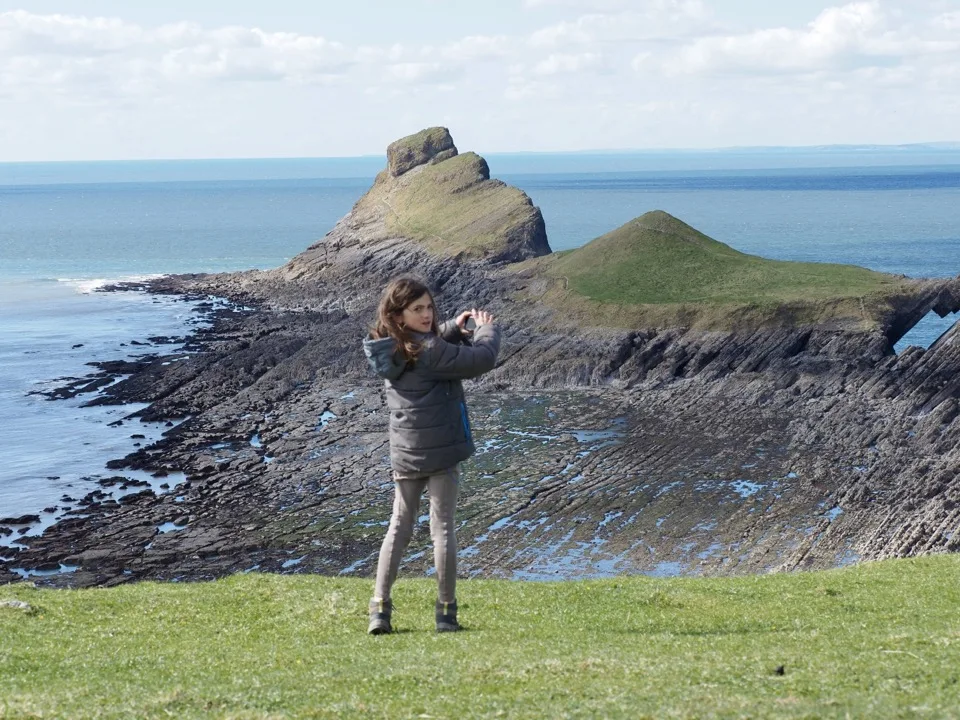
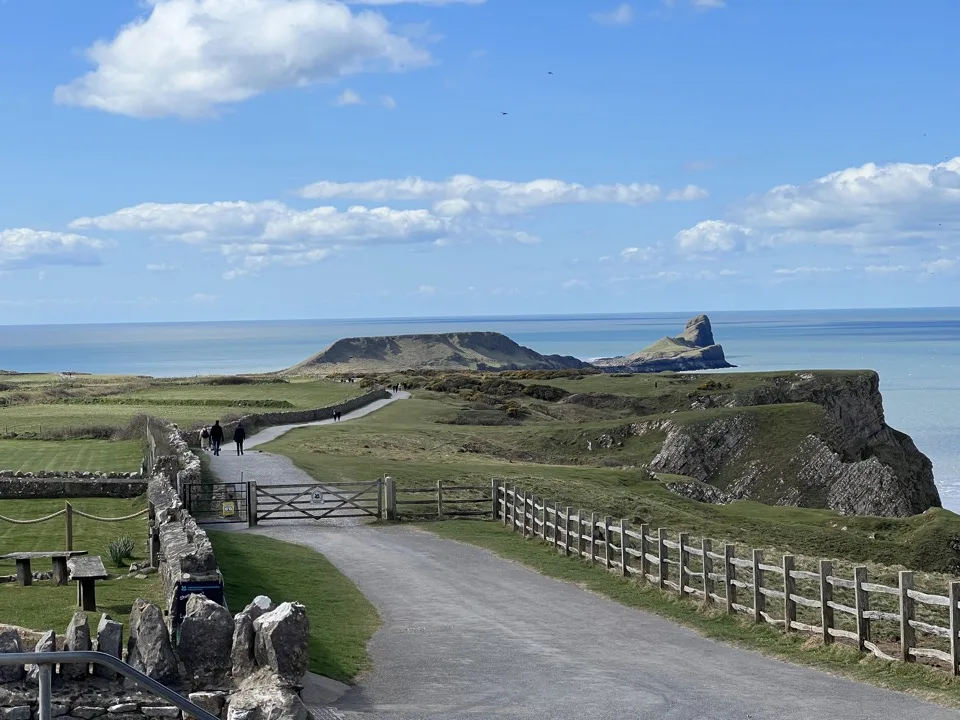
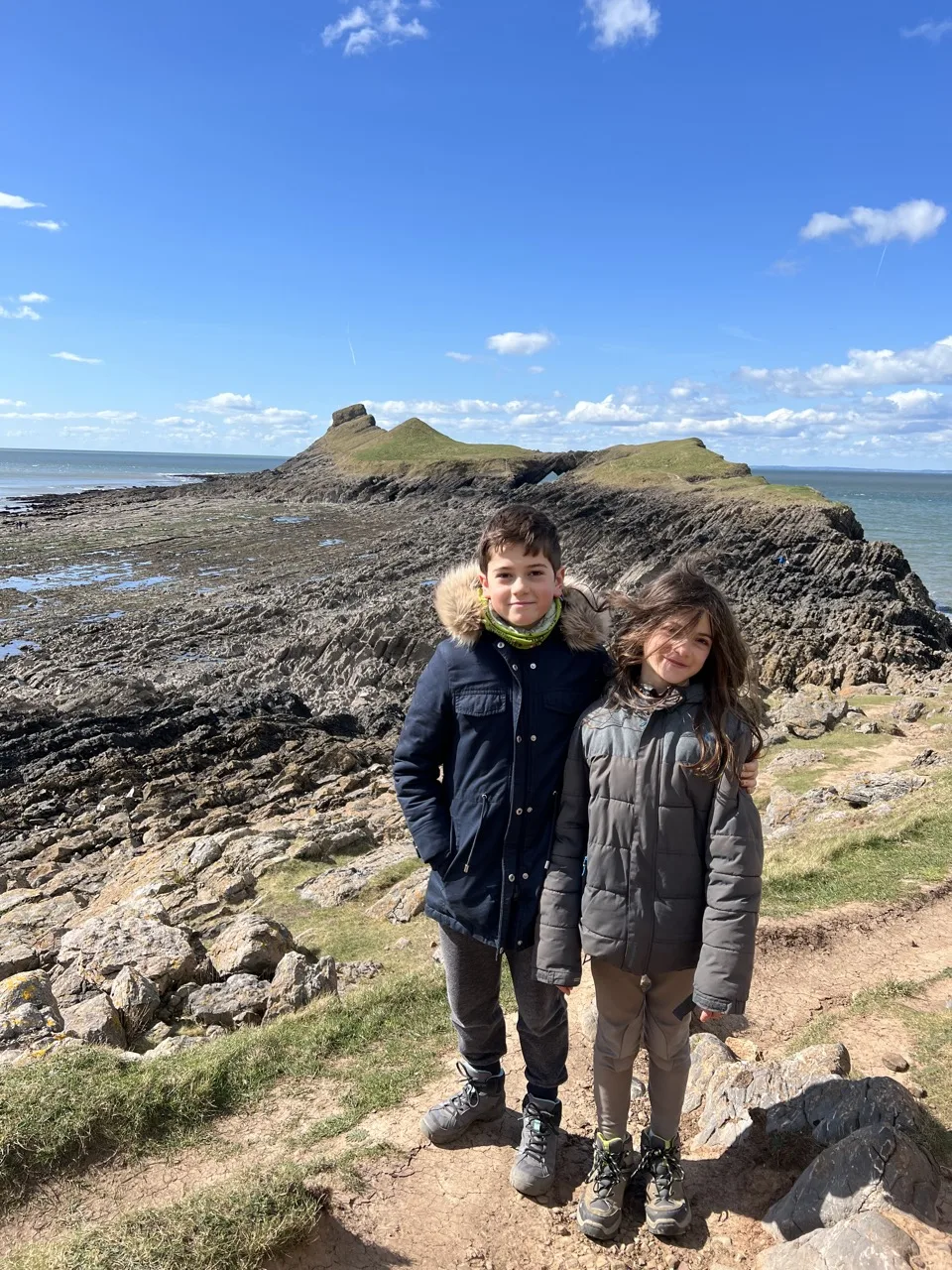
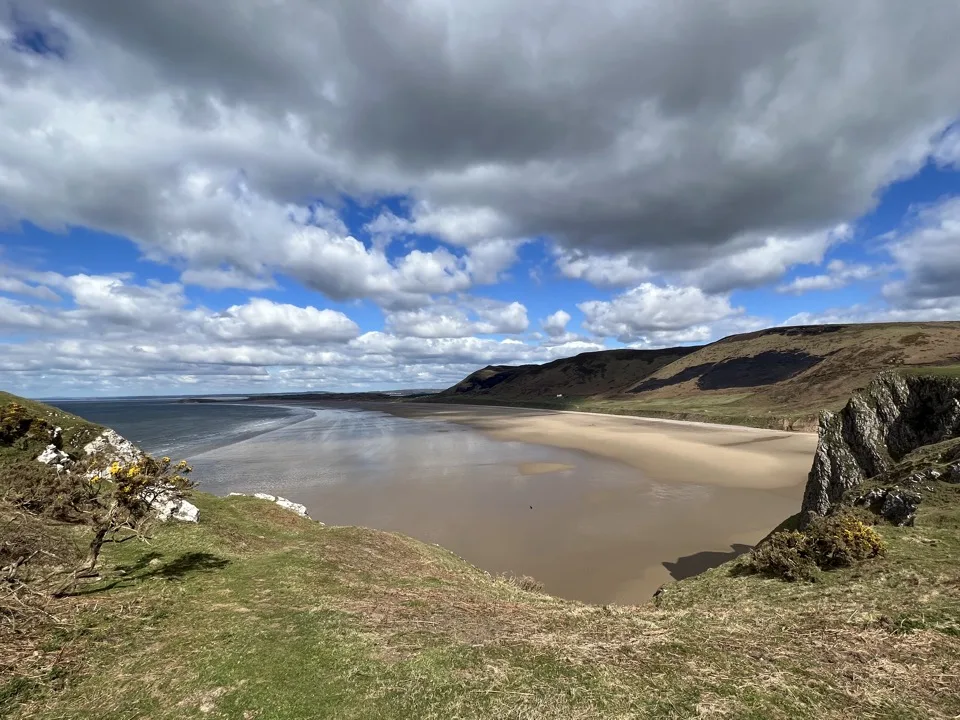
  • Rhossili Bay: a favourite spot! We did a 2-hour walk there. It was superb! A real end-of-the-world feeling, varied seascapes, beautiful colours… This place is unmissable! We’ll probably go back! Do pay attention to the tide times so you don’t get stuck. After our fresh-air walk, we sat down in the little café at the Lookout.

  Coastal path overlooking the sea on the Gower Peninsula

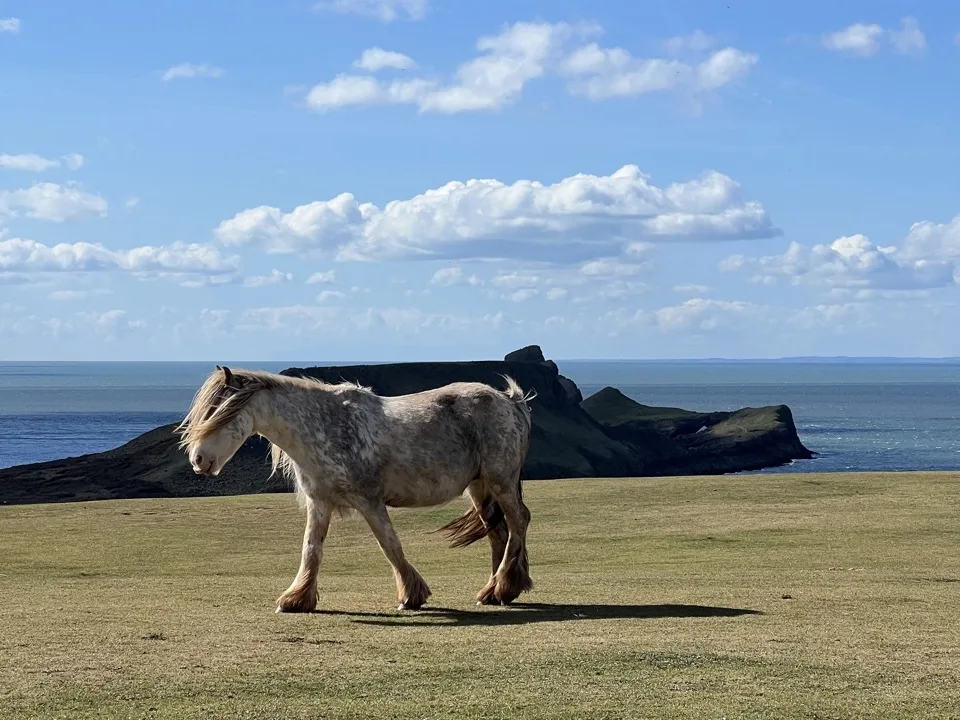
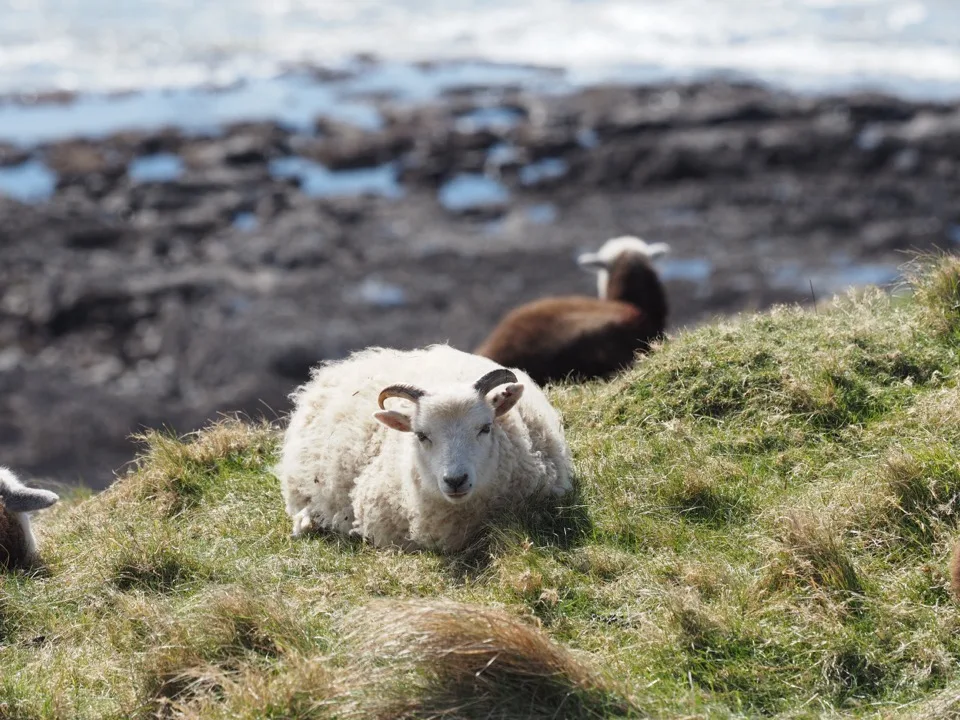
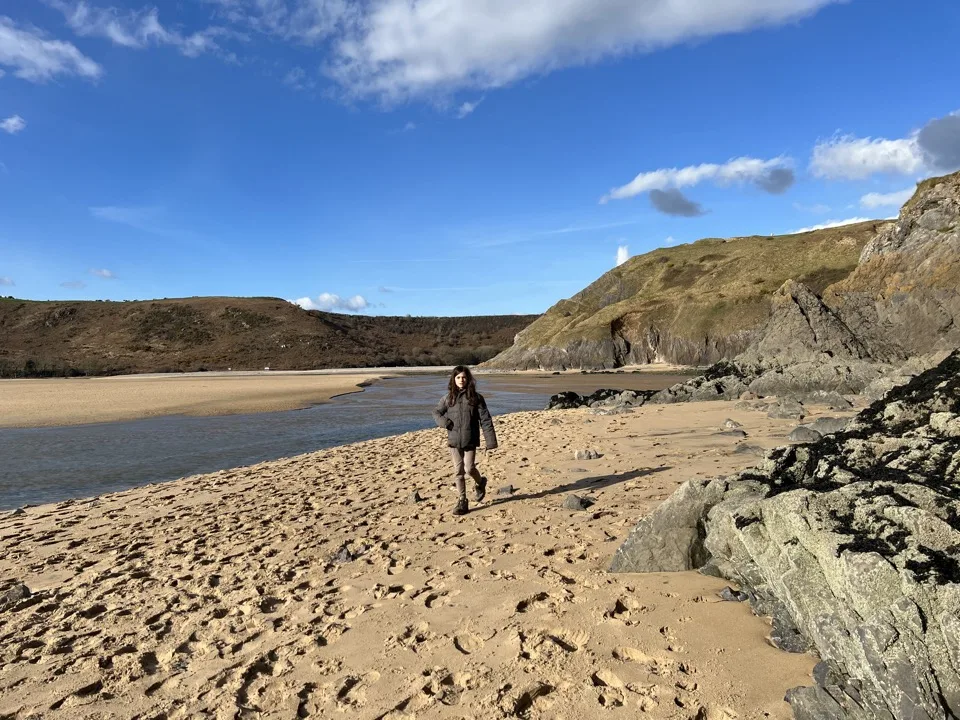
Sandy beach between the hills of the Gower Peninsula I’m not the only one with hair blowing in my face in the wind: Pony grazing near the Welsh coast This hairstyle is more practical: Sheep on a meadow overlooking the sea in Wales

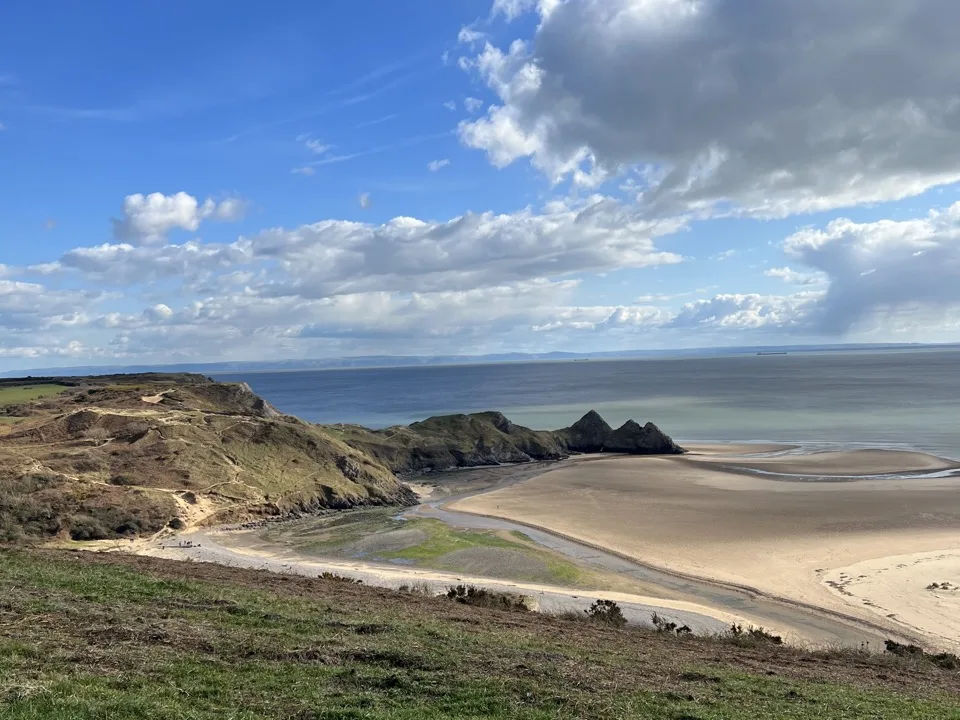
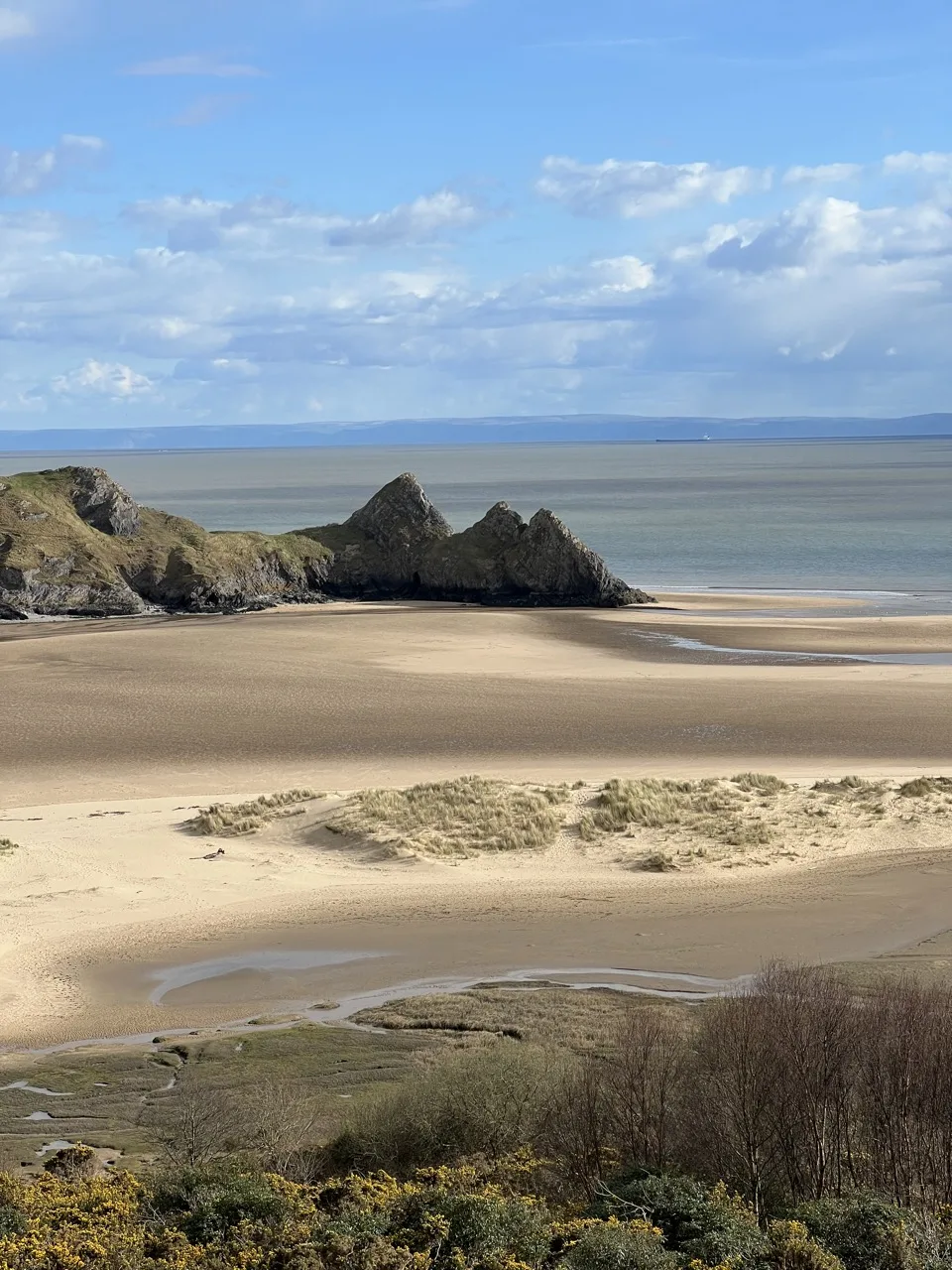
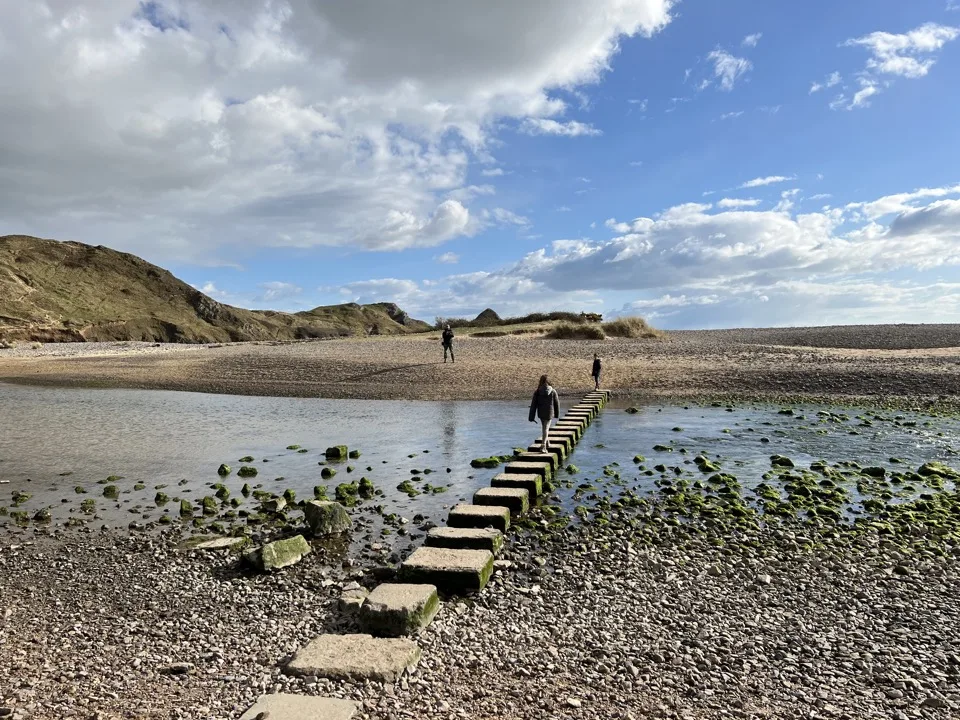
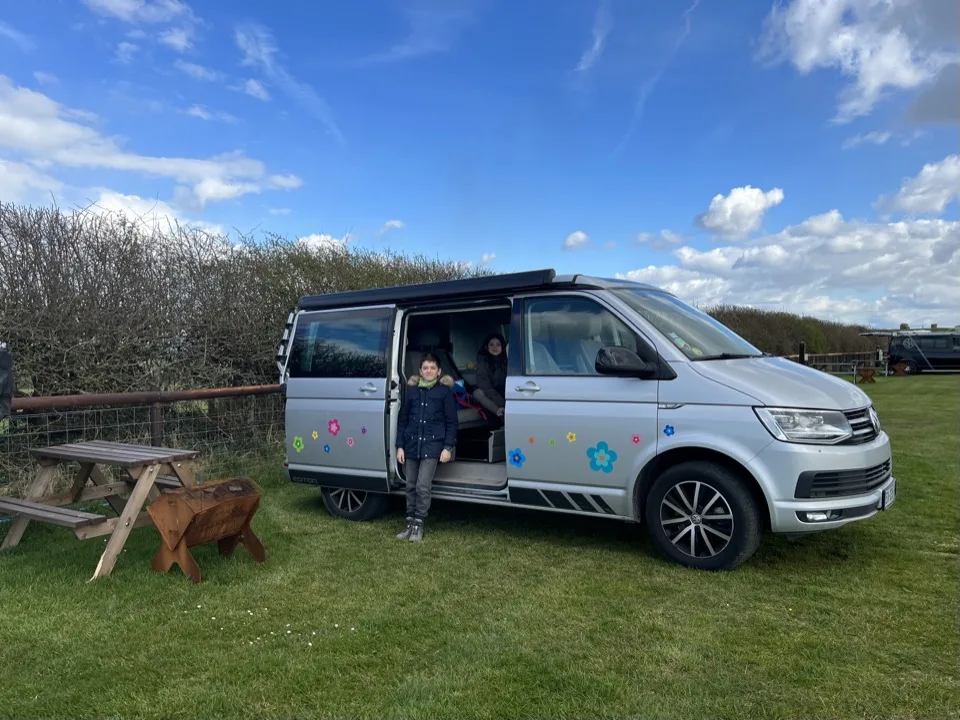
  • Three Cliffs Bay: also a stunning site! We really started strong! We walked along the whole bay, then stayed overnight at Holiday Park campsite, which overlooks the area. A very good campsite: very friendly welcome, superb spot and a little food truck where we ordered Indian-style wraps (night rate: £35 with shower).

Sandy bay on the Gower Peninsula viewed from the path

Le Pays de Galles en famille

Broad Gower beach at low tide

Stepping-stone path across the Gower foreshore

Campervan parked in a meadow near the Welsh coast

Pembrokeshire: the best-known coastal area

This is the south-western tip at the far end of Wales. It’s probably the most touristy area in summer, but in April there was no one. Here are our stops on this peninsula:

  • Tenby and its colourful seaside houses: this village is very cute. We did a long walk. Then, at midday, back in the village, we bought seafood to take away and eat on the go while admiring the beach.

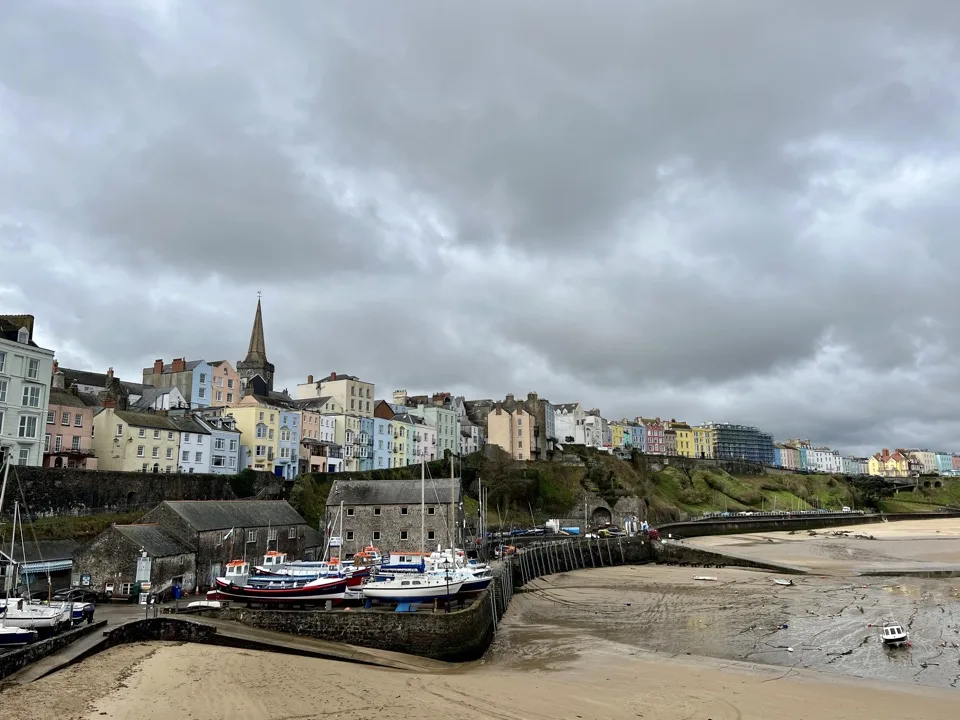
Tenby harbour and houses beneath heavy clouds

  • Church Cove: another beautiful spot for a seaside walk, but the rain came down on us, with a few bright spells all the same…

Ruins of a fortification on the Pembrokeshire coast

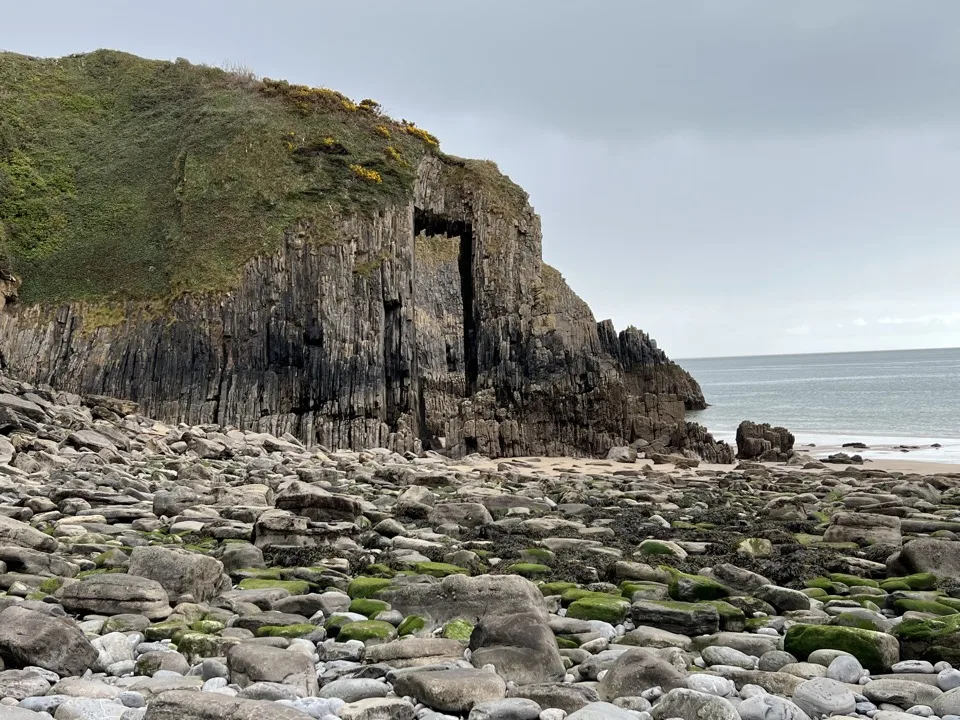
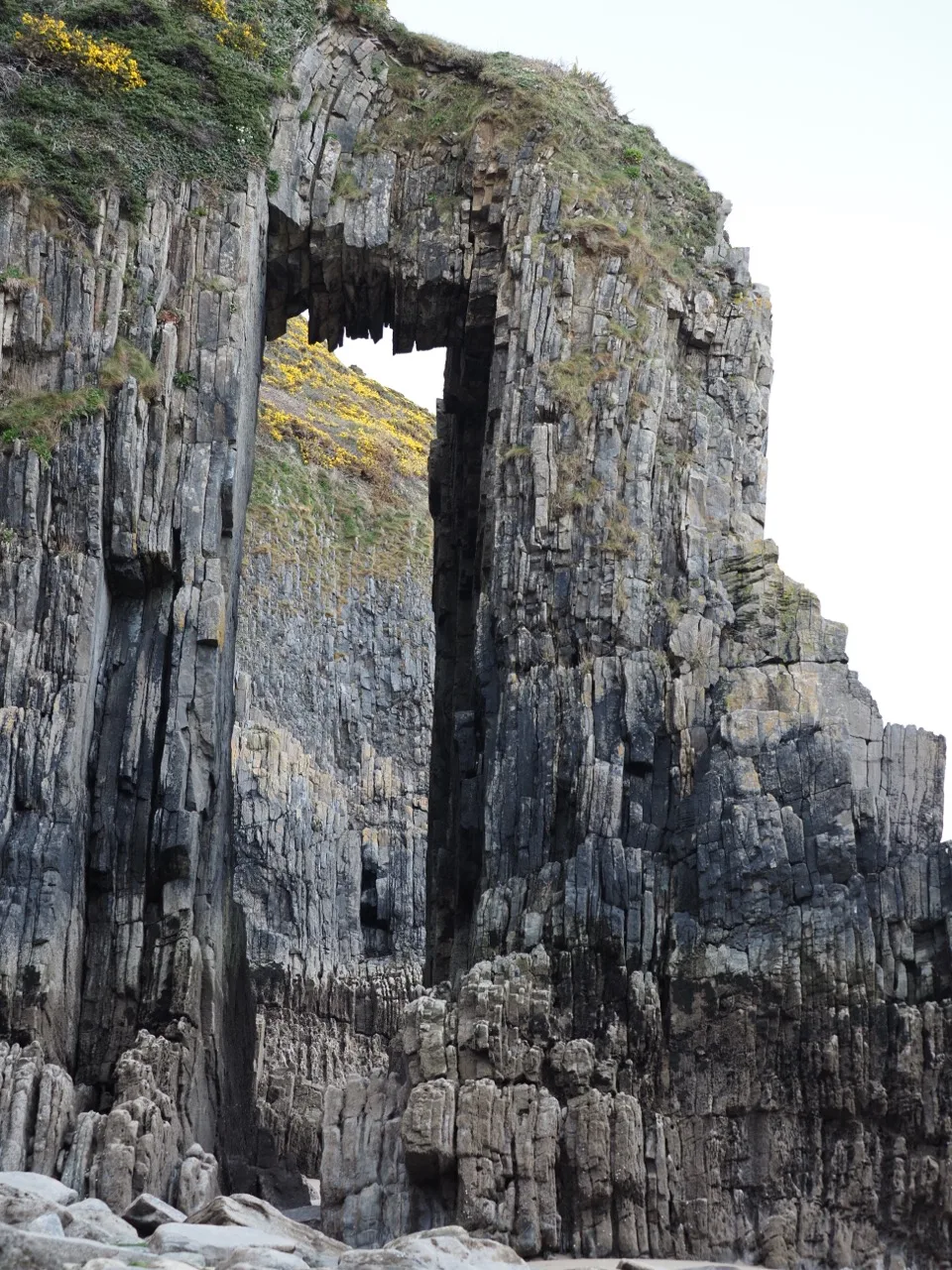
Natural arch in the Pembrokeshire cliffs

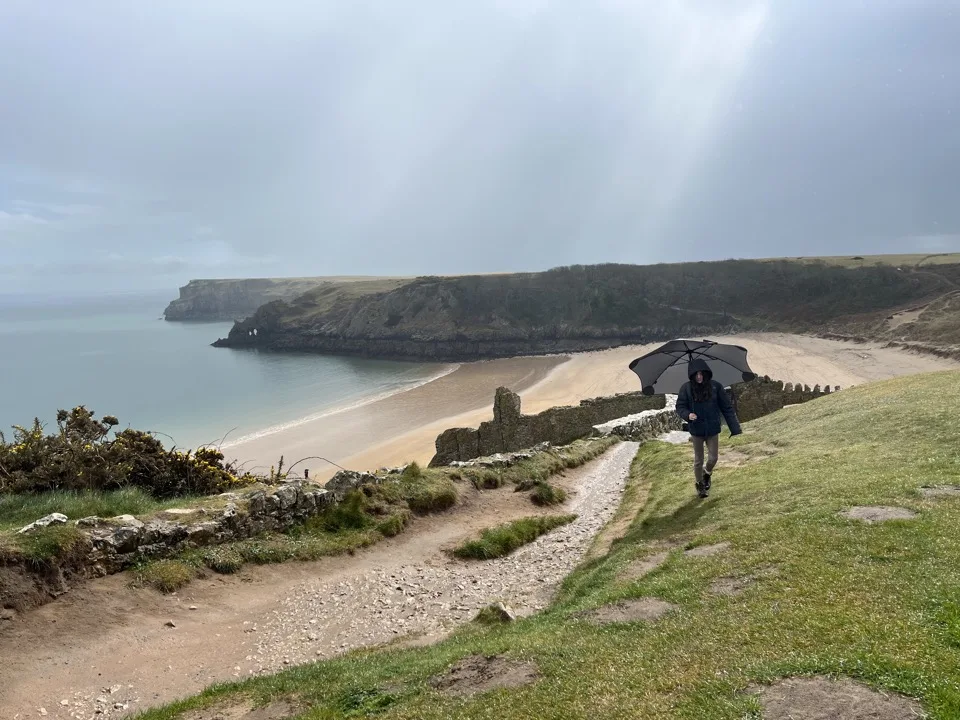
Coastal path above a Pembrokeshire beach

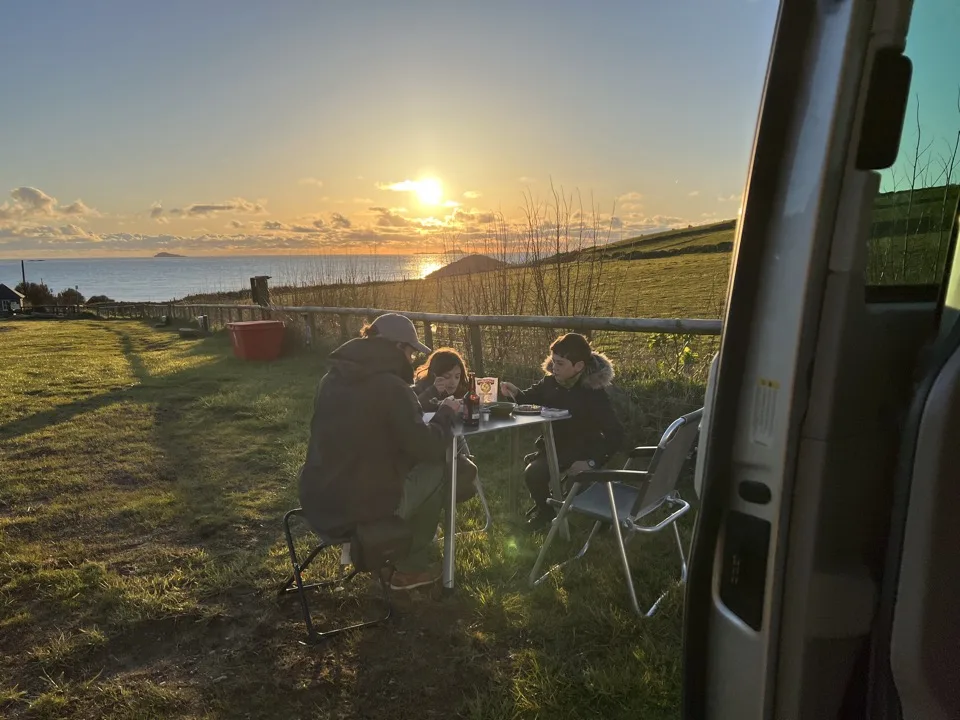
  • Whitesands: a lovely beach, a walk along the footpath and a night at Whitesands campsite, where we were alone with a sea view. The site is very simple, with no particular charm, but the view was great (£30 a night). It was the only evening when we managed to eat outside, in the sun (wearing big puffer jackets).

Camping table overlooking a Welsh sunset

  • St Davids: this was the only small disappointment of our stay in Wales. I’d heard so many good things about this village! Honestly, I don’t think there’s anything special about it. No charm, no beautiful architecture… But OK, there is one site to see: St Davids Cathedral! It’s worth it! So yes, make a quick stop in St Davids, but I think it’s unnecessary to linger in the village.

St Davids Cathedral beneath a blue sky

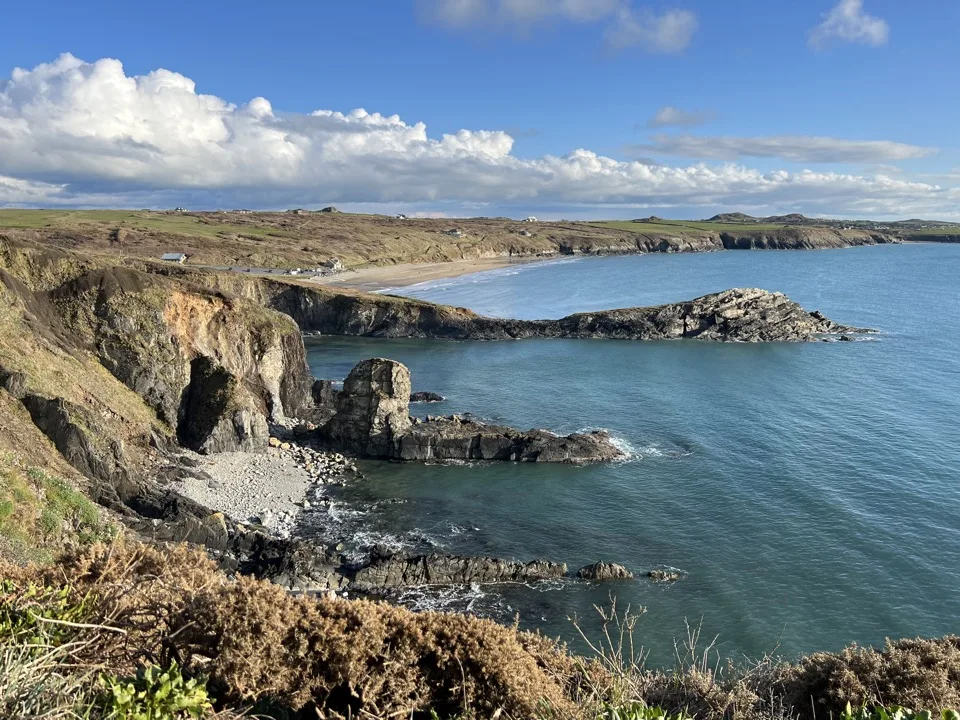
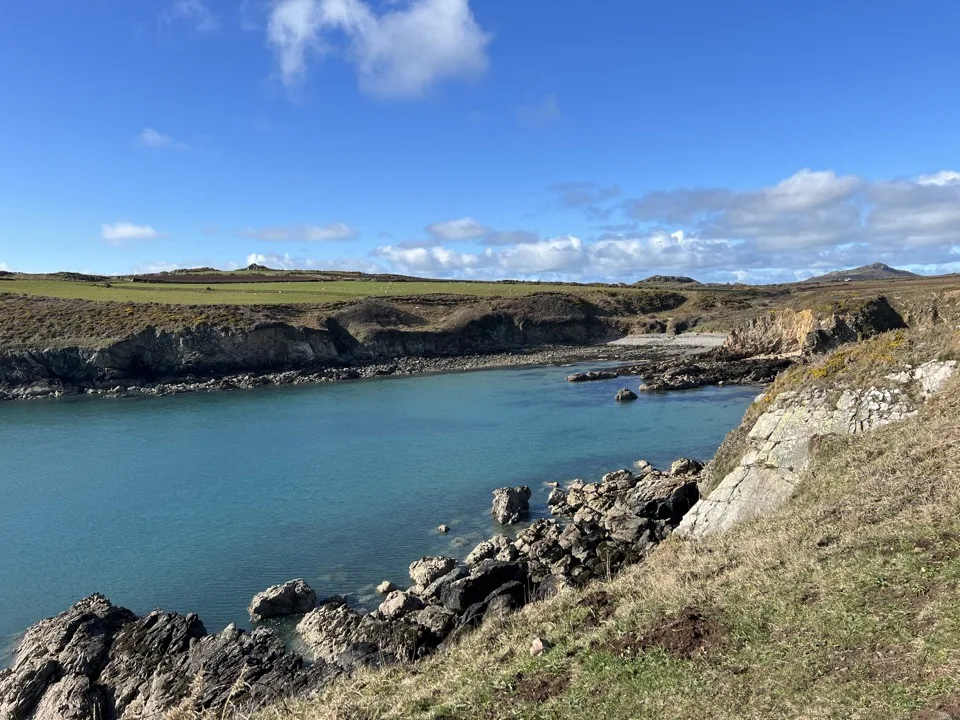
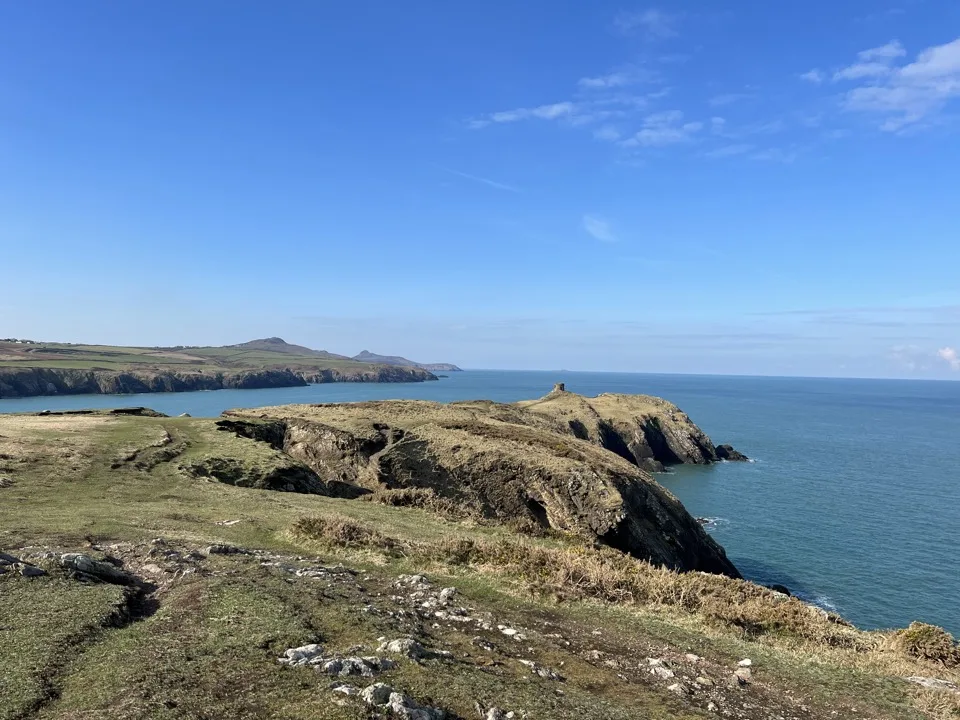
  • The Blue Lagoon: not far from St Davids, we liked this spot for a short, peaceful walk…

Cliffs and islets along the Pembrokeshire coast

Rocky cove with blue water in Pembrokeshire

Paths across a Pembrokeshire headland  

The Brecon Beacons: for hiking lovers!

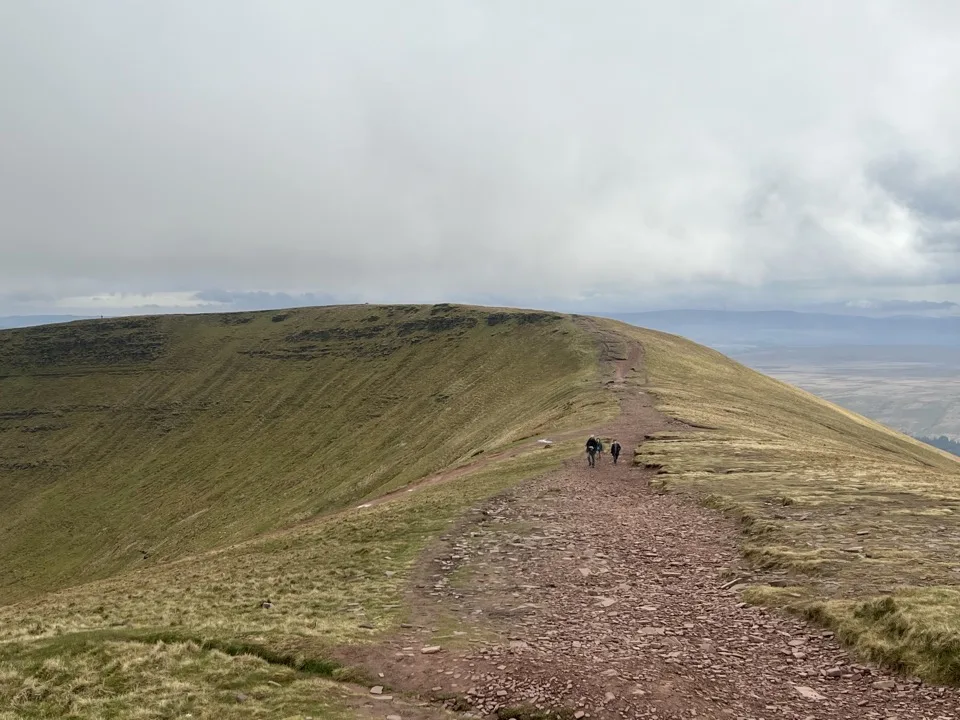
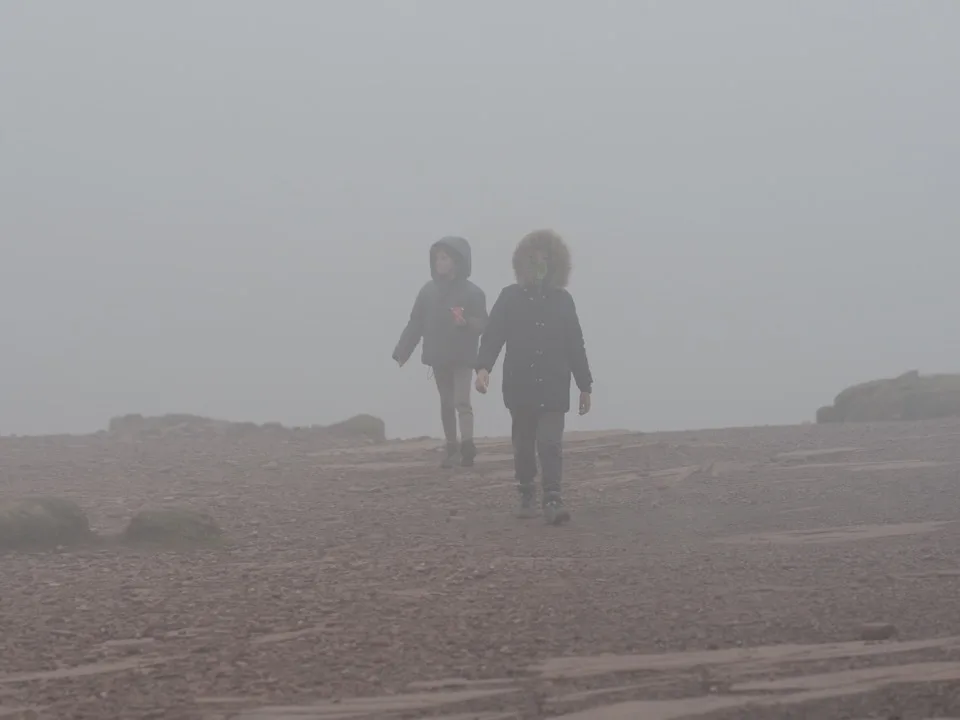
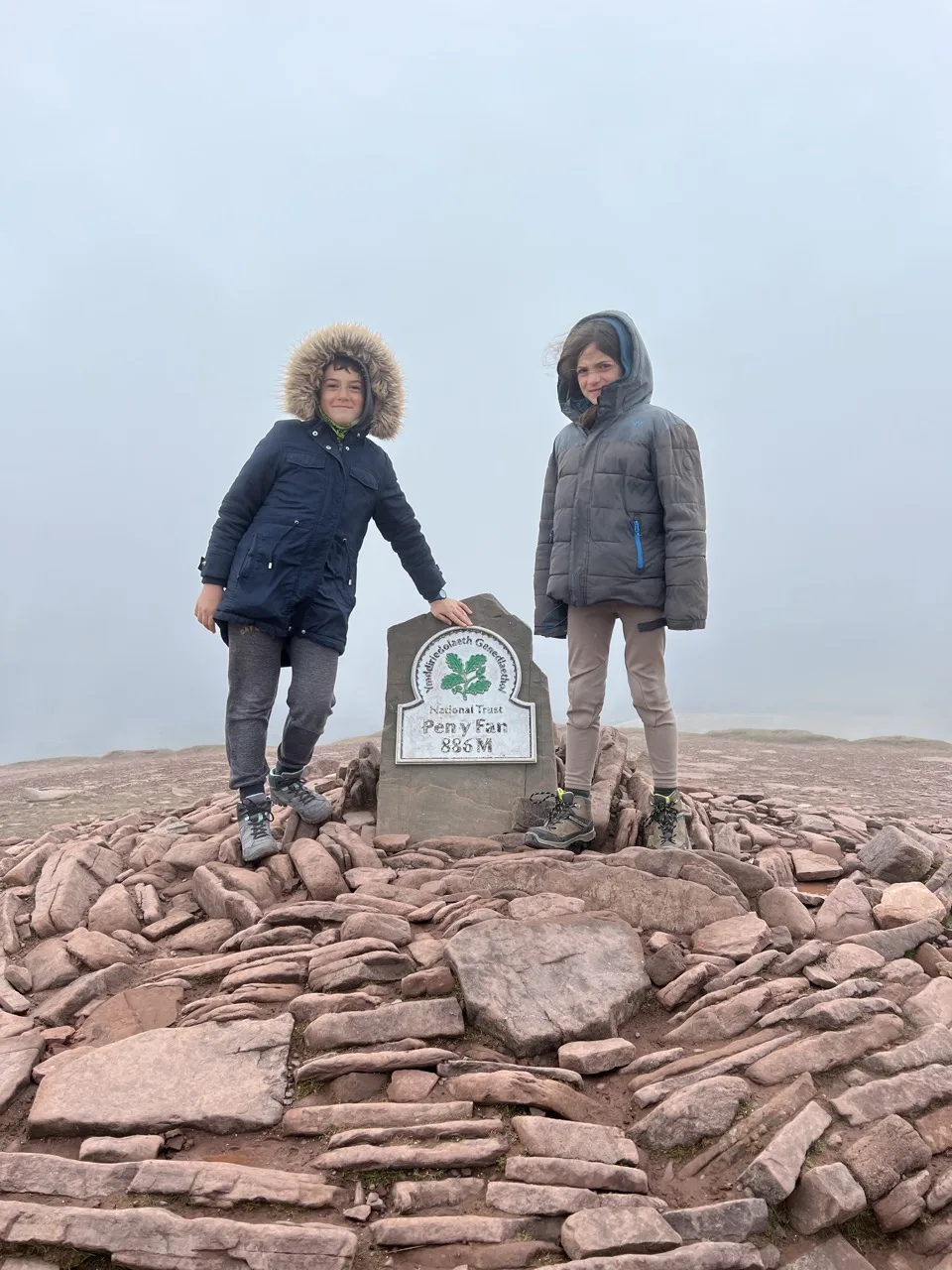
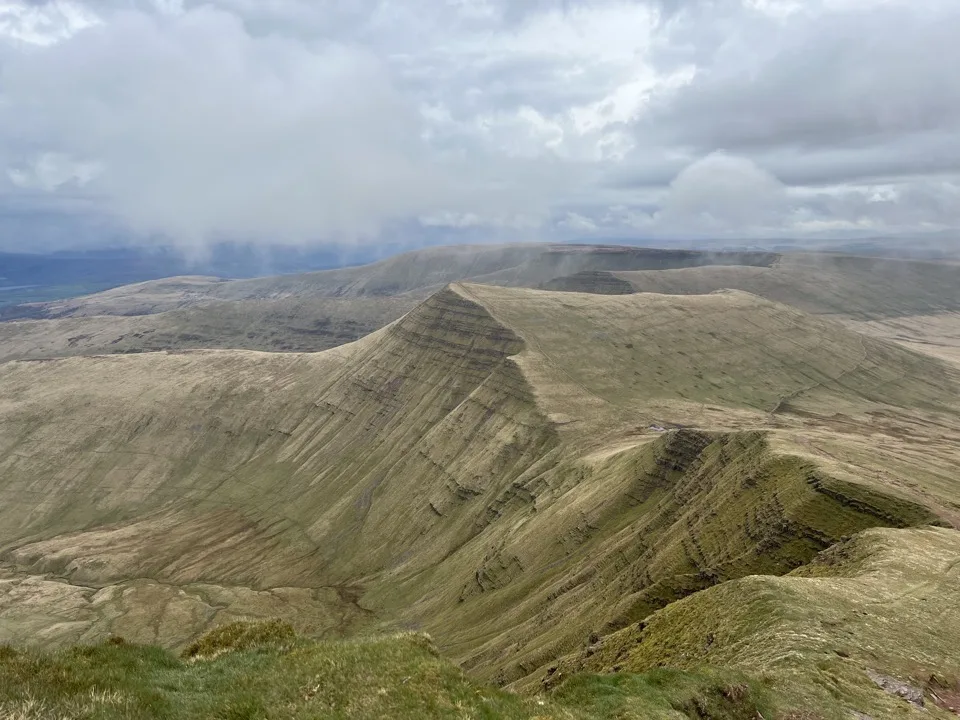
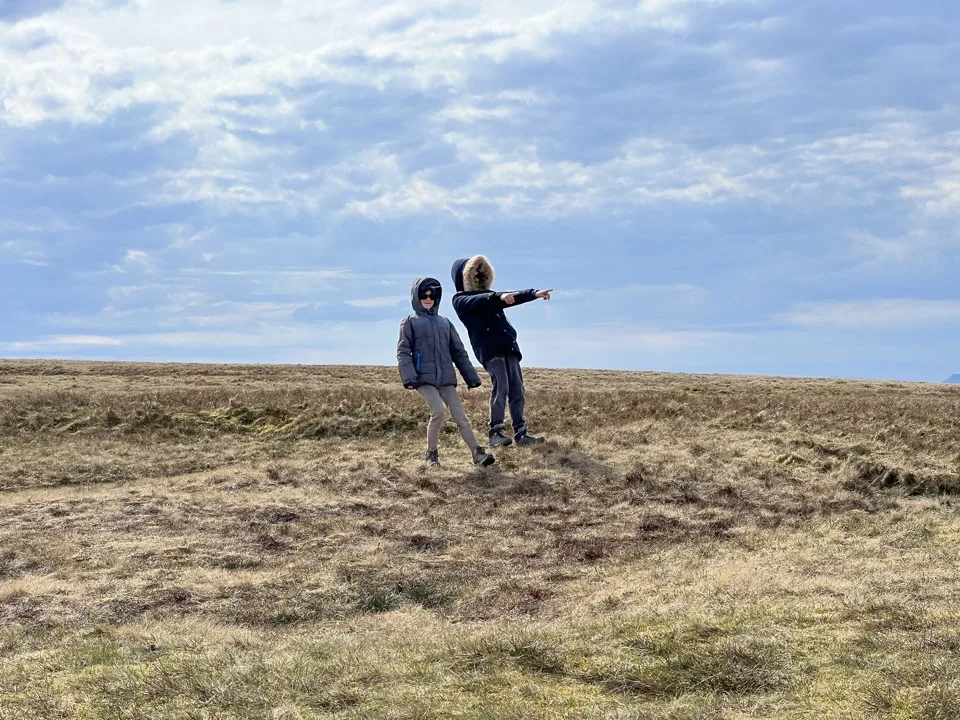
The Brecon Beacons are a mountain range that isn’t very high, but high enough for the hikes to be sporty. The landscapes are, once again, magnificent. We didn’t have great conditions for walking, with the wind, rain and sometimes fog. We’re used to hiking, but the weather made the challenge harder! Nevertheless, come what may, we reached the summit of the Brecon Beacons: Pen y Fan! It took us 55 minutes to reach the top in bad weather. The descent was much quicker, so I’d say allow under 2 hours for the round trip. Path along a Brecon Beacons ridge But where is the summit? Walkers' silhouettes in mist in the Brecon Beacons

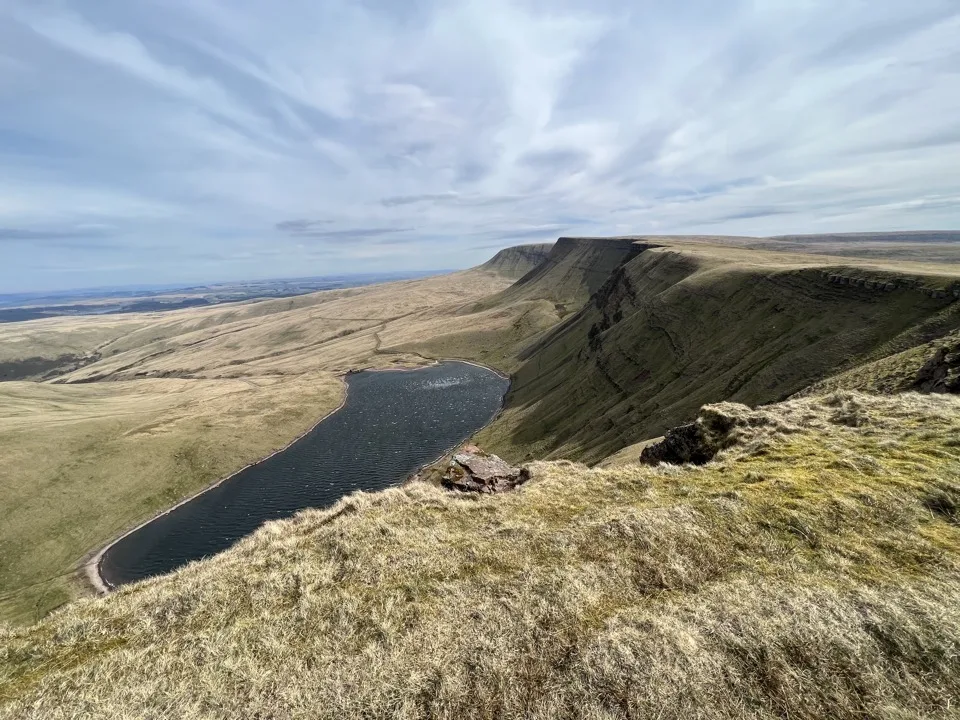
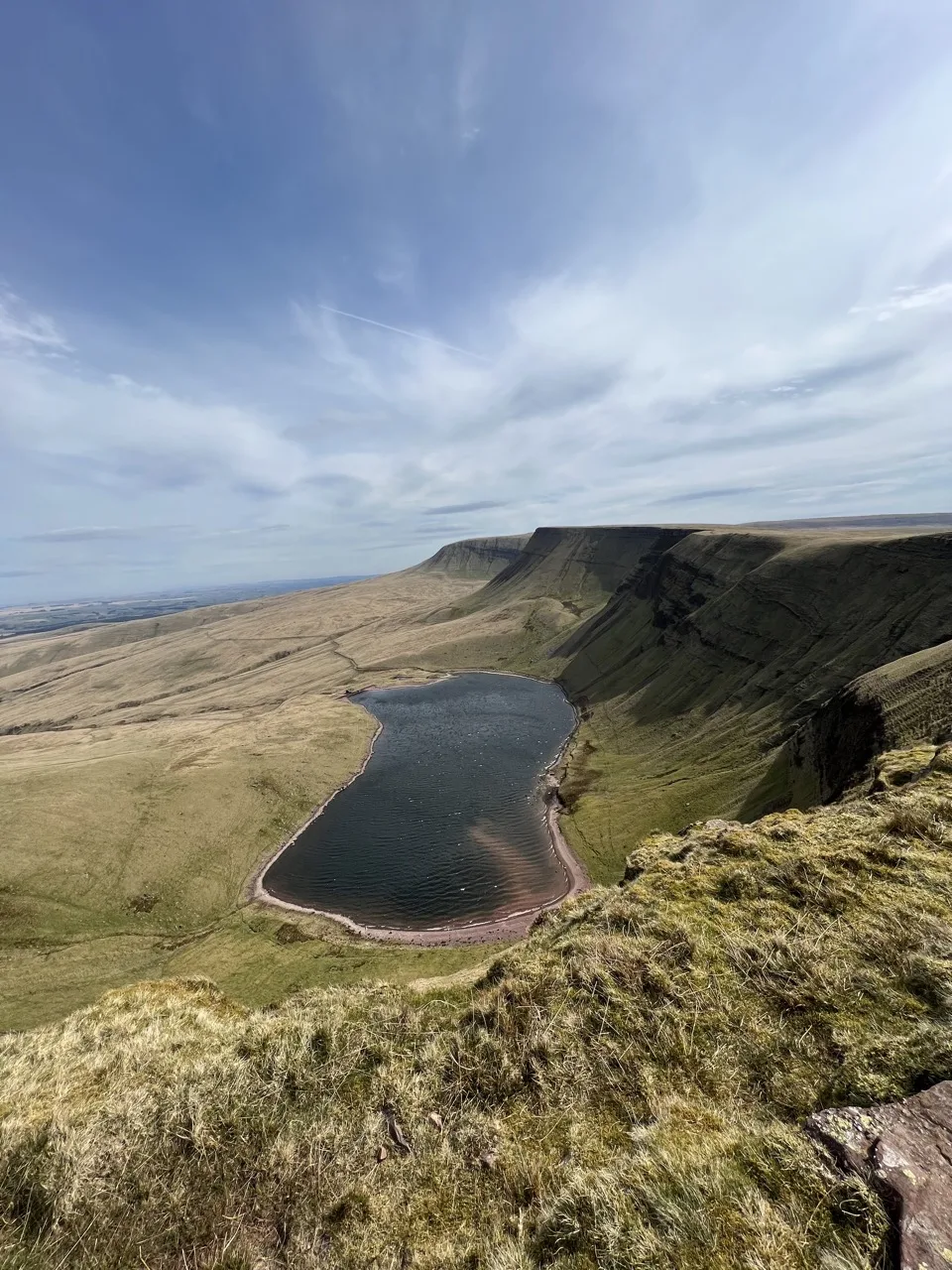
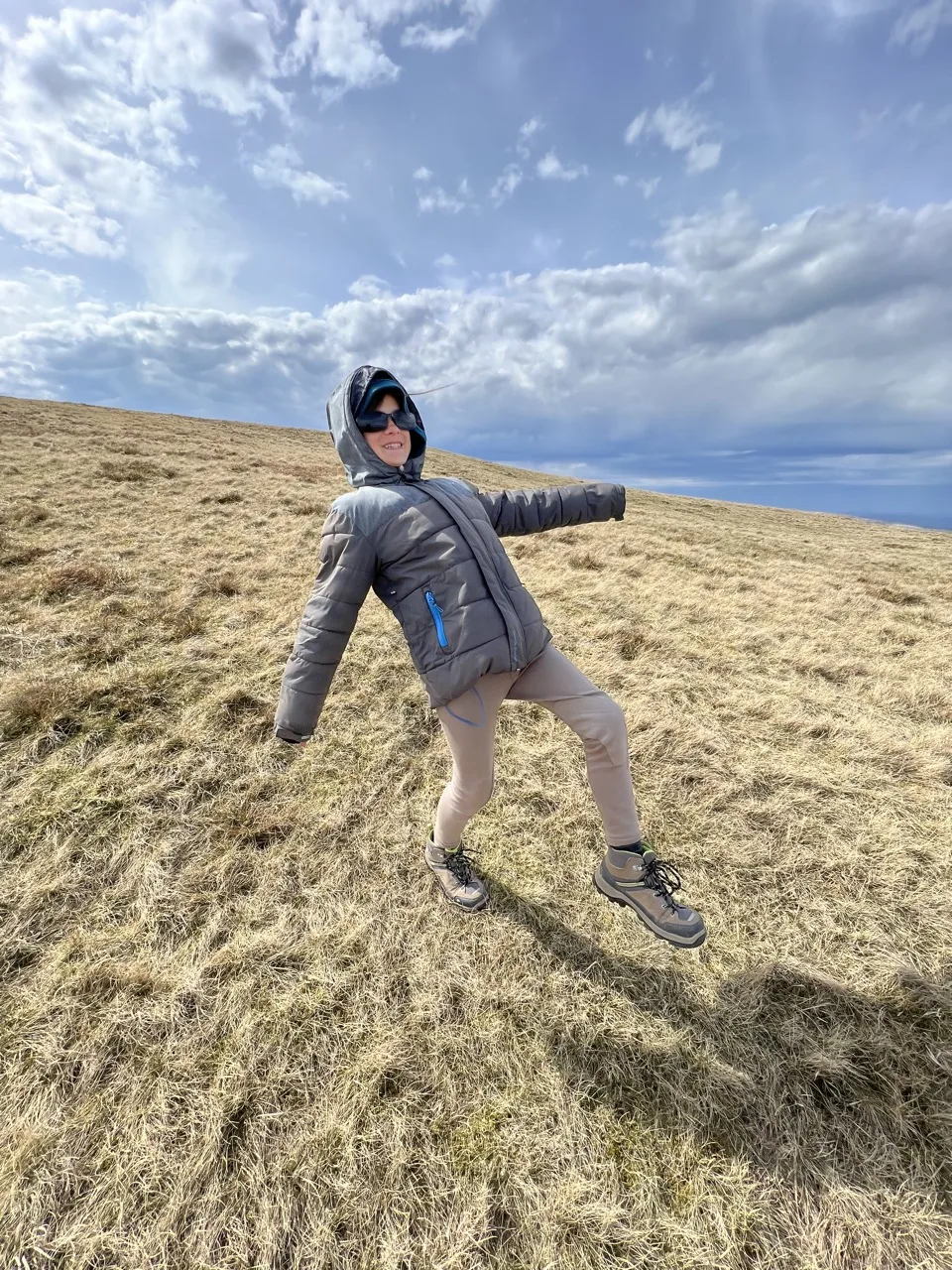
Fortunately, the sky cleared and the panoramic view appeared: Grassy Brecon Beacons ridge beneath grey skies As often, it wasn’t the highest summit that was our best hike: our favourite was Llyn y Fan (2 hrs 45 hike). Look at the landscapes! A great memory, even though I was scared by the power of the wind! Fortunately, Papa Voyage made us do the loop in a direction where the wind couldn’t push us towards the edge. What would we do without his sense of direction! Undulating ridge and lake in the Brecon Beacons   Dark lake beneath a Brecon Beacons ridge

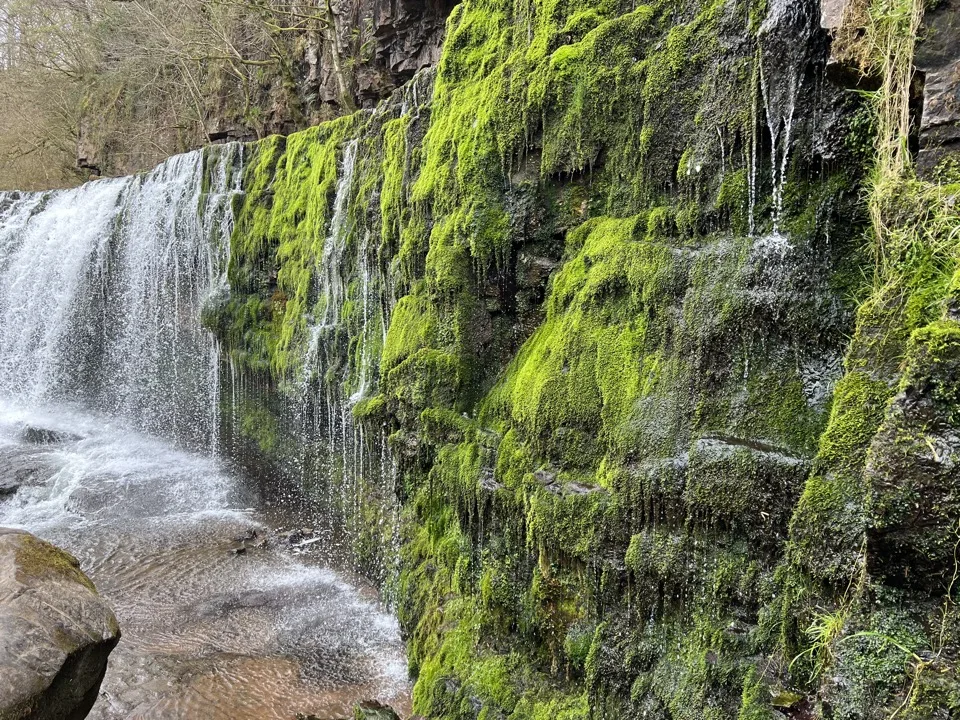
That same afternoon, we did the 4 Falls (waterfalls) walk: it took us 2 hrs 30, but it isn’t technically difficult. Do be careful, though, if it’s been raining, as the ground could be slippery. The 2nd waterfall and the 4th were our favourites. Moss-lined waterfall in the Brecon Beacons

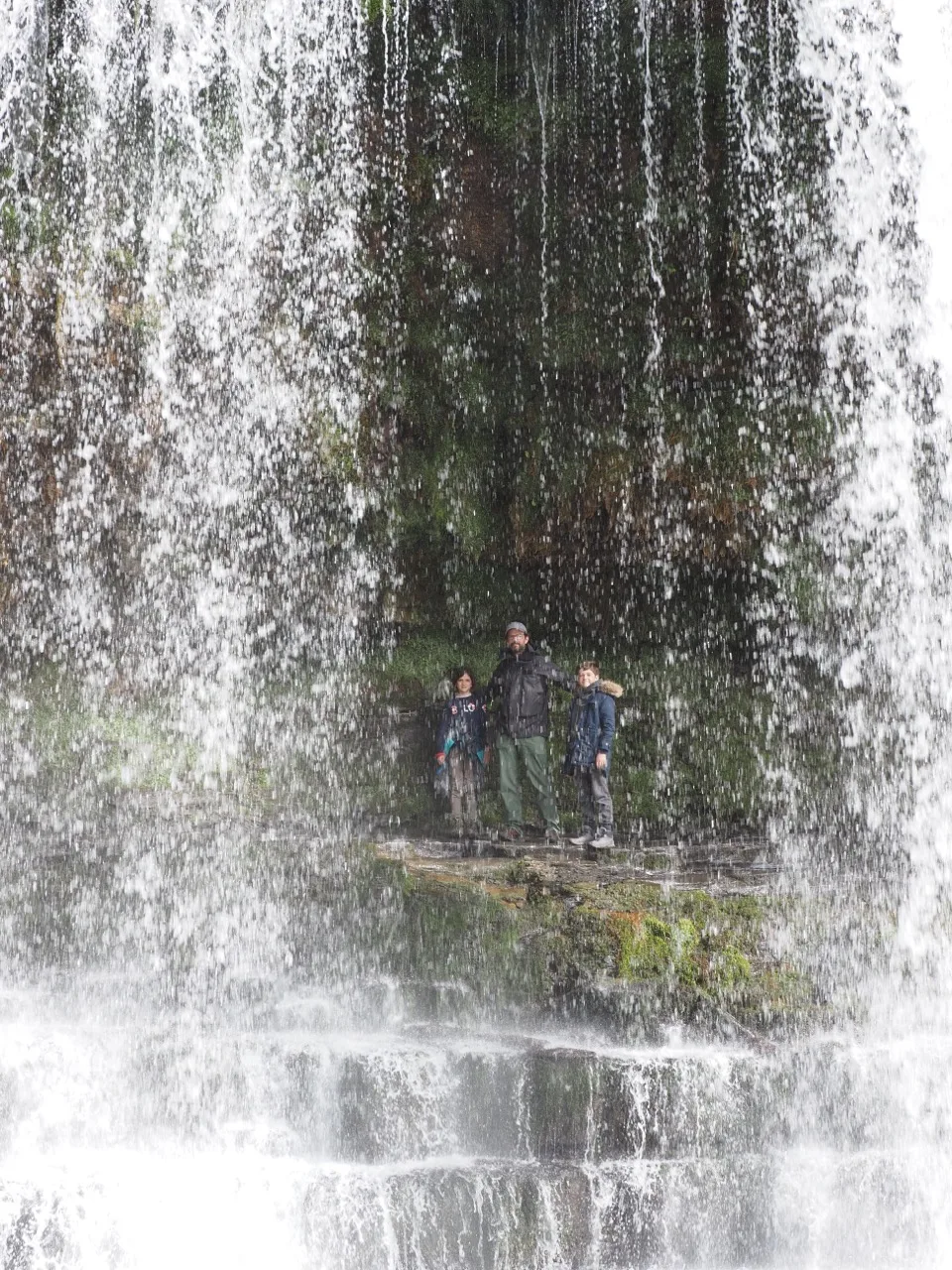
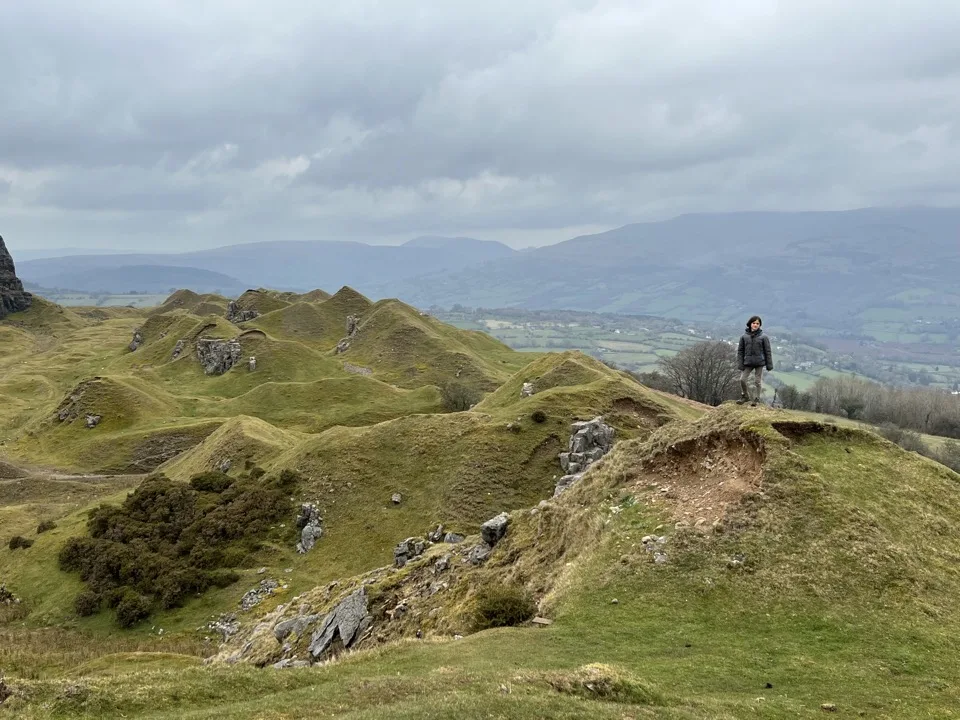
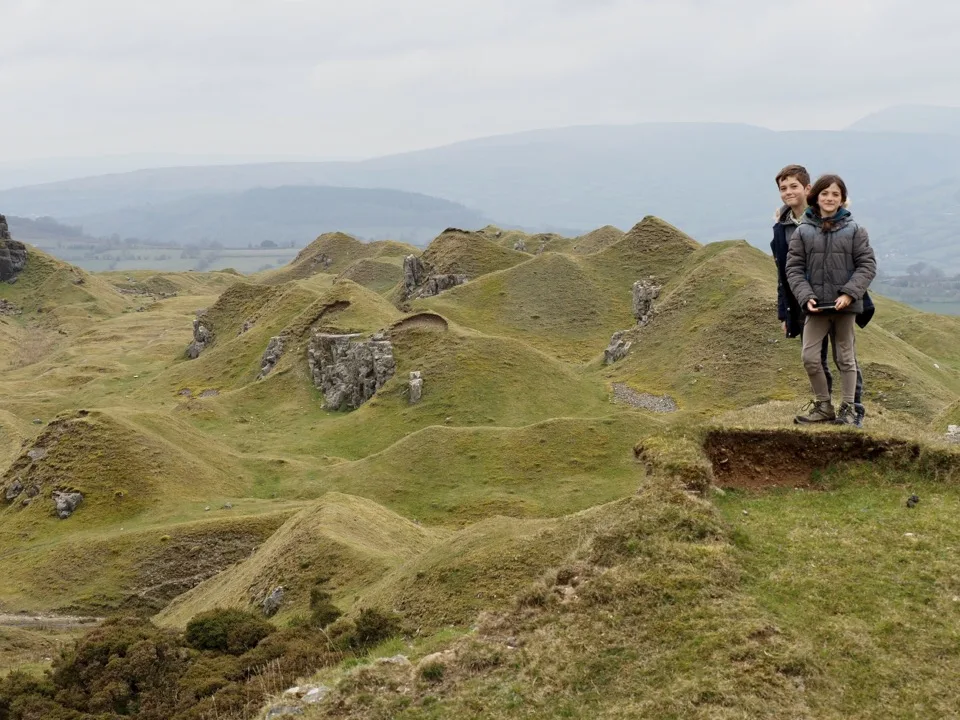
Walkers seen through the curtain of a Welsh waterfall While picnicking (in our campervan because of the weather), we stopped near a site we really liked: a bumpy landscape linked to the presence of quarries: Path winding across the Brecon Beacons hills

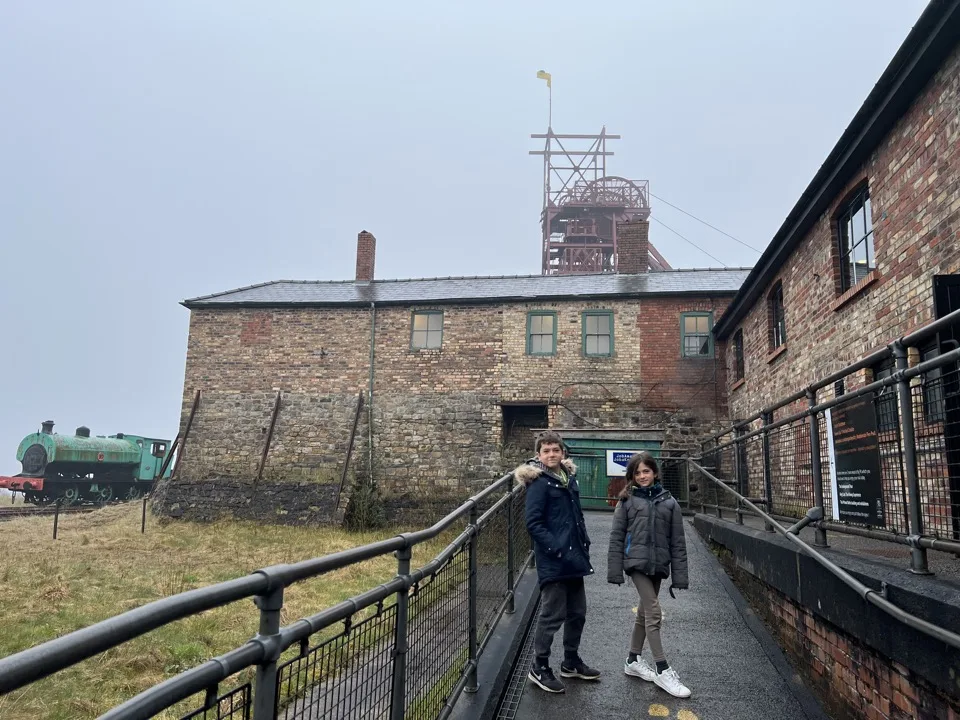
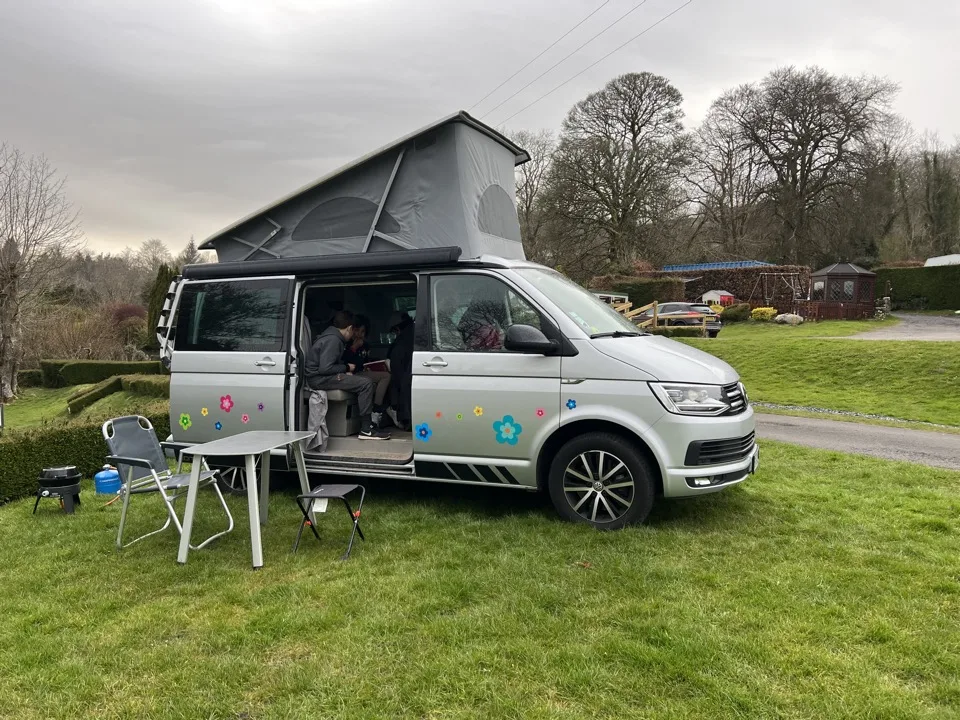
Finally, still in the same area, we visited an old coal mine: Big Pit. It’s a fascinating visit for children! It’s free, and it’s retired former miners who take you around the mine, explaining with emotion the difficulties of this work in their time, and also in the time of their fathers and grandfathers… In short, it’s Germinal, Welsh version! Family outside a stone building in the Brecon Beacons For camping, we slept several nights at Grawen campsite: nice because it’s very green, but you can hear the road a little (£28 a night). Campervan with raised roof on a grassy pitch

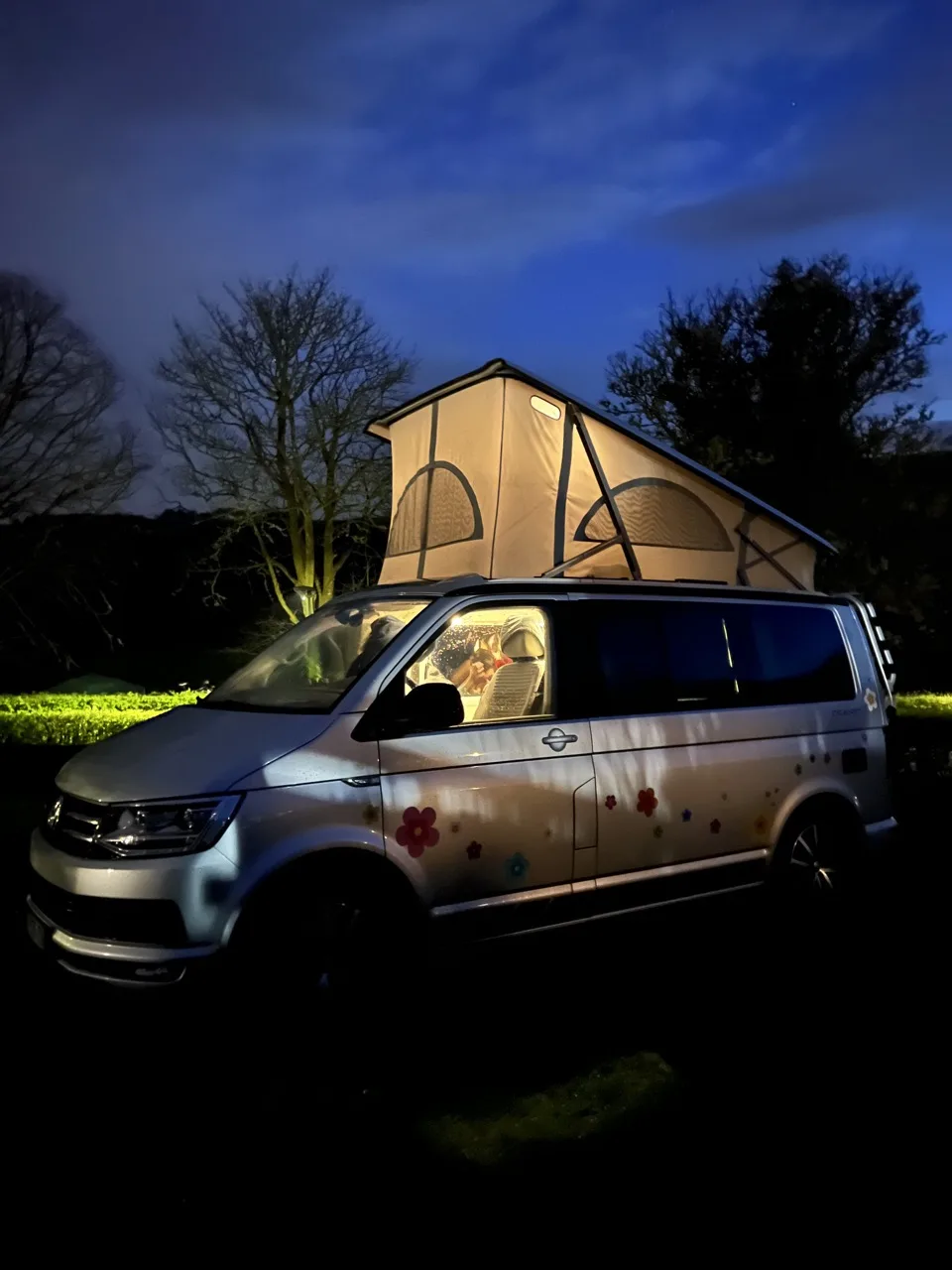
Campervan lit up at dusk on a Welsh campsite

On the edge of Wales: the River Wye and the Forest of Dean

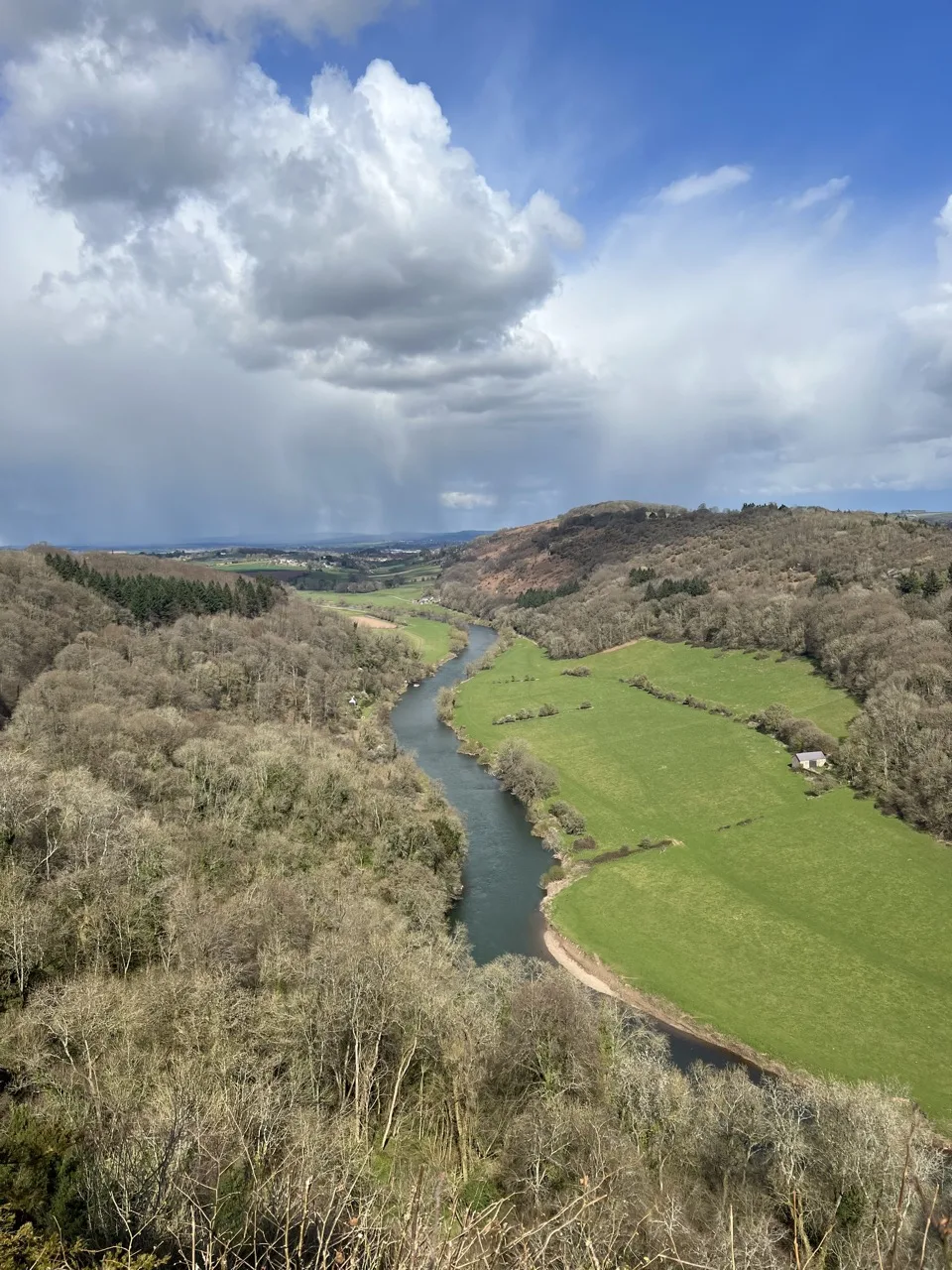
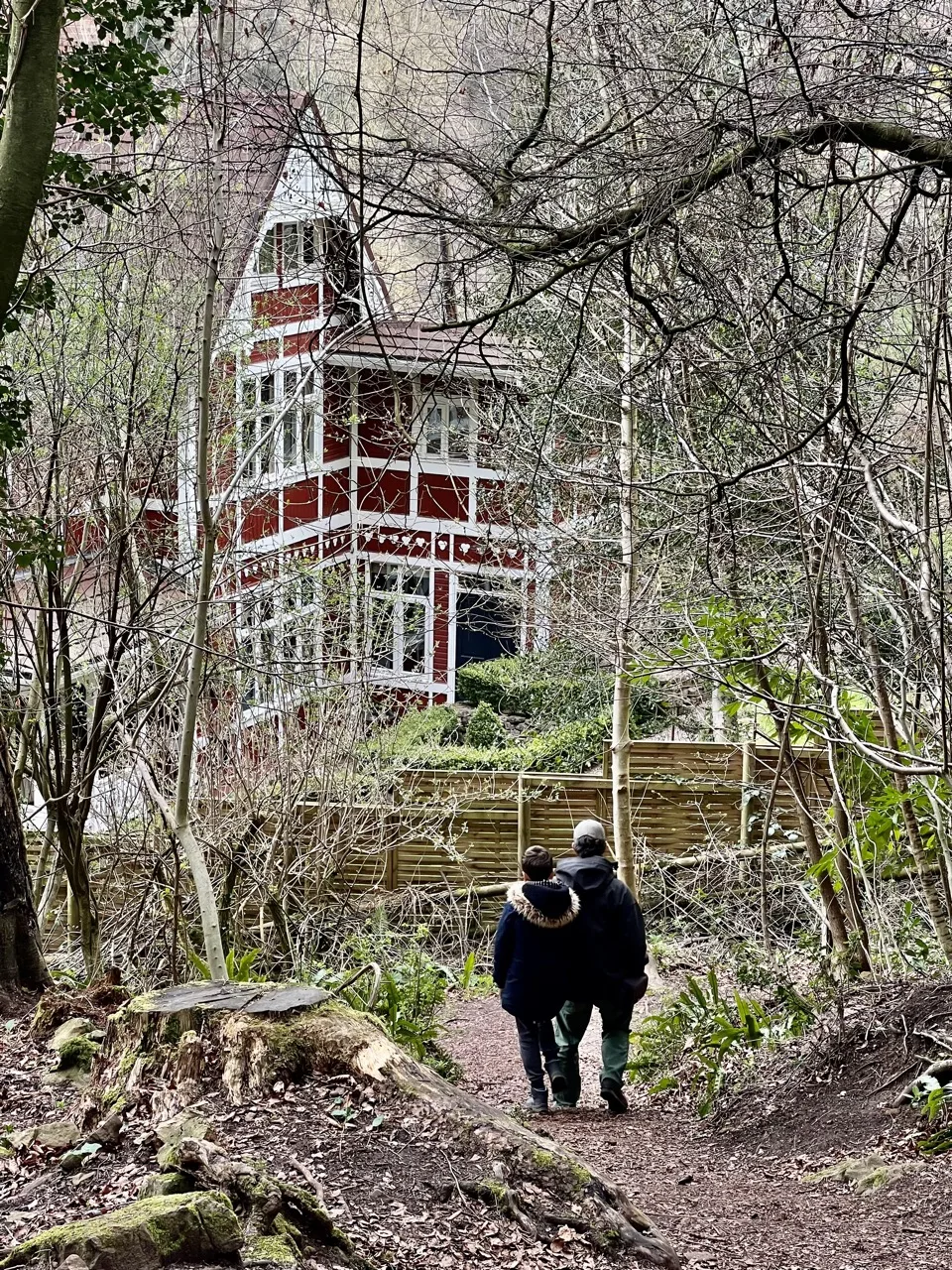
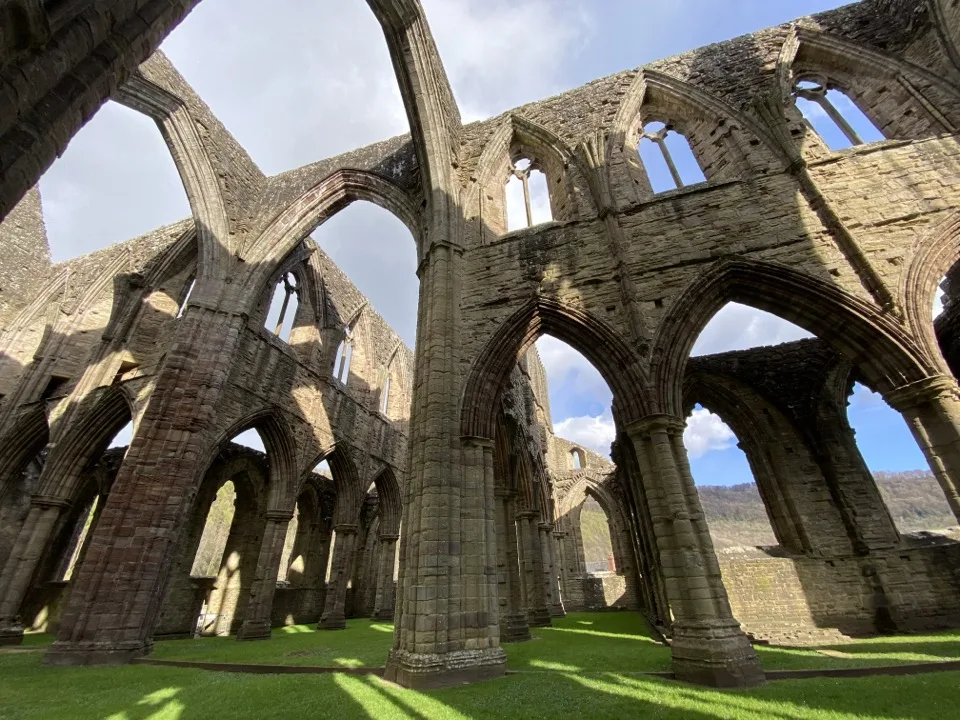
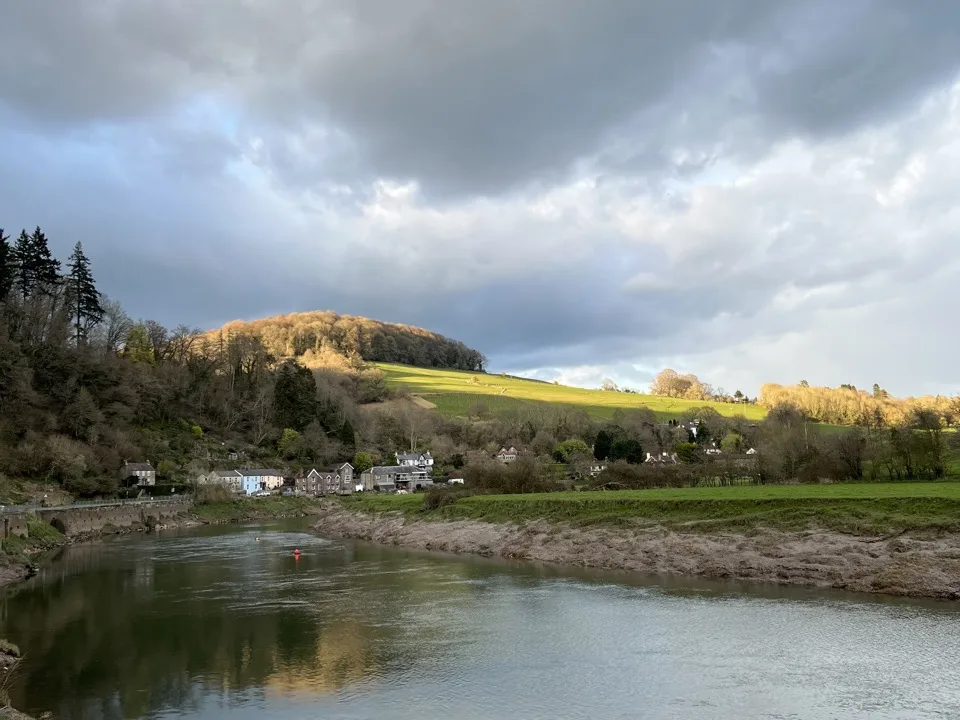
Here are a few places that are located on the edge of Wales, on the border with England, sometimes on one side, sometimes on the other: the River Wye is partly a natural border between the two countries. I wanted to stop there because of the landscapes you can see in the series Sex Education. The riverbed is indeed very charming, although I think it must be even more beautiful in summer or autumn… In summer, holidaymakers like to hire canoes/kayaks to go along the river. We did a long walk along the water, starting from the Symonds Yat Rocks viewpoint (the viewpoint not to be missed). Right at the beginning, we came across, without even having to look for it, the famous big villa where Otis and his mum live in the series: it’s very beautiful, but the filmed images are a bit misleading because you don’t realise it isn’t quite as isolated as that, so in the end no, I didn’t feel like buying it ;-). In fact, I looked it up and apparently you can rent it for a few days as a holiday home. If I’ve understood the geography correctly, the house is on the English bank of the river. About the series, the new season is currently being filmed in Wales again… Green valley of the River Wye   Suspended walkway in the Forest of Dean We visited Tintern Abbey: a superb abbey, located by the river on the Welsh side. We had lovely light at the end of the day: Ruins of Tintern Abbey in Wales During this visit, we discovered that there is a card that lets you visit Wales’s major sites, notably quite a lot of castles (the equivalent of the English Heritage card in England). As the aim of our trip was more about nature and hiking, we didn’t get it, but if you’re planning to visit a few castles, it will quickly pay for itself: see the Cadw website. River Wye beneath wooded hills In the River Wye area, we slept in a pub car park! Yes, I know, it’s not glamorous, but it’s a handy option in Great Britain in general: not all pubs agree, but most do, so you just need to push the door and ask. The idea is that if you spend money with them, they allow you to stay overnight in their car park and, in the best case, to use their toilets during the night. I won’t give the address of the pub where we stayed, as they don’t do it on a conveyor belt either… It’s on request and perhaps depending on the evening and how busy they are, but I wanted to share the idea in case you’re travelling in a campervan in the UK. Our dinner at the pub, by the fireplace, was actually very good and really comforting after several evenings of having to cook inside the camper. Finally, just before arriving in Wales, so still in England, we stopped for a lunch picnic in the Forest of Dean. We saw it in all kinds of weather! The road through this forest is really beautiful. Campervan in a Forest of Dean clearing

See that sunshine? And yet, here’s the same place ten minutes earlier:

Trees in mist beside a Welsh road  

South Wales, in conclusion?

We recommend it! It’s very beautiful! I complained a lot about the weather in this article, but even so, it didn’t spoil my very positive impression of this region! If you have no choice and you come in spring, then don’t worry: I’m sure you’ll enjoy your trip, like we did. You just need to be prepared and properly equipped (jackets, hats, gloves, sturdy shoes, lots of socks…). Especially in a van, it was cold at night. We even had zero degrees! Also, most of the time, we ate inside the van, which I don’t like too much. It’s obviously very cramped. As I’ve said in the past, for me the advantage of a van is more the outside of the van – the terrace in the sunshine :-). If you’re sleeping in a B&B, a rental, or a hotel, the experience will be easier early in the season. In nice weather, van life is truly a plus. On the other hand, for campsites, in high season you need to book. In April, there was no need! We were often alone! In short, you can’t have it all. Finally, there are many other places to discover in south Wales: more hikes in the Brecon Beacons, more coves, more beaches and many castles, so you can stay as long as you like! In one week, we got a lovely, varied and convincing overview that makes you want to go back! In any case, your trip to Wales will be a great wild adventure… under ever-changing skies!

***

So? Tempted by south Wales? Do you already know it?    

Also worth reading

Road trip in Scotland with a babyHikes in the Highlands with a baby on a 10-day holiday in Scotland: walks, sightseeing and also city breaks in Edinburgh and…
A one-week family road trip in KentOur one-week family campervan itinerary around Kent, from Canterbury and Margate to Dover and the Kent Downs.
Our one-week Cornwall road-tripOur family holiday in Cornwall: Nos vacances en famille en Cornouailles : dream coves, vanlife and wild coast
A long week-end in DorsetWe keep discovering the South coast of England with the family!
A week in MenorcaAll you need to know to spend your family holidays in Minorca !
10 days in Madeira: our practical guideMadeira with kids: our trip during the Easter holidays
Séville en famille

Seville with children: our 10 must-see places

Last spring, we spent a few days in Seville as a family during our one-week road trip around Andalusia. It was not our first time in Seville, as it is a Spanish city we love — in fact, it is my favourite city in Andalusia. It was, however, our first visit to Seville with the children , so we showed them the city’s great classics. This is the perfect opportunity to share our 10 must-see places for a family stay in Seville. As for timing, I find the Easter school holidays ideal for the weather: sunny, but not yet too hot.

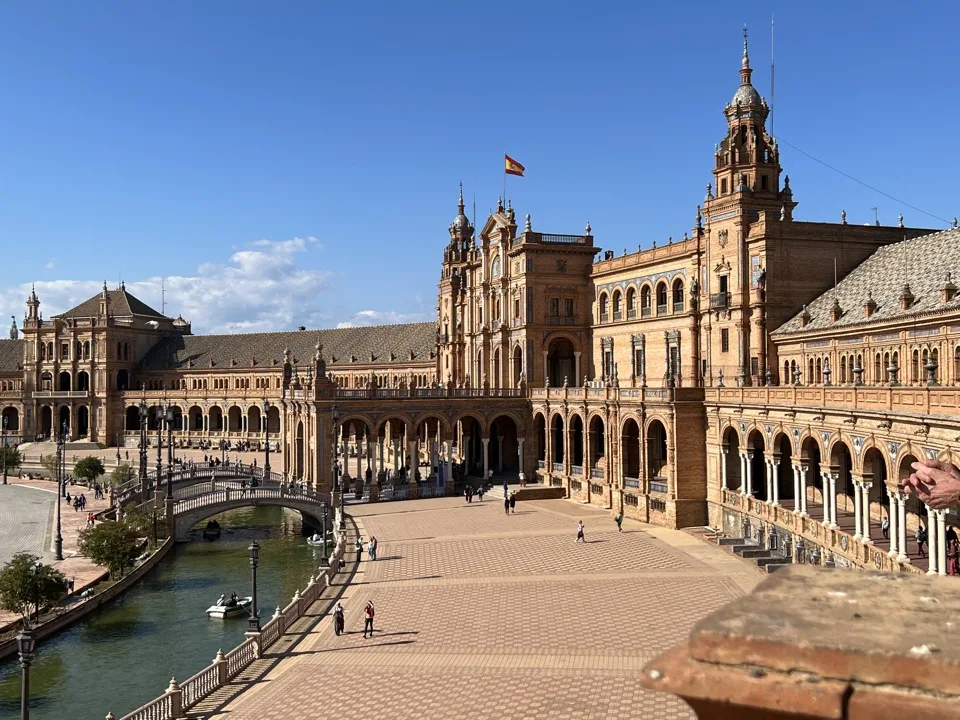
Plaza de España

As soon as we arrived in Seville, we set off from our accommodation in Santa Cruz on a long walk to Plaza de España. It is a magnificent introduction to Seville’s architectural beauty and thoroughly Andalusian in style. The setting is majestic and colourful, while the water adds to the immense square’s charm. Its long colonnades, mosaics and decorative tiles are impressive. It is the perfect place to fall in love with Seville and take plenty of beautiful photographs. Plaza de España stands in the gardens of María Luisa Park. The square is clearly the highlight, but it is also delightful to wander quietly through the park in the shade of its old trees. The park is divided into numerous smaller areas, making it feel intimate despite its size.

Séville en famille

Canal and pavilions at Plaza de España in Seville

Painted ceramic balustrade at Plaza de España in Seville

Read more

Clocher blanc de Santorin sur fond de ciel bleu

Family vacation in the Cyclades: Santorini, Milos, Sifnos

Last July, we went to the Cyclades for the first time. We’d been tempted by these Greek islands for so long! We had already visited several islands in Greece: Corfu, Kefalonia and Ithaca on the Ionian Sea, and also Crete, but we didn’t know the Cyclades yet. We first considered renting a sailboat, but I was wary of the infamous meltem, the strong wind that can be fierce in summer… If I’m not mistaken, Ulysses had some trouble with it… I didn’t want to deal with it: Papa Voyage is a good skipper; I’m not quite a top crew member yet! So, we opted to travel between the islands by ferry. And on each island, we chose to get around on foot and by bus! White bell tower in Santorini against a blue sky Which Cyclades islands to choose? We chose Santorini, Milos and Sifnos. Three islands, three vibes. We loved all three for different reasons. Here’s our take on each and the details of our itinerary…

Santorini with kids: 3 nights

We started with Santorini, the most touristy, because we thought it best to visit as early in the season as possible. I was expecting such huge crowds that we were pleasantly surprised. It was not crowded at all! The island was very calm and most tourists gathered only in Oia at sunset – yet there are so many other spots to admire the setting sun!

Santorini, the “pros”:

  • The caldera, the caldera, and the caldera! You can’t get enough of those views from the edge of the ancient crater! Hiking the trail between Fira and Oia is a must!
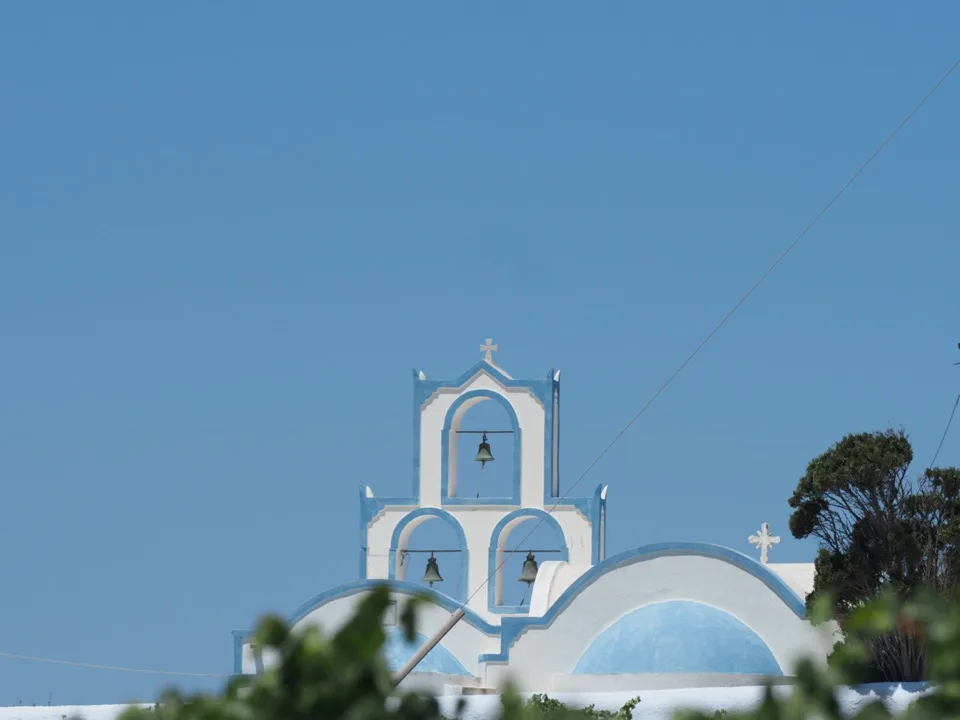
  • The typical Cycladic architecture: little white houses, blue domes, windmills…
  • Oia in the morning with no one around for a refreshing dip at the bottom of the steps.
  • Plenty of villages to explore: Megalochori, Pyrgos, Emporio…
  • Frequent buses to get around the island.

All the details of our walks and visits in Santorini are in my article Santorini, with kids, on foot and by bus. Blue domes of Oia overlooking the Santorini caldera   Aegean Sea and islands seen from Santorini White blue-domed church in Santorini Santorini, the “cons”:

  • Santorini isn’t the island to choose if you’re mainly after swimming spots, so I don’t think it’s ideal for a holiday with young children. Ticoeur and Titpuce enjoy hiking, so it was perfect for us, but for little ones, there are more child-friendly islands! That said, every morning Ticoeur and I enjoyed a swim at Amoudi Bay, a little cove at the foot of Oia (the sea temperature was around 20 degrees).
  • Oia from 5pm onwards is chaotic: people queueing to take photos at specific spots… If you’re like us and not a fan of crowds, don’t go to Oia in the early evening.

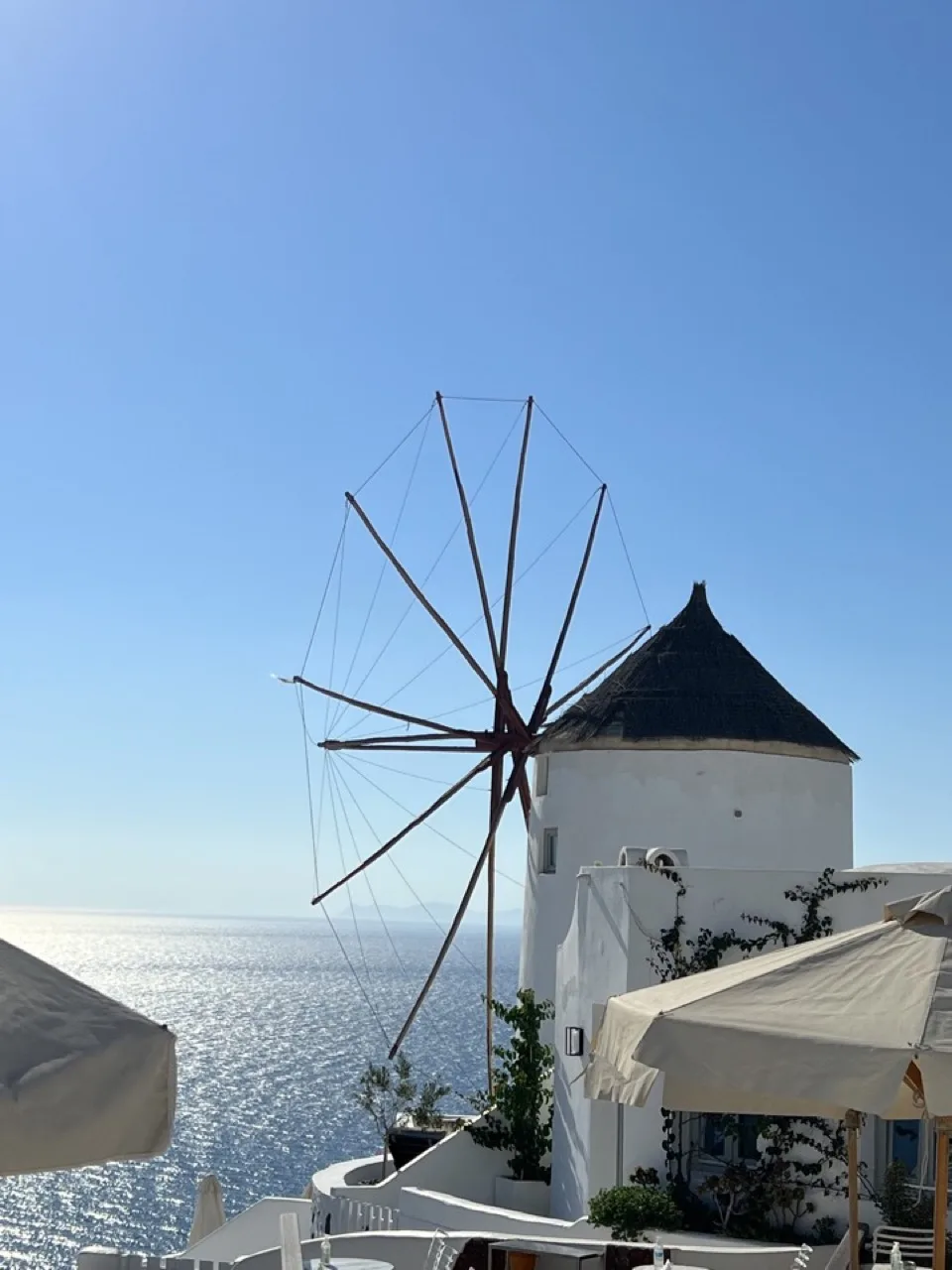
White windmill overlooking the sea in Santorini

Good addresses in Santorini:

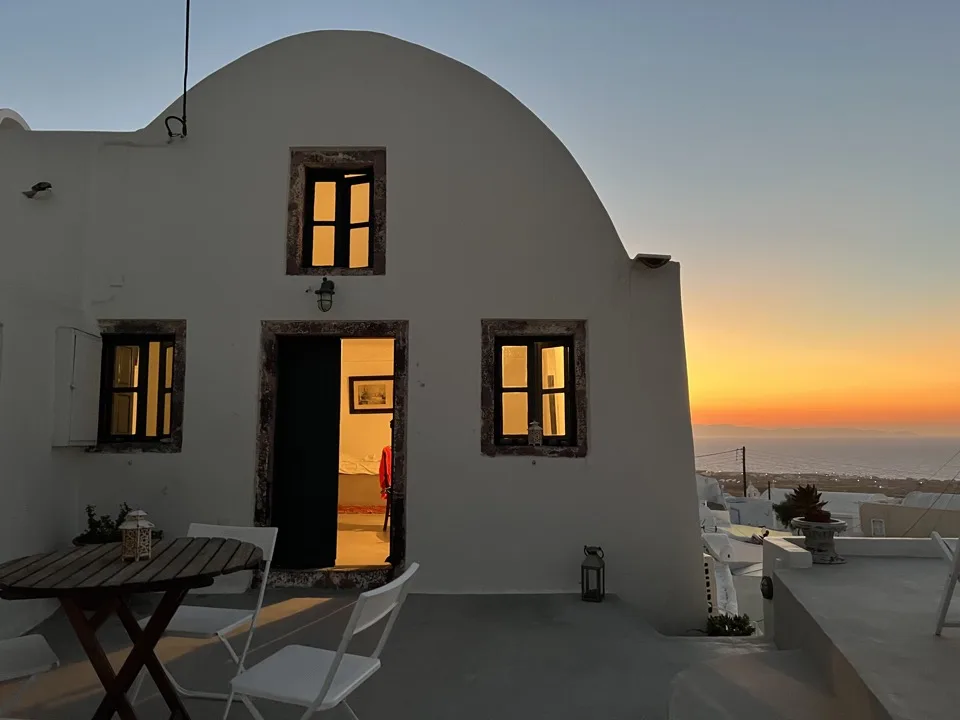
We loved our accommodation in Finikia, 20 minutes on foot from Oia. Those 20 minutes made all the difference! Our village was very peaceful and really pretty, with very narrow alleys. Our Cycladic home was called: The House of the Seven Ships. White house with lit windows at sunset in Santorini

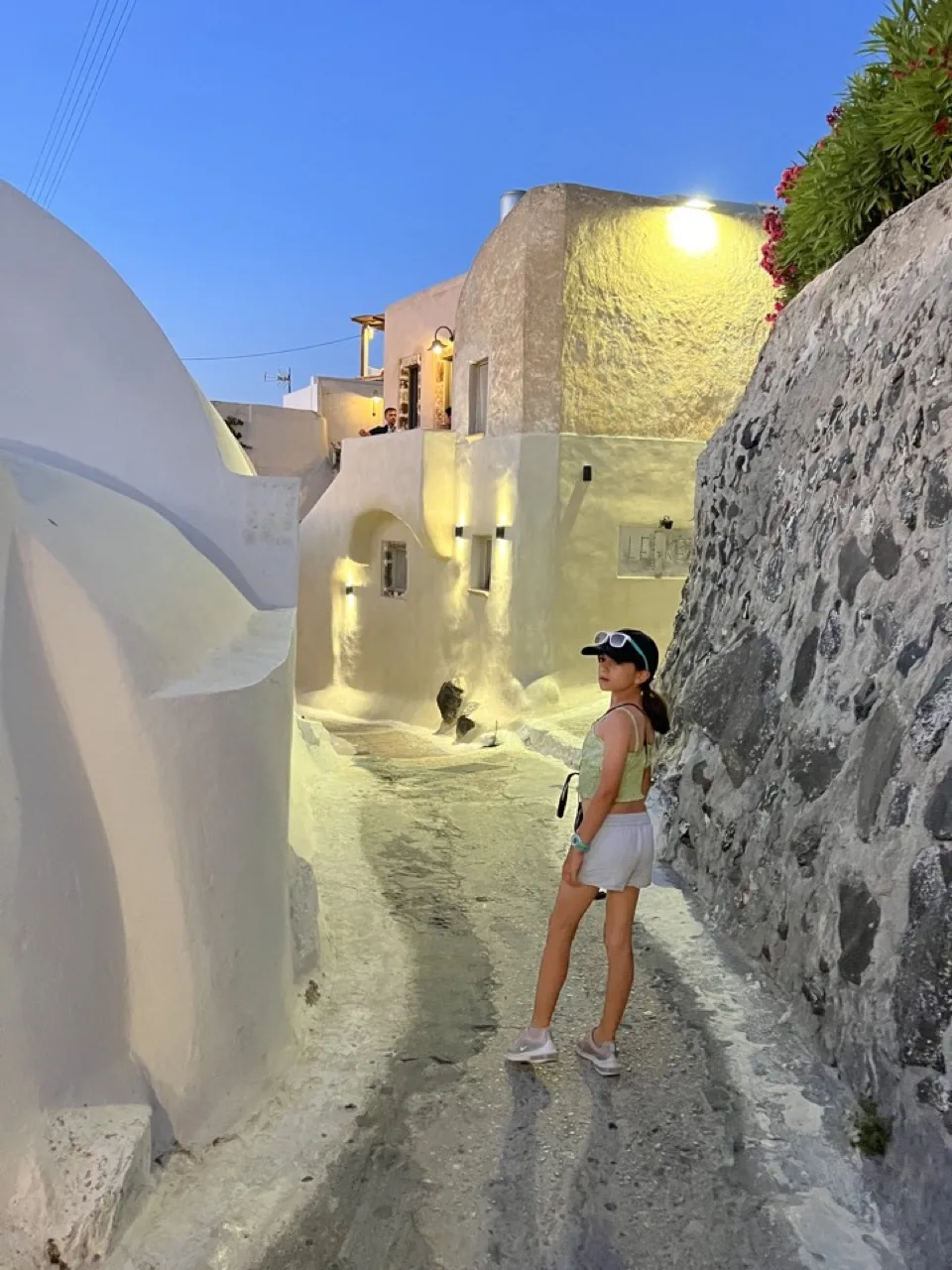
In the peaceful alleys of Finikia

As for restaurants, we tried to avoid trendy places. At Taverna Mou (in Finikia), we felt like we were back in our previous trips to Greece. Live traditional music in the evening, small tables, and homemade food. For good ice cream, stop at the The Family bakery in Megalochori.

Milos with the family: 4 nights

Milos mainly tempted me because of the beauty of its coves – and indeed, when it comes to swimming, we absolutely loved it! It’s an island with a history marked by mining. The population was very poor and worked extracting sulphur and minerals. Many remnants of that time still remain. Milos is also the island of the famous Venus! And sorry, we didn’t manage to find her arms!

White houses in seaside Pollonia on Milos

Milos, the “highlights”:

  • Swimming in dream locations! Firopotamos, Sarakiniko, Firiplaka, Kleftiko…
  • The colourful village of Klima!

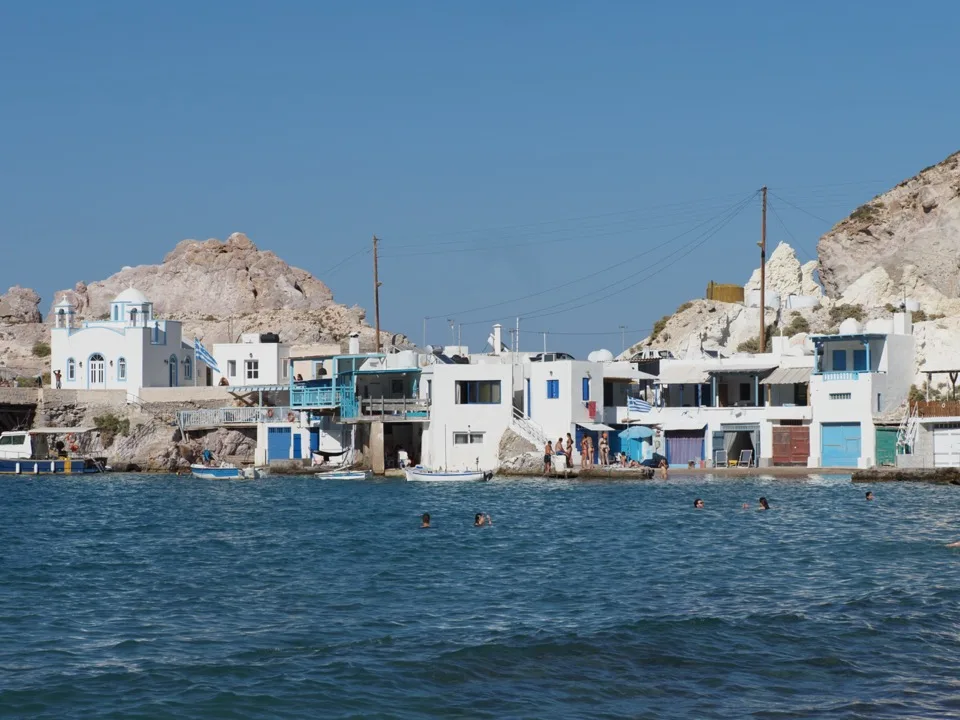
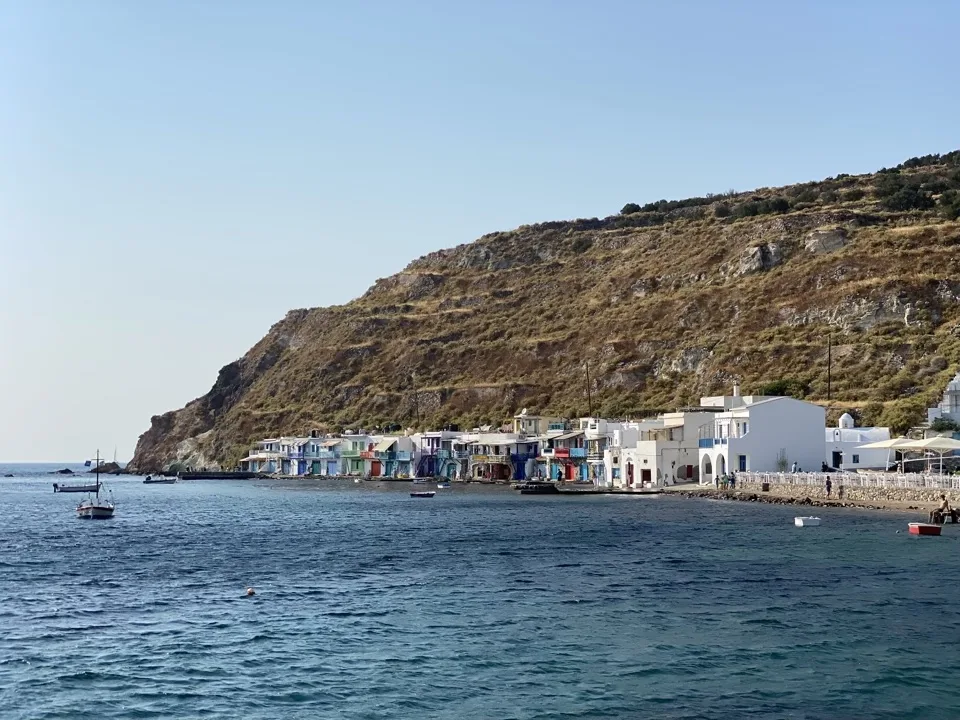
Fishing village beneath an arid hill on Milos

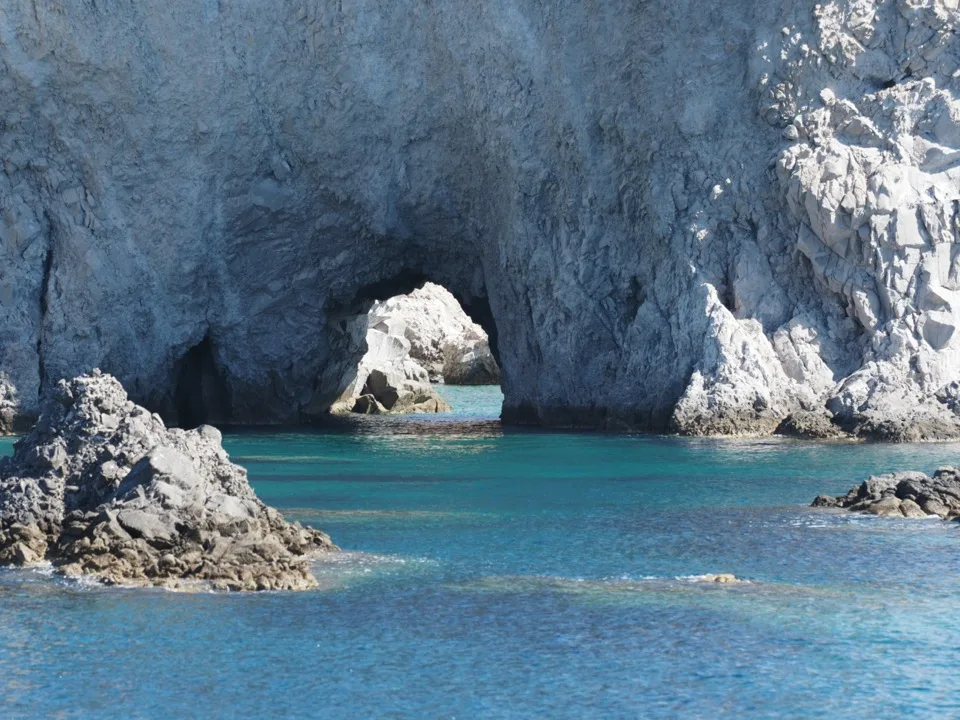
Natural arch in the white cliffs of Milos

Milos, the “downsides”:

  • As on other islands, we got around by bus and on foot, but we ended up walking quite a bit along roads (granted, they were quiet) because there were no pedestrian paths.
  • Boat excursions were a bit of a headache! It’s a big business on the island and prices vary widely! I didn’t always feel the price matched the service… I’ll tell you more about our experience in my Milos blog post.

Good spots in Milos:

We liked our accommodation in Triovasalos (called “Milos Cottage“, found on Airbnb): a former little shepherd’s house, very simple (warning: it’s really tiny! If you need space, skip it…). Our host Elena was lovely. We did have quite a few mosquitoes… but that might have just been bad luck… Also in Triovasalos, there’s “this flat with a terrace“. In terms of buses, staying in Triovasalos means changing at Adamas; however, it’s convenient for walking to several places. In Adamas, I didn’t find any accommodation that suited us, but have a look anyway. As for restaurants, our top favourite was Ergina in Tripiti (we ate there twice!). Medusa in Mandrakia was also nice, though more touristy.

**** When you book a hotel on Booking by following a link on my articles, it allows me to receive a small commission: it does not change the price for you and it helps me maintain the blog. So thank you very much to those who book the hotels we recommend! ****

Sifnos with the family: 4 nights

Sifnos was the obvious stop between Milos and the Athens port. I’d read it was a favourite island among Athenians, so I was surprised to see that 100% of the tourists were… French!! The island was peaceful, quiet, not too busy so there was no issue with crowds, but it did feel a bit strange – like being in France. I didn’t know the island was so popular among French families. Some even seem to have second homes there.

Sailing boats moored in a Sifnos harbour

Sifnos, the “highlights”:

  • The perfect island for hiking! There are marked trails all over! To enjoy it fully, go in spring or autumn. Still, we explored a fair number of trails and it was really pleasant to walk along such well-maintained paths.
  • The village of Kastro where we stayed! Note: it’s very small so best to avoid during high season. In July, it wasn’t too crowded.
In the alleys of Kastro

White chapel on a rocky Sifnos headland

  • An island mainly visited by families because, although it’s great for hiking, there are plenty of child-friendly beaches: clear, shallow water.

Family seen from behind descending a path to a Sifnos cove

White chapel on a Sifnos headland above the sea

Sifnos, the “downsides”:

  • The bus connection timetables don’t seem to be well thought out. As we enjoy walking, it wasn’t a problem for us: instead of waiting for the next bus, we often continued on foot. But for families relying entirely on the bus, there can potentially be a long wait in Apollonia.

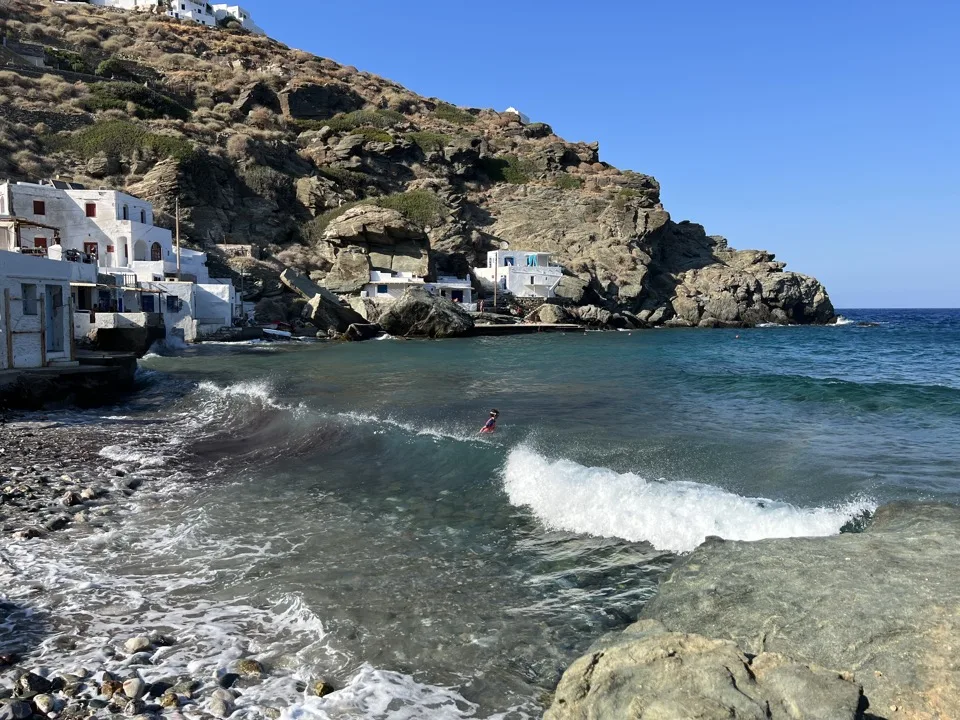
Recommended places in Sifnos: While we loved Kastro, I wouldn’t recommend our accommodation as it was really too small and had only a tiny outdoor space. I think it would have been fine for two people. But staying in Kastro is lovely, so take a look at what larger options you can find for a family: accommodation in Kastro. To optimise bus travel, you could also look for a place in Apollonia. It’s pretty and lively, even if I prefer Kastro. As for restaurants, we loved eating at Kaptain George, run by a family of fishermen located right at the bottom of Kastro, in the cove where Ticoeur is playing in the waves: Rocky cove and white houses on Sifnos

Before or after the Cyclades: a break in Athens.

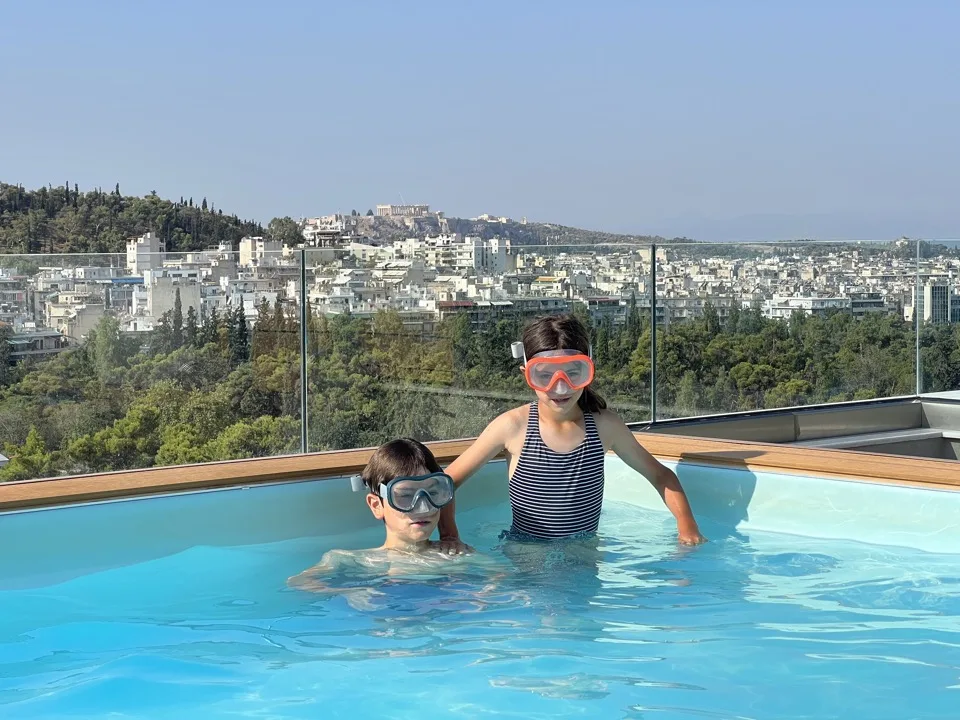
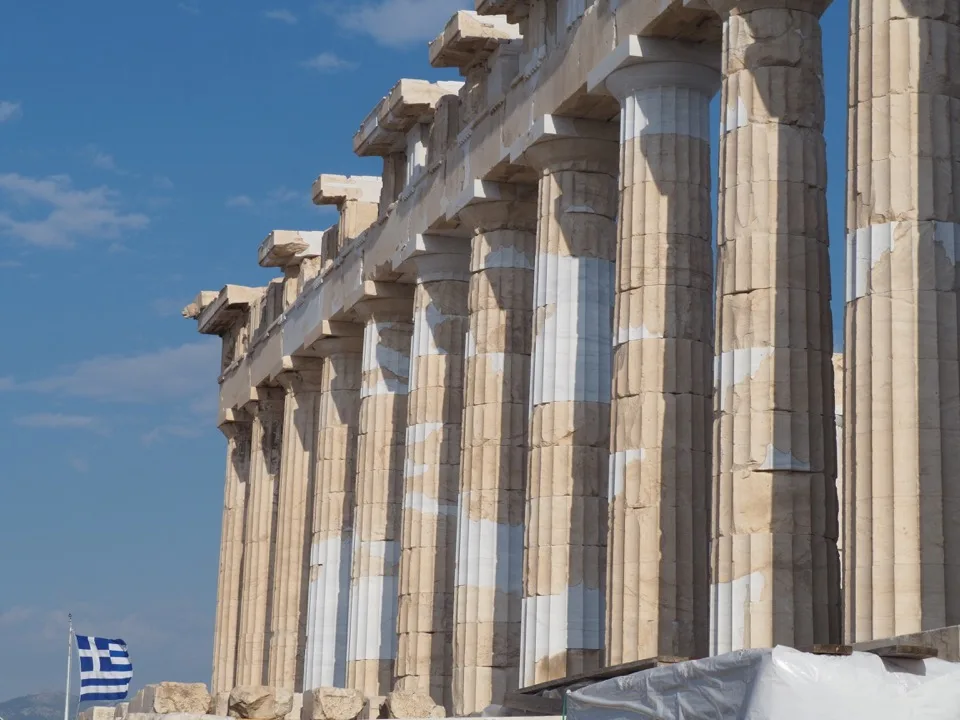
Summer isn’t the best time to visit Athens, because unlike the Cyclades, it gets extremely hot! But as you’ll likely spend a day or two there before or after taking the ferry, feel free to reread the article I wrote during our previous trip to Athens in spring 2018. For accommodation, if it’s your first time in Athens, I recommend staying in the charming district of Plaka. As this time we were just passing through, I booked a more impersonal and out-of-the-way hotel, but it had a pool so the children could cool off. We could even see the Acropolis in the distance: Athens Panorama Projects. Not a charming hotel, but modern, practical, and good value for money. Columns of an ancient Greek temple in Athens

Practical information for visiting the Cyclades:

Weather: in July, we had temperatures between 25 and 28 degrees Celsius. The seasonal averages for July-August are 27–28 degrees. Of course, the weather can always surprise you, but we chose the Cyclades because they’re known to be cooler than other southern European destinations, thanks to the local wind (the Meltemi). For me, as long as it’s under 30 degrees, it’s perfect! The sea was 22 degrees in Santorini and 25 in Sifnos and Milos. Tourism: we recommend going early in the season… even Santorini was pleasant! If you have no choice but to travel during peak season, you might skip Santorini and keep Sifnos and Milos on your itinerary, replacing Santorini with a less touristy island, such as Serifos, which lies on the ferry route between Sifnos and Athens, or Folegandros to the east of Milos. Budget: it was clearly more expensive than our other trips to Greece. The ferry prices in particular were very high — especially for a family of four. It’s definitely motivating me to sail next time! Prices vary greatly, especially depending on fuel costs, so I recommend checking fares for your planned routes before booking a trip to the Cyclades. For reference, I booked our ferries a month in advance, but had been monitoring them for three months and saw no change. Fortunately, we saved a lot by not renting a car at all on the islands: lots of walking and a few buses — it was perfect for us! Finally, I’ll soon be writing a detailed article about each of these three islands!

***

Have you been to the Cyclades? Which islands would you recommend?      

Also worth reading

4 days in Sifnos with children, on foot and by busFour days in Sifnos with children: hiking, beaches, Cycladic villages and practical tips for exploring the island on foot and by…
Santorini as a family, on foot and by busSantorini without renting a car
Our 10 hikes in Crete with the childrenOur family hikes in western Crete
Family holiday in Crete: our road trip through the western part of the island10 days in Crete with the kids during the Easter holidays
Our 10 family hikes in AragonA week of hiking with the children in Aragon during our campervan road trip in northern Spain
12 family hikes in MadeiraAll the details for our numerous hikes with the kids in Madeira

Trip to Andalusia with the kids

It was not our first time in Andalusia but it was our first trip to Andalusia with the kids. We went there during the Easter holidays, making sure not to be there during Semana Santa to avoid the crowds and find accommodation more easily, at lower prices. However, we saw the preparations for the decorations for Semana Santa so it was interesting to show this aspect to the children. Between the landscapes, the sunny weather, the architecture of the cities and the Spanish cuisine, it has been a great trip!

Our itinerary for a week in Andalusia

In the introduction, I would like to point out that the choice of our stays would not have been the same in the case of a very first trip to Andalusia. I will therefore first present our itinerary and then tell you what you could add if you are visiting Andalusia for the first time.

Day 1: Málaga

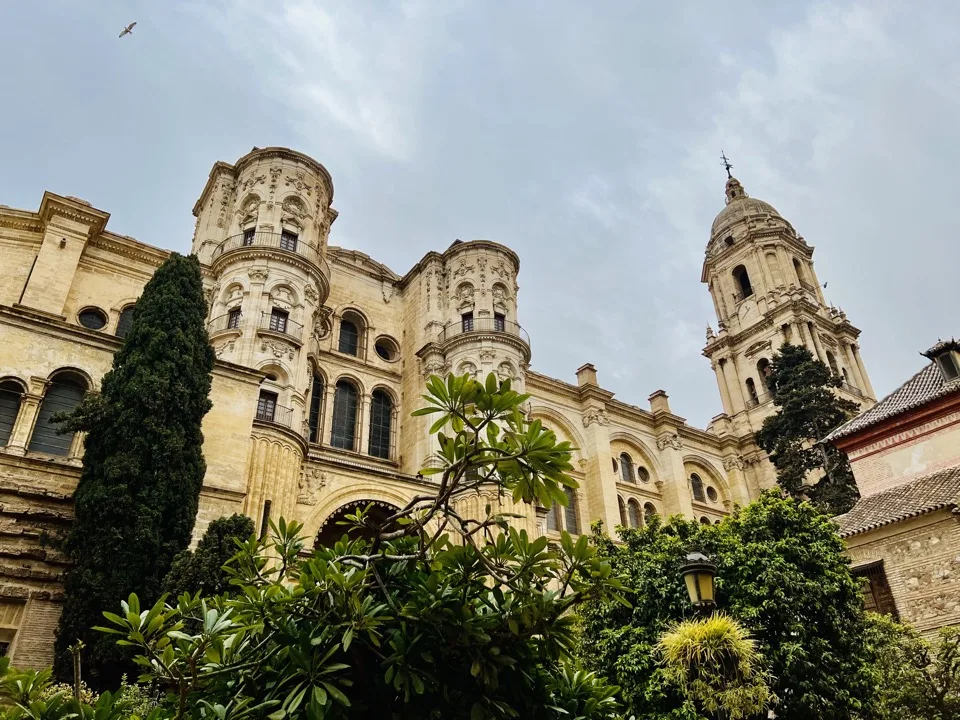
Malaga was the first stop on our trip to Andalusia. We didn’t know this city and we really liked it. To start off slowly, we went for churros and chocolate for breakfast at Tejeringo’s. Then, we admired the cathedral from the outside.

Historic façade of Málaga Cathedral

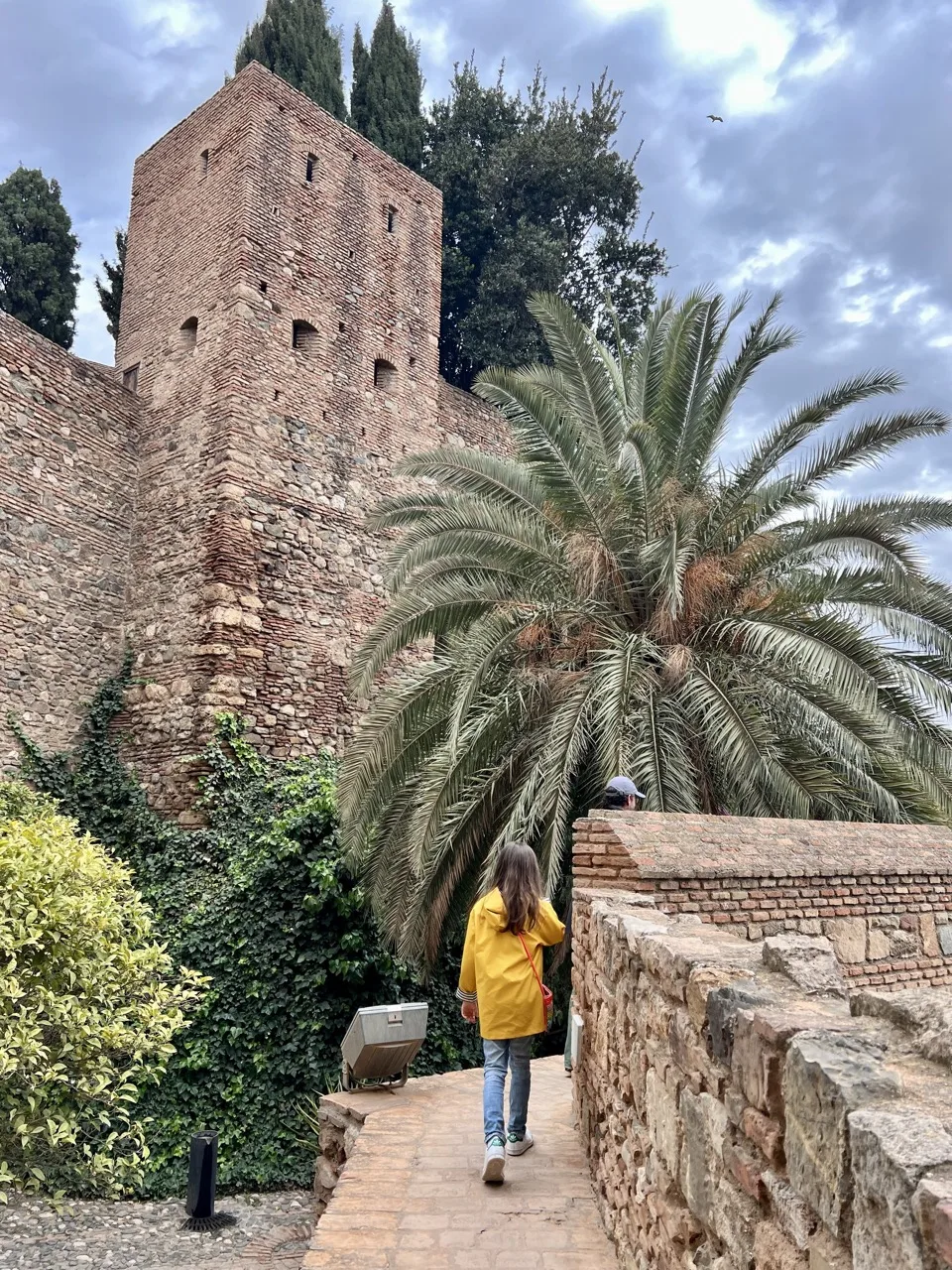
After the cathedral, we decided to visit the Alcazaba. This palace-fortress dates from the 11th century and its various patios are charming. Obviously, it’s not comparable to the Alcazar of Seville or the Alhambra of Granada but it’s pretty and it’s worth it!

Person seen from behind beside a tower of Málaga's Alcazaba

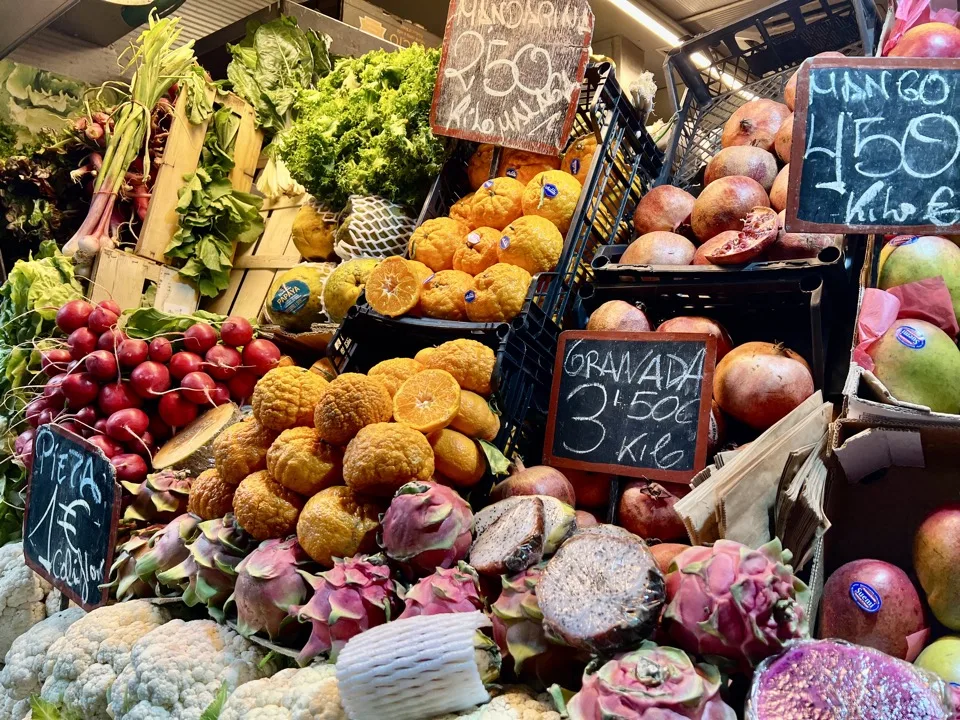
Then we have lunch at the market. There are small tables outside and it is possible to order tapas.

Colourful fruit stalls at a market in Málaga

Afterwards, we visit the Picasso museum. This is his birthplace. The collection does not present the most well-known works but that is precisely what I find interesting.

Framed Picasso artwork depicting a face

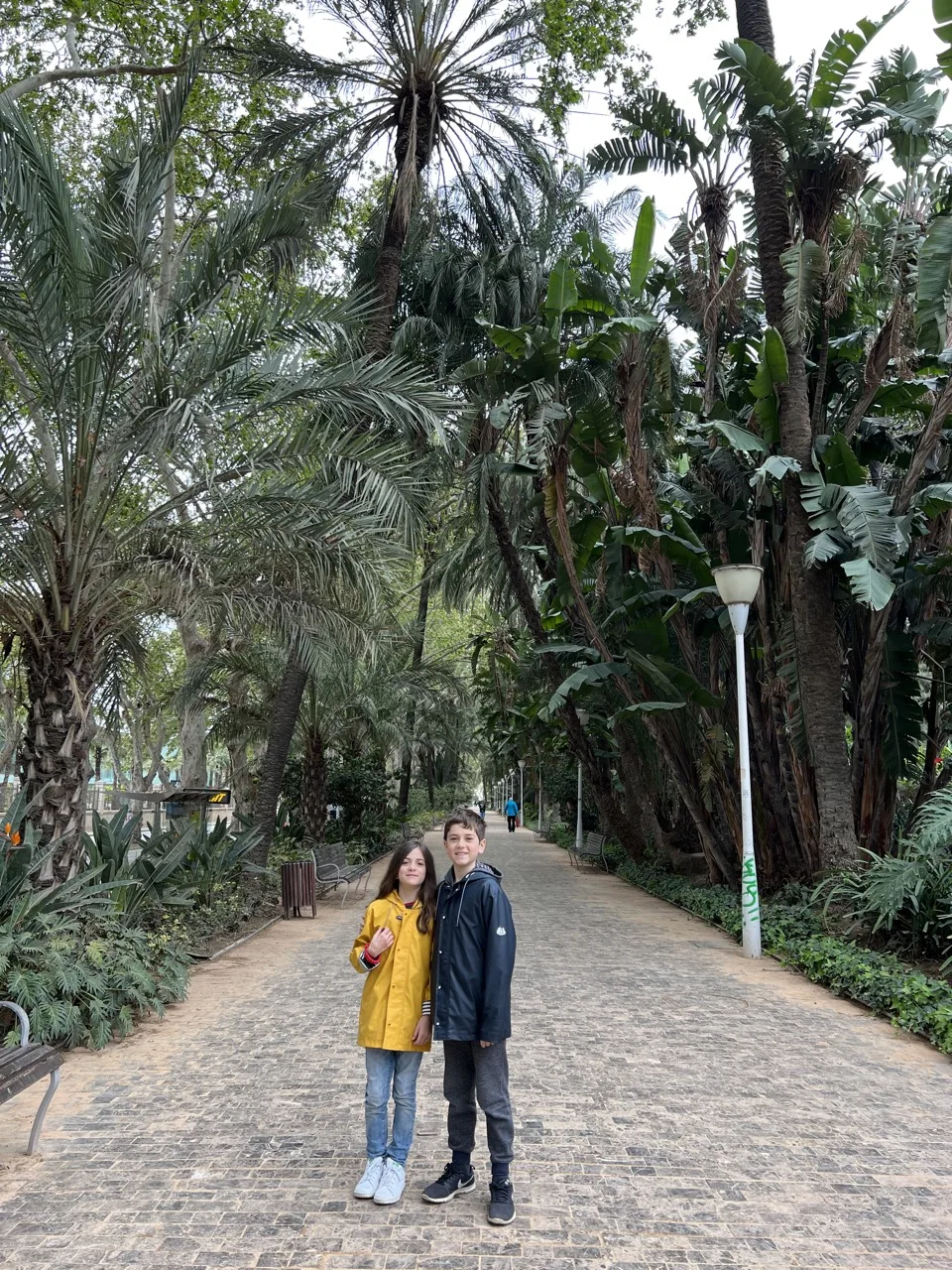
We continue our walk in the city:

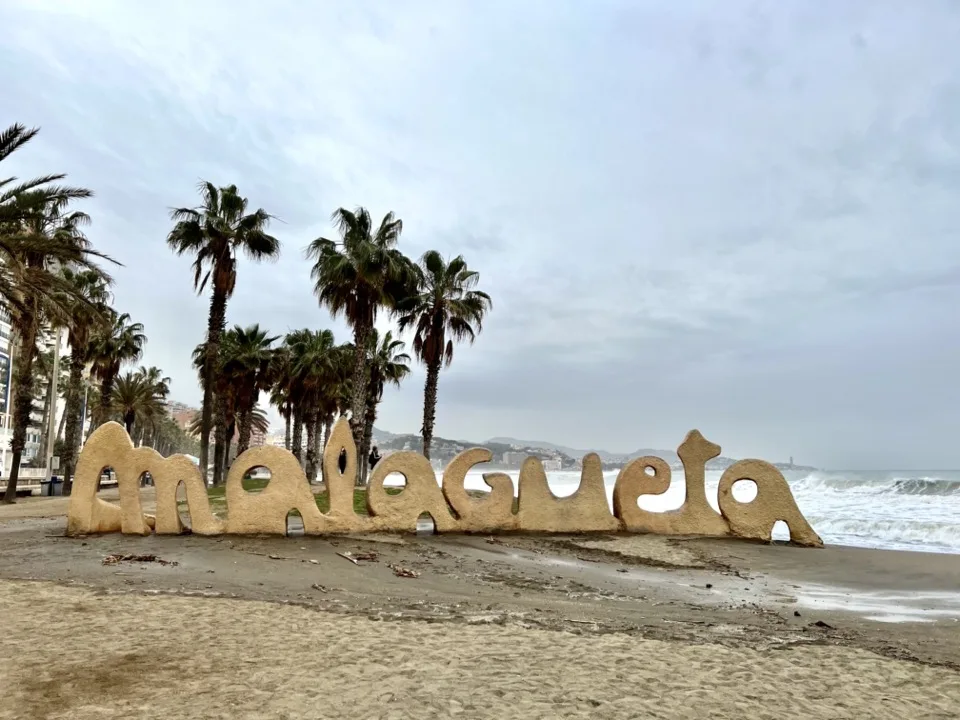
Large Málaga letters on the seafront

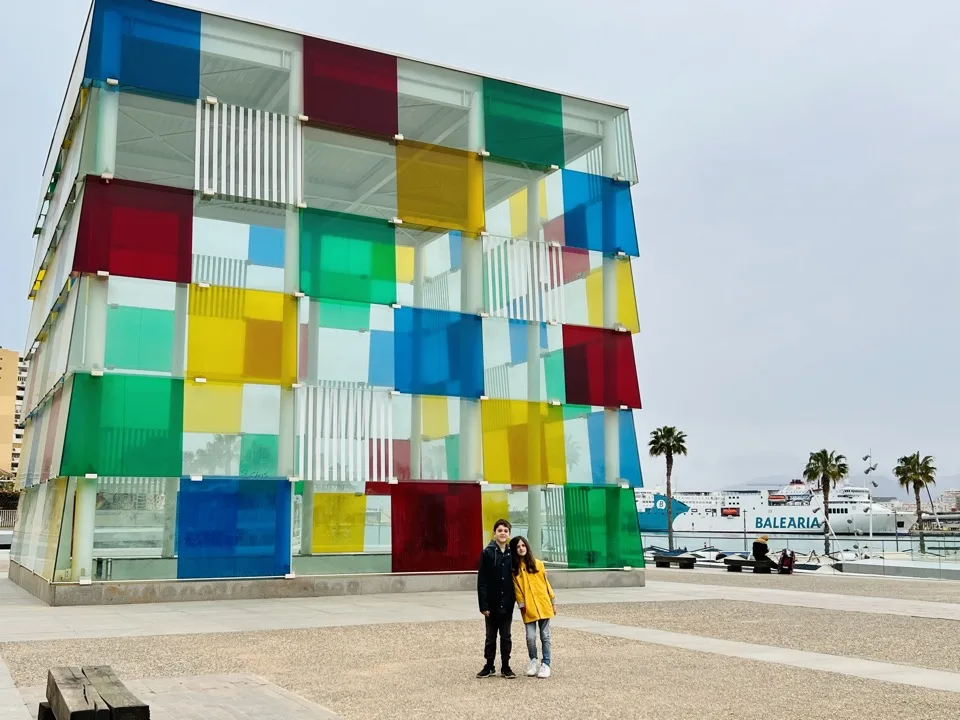
We pose in front of the cube of the small Pompidou museum but we do not visit it.

Multicoloured façade of the Centre Pompidou Málaga

Right before dinner we went to see a flamenco show at Tabloa Alegria. The dancing was very good, impressive. The place, less friendly than other places where I had seen flamenco in Seville. The bottom line is that we had a great time. Moreover, for the children it was completely new!

Flamenco dancers on an Andalusian stage

For dinner, we stopped by chance at a very typical tapas bar: La Tranca. It was really good. As for accommodation in Malaga, we slept in the historic center (it was perfect for doing everything on foot!). We booked the room with patio here.

**** When you book a hotel on Booking by following a link on my articles, it allows me to receive a small commission: it does not change the price for you and it helps me maintain the blog. So thank you very much to those who book the hotels we recommend! ****

Day 2: Malaga then Vejer de la Frontera

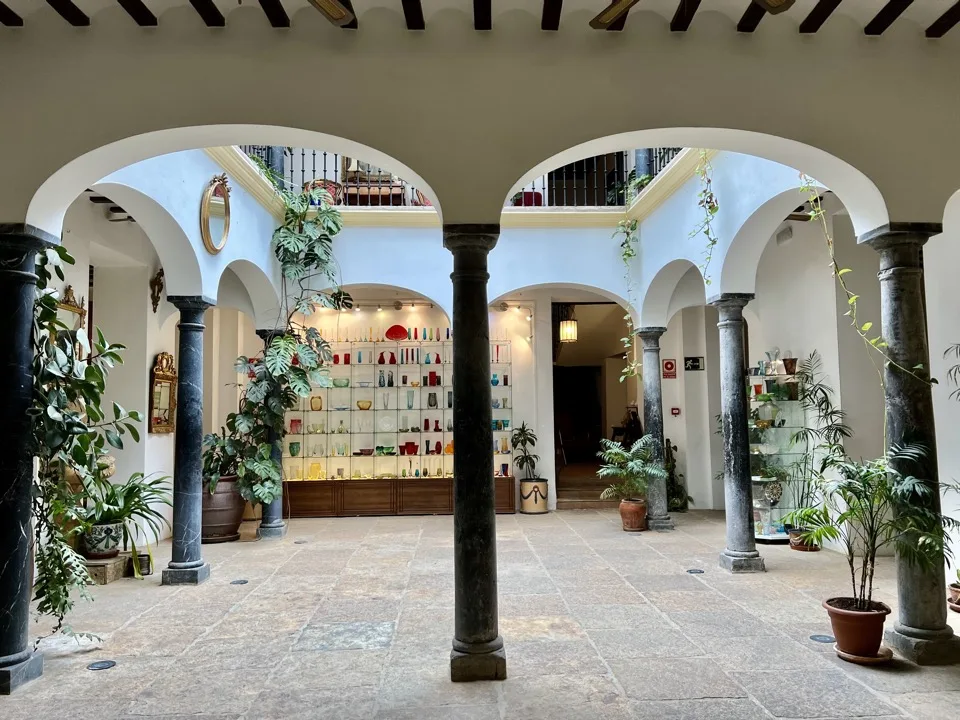
After the same chocolate churros as the day before, we visit the glass museum. A favorite ! This is a huge private collection of glass objects. We had a tour in French with lots of stories and anecdotes. And what’s more, the villa is superb! Clearly a visit not to be missed during your visit to Malaga. See opening hours on their website.

Whitewashed, flower-filled courtyard in an Andalusian house

Car rental in Malaga:

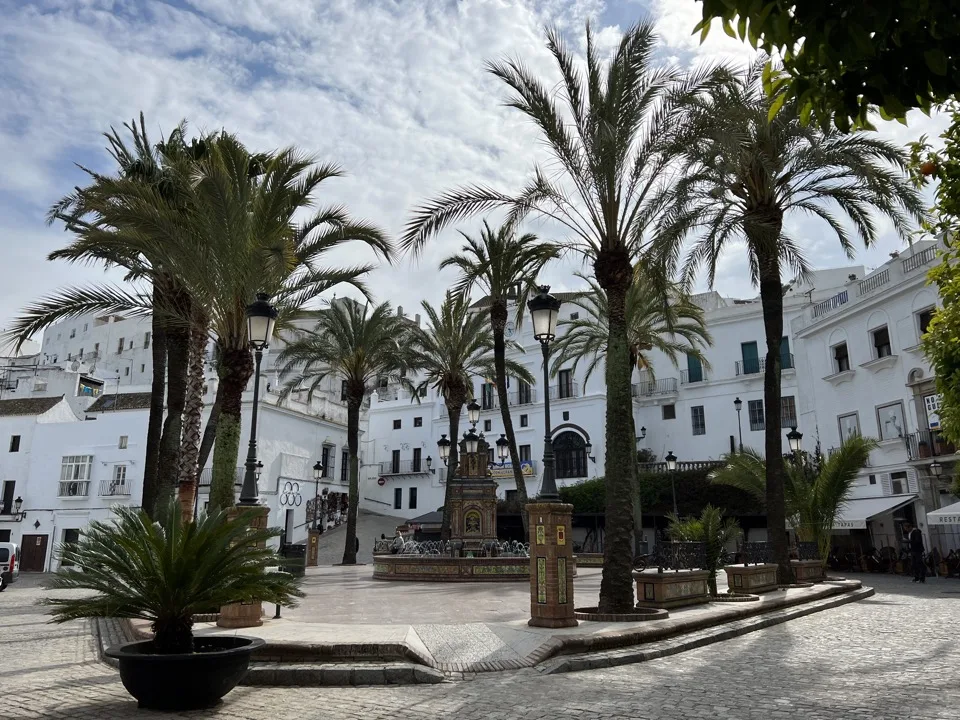
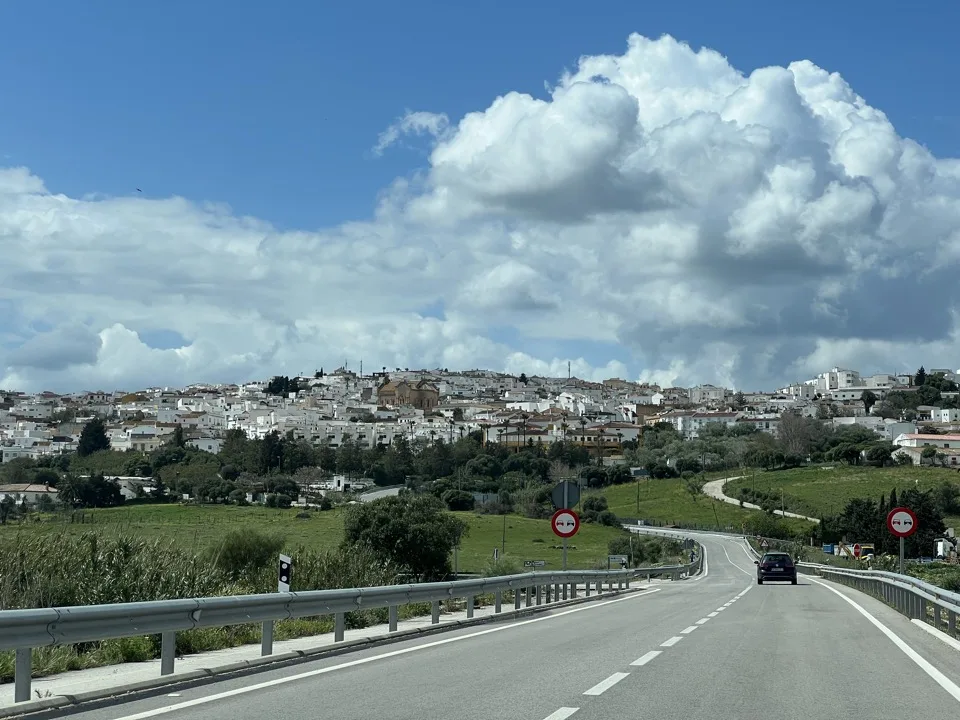
On site, we called several car rental companies and we had a good feeling with Miami Hire. They arranged to meet us at the station to leave the car (a Fiat 500) with us. Everything went well. We recommend them. We then take the road along the coast towards the east to visit a white village that we did not yet know and which is located just before the city of Cádiz: Vejer de la Frontera. Magnificent!

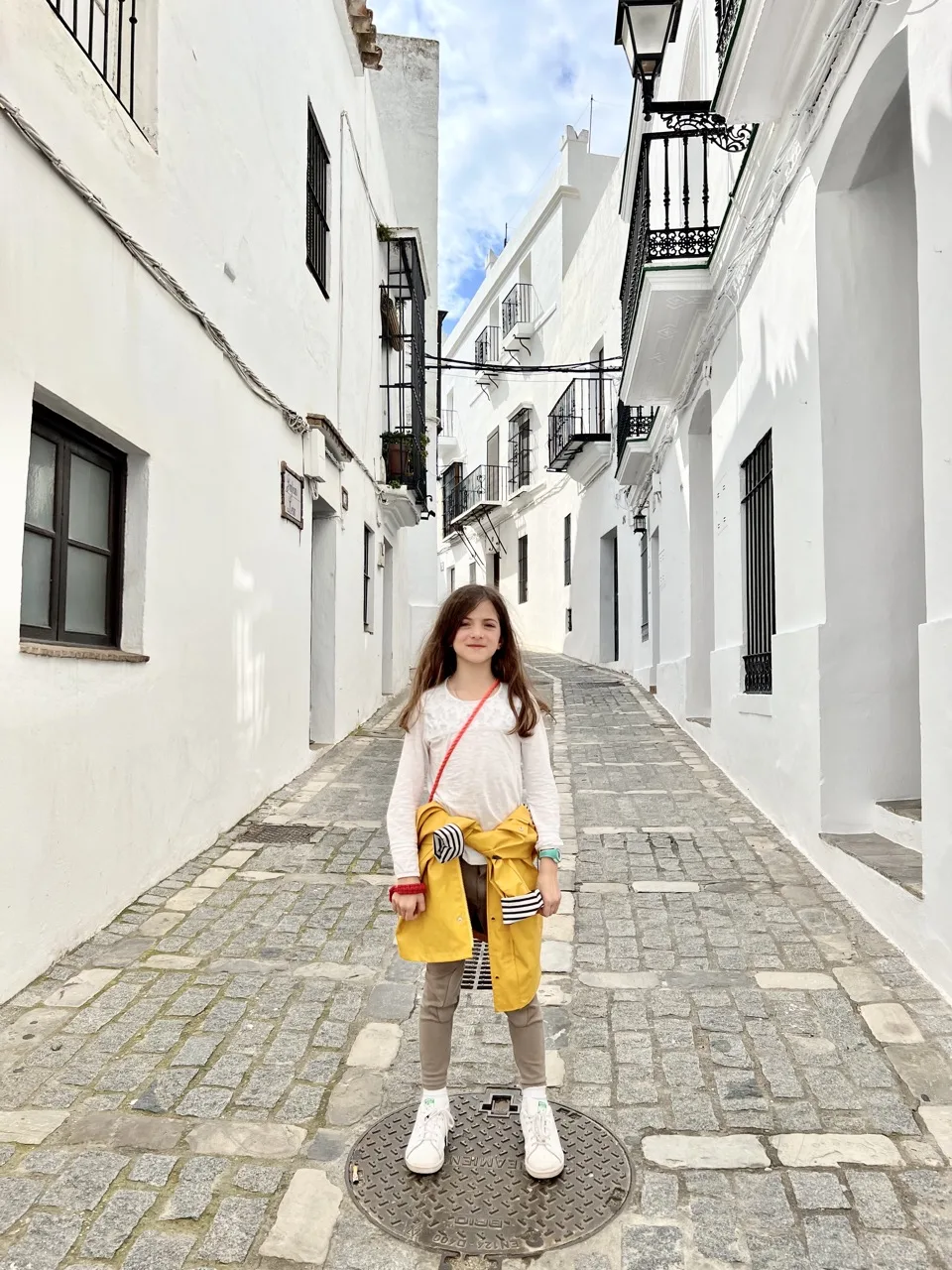
Palm trees and white façades in a Vejer de la Frontera square

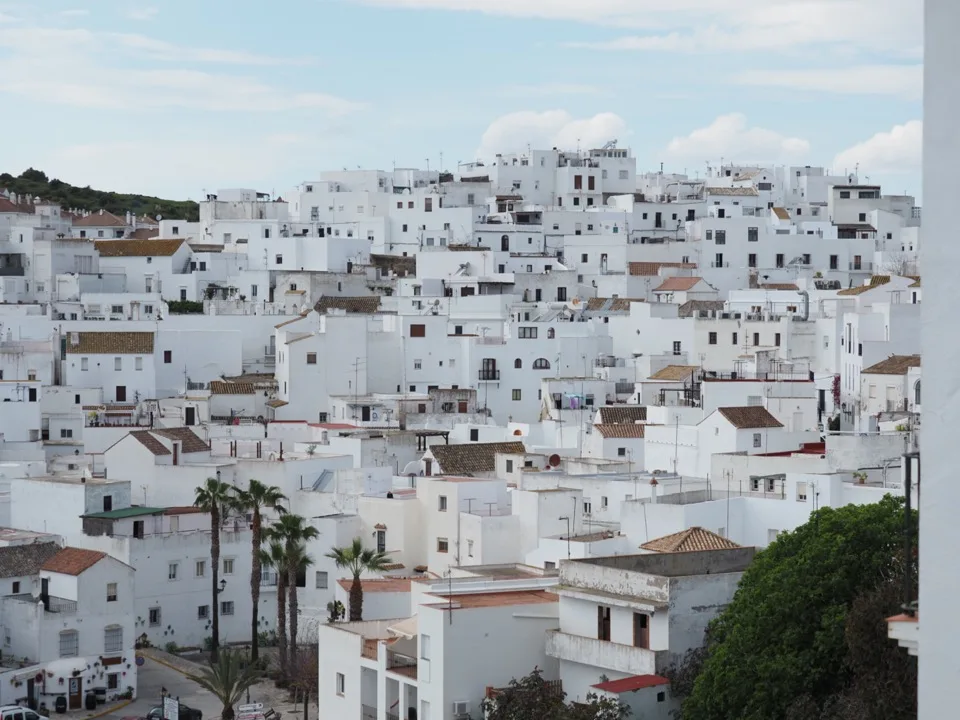
White houses of Vejer de la Frontera on the hillside

In the evening we reach Cádiz.

Day 3: Cádiz and Jerez de la Frontera .

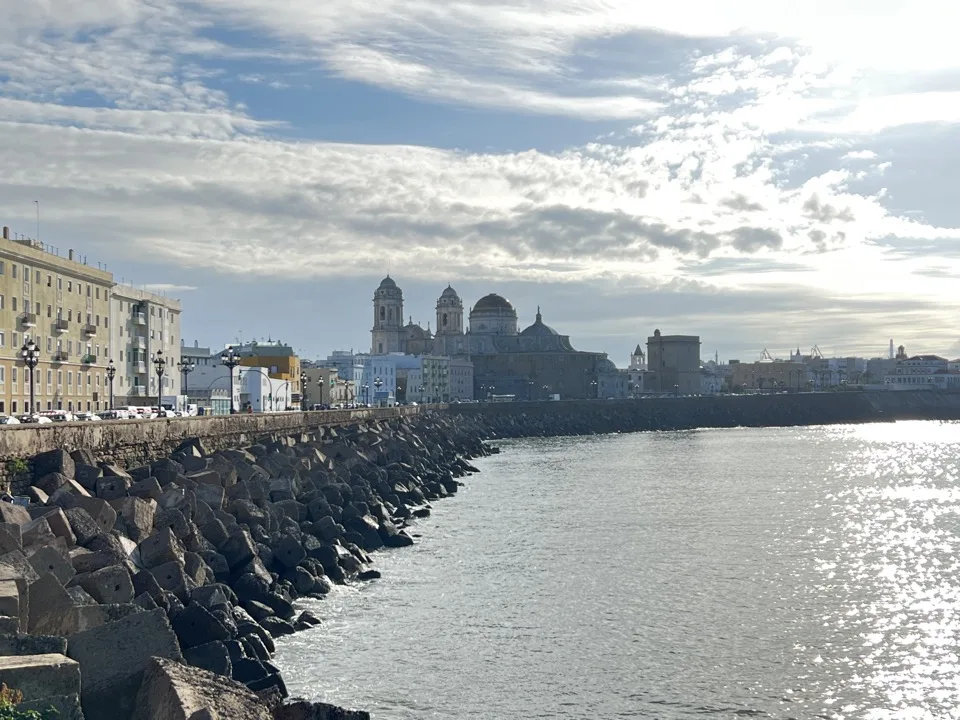
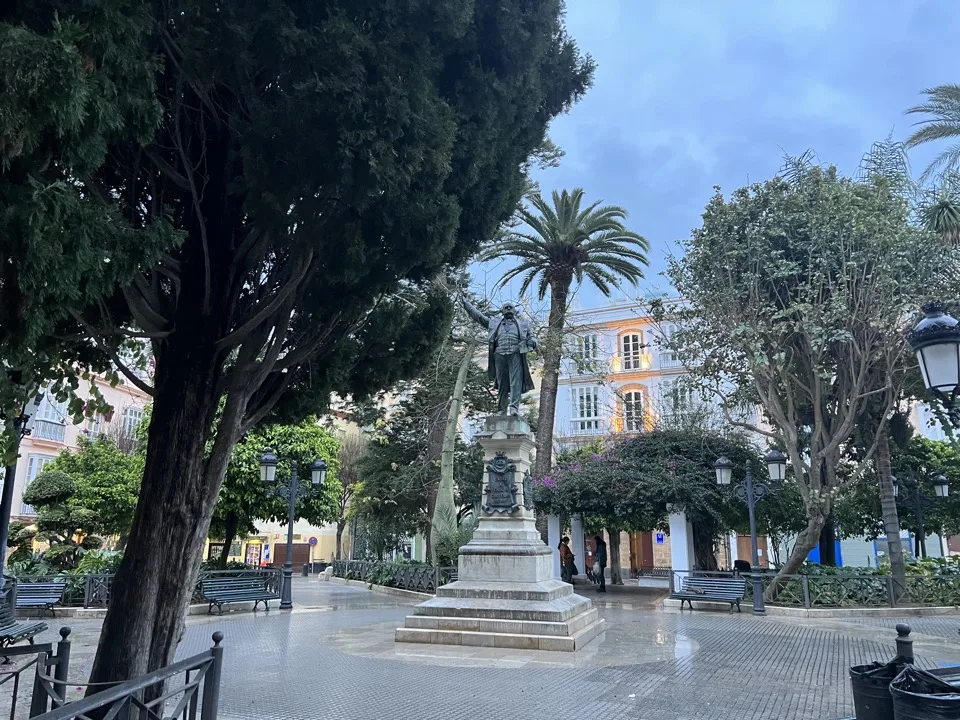
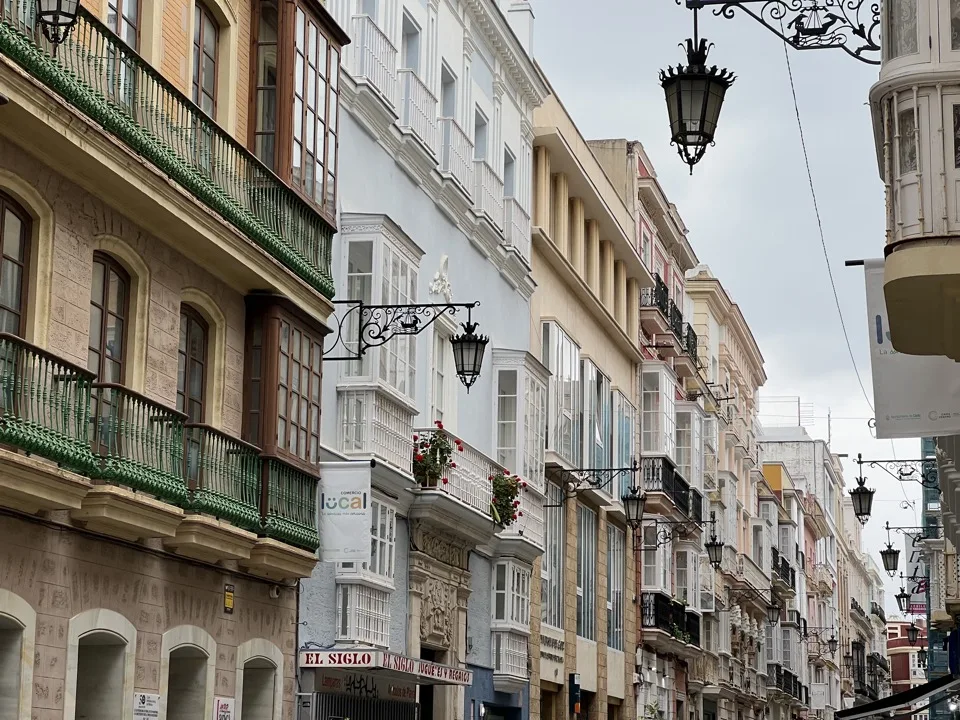
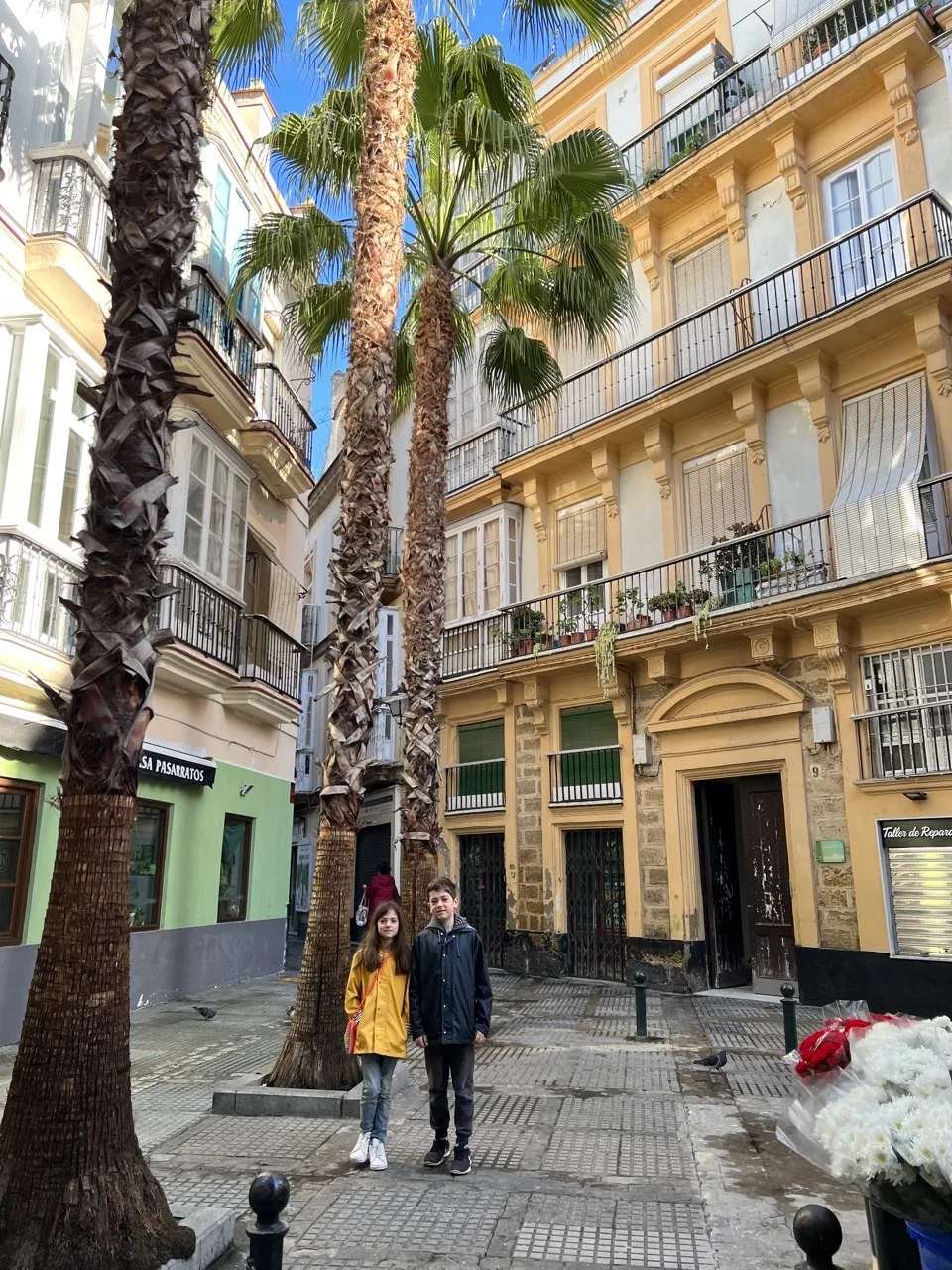
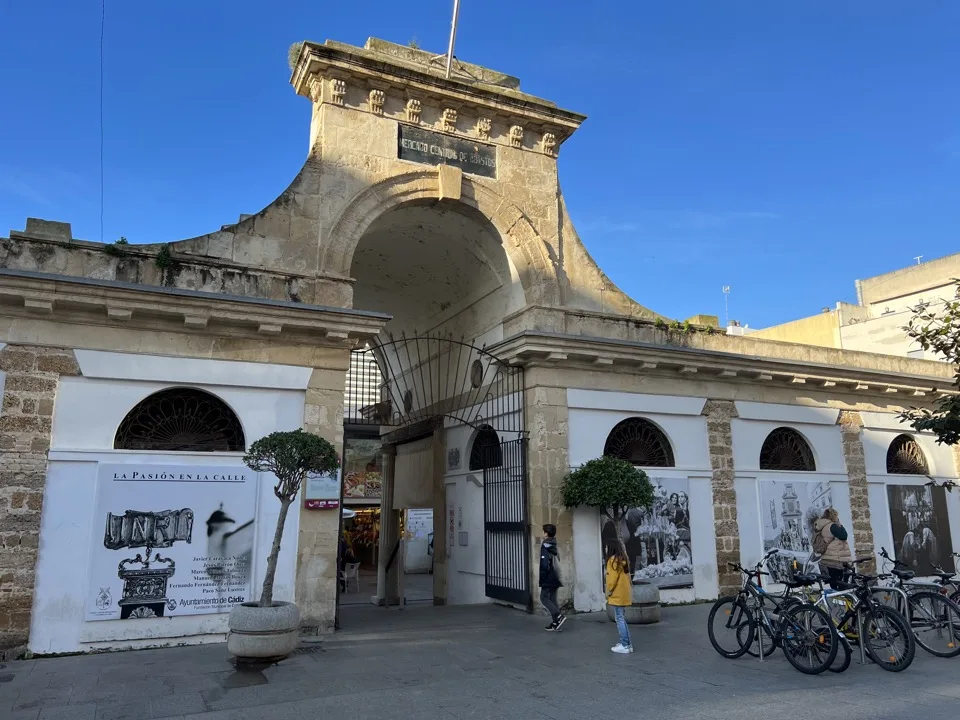
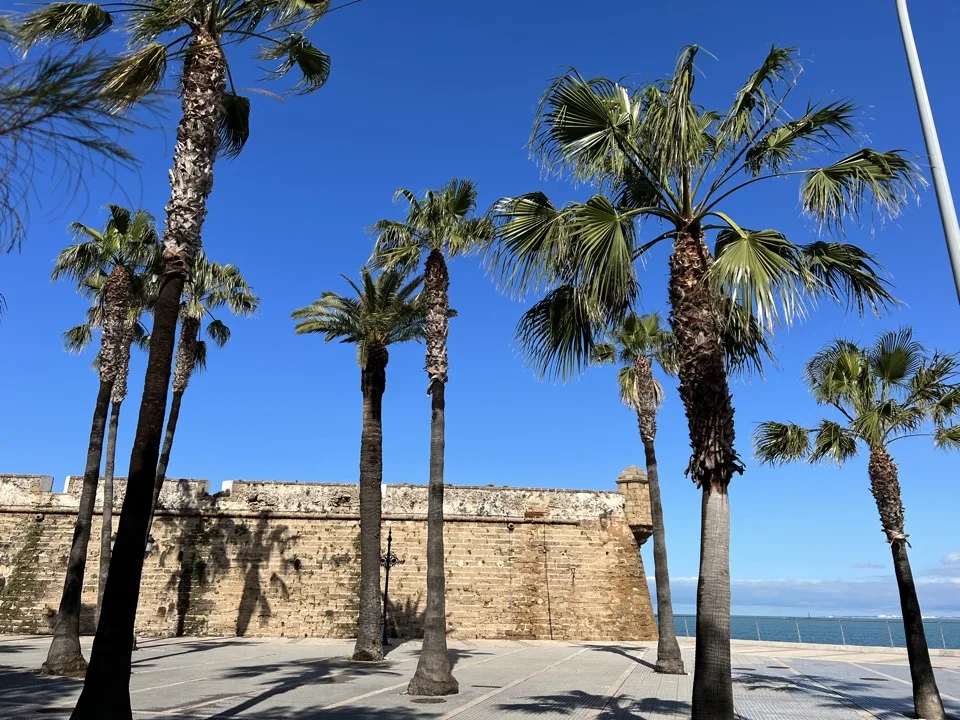
Cadiz, a discovery, a favorite! Here is a town in Andalusia that we didn’t know. It turned out to be very pleasant. In fact, there are no major visits to do but it’s just very aesthetic; the facades are very beautiful…

View of Cádiz and its cathedral from the seafront

Tree-lined square in Cádiz's historic centre

Balcony-lined street in central Cádiz Cadix en famille Monumental gateway and arcades in Cádiz Palm trees beside Cádiz's coastal walls

We climb the Tavira Tower for a small panoramic view and also for its dark room which allows a little optical show.

White Cádiz rooftops with the sea on the horizon

In Cádiz, the room we rented was simple but located in a very beautiful building. We recommend this address: Casa Patio del Pandora. The patio was particularly pretty:

Bright courtyard of a historic building in Cádiz

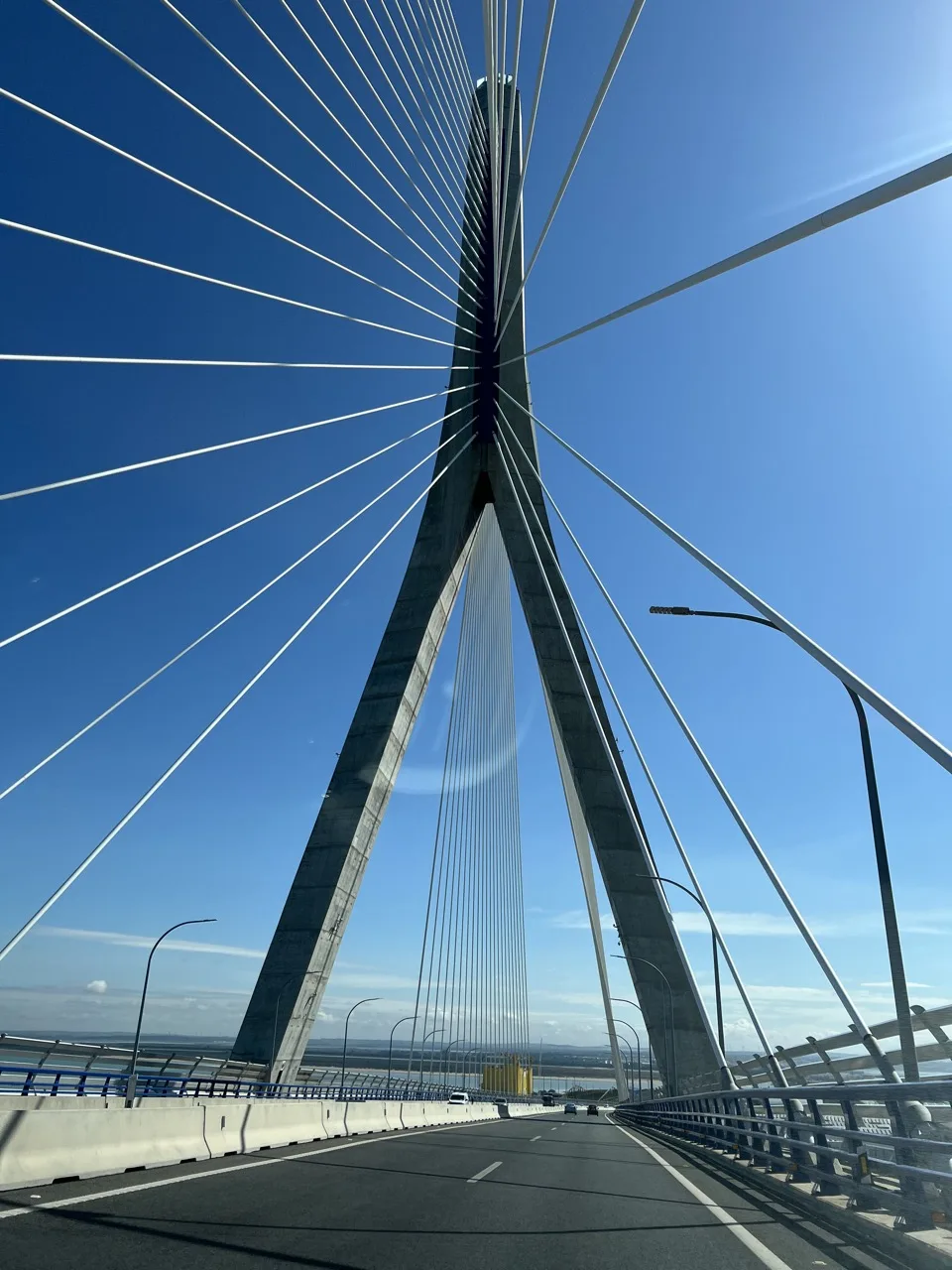
Leaving Cádiz, we cross an impressive bridge:

Modern bridge crossing the Bay of Cádiz

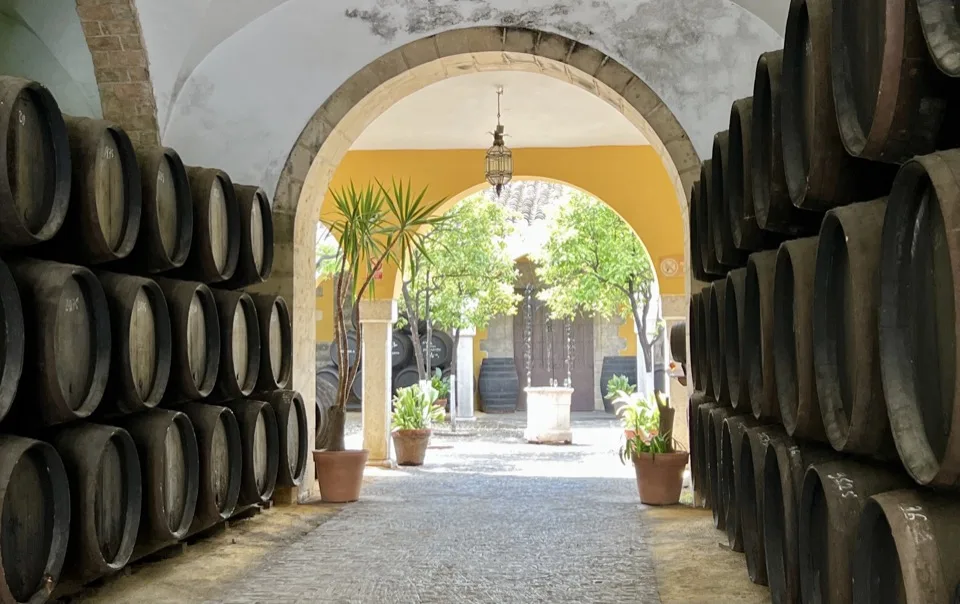
Then we drive to Jerez de la Frontera to visit a bodega. Yes, Papa Voyage is a fan of Jerez wines! The tour in French and Spanish was very interesting and the tasting, too! We recommend Bodega Diez Meritos:

Rows of barrels in a Jerez sherry bodega

In the evening we reach Seville for the night.

Day 4 : Seville , still the most beautiful!

Without doubt the most beautiful city in Andalusia! It’s already my third time there and I can’t get enough of it! I will write a post dedicated to visiting Seville combining our various experiences there. This time we spent two nights there. We stayed in this apartment, in the old town.

Plaza de España and its canal in Seville
Plaza de España , Seville

Day 5: El Caminito del Rey then Ronda

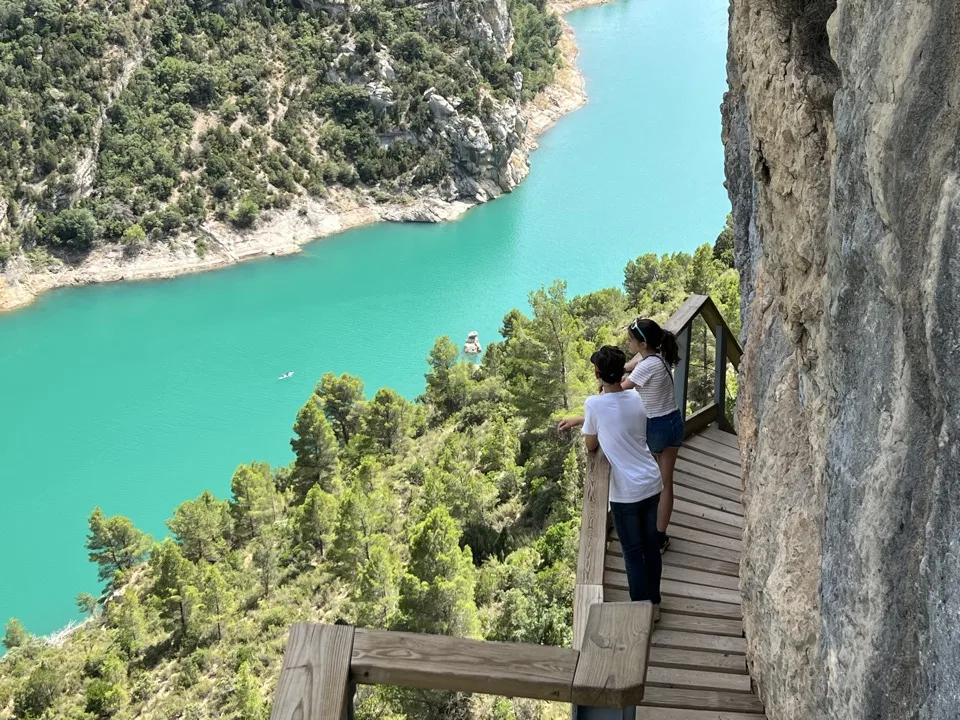
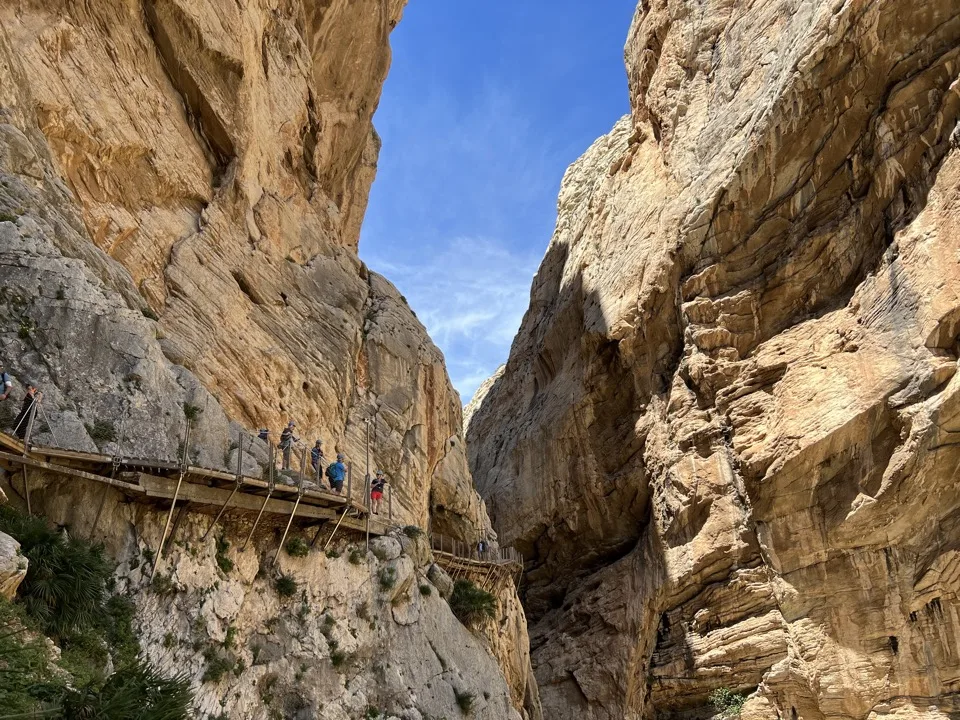
During my previous stays, it was no longer open to the public because major work had been undertaken to make the place safe. Now, rest assured: it’s really safe!! Visiting this canyon on the footbridge is definitely worth it! Please note: it requires a little anticipation to book the visit. See the complete guide to our experience on the Caminito del Rey! The children loved it!

Caminito del Rey walkway between the cliffs

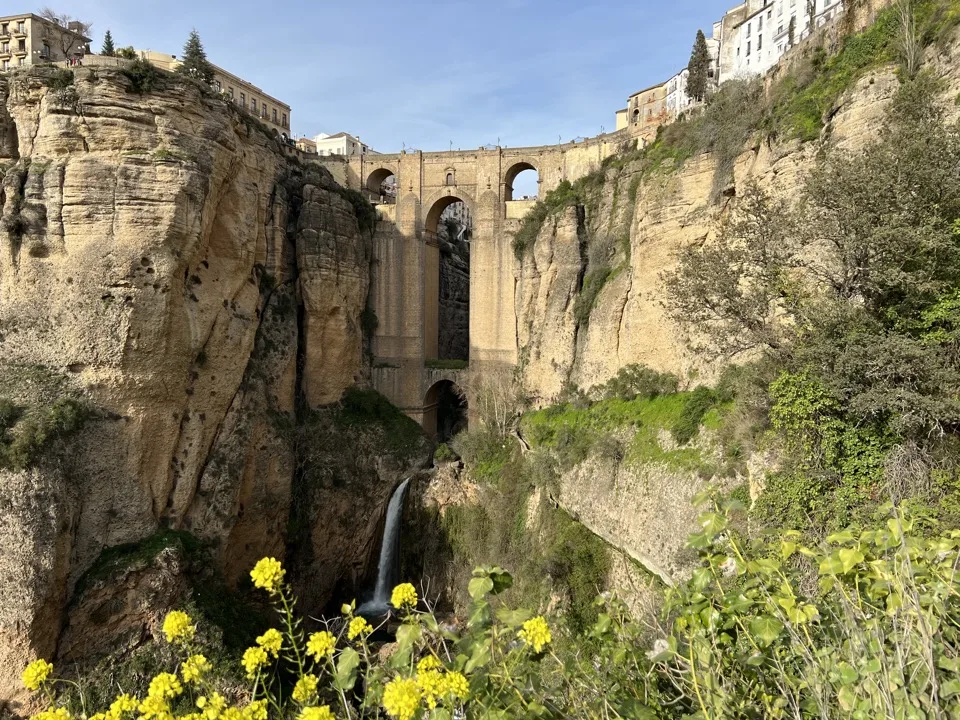
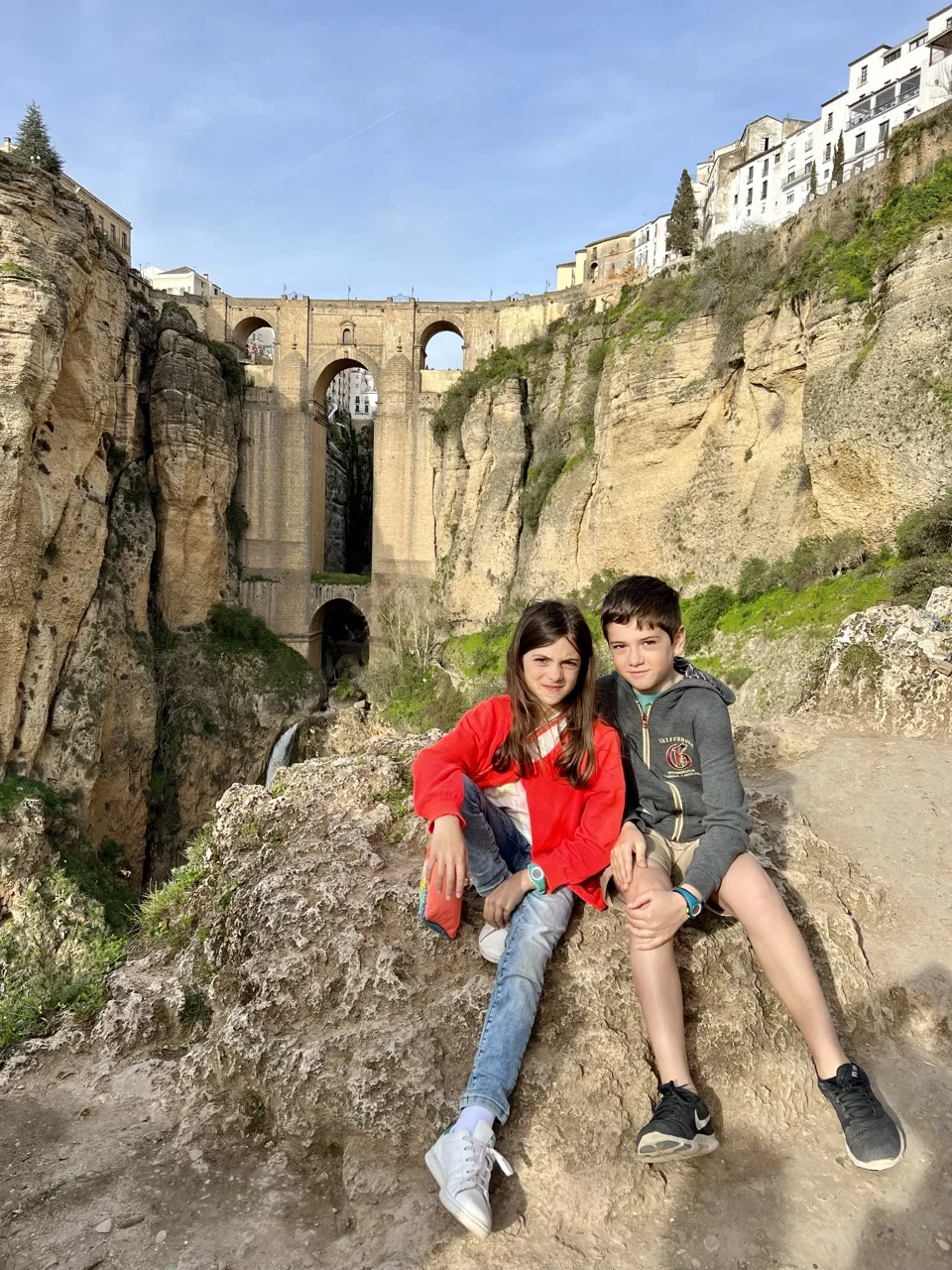
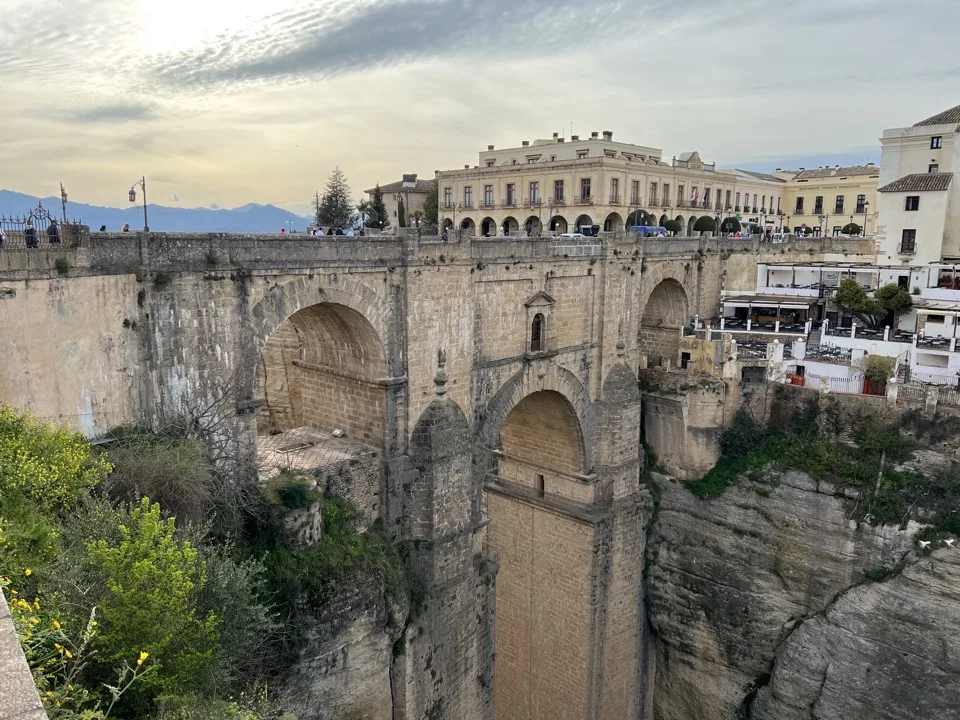
At the end of the day, we reach Ronda, which we know well. We enjoy the beautiful light of the setting sun:

Puente Nuevo spanning the Ronda gorge

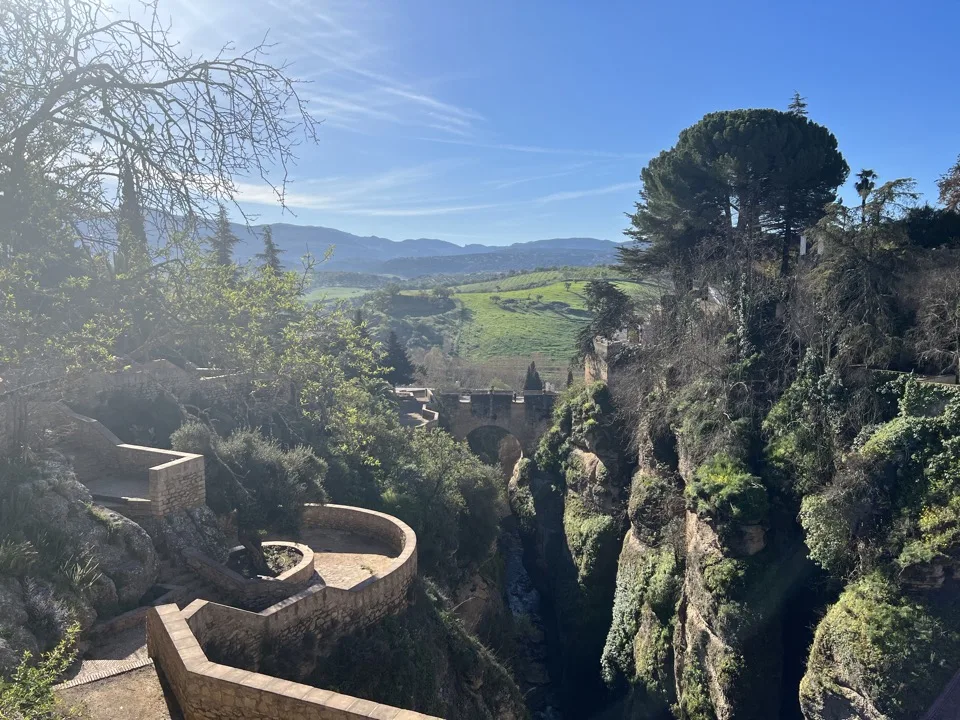
The gardens of Ronda…

View across the rocky landscape around Ronda

Our accommodation was just outside the fortification, in a lovely area. A very typical accommodation that we really liked with its series of small terraces: Ronda Romantica Loft. We were in the duplex apartment.

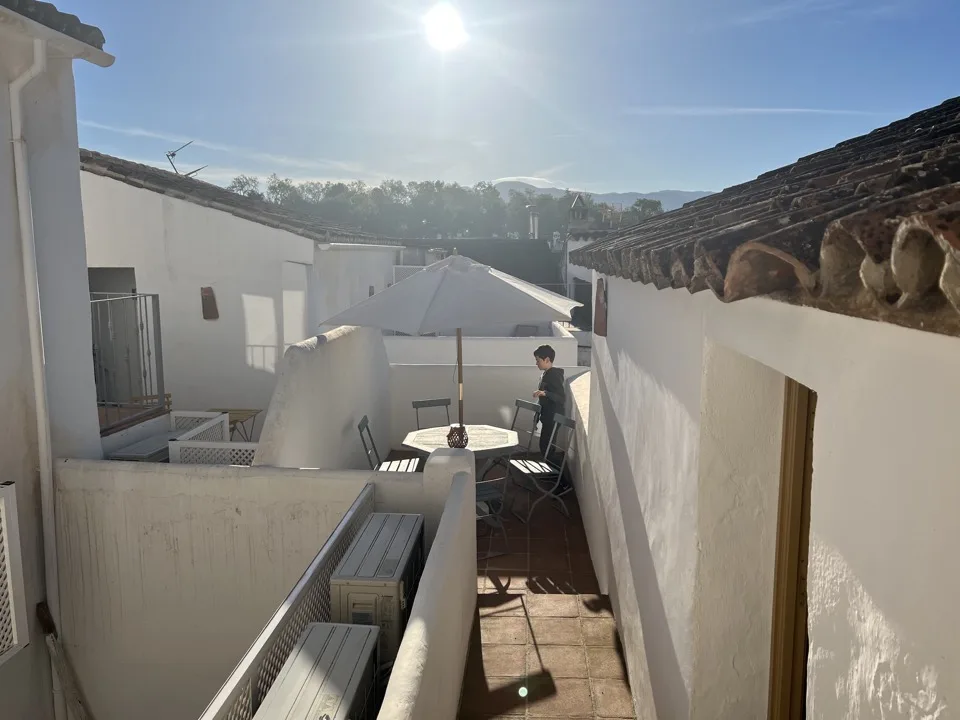
White terrace overlooking Andalusian hills

Day 6: Andalusian white villages

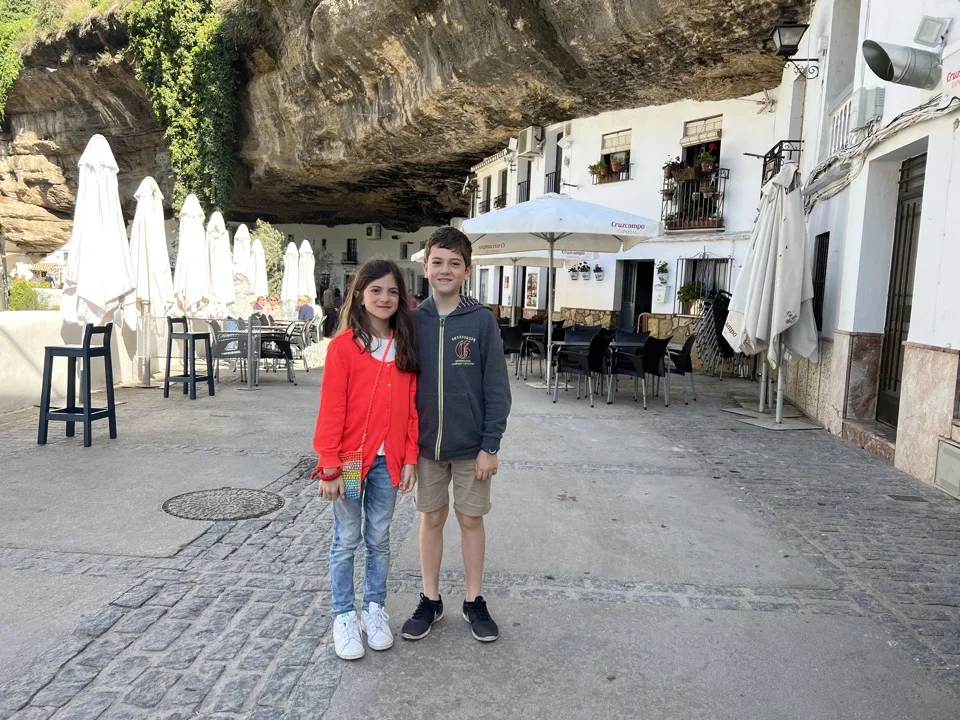
We had already visited quite a few white villages during our various stays. We did a mix between revisiting villages we loved and discovering new ones. Here are the villages where we stopped this time: Setenil de las Bodegas. It’s very small but it’s impressive:

Then direction Montejaque which we did not yet know:

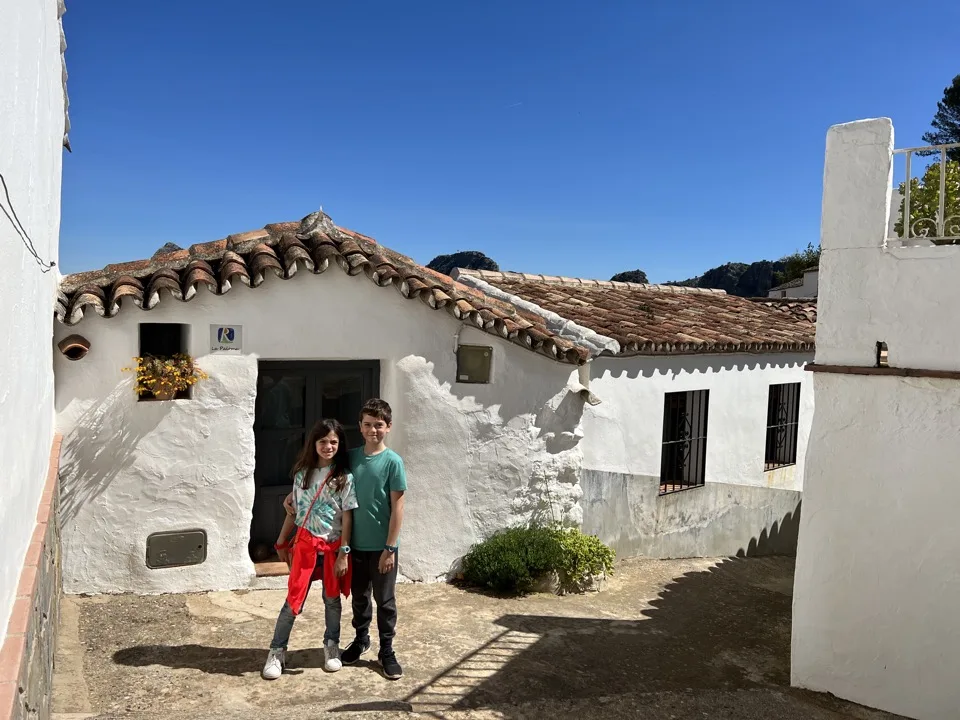
Andalousie en famille

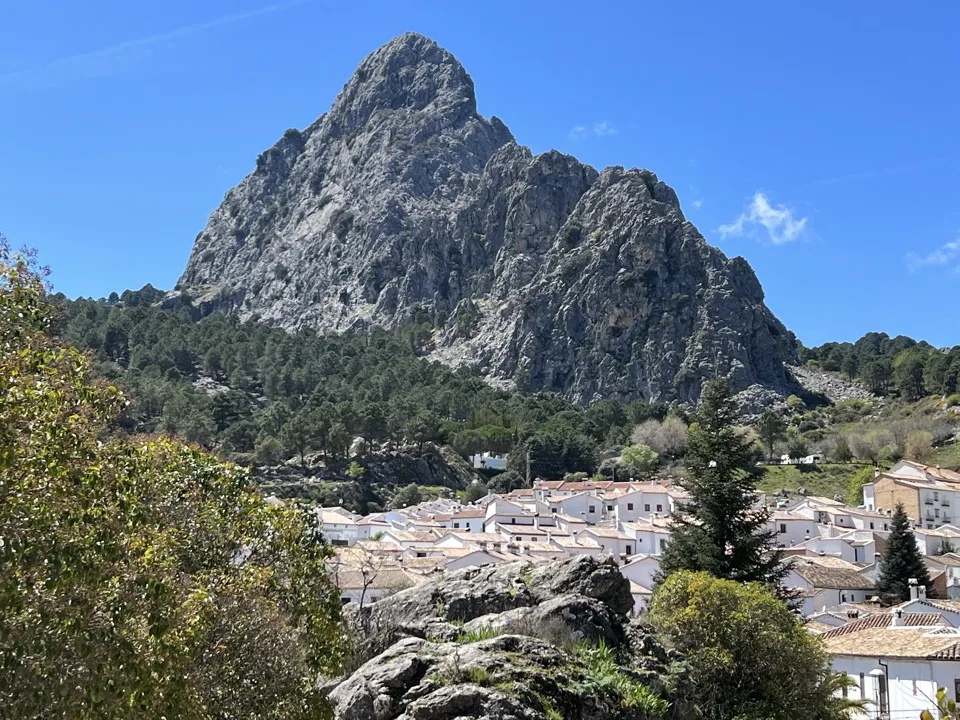
Mini hike to the Gato cave to stretch our legs: a lovely site! Grazalema with its rock which watches over the village… We have lunch there (at the La Maroma restaurant, not light but very good!).

Andalusian white village beneath a rocky peak

Return to Ronda for a quiet late afternoon. Discovery of an excellent little tapas bar: Entrevinos.

Ronda's Puente Nuevo viewed from the valley

Day 7 : El Torcal de Antequera

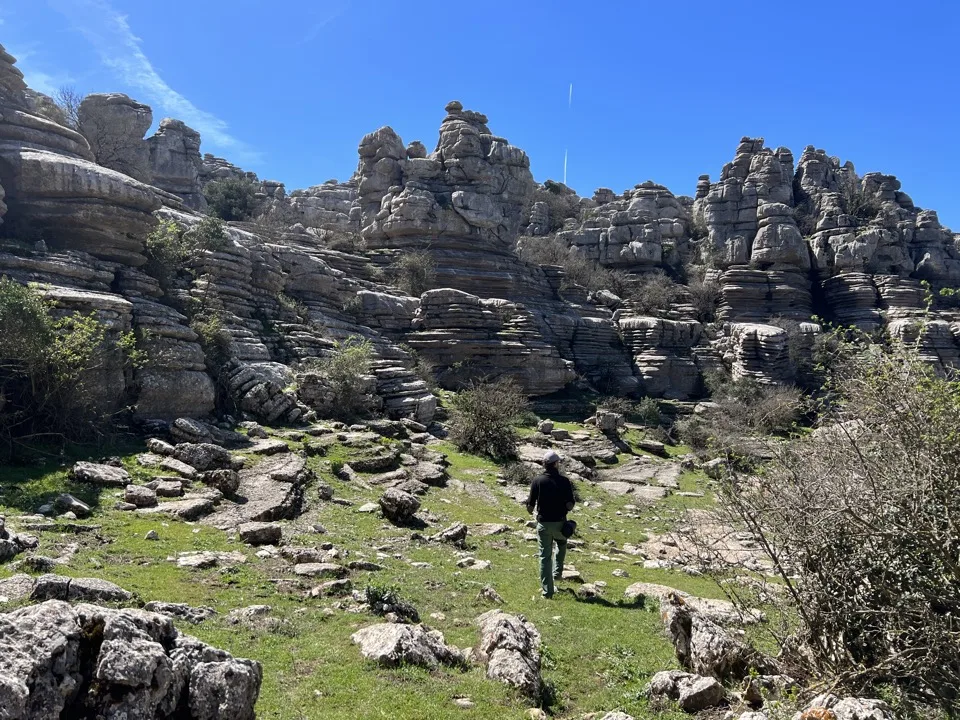
I was hesitant before visiting this place because there are actually similar landscapes in England but still it was worth it! Indeed, the site is impressive and we can never get tired of this kind of natural wonder! And the density of stones is particularly great in Torcal de Antequera. We did a two-hour hike, partly on the yellow path and partly on a path improvised by Papa Voyage!

el torcal de antequera

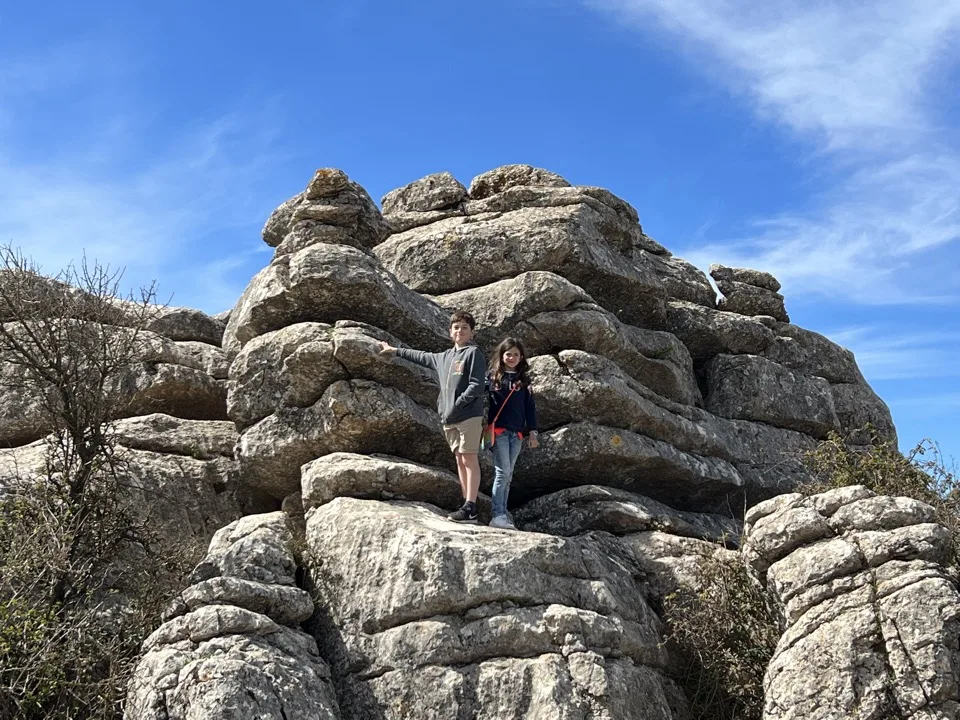
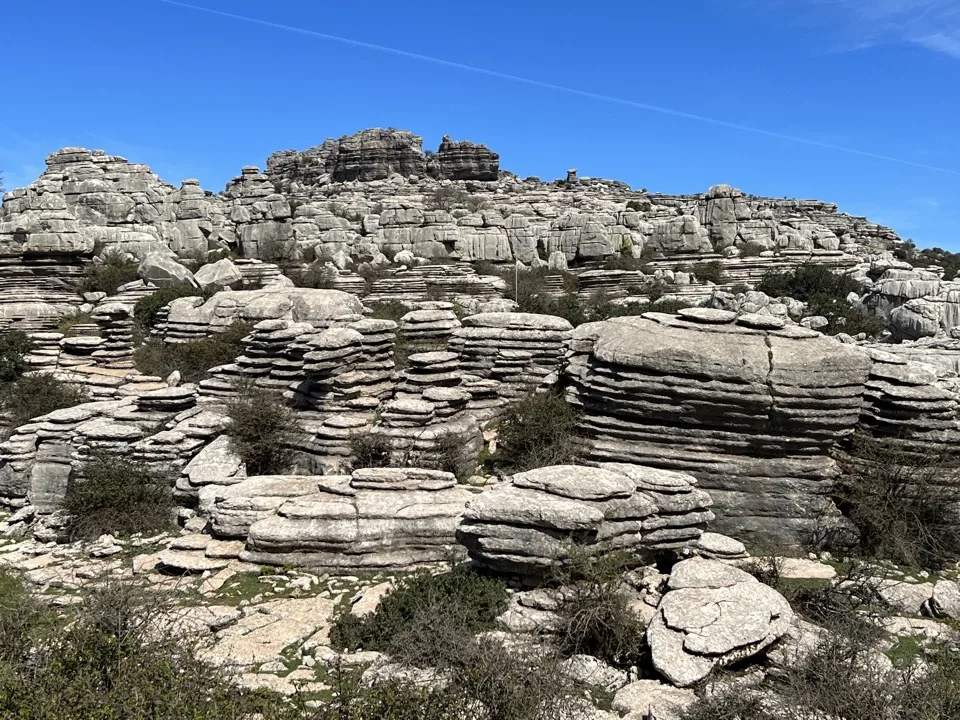
Stacked limestone rocks at El Torcal de Antequera

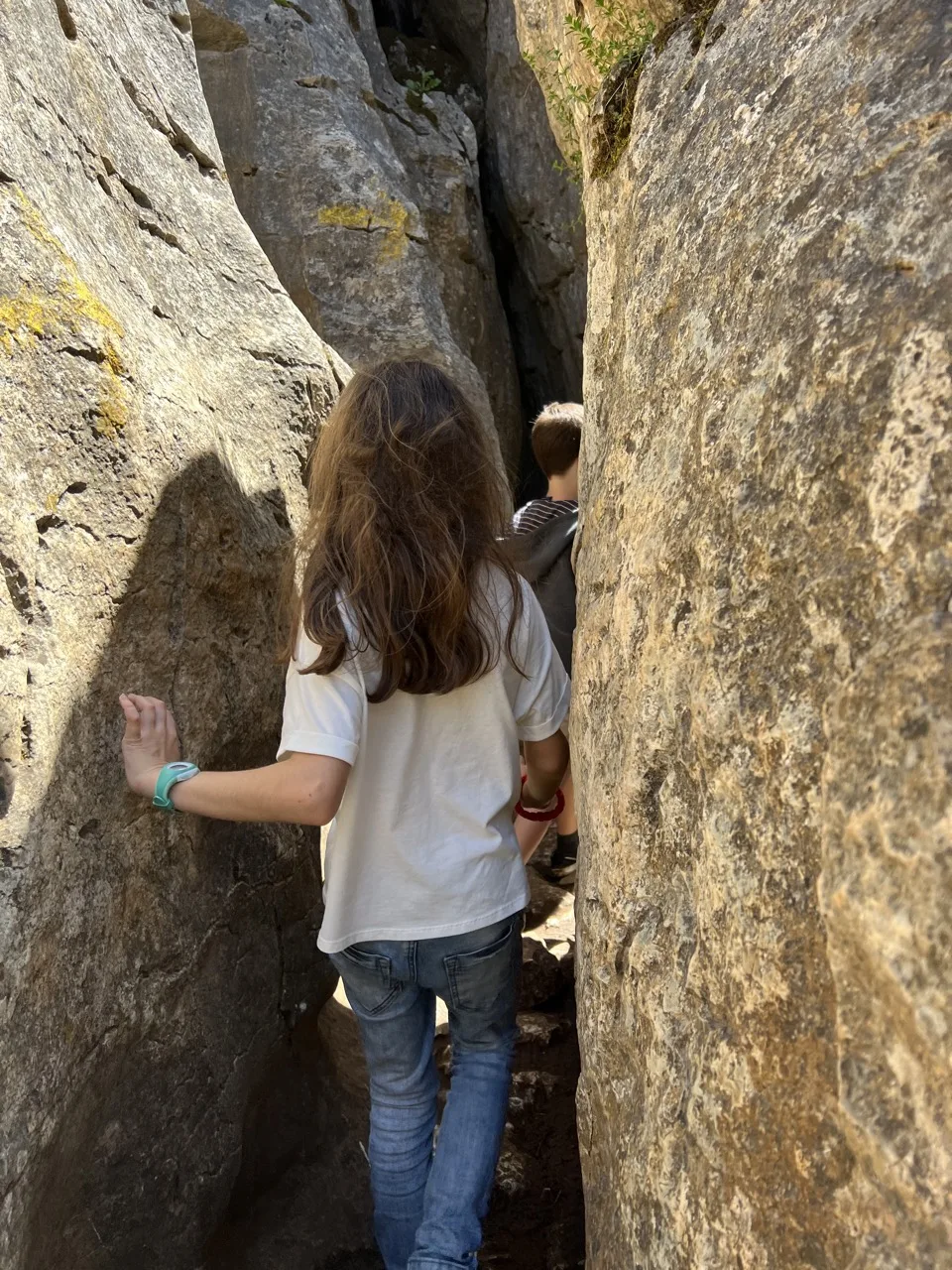
Family seen from behind among the rocks of El Torcal

Path between El Torcal's rock formations

And the circle is complete ! Head to Malaga airport!

***

More tips for a trip to Andalusia with children:

Car hire for visiting Andalusia:

We hired a car at Malaga airport. We had a Fiat 500 for €17/day. The roads were all in very good condition and pleasant to drive on.

Road through the hills of Andalusia

Our other trips to Andalusia:

If you don’t know this region, you mustn’t miss Granada and its Alhambra, or the city of Cordoba with its flower-filled patios and mosque.

Best season:

Spring was perfect! We loved it!

I strongly advise against visiting this part of Spain in the middle of summer. I did it once and I won’t be caught out again! It was so hot that it was impossible to walk through the white villages and the countryside was all dry and yellow. Also, spring really is a beautiful season for the flowers in the patios and the green landscapes.

The children’s opinion:

In conclusion, what did Ticoeur and Titpuce think? According to the children, the highlights of this trip to Andalusia were: beautiful visits with a real change of scenery, adventure with the Caminito del Rey, and tapas!

***

So? Tempted by a family holiday in Andalusia?

Also worth reading

Seville with children: our 10 must-see placesOur 10 must-see places in Seville with children, from Plaza de España and the Alcázar to Santa Cruz, flamenco and practical…
Granada with children: a 2-day itineraryWhat to do in Granada with children: our Alhambra visit, the Albaicín, tapas, flamenco and family excursions around the city.
The Caminito del Rey as a familyHow to prepare your Caminito del Rey in Andalusia hike with children
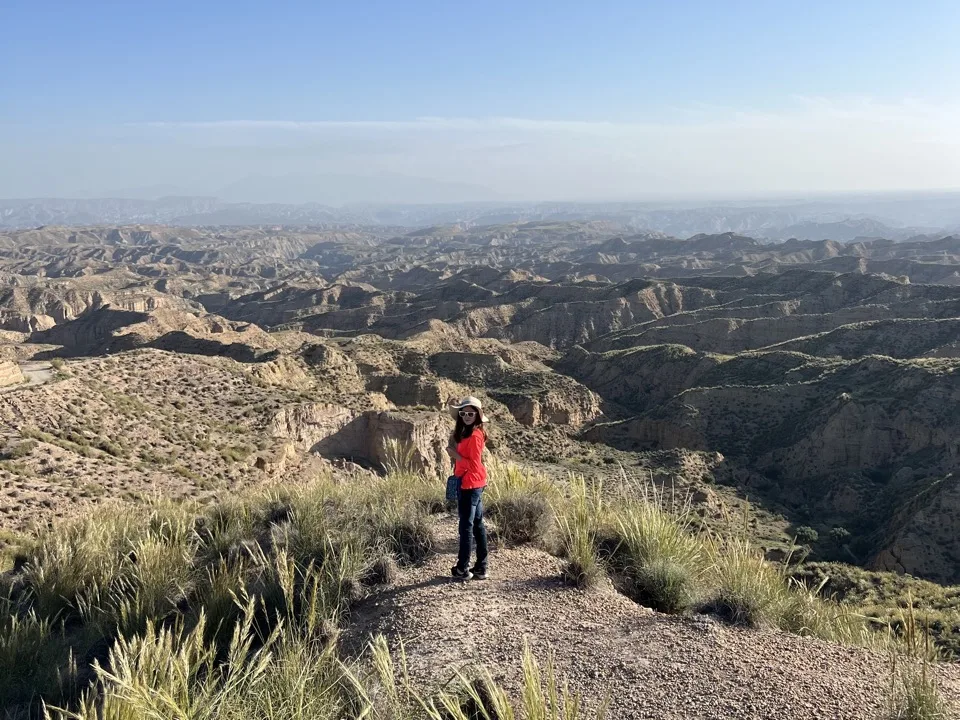
Gorafe Desert family hike and GuadixOur hike in the Gorafe Desert with the kids - discovering Guadix and its region in Andalusia
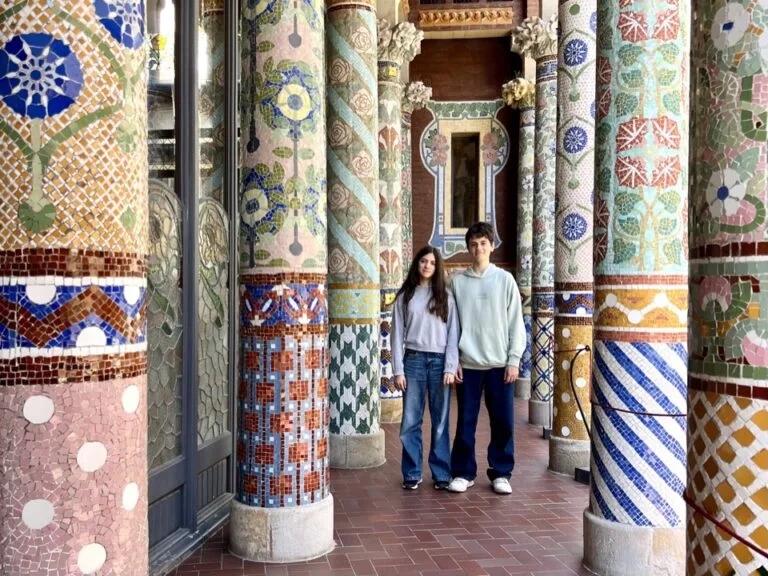
4 days in Barcelona with our teenagersOur 4 days in Barcelona as a family with our teenagers: itinerary, museum visits and walks neighbourhood by neighbourhood
Road trip in Scotland with a babyHikes in the Highlands with a baby on a 10-day holiday in Scotland: walks, sightseeing and also city breaks in Edinburgh and…
Famille vue de dos devant l'arène du Colisée de Rome

4 days in Rome with the family

For our multi-generational trip of the year, we chose a city break to Rome with the family, with the children and the grandparents. I went to Rome dozens of times as a child (ah, my Italian roots!) and it’s clearly a city I’ll never tire of. Rome was also our very first trip abroad with Ticoeur when he was only 4 months old. In short, I won’t talk about “discovering Rome” but about “reuniting with Rome”, which didn’t stop us from revisiting tourist sights we already knew well. Let’s say our programme was a mix of must-sees and off-the-beaten-track visits. Feel free to pick and choose ideas from it! Children’s ages: Titpuce 10 and Ticoeur 12 Time of the trip: early June (because we have a week of school holidays in England). Length of the trip: 4 days and 4 nights.

***

What to visit on a family trip to Rome?

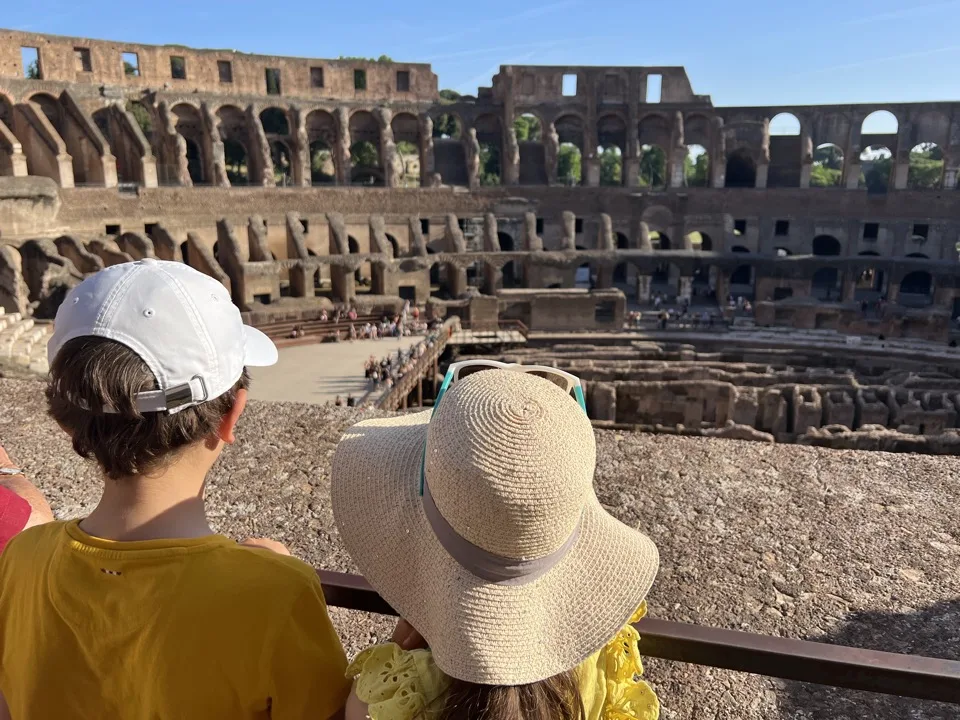
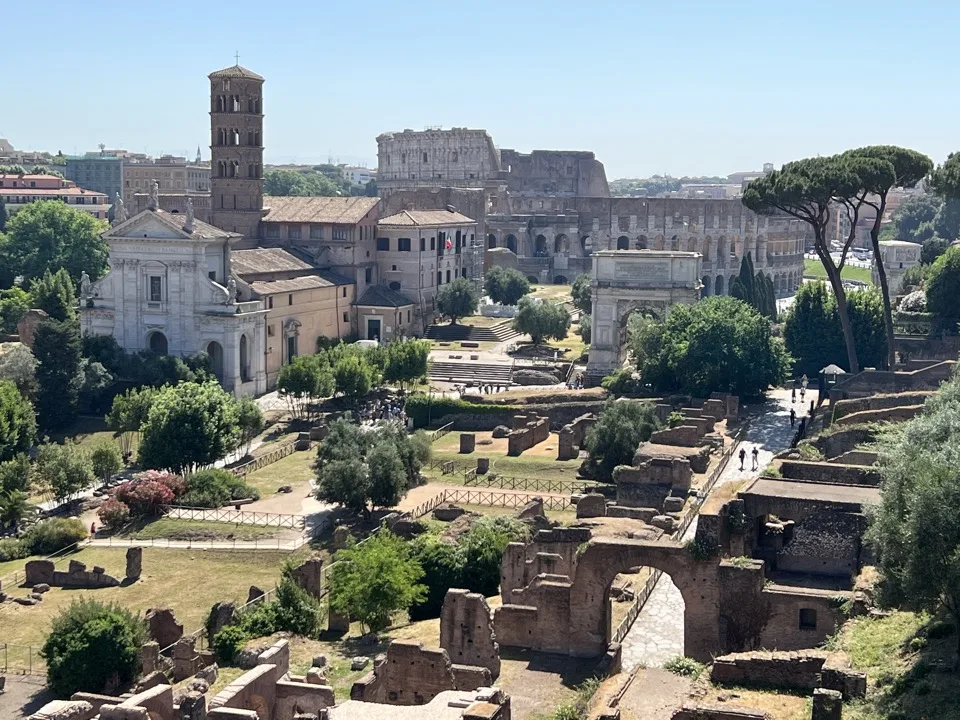
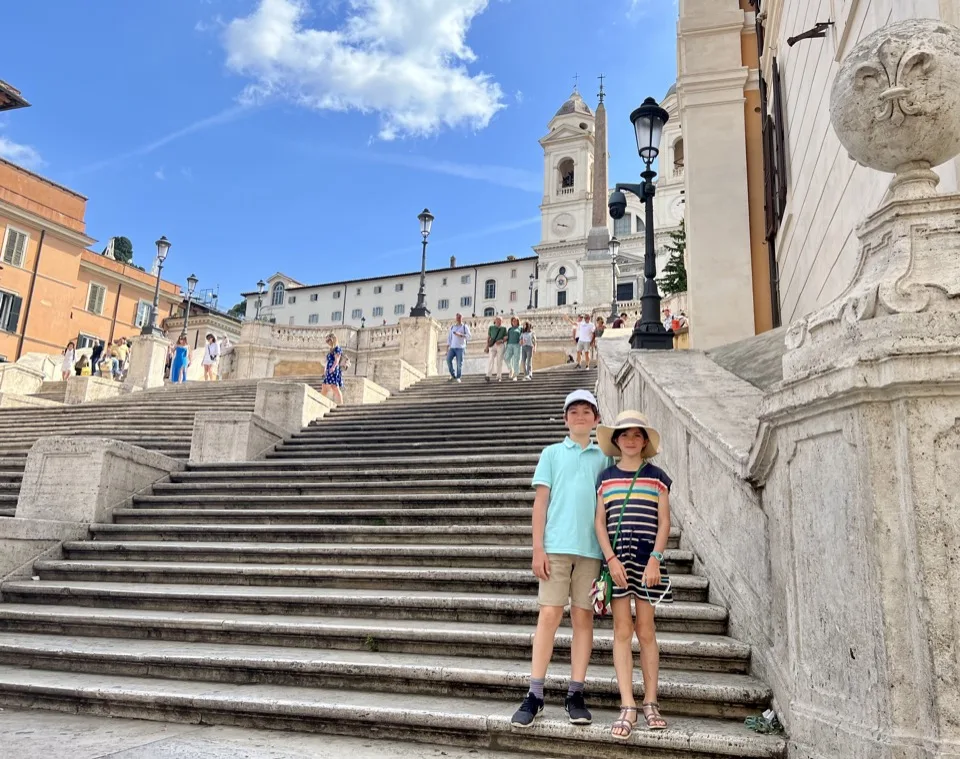
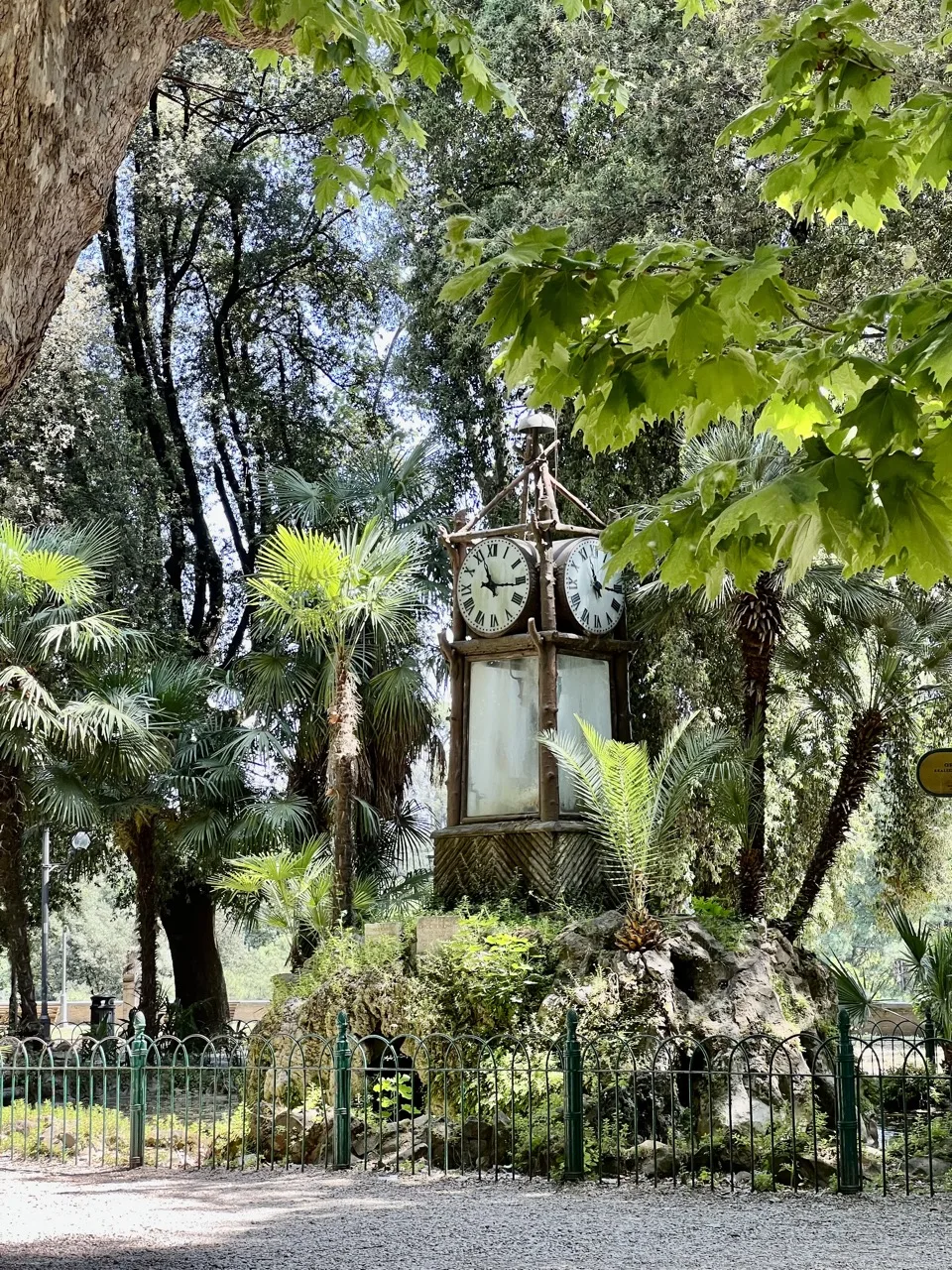
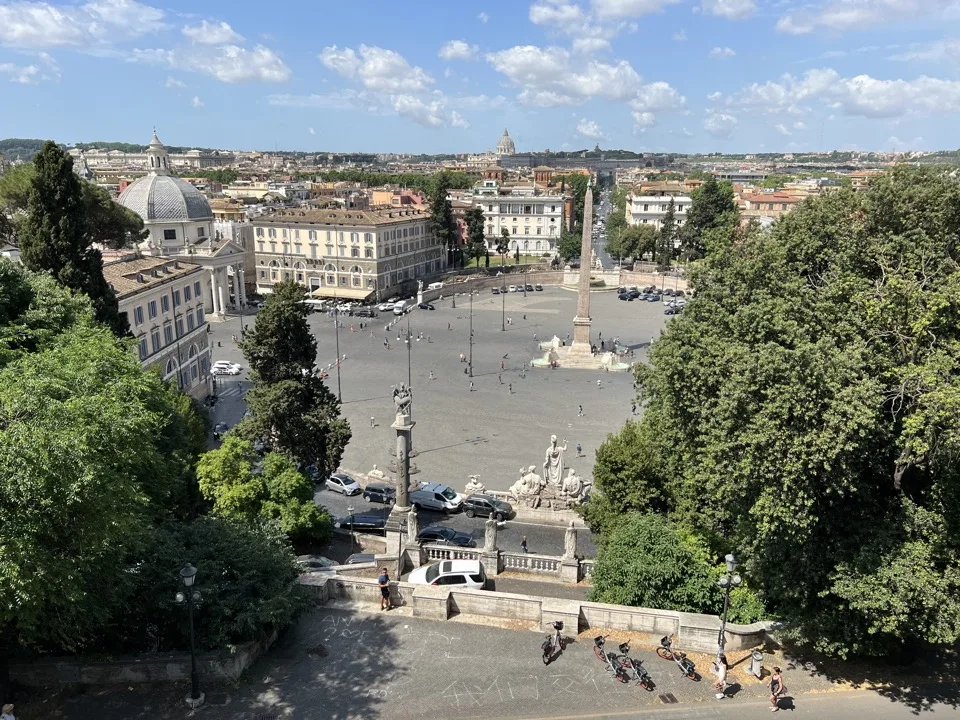
The Colosseum ❤ : Among the must-sees, we went back to see the Colosseum. We took a late-afternoon visit and it was ideal because, at the time we arrived, it was clearly the moment when a big wave of tourists was leaving. We enjoyed some beautiful golden light. The entry ticket also gives access to the Roman Forum, but it was closing when we came out of the Colosseum, so we went the next morning. Family seen from behind overlooking the arena of Rome's Colosseum The Roman Forum: Ruins and more ruins! I still find the walk just as enjoyable. A journey into the past that lets you imagine what Rome looked like at the time. To better understand what the buildings looked like in Roman times, the Welcome Rome films are perfect (see below). Ruins and gardens of the Roman Forum viewed from above Visiting the Pantheon: An exceptional building and free entry (Update 2023: unfortunately this visit is no longer free 🙁 ). That’s an excellent combination! We went at opening time in the morning to have fewer people around. In the evening, we always walked past it on our way back to our accommodation. I love the atmosphere all around. Coffered dome and oculus of Rome's Pantheon Pediment and columns of Rome's Pantheon in evening light The famous Roman fountains ❤: The fountains of Piazza Navona, the Spanish Steps, Campo de’ Fiori (where there’s a market) and of course the Trevi Fountain: classics that we passed several times during our walks around the city. I particularly love Piazza Navona – nice and spacious and, oddly, not that crowded. The Villa Borghese park: We arrived via Piazza del Popolo and walked up into the park – shady and pleasant, especially as it was hot. From up there, there’s a lovely view. Piazza del Popolo viewed from the Pincio terrace Leafy path through a park in Rome So those were the must-sees we already knew but wanted to see again. We chose what seemed the nicest for a family visit to Rome. We skipped the Vatican this time.

***

Some new discoveries:

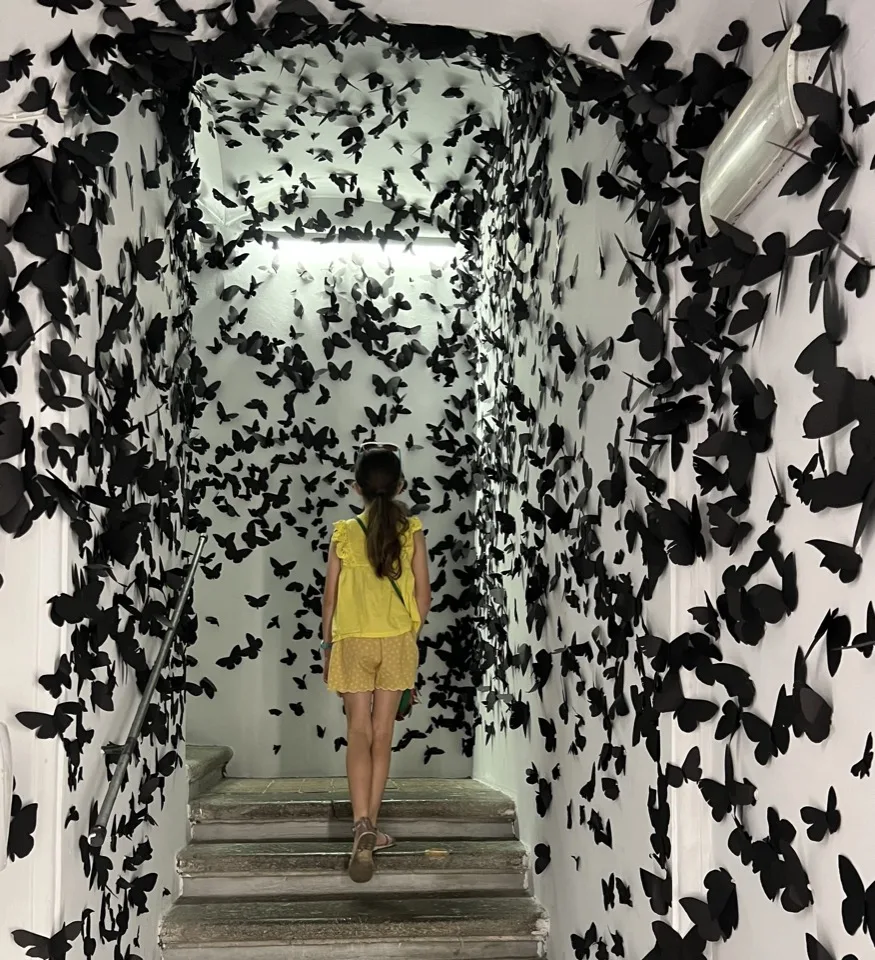
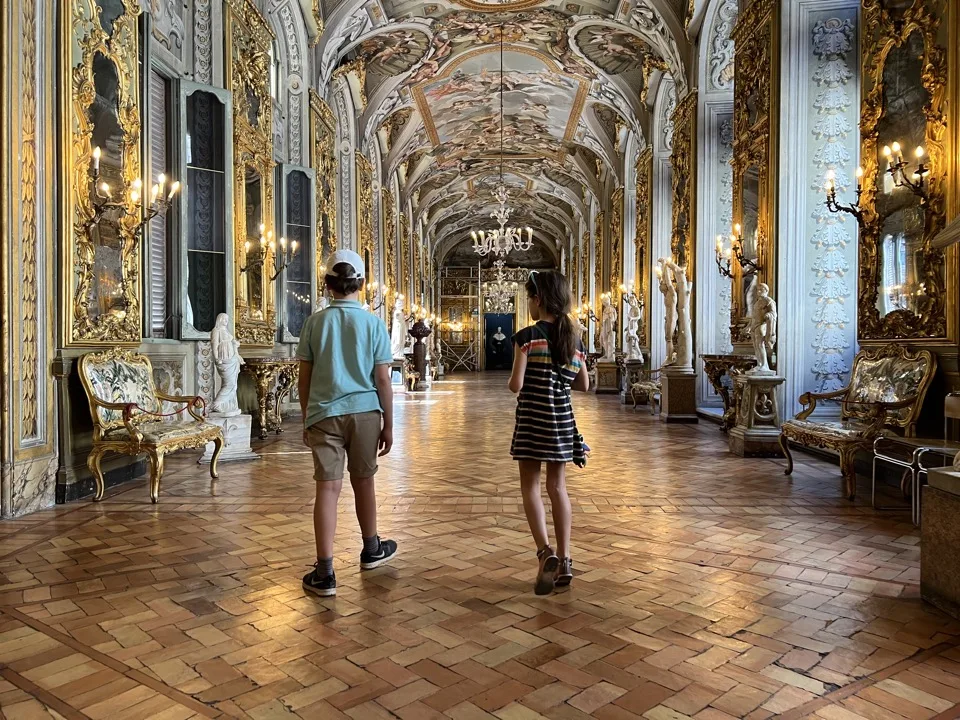
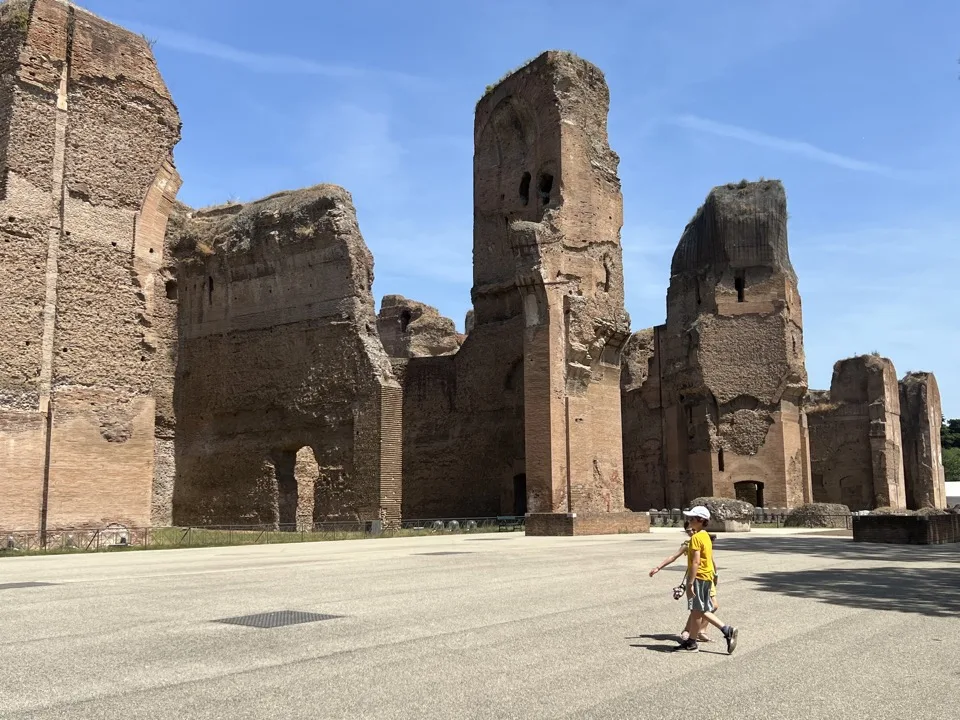
During this stay, we also visited places we didn’t yet know: Welcome Rome ❤: a big favourite! These are multimedia animations: a series of films, holograms and animated images that help you understand the stages of Rome’s construction. An excellent way to imagine what all the ruins we came across during our stay once looked like. A condensed dose of History that appealed to both the children and the adults! Note that the only downside is that you stay standing for each projection, so it’s less comfortable for grandparents. We went at the end of the day and it was very quiet. More information on the Welcome Rome website. A perfect family visit! The Doria Pamphilj Palace ❤: another favourite! A lovely collection of paintings in a magnificent palace! The palace dates from the 16th century. You’ll come across 400 works, but we especially loved the palace rooms: it’s like visiting a château! Lots of mirrors and ornamentation. It’s too much but it’s brilliant! Adult price: €14 and free for children. Family seen from behind in an ornate room of Palazzo Barberini The Baths of Caracalla The remains of the old bath walls are very high, so very impressive. There are also a few mosaics. But we expected to see more details evoking the baths. It’s hard to imagine the baths and how the place worked. It’s very different, but we prefer the Roman baths in Bath in England. That said, if you put the “baths” aspect aside, the place is very pleasant. Adult price: €8 and free for children. Ruins of the Baths of Caracalla in Rome The Catacombs of Priscilla It was interesting, but it was really far (endless bus journey) and above all we’ve had the chance to visit many catacombs in Italy that left a stronger impression on us (especially in Naples), so if we had to do it again, we wouldn’t go. But if you’ve never visited catacombs in Italy, why not. The guided tour is well done and informative. Adult price: €8 and free for children. The Chiostro del Bramante Which hosts contemporary installation art exhibitions: during our visit, we saw the “Crazy” exhibition. We really liked the diversity of shapes and colours! For children, it’s truly playful and original art.   Mirrored installation reflecting the walls of a Roman monument Visitor seen from behind in an installation of black butterflies And lots of churches, of course! A bit at random during our walks… There’s an incredible density of beautiful churches! All superb, all different, and there are still plenty more to discover! We saw the Basilica of Saint Clement of the Lateran, the Basilica of Sant’Andrea della Valle, the Church of St Louis of the French, the church of San Stefano (warning: the paintings in the latter are scary… avoid showing the details to children), …
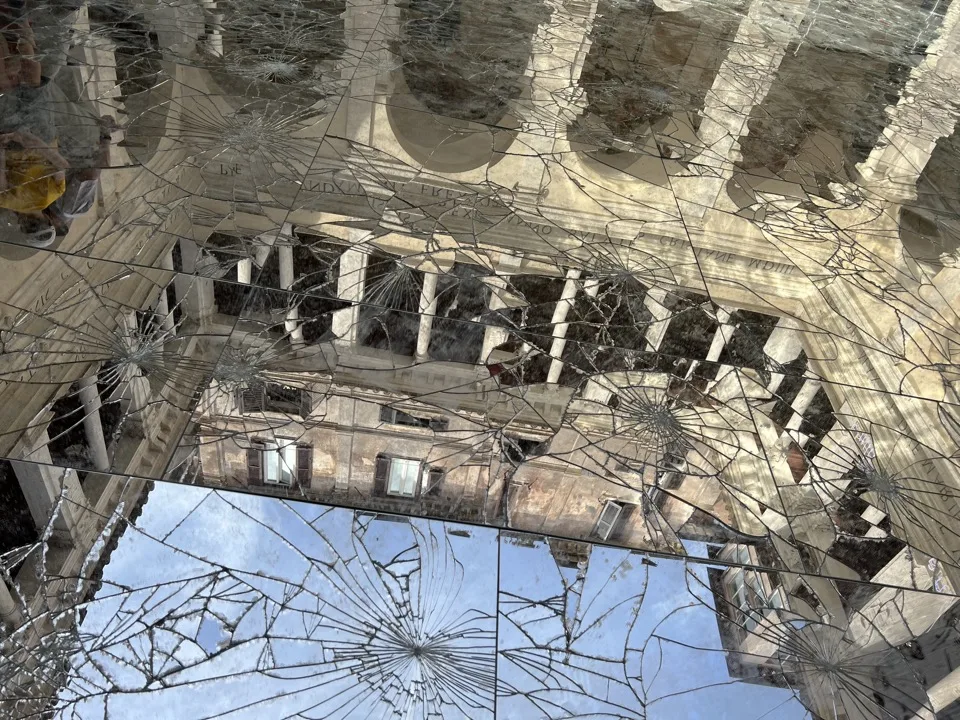
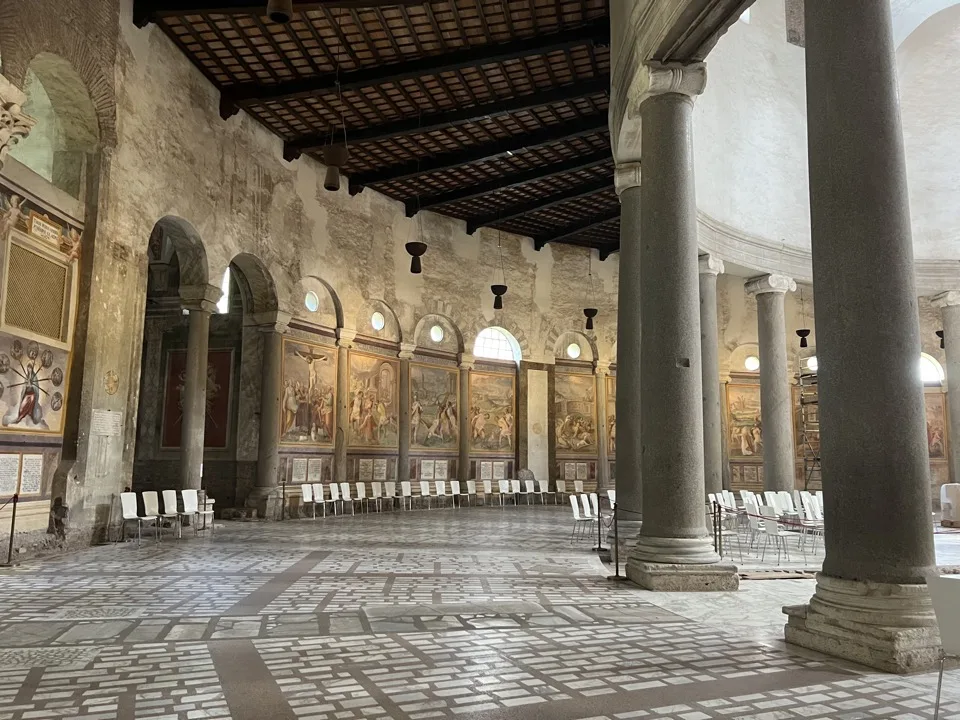
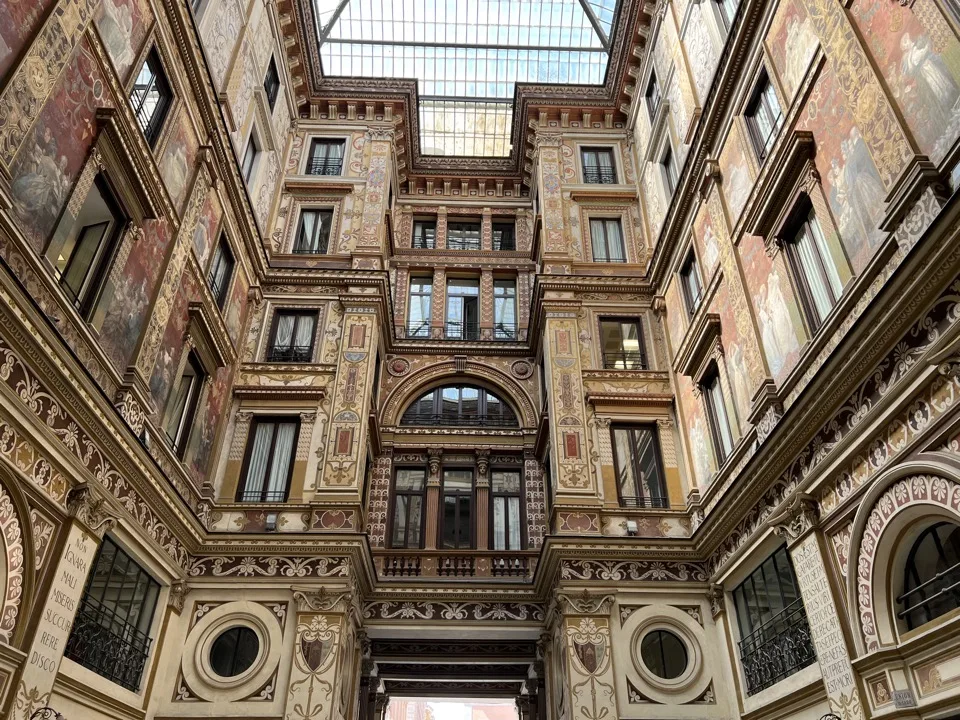
Large columned hall in a Rome museum
San Stefano church

***

We walked 17 to 20 km a day in the streets of Rome:

With Ticoeur and Titpuce, we really walked a lot because Rome is an open-air museum! Omi and Opa, for their part, opted for an afternoon nap after lunch, just to take a break from the family’s sporty pace ;-). Our long walks took us to lovely places such as: The Galleria Sciarra, a remarkable example of Art Nouveau! Ornate inner courtyard of a Rome palace Castel Sant’Angelo on the banks of the Tiber… and the Vatican in the distance… St Peter's Basilica viewed from the Tiber in Rome The imposing Monument to Victor Emmanuel II and Capitoline Hill… Victor Emmanuel II Monument beneath the Italian flag We also quickly went into the Capitoline Museums to say hello to the statue of the she-wolf with Romulus and Remus. Largo di Torre Argentina, then through the nearby Jewish quarter… Ancient ruins among pine trees in central Rome And we passed by the ruins of Trajan’s Market… Medieval tower rising above Rome's rooftops
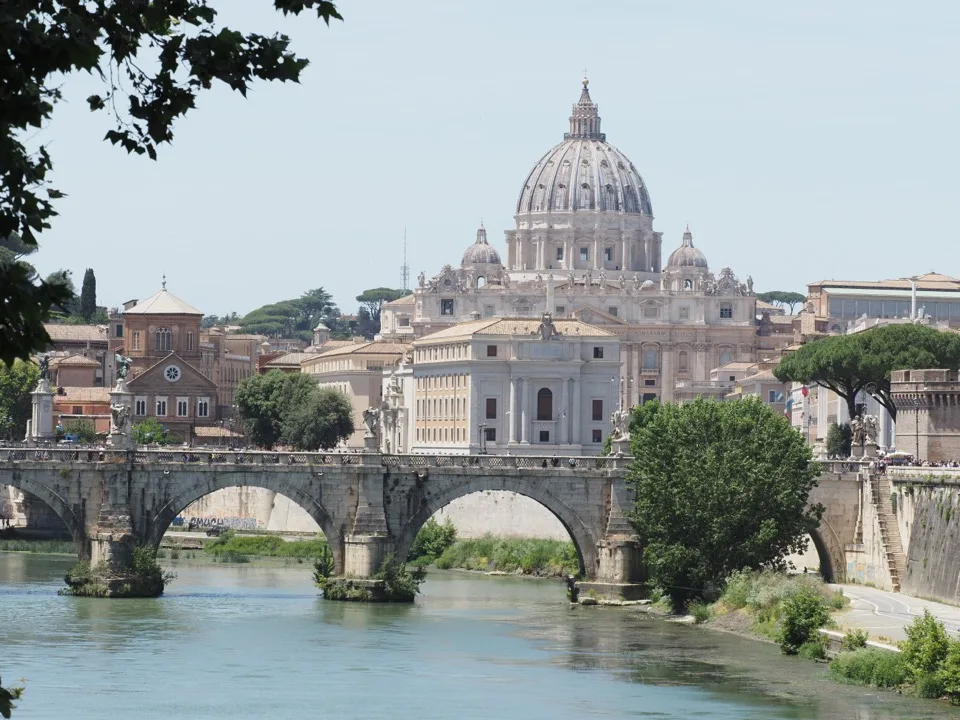

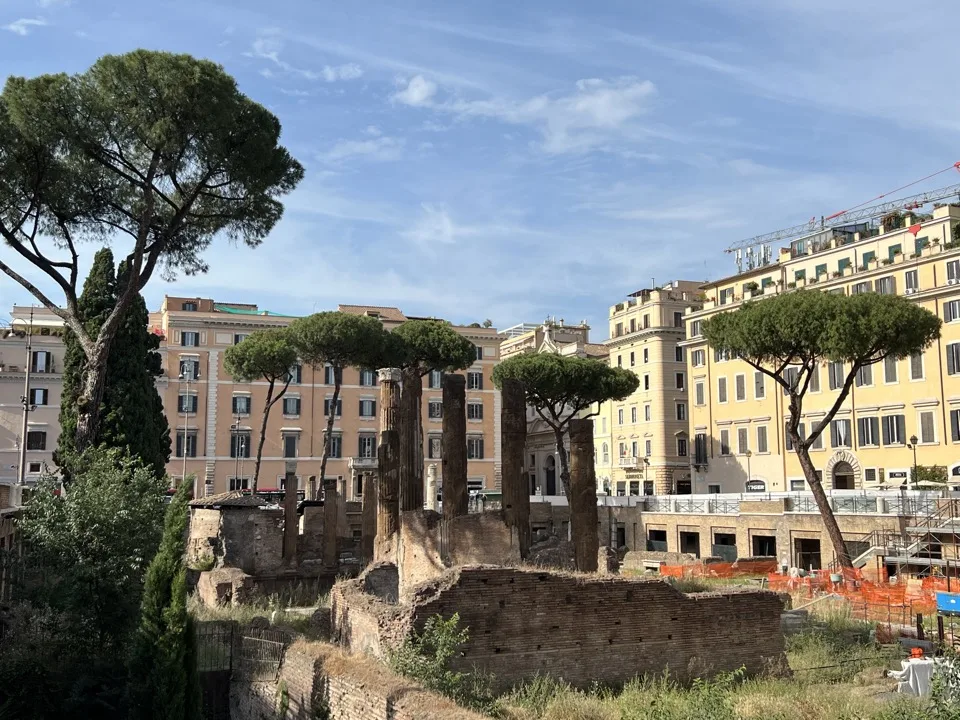
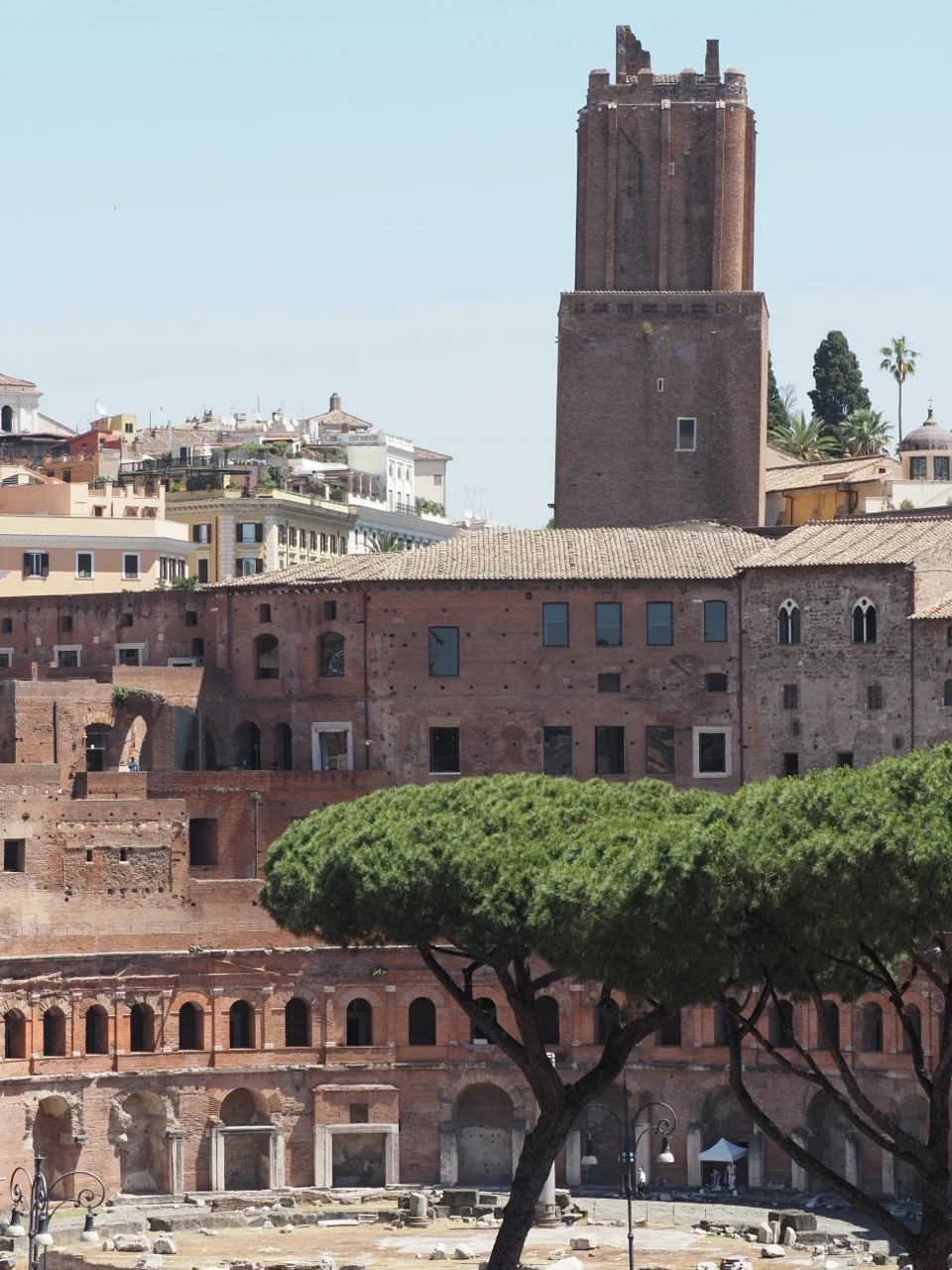
***

Rome with the family: our good addresses

Restaurants:

  • Giolitti: a must-visit ice cream parlour a stone’s throw from the Trevi Fountain!
  • Pizzeria Romana al taglio: for grabbing a slice of pizza on the go (good value). In the same style, there’s Pinsitaly near the Trevi Fountain.
  • La Mastrociccia: typical Roman cuisine, family-run and no-frills. On the same street (Via del Governo Vecchio), there are lots of restaurants like this and they all look nice.
  • L’Emporio alla Pace: a small bar perfect for an aperitif drink! Very friendly staff.
  • La Tavernetta 48: the fine-dining restaurant we all enjoyed and where we had dinner one evening on the terrace.
  • Prefetti 19: another fine-dining restaurant that I personally really enjoyed.

This time, we didn’t have time to go to the Tastevere district, but it’s the ideal area to eat in small trattorias! A great atmosphere guaranteed for a Roman-style dinner!

Accommodation in Rome:

We chose a flat for 6, with 3 bedrooms, not far from Piazza di Spagna. Very good location. This flat is no longer online, so here are three other well-located options for a family of 4:

  • Ale & Niki : a quadruple room with a double bed and a sofa bed. Lovely decor and a very good location, in the Vaticano Prati district by Ottaviano metro.
  • During our first stay in Rome, we stayed between the Colosseum and the station: see this flat in the Monti district.
  • La maison Romana: a more budget-friendly flat for four, not very far from Termini station by Manzoni metro.
**** When you book a hotel on Booking by following a link on my articles, it allows me to receive a small commission: it does not change the price for you and it helps me maintain the blog. So thank you very much to those who book the hotels we recommend! ****

The Roma Pass:

This time, we didn’t buy the Roma Pass because we weren’t doing enough visits included in the pass, nor enough journeys by public transport to make it worthwhile (we walked so much!), but do take a look at this option, which could help you save money!

And for next time in Rome?

When we go back to Rome, because of course we will go back, I’d like to visit the ruins of Trajan’s Market, which we only walked past, discover Palazzo Colonna, and then take the children to the Vatican. Rome's rooftops and domes viewed from a terrace And you? Have you ever visited Rome as a family? Also check out our other ideas for city breaks in Italy.    
Also worth reading

Guide5 ideas for long weekends in ItalyWhere to go in Italy for 3 or 4 days as a couple, with the family or solo?
4 days in Naples as a familyOur trip to Naples with the kids during the February half-term: 4 amazing days!
3 days in Florence as a familyA relaxed three-day Florence itinerary with kids: the Duomo, Uffizi, Palazzo Pitti, Boboli Gardens, family-friendly food and…
Venice with kids: our 10 essentialsOne week in Venice with the kids
4 days in Barcelona with our teenagersOur 4 days in Barcelona as a family with our teenagers: itinerary, museum visits and walks neighbourhood by neighbourhood
7 tips for visiting Barcelona as a family without breaking the bank!Our top tips for saving money in Barcelona with the children: free activities, discounts, sightseeing tips and accommodation

South England road trip: 7 days with kids from Portsmouth

Welcome to our corner of England! I have put together an itinerary for a 7-day family road trip in the south of England from Portsmouth. I designed it with short distances and a child-friendly programme so you can enjoy a relaxing holiday without spending too much time on the road. We have now been expats in the south of England for several years and have explored our region around Portsmouth, as well as the neighbouring counties, very thoroughly. I hope you will like my varied and kid friendly selection! This road trip will give you a first glimpse of southern England with an itinerary mixing history, prehistory, medieval towns and villages, seaside resorts, a forest with ponies, castles, ruins, gardens and beautiful coastal scenery. This 7-day itinerary in the south of England goes through the counties of Hampshire, Wiltshire and Dorset.

sud angleterre en famille

Map of the seven-day road-trip route through southern England

Portsmouth, its seafront promenade and historic ships

Recommended duration: 1 or 2 days.

The seafront and promenade:

Head for the Southsea area. I recommend starting the walk at South Parade Pier, an old pier typical of English seaside resorts. I actually find Portsmouth’s pier prettier than Brighton’s, so that will save you a detour via Brighton :-). Then you will come across a second pier, Clarence Pier, with slot machines and other games or small rides. These arcades are really not my thing, but they are typically English. You can stop for a light lunch by the sea or a fish & chips if you are hungrier. Then continue along the promenade, passing Southsea Castle and the lighthouse. If you enjoy walking, keep going along the seafront to the old town. Old Portsmouth is small, so it is quickly seen. From the Spice Island pub, you will have a lovely view of the Spinnaker, the city’s landmark, at the foot of which there is a modern shopping area.

South Parade Pier on Southsea’s shingle beach
Montage of key sights in Portsmouth and Southsea

The Historic Dockyard:

The dockyard is just after the Spinnaker.

Warning: visiting the area with all Portsmouth’s iconic ships is a very big budget* item! If you are history and big-ship fans, it is a fascinating visit, but given the steep prices, do not hesitate to skip it and replace it with a less expensive programme. The only ship you can see for free from Portsmouth harbour, just after the Spinnaker, is HMS Warrior, which belonged to Queen Victoria:

*2025 update: the family pass costs £145

Historic ship HMS Warrior in Portsmouth Harbour
HMS Warrior

If you invest in the family pass, then you will have plenty to see! I recommend spreading the visits over two days and prioritising the following ships:

  • Admiral Nelson’s ship: HMS Victory (a great moment of history! You will see where Nelson breathed his last.)
  • Queen Victoria’s ship: HMS Warrior (beautiful interior)
  • The submarine HMS Alliance (from the Second World War)
  • The wreck of the Mary Rose

Still for history fans, and more for secondary-school age children this time, there is also the D-Day museum: the D-Day Story on the Southsea promenade.

Accommodation in Portsmouth: this two-bedroom house.

**** When you book a hotel on Booking by following a link on my articles, it allows me to receive a small commission: it does not change the price for you and it helps me maintain the blog. So thank you very much to those who book the hotels we recommend! ****

***

Winchester, the former capital of England

Recommended duration: half a day.

Winchester was the capital of England in the Middle Ages. Today it is only the capital of my county, Hampshire. The city centre is typical of old historic English towns. Everything is organised around High Street and the cathedral. A few hours, or half a day, are enough to wander around the centre. St Peter’s car park is convenient.

A walk in Winchester:

Walk up and back down High Street. At the pretty Buttercross monument, take the passage towards the beautiful Romanesque cathedral (you can visit it, but it is paid – Jane Austen is buried there). Go around the cathedral towards Cathedral Close, heading for Dome Alley and Kingsgate Street. Notice the lovely bookshop P&G Wells. Walk down College Street, passing the famous Winchester College. Make the detour to the ruins of the Old Bishop’s Palace, then follow the very pretty River Itchen to the mill (Winchester City Mill). The little mill can be visited and is fun for young children because it is still working. You can even buy flour from the mill or make some. It is part of the National Trust network, so the visit is included in the pass (see the bottom of the article for information on the National Trust). Finally, you can climb St Giles Hill for the viewpoint.

Foodie addresses in Winchester:

  • The restaurant Chesil Rectory, in a 15th-century Tudor house. It is a quality gastropub.
  • For a more informal lunch, I recommend Cafe Monde and its small terrace just a stone’s throw from the cathedral.
  • Marse Winchester, a tiny Tibetan restaurant for delicious momos on the go.
  • Piecaramba! will let you try this English speciality: meat pies! There is also a vegetarian option.

Historic houses and street clock on Winchester High Street
Montage of Winchester Cathedral, streets and river

Accommodation in Winchester:

I recommend this accommodation in New Alresford, a very pretty village 15 minutes from Winchester. New Alresford is tiny but full of charm. It is the watercress village :-). I recommend walking along the river, where you will pass The Fulling Mill.

Thatched timber-framed cottage beside the river in New Alresford

Also, in this village there is a tapas restaurant I like: Pulpo Negro (rather upmarket). For a simpler or more family-friendly dinner, choose the Winchester addresses I gave above.

***

Highclere Castle: the Downton Abbey castle and the Egypt exhibition

Recommended duration: half a day.

Are you a fan of the series Downton Abbey? The castle used as the main filming location is called Highclere Castle. It is a private castle, open to visitors for part of the year. Be careful: you need to book months in advance on their website. I recommend taking the combined ticket with the Egypt exhibition because it is not much more expensive and gives you access to an exhibition about Egyptian expeditions. Fascinating for children and adults alike. What does it have to do with Downton Abbey? Nothing! But the family who own the castle descend from the Earl of Carnarvon, a friend of the archaeologist Howard Carter, whose expeditions he financed. Passionate about Egypt, he travelled there himself and documented everything carefully. The exhibition is located in part of the castle. It is interesting and very visual. A nice surprise! We came for Downton Abbey and, in the end, learnt a lot about Egypt! Finally, we walked around the huge castle park before stopping at the cafe for tea (never drink an espresso in England!). Highclere Castle is 30 minutes north of Winchester.

Highclere Castle surrounded by woodland in Hampshire
Highclere Castle

***

If you have more time and want to extend the itinerary, you can continue a few miles north towards Oxford.

Otherwise, let us now leave Hampshire and enter the neighbouring county of Wiltshire…

***

Stonehenge: a strange megalithic monument

Recommended duration: half a day.

Yes, admittedly, it is only a few big stones, but I love it, and after many visits the magic still works every time! There is still a lot of mystery around this place and the reason for its existence. The weather matters a lot, so try to aim for a sunny day and remember to book if you are travelling in high season or at the weekend. Stonehenge is probably the best-known prehistoric site in England. The visit is expensive, but it is included in the National Trust pass (see information at the bottom of the article). Once there, allow time because I recommend doing the walk to the stone circle on foot. There is also a reconstruction of the village from that period and an interesting small museum. On the way back from the monument, you can take the shuttle included in the price.

Stonehenge stone circle beneath a blue sky

If you do not have a National Trust card and do not want to buy tickets, you should know that it is possible to see Stonehenge from the surrounding roads. But you have understood: we are fans! And we have the National Trust card.

Either after or before visiting Stonehenge, especially for lunch, you can go to the town of Salisbury, which, like Winchester, has an old centre with its High Street and its impressive cathedral, with the largest cloister in England (paid entry from age 12). Salisbury Cathedral also houses a well-preserved copy of the Magna Carta. English small towns look alike, you will see. In Salisbury, there is the chain The Cornish Bakery for a quick lunch, or I recommend the little restaurant Thai Orchid.

***

Stourhead: a stately home with a magnificent English garden

Recommended duration: 2 hours.

To keep offering you a varied itinerary, I think Stourhead House & Garden is an excellent visit for discovering a typically English estate with an exceptional landscaped garden. In addition to the walk through the 1,000 hectares of gardens, the entrance ticket gives access to an 18th-century Neo-Palladian mansion. Stourhead is part of the National Trust. You really are going to need the pass!

Lake and Pantheon temple in the gardens at Stourhead

***

Shaftesbury: an adorable little English village

Recommended duration: 2 hours.

Here we are in Dorset, in a small village known for the beauty of its steep old cobbled street called Gold Hill. The old cottages, some with thatched roofs, add to the charm of the place. It is quickly seen, but it is on the route and it is charming. I took this photo from the cafe at the top of the street. The advantage of stopping in this cafe is that you can take the time to admire the view and enjoy moments when there is nobody in the photo! I should mention that we were there during the October half-term holidays, not in the middle of August. And we came early in the morning. After your coffee break, you can stretch your legs in the rest of the village, especially on the Park Walk, which offers views over the Blackmore Vale.

Gold Hill and its historic cottages in Shaftesbury
Gold Hill, Shaftesbury

Corfe Castle and Durdle Door

These two iconic Dorset sites are very close to each other.

Recommended duration: 1 day to explore both sites.

Corfe Castle:

The ruins of Corfe Castle appeal both to adults for their romantic atmosphere and to children, who can explore every corner of the remains of this medieval castle dating from the time of William the Conqueror. Guess what? The National Trust pass gives access to this site :-). The castle was destroyed in the 17th century during the Civil War between Parliament and King Charles I.

After visiting the castle, do not miss the adorable village of Corfe. Also, for those not planning to visit the castle, it is possible to admire it from the surrounding hills, the Purbeck Hills.

Ruins of Corfe Castle on a hill in Dorset
Corfe Castle

Durdle Door:

Half an hour from Corfe Castle is the famous natural arch of Durdle Door by the sea, on this part of the coast known as the Jurassic Coast. To really enjoy the place, plan several hours there because I recommend walking there and back along the coastal path, discovering Lulworth Cove, Man O’War Bay and Durdle Door beach. You will see, it climbs and descends! Not exactly an easy path, but that does not stop anyone. This site is touristy. It is better to avoid weekends. Parking is not cheap (2025 update: 8 euros for the day). You will find food or somewhere to buy an ice cream in Lulworth.

Durdle Door sea arch and beach on the Jurassic Coast

***

Old Harry Rocks: England’s Etretat

Recommended duration: half a day.

This is the Dorset “monument” closest to our home, so we often like going there at the weekend, especially when we have visitors from France. Yes, it does look a bit like Etretat. Let us say that they are also chalk formations, but it is still different. I like it a lot. Allow around 30 minutes’ walk on the coastal path from Middle Beach Car Park. We choose this car park because it is free for National Trust members. Two steps from the car park, there is a small beach and a cafe.

Before leaving Dorset, you could potentially stop in Bournemouth if you are fans of English seaside-resort style, especially if you have not explored Portsmouth. In Bournemouth, the advantage if it is warm is that, in addition to the typical seafront with the usual pier, children will be delighted to enjoy a very large sandy beach (in Portsmouth or Brighton, the beaches are small stones). There are also pretty colourful beach huts along the beach.

Turquoise and white beach huts in Bournemouth

***

If you want to extend the itinerary towards the south-west of England, then continue exploring Dorset with the family.

Otherwise, let us return to Hampshire! Time for the famous New Forest, which forms the border between the two counties.

***

The New Forest and the magic of free-roaming ponies

Recommended duration: half a day to 1 day, or even 2!

A huge favourite for us: the New Forest! No, no, it is not just a simple forest! It is the largest forest in England and it is home to thousands of free-roaming ponies, much to children’s delight! We really enjoy living not far from this vast natural area made up of heathland and woodland. Formerly William the Conqueror’s hunting ground, today it is the ideal place to see animals, walk, visit typical villages and picnic. The New Forest stretches all the way to the sea. We recommend:

  • one or two walks deep in the forest (there are car parks at each walk starting point).
  • a stop by the sea: in the village of Lymington or at Milford-on-Sea, where you can see the Isle of Wight nearby.
  • the Beaulieu museum: its collection of vintage cars and small castle can make a good programme for the whole family.

To go further: all the details of these walks and activities are in my full article about the New Forest with the family.

Where to sleep in the New Forest: Forest View Farm (with kitchen) in Lyndhurst, a pleasant New Forest village located in the centre of the forest. There are also many campsite options if you are travelling by campervan or motorhome.

Mare and foal roaming freely in the New Forest

***

Paultons Park: a fun theme park for children

Recommended duration: 1 day.

Paultons Park is a theme park located very close to the New Forest. It is a good option for making your children happy. For younger children, there is a dedicated Peppa Pig area with small rides. For older children, there are thrill rides. Everything is set in a very well-kept park. You did not necessarily come to England for this, but it can be nice for a change of pace. See all the information on the Paultons Park website. I recommend it for families, especially if your children are under about 13.

If you do not feel like devoting a whole day to a theme park, then for me the alternative is simple: spend one more day in the magnificent New Forest! On foot, by bike, or simply by the water catching crabs like local children!

Colourful hot-air-balloon ride at Paultons Park

Landscaped garden with a pagoda at Paultons Park

***

Back to Portsmouth!

Sunset over Portsmouth viewed from across the waterView over Portsmouth at sunset

Practical information for this family road trip in the south of England

  • If you are coming from abroad – Driving in England: does driving on the left stress you out? It is less difficult than it looks! If you come by ferry, I imagine you will bring your own car. But if you arrive by train or plane, you will probably choose to rent a car. In that case, for more ease, I recommend choosing an automatic car. See DiscoverCars to find the best value for money.
  • In total, the itinerary I have just suggested for this little loop in the south of England is about 380 kilometres. Over a week, that is fairly relaxed and reasonable. It is up to you to customise your English road trip!
  • The National Trust card: the National Trust network includes many sites, monuments and houses in England. In my article, I have already pointed out that Stonehenge, Winchester Mill, Stourhead House & Garden and the Old Harry Rocks car park are part of the National Trust. If you plan to do all these visits, the annual family pass may well be cheaper than buying tickets for each site. As it depends on the size of your family, the age of the children and the number of National Trust sites you want to visit, the best thing is to do the sums for your own case. All information about prices is on the National Trust website.

***

If you do this road trip in our corner of southern England, you will be very close to my home, so do not hesitate to contact me and come for tea! I will show you my favourite river!

Sailing boats moored in an estuary in southern England


See you soon!

Also worth reading

Christmas in London: 20 family activitiesPlanning Christmas in London with children? Discover 20 family-friendly ideas, festive lights, shows, attractions and practical…
Visiting the Harry Potter Studios as a familyAdvice for visiting the Harry Potter Studios near London: official tickets, booking ahead, visit length, train travel and the…
10 ideas for visiting Bath with the familyA long family weekend in Bath with children and grandparents: ten places to visit, nearby excursions, accommodation and…
Road trip in Scotland with a babyHikes in the Highlands with a baby on a 10-day holiday in Scotland: walks, sightseeing and also city breaks in Edinburgh and…
3 days in Edinburgh with my teenagerA long mother-daughter weekend in Edinburgh: Harry Potter, art, history and shopping in the Scottish capital