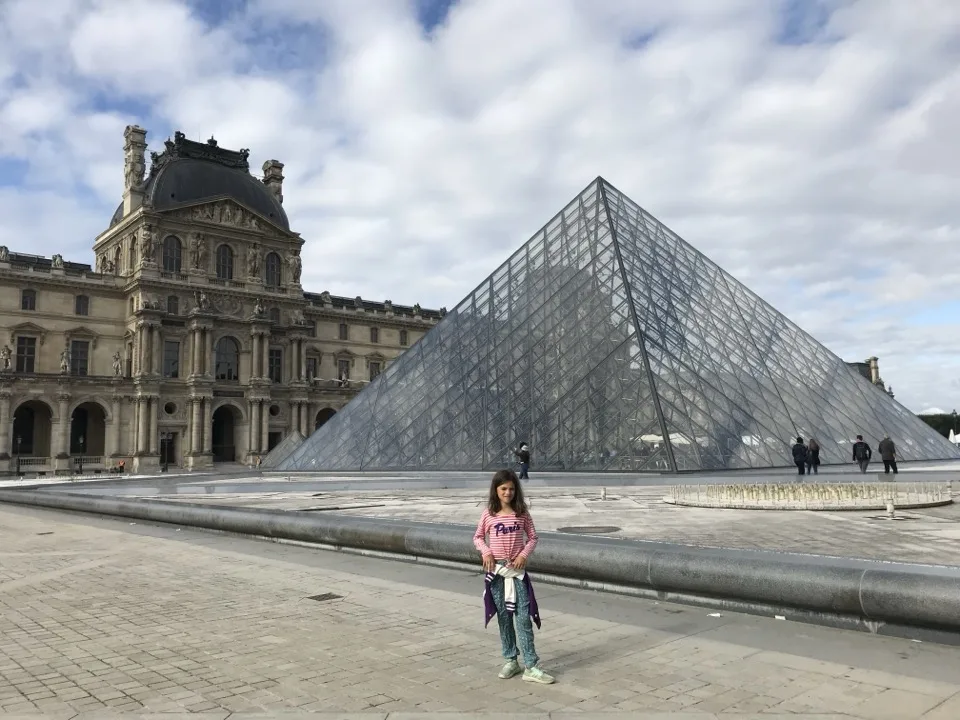
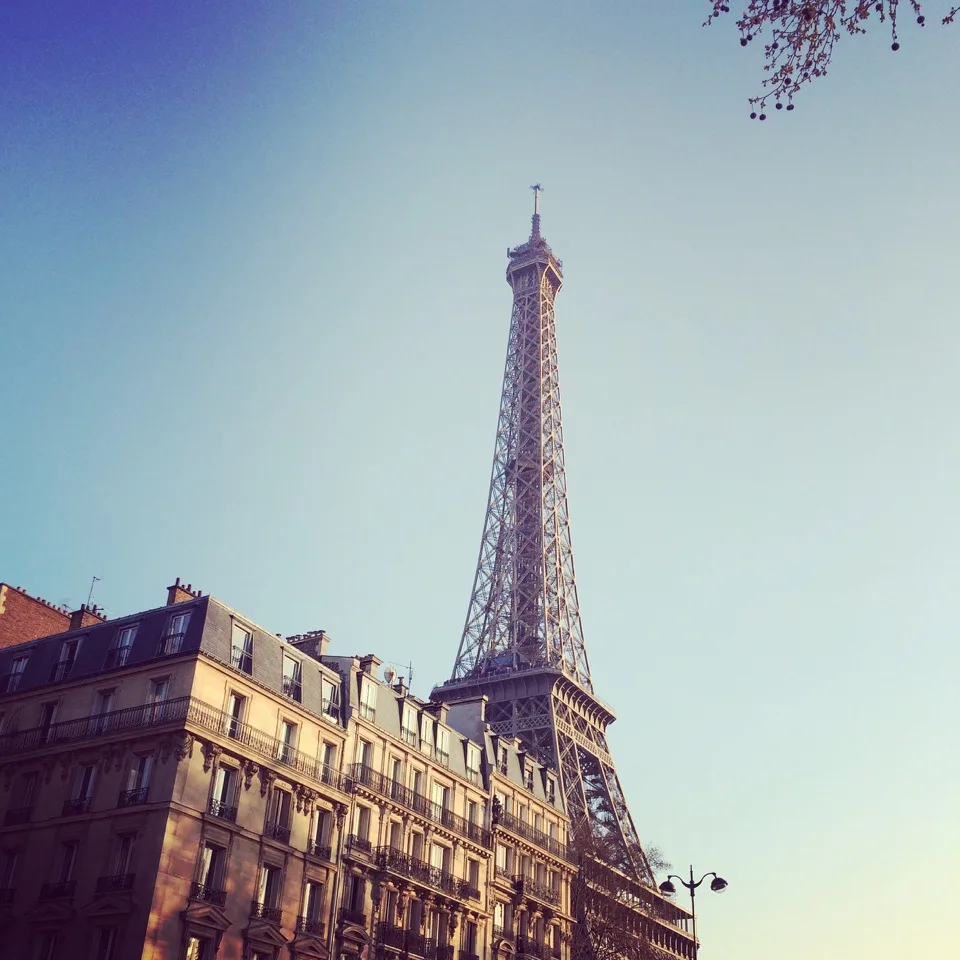
Marrakech is a wonderfully different city that I have visited three times. I could not wait to introduce the rest of the family to it. I had therefore prepared a short itinerary for our stay in late October and early November, asking myself: which sights are worth visiting, and which can you skip when you have only 1 or 2 days? Marrakech has changed greatly since my last visit: there are more tourists, so more places are crowded; new venues have opened; other places are closed or partly closed for building work; and some visits have become expensive. I would therefore like to help you make the right choices and see the best of Marrakech. If, like us, you have only one or two days in Marrakech, here is my opinion of the sights that are genuinely worthwhile and those that do not seem essential.
Marrakech in 2026: the sights that are genuinely worthwhile
The entire medina of Marrakech is a UNESCO World Heritage Site because of its historical, cultural and architectural richness. It offers a striking change of scenery and strong contrasts, from exceptionally intricate buildings to simple lanes that seem to belong to another age. Here are the places not to miss — according to me and my own tastes — in Marrakech’s old town:
Ben Youssef Madrasa
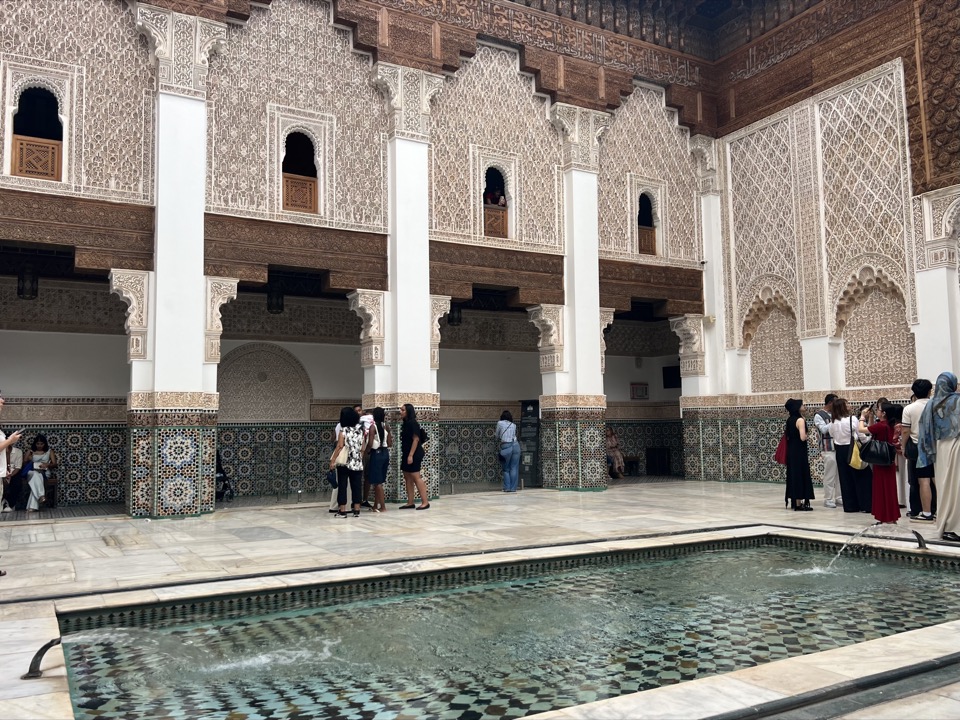
Ben Youssef Madrasa is worth seeing for its magnificent architecture. This former Quranic school was founded in the 16th century. Since my previous visit, the madrasa has been beautifully restored. We enjoyed admiring its Hispano-Moorish style and the delicate plasterwork, cedar wood and zellige mosaics. The large inner courtyard is the most beautiful part, although it is also interesting to see the students’ rooms around it. The madrasa is in the north of the medina. It was busy, but visitors moved around easily. We went towards the end of the day, shortly before closing, and spent 45 minutes there.
We bought our tickets at the ticket desk (50 DH for adults and 10 DH for children under 12). More information is available on the official Ben Youssef Madrasa website.
Dar El Bacha, Museum of Confluences
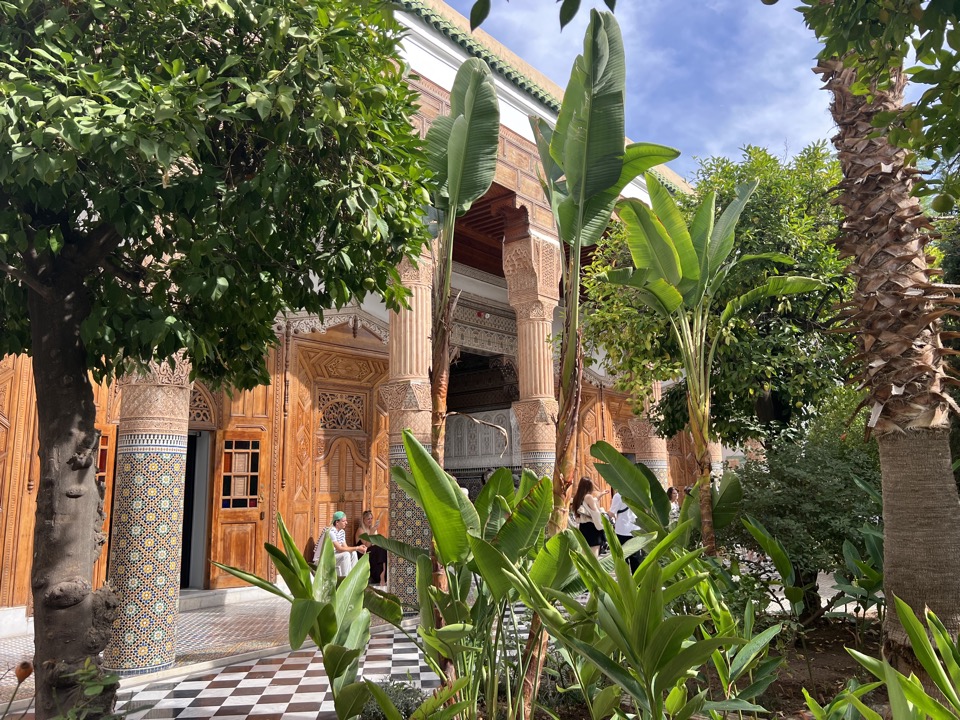
Dar El Bacha Palace was a wonderful discovery! I had not seen it before because it was not open to the public during my previous stay in Marrakech. This 18th-century palace was home to Thami El Glaoui, Pasha of Marrakech. Today, it houses the Museum of Confluences, with a small collection of decorative arts and objects from around the world. I recommend the palace not for its modest museum collection, but for its elegant architecture: the building is superb, with mosaics and rooms opening onto an attractive planted courtyard surrounded by columns.
Here is, at last, the story of our 10-day family trip around the Yucatán Peninsula in Mexico. We had already travelled there without the children on our honeymoon and were eager to return with them. Yucatán offers a perfect blend of culture and nature. It is wonderfully different: from idyllic beaches and Maya temples to colonial towns, we had a fantastic holiday! I am publishing this post rather late, but with Día de Muertos approaching, I felt inspired to revisit these lovely memories. Choosing an itinerary is never easy, so I hope the details of our Mexican road trip will inspire you and make planning a similar journey easier!
**** When you book a hotel on Booking by following a link on my articles, it allows me to receive a small commission: it does not change the price for you and it helps me maintain the blog. So thank you very much to those who book the hotels we recommend! ****
Puerto Morelos
Journey: from Cancún Airport to Puerto Morelos : 20 minutes
1 night
A relaxed arrival in Puerto Morelos:
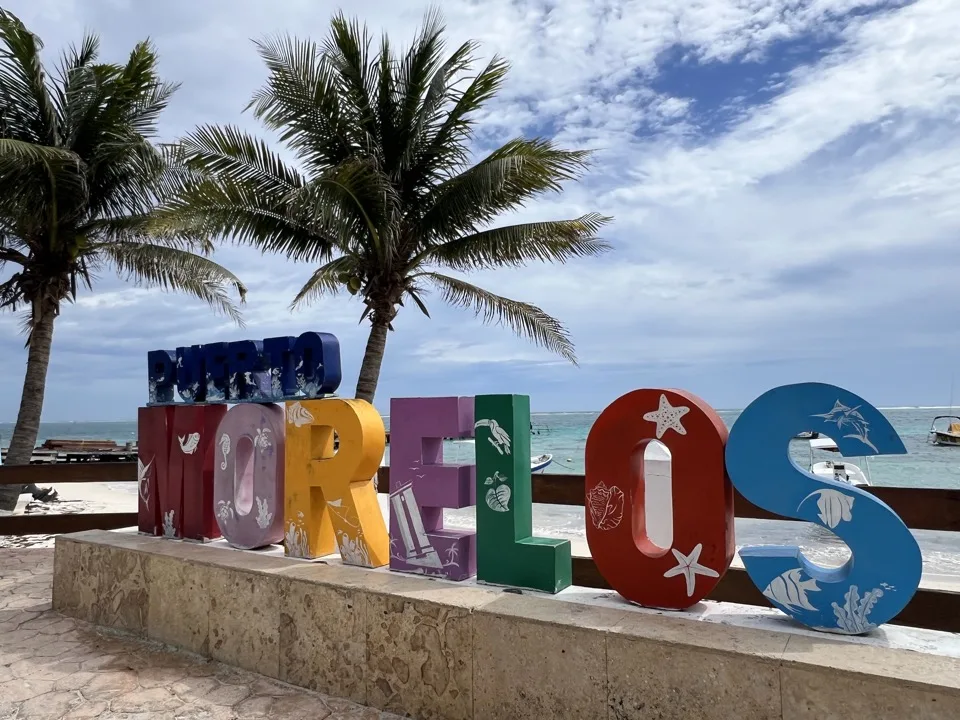
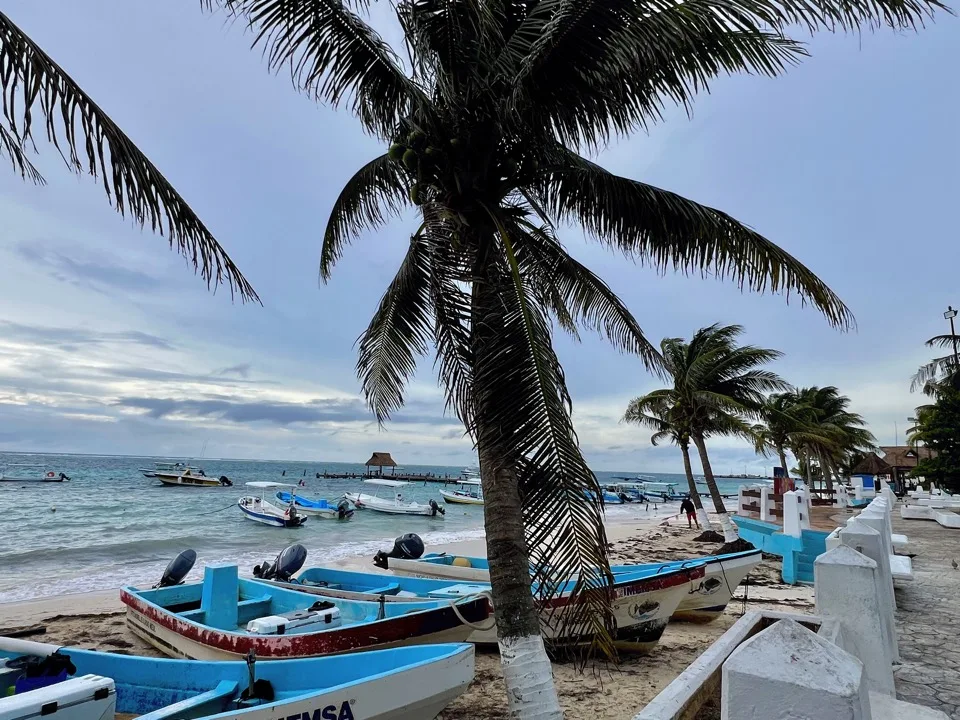
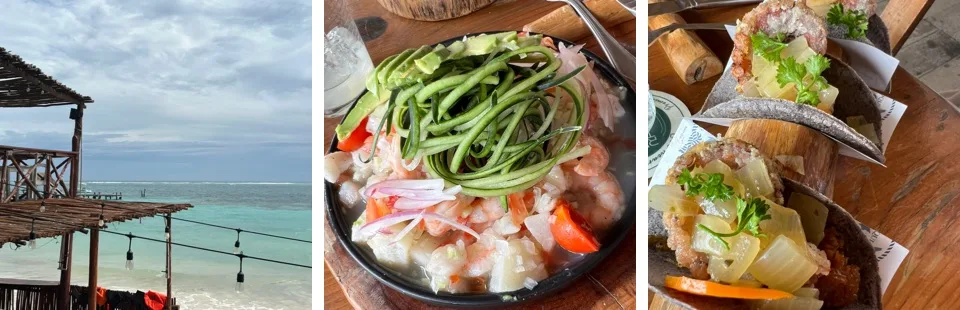
We chose Puerto Morelos for our first night in Mexico because our flight arrived late and we did not want a long drive after the journey. We had no particular expectations beyond the convenience of the stop, but Puerto Morelos turned out to be a delightful little fishing town.
After our first night, we walked along the long beach and settled into an excellent seafront restaurant for our first Mexican lunch: Chez Boquinete. It was delicious!
We then went for our first swim. The sea was 28°C. It was a little choppy and the sky overcast, but we could still see a few fish with our masks and snorkels. Afterwards, we set off for Chiquilá to catch the ferry to Holbox.
One of our most memorable experiences in Mexico was the Day of the Dead, el Día de Muertos. We discovered the beautiful rituals surrounding this celebration on our honeymoon, and ever since we had dreamt of returning to Mexico as a family around All Saints’ Day. In the meantime, the animated film Coco introduced el Día de Muertos to a much wider audience, especially children. I must admit that the film moved me deeply because it truly captures the atmosphere and positive spirit of el Día de Muertos and its unique Mexican customs, which have been recognised as UNESCO Intangible Cultural Heritage.
In this article, I hope to share the different Day of the Dead traditions found across several regions of Mexico, with a particular focus on our experience of Día de Muertos in Yucatán, where we travelled with the children.
What can you expect during Día de Muertos in Mexico?
The customs of Día de Muertos draw on ancient Aztec and Maya traditions, now interwoven with Catholic practices. According to the beliefs surrounding the festival, the souls of the departed return to visit their families during Día de Muertos. What I find so remarkable and moving about the Mexican version of All Saints’ Day is that the dead are celebrated in an atmosphere that honours life.
Throughout the period around Día de Muertos, you will see the following in Mexico:
Altars with offerings (las ofrendas)
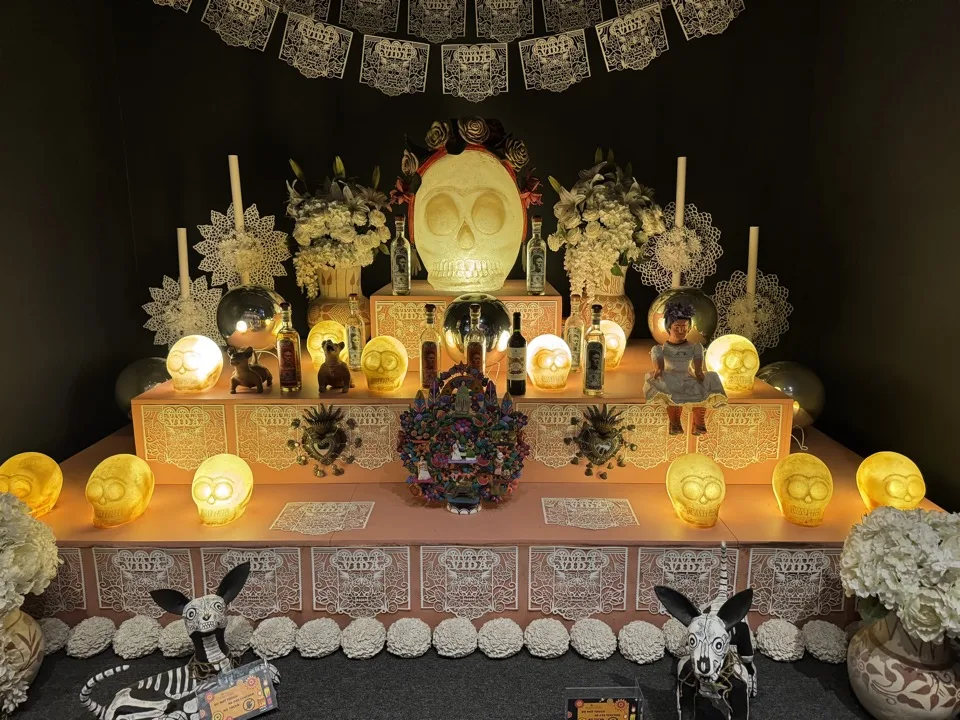
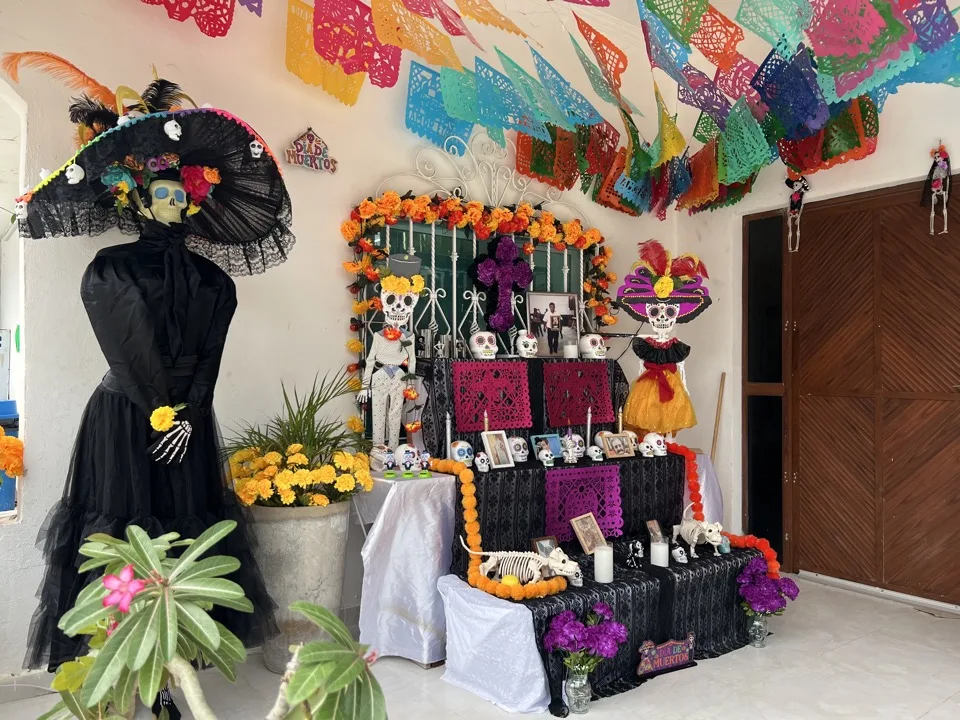
At the end of October, each family prepares a small altar (altar) in memory of their loved ones. These may be placed inside homes or outdoors. They often feature photographs, candles, skulls, pan de muerto (a sweet bread), the deceased person’s favourite food, water and plenty of yellow-orange marigolds known as cempasúchil. Their vivid colour and strong scent guide the spirits who are “visiting” their families. Their rich colour also evokes the sun and the divine. Colourful cut-paper decorations, often depicting skulls, complete the display.
An altar we saw in Holbox (Yucatán)
We tried pan de muerto, a delicious little sweet brioche:
Today I am sharing 7 ideas forlong weekends in Spain, as the country has so many cities that are perfect for a city break at any time of year. Whether you are interested in architecture, history, food, the sea or sunshine, Spanish cities offer all of these, along with an atmosphere we love!
Here is my selection of city breaks in Spain, featuring cities we have visited on our family travels:
1 – A long weekend in Barcelona
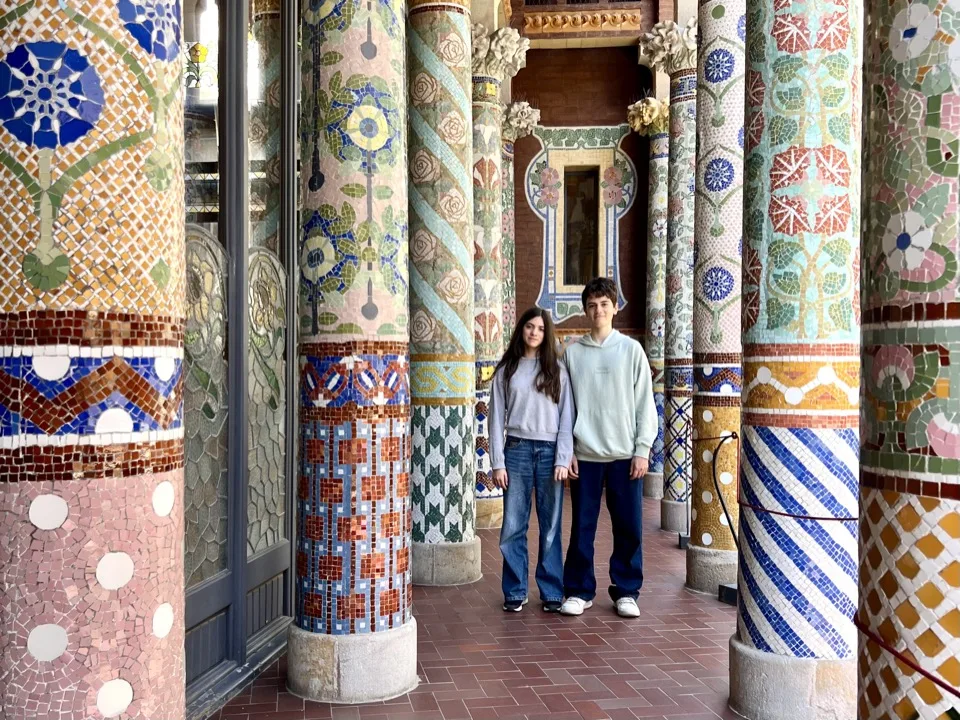
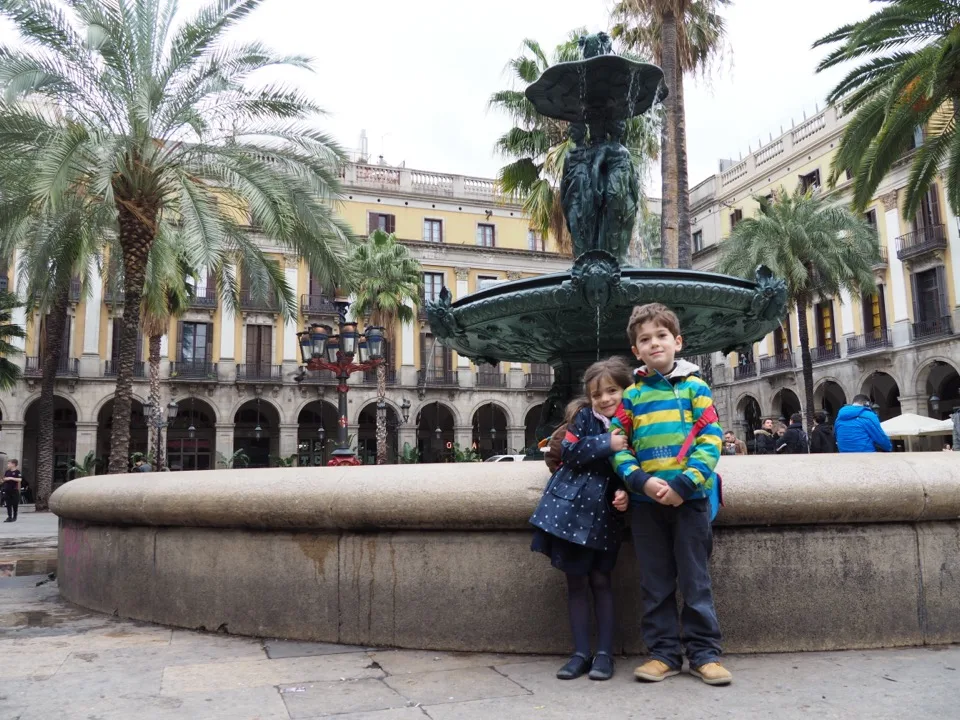
Barcelona is the Spanish city we have visited most often—with friends, as a couple and as a family. It is an incredible city with an enormous variety of interesting things to see, from the Sagrada Família to the lanes of the Gothic Quarter, from the bohemian spirit of El Born to Barceloneta beach, and from Modernist architecture to the art museums of Montjuïc.
A few ingredients for a successful weekend in Barcelona:
When should you visit Barcelona? We have been at different times of year: in winter, in February and March, and in spring during the Easter holidays. Summer would be too hot for us, while autumn should be pleasant.
Managing your budget: Barcelona is extremely popular with tourists and has become a fairly expensive city. I wrote a complete guide full of money-saving tips:
**** When you book a hotel on Booking by following a link on my articles, it allows me to receive a small commission: it does not change the price for you and it helps me maintain the blog. So thank you very much to those who book the hotels we recommend! ****
2 – A long weekend in Seville
Seville is our favourite city in Andalusia. Its architecture is extraordinarily beautiful!
When should you visit Seville? We have always been in spring. To avoid the crowds, I recommend avoiding Semana Santa and going just beforehand to see the preparations and decorations. I have also visited Seville in summer, when it was far too hot. I imagine autumn would be pleasant.
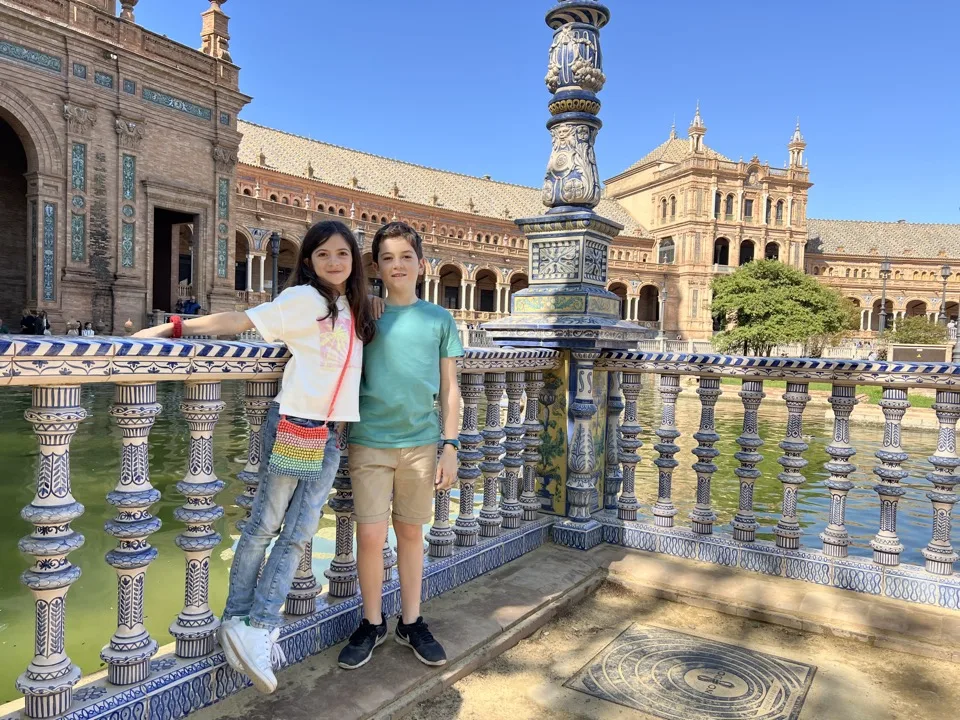
Seville with children: Ticoeur and Titpuce loved the change of scenery at the Alcázar and Plaza de España.
Accommodation in Seville: we stayed at Santa Marias Apartments, ideally located in the Santa Cruz neighbourhood.
Around Seville: if you have more than a weekend, Seville makes a great starting point for a road trip through the region. Read about our week in:
We have visited Andalusia several times, and sometimes the cheapest flights are to Málaga. That is how we discovered the city almost by chance—and we were pleasantly surprised! It is a very enjoyable destination for a two-day break.
When should you visit Málaga? In spring or early autumn, to avoid the summer heat.
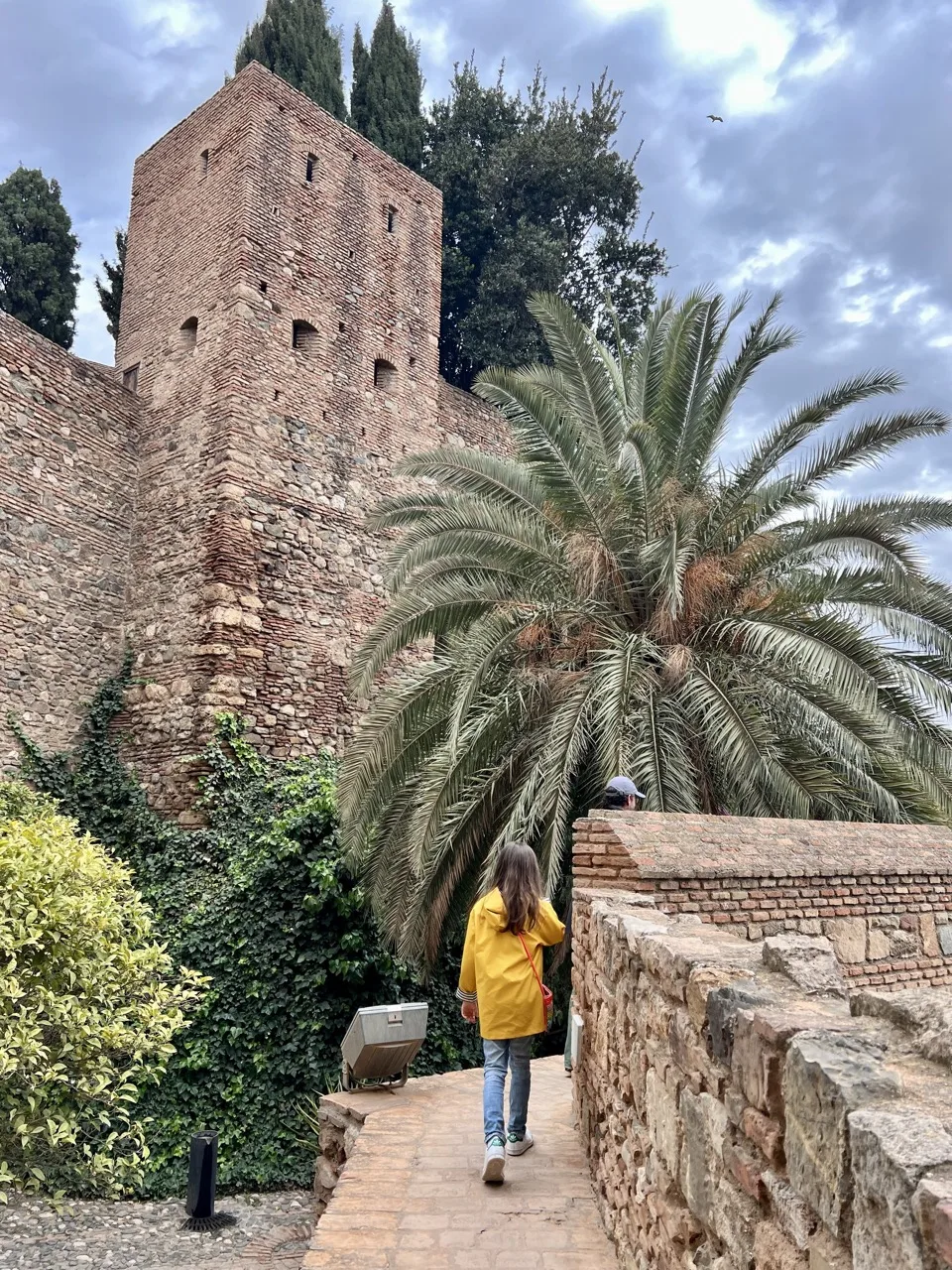
Málaga in two days: Highlights include the cathedral, the Alcazaba and the Picasso Museum. A more unusual visit that the children enjoyed was the Glass Museum. It is also always lovely to be beside the sea, especially when there are beautiful golden-sand beaches!
Another beautiful Andalusian city! I have visited several times, with and without children, for a weekend or as part of our family road trip through Andalusia.
When should you visit Granada? Spring is ideal for seeing the Alhambra’s gardens in bloom.
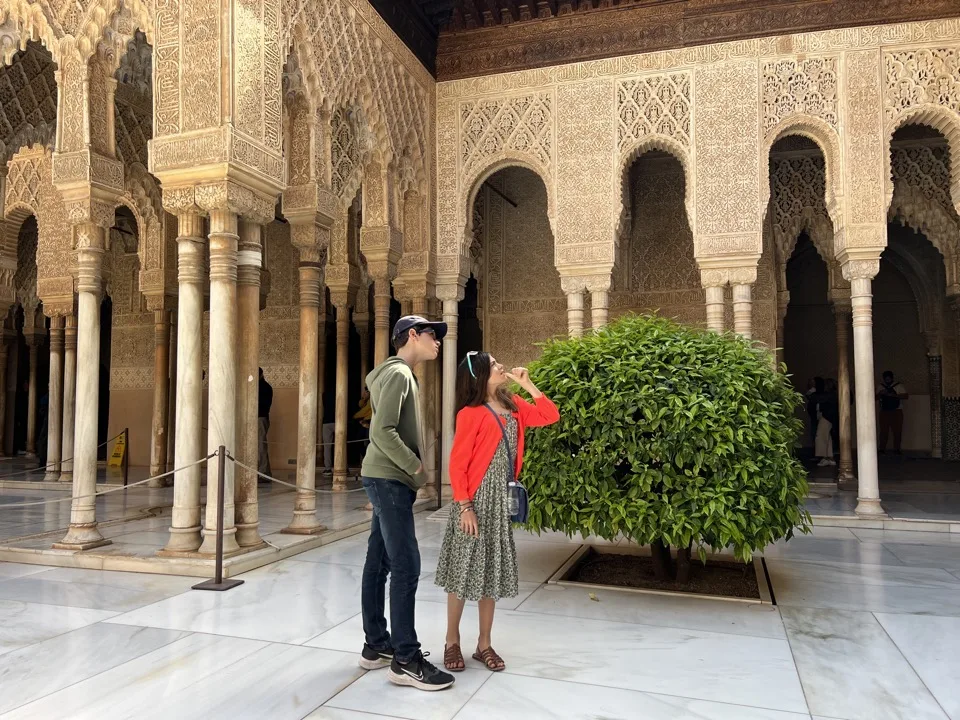
Granada’s must-sees: First and foremost is the Alhambra, a magnificent palace complex with several buildings and gardens. Be warned: you need to book in advance. The children also enjoyed the flamenco show, the tapas bars and the exotic atmosphere of the old town’s souks around the magnificent cathedral.
Accommodation in Granada: We loved our Andalusian-style apartment at Smart Suites Albaicín, in the picturesque Albaicín neighbourhood.
5 – A long weekend in Alicante
We first passed through Alicante when the children were very young. Last week, I returned for a mother-and-daughter weekend with my Titpuce, and we took the time to discover and rediscover this city. It is less well known than the previous destinations but definitely worth visiting!
When should you visit Alicante? The shoulder seasons are very pleasant. In early October, we had magnificent weather. The sea was still warm, and we were always able to eat outside.
Alicante’s must-sees: We particularly enjoyed the historic El Barrio, the Explanada de España and the picturesque Santa Cruz neighbourhood. Do not miss the views from Santa Bárbara Castle orthe archaeological museum, which proved extremely interesting.
Around Alicante: We used our weekend in Alicante to visit the beautiful village of Altea and Villajoyosa, with its colourful houses and chocolate. We reached both by tram, allowing a day for the excursions.
Here is another very attractive city with plenty of child-friendly places to visit!
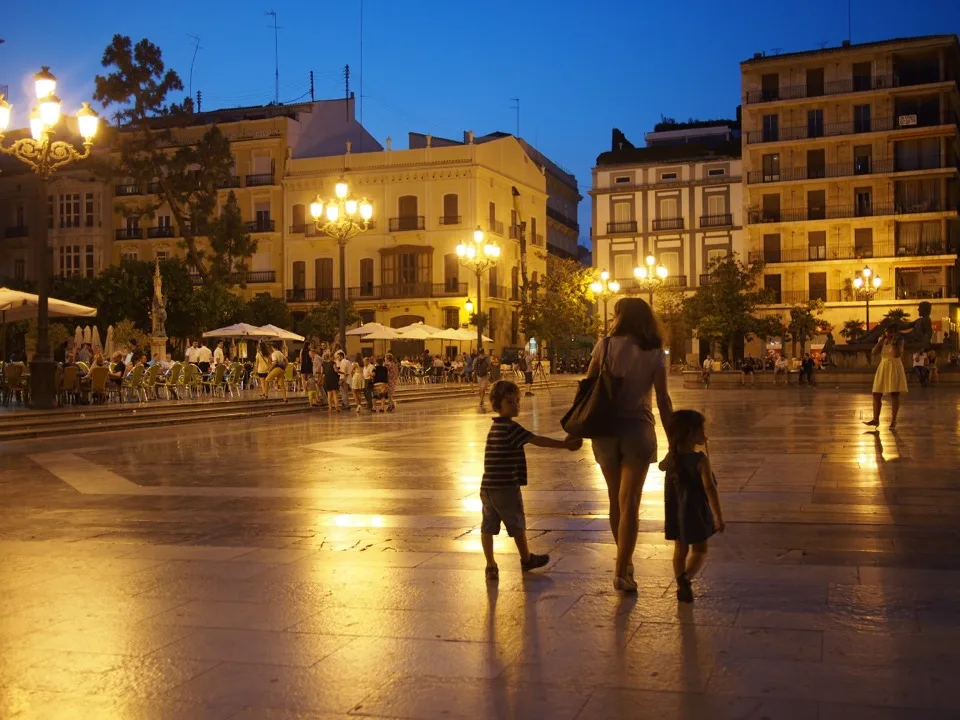
When should you visit Valencia? We were there in July, when it was starting to get very hot. At least it meant we could enjoy the sea. The shoulder seasons should offer more comfortable temperatures.
A weekend in Valencia: Highlights include the old town and the aquarium—the Oceanogràfic—which the children loved, as well as the entire City of Arts and Sciences.
Accommodation in Valencia: We stayed in the old town at Hotel Adhoc Carmen, a centrally located modern hotel in a very old building.
I once worked in Madrid for a winter, so I had the opportunity to discover the Spanish capital over a longer period. I think it is a city to experience rather than simply tick off a list. There may be fewer essential sights and less of a change of scenery than in some other Spanish cities, but it feels good to be there—and the food is excellent!
When should you visit Madrid? I have experienced winter there and visited once in spring. I think any season works, although warmer weather makes it easier to enjoy the lovely Retiro Park.
A weekend in Madrid: The main sights include Puerta del Sol, Plaza Mayor, the Prado Museum, Retiro Park and the Reina Sofía Museum. I was less taken with the Royal Palace.
Madrid with the family: We are returning next February, so I will write a detailed report afterwards!
Accommodation: Here is the apartment for four that I have booked for us, overlooking the magnificent Plaza Mayor.
Around Madrid: If you are staying for three or four days, you can take the train to Toledo or Segovia.
***
Practical information for planning a long weekend in Spain:
Getting to Spain
By air: There are numerous low-cost flights to almost all of Spain’s major cities.
By car or campervan: Spain is also accessible by road, particularly the north of the country. We enjoyed travelling there by campervan on our road trip through Aragon and the Bardenas Desert.
By train: Paris and Lyon have rail connections to Barcelona, serving other cities along the way. Trains also connect Marseille and Madrid via Barcelona.
The advantages of a Spanish city break with children
An easy, nearby destination where families always receive a warm welcome.
The weather: A weekend in Spain lets you extend the summer or enjoy some winter warmth.
Apart from Barcelona, Spanish cities are often less expensive than French ones.
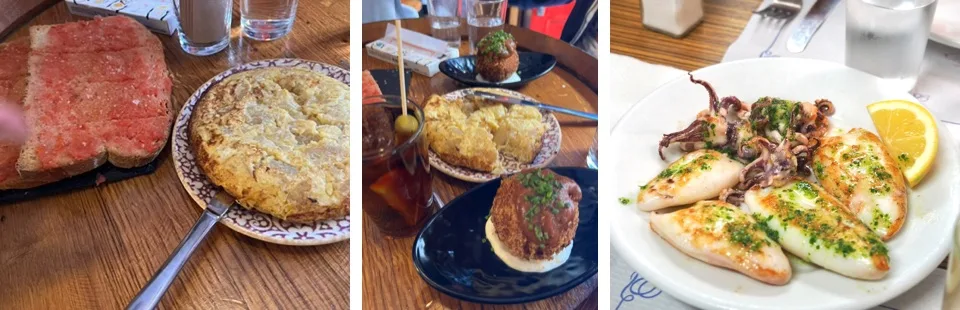
The food: Our children love the tapas concept. Their favourites are croquetas, tortilla, boquerones and simple pan con tomate. For something sweet, they love churros with chocolate in the morning!
The only drawback: Ticoeur and Titpuce are less keen on eating late. The Spanish rhythm does not match their stomachs ;-). Fortunately, since we have lived in England, Spain has been one hour ahead, so we can stay on UK time—which automatically means eating an hour later in Spain.
***
Spain for longer than a weekend:
Besides a weekend city break, many parts of Spain are, of course, ideal for longer stays and road trips exploring entire regions. Here are some of the trips we have taken in Spain with the children during school holidays:
If you are coming to London with your family for the Christmas holidays, here is all our advice to help you plan your stay and sightseeing itinerary. Every year, we enjoy seeing the illuminations in the British capital and soaking up the festive atmosphere in London’s different neighbourhoods.
Updated for 2026: We have now lived in England for 8 years, 90 minutes from London on the south coast. We visit this capital city, which we love, regularly. I therefore wanted to share ideas for an itinerary with children and advice about the Christmas period, based on our discoveries over many festive seasons. Perhaps, like us, you too will fall under the spell of Christmas in London!
***
Here are our 20 ideas for enjoying London with children during the Christmas season:
1 — Christmas lights in London’s streets
The Christmas illuminations around London were undoubtedly our favourite experience. The children walked a great deal to see them, but never complained because they too were enchanted by all the lights and decorations. Depending on the street, they are installed from early or mid-November and generally remain until the first weekend in January.
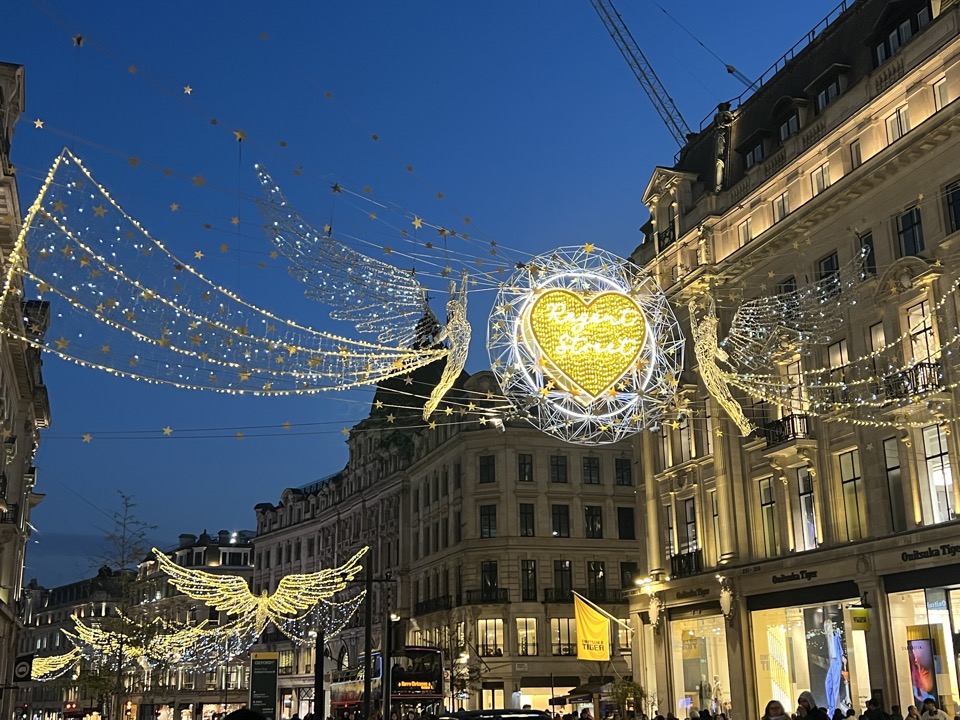
Regent Street: a story of angels
Every year, suspended angels decorate and illuminate Regent Street. They are impressive, elegant and enormous! Our children loved them from their very first visit when they were little, especially Titpuce.
From 5 November 2026.
Regent Street — Christmas 2026
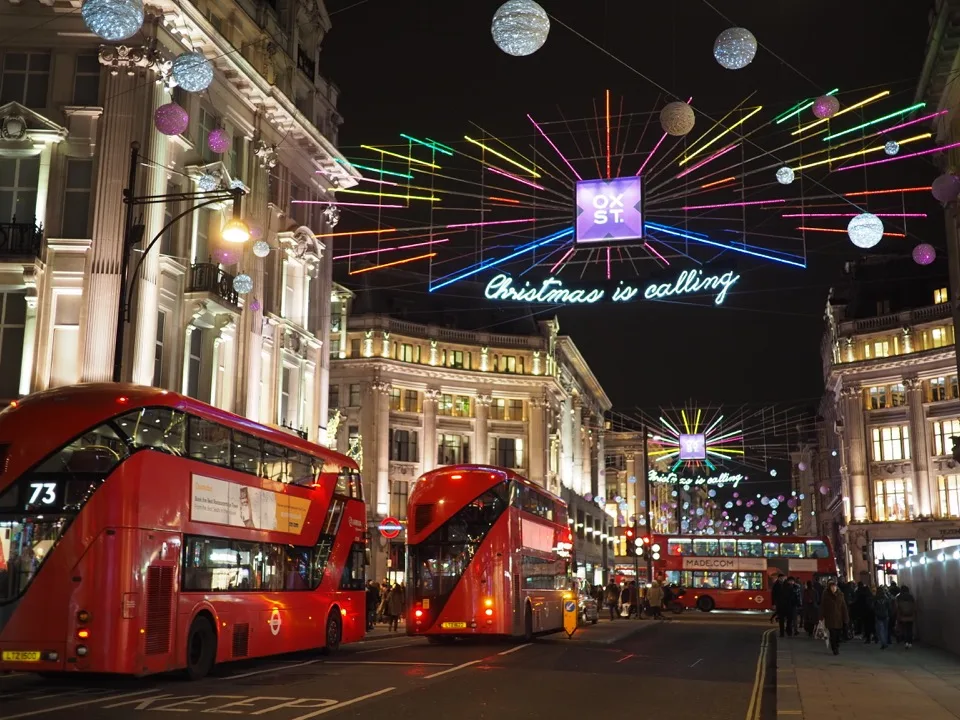
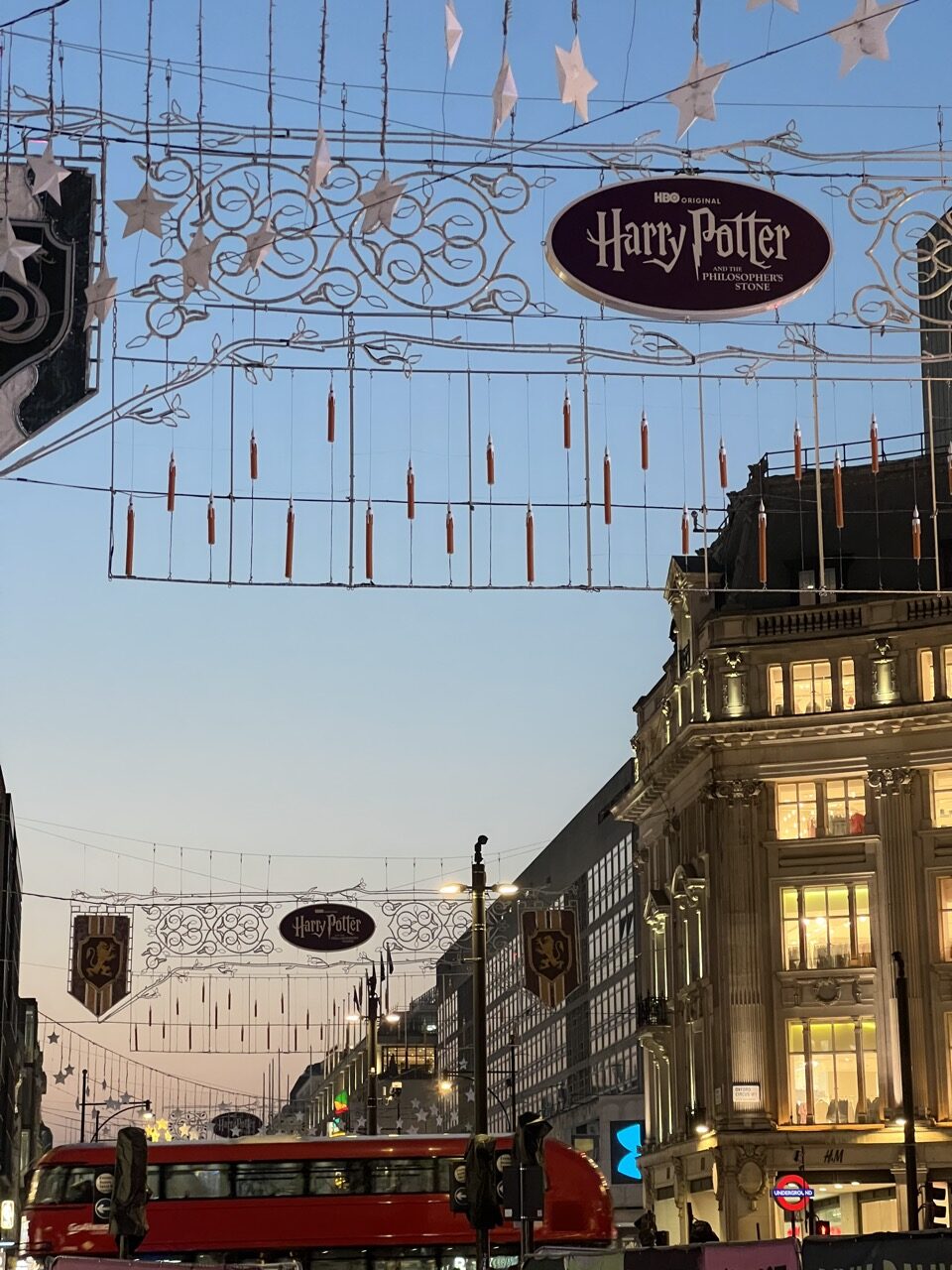
Oxford Street in 2026: Harry Potter decorations for the shop opening
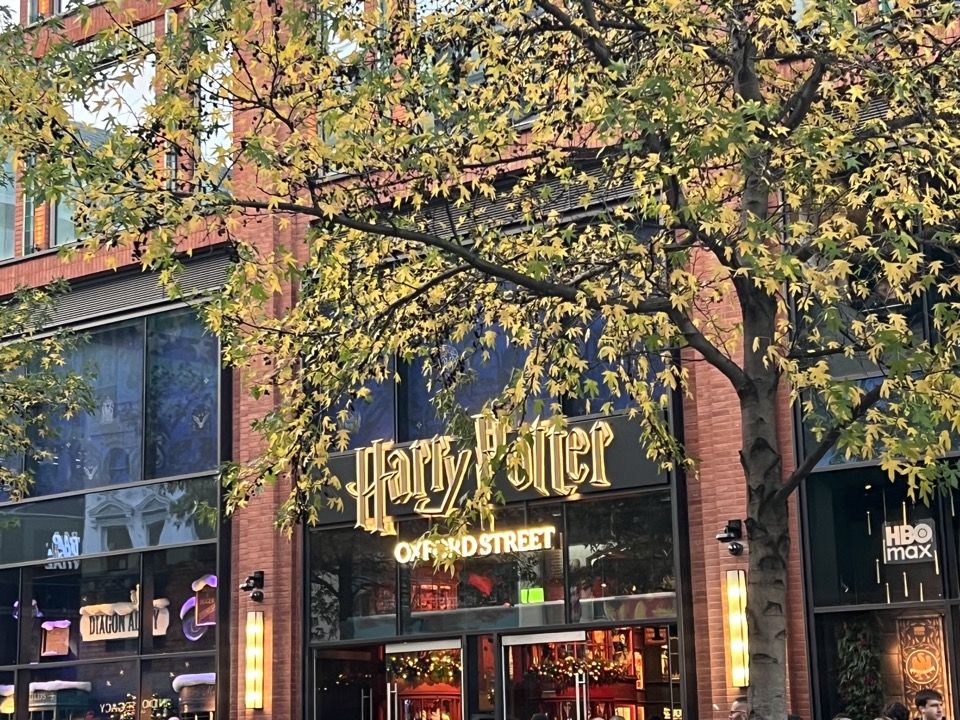
On Oxford Street, the decorations are more interesting in 2026. To celebrate the opening of the Harry Potter shop at 134 Oxford Street on 4 November, this year’s Christmas display is themed around the famous wizard, with illuminated magic wands and stars. We were there yesterday, and it is rather successful. See the shops section below.
More good news: part of Oxford Street is pedestrianised since the festive season. This is the section west of Oxford Circus, and it makes a real difference, especially for families.
Oxford Street — Harry Potter-themed Christmas decorations in 2026
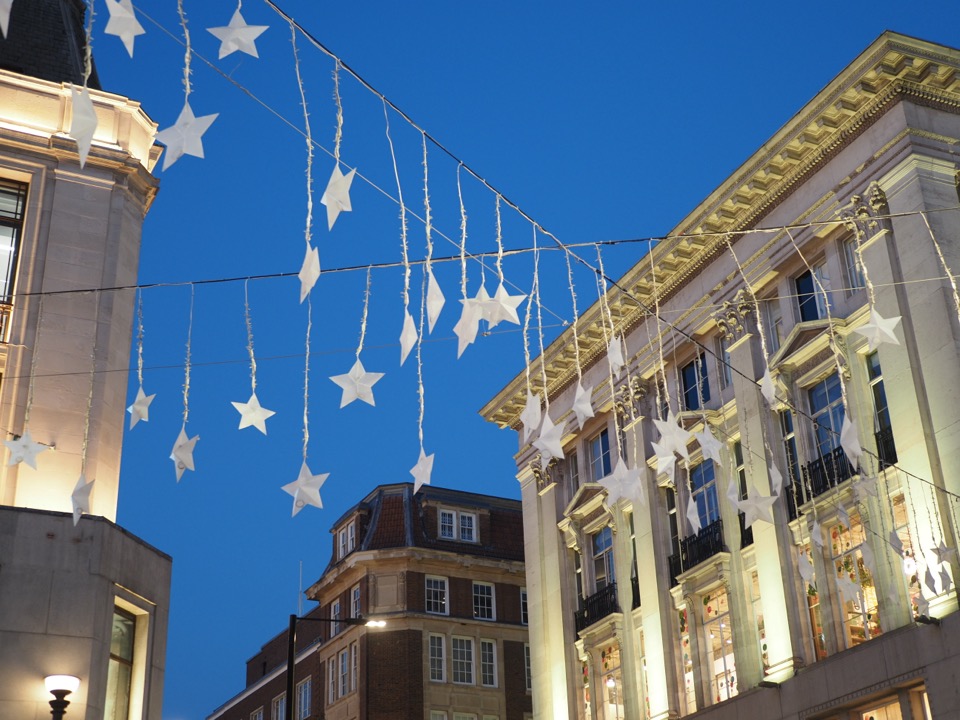
Oxford Street at Christmas in previous years
Carnaby Street: the most beautiful
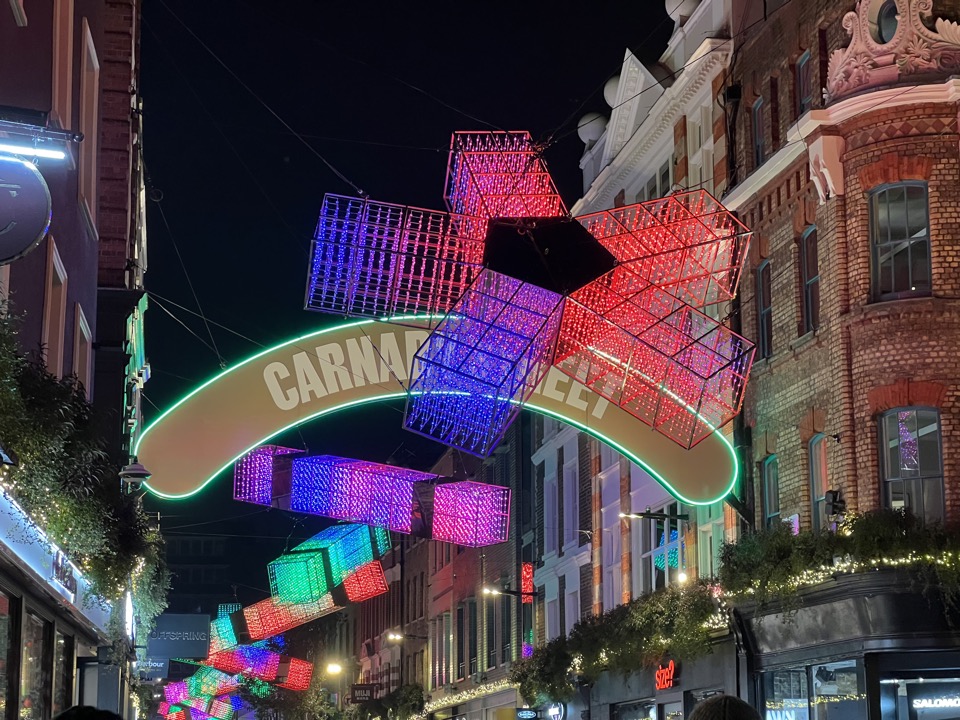
In my opinion, the most successful Christmas decorations are on Carnaby Street. The theme changes every year, but it is always original and spectacular. I particularly loved the Freddie Mercury theme in 2018, during our first Christmas visit to London, when the lyrics of Bohemian Rhapsody floated above the street to mark the release of the film. The children loved the different colours and the “Ho Ho Ho” signsin the adjoining streets.
From 4 November 2026.
Carnaby Street — Christmas 2026
And here are some photographs from previous years:
Bond Street and its luxury shops
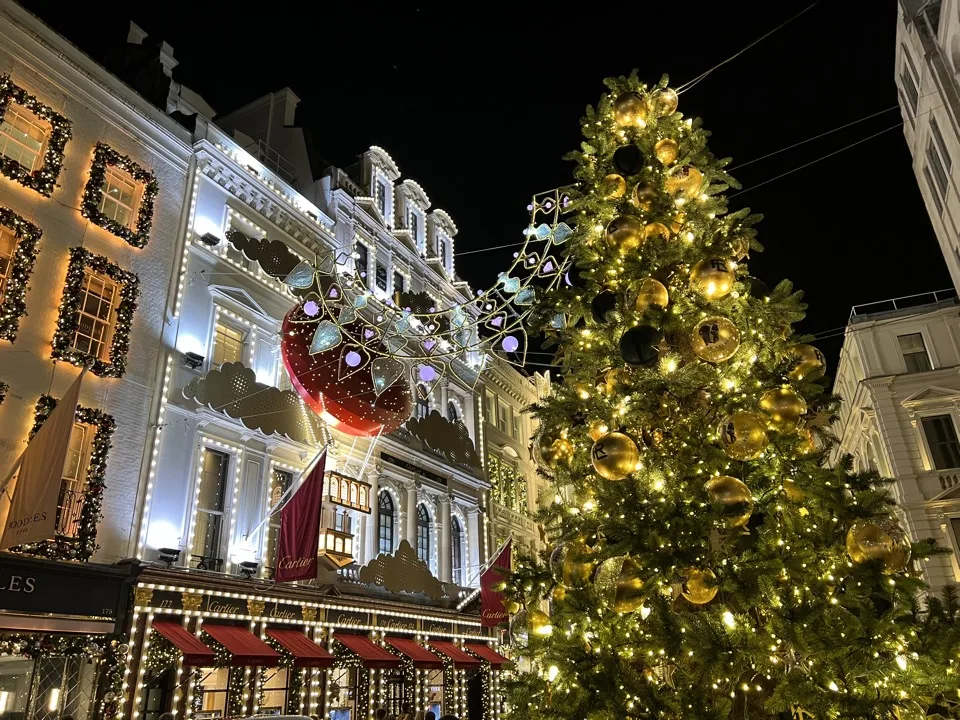
On Bond Street, most luxury shops embrace Christmas and spend lavishly on their displays, particularly Dior and Cartier. You will also find a Christmas tree and attractive lights:
Covent Garden
The mistletoe-shaped lights at Covent Garden are particularly beautiful. To reach them, walk through Seven Dials, which is prettily decorated. Immediately nearby, do not miss Neal’s Yard if you have not seen it before. It is a lovely, colourful passage. See my itinerary for visiting central London.
From 12 November 2026.
2 — London’s most beautiful shops at Christmas
Fortnum & Mason
I love Fortnum & Mason on Piccadilly, with its red lights and festive windows. Every year, the shop makes an enormous effort with its Christmas decorations. It is also an opportunity to buy tea — the best, in my opinion — and champagne orange marmalade. Let me know what you think!
Burlington Arcade
Nearby, take a look inside Burlington Arcade and the courtyard of the Royal Academy of Arts next door.
Selfridges
The windows at the famous Selfridges on Oxford Street are also fun. In 2018, we liked the eccentric rock-themed displays.
Liberty
Liberty is, in my opinion, London’s most beautiful department store. It needs little decoration because the building itself has so much character. Christmas trees adorn its façade during the festive season, while the ground floor is full of gift ideas.
Harrods
At Harrods, there is certainly no shortage of lights on the façade. It is not my favourite shop, but I always enjoy the food halls, which are full of delicious Christmas gift ideas.
3 — Shops for children
The new Harry Potter shop
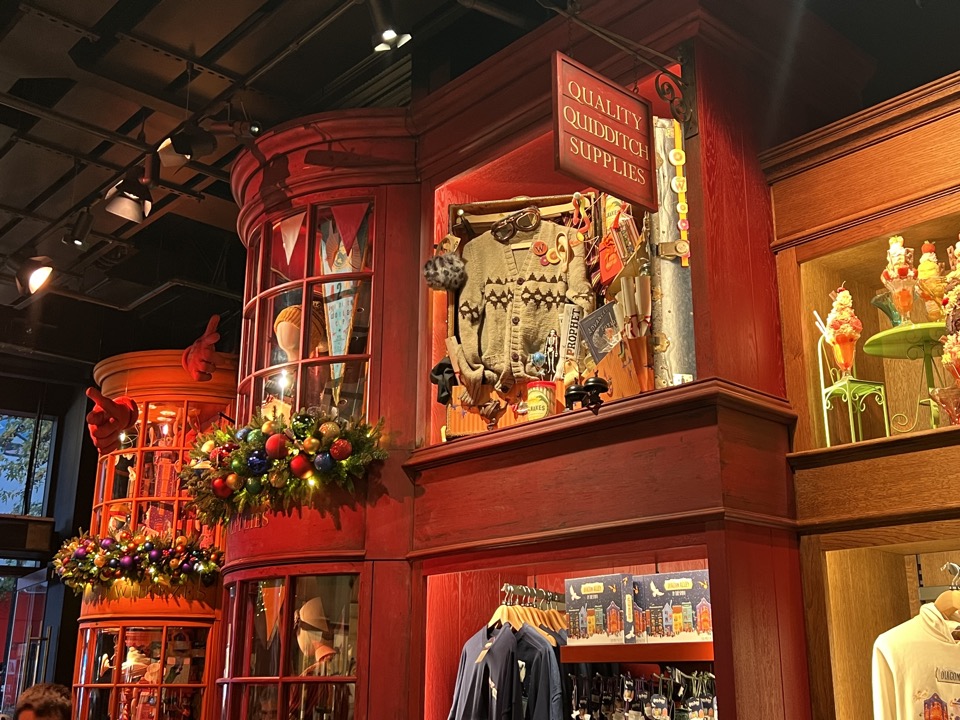
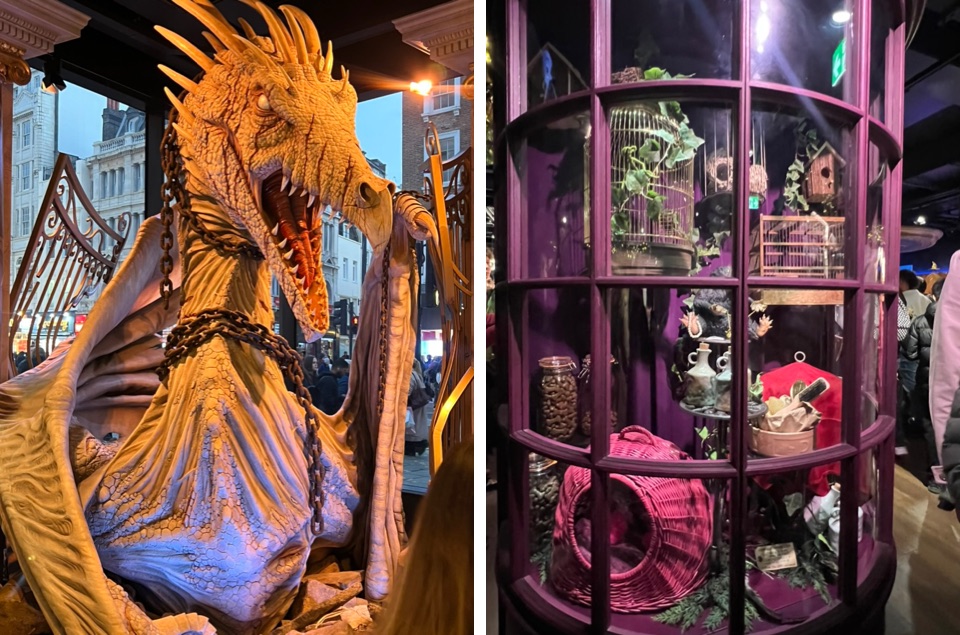
As I mentioned above, a new Harry Potter shop opened at 134 Oxford Street on 4 November 2026. We visited it as a family. The design is very successful, immersing visitors in iconic settings from the films. The queue outside was about 100 metres long, but we waited only five minutes. It was extremely busy inside, but the impressive ceiling height means you can always look up and admire the décor. The products are the usual official merchandise found in the other Harry Potter shops or at the Studios. For us, it is more a place to see than somewhere to shop.
Harry Potter shop, Oxford StreetHarry Potter shop, Oxford Street
Hamleys
Personally, I have always found Hamleys, the famous toy shop, a little disappointing. I do not think it makes much effort with its Christmas decorations, and the shop feels rather dated. But do not worry: young children still love it. Ticoeur particularly enjoyed the Harry Potter area in the basement.
LEGO Store
At the LEGO Store on Leicester Square, children can have their photograph taken inside a London Underground carriage made entirely from LEGO.
4 — Listening to Christmas carols in Trafalgar Square
We were a little cold, but thoroughly enjoyed this very British experience. As I have mentioned in previous posts, people in Britain sing a great deal at Christmas. They have a vast repertoire of Christmas carols and sing everywhere, including in the street. During the festive season, you can listen to carols in Trafalgar Square for free. You can also admire the enormous Christmas tree given to London each year by the city of Oslo.
5 — London landmarks by night
It gets dark very early in December, so by 3.30 p.m. you will already be seeing London by night. We particularly enjoyed The Shard, whose summit changes colour for the festive season. From 4 p.m. until 1 a.m., a light show repeats every 30 minutes; the London Eye, whose bright red light is reflected in the Thames. It is red outside the Christmas season too, but the colour is particularly appropriate at this time of year. Finally, there is a large Christmas tree outside St Paul’s Cathedral.
6 — The attractions at Winter Wonderland in Hyde Park
Winter Wonderland has been held in Hyde Park at Christmas for many years. What is it? A mixture of funfair, German-style beer festival and Christmas market, all with wintry decorations — quite a combination! Young children will certainly enjoy the rides. Funfairs are not really my thing, and you should not expect a picturesque Christmas market. I would suggest stopping by to please your children if they are still young. Ticoeur and Titpuce enjoyed it when they were 6 and 9. Note that there is a dedicated family entrance. Crowds arrive around 5.30 p.m., so go earlier, although it will already be busy.
Winter Wonderland 2026
In addition to the usual attractions and Christmas market, there will be a Magical Ice Kingdom where families can walk among enormous snow and ice sculptures. Expect crowds!
7 — Ice skating in the Somerset House courtyard
This is London’s prettiest temporary ice rink during the Christmas season. Skating is expensive, but it is worth stopping simply to admire the setting. It is particularly beautiful, just a short walk from Covent Garden, and has a magnificent Christmas tree.
8 — A musical for the whole family
If we had to choose only one musical to see as a family in London, we would recommend The Lion King at the Lyceum Theatre without hesitation. All four of us loved it, and it is one of the finest musicals we have seen. It is expensive, but worthwhile. Do not worry if you do not understand English: simply watch the Disney animation again beforehand. Since seeing The Lion King, we have used the Christmas season each year as an opportunity to see another musical in the British capital.
9 — A Christmas ballet
Seeing a classical ballet in London is also expensive, but if you can afford it, it adds to the festive magic, especially if there are dancers in your family. Titpuce’s favourite Christmas classic is, of course, The Nutcracker. In 2026, a beautiful traditional production of The Nutcracker will be staged at the Royal Opera House from 3 December 2026 to 13 January 2027. Another version, performed by English National Ballet, will be at the London Coliseum from 17 December 2026 to 10 January 2027. Beside the Royal Opera House, do not miss this attractive sculpture by Enzo Plazzotta:
10 — A pantomime for a cultural experience
Before living in England, I knew nothing about Britain’s Christmas pantomime tradition. Essentially, it is a zany stage show that calls for plenty of audience participation, a little like France’s Guignol puppet theatre. It takes nothing seriously, and the humour is extremely broad, sometimes even rather heavy-handed. Female characters are often played by men for additional extravagance. Be warned: you need a good understanding of English. Pantomime grew from popular entertainment traditions, including commedia dell’arte, but modern London pantomimes have become major productions. For Christmas 2026 in London, the most eagerly anticipated appear to include:
Cinderella at the London Palladium, starring Dawn French and Jennifer Saunders — an expensive option.
Peter Pan at the New Wimbledon Theatre in a family-focused production.
Jack and the Beanstalk at the Hackney Empire, a more affordable show in Hackney, a neighbourhood less familiar to tourists.
11 — The Christmas installation at St Pancras station
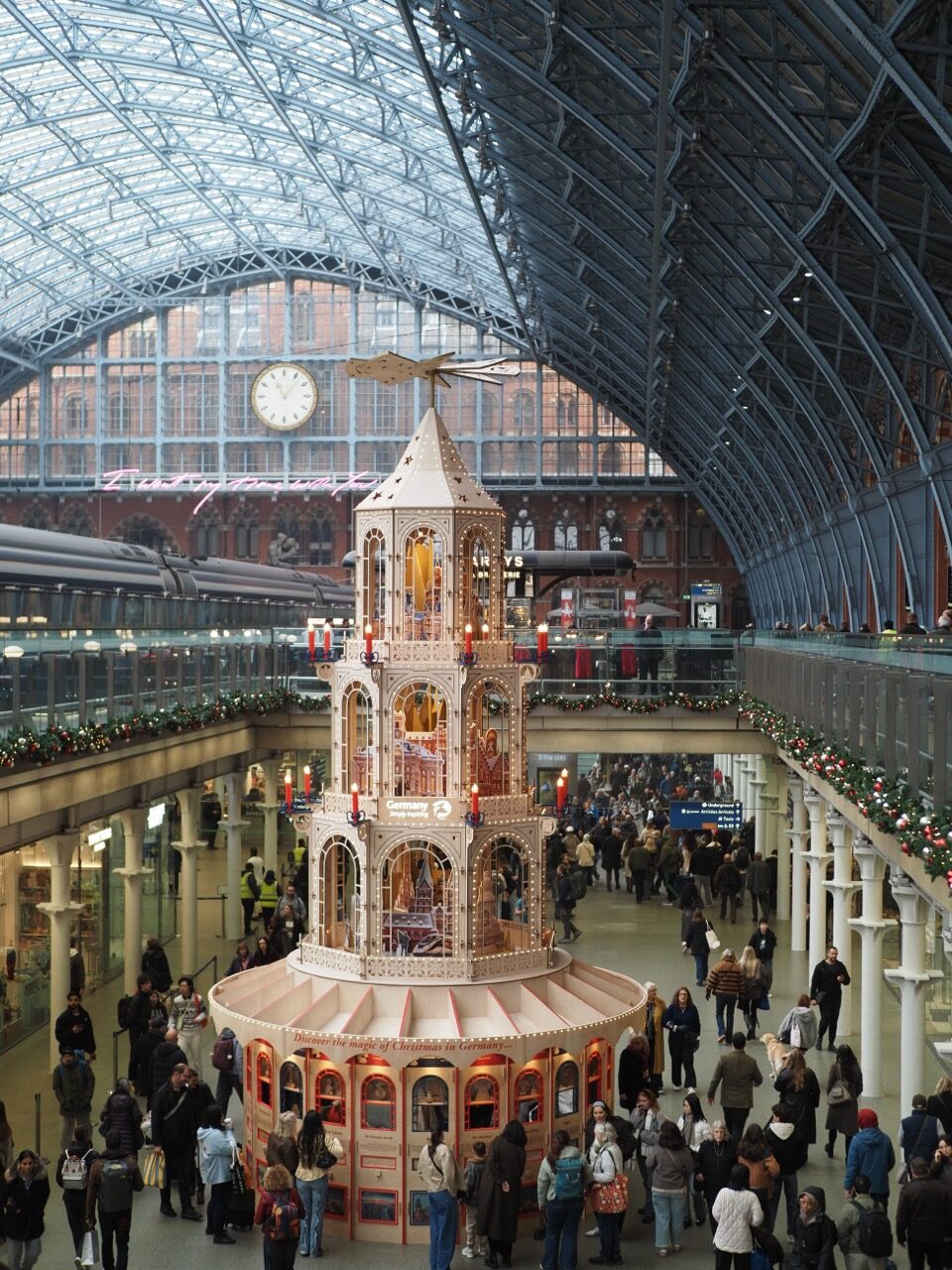
There is always a large installation at St Pancras, where Eurostar trains arrive. For Christmas 2026, it is an enormous German Christmas pyramid. The station architecture displays it beautifully: I love the contrast between the glass and wrought iron on one hand and the pyramid’s wood on the other. Papa Voyage, who is German, thought it needed more wooden figures in the niches on each level.
St Pancras — Christmas 2026
I particularly loved the book tree in 2023:
In 2024, the display was themed around Wicked:
12 — Christmas markets in London?
I had read many promising things about London’s Christmas markets, but found them extremely disappointing. At the same time, you do not come to London for its Christmas markets, and the city absolutely does not need them to be fascinating during the festive season. We saw:
the Christmas market beside the Thames on the South Bank, near Waterloo Bridge;
the Christmas market in Leicester Square;
the Christmas market in Trafalgar Square.
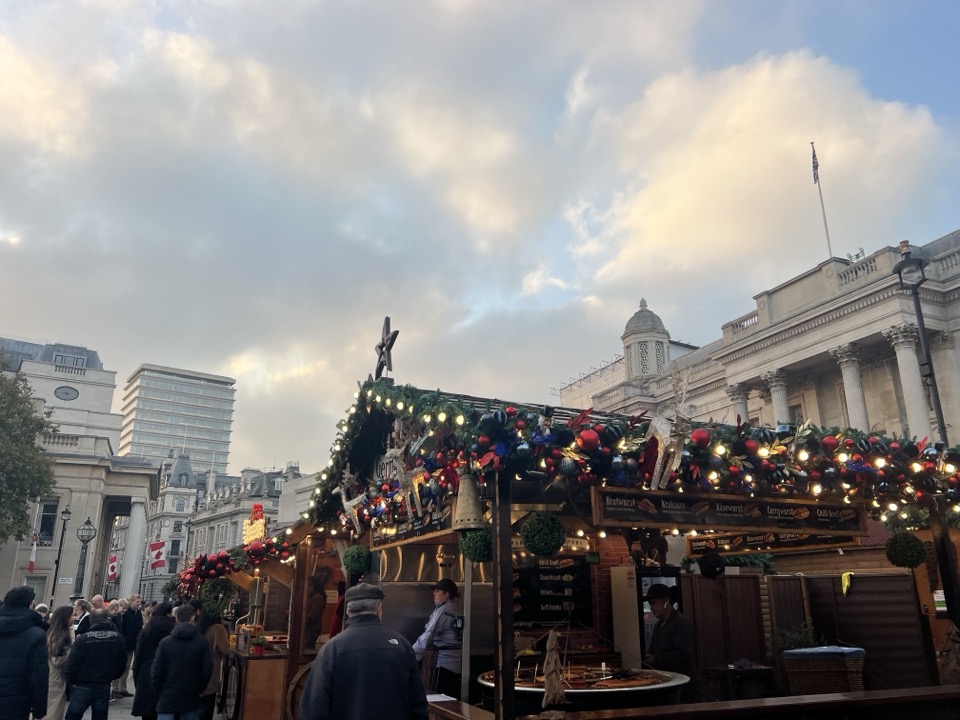
Trafalgar Square Christmas market
Well, I cannot see what is particularly interesting about them. There are other destinations for Christmas markets. In London, I think you should concentrate on the city’s own atmosphere. I would rather recommend drinking mulled cider — hot spiced cider — or simply having a beer in a pub instead of drinking mulled wine at a Christmas market. The atmosphere in London’s pubs is a wonderfully warm and typical experience. Most pubs admit children before 6 p.m., although some do not accept them at all, so it is best to ask when entering. You will probably see British customers wearing wonderfully outlandish Christmas jumpers. Some pubs also provide board games for children.
If you genuinely want to visit a Christmas market, we thought the best was inside Winter Wonderland — see point 6 above. The stalls are more carefully presented and decorated than at the other markets. It is also a quieter part of Winter Wonderland, as most visitors head for the rides:
13 — A Christmas-themed afternoon tea
Taking tea in the middle of the afternoon with small savoury and sweet treats is quintessentially British. Many London hotels offer special Christmas packages. I particularly recommend afternoon tea at St Ermin’s Hotel at 2 Caxton Street because it is very child-friendly and the setting is superb. It offers good value. It is still expensive — £52 for adults and £24 for children — but often costs even more elsewhere. I have also tried the Mad Hatter’s Afternoon Tea, which was excellent but much more expensive. If you have afternoon tea, you can skip lunch or dinner.
14 — Eating mince pies
For a delicious experience that costs less than afternoon tea, try mince pies in a café, small tearoom, bakery or market stall. These little Christmas pastries contain a shortcrust case filled with dried fruit, red berries and spices. I like the ones from Gail’s, a bakery chain found throughout London.
15 — Christmas crackers
I am certain your children will enjoy them — mine love them. Christmas crackers are a Christmas tradition here. They contain a snap and sometimes a small gift, and you will find them in every shop. Traditionally, they are pulled just before Christmas dinner. Be careful: one year, I tried to take some to France for New Year’s Eve, but they did not pass airport security. Around half of airlines do not permit them, so check if you want to take any home. You can carry them on Eurostar, although the rules specify that you must not pull them on the train!
16 — Booking the Sky Garden
The Sky Garden occupies the top floors of a skyscraper in the City and is arranged as an indoor garden. Its main attraction is the free view over London, so why not treat yourself at Christmas? You must, however, book three weeks in advance. Visit its website to reserve free tickets.
17 — The lights of the Ever After Garden
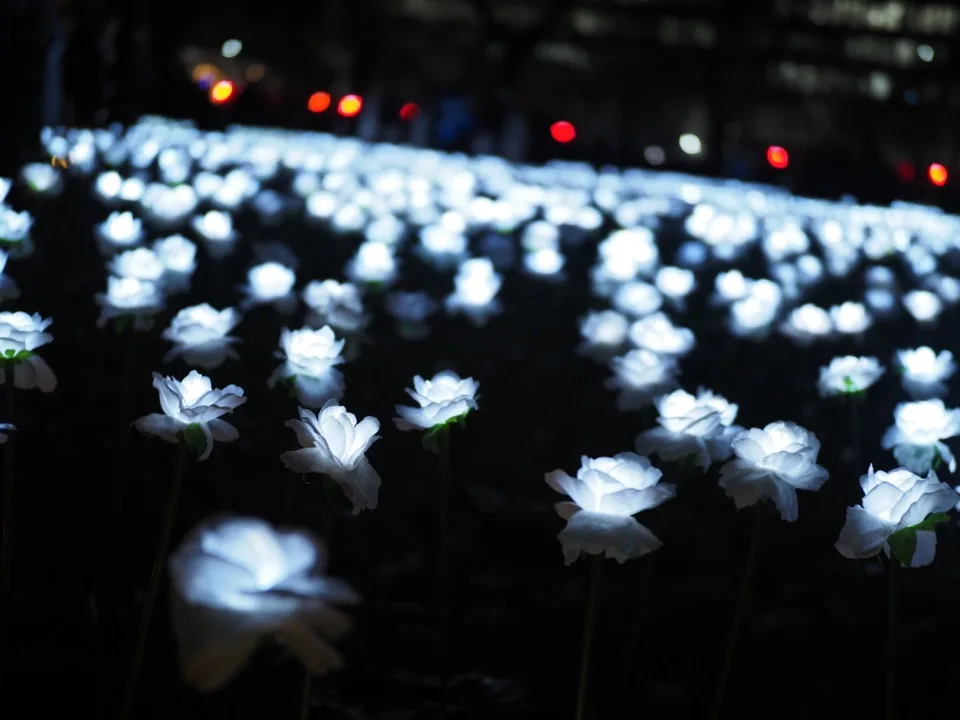
The Ever After Garden is not directly a Christmas attraction, but it runs from early November until late December and draws on the festive spirit, solidarity and remembrance to raise funds for cancer research. The Royal Marsden Cancer Charity illuminates the square with 30,000 white roses. This memorial garden offers a poetic way to remember people we miss during the festive season.
2026 edition: 5 November to 21 December at Duke of York Square in Chelsea.
And around London…
18 — The Harry Potter Studios
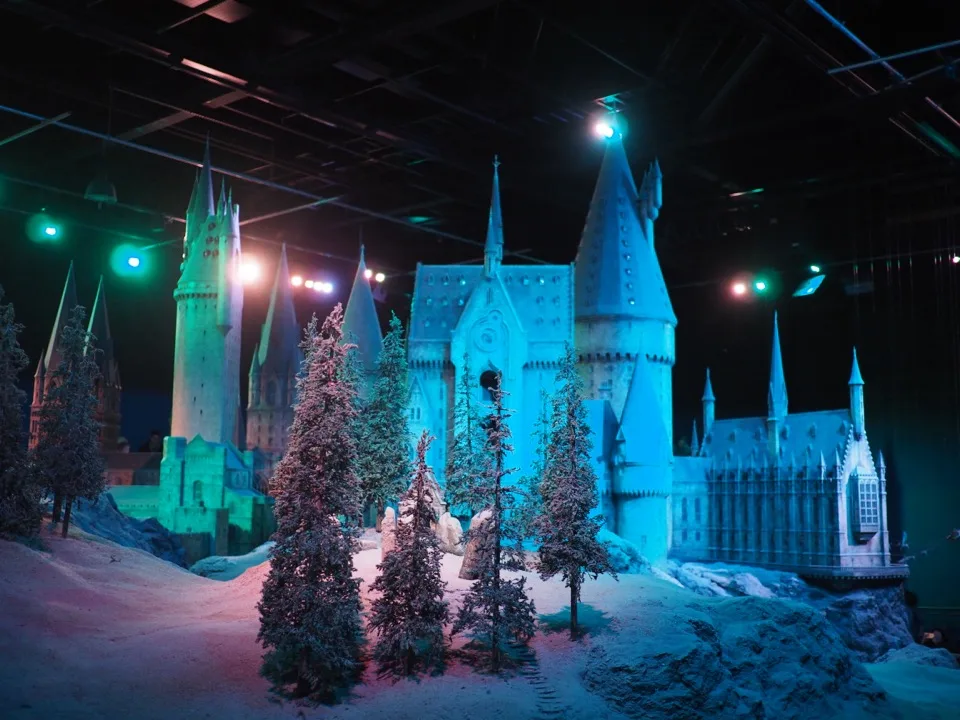
At Christmas, the Harry Potter Studios add Hogwarts in the Snow (Hogwarts in the Snow). In 2026, it begins on 14 November. Read my post about our latest family visit to the Harry Potter Studios for all the practical information, including how to travel there independently and avoid overpaying. There are far too many expensive packages online. Note that HBO is expected to release its Harry Potter series around the Christmas season.
19 — Christmas at Kew Gardens
Kew Gardens is London’s magnificent botanical garden. See my article about visiting the highlights of Kew Gardens in half a day. During the festive season, Kew always organises an enchanting illuminated trail through the gardens. It is a highly regarded Christmas attraction that is very popular with families, so you must book your time slot well in advance. See the official website.
20 — Hampton Court
Hampton Court was Henry VIII’s palace — he is the star of the Tudors! Fortunately, Ticoeur is there to teach me English history. It is a beautiful palace to visit as a family, and during the Christmas season you can ice-skate there. Not a bad setting, is it? Book on the official website.
Practical information for visiting London at Christmas
Transport: the London Underground does not run on 25 December.
Public holidays: in addition to 25 December, 26 December — Boxing Day — is also a public holiday in the United Kingdom.
December in London: remember that darkness falls very early. It is dark at around 4 p.m. This is excellent for the festive lights, but reduces time for outdoor walks, and you need to dress warmly.
Sightseeing in London: although you are coming to enjoy London’s Christmas atmosphere, I imagine you will also want to see or revisit the classic sights. See my complete guide to visiting London with children, which includes dedicated articles for each neighbourhood.
Public transport at Christmas: there are no Underground trains or buses in London on 25 December.
Transport strikes announced for Christmas 2026–27: London Underground strikes have been announced for 26 November 2026, 17 and 19 December 2026, and 4 January 2027.
News for 2026: the London Museum reopens on 28 November. It is an excellent free family attraction for discovering London’s history.
So, who is coming to London for the Christmas holidays?
Also worth reading
GuideLondon with kids: All you need to knowOur practical guide to visiting London with children: walks, museums, parks, transport, restaurants, accommodation and family day…
4 days in Barcelona with our teenagersOur 4 days in Barcelona as a family with our teenagers: itinerary, museum visits and walks neighbourhood by neighbourhood
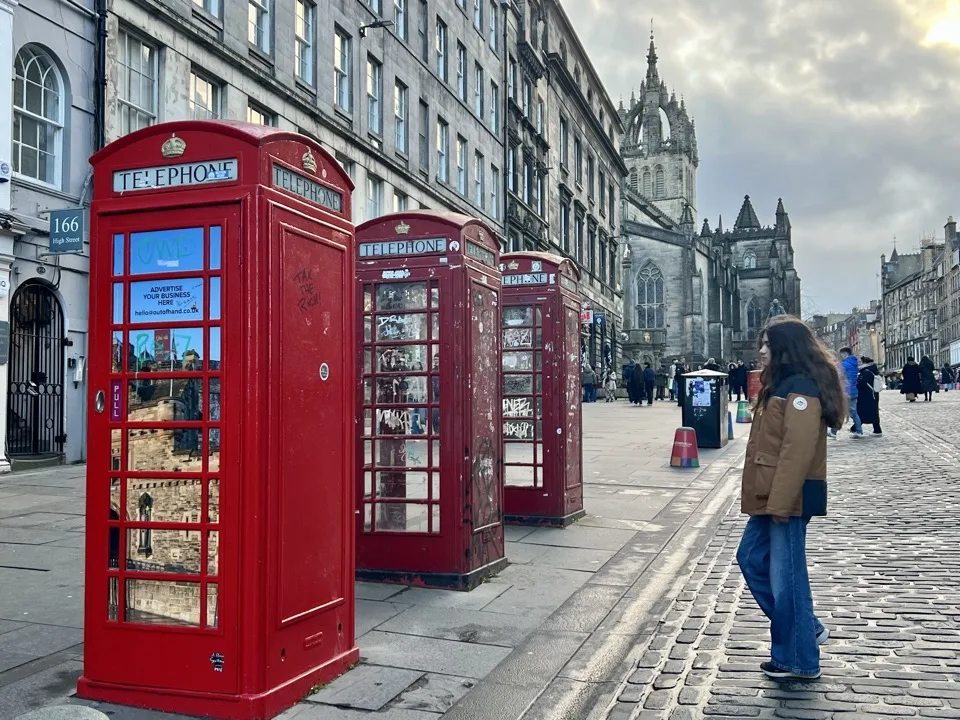
3 days in Edinburgh with my teenagerA long mother-daughter weekend in Edinburgh: Harry Potter, art, history and shopping in the Scottish capital
I have just spent a weekend in Alicante and the surrounding area with my young teenager. It had been a long time since we had visited this part of Spain. The Costa Blanca proved to be a very pleasant destination in early October, ideal for extending the summer. As is often the case when I organise a city break with Titpuce, I like to choose a city I already know (last time, we spent a mother-and-daughter weekend in Edinburgh). It means less preparation for me. In fact, I only organised this Alicante getaway about ten days beforehand.
**** When you book a hotel on Booking by following a link on my articles, it allows me to receive a small commission: it does not change the price for you and it helps me maintain the blog. So thank you very much to those who book the hotels we recommend! ****
A weekend in Alicante: what is there to see and do?
Alicante city centre has the advantage of being very manageable in size: we explored it entirely on foot. We managed to fit the following programme into one busy day, concentrating on El Barrio (the heart of the old town), Santa Cruz (the birthplace of the city), Mount Benacantil, where the ruins of Santa Bárbara Castle stand, the modern centre and finally Postiguet Beach. Here are all our discoveries:
Explanada de España
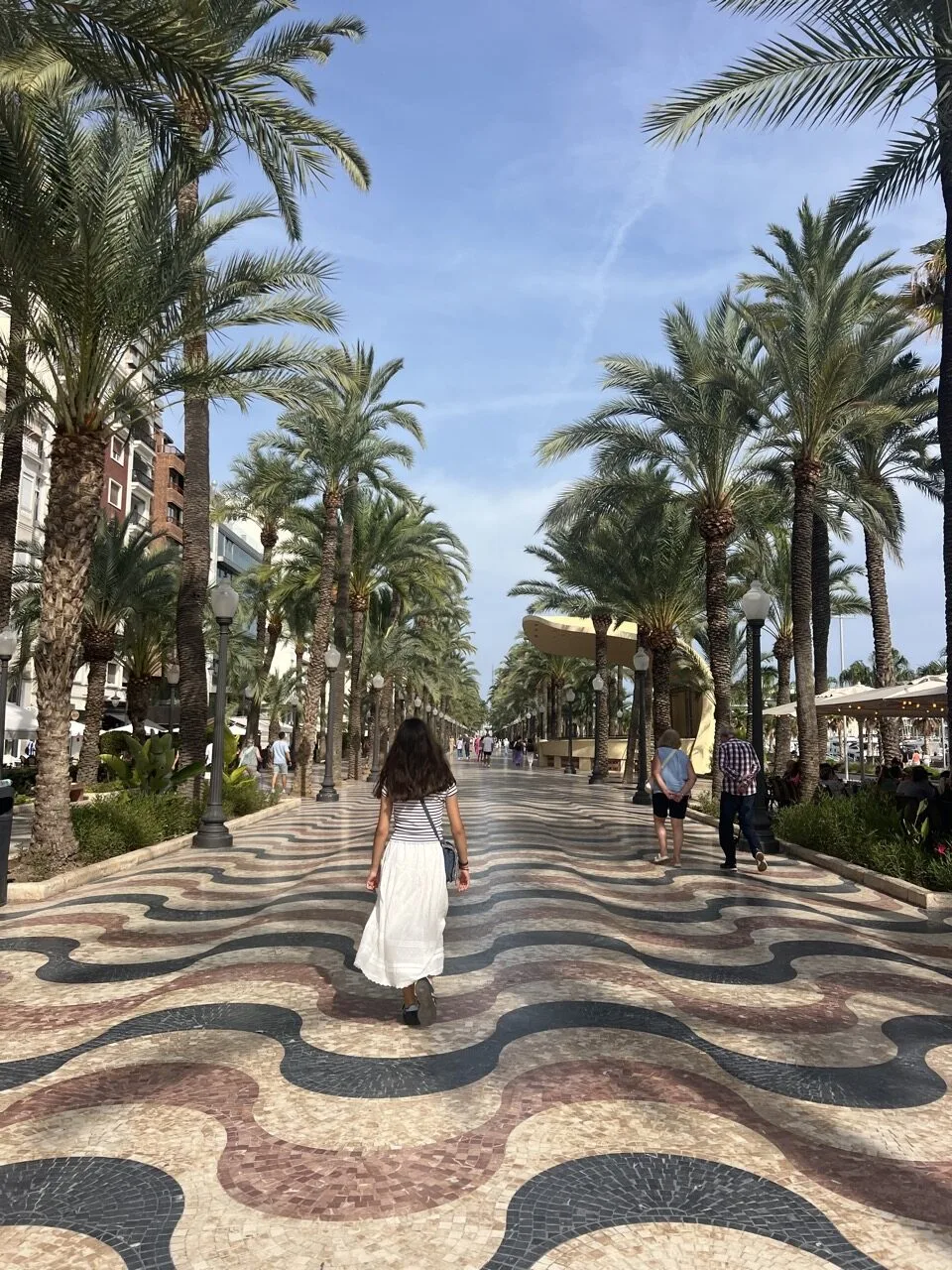
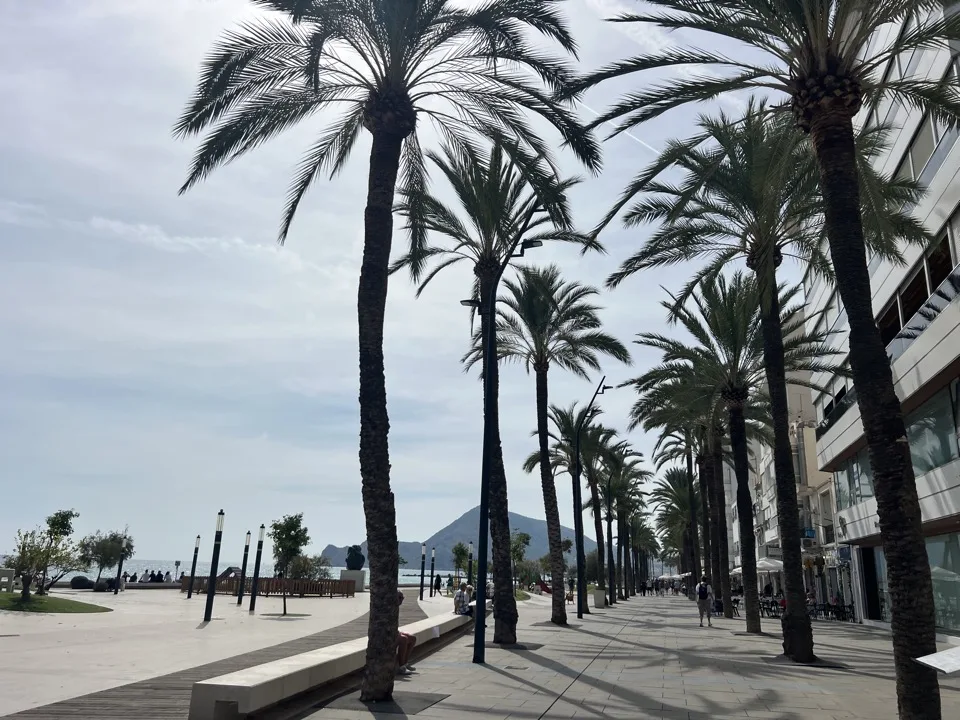
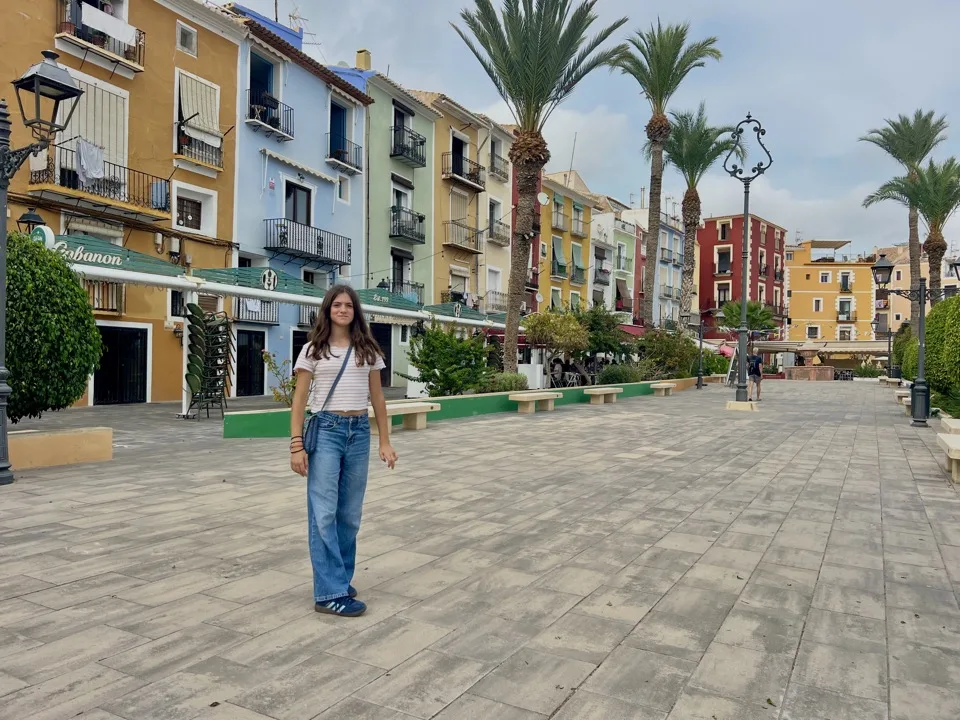
This is Alicante’s emblematic promenade: an elegant palm-lined pedestrian avenue running alongside the harbour. Underfoot, an impressive marble mosaic made from more than six million small tiles makes the walk a feast for the eyes. Titpuce and I walked along the Explanada de España several times during our stay, as it is an ideal route for crossing the city from east to west.
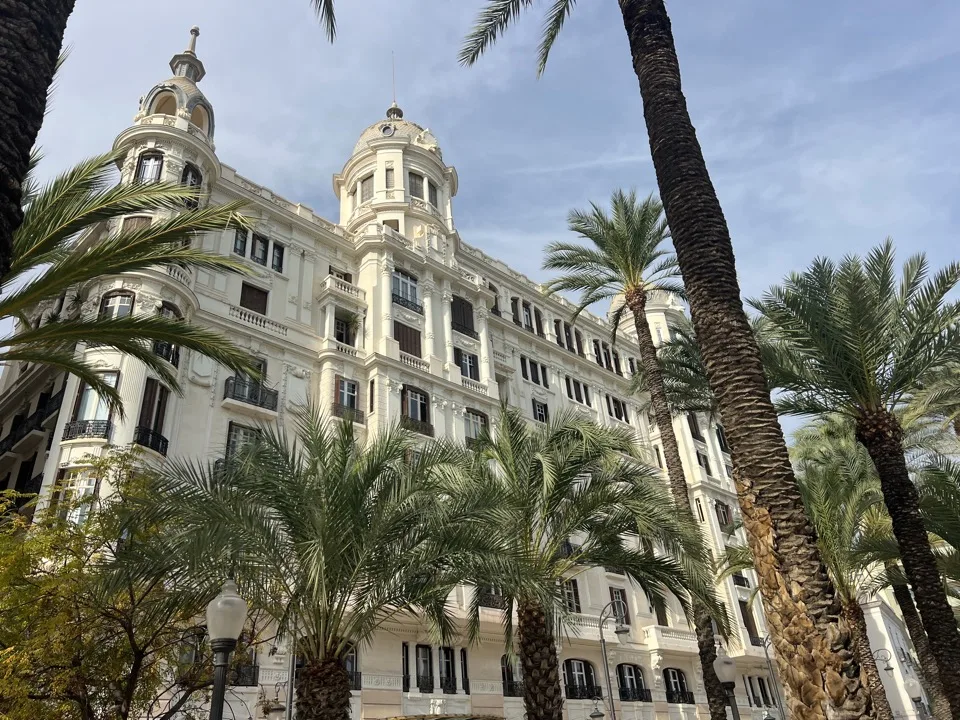
At the end of the promenade, beside the marina, stands Casa Carbonell, whose architecture is reminiscent of the French Riviera. This is no coincidence: the architect Juan Vidal Ramos took inspiration from the style fashionable in the grand seaside resorts of the early 20th century. It looks a little like the Hôtel Martinez in Cannes, don’t you think? In any case, the aim was to impress, as Enrique Carbonell, who commissioned the building, wanted to show that he had made his fortune. This textile industrialist became wealthy by supplying uniforms to the French army during the First World War. With grand ambitions, he wanted 365 windows for his casa: one for every day of the year!
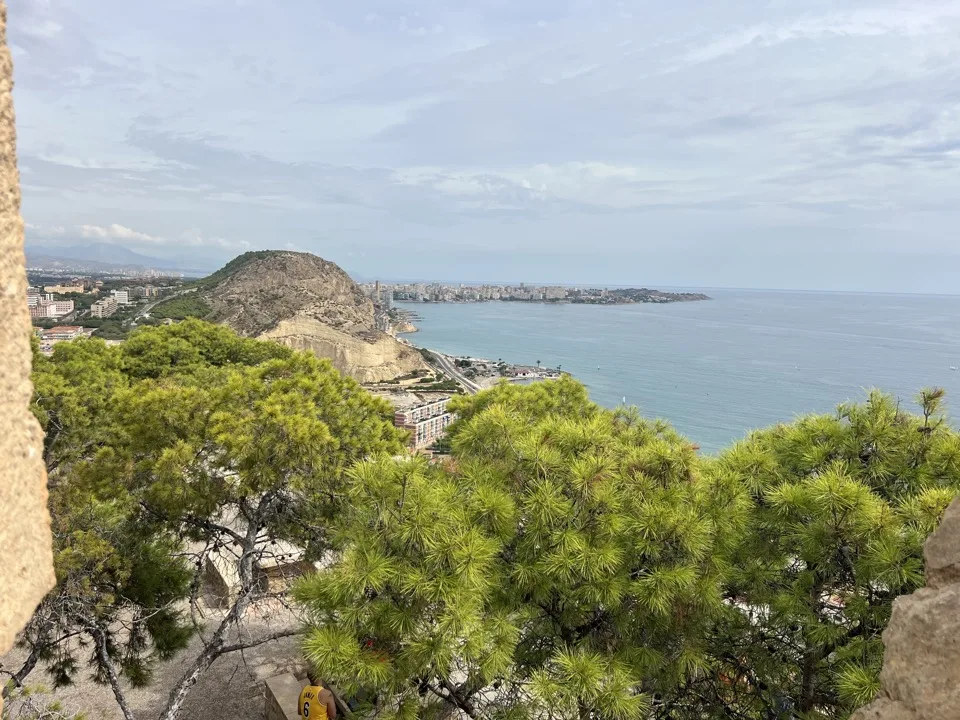
Santa Bárbara Castle
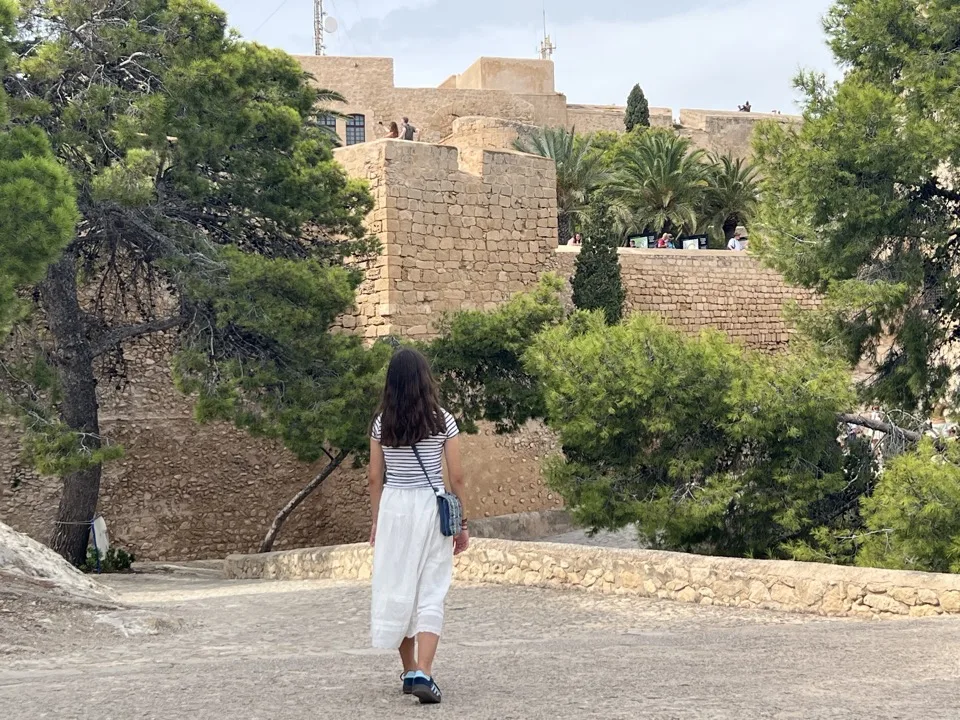
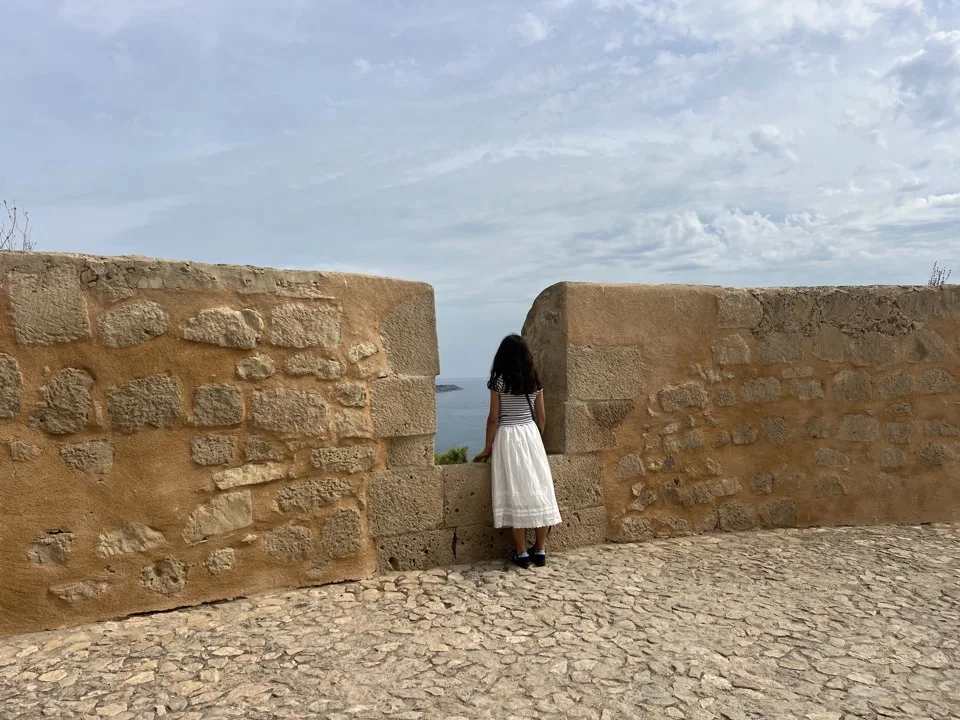
Another Alicante must-see is the Castillo de Santa Bárbara, whose medieval remains tower above the city on Mount Benacantil, offering views across the whole bay. Admission is free and the walk is enjoyable. The usual option is to take the lift up and walk down, but Titpuce and I did the entire route on foot because we first visited the MARQ museum (see below), on the other side of the hill. We therefore climbed to the castle through the park on its northern slope. On the way down, we followed the more conventional route through Santa Cruz.
Santa Cruz
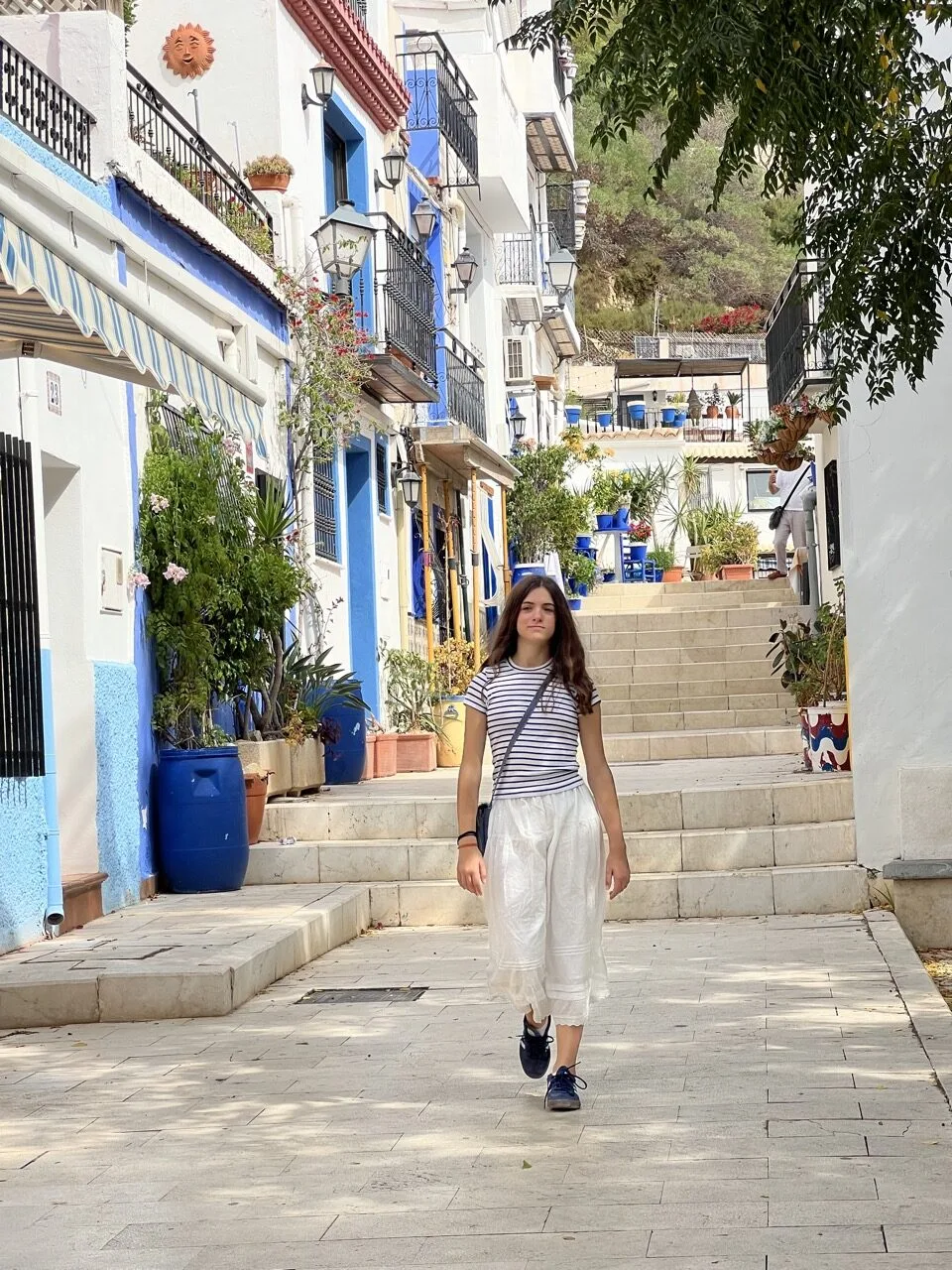
As we came down from the castle, we crossed the historic Santa Cruz district, whose blue-and-white houses give it a touch of Greece. Built on a slope, with steps and flowerpots everywhere, it is undeniably charming. Most visitors concentrate on Calle San Juan, Calle Toledo and Plaza del Carmen. The surrounding lanes are also very pleasant and much quieter, even if they are a little less picturesque. Overall, we really liked Santa Cruz, although it is not very extensive. To soak up the atmosphere and take our time, we stopped on the terrace at Camino de Sabores (see our recommended addresses below).
Alicante’s pretty squares
As I mentioned in the introduction, our day was very full given everything we visited. Nevertheless, we still found time for terrace breaks and to enjoy Alicante city centre’s pretty squares. Here are a few examples:
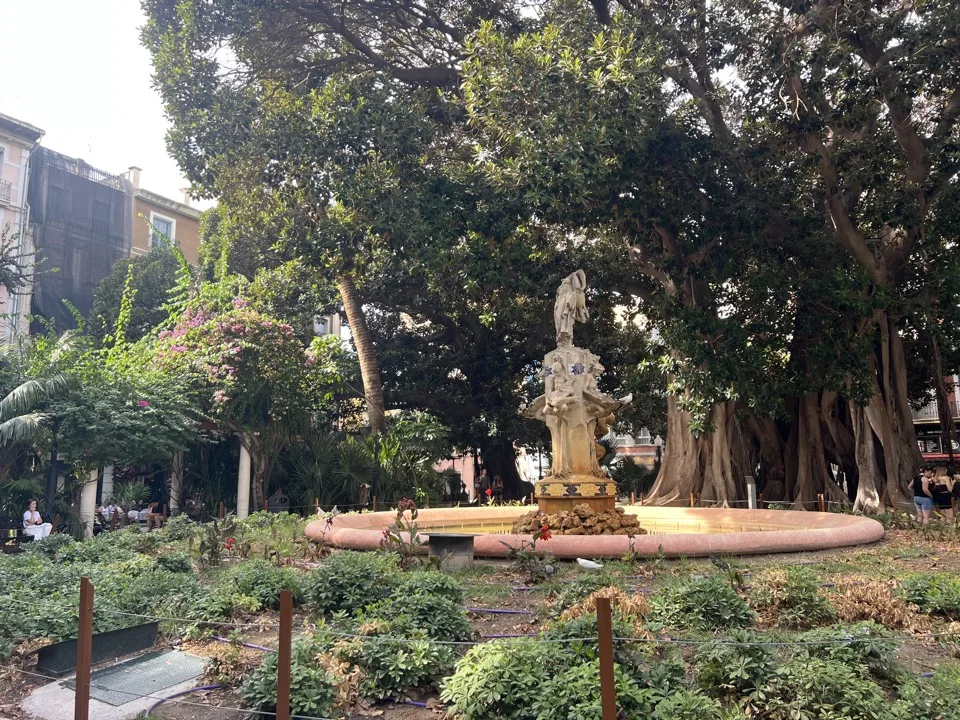
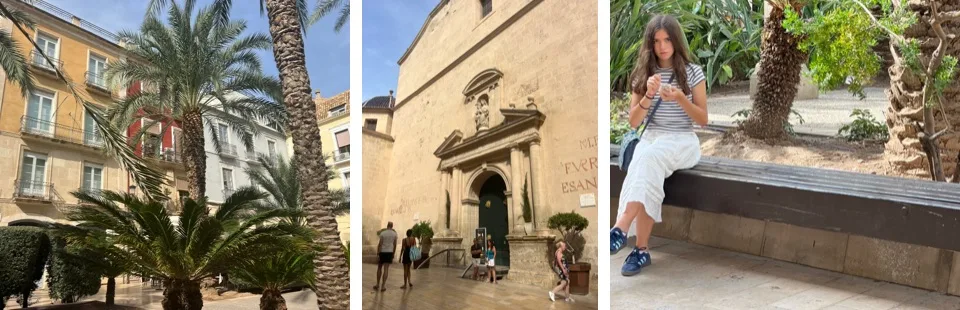
Portal de Elche: with its huge ficus trees and café terraces, this square separates El Barrio from the modern city centre. The Rambla de Méndez Núñez, known simply as Alicante’s “La Rambla”, is just a short walk away and is lined with shops.
Plaza Gabriel Miró, another square shaded by enormous ficus trees.
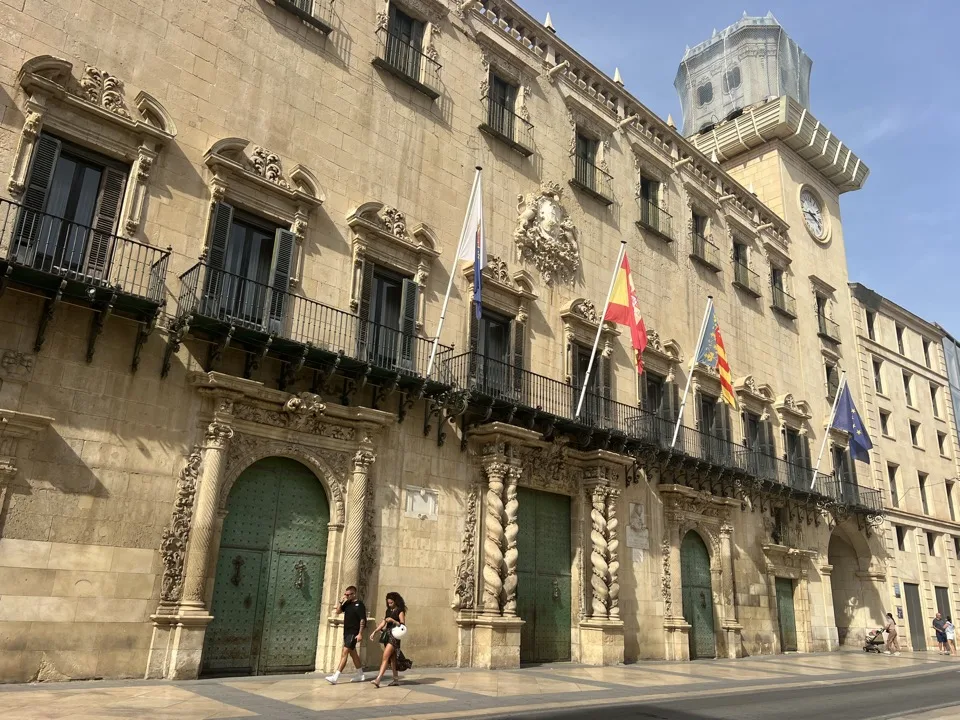
Town Hall Square (Plaça de l’Ajuntament) in El Barrio: an elegant square dominated by the town hall’s beautiful Baroque architecture. Carrer Major, just behind it, is one of the city’s main thoroughfares.
Plaza del Abad Penalva and Plaza Santíssima Faç, near the Co-cathedral of San Nicolás: two more lovely spots in El Barrio. This whole area was lively during the day and in the evening.
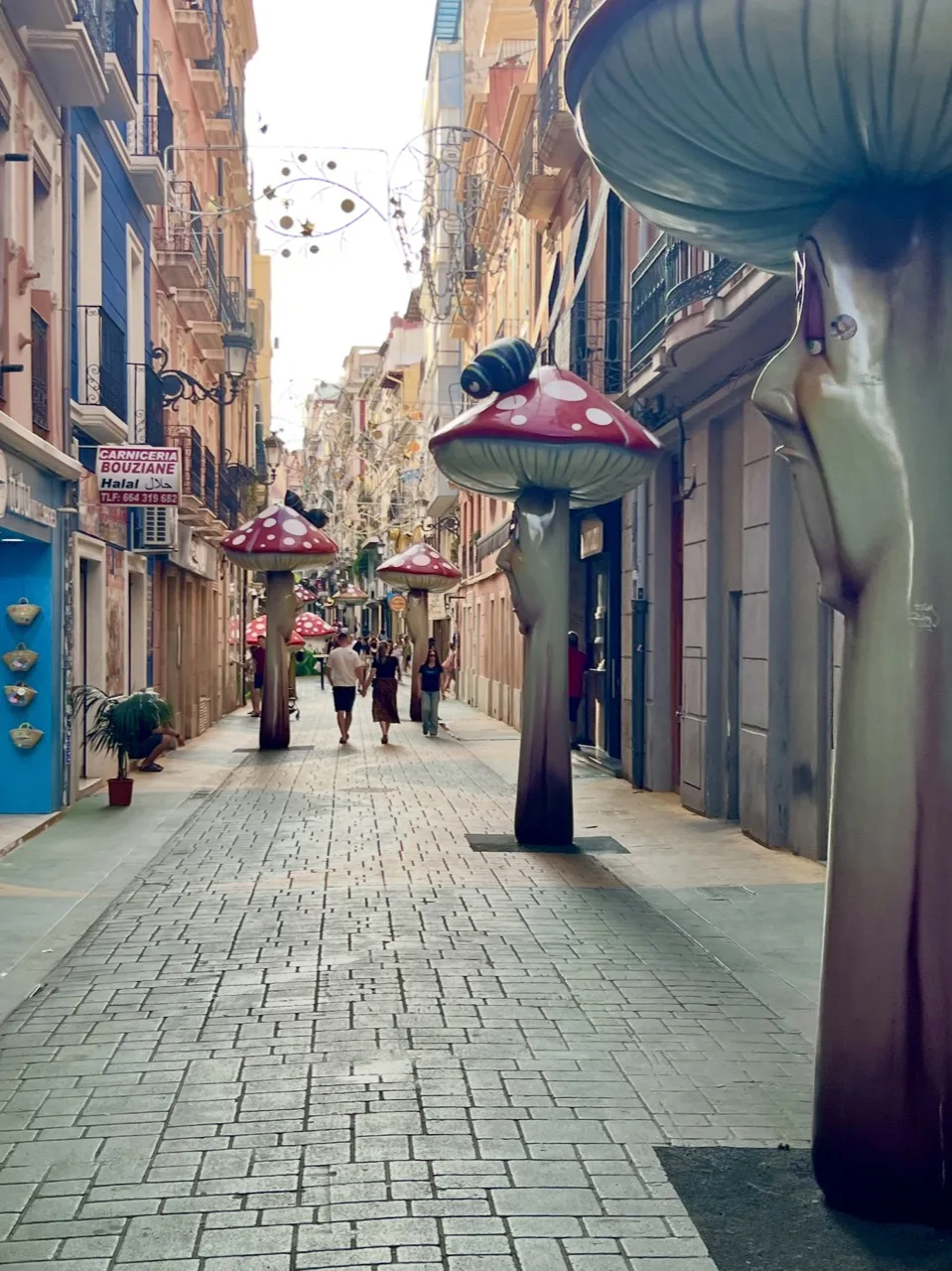
The mushroom street: Calle San Francisco
You cannot miss Calle San Francisco, nicknamed Calle de las Setas because this pedestrian street in central Alicante is dotted with a playful display of giant mushrooms. It reminded Titpuce and me of Alice in Wonderland. So why the mushrooms? The city installed them about ten years ago to attract tourists and families to a street that apparently used to have a rather poor reputation. It worked: the street, which was also pedestrianised, is now lively and pleasant, filled with bars, restaurants and shops. We felt completely safe there, as we did everywhere we went during our weekend in Alicante.
At its eastern end, Calle San Francisco meets Avenida Doctor Gadea, another pleasant avenue designed in a Rambla-like style.
MARQ, Alicante’s archaeological museum
Before climbing to Santa Bárbara Castle, we walked around Mount Benacantil to visit Alicante’s archaeological museum, which was a very pleasant surprise. We had hesitated because neither of us is particularly interested in archaeology. However, the experience was very positive thanks to the museum’s modern exhibition design. The sculpture not to miss in the permanent collection is the Lady of Guardamar: its style is so elaborate that we were amazed to learn that it dates from the 4th century BC. Our favourite part of the visit was the current exhibition of pre-Columbian treasures, El oro y el universo (until May 2027), featuring exceptionally delicate gold jewellery and objects. Titpuce and I both loved it. More information is available on the MARQ website (admission charge).
Please note:MARQ closes at 2 pm on Sundays and is closed on Mondays.
MACA contemporary art museum and the Basilica of Santa María
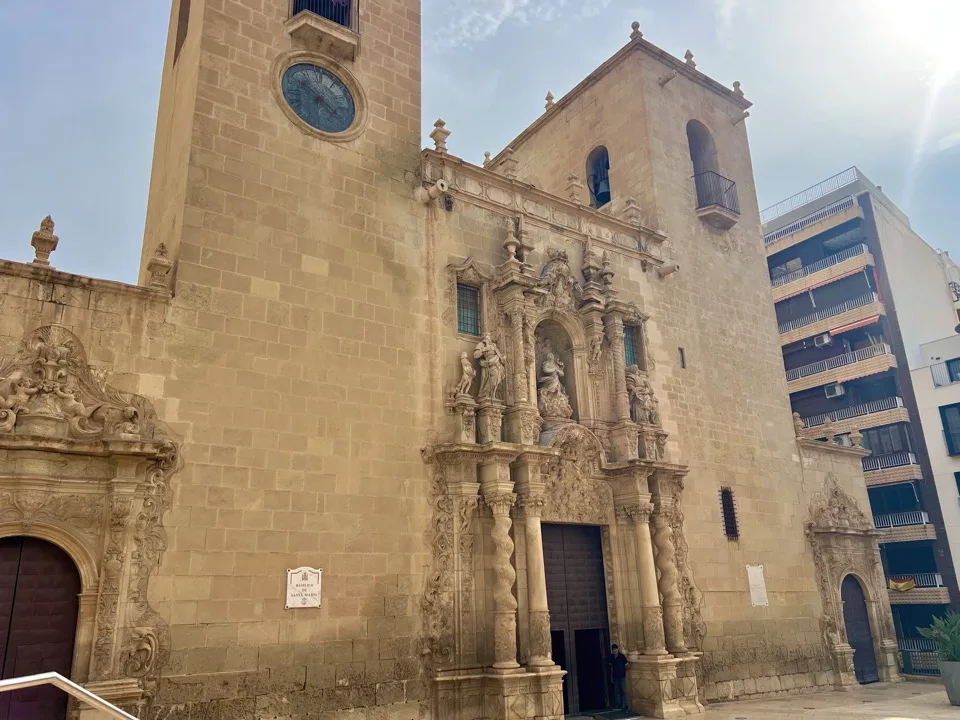
Both stand on the same square in El Barrio. We first admired the Gothic façade of the Basilica of Santa María, Alicante’s oldest active church, although we liked its interior less.
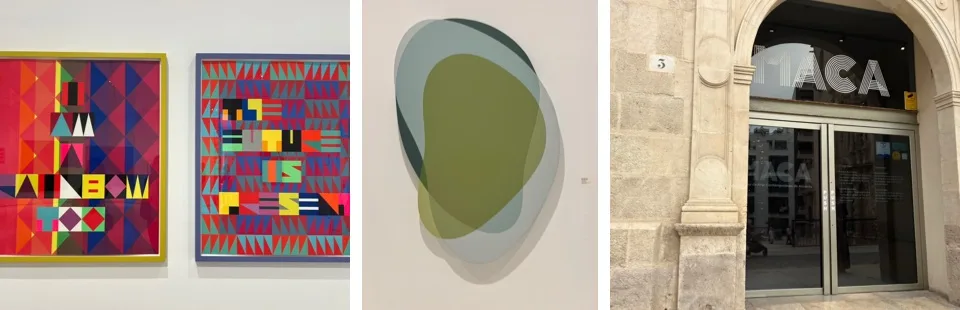
We then visited MACA, a very small contemporary art museum. A visit is therefore quick—we only spent 30 minutes there—but admission is free and you will encounter works by several well-known artists, including Miró, Picasso, Juan Gris and César Manrique.
Please note: MACA closes at 2 pm on Sundays and is closed on Mondays.
Postiguet Beach
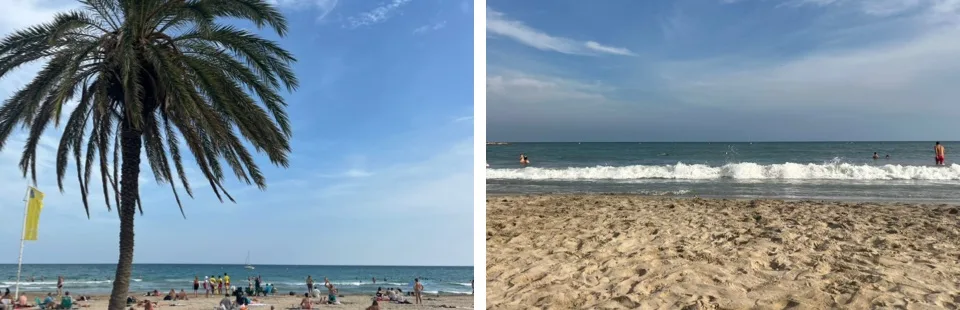
At the end of our busy day, we stopped for a swim at Postiguet Beach, Alicante’s city-centre beach. It was crowded! The sea was 23°C, so swimming was very pleasant even though the water was not especially beautiful. We enjoyed the lively, local atmosphere on the beach.
Central Market
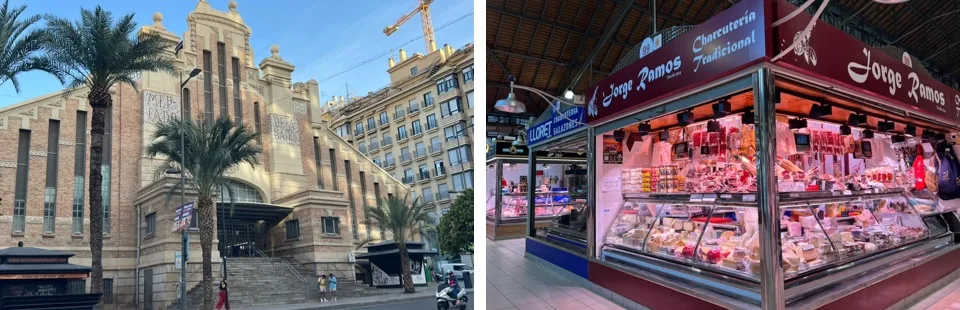
At the northern end of “La Rambla”, we visited Alicante’s Central Market. It is open on Saturday mornings but closed on Sundays, so we went on Monday morning before leaving for Altea. The market was not very lively, but the building has lovely architecture. The tram station for excursions along the Costa Blanca is also right next door!
Around Alicante: our day trip along the Costa Blanca
With only a weekend of two days and two nights, I had wondered whether we should venture out to explore the Costa Blanca, but I have no regrets! We had plenty of time to enjoy Alicante on our first evening, Saturday, and throughout Sunday. On our second day, we therefore took the tram for an excursion to Altea and Villajoyosa (see the practical information below). I should add that I only decided to stop in Villajoyosa on our way back from Altea, when I realised we still had enough time. As it lies on the tram route back to Alicante, you can make this decision at the last minute.
Altea’s whitewashed old town for a taste of Andalusia
1 hour 45 minutes by tram from Alicante: Line 1, changing at Benidorm for Line 9.
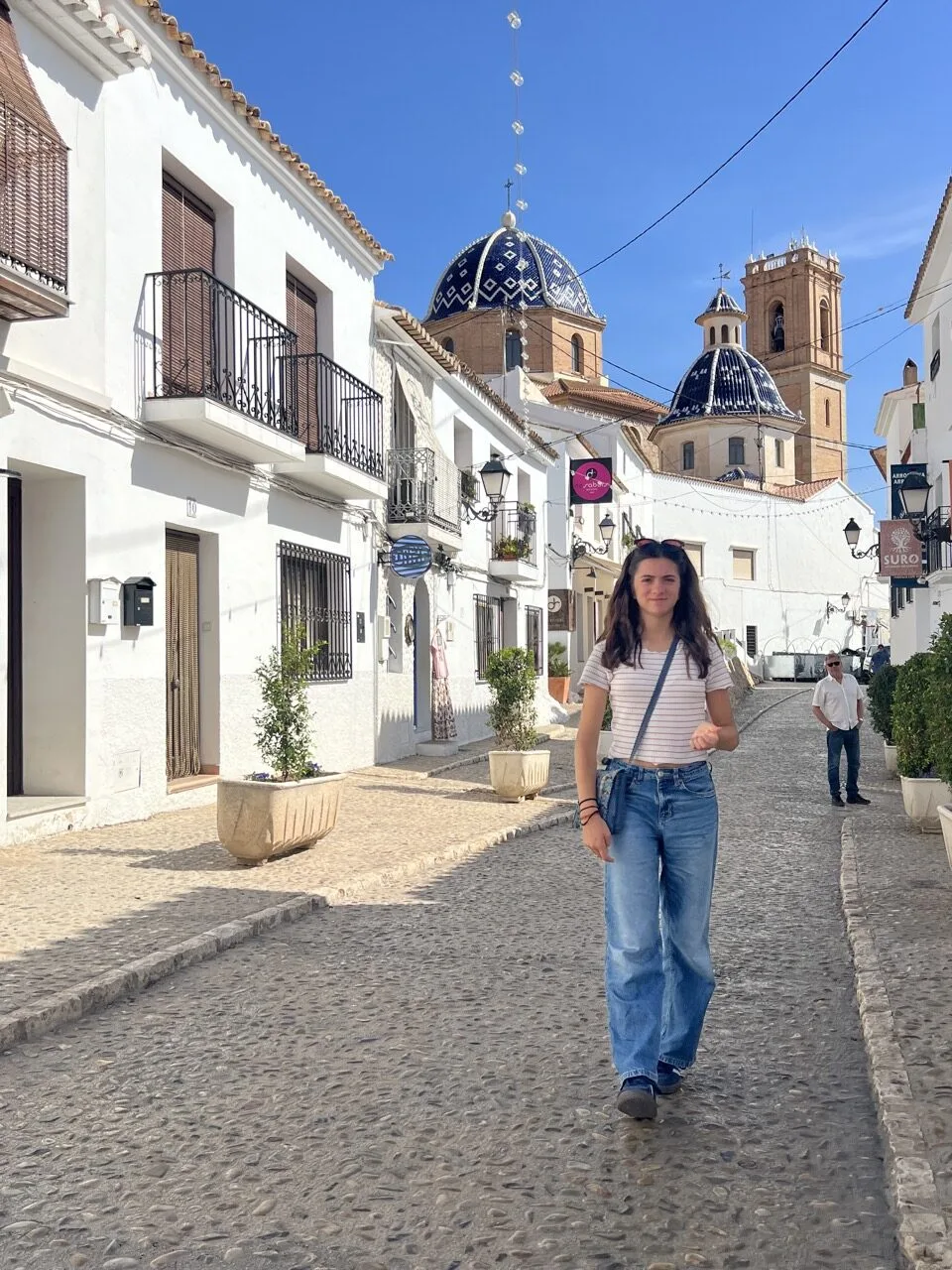
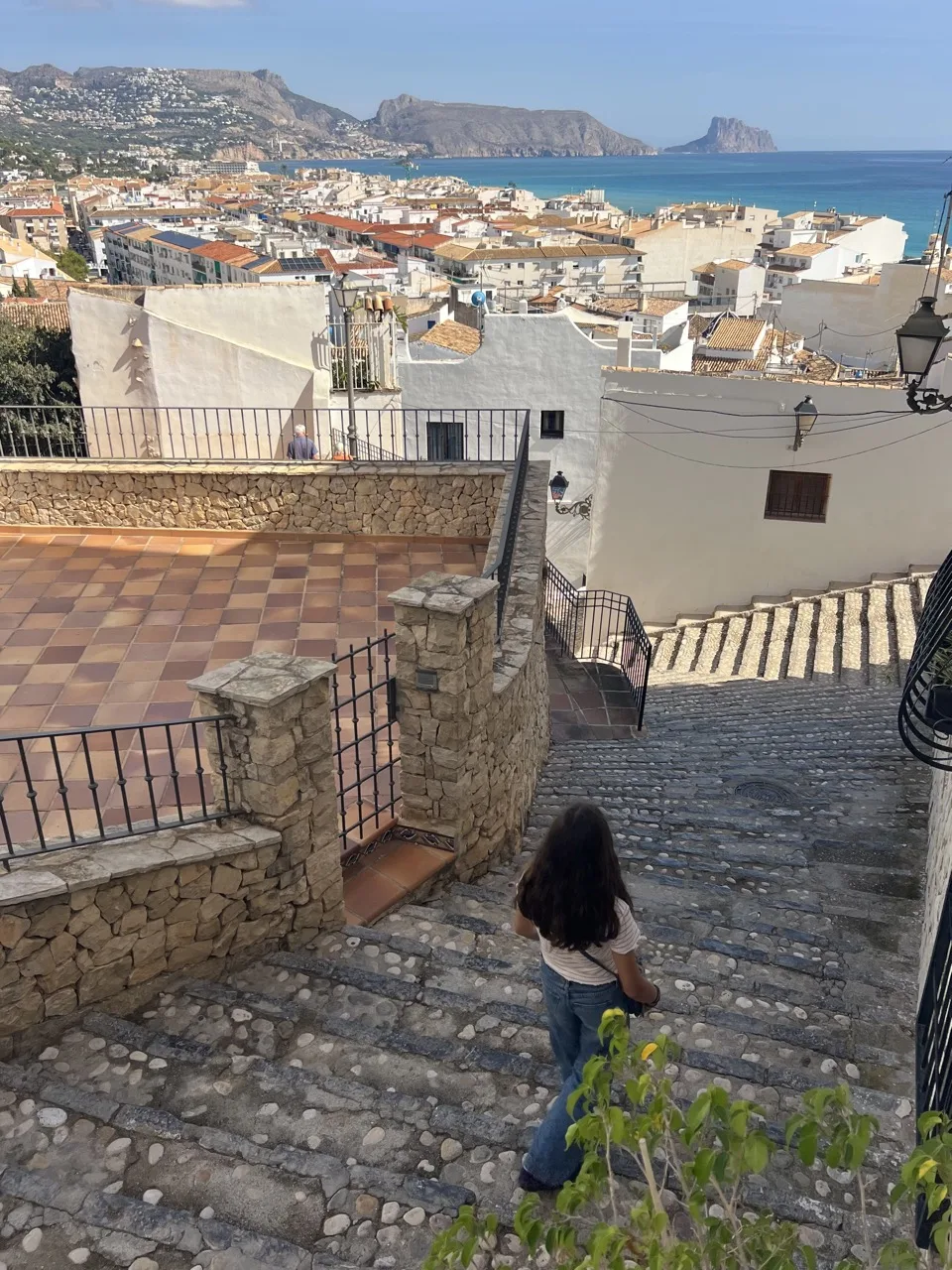
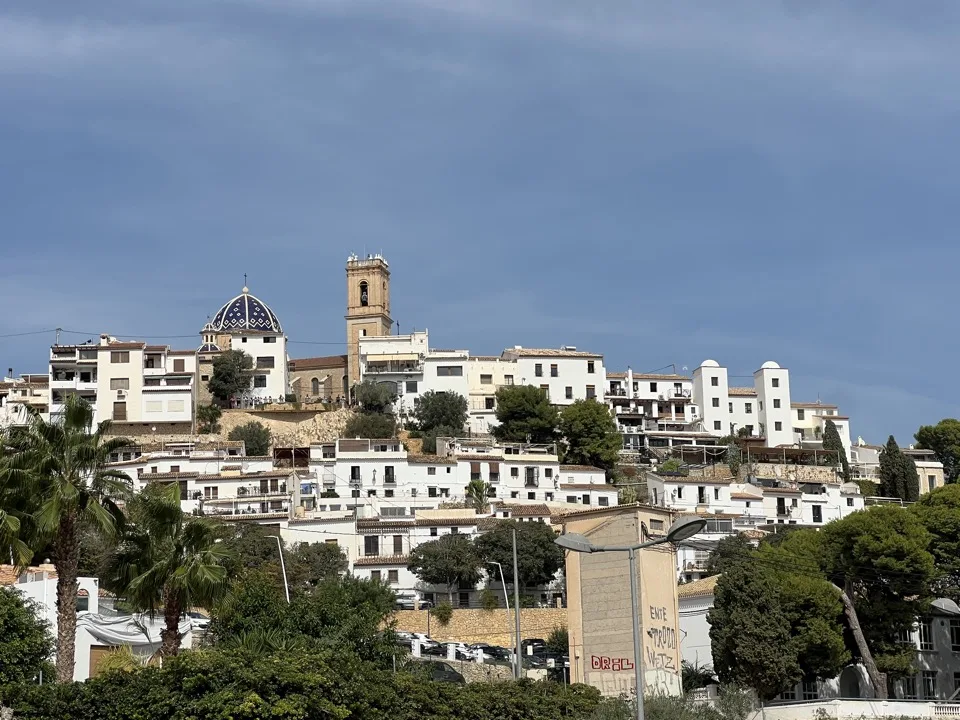
Both Titpuce and I absolutely loved Altea! If you only have time for one excursion from Alicante, this is the one we recommend. Upper Altea is magnificent and feels like an Andalusian white village. We loved its cobbled lanes, white houses, the blue-tiled domes of the Church of Nuestra Señora del Consuelo and its various viewpoints. We stopped for a drink on the terrace at El Racó, opposite the church. Streets not to miss include Carrer Major, Carrer Sant Miquel, Calle Salamanca and Carrer del Portal Vell. We then took the steps on Carrer Mestre de la Música down towards the sea.
Titpuce on Carrer Sant MiquelWalking down towards the sea
The seafront was delightful, with intensely blue water. We should have swum there rather than in Alicante! We walked along the promenade and had lunch overlooking the sea. The view was superb, although the restaurant was merely all right (Restobar Casa del Mar). There are many other restaurants along the Passeig Marítim, so we will try a different one next time!
One last view of Altea’s old town from the tram station:
Villajoyosa: colourful houses and chocolate!
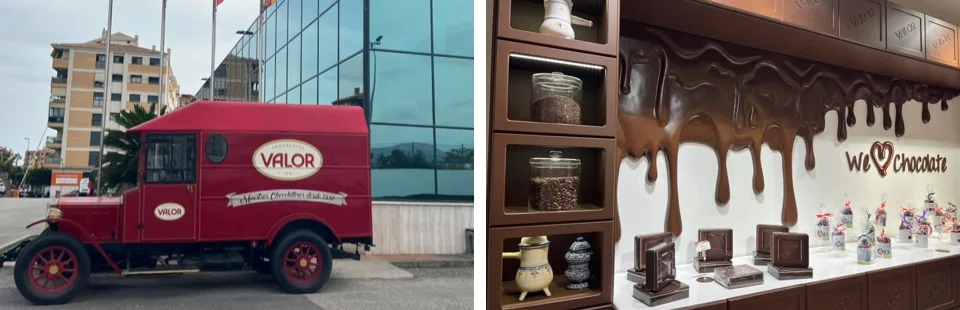
Two English women sitting opposite us on the tram told Titpuce: if you like chocolate, you have to get off at Villajoyosa! Villajoyosa was already on my list, but because of its colourful seafront houses. It is also home to the Valor chocolate factory, Spain’s leading chocolate brand. Looking at its website, I realised that our tram would arrive ten minutes before the final English-language factory tour, at 3 pm. It was a sign! We still had time, so we got off the tram (Line 1, Creueta stop) and hurried to the Valor factory. The free tour lasts 45 minutes. It was enjoyable, although I would not call it unmissable. It certainly smelled wonderful, and we bought several bars of dark chocolate with almonds—they were delicious!
We then headed for the seafront, the prettiest part of Villajoyosa, with its collection of vividly coloured houses. Fishermen painted them this way so they could recognise their homes from their boats.
Alicante with children
Alicante is perfect for a mother-and-daughter break, combining picturesque neighbourhoods, the sea and excellent food. These were my young teenager Titpuce’s favourite experiences:
In Alicante itself:
The lanes of Santa Cruz
Walking along the Explanada de España.
The pre-Columbian art exhibition at Alicante’s archaeological museum.
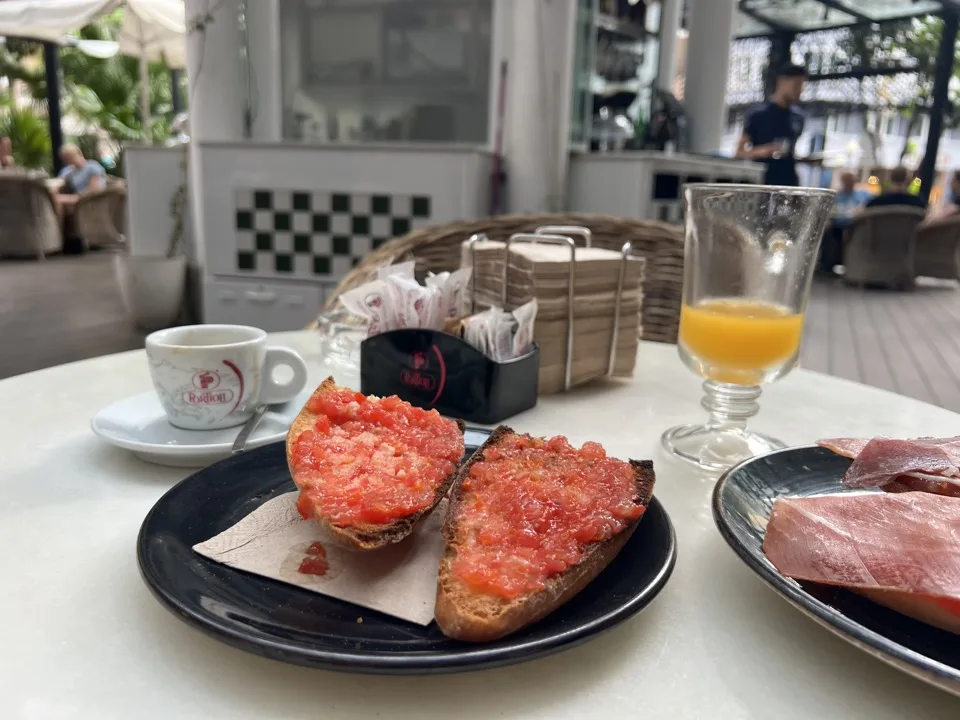
Tapas, aperitifs and breakfasts on terraces in Alicante city centre!
In the surrounding area:
Altea, which she thought was adorable.
The Valor chocolate factory in Villajoyosa.
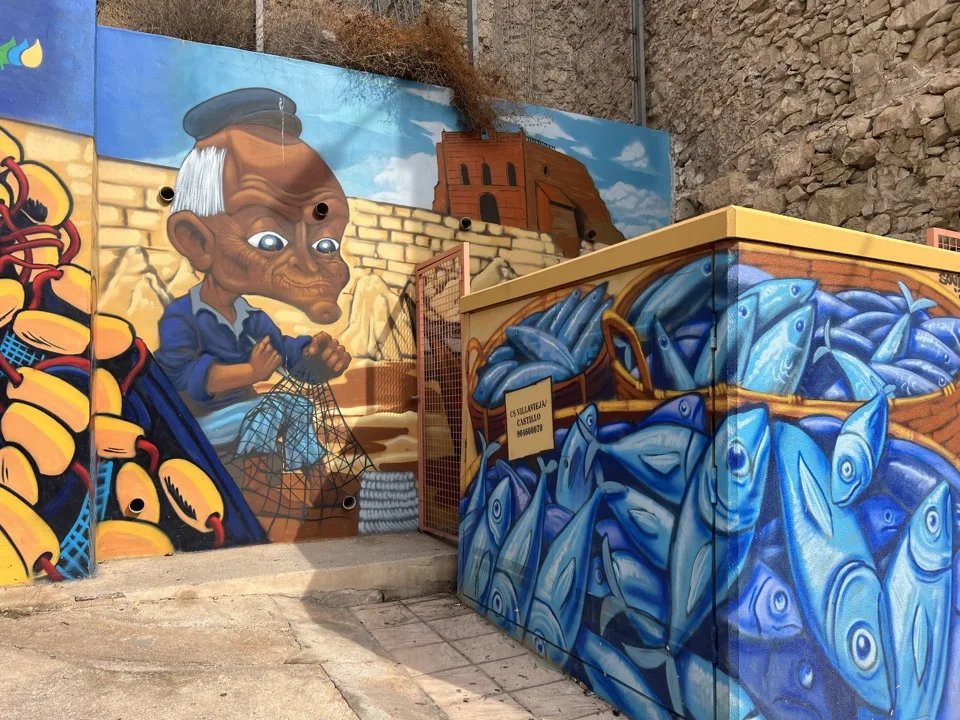
Street art in Alicante
Our favourite places in Alicante
Where to eat and drink in Alicante
Vino y Más ❤: we loved this tapas bar on the mushroom street. It is very affordable and the staff were extremely friendly.
Camino de Sabores: we simply shared a plate of squid here at lunchtime while enjoying the atmosphere in Santa Cruz. It was good, and I recommend the white sangria.
La Taberna del Gourmet: a traditional choice for sampling the classics in a gourmet tavern. A friend from Alicante recommended it to me.
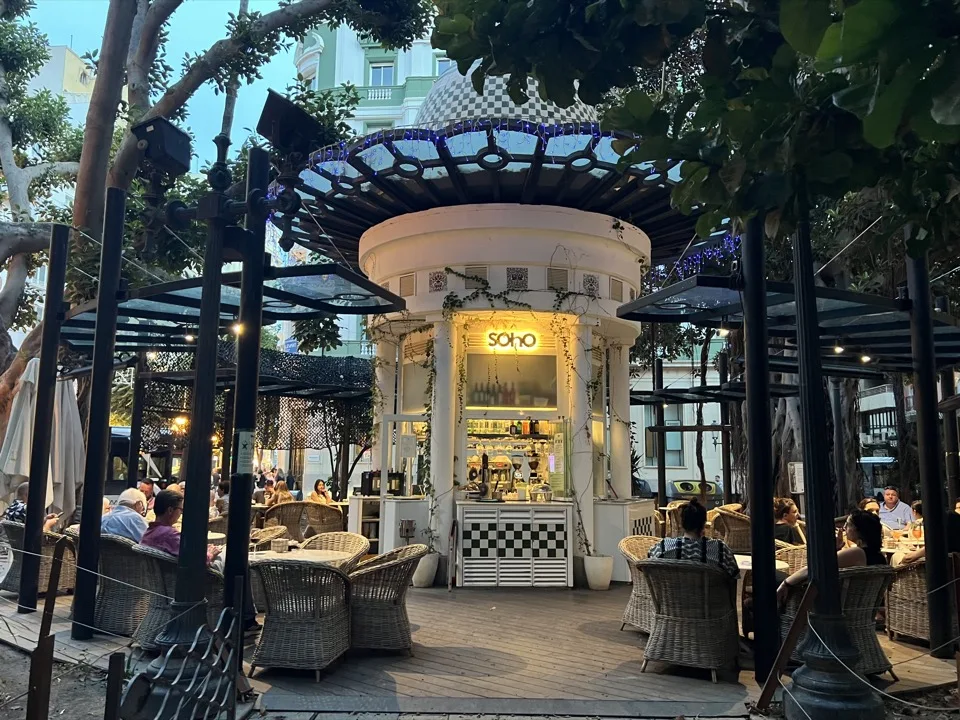
Soho Parc: another good recommendation from my Alicante friend. Its leafy setting on Portal de Elche is very relaxing. The kiosk serves breakfasts and snacks from morning until evening. Come mainly for the surroundings.
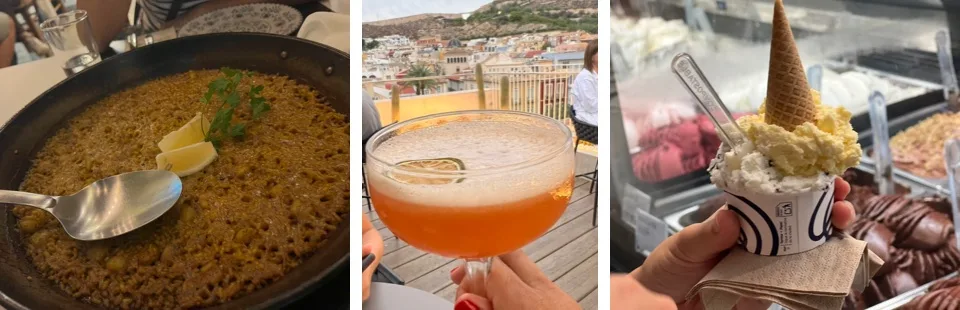
La Tasca del Barrio: we had dinner here and tried Alicante’s speciality, arroz a banda, a seafood rice dish similar to paella and cooked in fish stock. This old-town restaurant does not accept reservations, so it is best to arrive a few minutes before it opens.
Mira Alta Terrace at the Eurostars hotel: we had a cocktail and a mocktail on this rooftop terrace overlooking Santa Bárbara Castle. Be aware that only three tables have the beautiful view. We tried our luck twice and succeeded on our second visit.
Livanti Gelato di Sicilia: delicious ice cream in El Barrio, a short walk from the Co-cathedral of San Nicolás. As its name suggests, this is a Sicilian gelateria. I remain loyal to my roots: my family takes ice-cream quality very seriously ;-).
Where to stay in Alicante
I have visited Alicante three times, so here are a few accommodation suggestions:
In the historic district, at the foot of Santa Bárbara Castle, Hotel Boutique Ferrisa is very well located in the heart of the old town, yet quiet. The rooms are small but attractive, and the beds are very comfortable. Its terrace has a lovely view of the castle.
In the city centre, near Calle San Francisco, the Balmis Plaza Apartments are stylish and well located. Be warned, however: you should avoid staying there from Thursday to Saturday inclusive because they overlook a very noisy square, where popular bars remain open until the early hours. For stays from Sunday to Wednesday, however, they are a good option.
Planning a weekend in Alicante: practical information
Bus from the airport: we took the C6 bus, which runs every 15 minutes and takes only about 20 minutes to reach Alicante. A useful tip: we bought the non-personalised ten-journey card for about €10 rather than buying individual tickets, which cost around €4.60 at the time. We needed four journeys, two on the way in and two on the way back, so the ten-journey card was better value and left us with six journeys. They are valid for two years. I will give the card to my Alicante friend, who visits regularly. You can buy the card on board. As fares change, check the current prices before travelling.
The tram for our Altea and Villajoyosa excursion: our return tram journey to Altea cost €5 per person. Take Line 1, which runs every 30 minutes, then change at Benidorm for Line 9, which runs hourly. Alicante to Altea takes 1 hour 45 minutes, while Alicante to Villajoyosa takes one hour. We combined the two because Villajoyosa is on Line 1. Check the current timetable on the TramAlicante website.
What is the best season for visiting Alicante? I thought early autumn was perfect. On our previous visits we came in summer, when it was obviously too hot. I therefore recommend spring or the late-October school holiday for pleasant temperatures.
Beyond Alicante: Alicante is ideal for a weekend break, but it also makes a good stop on a longer journey through this part of Spain. On an earlier trip, we combined Alicante with the beautiful city of Valencia, which we particularly recommend with young children.
***
How about you? Do you know Alicante and its surroundings? Would you like to visit?
Today, we are taking you to Winchester, the former capital of England, located in Hampshire. Whether for a pleasant walk through a historic city full of character or for a good restaurant, we regularly go to Winchester because our village is only half an hour from this charming city. We have a usual route that we like to do with friends or family when they come to visit us. I am sharing it with you in this article because you may want to visit Winchester as part of a train escape from London or during a road trip in the south of England. For one day, or why not two, Winchester is a lovely little English stop!
So, what to see and what to do in Winchester?
The whole programme below is possible in one day, and the entire city is very easy to visit on foot.
High Street
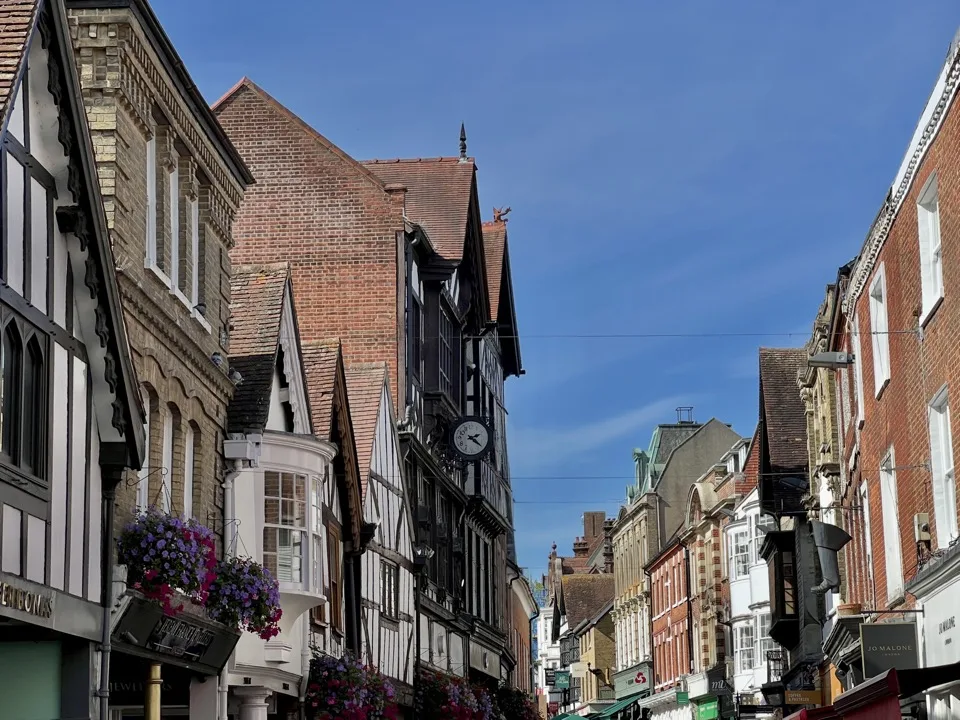
High Street is Winchester’s main shopping street. It crosses the city centre from the Westgate entrance gate to the River Itchen. All along the street, you can admire old half-timbered buildings as well as other historical and architectural details:
The Buttercross, which dates from the 15th century: in the Middle Ages, merchants gathered around this market cross to sell their goods.
A large clock dating from the 19th century.
Westgate, the western entrance gate, dating from the 12th century.
A market is held on High Streetfrom Thursday to Saturday, with a few food stalls, craftspeople and sellers of retro items.
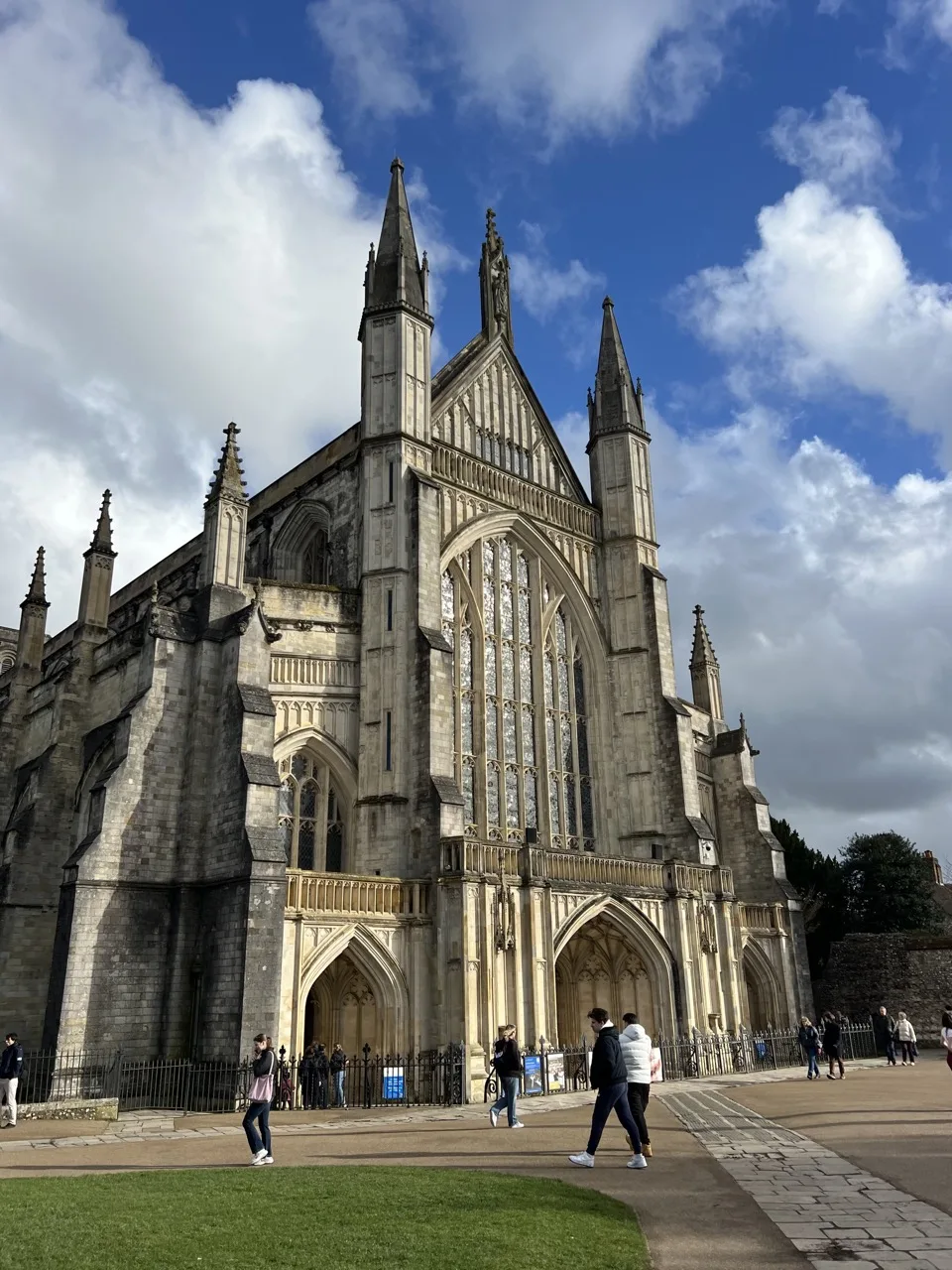
Winchester Cathedral is one of the most important cathedrals in England. Its construction began in the 11th century, just after the Norman Conquest, and continued until the 16th century. It is the longest medieval cathedral in the world. Its architecture is a mix of Norman Romanesque and Gothic styles.
I recommend visiting the inside: it is magnificent! The visit is paid – see information and prices on their website. The novelist Jane Austen is buried there, in the north aisle.
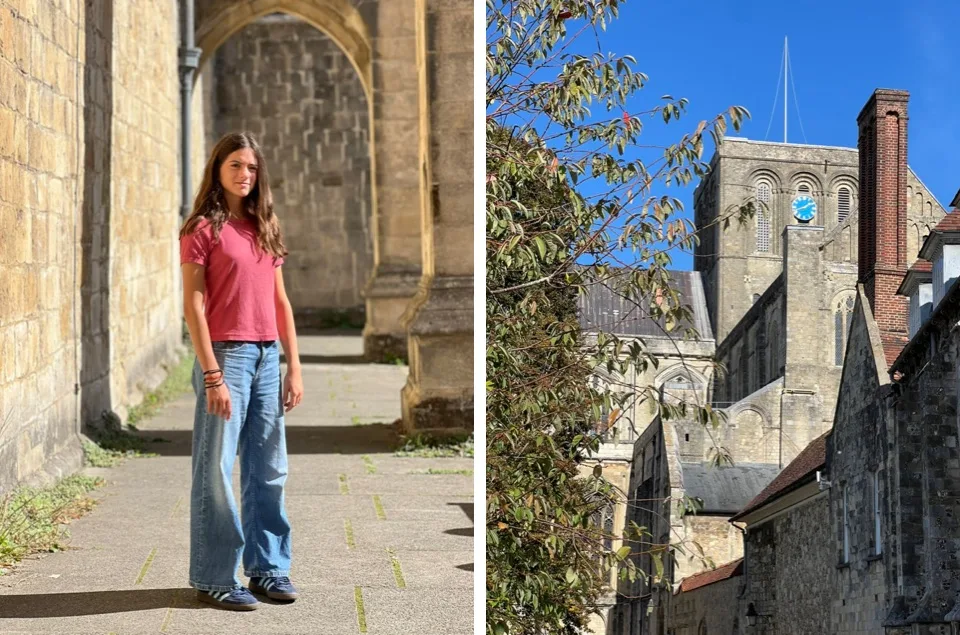
If you do not visit the cathedral, you can enjoy the green spaces around it before continuing the walk along the right-hand side of the building, under the arches:
The Inner Close
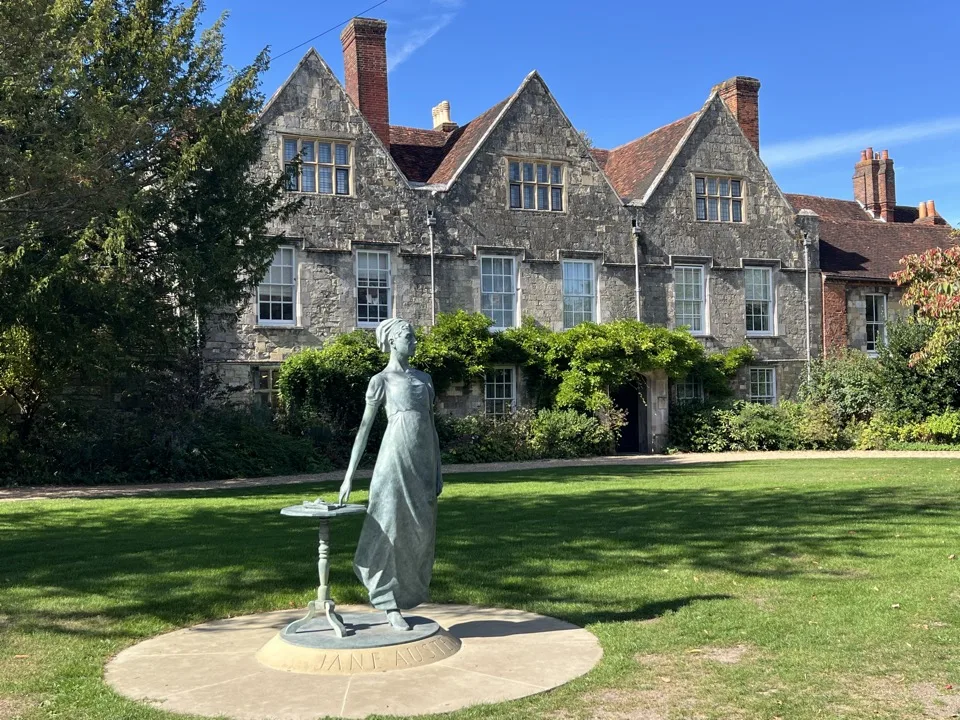
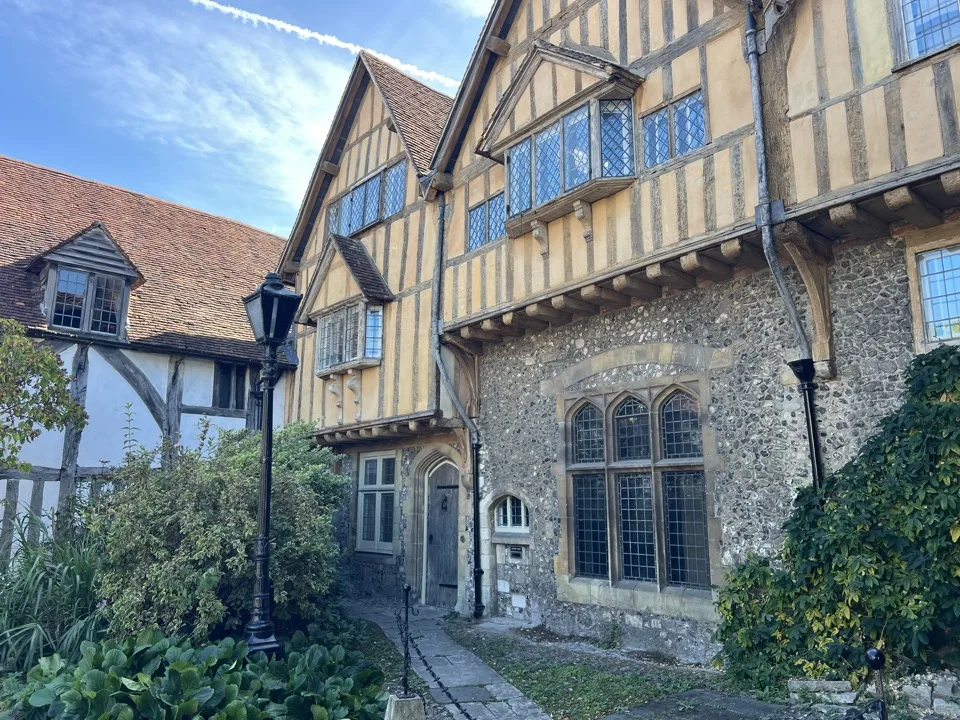
Once you have passed under the arches, you are in Inner Close, where St Swithun’s monastery once stood. This spot has a great deal of charm. You will come across the statue of Jane Austen, then more old half-timbered buildings by another gate: Priors Gate.
College Street: Winchester College and Jane Austen
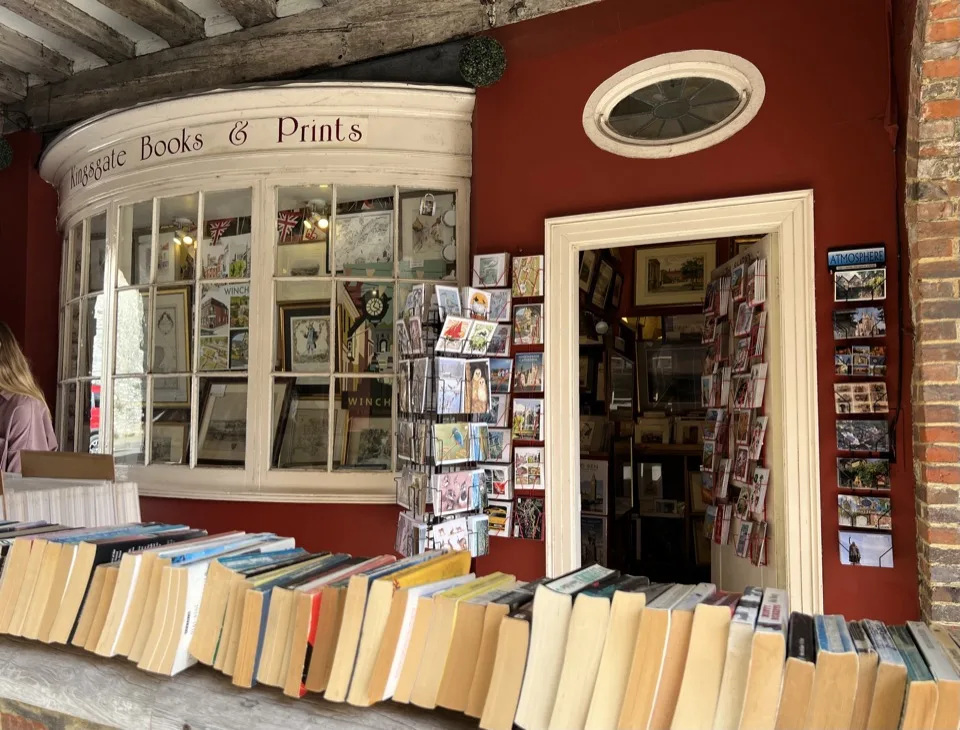
Next, go through Kingsgate, where there is an adorable bookshop, Kingsgate Books & Prints, selling modern illustrations and old postcards from all over the United Kingdom, perfect for bringing back a little souvenir.
Then you arrive on College Street.
At number 11, you will pass a very old bookshop that my Titpuce loves: P&G Wells. They have a very complete section on Jane Austen.
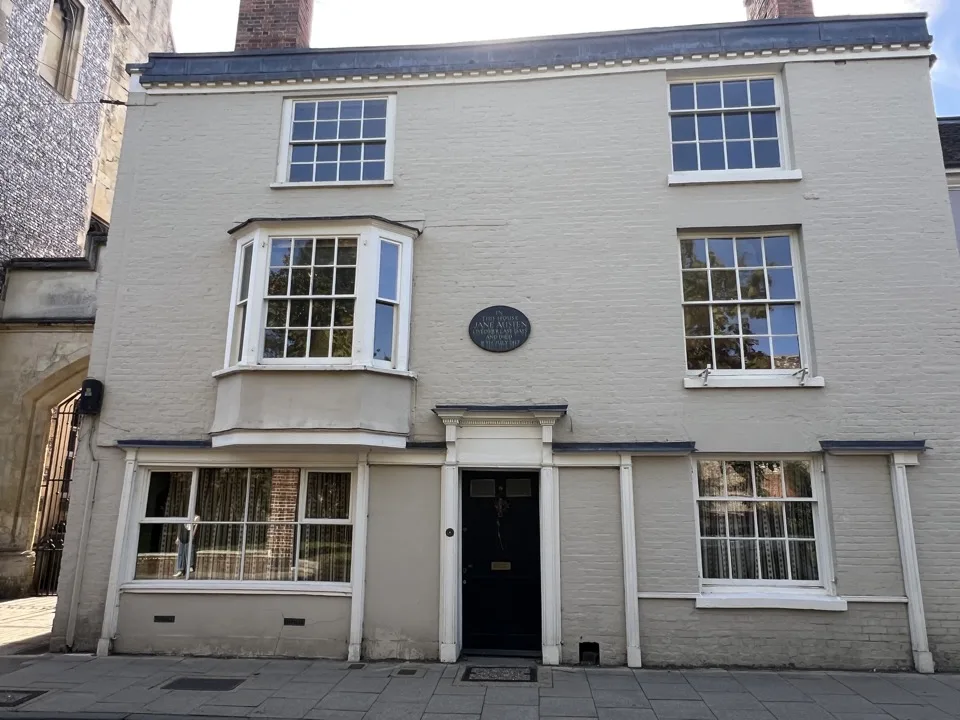
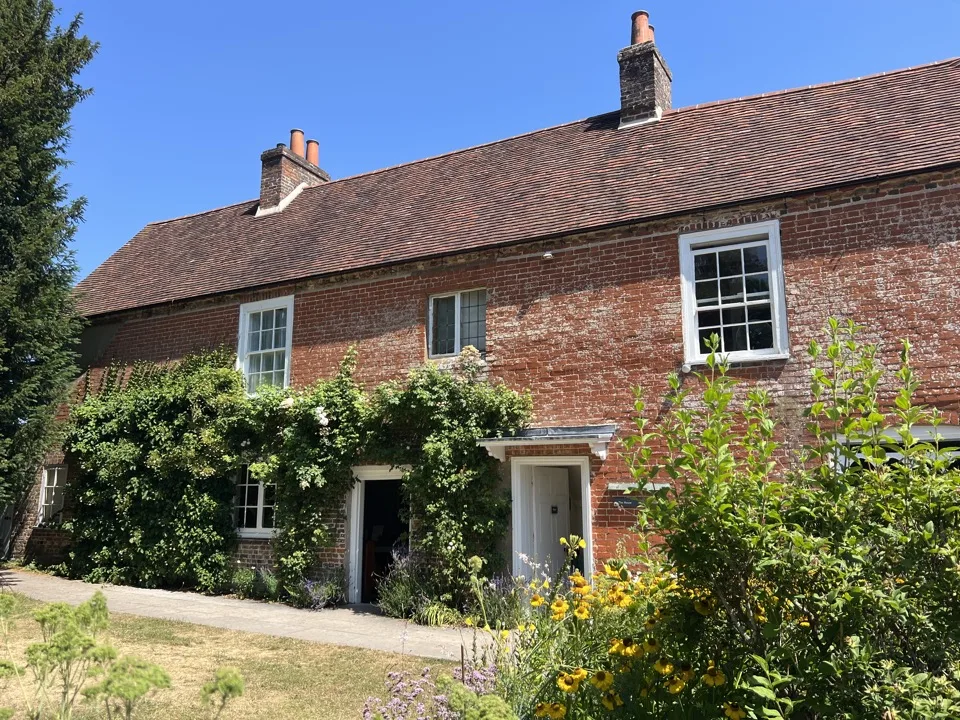
Then, at 8 College Street, you will find Jane Austen’s final home, where she spent a few weeks trying to be treated by Winchester doctors before dying of an unidentified illness at the age of 41.
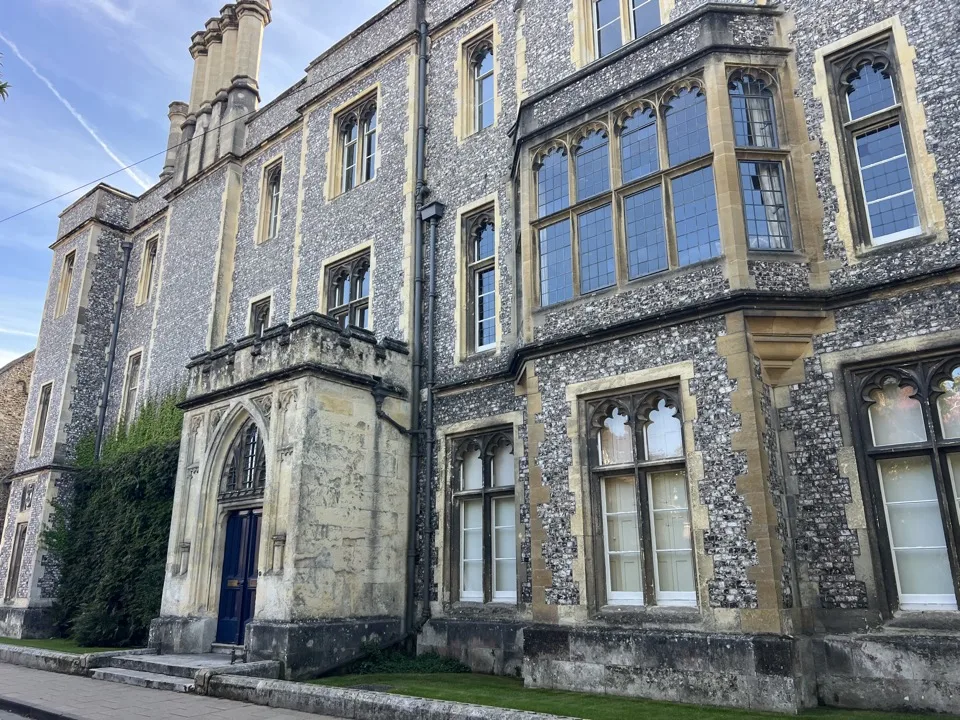
Then, continuing along College Street, you pass the famous Winchester College, hence the name of the street. A little reminder: in English, “college” here is not a middle school, but a secondary school or part of a university. Winchester College is an elite private school. There is usually a guided tour in the early afternoon. I visited it a long time ago on a school trip and it really impressed me. Back then, Harry Potter did not exist yet; otherwise I could have said it felt like being in Harry Potter :-). It is a good option for seeing a typical, historic school. On the other hand, I would say it is not essential if you are already planning to visit Oxford or Cambridge, because the buildings are even more spectacular in those two university cities.
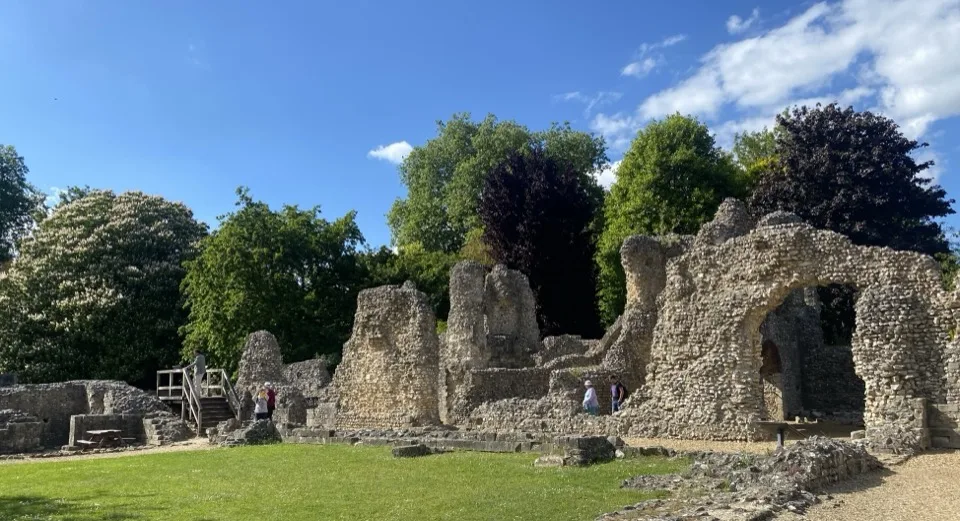
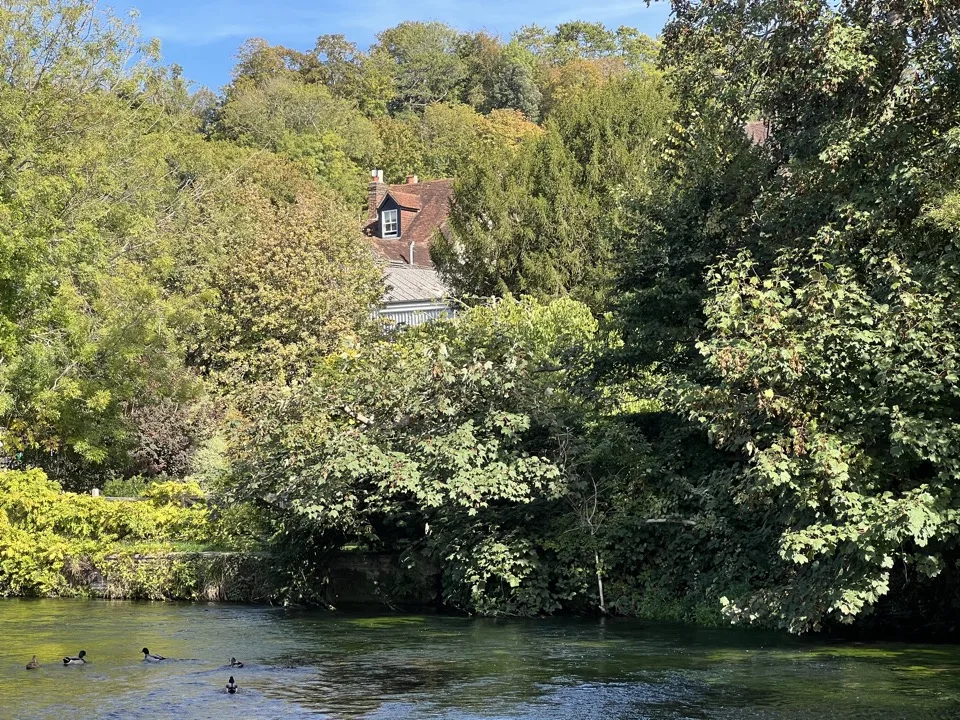
Continuing along College Street, on the right you come across a few ruins of Wolvesey Castle, which was the residence of the bishops of Winchester in the Middle Ages. Entry is free. So you can make the little detour to these ruins before continuing the walk along the River Itchen. This river is incredibly clear! The walk becomes very bucolic. At this point, I recommend a break on the terrace of The Bishop on the Bridge pub if the weather allows.
Winchester City Mill
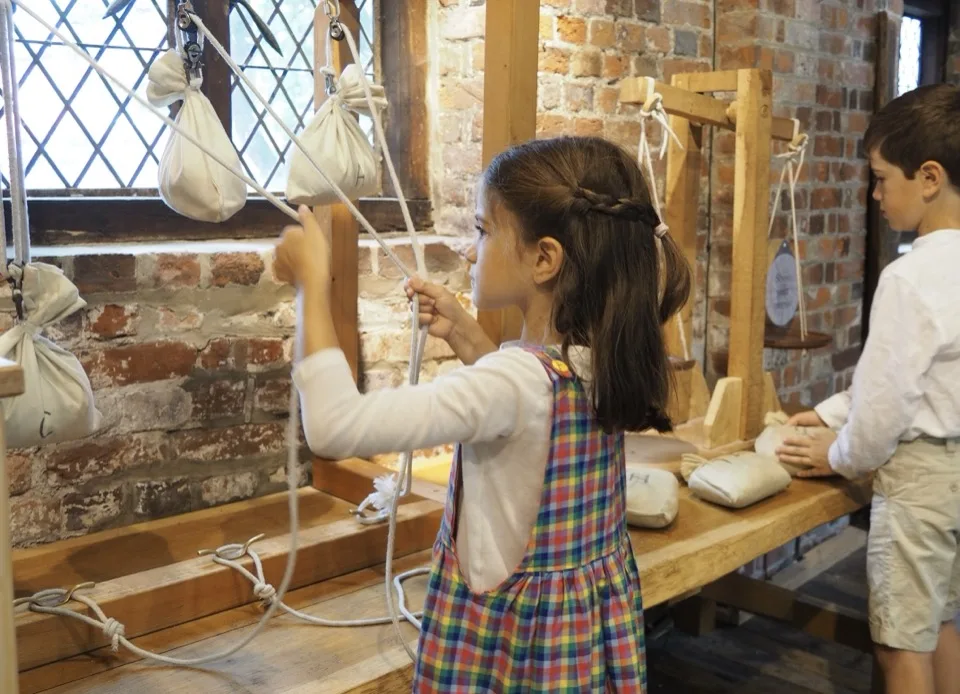
Winchester Mill is one of the oldest working watermills in England. It is small and quick to visit, but it is lovely if you are with young children because they can watch the wheel and make flour. Ticoeur and Titpuce enjoyed this visit when they were 6 and 8. Entry is paid or included in National Trust membership (a pass I recommend because it quickly pays for itself if you visit several historic sites managed by the National Trust).
St Giles Hill
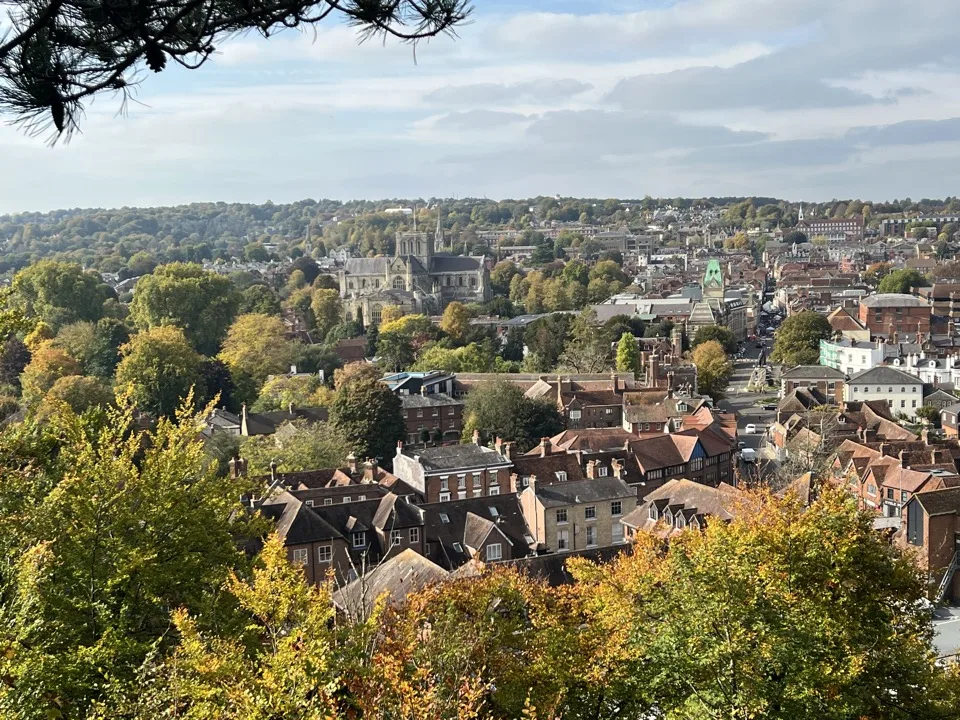
Before looping back towards High Street, I suggest taking a step back and heading first to St Giles Hill. It climbs a little, about 50 m of elevation gain, but it is not very long: allow around fifteen minutes to reach the top. From there, you can enjoy a beautiful panorama over Winchester.
St Catherine’s Hillisanotherhillthatoffersaviewofthecity,butit’squitedistant.IprefertheviewfromSt Giles Hill.
The Great Hall
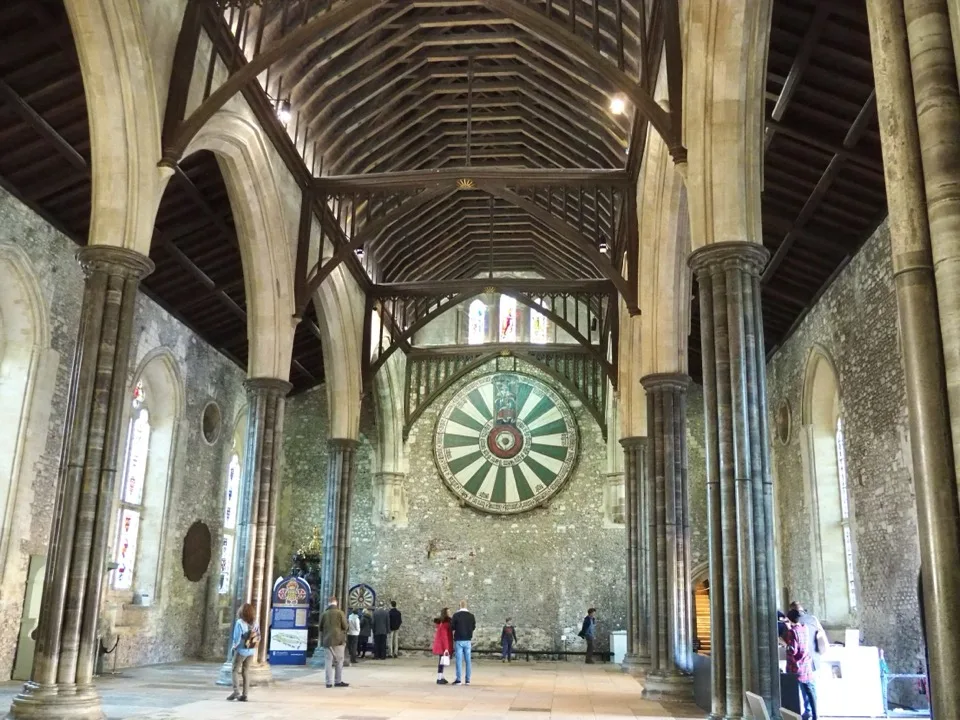
On the way back down, head towards High Street and, if you did not already do so at the beginning when you arrived, walk all the way up the street to Westgate. To the left of this gate is the Great Hall, a remnant of William the Conqueror’s former castle. The hall itself is a vast room dating from the 13th century and housing an immense Round Table, a representation of the Arthurian legend.
When I visited as a teenager, I really enjoyed it, especially because of this table. When I went back recently, I found the entry fee expensive for such a short visit. So it depends on your taste for history.
Winchester with children:
Winchester is a good city to visit as a family. First of all, because it is a calm, residential city, home to many families. There are lots of former Londoners who moved to Winchester once they became parents because it is a more child-friendly, and less expensive, city.
Depending on the age of your children, here are the visits not to miss in Winchester:
With young children:
The mill: this is the place our Ticoeur and Titpuce liked most when they were small because they could see a mill in action and make flour.
Children will all enjoy the outdoor spaces for running around: the lawns around the cathedral, the ruins of Wolvesey, the riverside and Abbey Gardens, located between the pretty Guildhall and the cathedral.
The Winchester Science Centre & Planetarium is an interesting outing in case of rain.
With older children and secondary-school age kids:
The Round Table in the Great Hall makes an impression if your pre-teens are interested in the Arthurian legend.
Winchester College, to see the inside of this elite school whose architecture will appeal to Harry Potter fans.
My Titpuce really likes the city’s different bookshops: Kingsgate Books & Prints, P&G Wells and Waterstones.
Our good pub and restaurant addresses
The Bishop on the Bridge: for a drink by the river.
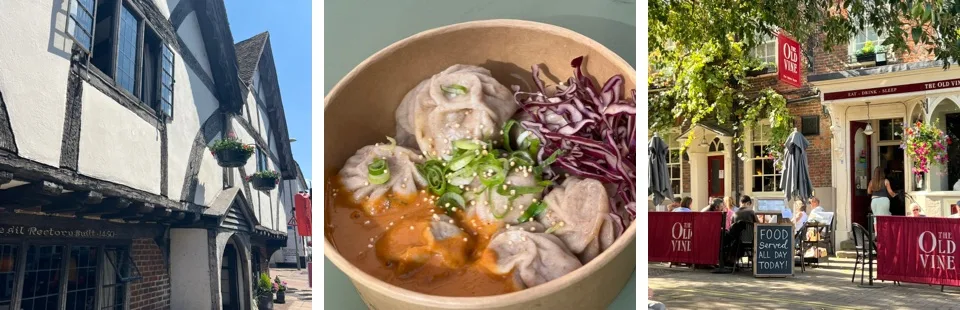
The Chesil Rectory: a gastronomic restaurant located in Winchester’s oldest commercial building.
The Square: for a snack on a terrace just a stone’s throw from the cathedral.
Josie’s: for a delicious breakfast or brunch.
Marse: for excellent Nepalese momos to take away, with a few tables on the terrace.
Piecaramba! A restaurant serving savoury pies in all sorts of flavours! Very English.
The Old Vine: a pretty pub opposite the cathedral.
The Chesil Rectory, momos from Marse, The Old Vine pub
Practical information for visiting Winchester
Transport:
By train:from London, it is only 50 minutes by train from Waterloo station. You can book your tickets on the Southwestern Railway website.
By car: Winchester is 1 hr 30 min from London or 30 minutes from Portsmouth.
Parking: we always park at St Peter’s car park on weekdays or Saturdays. It is paid, but not very expensive, and well located for reaching the centre on foot. On Sundays, there is a large free car park at Chesil Street multi-storey car park.
What to see nearby:
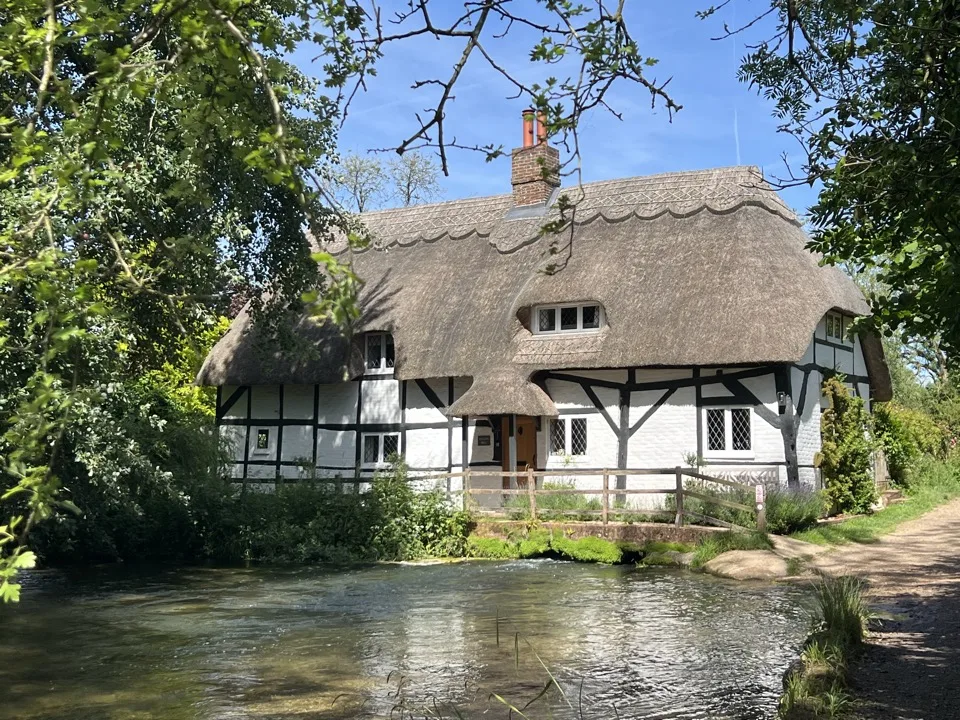
The village of Alresford, for a bucolic walk along the river in a charming little village.
The village of Chawton, where Jane Austen’s main home is located, 30 minutes from Winchester.
The New Forest, a magnificent forest with free-roaming horses, 30 minutes from Winchester.
Spring and autumn are the most beautiful seasons, I think, for enjoying the nature that is so present in Winchester, with lovely flowers in spring and the warm golden colours of the trees in autumn.
Summer is pleasant for enjoying all the terraces and visiting the region during a road trip in the south of England.
I do not recommend winter, except in December for the pretty Christmas market. It is small but authentic and picturesque, at the foot of the cathedral. It is the most beautiful one I have seen in England.
What can you do in Paris with teenagers? Now that our children are older, their tastes and interests have changed. Whenever we return to Paris, we try to plan activities they will enjoy. We visit the capital often, so we have explored — and revisited — quite a few places. Here is a list of places and activities that Ticoeur and Titpuce (aged 14 and 16) enjoyed. I hope these 12 ideas will make your teenagers fall in love with Paris!
1 – See Paris from the rooftops of the department stores
Paris 9th arrondissement – métro: Chaussée d’Antin or Opéra – free – For teenagers who enjoy a “wow” factor, shopping and architecture.
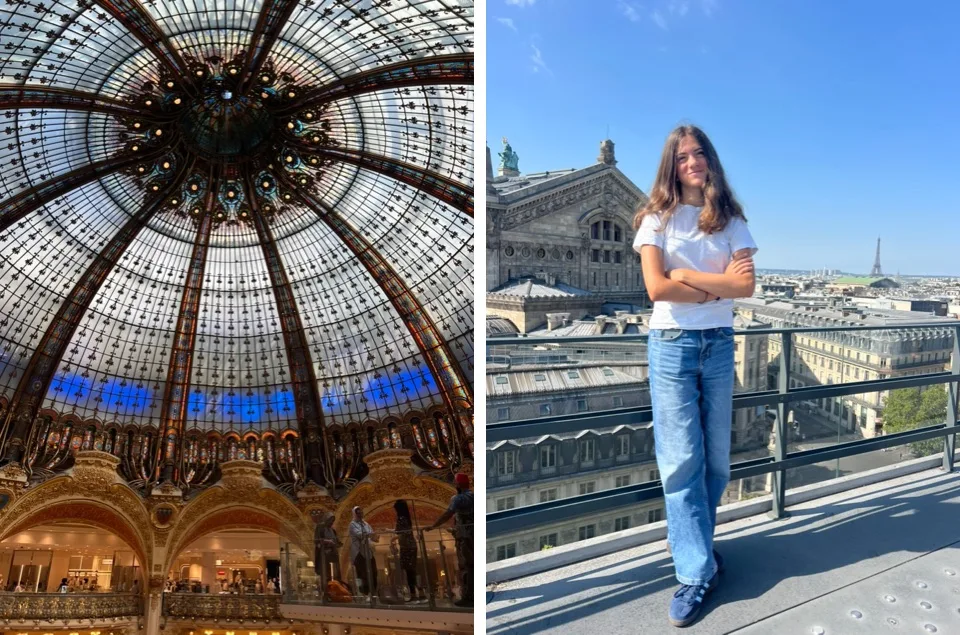
Head to the rooftops of Galeries Lafayette and Printemps for magnificent free views across Paris. Your teenagers may also be tempted by a shopping session in these famous Parisian department stores.
Galeries Lafayette
Make your way to the eighth floor. On the way up, admire the monumental Art Nouveau glass dome. Once outside, the terrace offers a panorama of the Palais Garnier and far beyond. This was Titpuce’s favourite view.
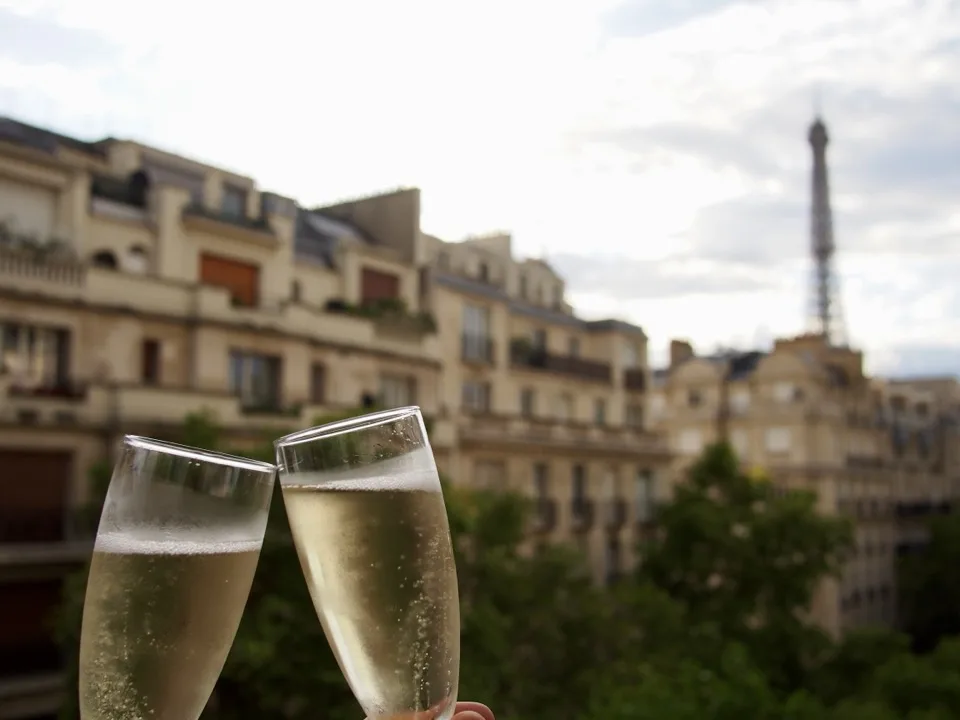
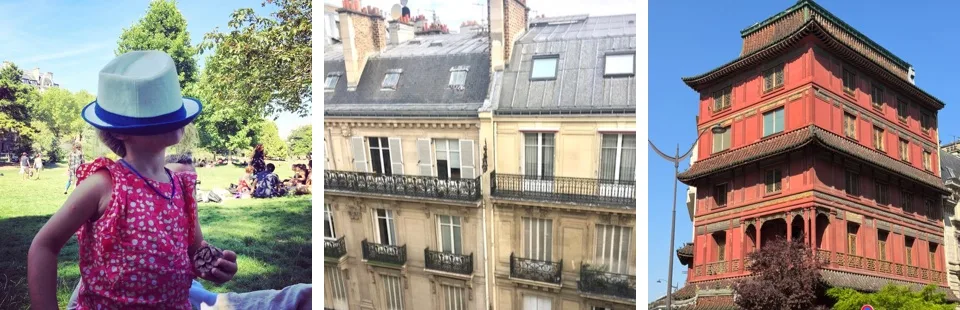
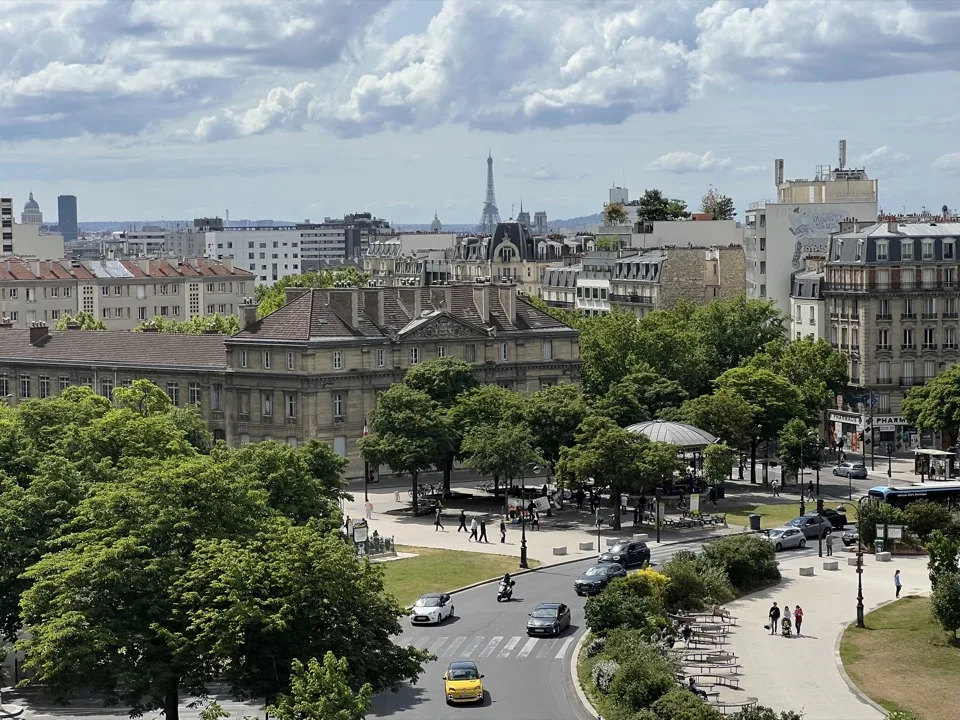
Choosing where to stay in Paris is not always easy if you do not know the city. I have put together all our tips and a few addresses here, because I am often asked: “Where should we stay in Paris?” and “Which neighbourhood is best for a family trip to Paris?” I am a Parisian and I love my city — the place where I was born and lived for many years.
Since we moved to England, we have become visitors to Paris ourselves and have tried different places to stay: apartment rentals and hotels. We have even done a home exchange.
Of course, every Parisian has their favourite spots, so my choice of Paris neighbourhoods and my views on each of them are very personal. These are the areas I find convenient for sightseeing and well suited to a family stay. I hope they give you some ideas!
1 – Stay in Le Marais
Le Marais is old Paris at its most charming, with cobbled streets and a lively neighbourhood full of cafés, restaurants and museums.
Why stay in Le Marais?
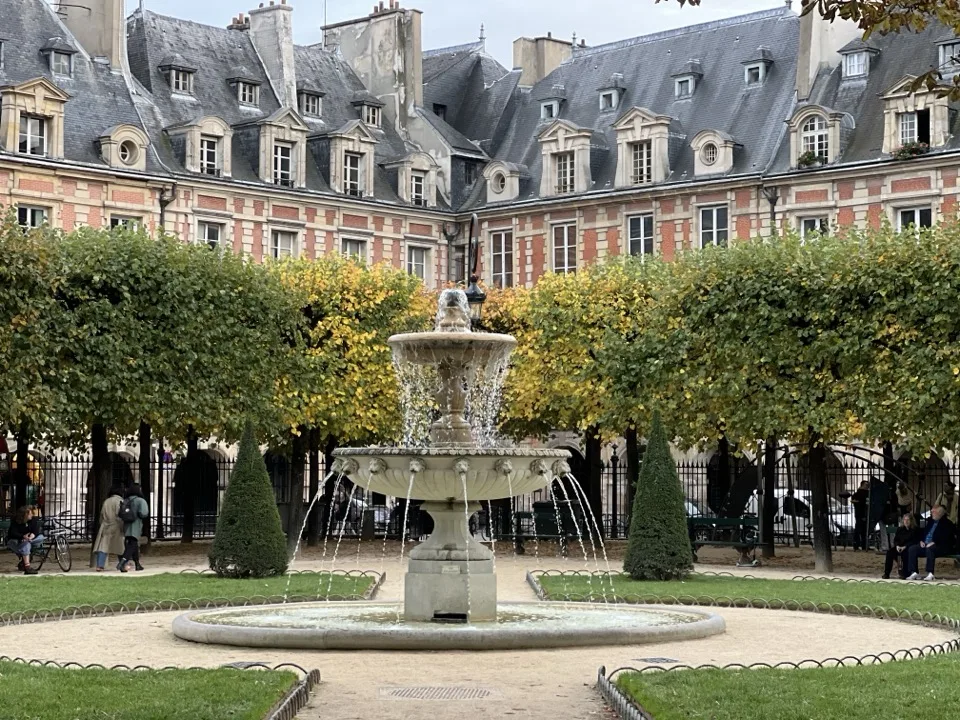
It is beautiful and central, on the Right Bank of the Seine. Do not miss the magnificent Place des Vosges!
Le Marais is made for long walks, and you can easily catch métro line 1 to explore the rest of Paris.
There is plenty going on, even on Sundays, with lots of independent designer shops.
Wonderful museums include the Musée Picasso, the Musée Carnavalet (the history of Paris) and the Maison de Victor Hugo.
For families: there are plenty of little squares and not much car traffic. Children will particularly enjoy the Musée de la Chasse et de la Nature (see my selection of 20 things to do in Paris with children).
Place des Vosges, Paris
Approximate journey times:
To the Eiffel Tower: about 30 minutes by métro.
To the Louvre: about 10 minutes by métro or 25 minutes on foot.
To Montmartre and Sacré-Cœur: about 40 minutes by métro.
To Orly Airport: about 40 minutes by métro; to Charles de Gaulle Airport: about 50 minutes.
Where to stay in Le Marais
This duplex for five has a lovely view and an ideal location. Be aware that it has a spiral staircase, so I would avoid it with very young children.
**** When you book a hotel on Booking by following a link on my articles, it allows me to receive a small commission: it does not change the price for you and it helps me maintain the blog. So thank you very much to those who book the hotels we recommend! ****
This large apartment for six is another excellent option, with typically Parisian décor. It is more expensive, of course, so sharing the cost between six makes sense — perhaps with the grandparents, as we sometimes do.
2 – Stay in the Latin Quarter
The Latin Quarter is the capital’s student and intellectual heartland.
Why stay in the Latin Quarter?
It is another very central neighbourhood, this time on the Left Bank of the Seine.
Enjoy walks towards Saint-Germain-des-Prés or the two nearby islands: Île de la Cité (home to Notre-Dame Cathedral) and the charming Île Saint-Louis.
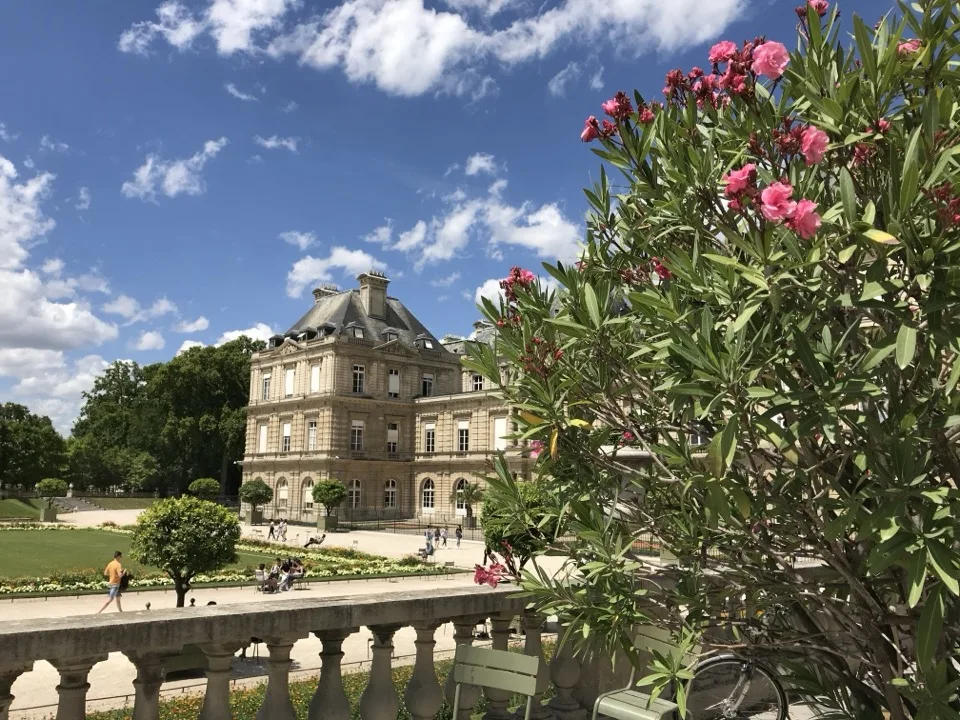
For families: the elegant Jardin du Luxembourg is close by and gives children plenty of room to run around.
Jardin du Luxembourg, Paris
Approximate journey times:
To the Eiffel Tower: about 30 minutes by métro.
To the Louvre: about 20 minutes by métro or 20 minutes on foot.
To Montmartre and Sacré-Cœur: about 35 minutes by métro.
To Orly Airport: about 40 minutes by métro; to Charles de Gaulle Airport: about 50 minutes.
Where to stay in the Latin Quarter
This Latin Quarter apartment is ideally located, a 15-minute walk from Notre-Dame. It has a double bed and a sofa bed.
If your budget stretches further, Hôtel des Grandes Écoles is a charming, elegant hotel with family rooms.
3 – Stay near the Eiffel Tower
The Iron Lady needs no introduction! She is fascinating, and I understand why some visitors want to stay right at her feet. It is often more expensive than elsewhere, though.
Why stay near the Eiffel Tower?
The pleasure of seeing the Eiffel Tower! If you want to go up, book your tickets in advance (see my article on 20 unmissable things to do in Paris).
Excellent museums nearby include the Musée d’Art Moderne, the Musée de l’Homme and the Musée Guimet (Asian art).
For families: take that classic souvenir photo at the Trocadéro, with the Eiffel Tower behind you!
Approximate journey times:
To the Louvre: about 30 minutes by métro.
To Montmartre and Sacré-Cœur: about 40 minutes by métro.
To Orly Airport: about 50 minutes by métro; to Charles de Gaulle Airport: about 1 hour 10 minutes.
Where to stay near the Eiffel Tower
At the higher end, Hôtel La Bourdonnais is a lovely hotel about a five-minute walk from the Eiffel Tower (some rooms have a tower view). Papa Voyage and I spent a night there as a couple, but it also has a junior suite for families.
Hôtel La Bourdonnais
4 – Stay in the 17th arrondissement: Monceau, Batignolles and Ternes
The 17th is a large arrondissement in western Paris. The parts I recommend are:
Around the beautiful Parc Monceau, for a smart, family-friendly area.
Batignolles, with its village-like, slightly bohemian atmosphere.
Around Place des Ternes, particularly the market on Rue Poncelet.
I would avoid the area north of Avenue de Clichy: it is further from the centre and, to my mind, less suited to a family stay.
Why stay in the 17th?
It is a very family-friendly part of Paris with several different atmospheres.
The most useful métro lines for exploring Paris from here are lines 3 and 2. Bus 92 is handy too, taking you through some of Paris’s more elegant neighbourhoods.
For families: Parc Monceau is wonderful. I particularly recommend it with young children.
Approximate journey times:
To the Eiffel Tower: about 20 minutes by métro or bus.
To the Louvre: about 20 minutes by métro, depending on where you start in the 17th.
To Montmartre and Sacré-Cœur: about 25 minutes by métro.
To Orly Airport: about 50 minutes by métro; to Charles de Gaulle Airport: about 1 hour.
I worked in this neighbourhood for three years, and my father had an Italian restaurant here, so I visited often. I think it is a very good choice for families. Why?
Why stay in the 15th?
It is a residential, family-friendly area.
This is south-west Paris, so the Eiffel Tower is never too far away. I recommend staying near métro line 6 so you are not too far from the centre.
For families: you will enjoy the relaxed neighbourhood feel. Show your children Paris’s Statue of Liberty, too (on the Seine near Pont de Grenelle).
Approximate journey times:
To the Eiffel Tower: about 15 minutes by métro, or 20–30 minutes on foot.
To the Louvre: about 30 minutes by public transport.
To Montmartre and Sacré-Cœur: about 45 minutes by métro.
To Orly Airport: about 1 hour by public transport; to Charles de Gaulle Airport: about 1 hour 30 minutes.
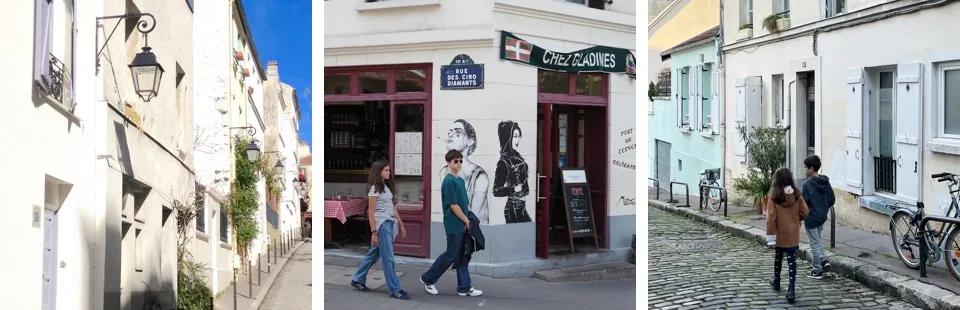
La Butte aux Cailles is where I was born and lived for many years. It is in Paris’s 13th arrondissement, near Place d’Italie, on a slightly hidden hill that gives it a village atmosphere. We also lived here when our son Ticoeur was a baby. I cannot claim to be impartial, but I love it!
Why stay in La Butte aux Cailles?
It is a picturesque, lively neighbourhood, off the beaten track yet unmistakably Parisian.
Although it is not in the heart of Paris, three métro lines serve nearby Place d’Italie (lines 5, 6 and 7), making it easy to get around the city.
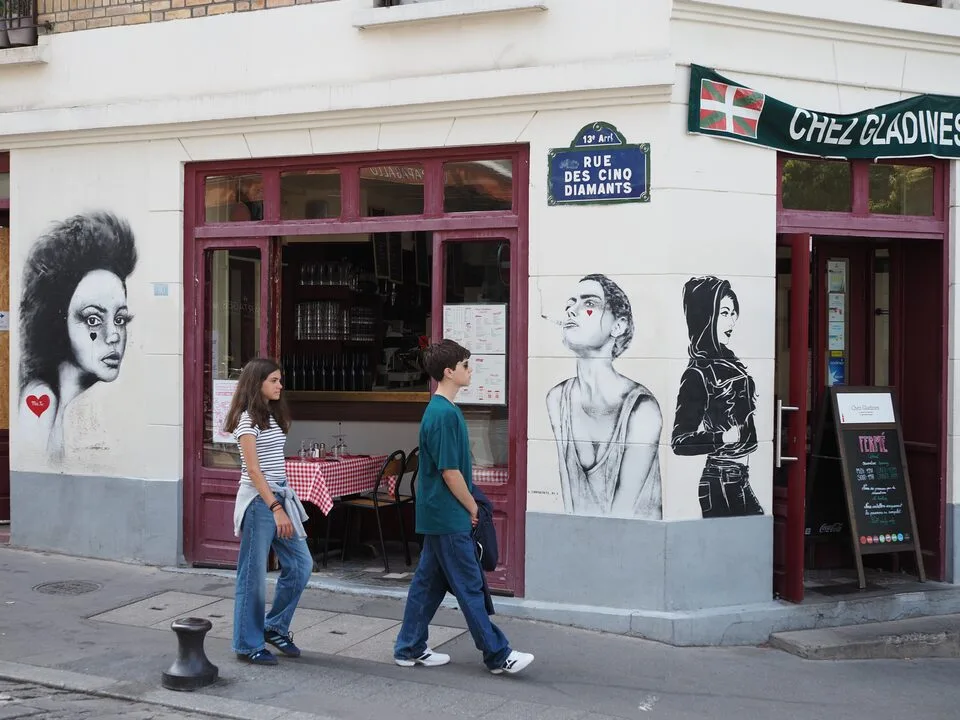
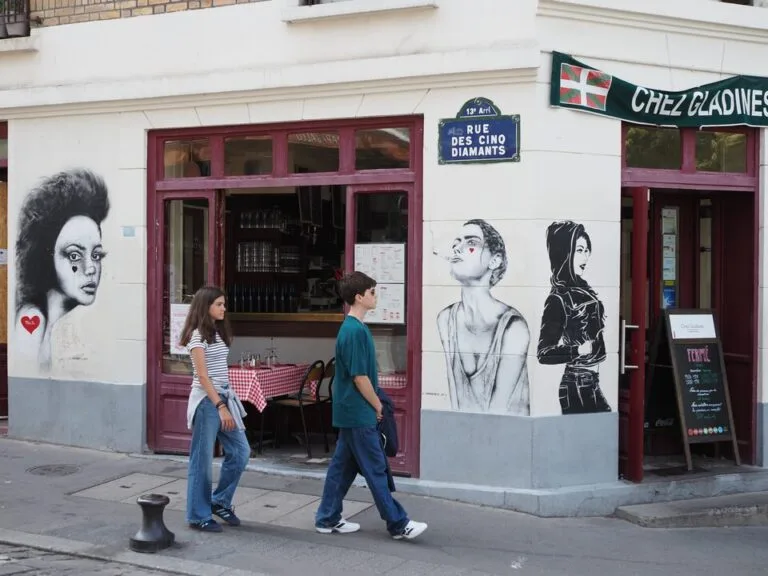
For families: teenagers will enjoy all the street art.
Approximate journey times:
To the Eiffel Tower: about 30 minutes, directly on métro line 6, with lovely views on its above-ground sections.
To the Louvre: about 25 minutes, directly on métro line 7.
To Montmartre and Sacré-Cœur: about 45 minutes by métro.
To Orly Airport: about 40 minutes by métro; to Charles de Gaulle Airport: about 1 hour 20 minutes.
Where to stay in La Butte aux Cailles (13th arrondissement)
The Beauquartier – Butte aux Cailles studio is a practical family-friendly aparthotel-style option, with a kitchen and good value for money.
Now to the 12th arrondissement in south-east Paris. It is mainly residential and family-friendly, especially south of Place de la Nation around Picpus.
Why stay near Nation?
It is further from the centre but very well connected: RER line A gets you to Auber, near the Opéra and department stores, in about 10 minutes. Métro lines 1, 6, 8 and 9 also serve many sights.
For families: I recommend walking along the Coulée verte towards Bastille, following an elevated planted walkway on a former railway line.
Approximate journey times:
To the Eiffel Tower: about 40 minutes, directly on métro line 6, with some scenic above-ground sections.
To the Louvre: about 15 minutes, directly on métro line 1.
To Montmartre and Sacré-Cœur: about 30 minutes by métro (directly on line 2).
To Orly Airport: about 40 minutes by métro; to Charles de Gaulle Airport: about 1 hour.
Where to stay around Nation, Picpus and Bercy (12th arrondissement)
A little further away, between Nation and Bercy, I spotted The People Paris Bercy hostel. It also has private family rooms with bathrooms and a large shared roof terrace. We have often stayed in hostels as a family: they can be a good, more affordable compromise.
Place de la Nation, Paris
***
Our tips for booking a family stay in Paris
Book early for the widest choice and the best prices.
Avoid the busiest periods, when hotels fill up and rates rise: Fashion Week in late September and early October, New Year, and May–June during major trade fairs and Roland-Garros. August prices are often attractive as business travellers and many Parisians leave the capital. The autumn half-term and February school holidays can also be good times.
Check how far your accommodation is from the métro. That said, you can cover a lot on foot: Paris is not as large as London, for example.
Apartment or hotel? I have suggested several apartments because having a kitchen helps keep restaurant costs down. At a hotel, there is no need to pay extra for breakfast: Paris has plenty of delicious bakeries and welcoming cafés!
Home exchange: we have tried HomeExchange in Paris and had an excellent experience. If you are interested, I can refer you so we both earn points. My HomeExchange referral code is christine-f9777.
What about the suburbs? Yes, they can help you find cheaper accommodation or a larger apartment. For me, the key is having a métro station nearby. My two favourite places for a family stay are Neuilly-sur-Seine (line 1: Les Sablons or Pont de Neuilly) and Levallois-Perret (line 3: Louise Michel, Anatole France or Pont de Levallois). Both are quiet, family-friendly suburbs, and lines 1 and 3 are among the best for crossing Paris and seeing the main sights.
Paris with teenagers: 12 things to doOur ideas for things to do in Paris with teenagers: panoramic views, street art, unusual museums, history, shopping and much more.
During our family road trip in Montenegro, we spent 3 days as a family in Durmitor National Park. During our stay, we did some beautiful hikes: easy walks and proper, rather sporty alpine hikes, with routes for all levels! Whatever the age of your children, you can enjoy nature in Durmitor, in north-west Montenegro, between mountains, forests, canyon and glacial lakes.
When we travelled: the third week of July. We had good weather. In terms of visitor numbers, it was lively but very pleasant, without too many people.
Children’s ages: for this trip, we were with our Titpuce, aged 14. Ticoeur was not with us because he was doing an internship in Germany.
Below, I am sharing all the details of our family hikes in the magnificent natural setting of Durmitor National Park.
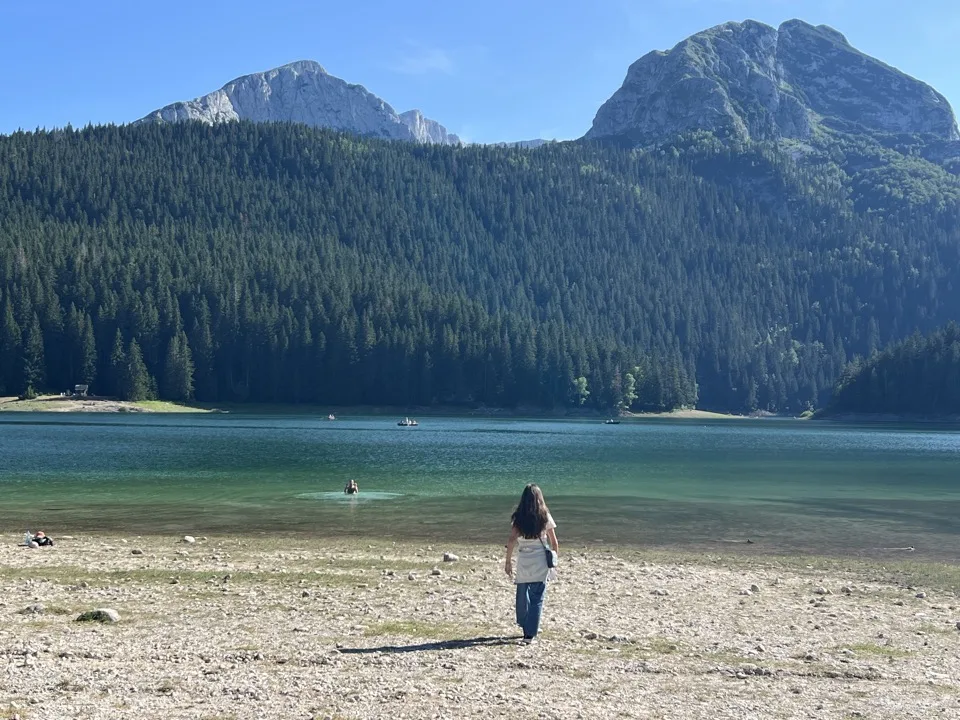
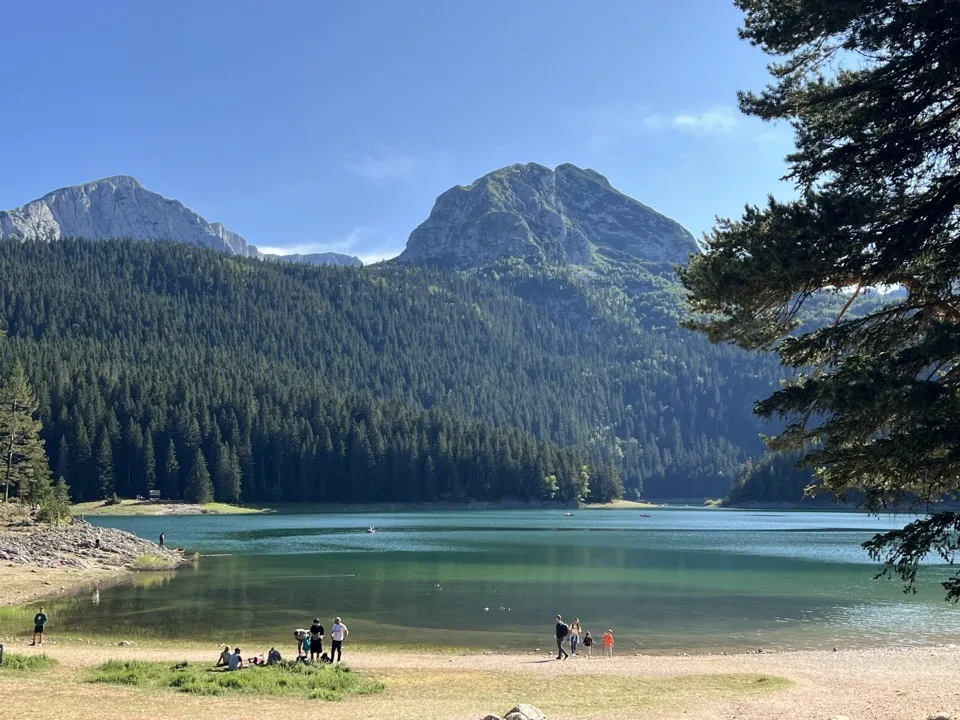
Black Lake, Durmitor National Park
Our programme in Durmitor National Park
We spent 3 days and 2 nights in Durmitor National Park:
Day 1: arrival in the afternoon. Loop around Black Lake.
Day 2: ascent of Bobotov Kuk, then a short hike to Tara Canyon towards the Curevac viewpoint.
Day 3: head to Durdevica Bridge for more views over the Tara River, then leave for our next stop: the Grebaje Valley.
Where should you base yourself to visit Durmitor National Park?
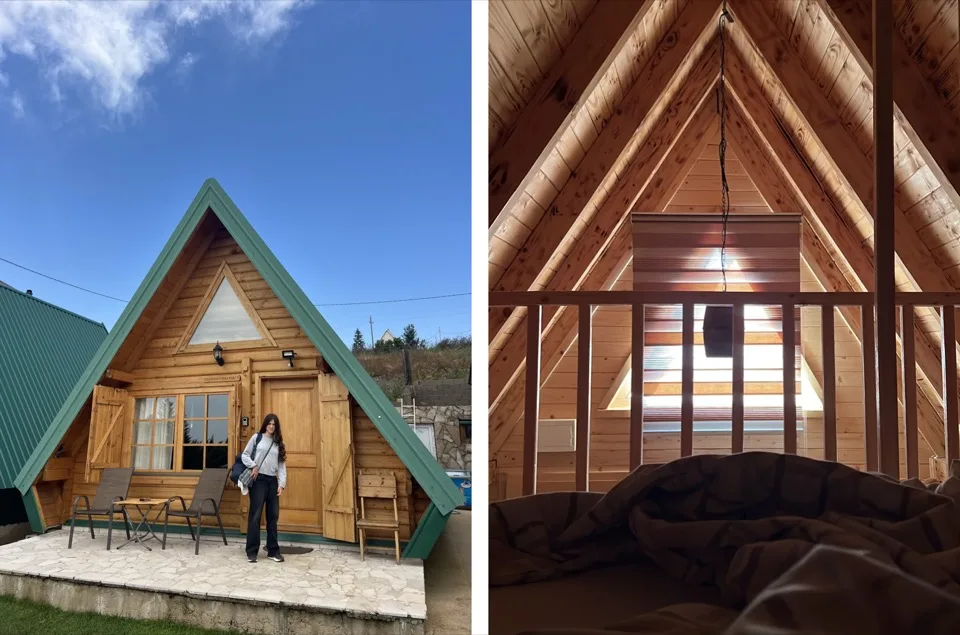
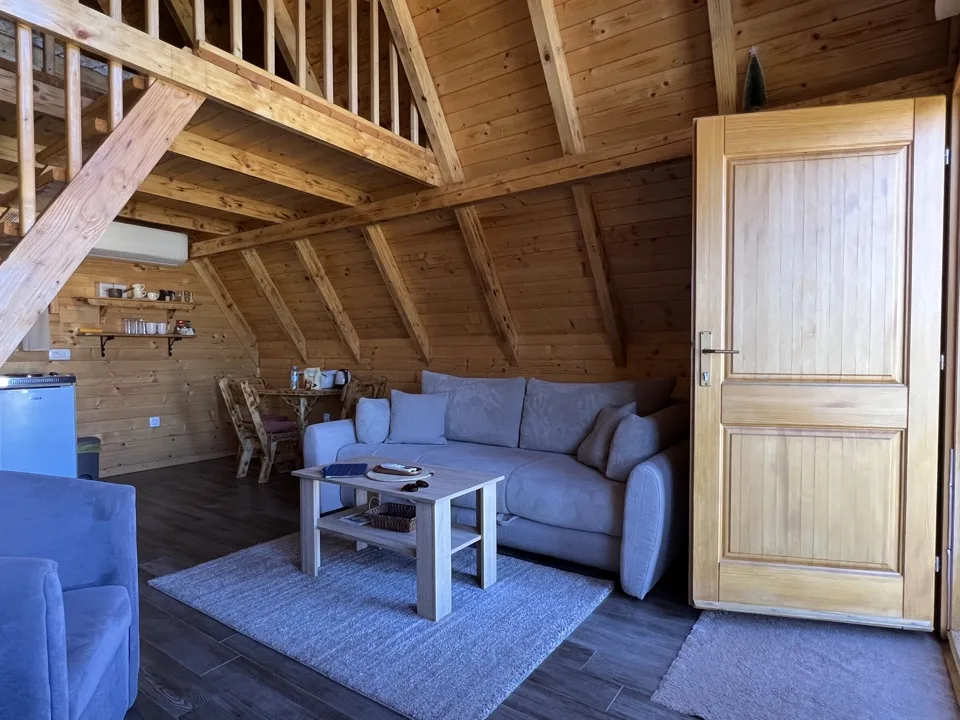
The main small town inside Durmitor National Park is Zabljak. It is the ideal base for enjoying all the possible day hikes. Most of the accommodation is therefore in and around this town. You will see that there are many options for sleeping in wooden A-frame huts. At first glance, all these huts look quite similar, but some are newer and therefore in better condition than others.
As for our choice, we wanted to sleep slightly outside town. We were about 3 km from Zabljak. Our hut was very comfortable in terms of bedding, nicely decorated and modern: Vila Durmitorska bajka. We highly recommend it. The location was excellent for reaching the different hiking trailheads. We were not isolated, as there were other huts like ours in the same place. Our host was friendly and lived right next door. Access by car is very easy and you can park right in front of the huts.
**** When you book a hotel or a car by following a link on my articles, it allows me to receive a small commission: it does not change the price for you and it helps me maintain the blog. So thank you very much to those who book the hotels we recommend! ****
Our 3 family hikes in Durmitor National Park
First of all, do not forget to buy your annual pass online for Montenegro’s national parks. It costs 13.50 euros per person in 2026, and is free for under-15s. It is more economical than paying 5 euros per day at Durmitor National Park.
1/ Black Lake: the favourite family hike!
Loop around the lake: around 40 min for 3.6 km. Level: easy.
The walk around Black Lake (Crno Jezero) is a very easy hike, more like a woodland walk, ideal with children, even young ones, because there is almost no elevation gain and the scenery is magnificent right from the start of the loop. You immediately fall for the emerald and turquoise colours of the water. To reach the lake, you need to walk 30 minutes from the centre of Zabljak (which is what we did), or 10 to 15 minutes from the large paid car park. Then the loop takes around 40 minutes. Some families do not walk all the way around and simply settle down facing this superb setting. Others swim there. The path is flat for a good half of the loop, with a few short uphill sections that are not difficult. Here it is in pictures: