

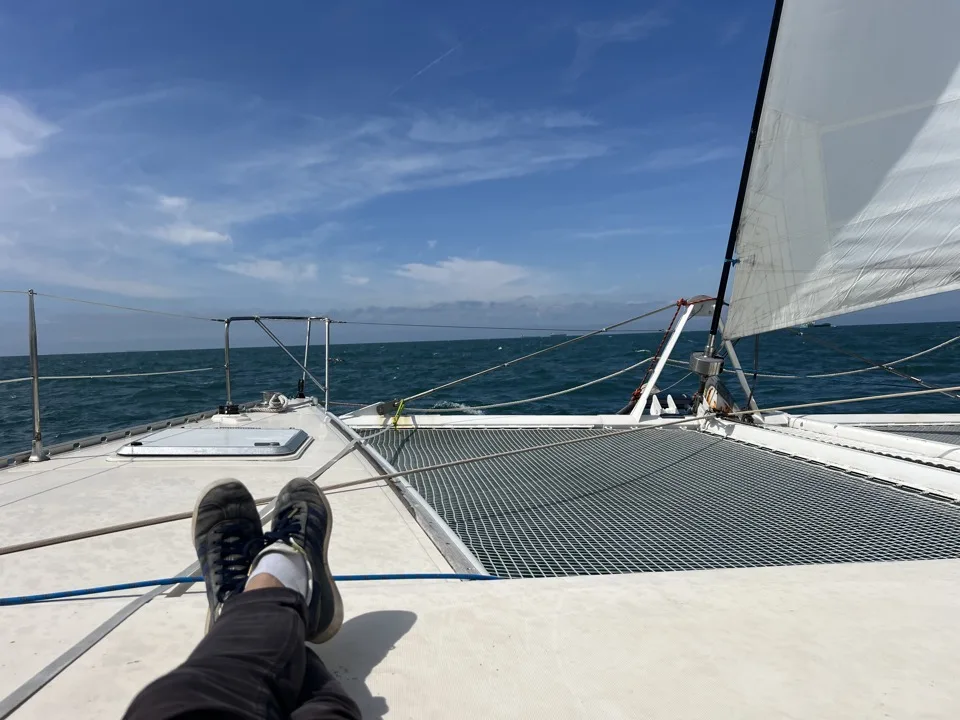
Last weekend, we crossed the Channel under sail, by catamaran, from Boulogne-sur-Mer to Dover. Travelling by sailing boat was our most beautiful transport experience between France and England. Just imagine: crossing the Channel powered by the wind! What a wonderful feeling! No noise, no pollution and the pleasure of being closer to the sea. It is a gentler, more eco-friendly alternative to the traditional ferry. This sailing crossing is perfect for foot passengers or cyclists like us. Even better, you can take part in the sailing if you want to create even more memories. As my Ticoeur loves sailing, of course he volunteered and had the pride of taking the helm for a large part of the crossing, under Captain Andrew’s watchful eye. But it is not compulsory! No sailing experience is required!
How did I get the idea to book this catamaran crossing? I had been looking for a company offering a sailing link across the Channel for a long time, but there was nothing. A few months ago, SailLink, a young English company, launched and now offers the very first wind-powered passenger transport between France and England. When I discovered this lovely alternative to the big classic ferries, I kept the idea in mind as a surprise for my teenager, who loves sailing so much. So, to celebrate the end of his GCSEs, I booked two tickets for this incredible experience, with an original mode of transport that turns the journey into an adventure! From that idea, I then built our little trip cycling along the Côte d’Opale in Northern France. You can create your own trip according to your wishes! You could come and visit Boulogne-sur-Mer or continue by train to Paris!
We did use this sailing service on our way back from France, between Boulogne-sur-Mer and Dover (you can do either way or both ways). I’ll share all the details below and perhaps make you want to try this slow-travel adventure too!
The details of our catamaran crossing between Boulogne-sur-Mer and Dover
Departure from Boulogne-sur-Mer:
The meeting point is on the quays between the fish market and Nausicaa, the largest aquarium in Europe. It is very convenient because it is central. Andrew, the catamaran captain, immediately made us feel at ease: he gives an impression of both friendliness and seriousness. He welcomed us aboard Echoes, a 17-metre catamaran. He put our bikes in the boat’s cabin. We were the only cyclists that day. The other passengers were travelling on foot.
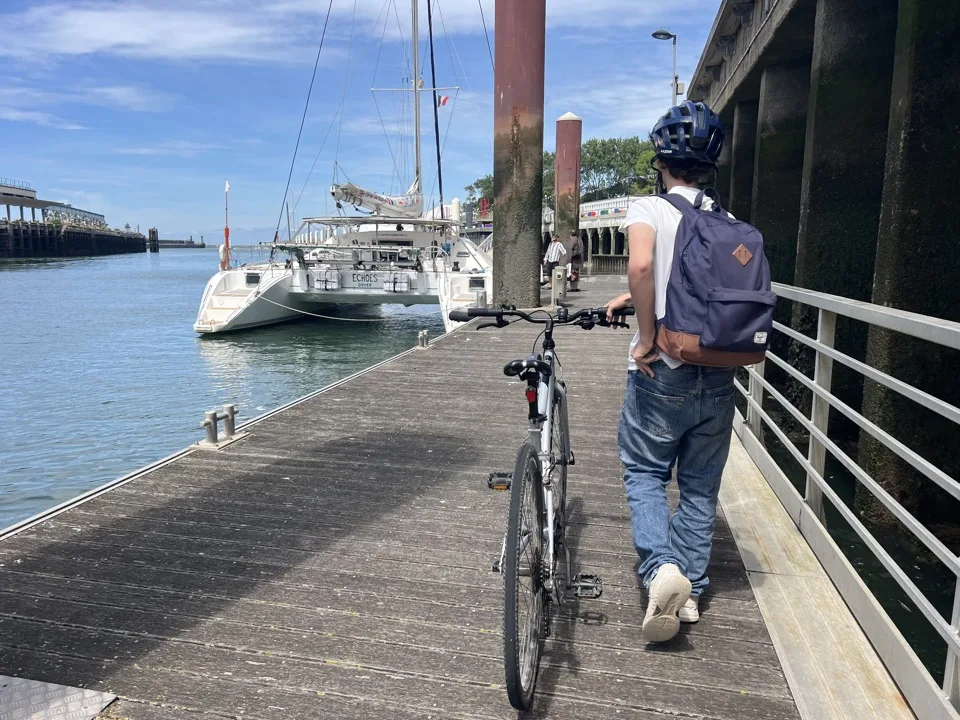
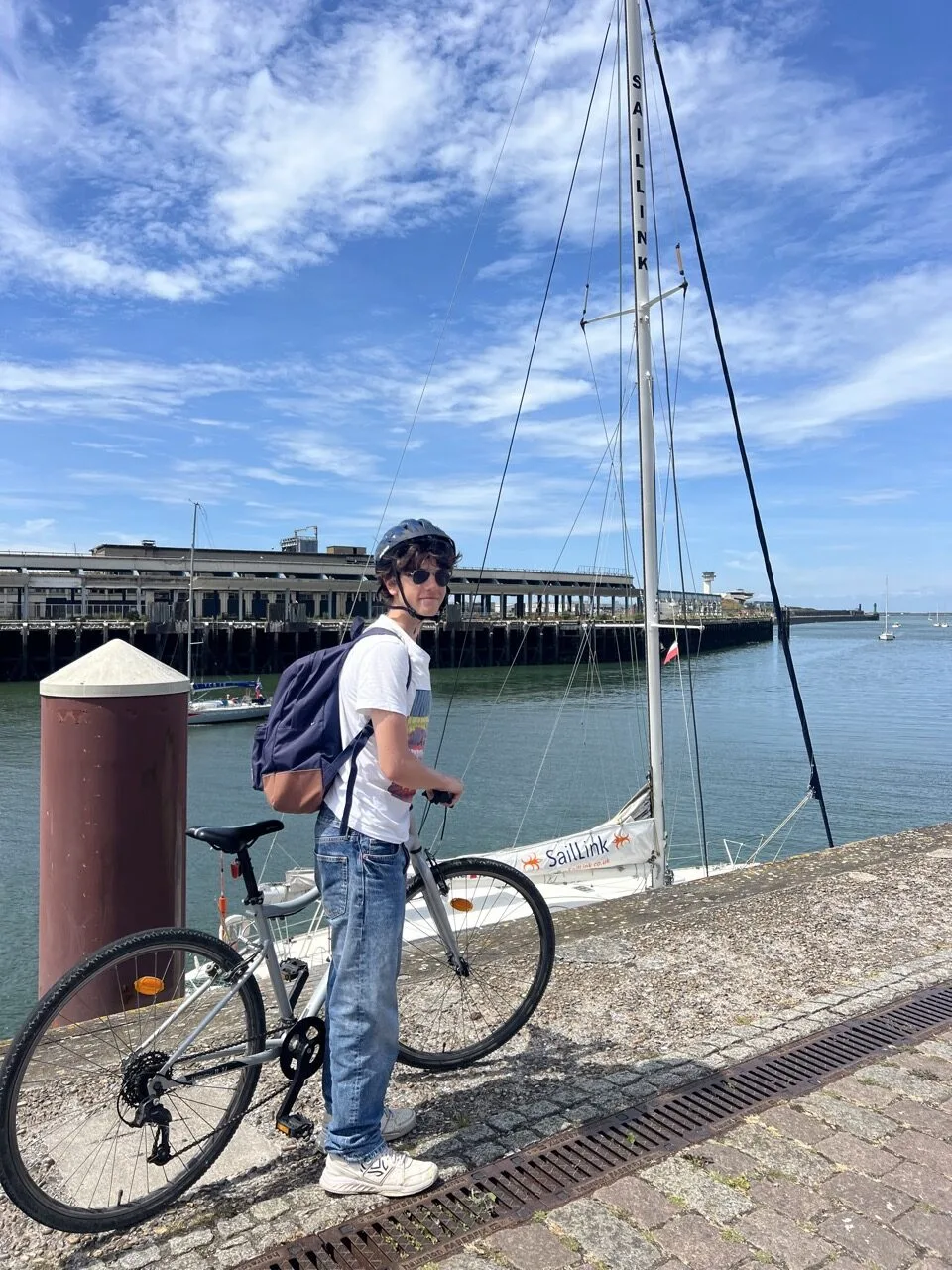
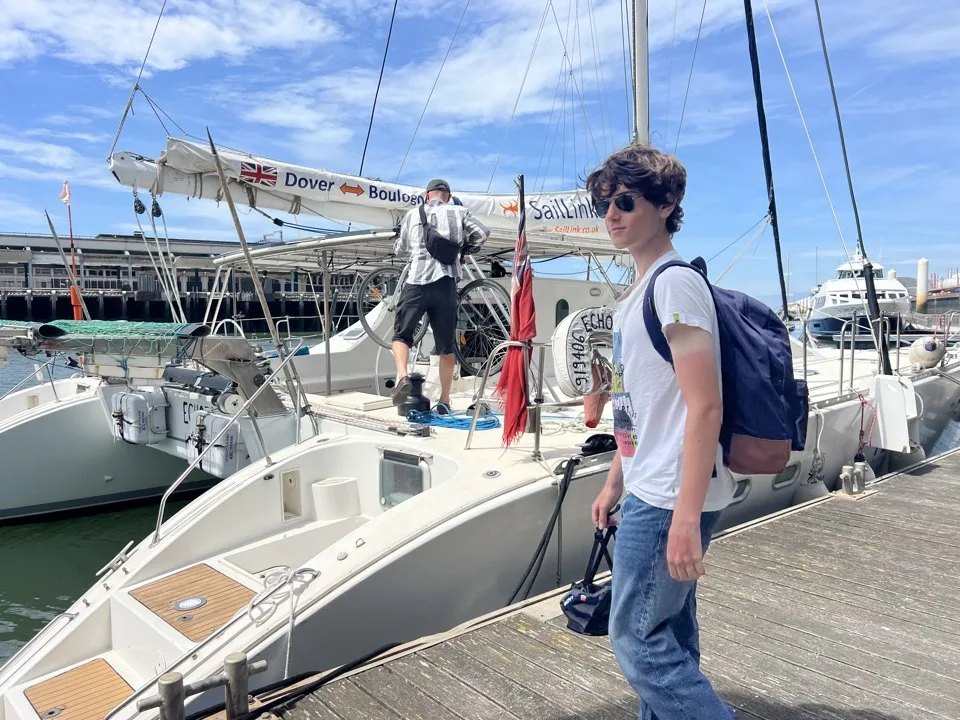
Compared with the big ferries, departure is very smooth:
- central and quick access via a pontoon: you feel as if you are on holiday before you have even left!
- meeting time 45 minutes before departure
- few passengers (maximum 12)
- passport control with a small team of police officers. Check the official French government site for requirements.
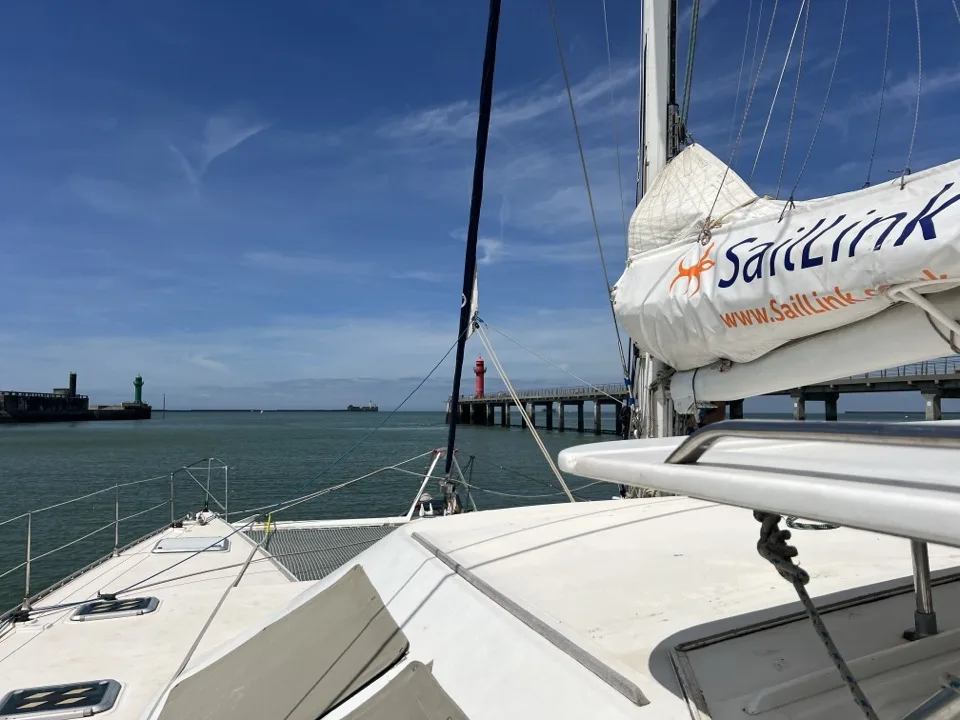
The crossing
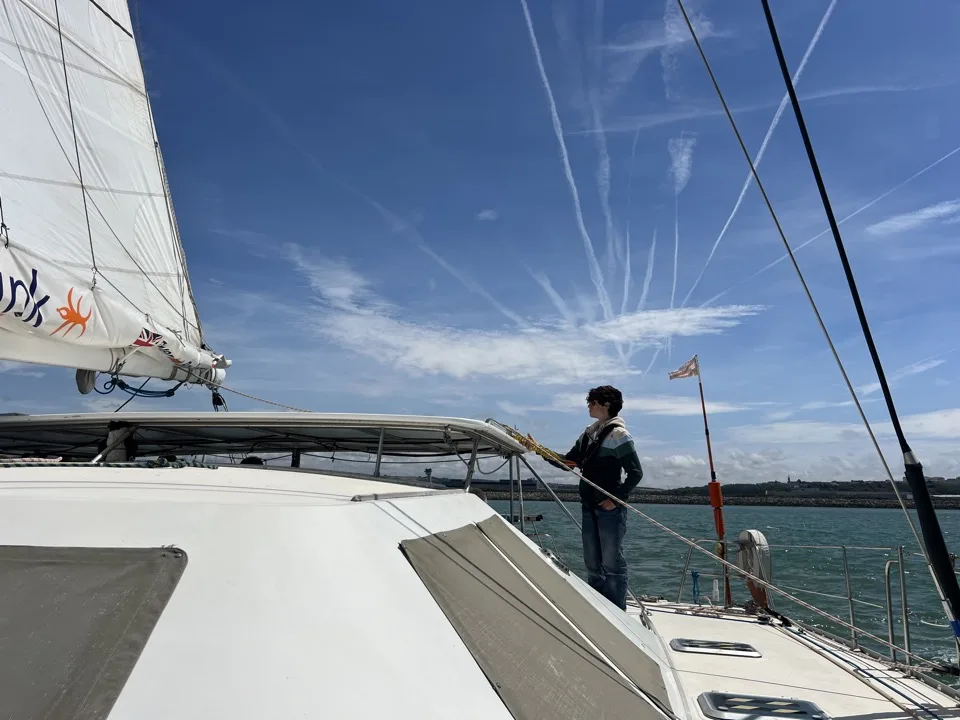
Andrew gives us a life jacket and a lifeline so we can clip ourselves onto the boat when moving around on deck. We leave the harbour in beautiful sunshine.
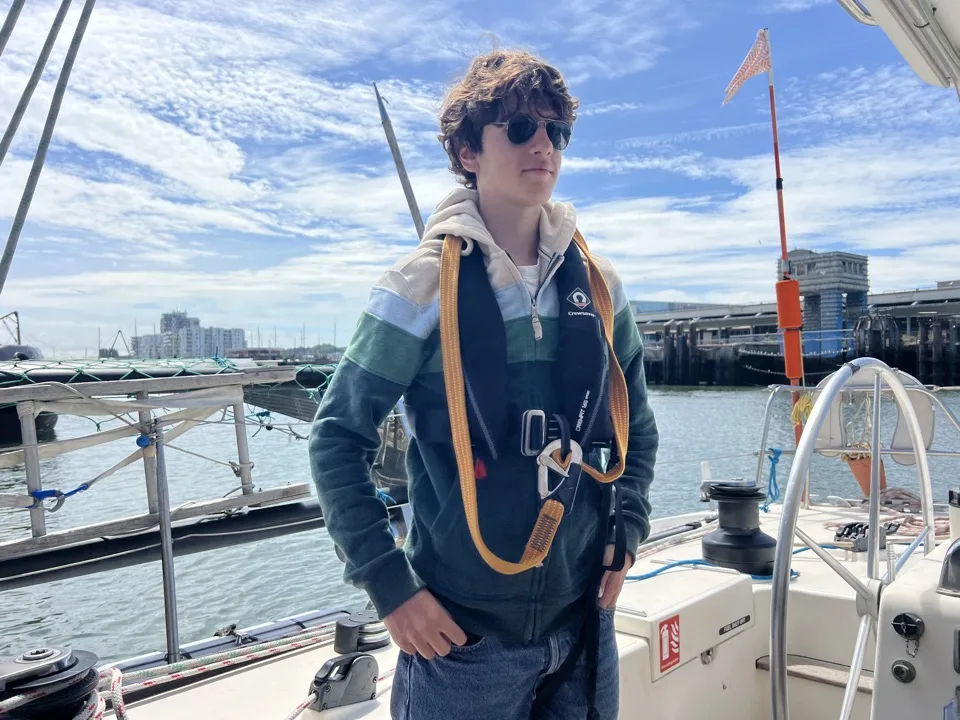
On board, we are 10 passengers. We chat and quickly get to know one another. There are several keen travellers, but apart from Ticoeur and me, no one has sailing experience, and that is absolutely no problem! We share the crossing with a Scottish traveller, a woman from Devon, a group of friends from Dover and a French couple. The Scot and the English passengers had already done the outward journey on the catamaran two days earlier. They tell us they loved it and that we are going to be won over. The Scottish passenger also says he was the only person to feel seasick on the outward crossing, but he thinks it was the fault of a bad coffee he had at London station ;-). Even so, he found the experience incredible and was looking forward to crossing the Channel again with no coffee in his stomach! Experiencing this adventure in a small group creates human connections during the crossing. I would never have spoken to strangers on a large ferry!
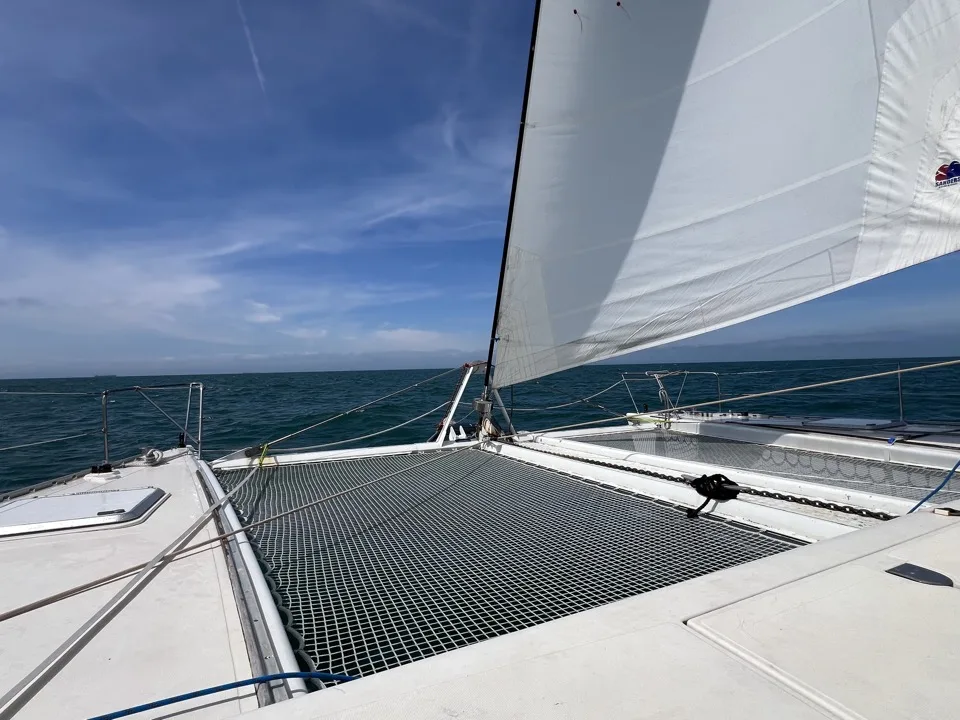
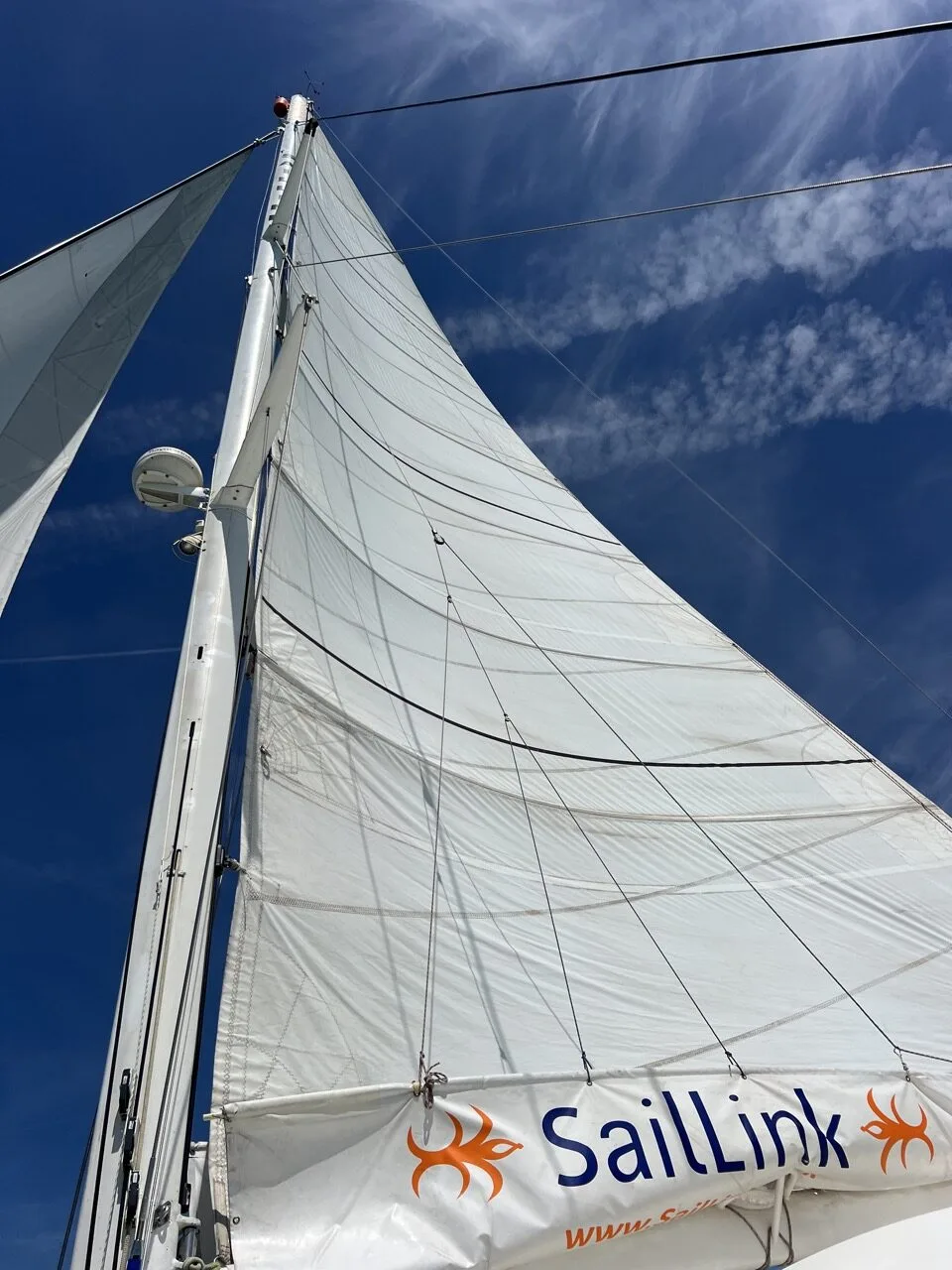
As we leave Boulogne-sur-Mer harbour, all willing passengers help hoist the sails. I would say we have about 20 knots of wind (Beaufort 4): plenty of power! A lovely, efficient wind, just as we like it!
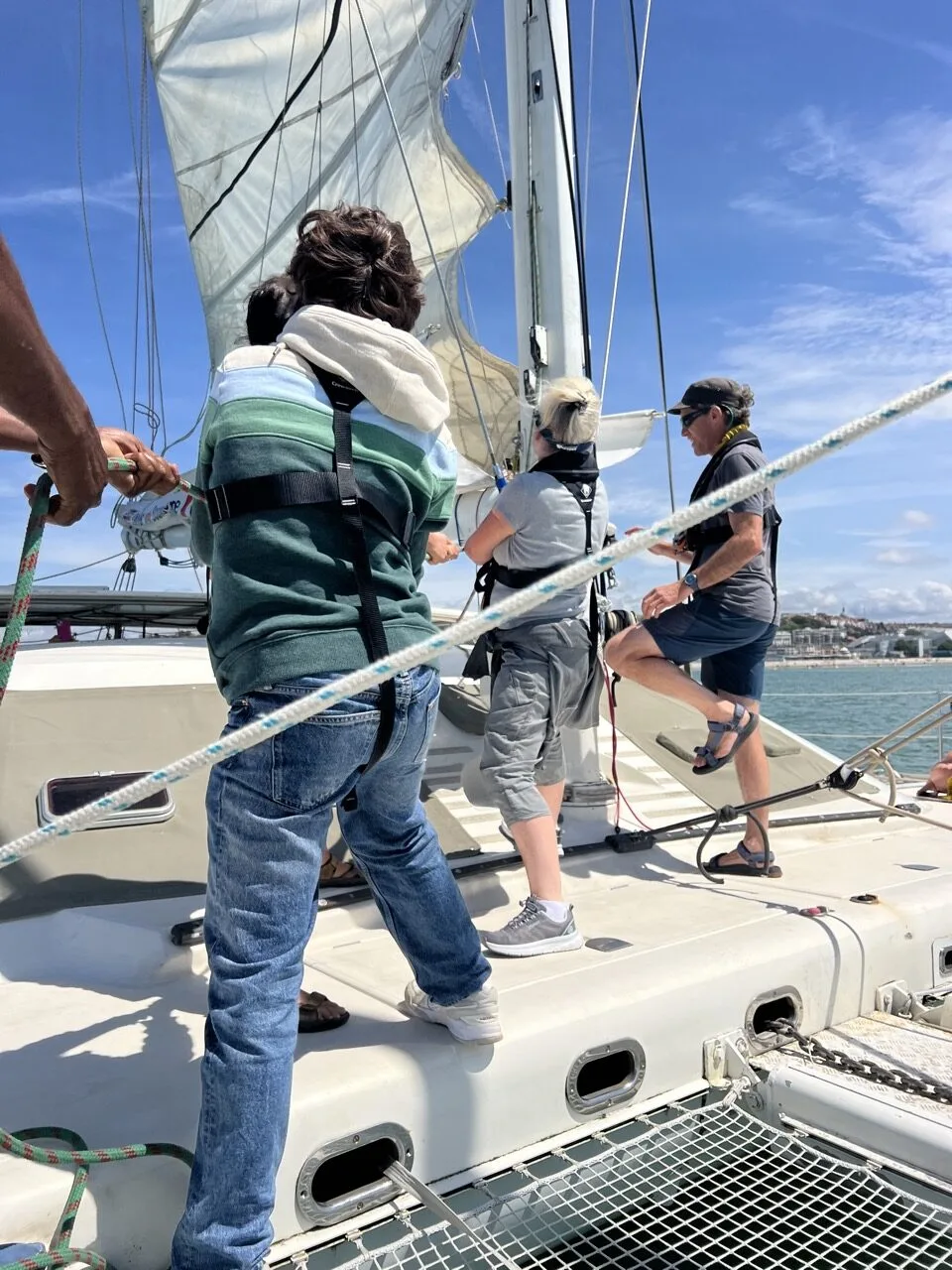
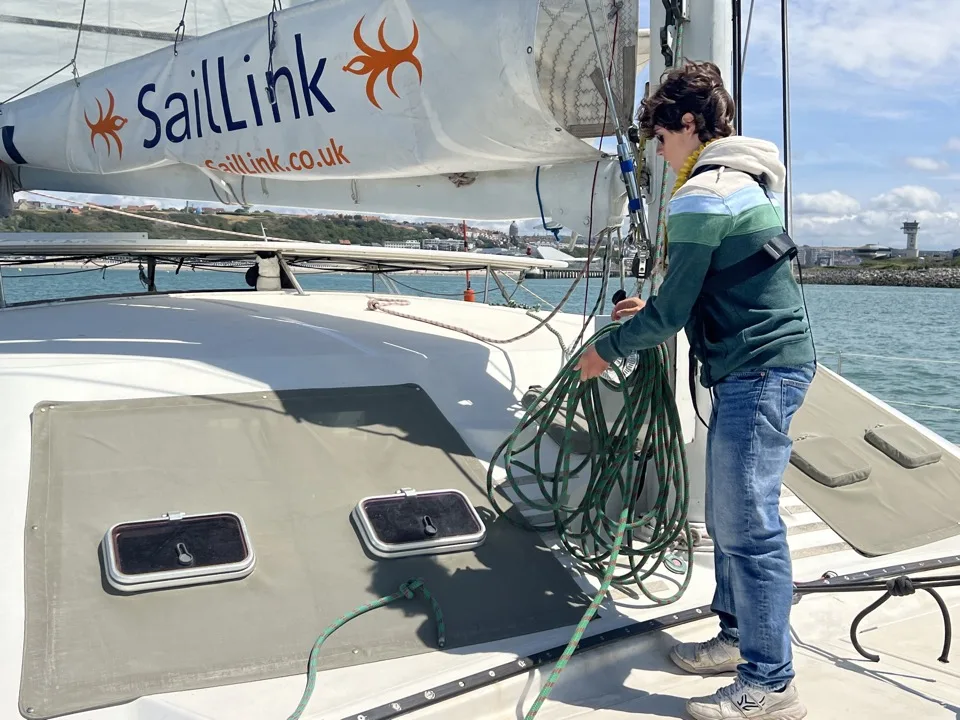
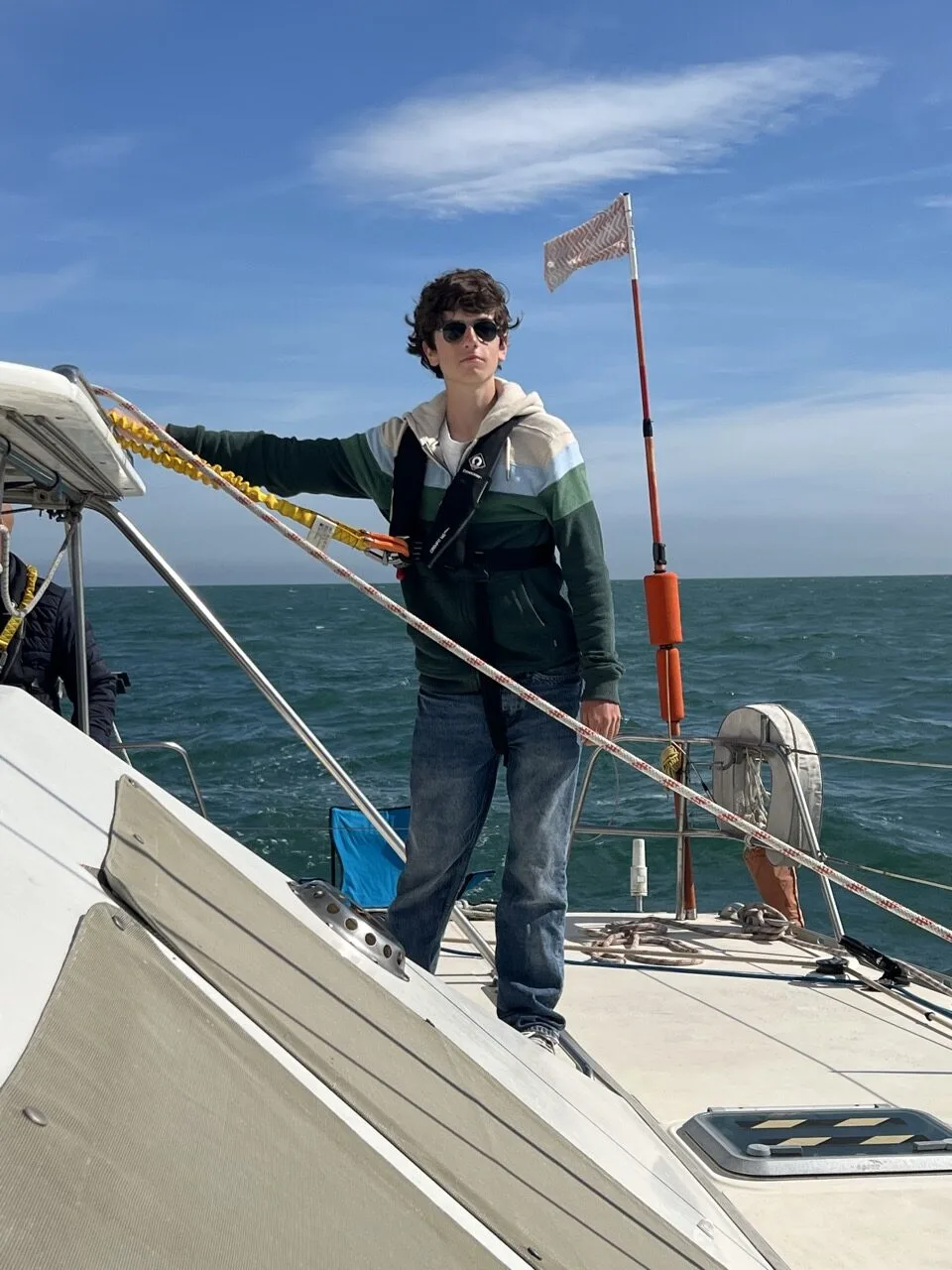
Once the sails are up, Ticoeur and I settle at the front of the boat for the views and sensations. Most passengers stay quietly seated in the cockpit. As I said, they are not used to sailing, and with the lovely wind we have, perhaps they prefer to remain on the benches rather than venture onto the deck. After an hour, Andrew offers Ticoeur the chance to take the helm, which he gladly accepts! In the end, my Ticoeur steers the boat for a good third of the journey! A wonderful experience! It is different from his little Laser, but he does it very well! Andrew checks that Ticoeur keeps the right course despite the waves and the tidal current. Apart from that, my teenager handled it brilliantly! He can now say he knows how to cross the Channel! My gift idea was a success!
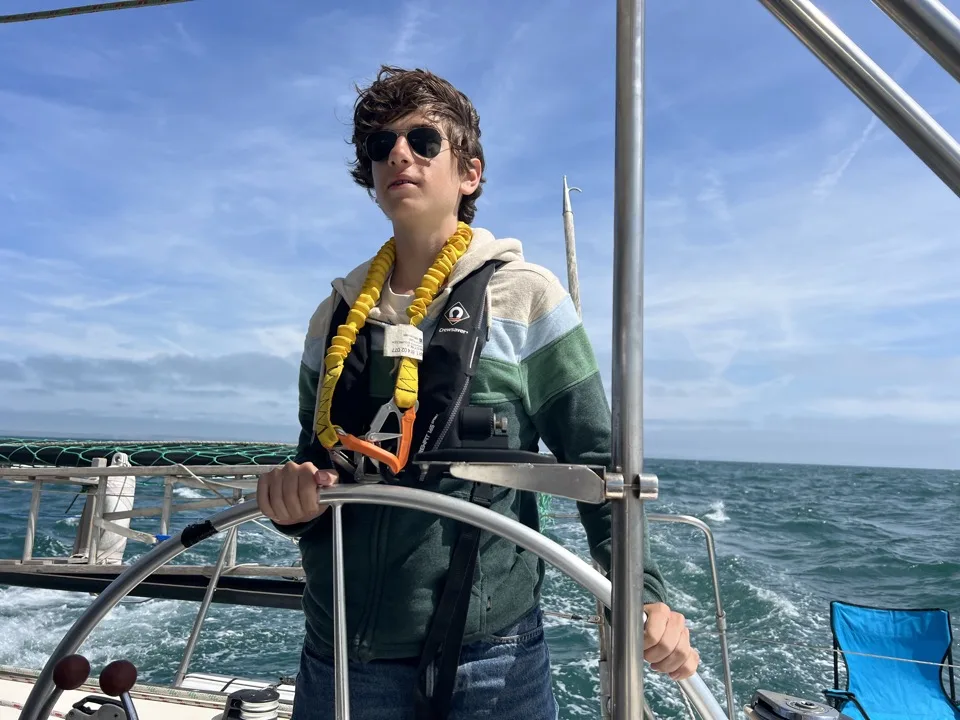
In the middle of the Channel, the waves start splashing me, so I move to the rear part of the deck. It gives me another point of view and lets me watch Ticoeur at the helm.
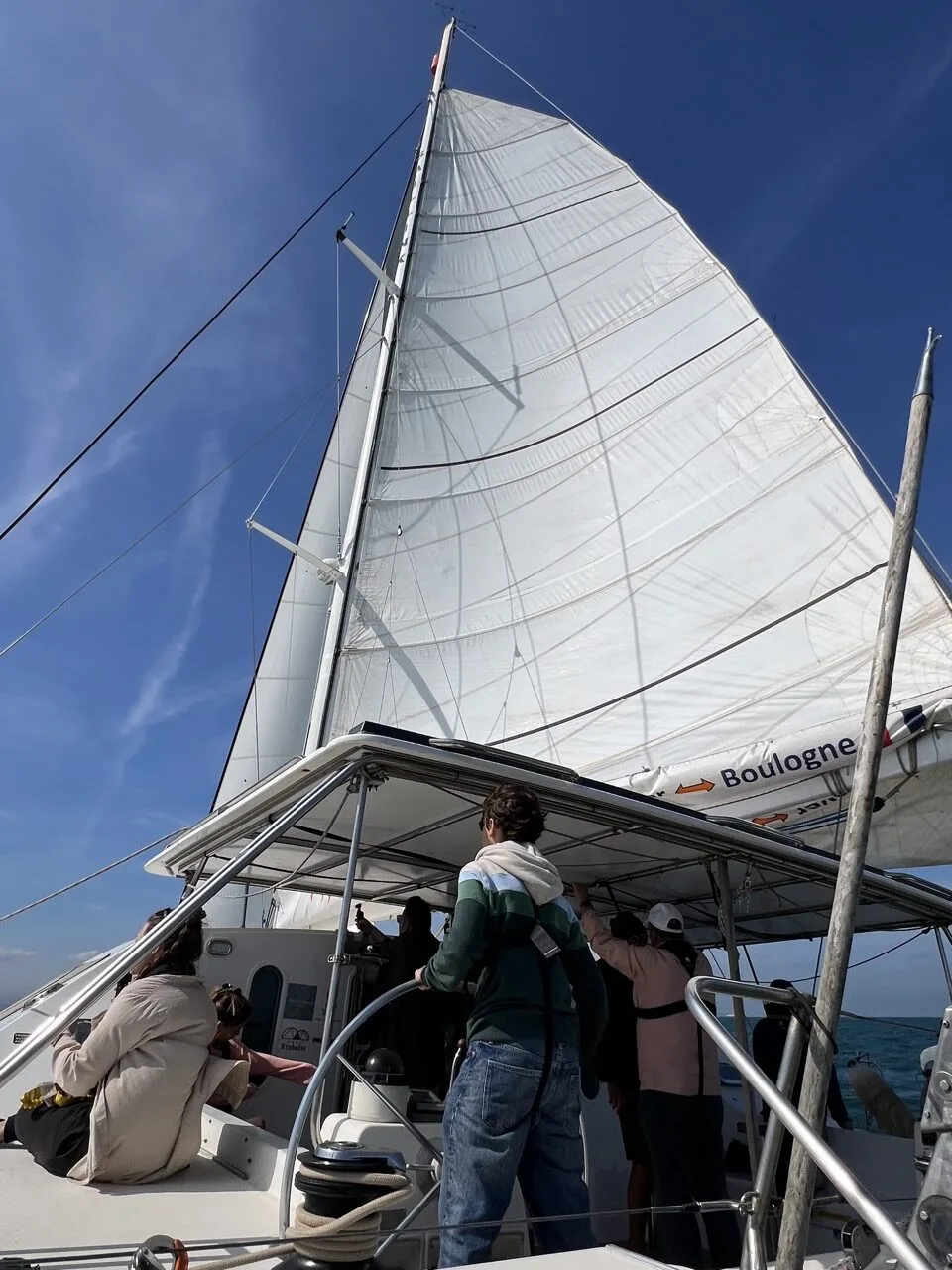
We make good speed. It takes us only 4 hours to reach Dover! And we do not feel the time passing at all because the experience is so enjoyable. Those who had made the journey in the opposite direction a few days earlier had even been lucky enough to encounter dolphins! Sometimes, you can also spot seals. But of course, there is no guarantee: these animals are usually very shy.
Arrival in Dover
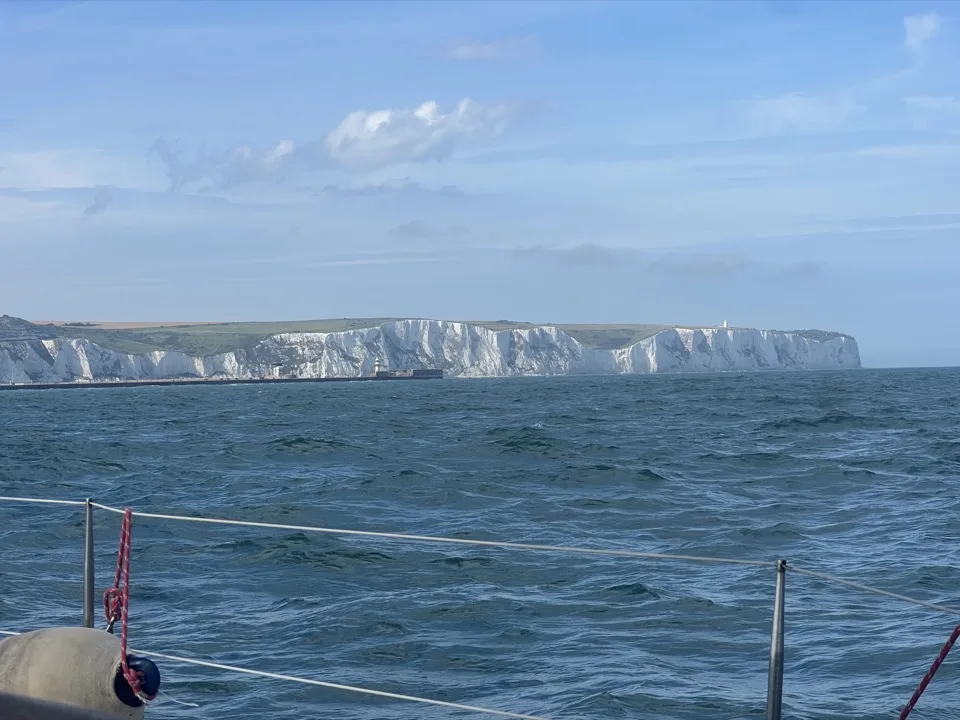
Arriving in England with a view of the chalk cliffs of Dover is always a beautiful sight. It is even more magical when approaching under sail! Arrival is very smooth and quick. We enter the small marina, not the large port where the ferries are. Two British police officers come aboard to check our passports, and then we can disembark! The marina is very central, so we only have to cycle 5 minutes to our car.
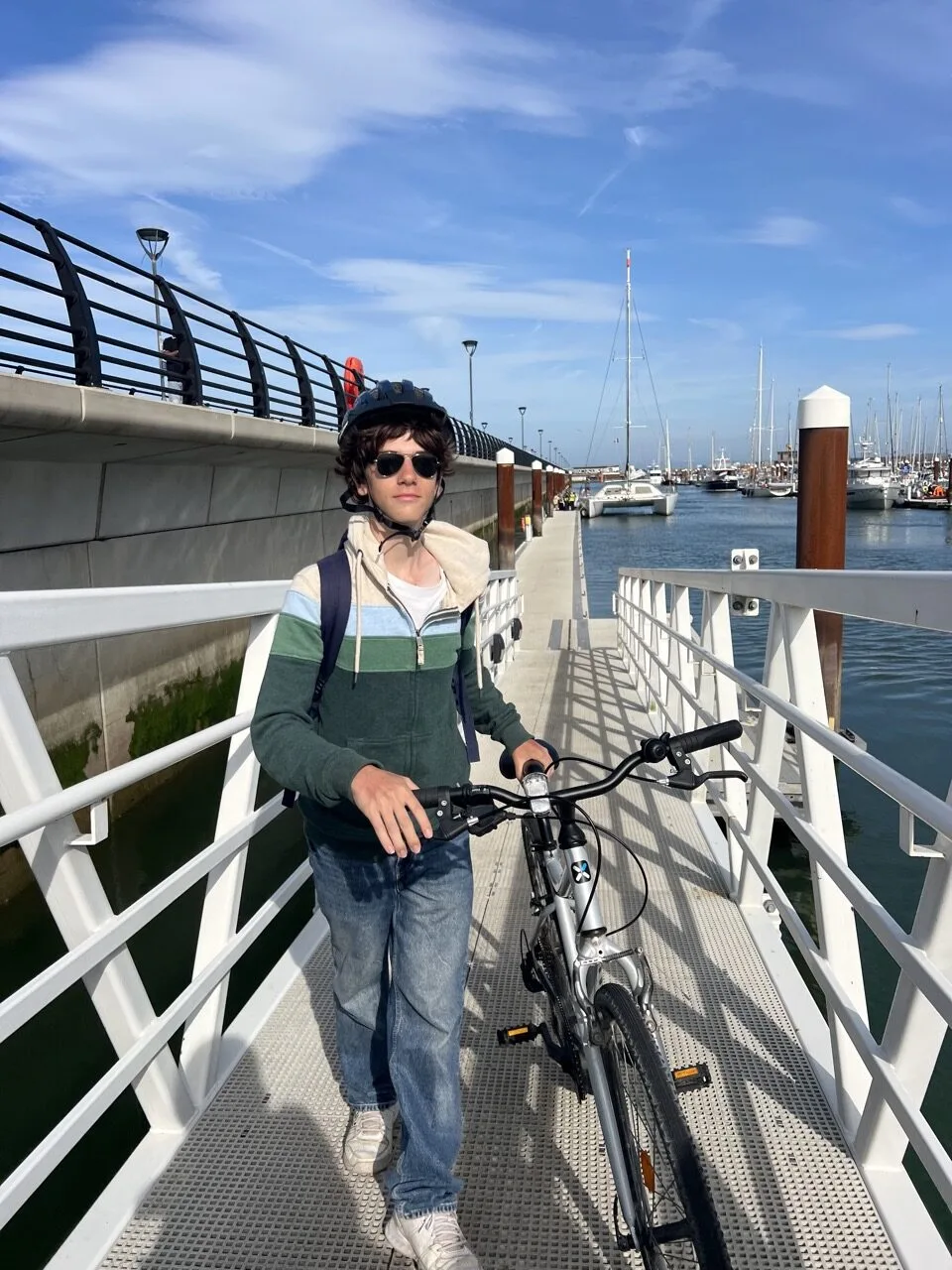
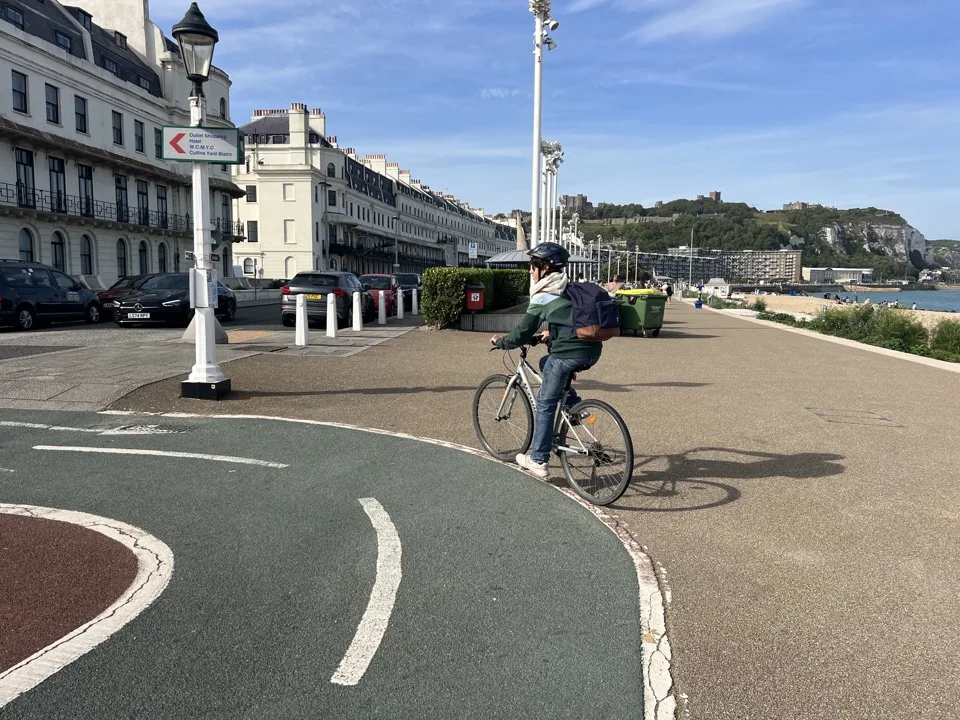
Parking in Dover: I had parked in the outdoor St James Shopping Centre car park, convenient and not too expensive, close to the marina.
The other passengers walked to the station to continue their journey by train, some to London and others to Canterbury.
Why did we love it?
- My teenager’s opinion: he loved taking part in the sailing and is proud to have helmed a large sailing boat offshore in the Channel! Ticoeur is usually sailing Ilcas in our local sailing club, so it really was the perfect gift for him! But I think it could appeal to children and teenagers in general because it is a beautiful adventure, close to the sea and 100% nature!
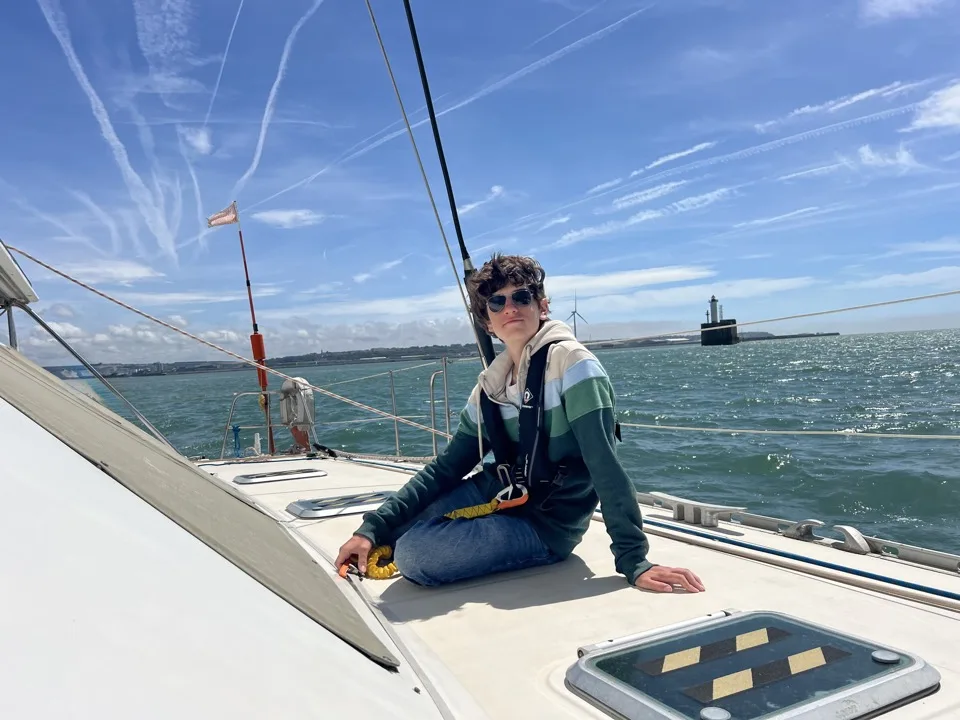
- My opinion: a huge favourite! I wanted to cross the Channel under sail to make Ticoeur happy, but I loved it just as much as he did! It feels like being on holiday and so close to the elements. On deck, in a small group, it is truly a memorable experience. I did not see the 4 hours pass, and this crossing gave me a real feeling of freedom!
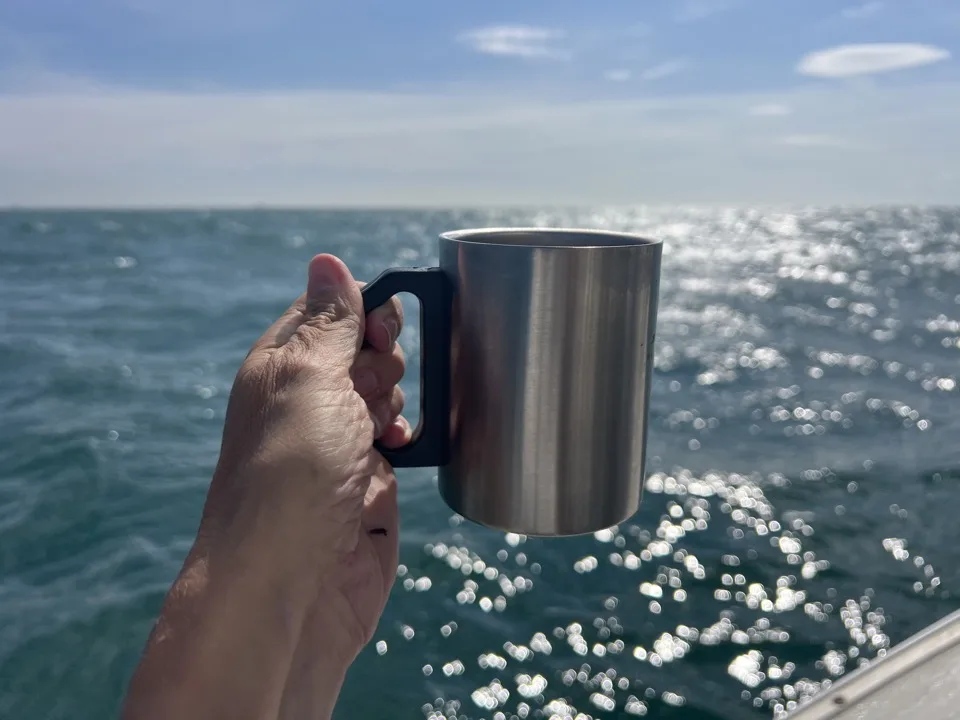
Crossing the Channel by catamaran: our tips and practical information
The route: from where to where?
SailLink sails between Dover and Boulogne-sur-Mer. They are simply the only company offering a passenger catamaran service to cross the Channel, so there are no other destination options for now. At the same time, I think Dover and Boulogne-sur-Mer are very good choices because:
- I like that the catamaran is not on the Dover-Calais route, otherwise we would be right next to the big ferries! Between Dover and Boulogne, traffic was very quiet.
- Boulogne-sur-Mer and Dover are both interesting destinations (see below for my weekend suggestions).
- The Channel is not very wide at this point. We live near Portsmouth: sailing to France from there would take a whole day! I think I would enjoy it, but I am not sure there would be a market for it!
Duration depending on the wind:
On average, the crossing takes 4 to 5 hours, but it depends on wind strength. We were very lucky with efficient wind. It took us 4 hours. Note that if the forecast wind is too strong, the crossing is cancelled (in that case, you can be refunded or travel on a later date). And if there is no wind at all, which in my view is the worst-case scenario, you unfortunately have to use the engine, which obviously loses some of the charm, even though the catamaran setting and the closeness to the water are still advantages compared with a ferry. Fortunately, windless days are rare.
If you book a few days ahead, I recommend the free Windy app to check the wind forecast.
Seasickness:
This is the question I was asked most on Instagram. Everyone reacts very differently, so it is hard to say. Still, I can share my experience and a few tips:
- A catamaran is more stable than a monohull sailing boat, so it heels very little, if at all.
- I get travel sick in cars, on TGV trains if I sit upstairs, on ferries and even on a river boat on the Seine! So I thought I might be prone to seasickness on a sailing boat, but not at all! You know Papa Voyage is a sailing fan, so we have often rented sailing boats. I was nervous the first time, but nothing happened! In my case, breathing the fresh sea air and looking at the horizon work very well. I have never been seasick on a sailing boat! Yet I do feel sick on motor boats. I think it is the smell of the engine that makes me ill, and also the movement, which feels less natural. On a sailing boat, you move with the sea, you live the motion: for me, it works!
- However, be careful: I never go down into the cabin, and I do not recommend it if you are sensitive! For example, plan to go to the toilet before the crossing so you do not need to go inside the catamaran. I even sent Ticoeur inside to fetch my jacket. A few minutes inside can tip me over, and once nausea sets in, it is hard to get rid of.
- In our group, only one passenger felt seasick, only on his outward journey. He thinks his mistake was drinking coffee. I also find that coffee can make you nauseous when travelling. I also think he did not look at the horizon enough. But he managed very well on the return. No one was ill.
- In any case, it is important not to have an empty stomach; eating something light is ideal. And you must not get cold. So bring several layers just in case.
- The waves: there were few near the coasts, then more offshore, but of a pleasant size. No strong swell. To get a better idea, see my video:
Timetable and prices:
SailLink operates from April to the end of September. Days and times may vary and depend on the tide. I will let you check their sailing calendar.
For Ticoeur and me, I paid:
- £85 for me.
- £45 for Ticoeur (11-16 fare). For under-11s, it is £30.
- £10 for each of our bikes.
I think it is a very affordable and fair price for the quality of the experience. If you have ever done catamaran trips on holiday, you know they are expensive. Here, it is half a day of sailing in a small group: you get the boat trip and the transport between England and France, both in one!
The return trip:
If you book a return trip, there is a 10% discount on your tickets. Why did I not choose this option? Several reasons in my case:
- I wanted it to be a surprise and a unique adventure for Ticoeur. The perfect final of our mother-son getaway!
- The Dover to Boulogne-sur-Mer timing did not suit me that day (the time changes with the tide): it was too early, knowing that we live 2h20 from Dover.
- Uncertainty: I did not know what to expect, so I preferred to test it on one leg. I was apprehensive about open sea: even if the Channel is not the Atlantic, I was not reassured by the idea of not seeing the coast for a while. When we usually sail, we always follow the coast, and that is reassuring. In the end, I did not feel stressed for a single minute, even offshore, so now I am ready for another crossing!
How did we do the outward journey? By classic ferry between Dover and Calais with P&O Ferries, as foot passengers with our bikes. The crossing takes 1h30, but it is less pleasant and the waiting time before boarding and after disembarking is long for cyclists and pedestrians. Let’s say it was practical for our cycling project on La Vélomaritime between Calais and Boulogne-sur-Mer. It allowed us to complete this triangle:
- Dover -> Calais (by classic ferry)
- Calais -> Boulogne-sur-Mer (by bike, on The Vélomaritime)
- Boulogne-sur-Mer -> Dover (by catamaran)
What to bring on the catamaran:
- your passport
- a cardigan, windbreaker and jumper depending on the season
- trainers or light tennis shoes are practical because they let you move around safely on deck.
- sunscreen, because the sun is strong at sea!
- a cap is useful, but make sure it cannot fly away: bring a safety clip, or simply do as Ticoeur and I did and wear a hoodie.
- sunglasses if it is sunny
- your bags, suitcases, etc. (any size).
Our good addresses in Boulogne-sur-Mer
A great fish restaurant
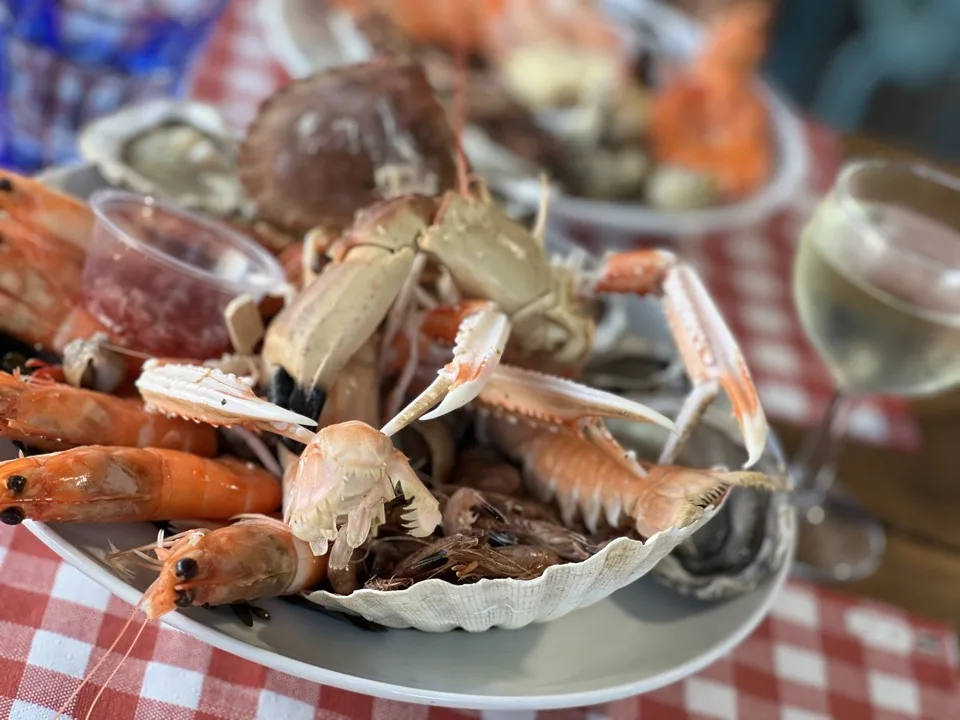
Just before our crossing, we had lunch at Chez Sandrine: it is the restaurant belonging to a fishmonger. It was delicious and excellent value for money. The location is ideal, on the quays, just 5 minutes from the catamaran departure point, opposite the fish market.
Our guesthouse in Boulogne-sur-Mer
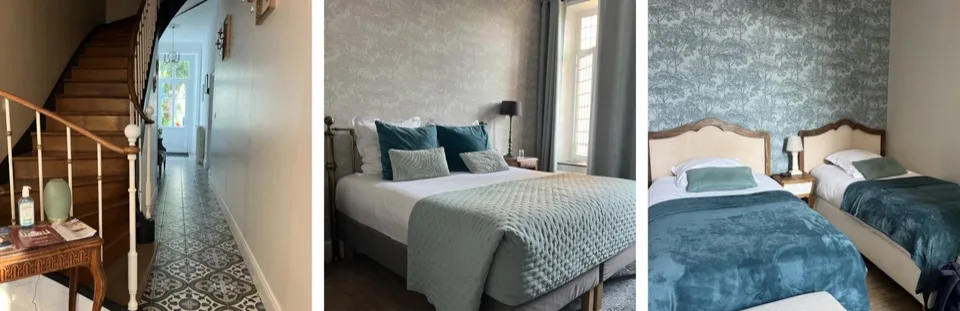
I had found a superb guesthouse in the old town of Boulogne-sur-Mer: La Boulonnaise. It is a charming address at a gentle price, with double rooms and a family suite. We loved everything: the welcome, the beauty of the place, the 18th-century style, the location and the excellent breakfast!
Ideas for getaways before or after the Channel crossing by catamaran
Discover Boulogne-sur-Mer and the Côte d’Opale
As for us, we travelled for 3 days, from Friday to Sunday. We visited Boulogne-sur-Mer and cycled along the Côte d’Opale. For a more relaxed weekend, it is perfectly possible to spend two full days in Boulogne-sur-Mer and enjoy the old town, the famous Nausicaa aquarium, the historic buildings, the markets and the street art. And there are plenty of good places to eat too!
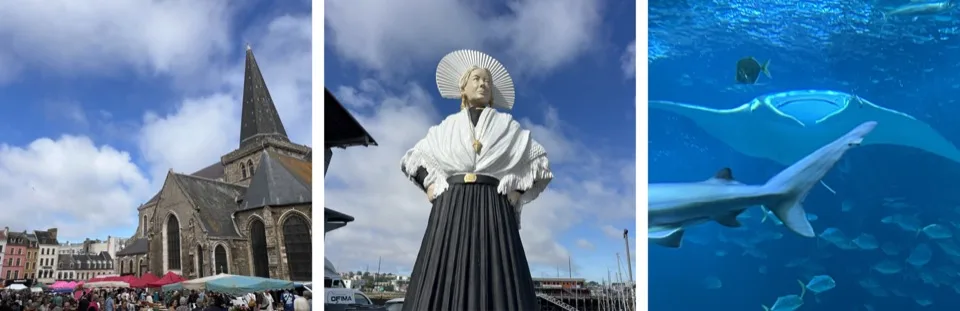
To discover the Côte d’Opale, do not miss the landscapes of Cap Blanc-Nez and Cap Gris-Nez, as well as the villages of Wissant and Wimereux.
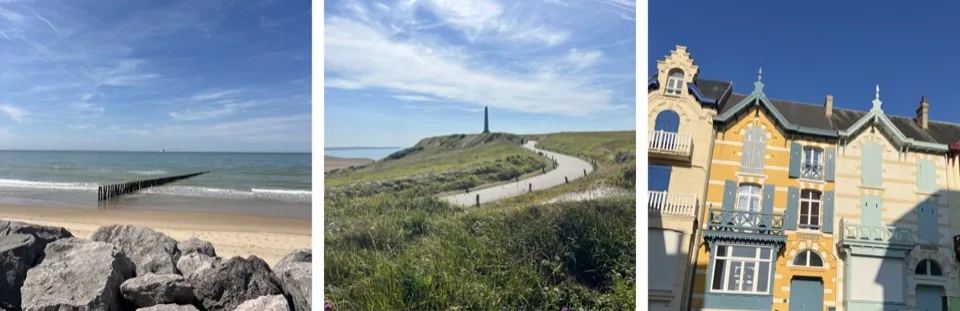
The Côte d’Opale by bike: you can bring your bikes as we did, or rent them locally. Then follow the Vélomaritime route.
Visit Paris
By train to Paris: you can reach Paris from Boulogne-sur-Mer in 2h20 by TGV.
Visit Dover and Kent
You can combine your trip with vistis before or after taking the boat. In Dover, do not miss a walk on its cliffs and a visit to its amazing castle: in addition to the medieval part, you can explore the tunnels used during WWII! It is a fascinating visit.
When arriving by catamaran, you can clearly see Dover Castle at the top of the cliffs:
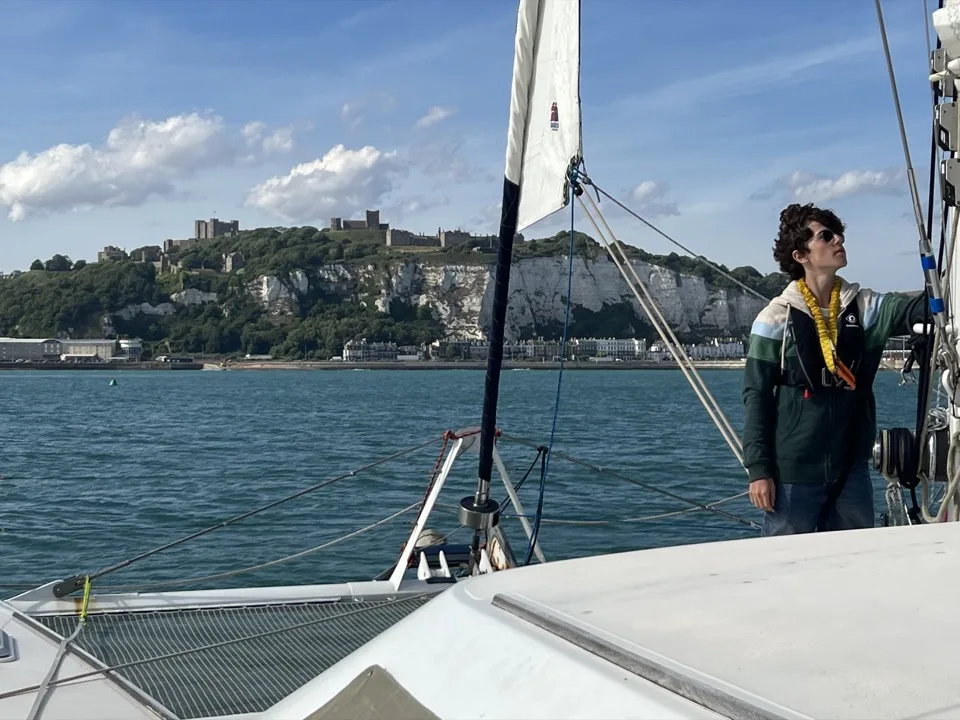
From London, there are direct connections to Dover (Dover Priory, about 1h50 by train from Charing Cross or Victoria Station). If you live further away, but connect through London, why not combine the catamaran adventure with a trip to the British capital. You can read my guide to visiting London.
***
I hope I have given you an idea of what it is like to cross the Channel by catamaran! A mother-son adventure we will not forget any time soon!
Who among you is tempted to cross the Channel under sail?

You read this blog — which means you value quality content grounded in real experiences. With Google Preferred Sources, tell Google which publishers you trust. Add us and other sources you love, and Google will surface them more in your future search results.