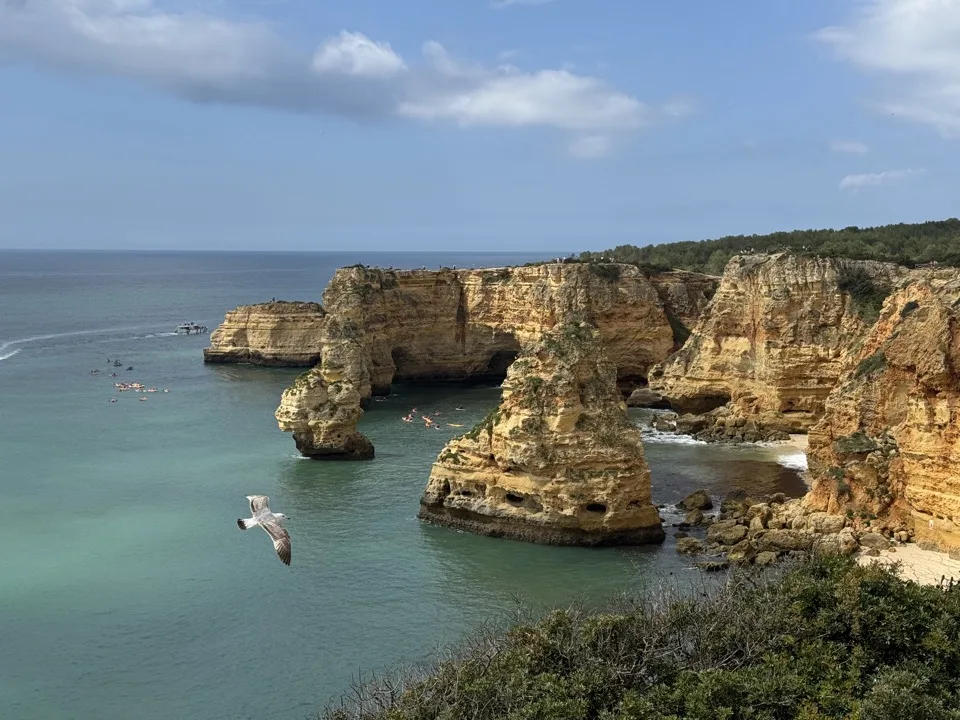
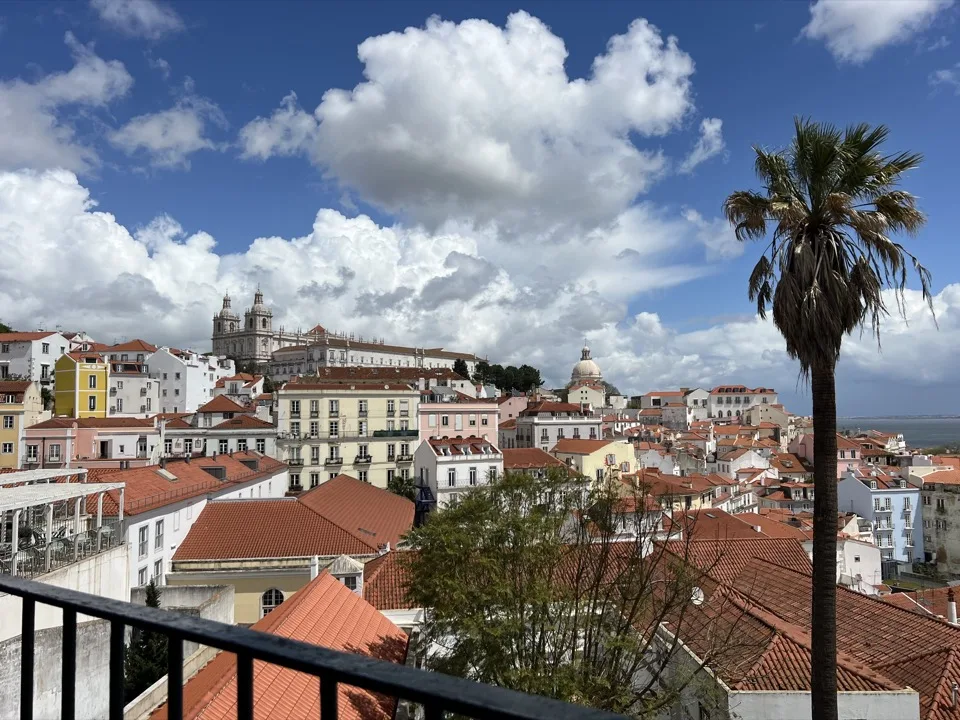
This summer, we went back as a family to the Bassin d’Arcachon. We absolutely love this area! This wasn’t our first stay on the Bassin, so I felt like sharing a round-up of our favourite spots and child-friendly activities. Depending on the length of your stay, you won’t necessarily manage to do everything. My list is a summary of three stays there. Of course, there are places we happily return to, beaches we particularly enjoy, and oyster huts where we love meeting up with friends. For us, the Bassin d’Arcachon really goes hand in hand with reunions, as several of our friends spend their summers there. It’s a bit like the film Les Petits Mouchoirs, but without the accompanying drama 🙂
This summer, we were based in Le Teich and explored the Bassin d’Arcachon from there. The previous time, we were based in La Teste-de-Buch, and the time before that in Cap-Ferret. Everywhere is great!
Trip to Cap-Ferret:
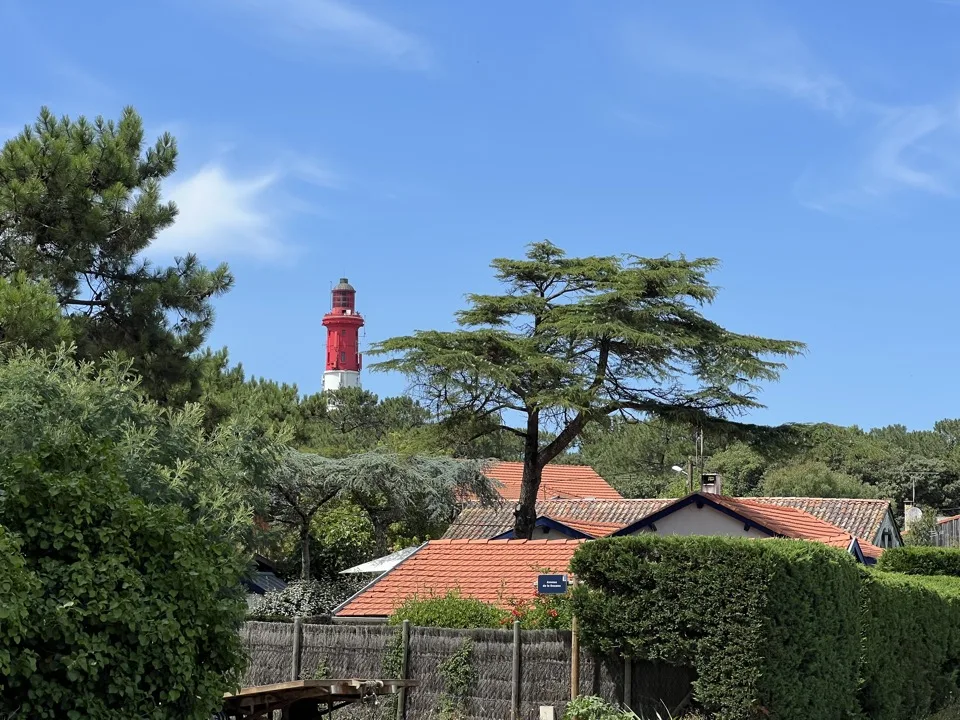
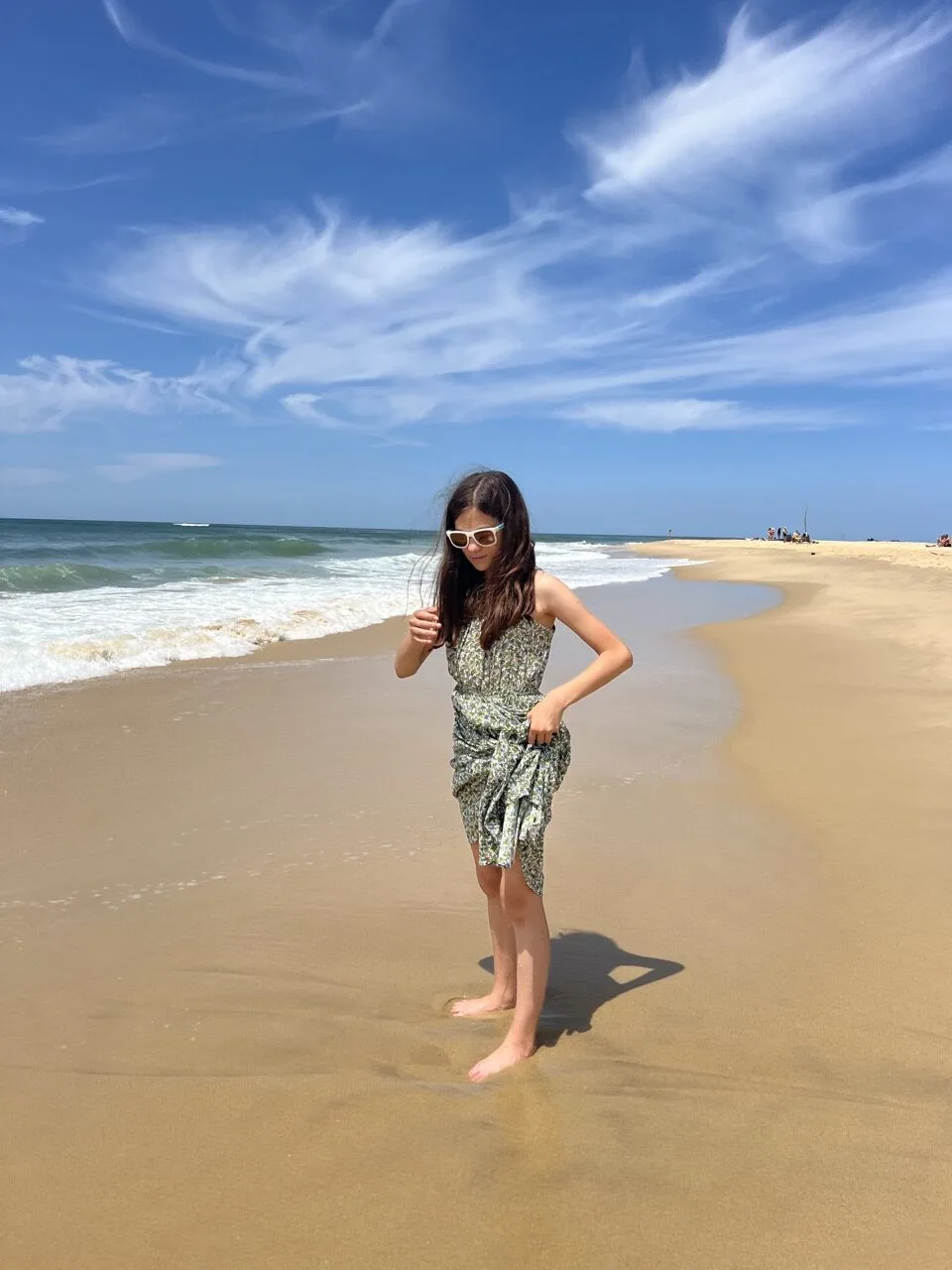
Cap-Ferret is an unmissable and utterly charming stop! For Papa Voyage, it’s full of childhood memories, as he spent all his summers there. It’s best to go early in the season, and preferably in July rather than August. This year, we were there in the third week of July and it was perfect. Cap-Ferret has something magical about it, as it separates the calm waters of the basin from the ocean: two atmospheres in one place! Such a contrast over just a few metres. We wandered around the lighthouse area and the tip of the peninsula. I must admit that the ocean side always impresses me. We walked in the shade of the pine trees before settling down on the vast and beautiful beach at the Pointe. This time, as we were staying in Le Teich (so in the south of the Bassin), we went by car and drove around the Bassin, but the quicker option is to take a boat between Arcachon and Cap-Ferret. All the information about the shuttle boats here.
The village of L’Herbe:
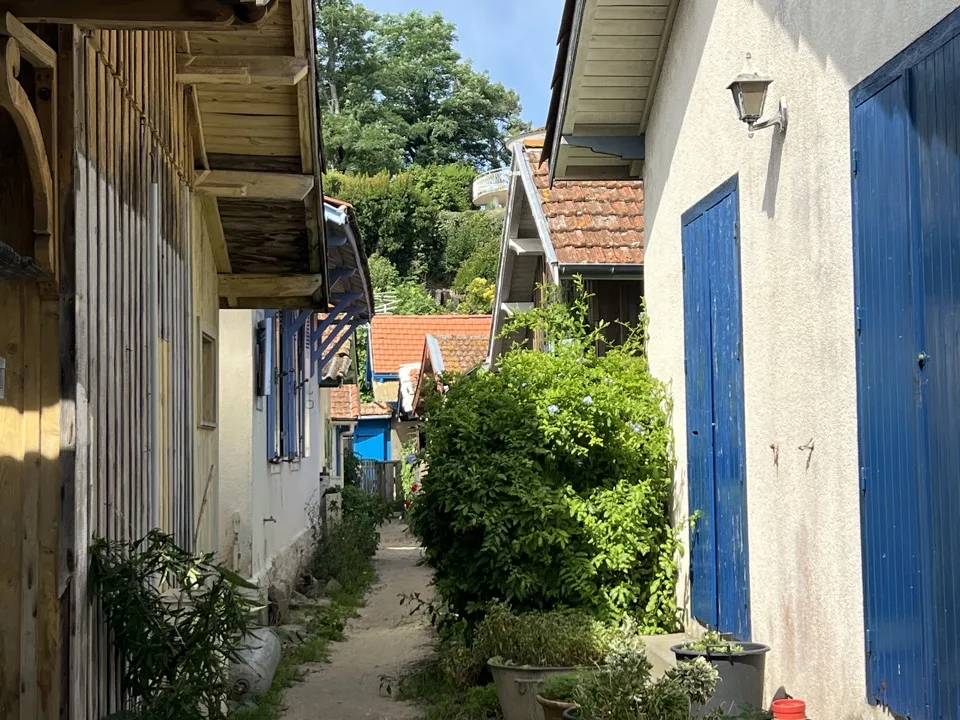
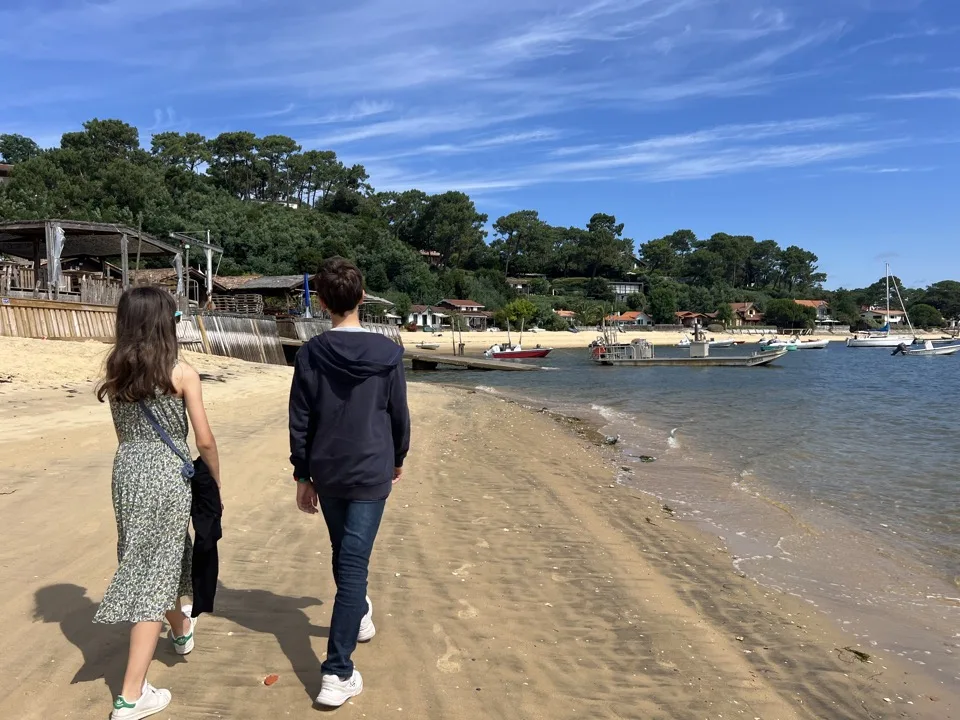
Once in Cap-Ferret, it’s really worth going as far as the village of L’Herbe, an oyster-farming village full of charm with its old, colourful huts. The edges of the Bassin are particularly lovely here, and the oyster huts all invite you to take an iodised break with a view.
Visiting the lovely town of Arcachon
In high season, Arcachon can be very busy, so it’s best to go early in the morning or in the evening. The half-timbered houses are full of charm, especially the huge villas of the Ville d’Hiver, a district where 19th- and early 20th-century houses with incredible architecture are concentrated. There must have been a competition to see who could build the biggest and most original one! A stroll through the town centre is also a must, ideally ending with a little ice cream. We loved the ice creams from Olala:
Hiking in the Gorafe Desert with the Family was one of the highlights we had in mind for our latest trip to Andalusia. After exploring the main Andalusian cities and the famous white villages on previous visits, we were keen to discover the “desert” side of the region. And as you know us, we love family hikes! So, the famous 24 km hike in the Gorafe Desert seemed like a perfect plan—admittedly a bit of a challenge, but nothing we couldn’t handle.
We based ourselves in Guadix to explore the desert. This town in eastern Andalusia is famous for its cave houses. The village of Gorafe is just a 30-minute drive away, making Guadix a convenient base. Plus, the area around Guadix is full of other stunning desert landscapes to discover, including the Badlands.
Why the Gorafe Desert is so captivating
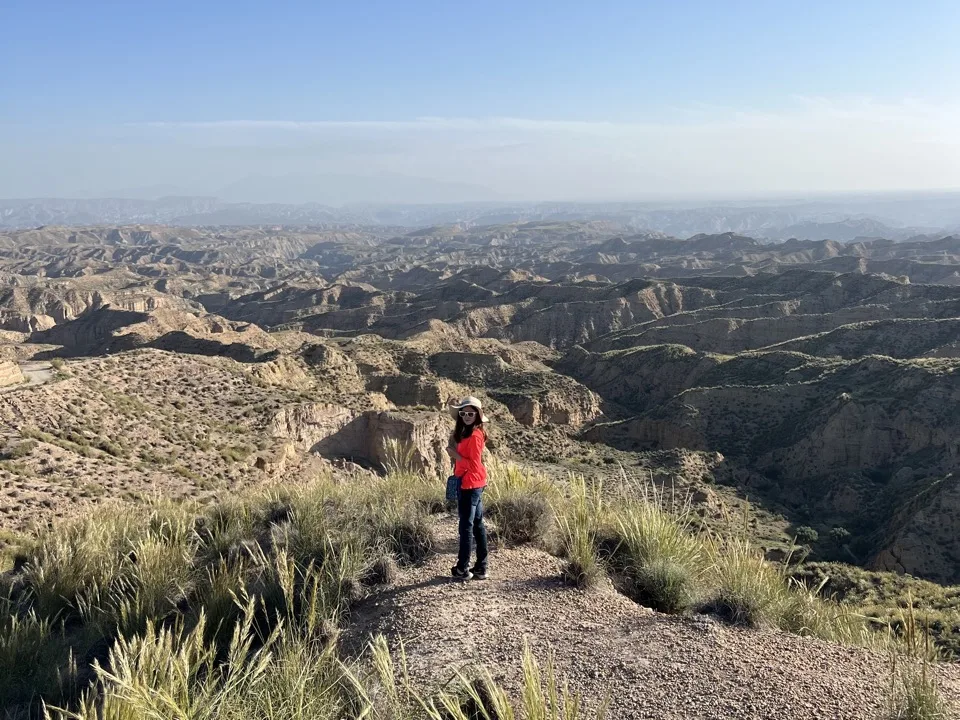
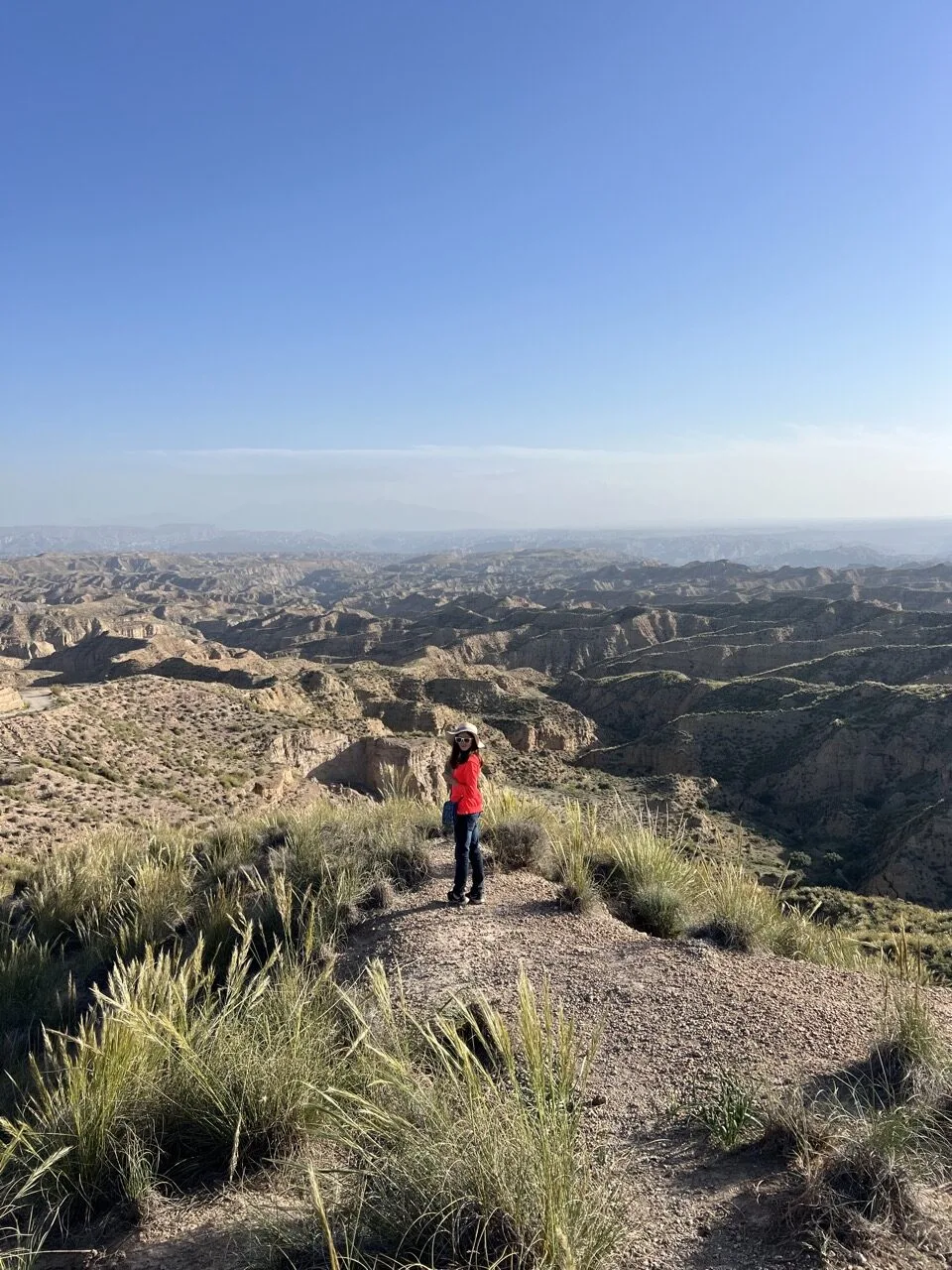
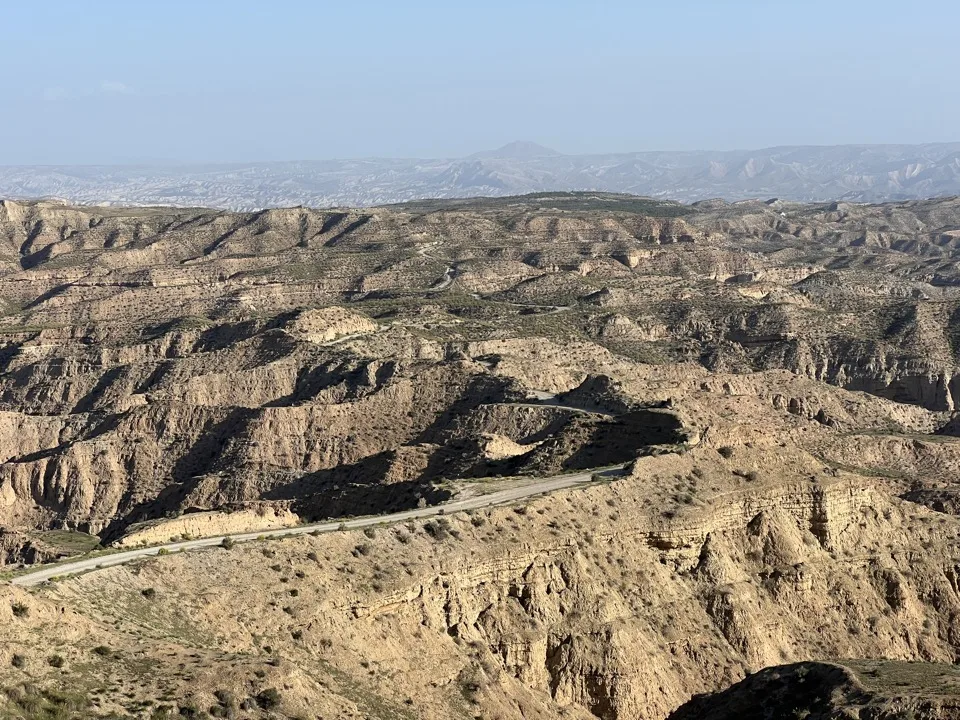
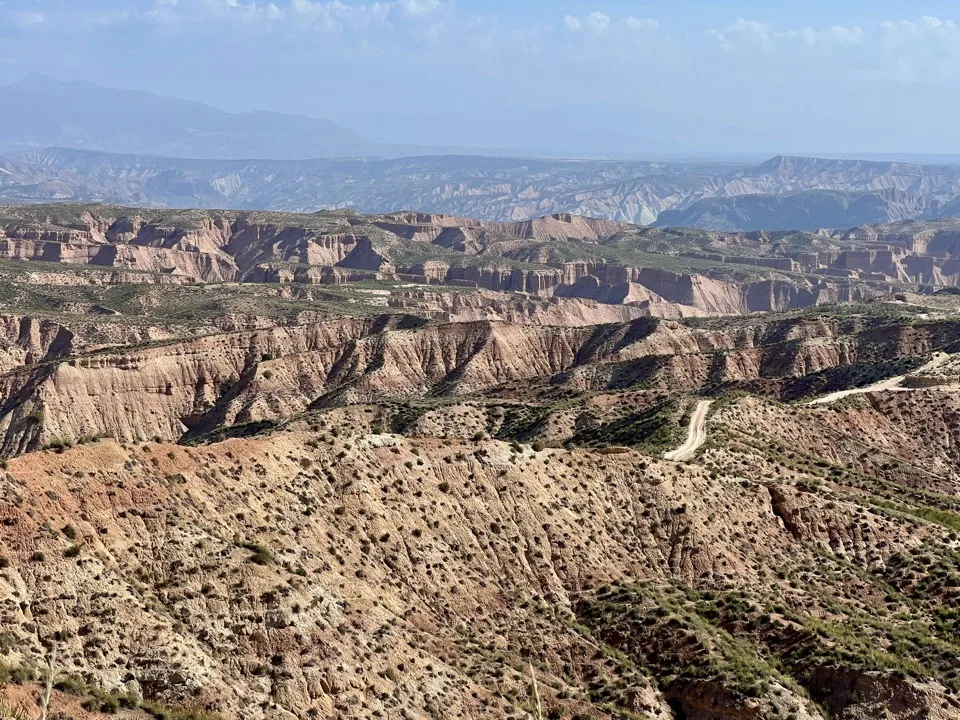
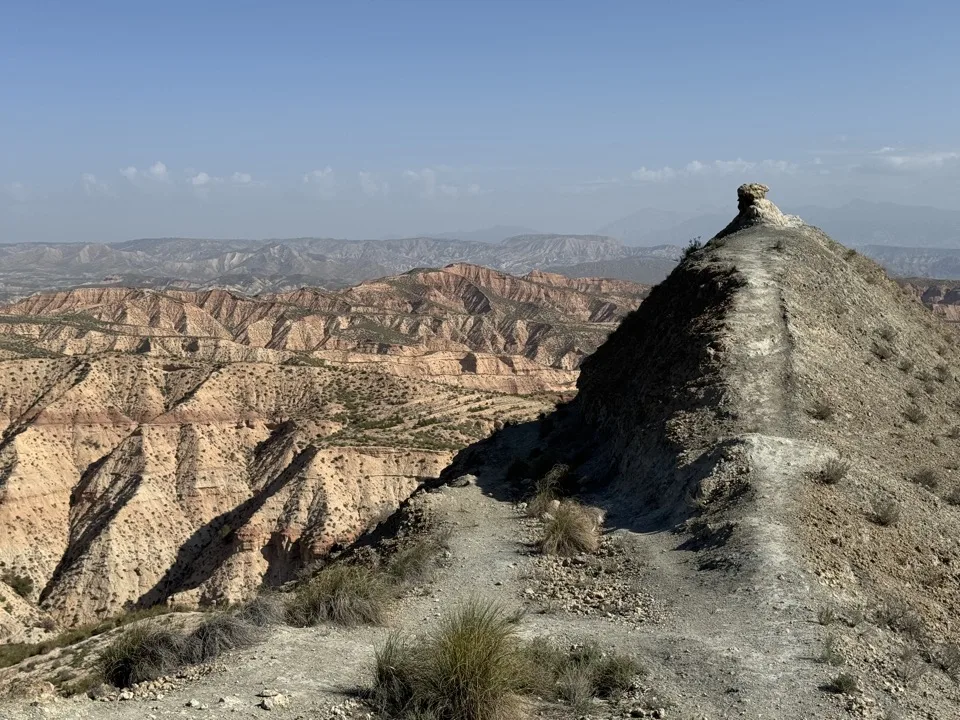
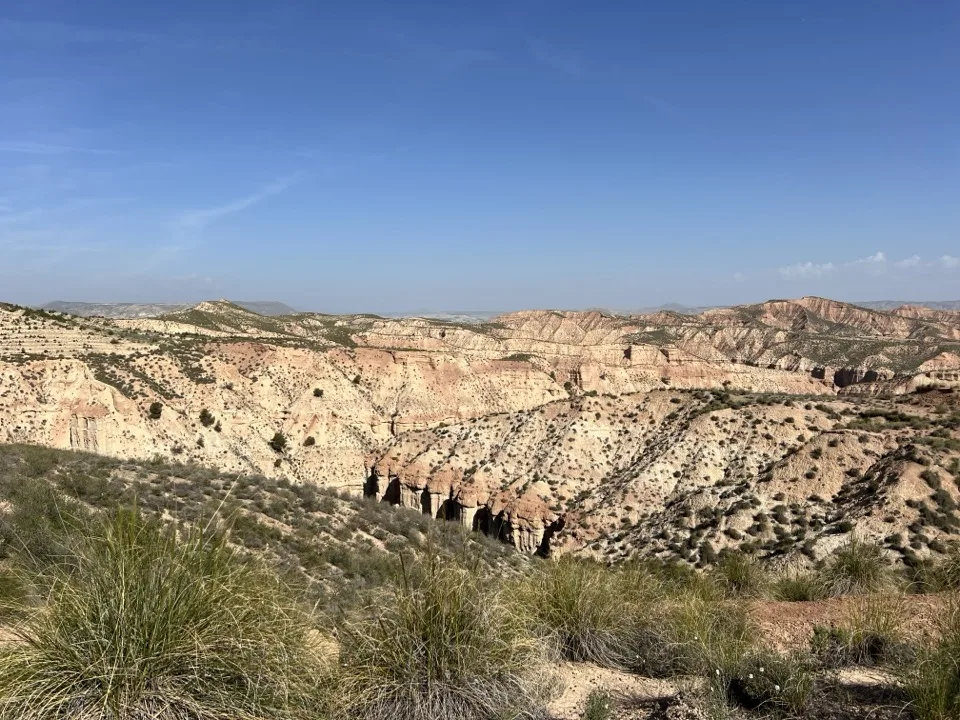
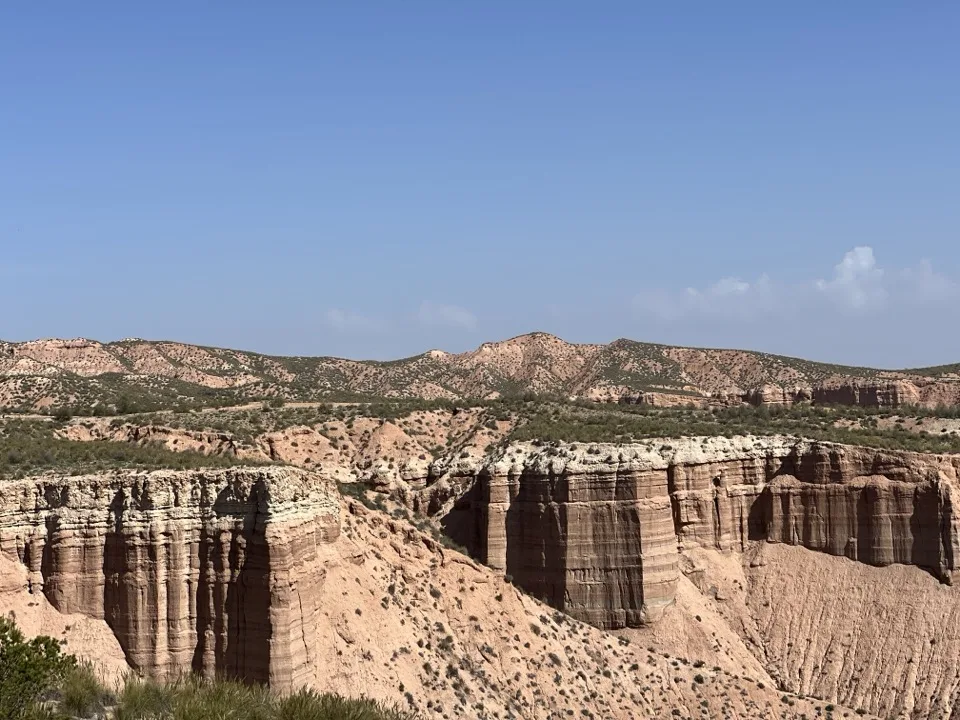
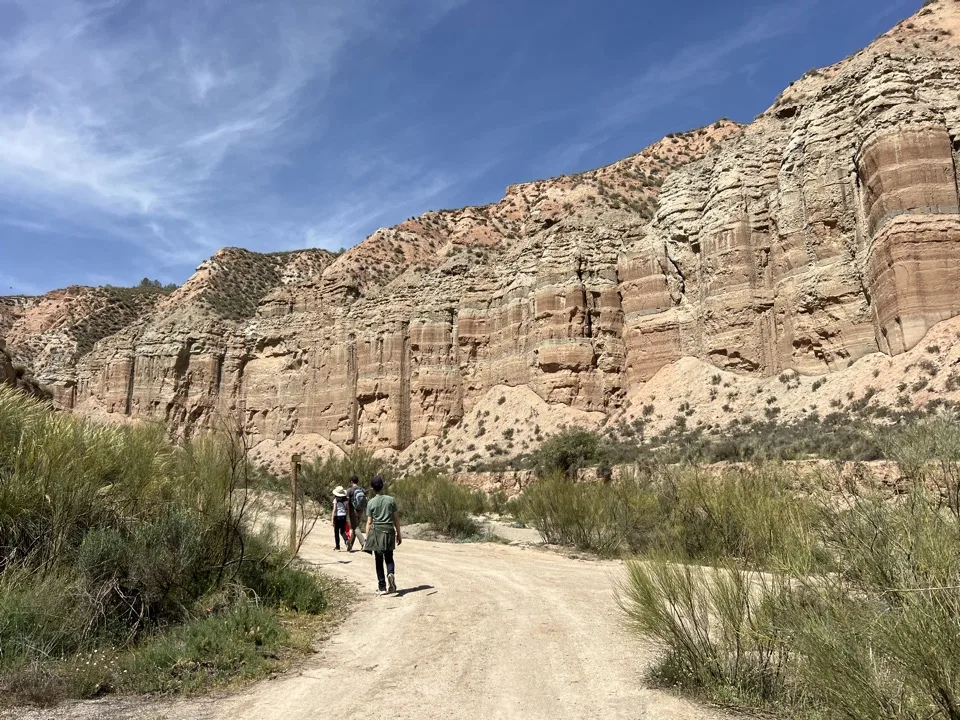
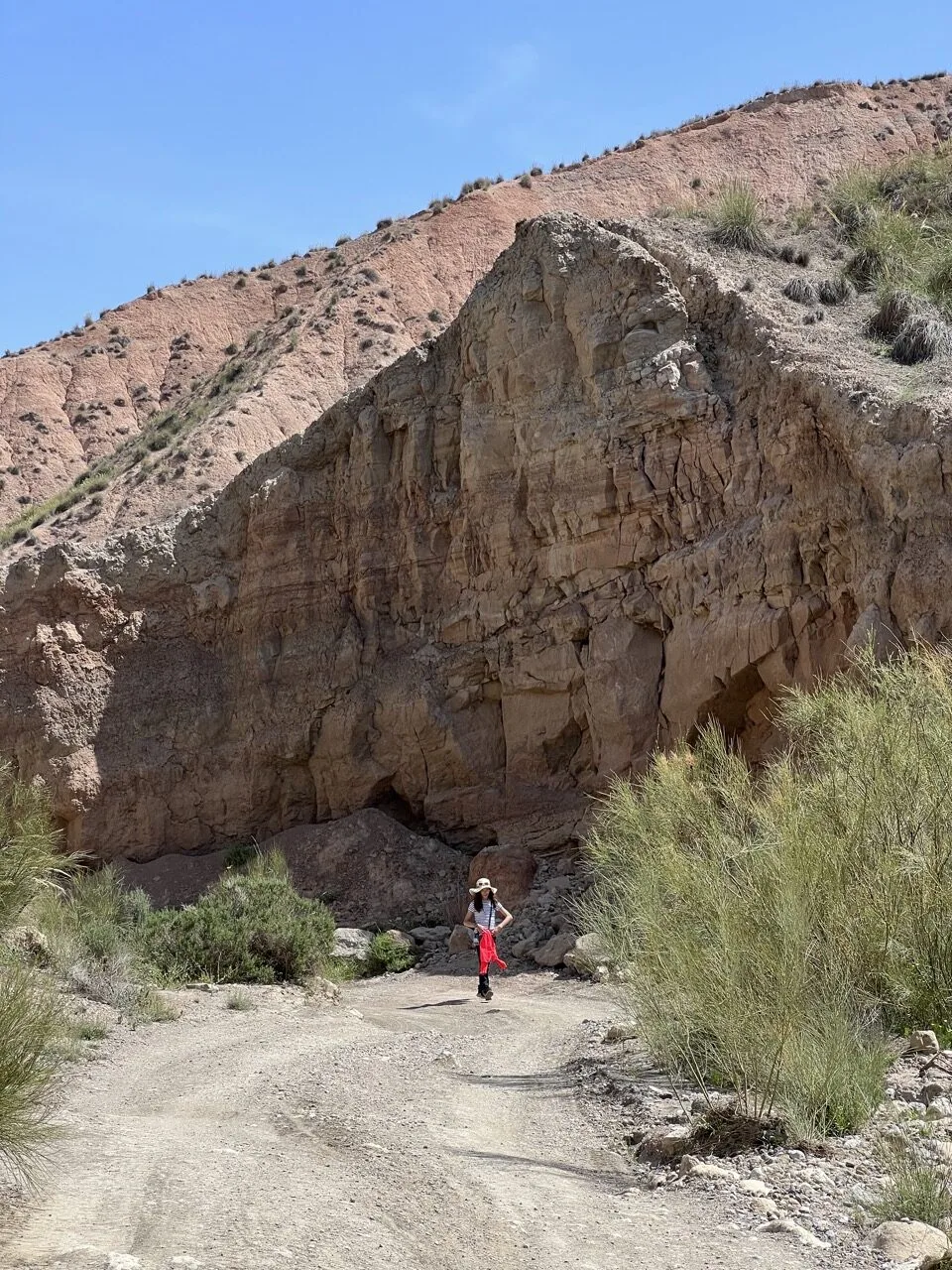
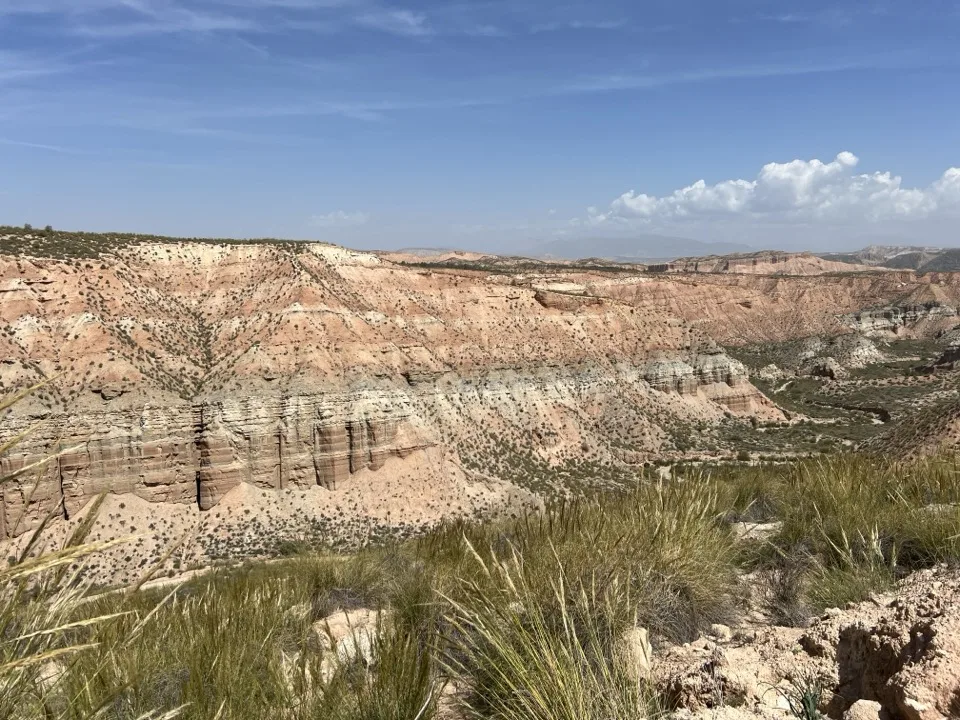
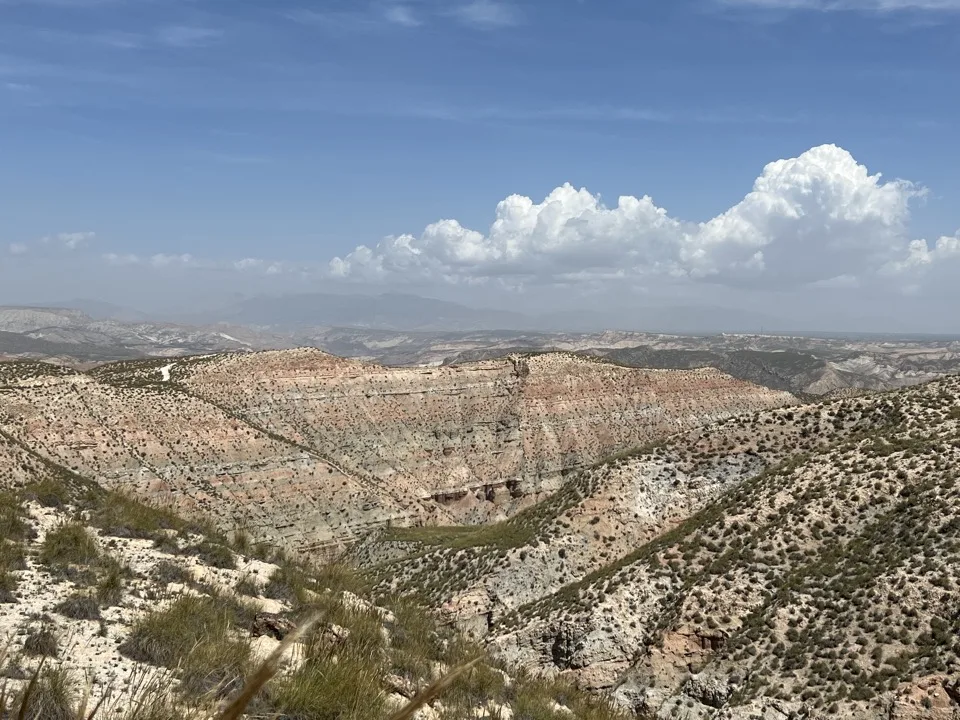
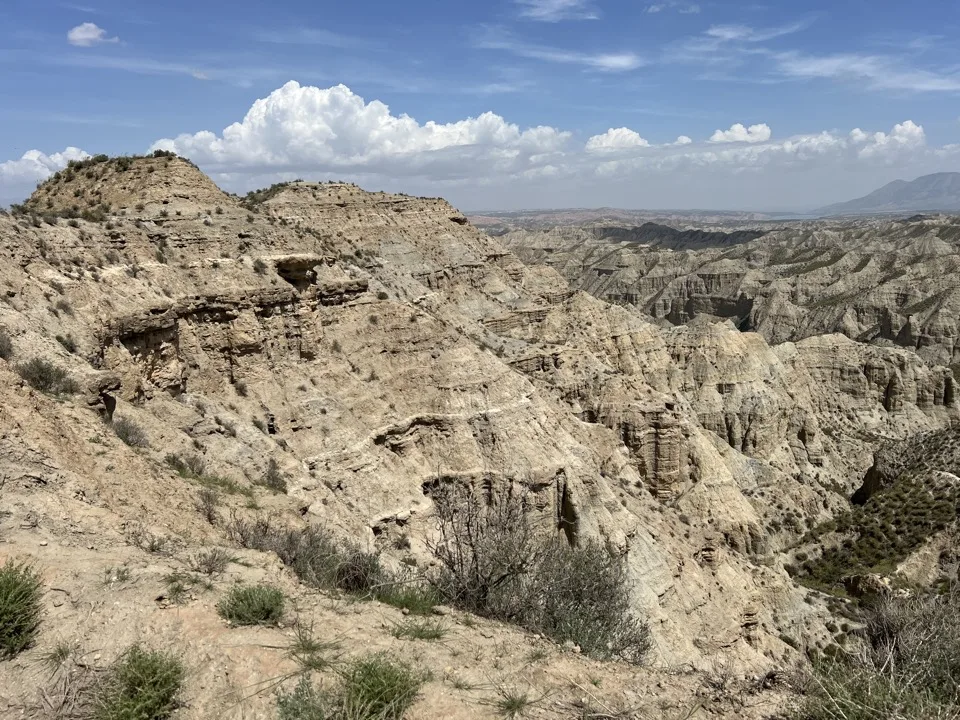
The Gorafe Desert is full of striking geological formations in shades of ochre and red. It forms part of the Granada Geopark, a UNESCO-recognised site of geological and cultural importance. You’ll see large ravines that might remind you of the American West. In fact, it’s funny—when trying to describe the Gorafe Desert, references to the US keep popping up. Those Americans really are masters of marketing! They’ve planted the image in our minds, while ironically, seeing the western US could just as easily make you think: “Wow, this looks just like the Gorafe Desert!”
If you dream of wide-open spaces, canyons, and real escapism, Andalusia is a must. The Gorafe Desert won’t disappoint—it’s a real favourite of ours.
Gorafe Desert
A quick warning: the renowned Ruta del Desierto de Gorafe leading to LosColoraos is tough—not technically, but because of its length and elevation gain.
Before we went, there was very little information on whether families could tackle this hike. Even without children, it seems few people walk this route. Now that we’ve done it, though, we can confidently say it’s the best way to experience the desert—and we hope this guide helps sporty families who want to give it a go!
Our Family Hike in the Gorafe Desert
Here are the key details of our hike:
24 km loop: it’s long. Children should be used to long walks. We completed it in 6½ hours, including a 30-minute lunch break—so 6 hours of walking in total.
Halfway along, at the furthest point, you reach the famous viewpoint Los Coloraos, where the geological formations are most colourful, with shades reminiscent of a Western movie! Yes, I know—I’m comparing it to the US again! Pfff!
Elevation gain of 753 metres: we’ve tackled this kind of climb in the mountains before, but two things made it tricky here. First, the trail starts by descending into a canyon, meaning the easiest section comes first. By the time you reach Los Coloraos, the hard part is still ahead! Psychologically, this is tougher than summiting a mountain—at least then, the worst is behind you. Second, a 753-metre climb in the Alps on a cool day is one thing, but in southern Spain, it can get hot. We were there in April, a lovely season, but the desert temperature swings quickly. Starting at 9am, it was 13°C, soon climbing to 16°C—perfect. After lunch, we faced the climb back in 24°C heat, which made those 753 metres feel even tougher, especially with little shade.
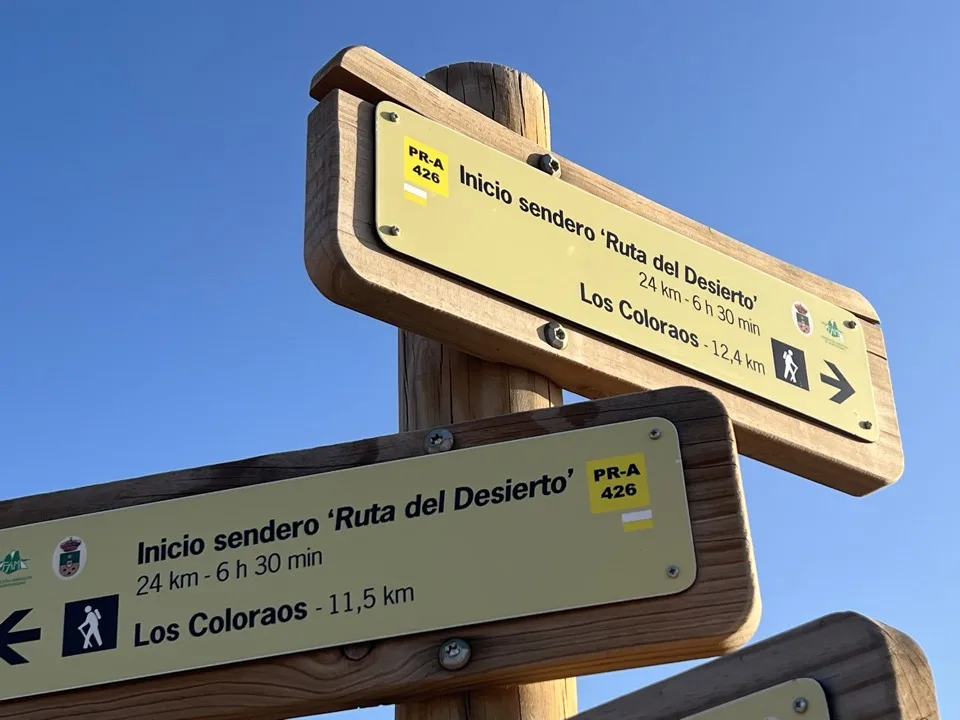
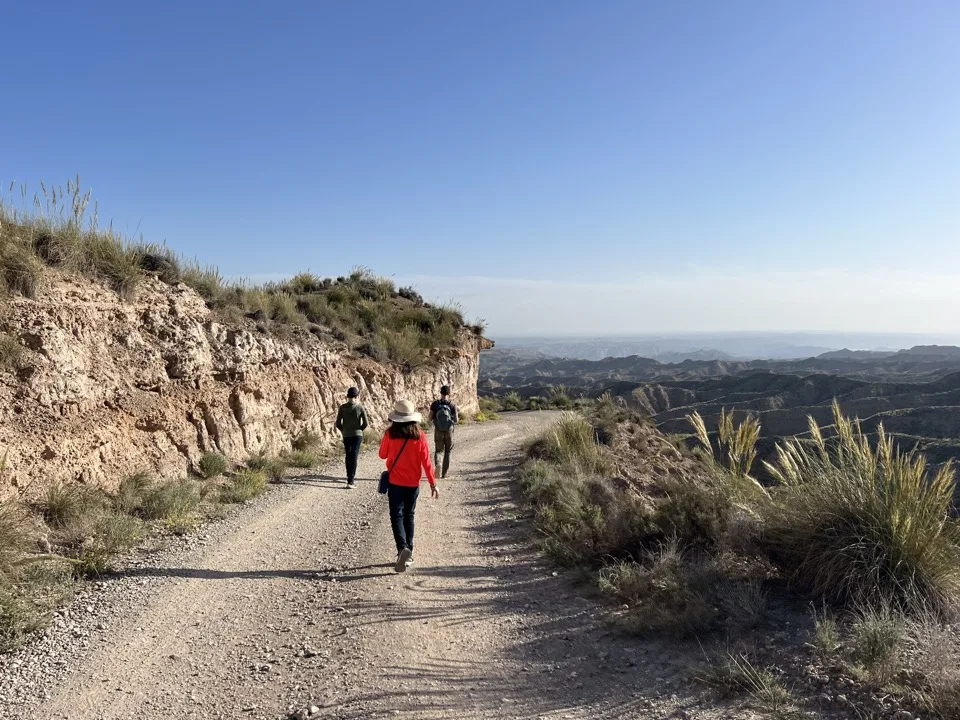
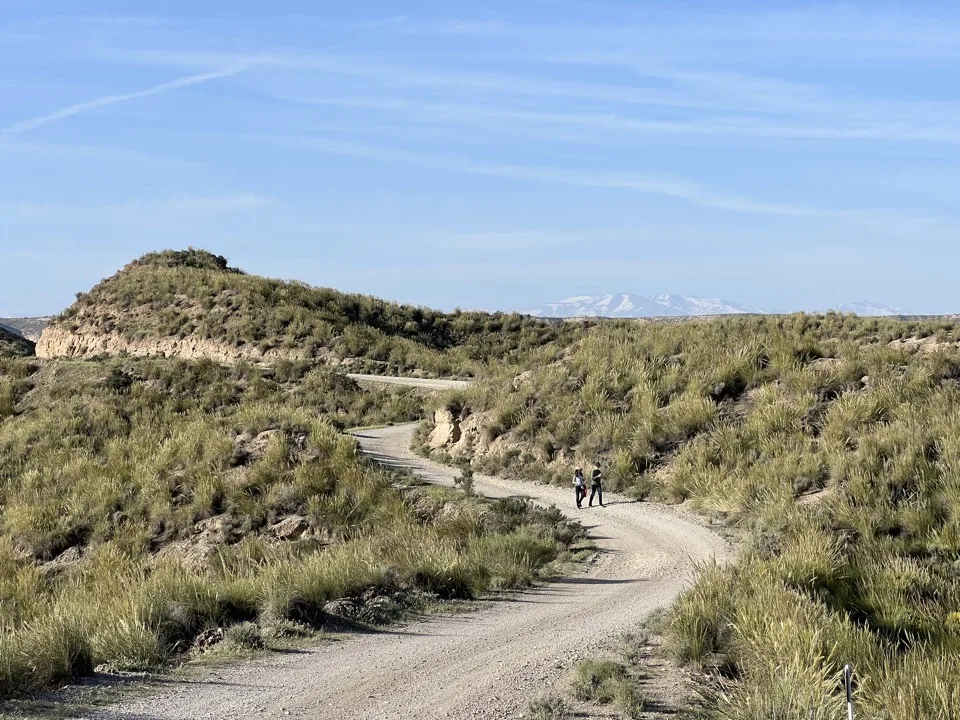
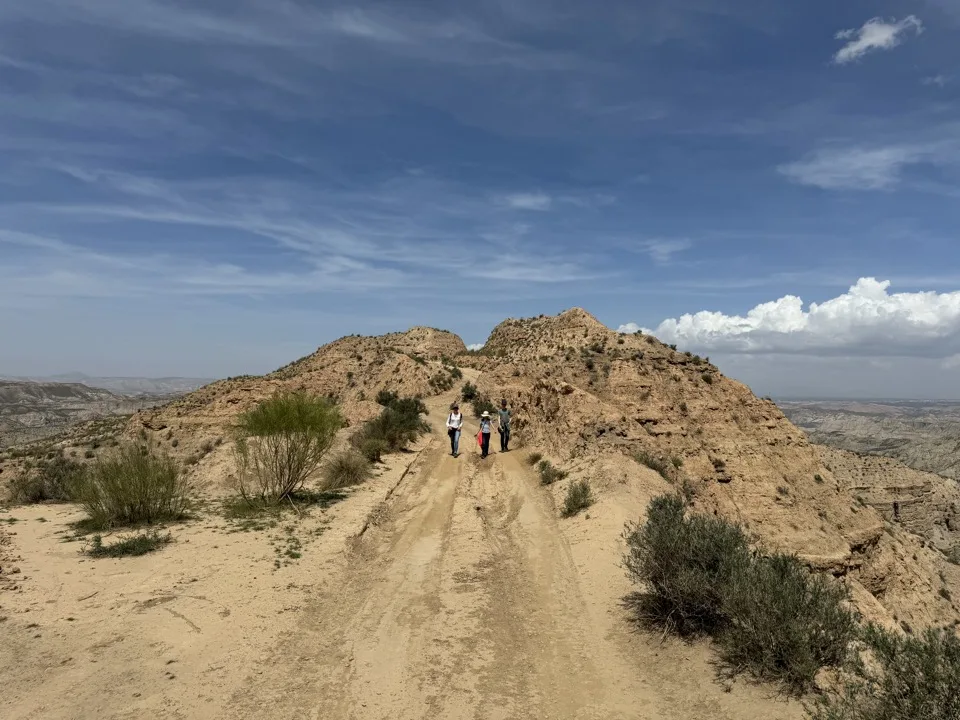
Trail conditions: there’s no technical difficulty as the path is a 4×4 track. It’s wide, comfortable, and easy to follow. The route is signposted as PR-A 426. In 6½ hours, we only saw one 4×4! These excursions are pricey, so traffic is rare. We also planned to hike on a weekday, in case Granada locals visited at weekends.
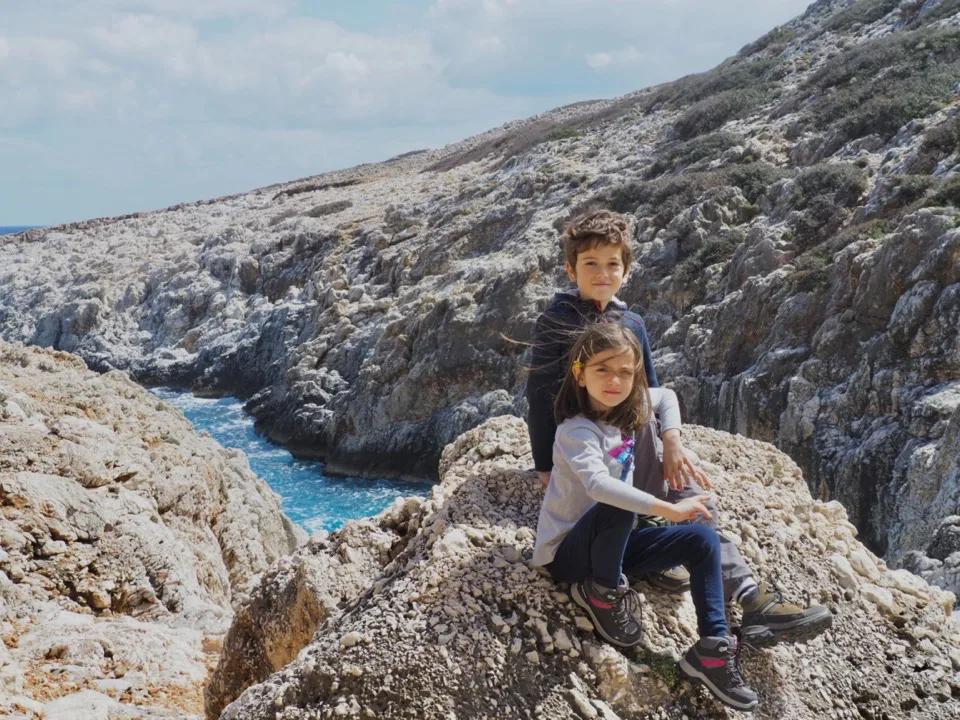
If you’re still reading, you’re probably feeling up for it! For children used to hiking, it’s very manageable. This is not a beginner’s hike, nor is it for very young children. Ticoeur and Titpuce were 14 and 12 at the time. More important than age is whether your kids can walk 6 hours with a serious climb. Shall we go?
The Ruta del Desierto Loop via Los Coloraos
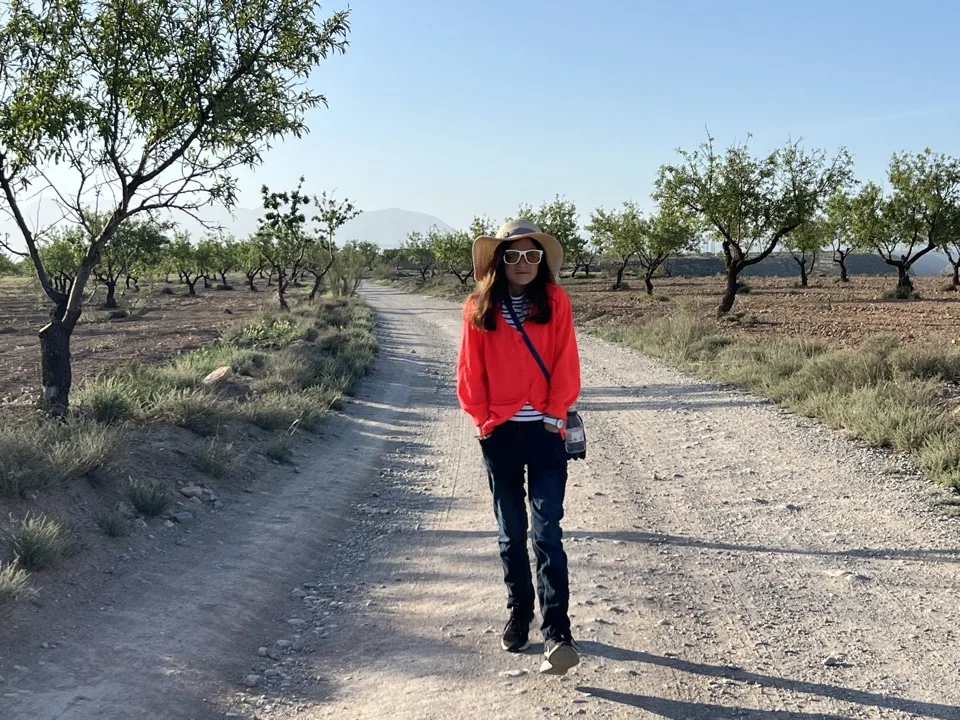
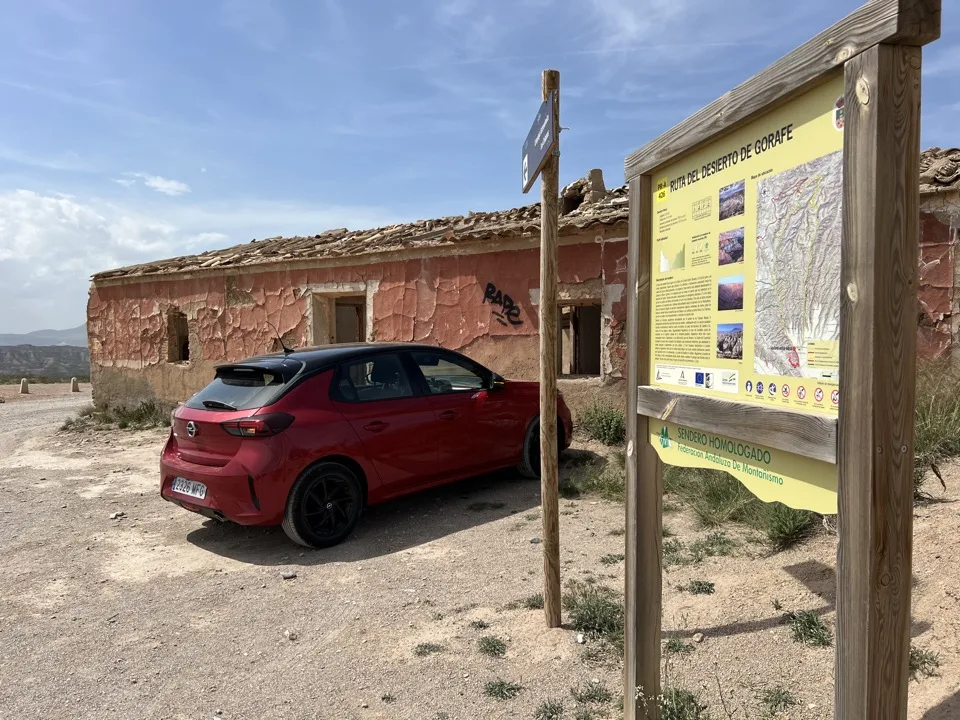
We started the Gorafe Desert trail at 9am. To reach the start, drive to the village of Gorafe and follow the signs upwards. We parked at the trailhead, completely alone, next to a large information board. We chose to hike clockwise, but honestly, it doesn’t matter much. The advantage of our direction is that you see the most beautiful and varied landscapes first. If you don’t complete the loop, you can always turn back and you’ll already have seen plenty.
And we’re off!
We soon felt immersed in this exceptional geopark:
The snowy Sierra Nevada looms in the distance…
The landscapes keep changing as we move forward…
Two hours in…
And onwards…
Feels a bit like Colorado, doesn’t it? 🙂
We reach the viewpoint Los Coloraos, halfway through the loop (about 12 km). It’s the most famous viewpoint in the Gorafe Desert—but honestly, the scenery was beautiful all along the way. Even if you tire before reaching it, you’ll have seen incredible views.
Los Coloraos, Gorafe
We stopped for a picnic at noon after three hours of walking, finding some shade in a bend. After lunch, it was time to climb out of the canyon—and it felt hot!
We passed the Barranco de Los Anchurones:
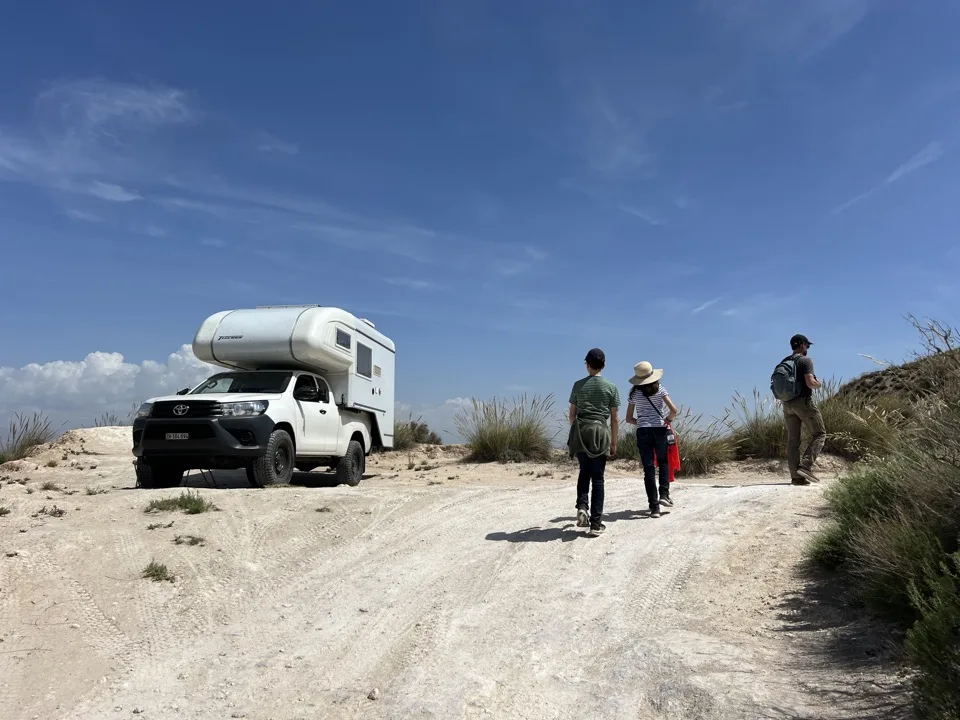
As I mentioned, the climb back is challenging. We spotted a 4×4 camper van struggling on the track, which had large ruts on the second half of the route.
Passing the Cerro de la Bandera:
We continued to climb, slowly but surely, discovering more stunning formations in lighter shades:
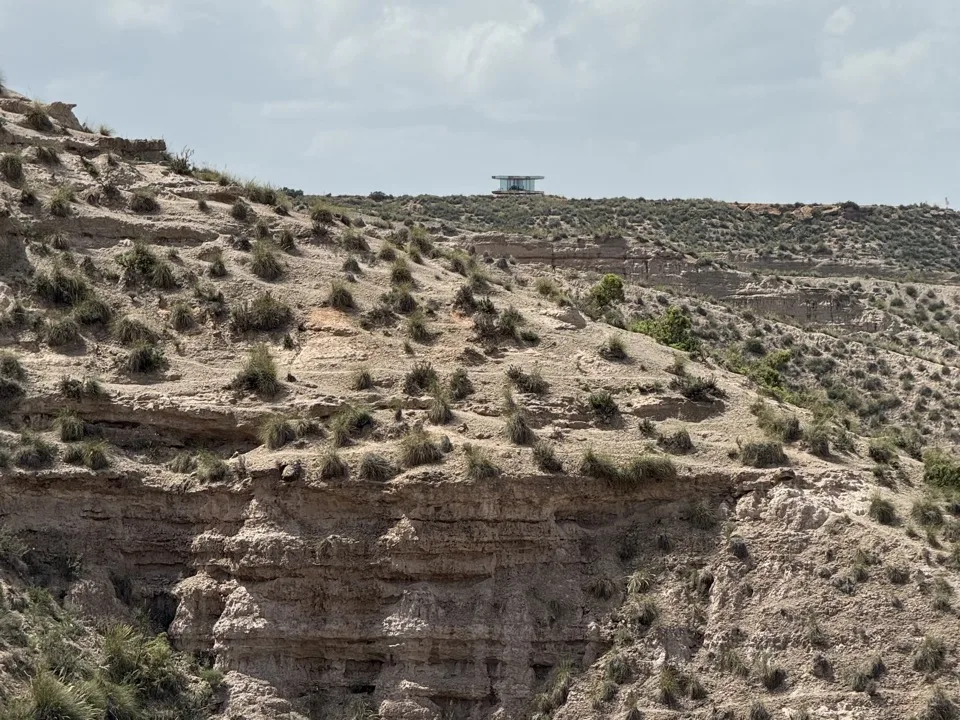
We were almost done when we spotted the glass house (a hotel) at the start of the hike. Fun fact: this house appears in an episode of Black Mirror. I’ve watched many episodes of this TV series, but I hadn’t seen this particular one.
The final stretch winds through an almond orchard:
Back at the car, we hadn’t encountered any other hikers—the car was still alone. We’d brought plenty of water, which we drank during the second half of the hike! Exhausted and thirsty, we returned to Gorafe village and ordered two drinks each at the first bar we found. As I mentioned earlier, 24°C with no shade really feels hot! Everyone was wearing trousers—hiking trousers that convert to shorts would have been ideal for the climb back. And of course, don’t forget hats and sunscreen!
Options for Discovering the Gorafe Desert as a Family if the Hike is Too Challenging
Shorten the hike. This is the best option if 24 km feels too much. Even the first few kilometres are stunning! 2, 3, or 5 km—choose a distance that suits your children and turn back whenever you like. Don’t be disappointed if you don’t reach the Los Coloraos viewpoint—the views are incredible from the very start.
Take a 4×4 tour: I mention this mainly to warn you that you might encounter 4x4s on the trail, as it doubles as a track. Personally, I don’t recommend it. Walking allows you to really absorb the scenery. Plus, we hope hikers won’t see more than one 4×4 like we did—luckily, we only saw one! These tours are expensive anyway, which keeps traffic low.
Drive to the Los Coloraos viewpoint: With a normal car, you can do the first half of the loop as an out-and-back. The second half is too rough. But in my opinion, driving is less rewarding than walking. It’s better to do a short hike. Even if the track is decent in the first section, a rental car wouldn’t be covered for damage. Avoid it!
Electric bike: At the end of the hike, we saw a young couple preparing to cycle the loop on e-bikes. Fine for a couple used to rough tracks, but I couldn’t do it! For a family, it’s tricky—even with e-bikes, there’s a big climb and rough terrain. Plus, for four people, rentals would be costly.
In short, adjust the hike to your fitness, motivation, and family hiking experience. Bring plenty of water and soak in the views!
Our Guadix Accommodation: a Charming Cave House
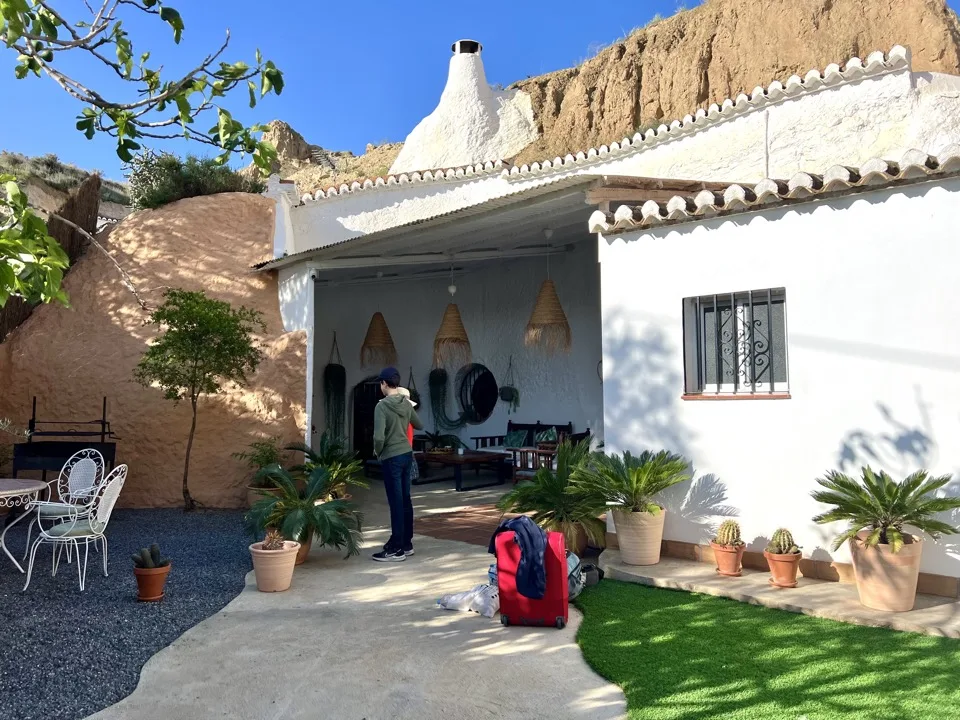
Gorafe is an hour east of Granada, so it’s possible to visit from the city. But for a 24 km hike, staying closer makes sense. Gorafe village has some lovely cave accommodations, but they were pricier than in Guadix, a small town 30 minutes away. So, we compromised. We stayed in Guadix for two nights at this wonderful cave house. We loved it—highly recommended!
****
When you book a hotel on Booking by following a link on my articles, it allows me to receive a small commission: it does not change the price for you and it helps me maintain the blog. So thank you very much to those who book the hotels we recommend!
****
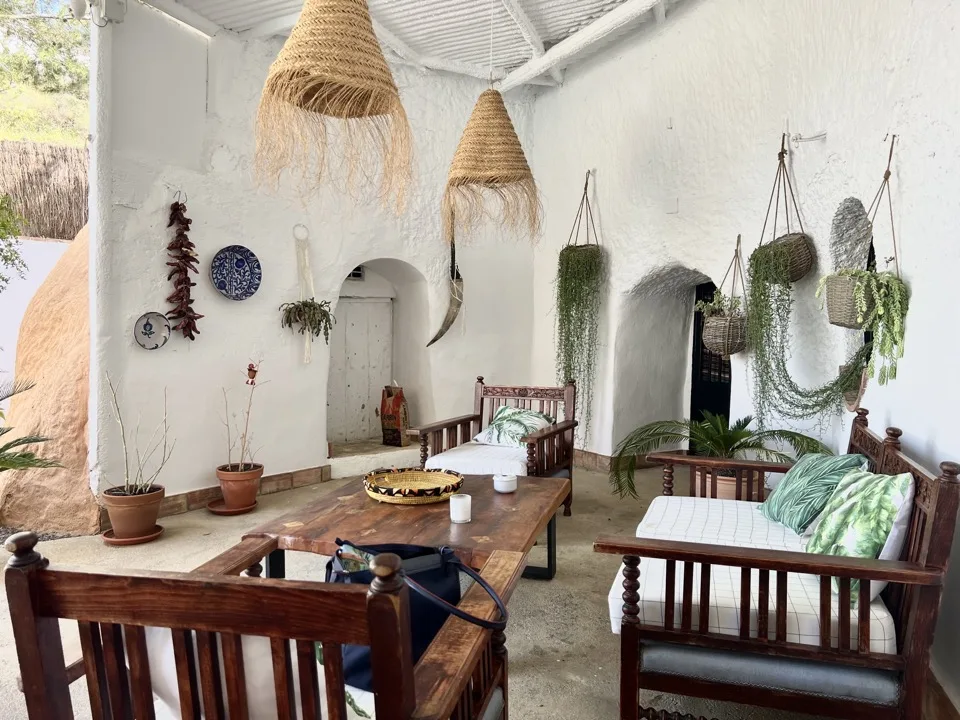
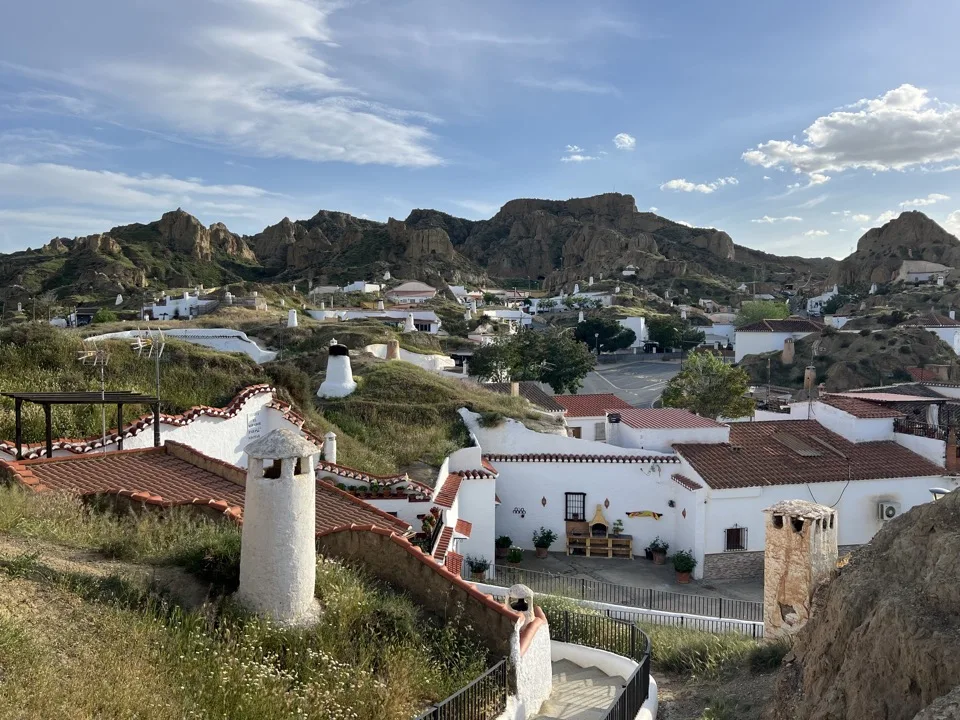
The accommodation is in Guadix’s cave house district, on the outskirts of town—a very typical area. Our cave house was comfortable, with a kitchen, bathroom, two bedrooms, a small courtyard, barbecue, and even a tiny pool (water too cold in April!). Highly recommended.
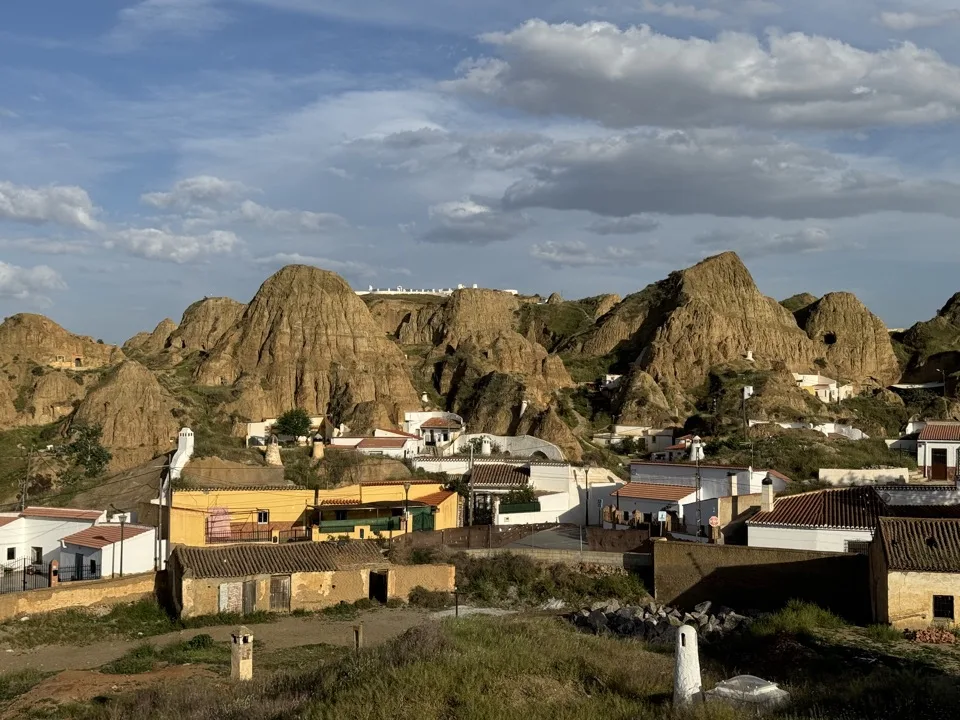
Here’s the cave district. Not long ago, it was mainly inhabited by Romani people. Today, there are some locals and several tourist accommodations.
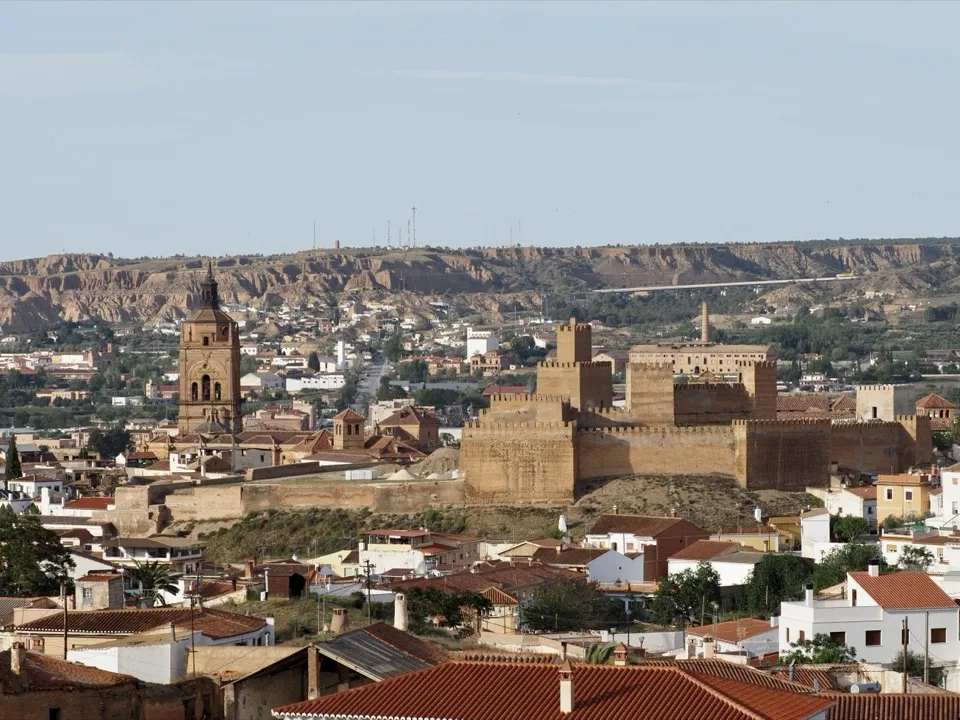
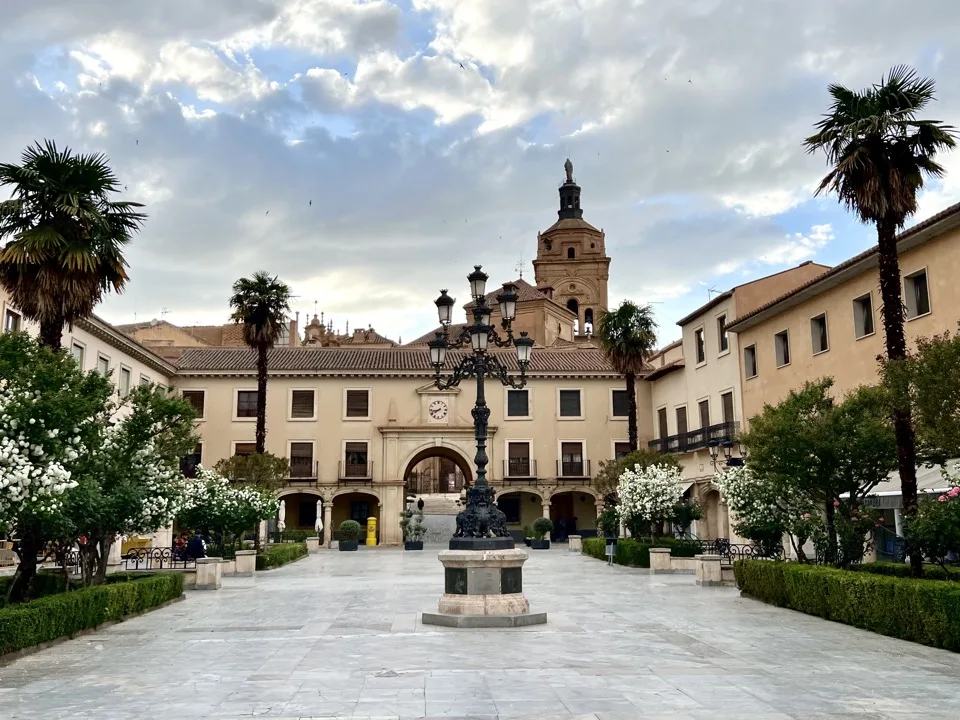
This district is different from central Guadix. Approaching the town by road, you first see the modern, less charming part. Then you discover a small, pleasant historic centre where we strolled in the early evening near the cathedral and castle.
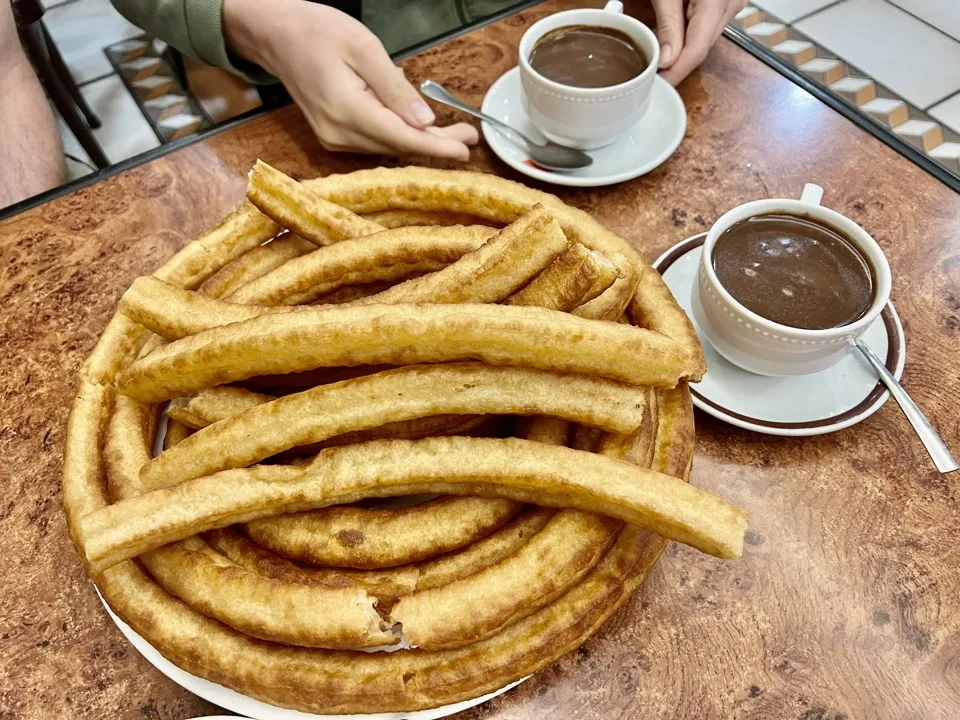
For food in Guadix, we recommend the bar-churreria Cafetaria Versalles, serving excellent churros with hot chocolate—perfect before a family hike. It opens early, so we went at 7:30am:
We also enjoyed cooking in our cave house courtyard, but on our last night we tried a local restaurant: Braseria La Tinaja, a large grill-restaurant at the town edge. Very popular, with a friendly waiter, lively atmosphere, generous portions, and excellent value!
***
The Badlands Around Guadix
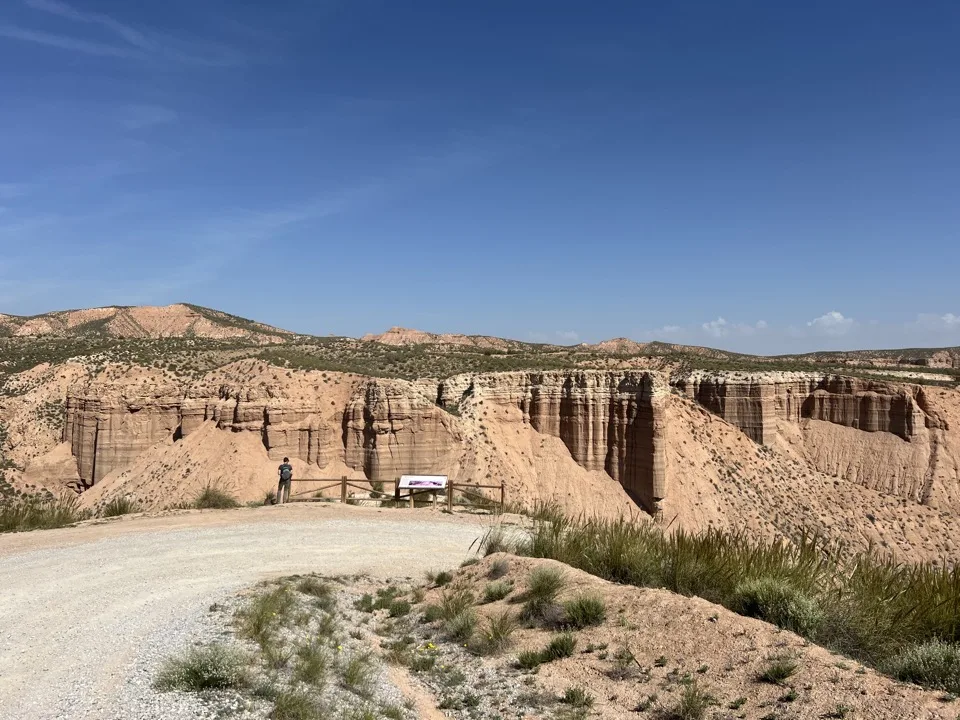
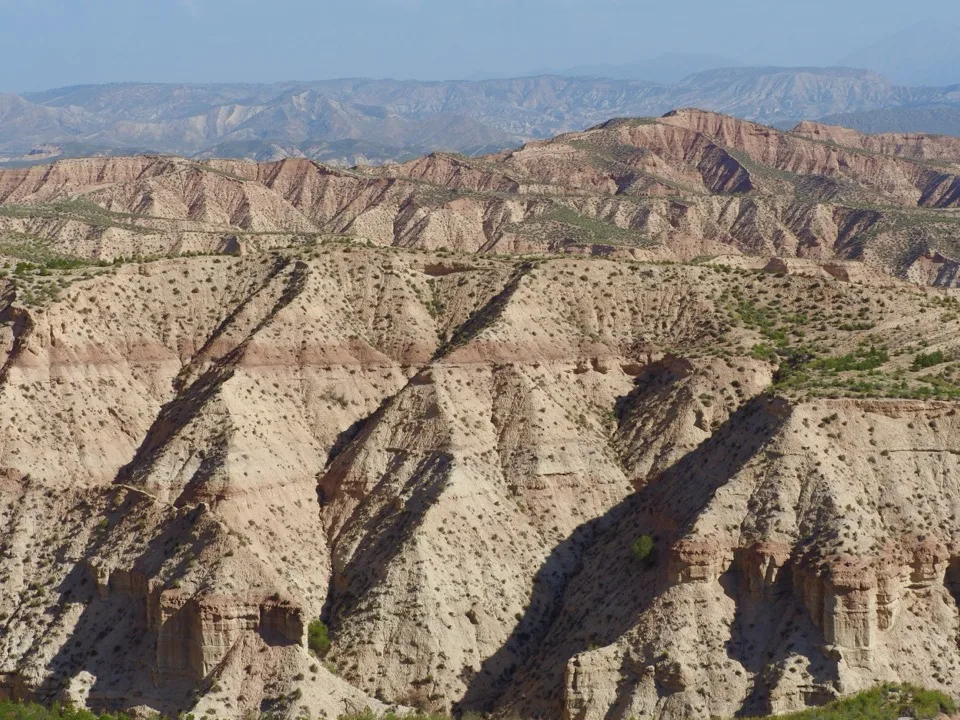
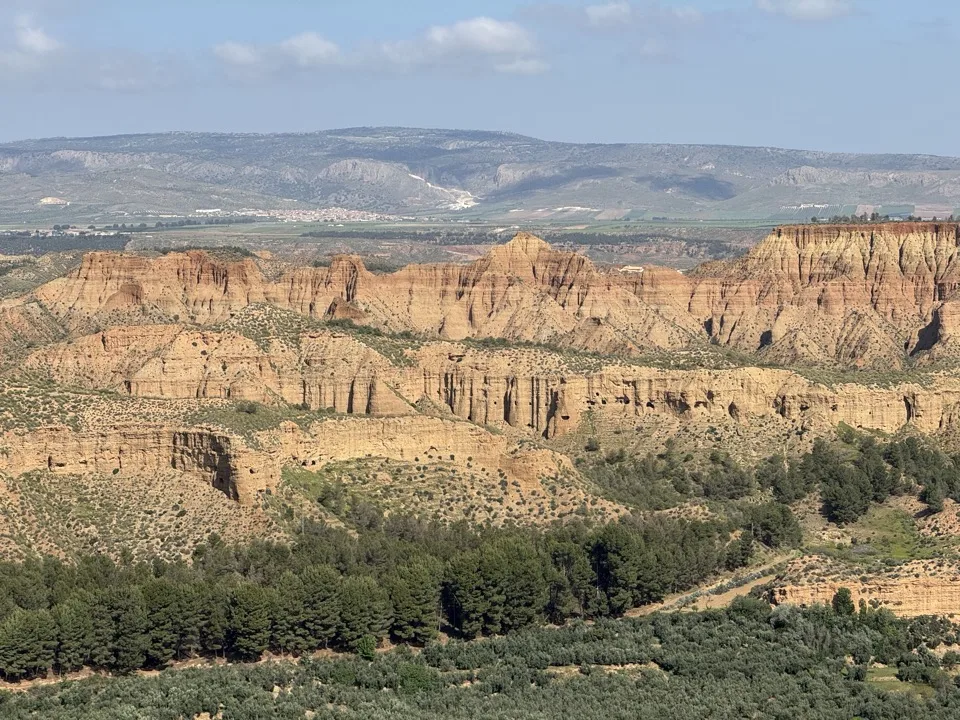
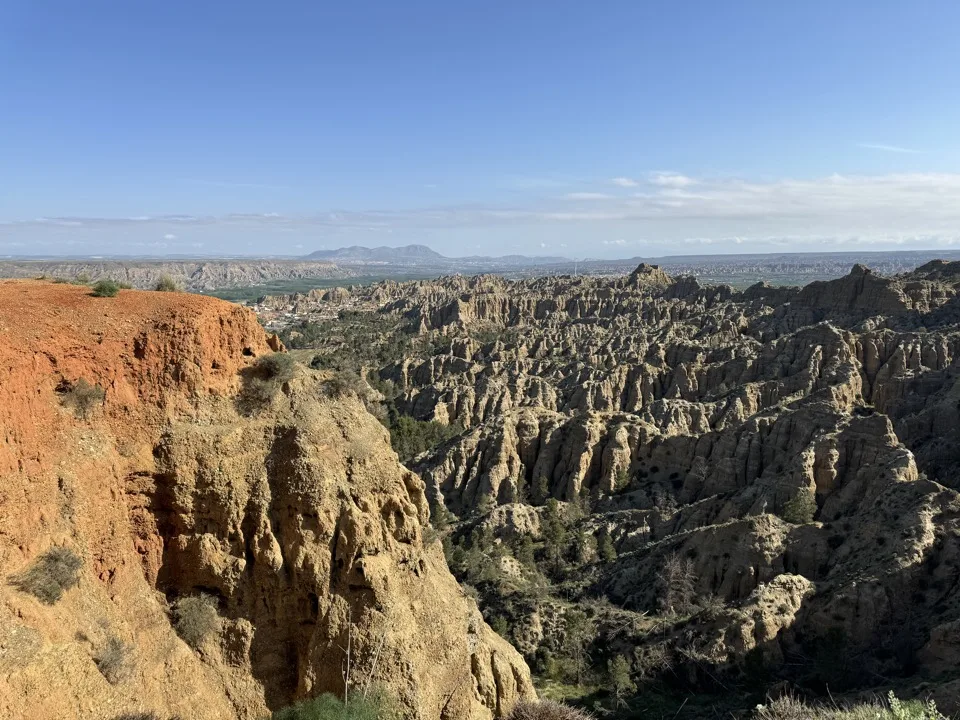
Another perk of staying in Guadix is being able to enjoy the Badlands landscapes. Guadix is part of the geopark, and the scenery is very similar to Gorafe. Just a few minutes from the town, there are several viewpoints accessible by car. If you haven’t done the full Gorafe Desert hike, you can opt for shorter walks in the Badlands. Here are three viewpoints we visited by car.
First, the viewpoints at Purullena and Marchal, right next to each other, offering beautiful panoramas:
Next, the viewpoint at Beas de Guadix:
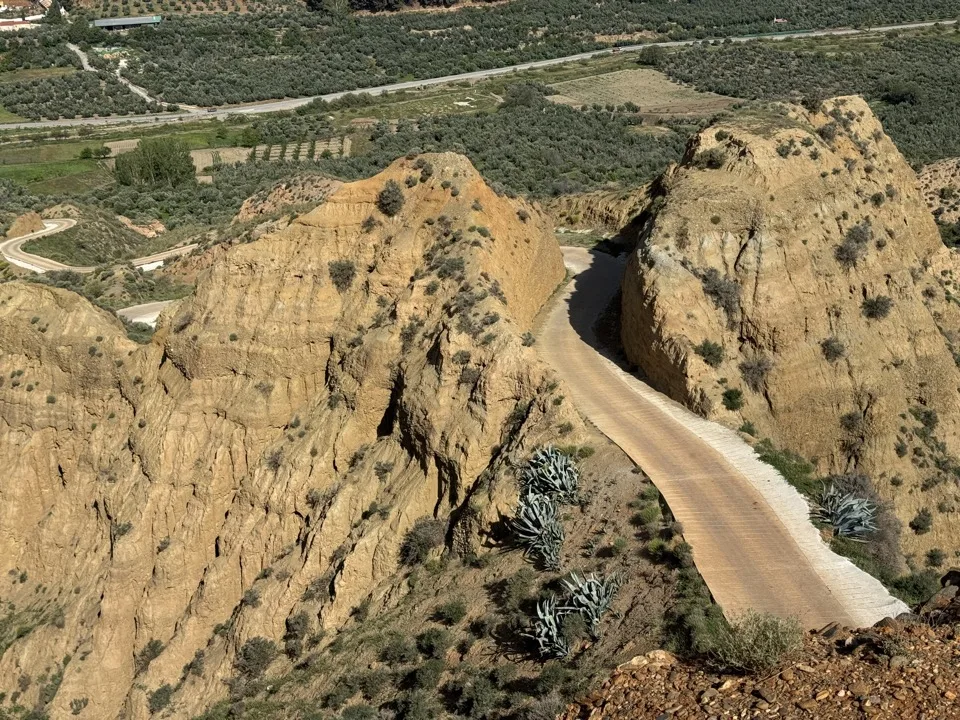
Finally, we left the Badlands via a scenic road. Our next destination? Granada!
***
In Conclusion:
I hope I’ve inspired you to explore this corner of southern Spain. The Gorafe Desert and Guadix region offer breathtaking, cinematic landscapes. The Gorafe Desert hike is challenging, but you can always shorten it. Staying in Guadix lets you see a lesser-known, quieter side of Andalusia. Spring seemed ideal for this region—avoid the summer heat.
And if you enjoy family hikes, check out my article on the Caminito del Rey hike in western Andalusia—it’s very easy. Next time we return to Andalusia, we plan to explore another desert: the Tabernas Desert!
***
So, are you tempted by the Gorafe Desert and the Guadix region?
Visiting Camden is very often on the agenda of anyone travelling to London. In particular, if you are in London with your family and have teenagers with you, there is a very good chance that this area will appeal to them! It’s an alternative, offbeat, slightly rock-and-roll neighbourhood – and therefore very cool! The first time I went there, I was 15. It was on a school trip. Camden left a strong impression on me because of its atmosphere and its “underground” style. For those who, like me, knew Camden in the 80s or 90s, I should point out that it has changed quite a bit since then! Camden Market no longer looks like a flea market full of “bad guys”!
Camden Market is now more polished, more touristy, almost “bo-bo” (bourgeois-bohemian)… The market shops have been redone and renovated, and food stalls have taken the place of the old little craft and knick-knack stalls of all kinds. The first time I went back, I was even a little disappointed not to find the old spirit. It’s less quirky, less “a change of scenery”. That said, if it’s your first time in Camden, it’s still a very distinctive area that’s well worth spending a few hours in – especially with pre-teens and teenagers. What’s more, from Camden there is a walk that I really like, along Regent’s Canal. It lets you see a completely different side of London. Very few tourists take the time to walk along the canal from Camden to Little Venice (1 to 1.5 hours on foot). And yet, it’s well worth it! On the way, you can make a detour via Primrose Hill for a lovely distant view over London. Between exploring Camden and the long walk along the canal, you should almost plan a full day (with breaks), or a well-paced long half-day! So? Follow me on this family walk in London, from Camden to Little Venice.
Visiting Camden: the market, its vintage shops and its quirky atmosphere
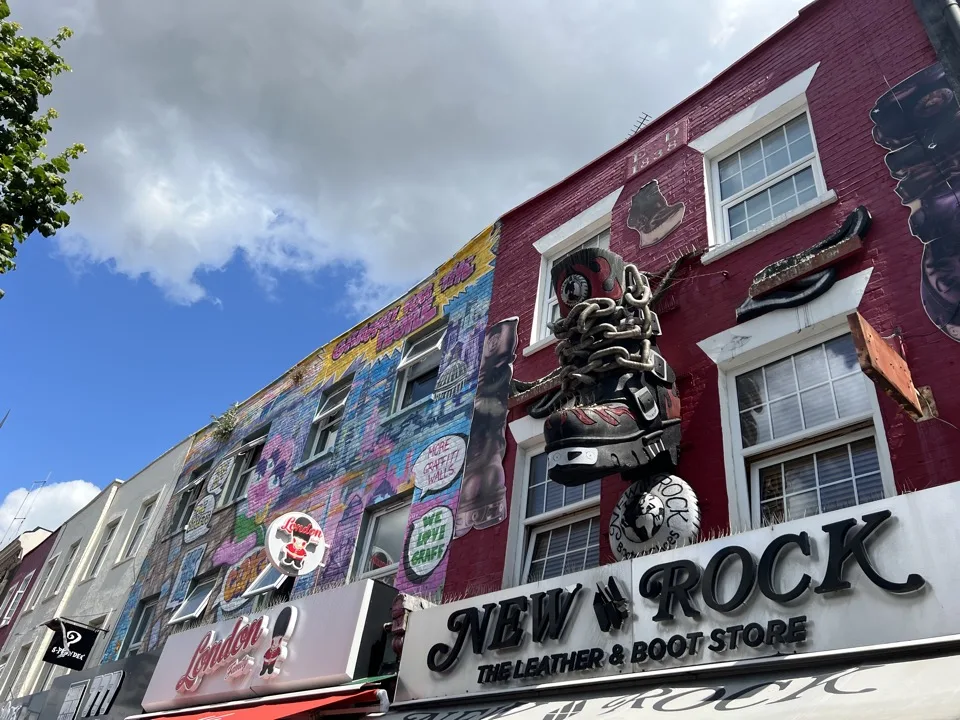
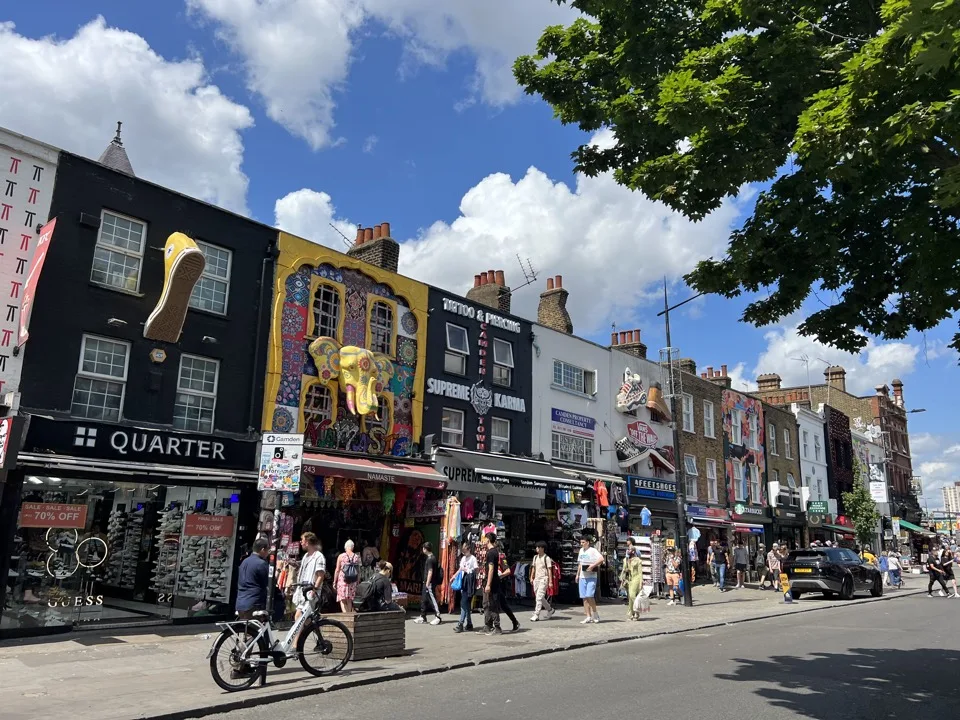
You arrive in Camden via the “Camden Town” underground station. From there, by taking Camden High Street, you’ll quickly be plunged into the area’s scenery with its decorated façades. As I said above: in the past it was similar, but the paintings weren’t all brand new and the people were more original :-).
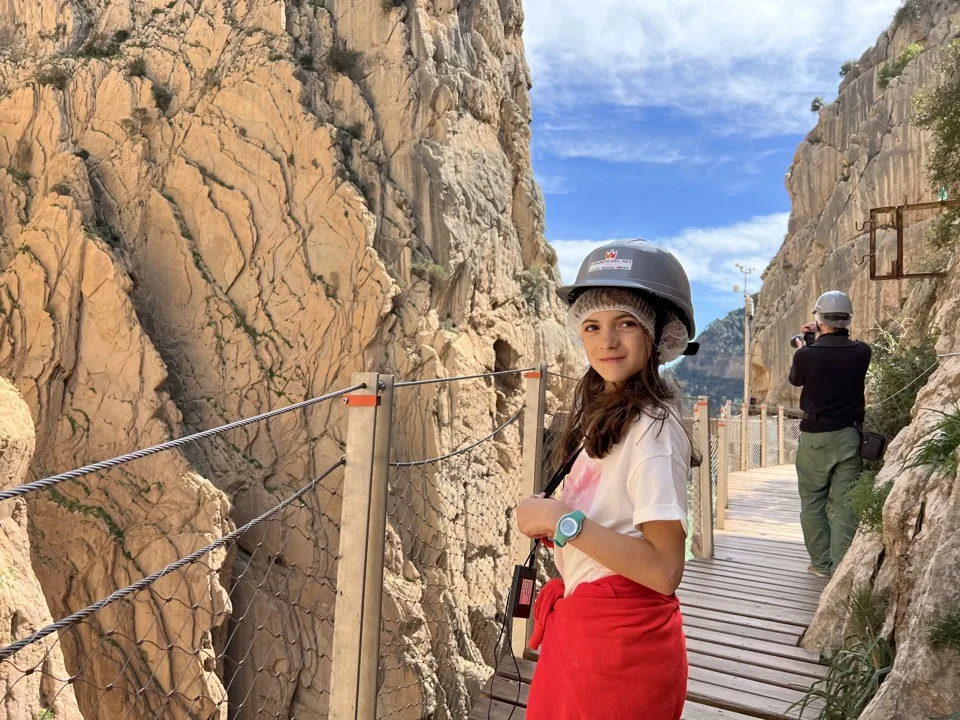
Discovering the Caminito del Rey as a family was a truly wonderful experience during our trip to Andalusia with the children. A few years ago, I had already wanted to venture onto this famous Andalusian path, but it was extremely dangerous at the time as it had no safety measures. It was probably the most dangerous via ferrata in the world! But after many years of closure and extensive renovation work, the Caminito del Rey reopened to the public in 2015, now fully secured. There’s no longer any reason to worry. The path is very well laid out and feels solid! We even found it easier and safer than we had imagined! Easier than other via ferratas we’ve done in the Alps.
The “King’s Path” gets its name because King Alfonso XIII of Spain walked it in 1921 during the inauguration of the dam. During the construction of the dam and the El Chorro hydroelectric power station, workers tragically fell using this makeshift and unsafe route. In the years that followed, bold hikers occasionally ventured onto this abandoned caminito, leading to some unfortunate accidents. In short, that chapter in the history of the Caminito del Rey is well and truly closed. You can now walk this path with your eyes closed — well, almost! From the new route, you can still glimpse the old one: you’ll see it’s a world of difference!
To plan your family trip to the Caminito del Rey, a bit of forward planning and organisation is definitely needed, so I hope this article provides you with all the useful information for your visit.
***
Caminito del Rey with kids: be aware of the age restrictions!
This is a very important point! Before including the Caminito del Rey in your Andalusia holiday plans, you should know that children under 8 are not allowed on the trail. Children’s ID is checked at the entrance. The rule is strict. In fact, even if your children are over 8, make sure you have their ID with you. It would be a shame to be turned away when your children are the right age. When we visited, Titpuce was 10 and Ticoeur was 12.
We have just spent 3 days in Florence as a family. It wasn’t our first time in the Tuscan capital but it was the first time with our two children. We chose the February school holidays because it is a period with less tourists in Florence. In the spring or summer, I found the city oppressive. Indeed, Florence is ultimately a fairly small city. There quickly is too high a density of tourists because it attracts a lot of people with all the artistic beauty it concentrates!
During these three days in Florence as a family, we took our time. We certainly made a few cultural visits but very few so as not to overwhelm the children with too many museums and too many paintings. I prefer that they remember a few essentials. We therefore alternated visits and walks in the city. Obviously, we tasted la dolce vita, tasted good ice creams and dined in small trattorias. Here I share with you our program for discovering Florence with children, a program that we wanted to be as balanced as possible, between culture and strolling to please the whole family!
Age of children: Ticoeur 14 years old and Titpuce 12 years old. Ticoeur has been learning Italian at college since last September and Titpuce is our little budding artist so Florence was a destination that seemed interesting for both of them.
Travel period: February school holidays. We were very lucky with the weather: bright sunshine every day!
3 days in Florence as a family: our program
Day 1: stroll in the old center, first ice cream and sunset over the city
As I said in the introduction, the historic heart of Florence is not that big. You can discover everything on foot. I would say you can explore the historic heart of Florence from east to west or north to south in just half an hour. In addition, as is often the case in Italy, traffic is extremely limited in the center. Only local residents are allowed to drive through. It’s really appreciable in terms of noise and safety. Florence is a city where it is good to walk with children, without the stress of traffic.
Piazza del Duomo and Piazza di San Giovanni:
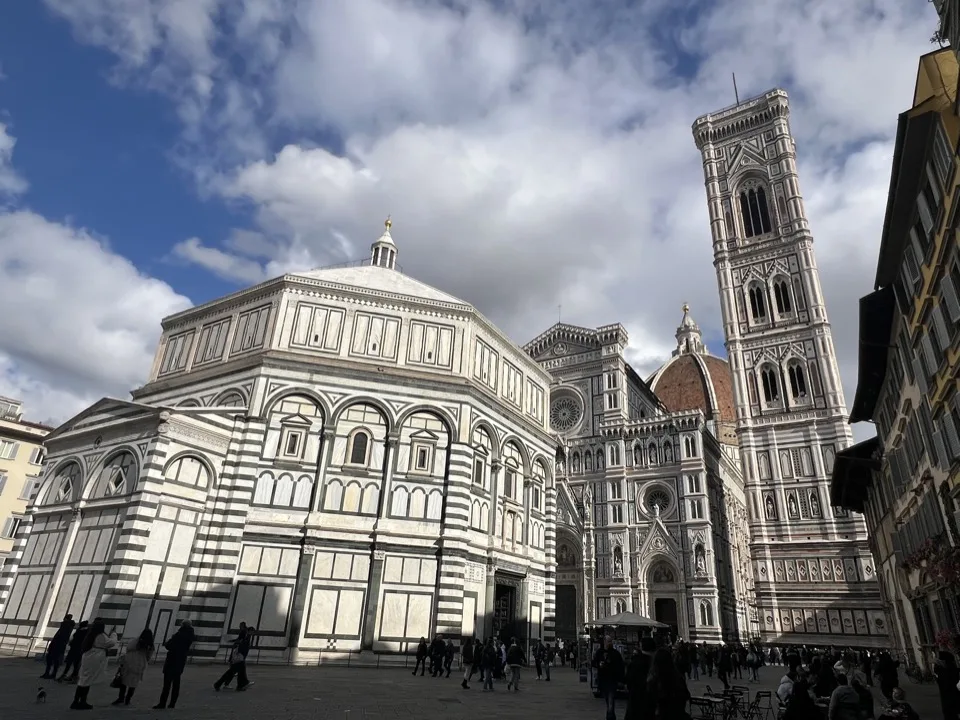
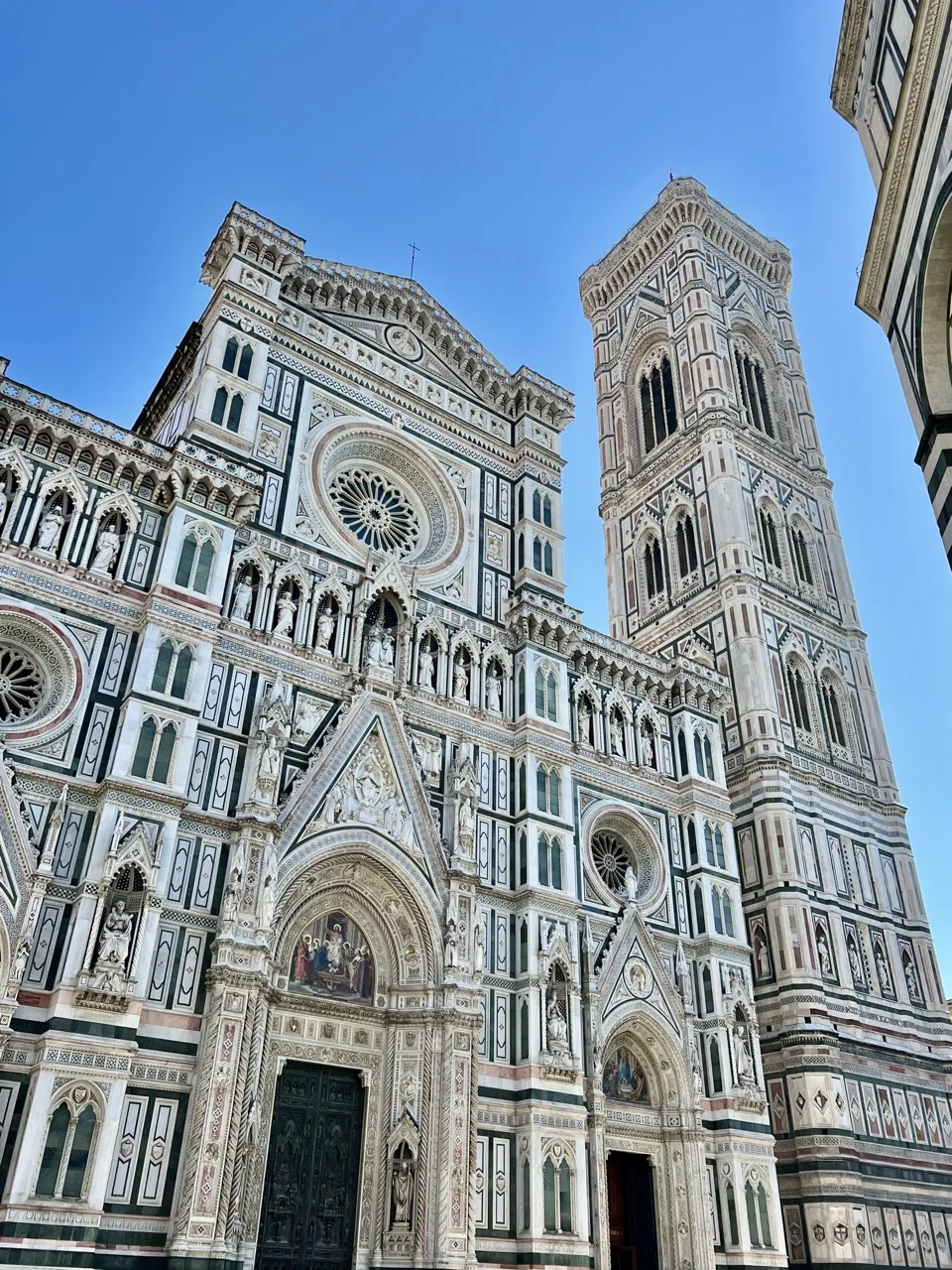
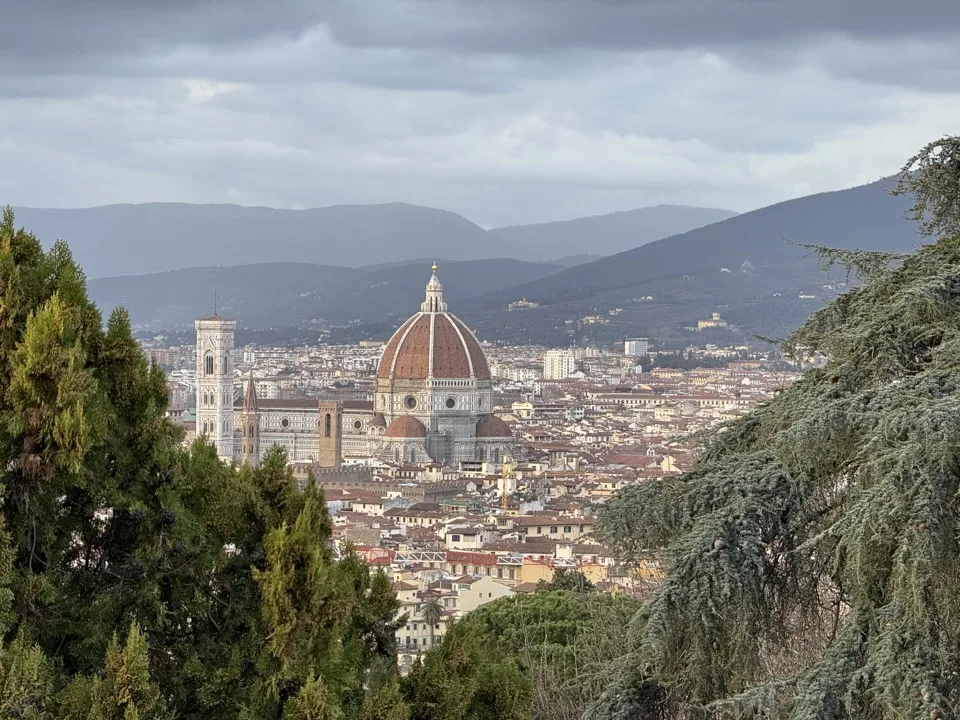
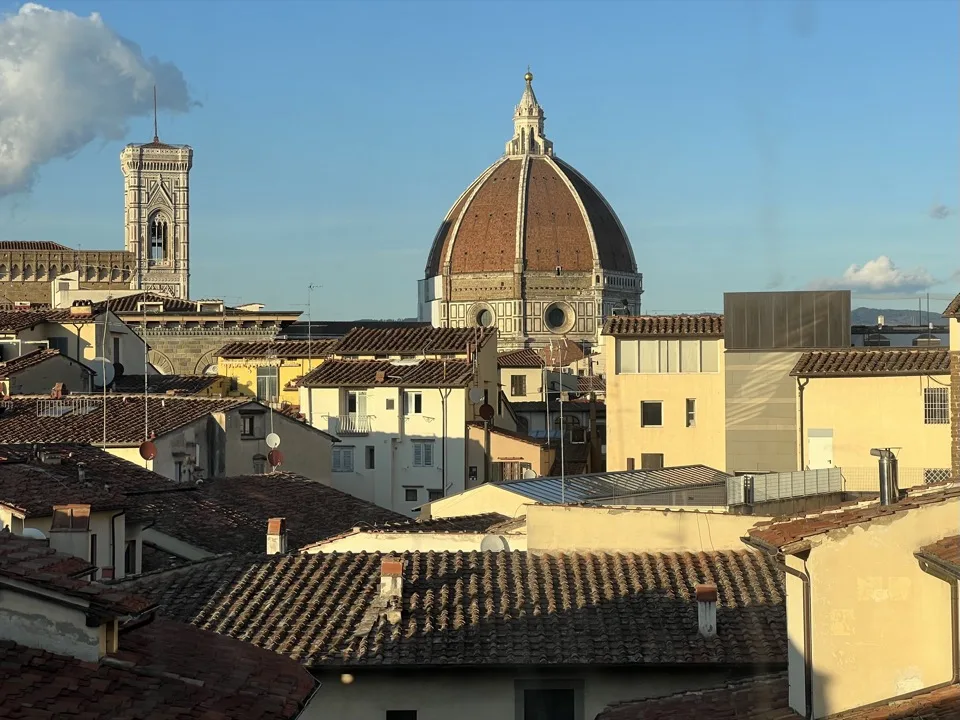
For our first walk, we walked near the Duomo (Cathedral of Santa Maria del Fiore), Giotto’s campanile and the baptistery: a harmonious set of three matching buildings, with impressive architecture marking the beginnings of the Renaissance. And what a pleasure since our last visit: the facades are all beautiful, all clean!
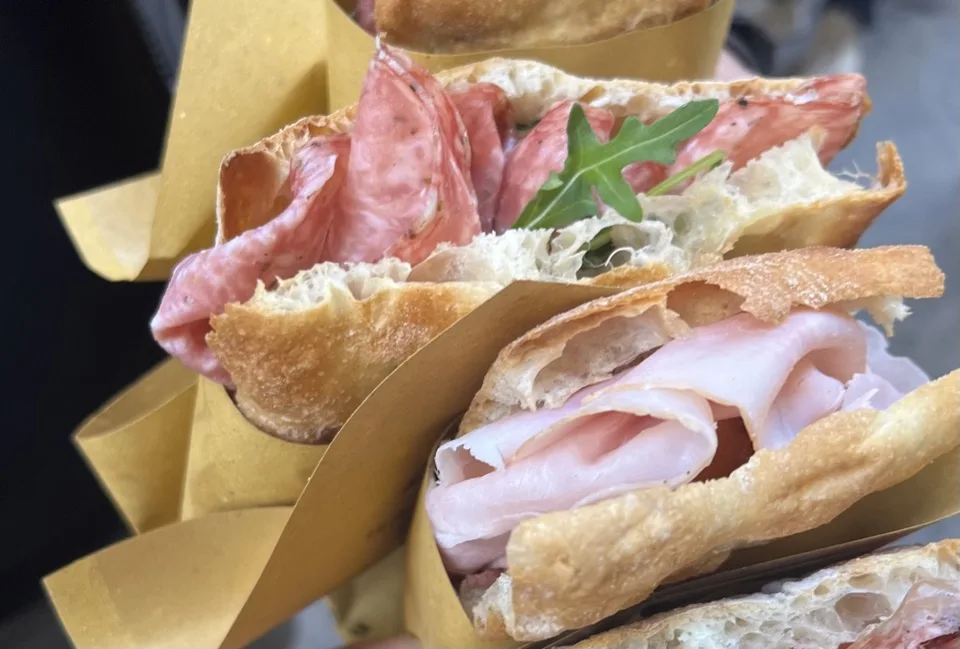
A stone’s throw away, we taste our first schiacciata. It is a specialty of Florence. This is a light, crunchier foccacia served like a sandwich with your choice of filling. Ticoeur and Titpuce really liked it so we chose this snack for each of our on-the-go lunches in Florence (see our good addresses section below). Taking advantage of the sun, we stayed to admire the Duomo square while having a great lunch.
Then, it is time for us to cross the Arno, the river which cuts the city in two, to reach our accommodation located on the other side (Oltrarno).
The Ponte Vecchio:
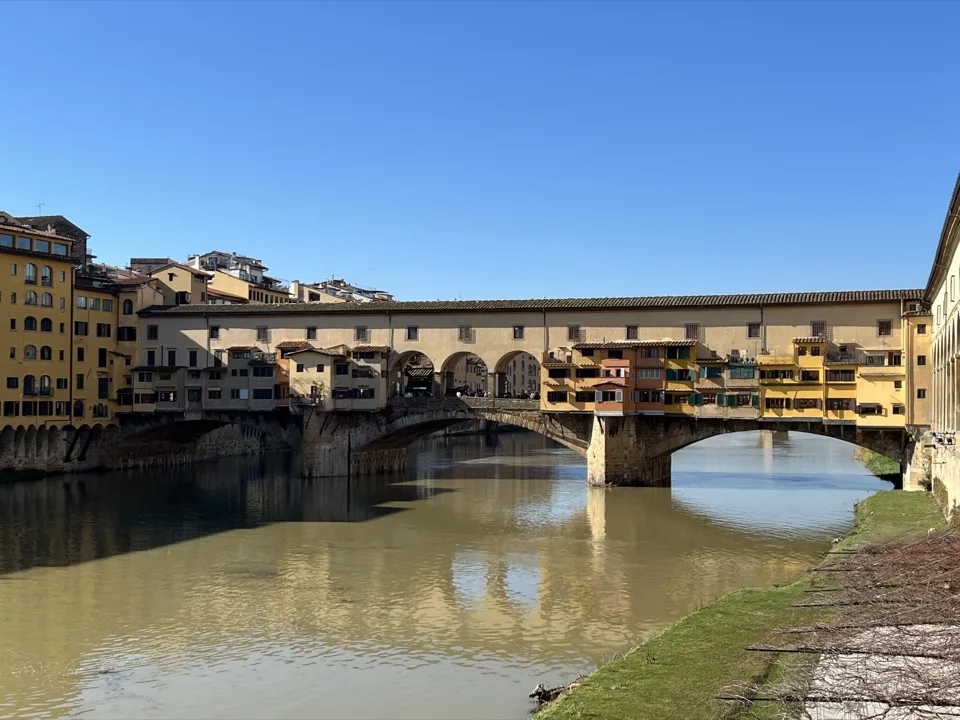
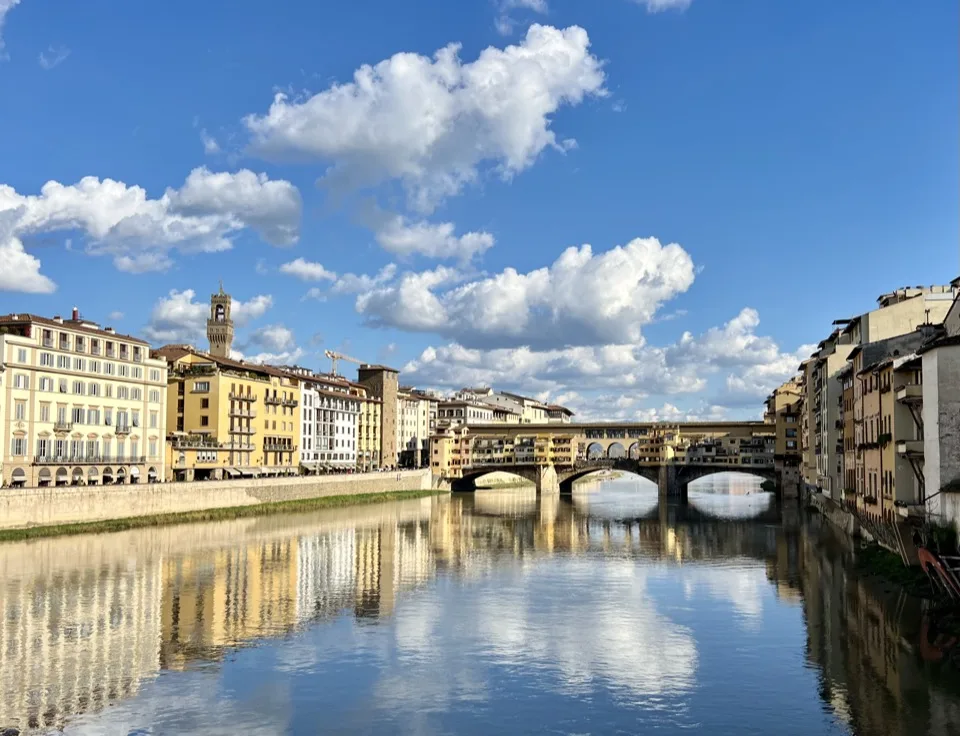
To go from the historic center to the Oltrarno district, we choose without much surprise the Ponte Vecchio, so known for its small shops on either side. Since the Renaissance, there have been jewelers there because Cosimo I de’ Medici had chased away butchers and other food businesses for a more chic and more hygienic bridge. But it is above all the architecture of the bridge which is interesting with the Vasari corridor above, a passage which allowed Cosimo I to pass from the Offices (his administrative offices) to his Pitti Palace in complete safety. It would be nice to be able to cross this corridor to immerse yourself in the world of the Medici. I love secret passages!
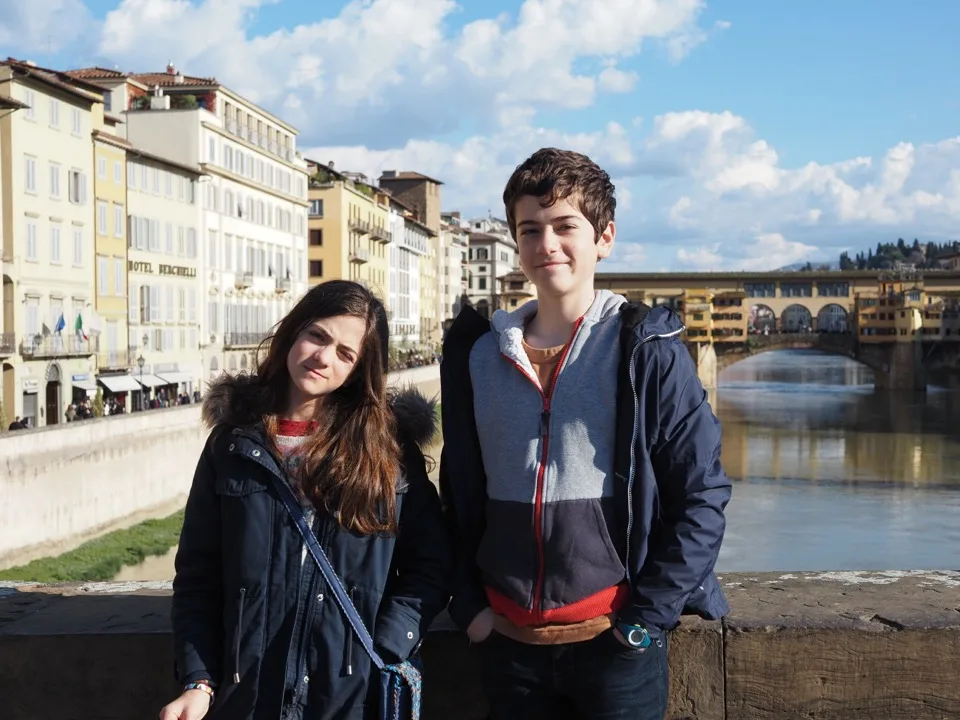
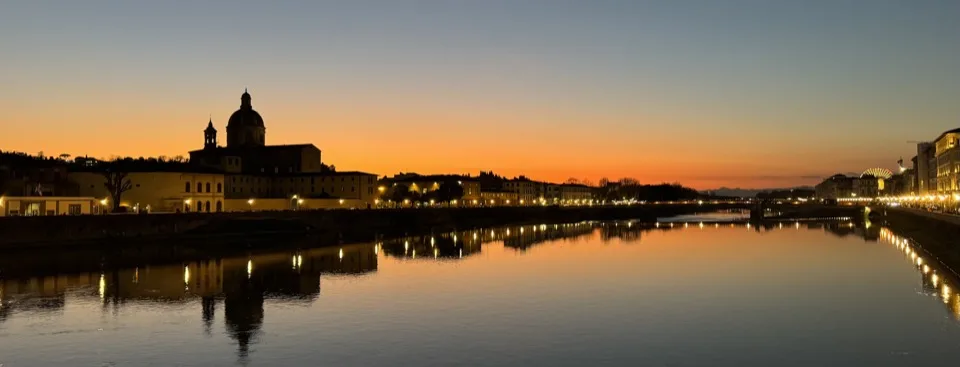
Once in the Oltrarno district and free of our luggage, we walk along the river and taste our first ice cream at the Carraia bridge . We cross back to the other side of the Arno at the Santa Trinita bridge which offers a very beautiful view of the Ponte Vecchio:
Piazza della Signoria:
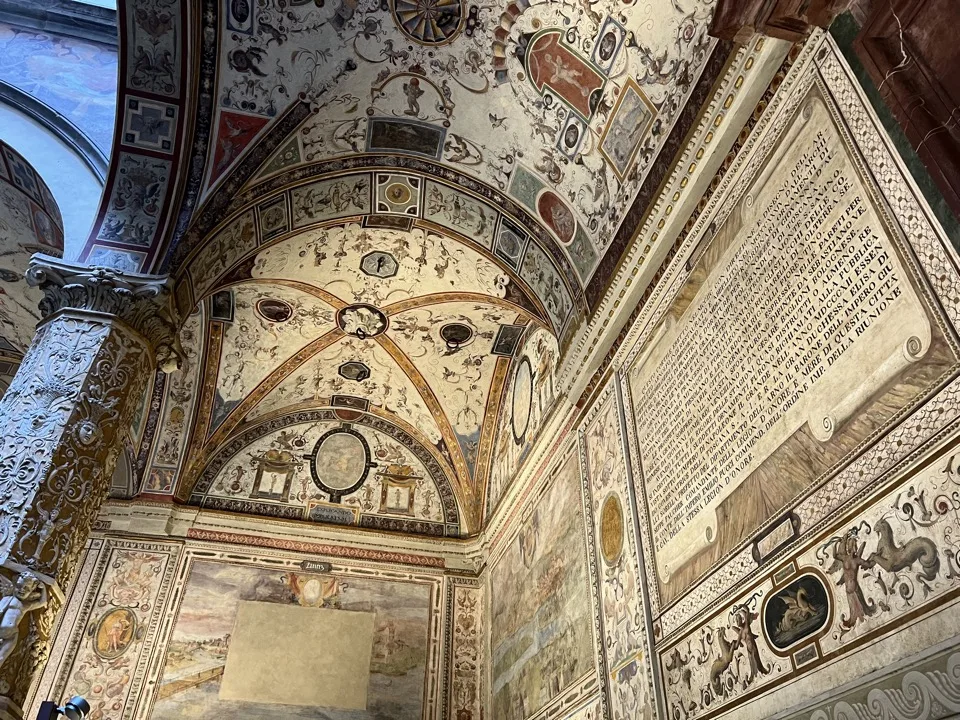
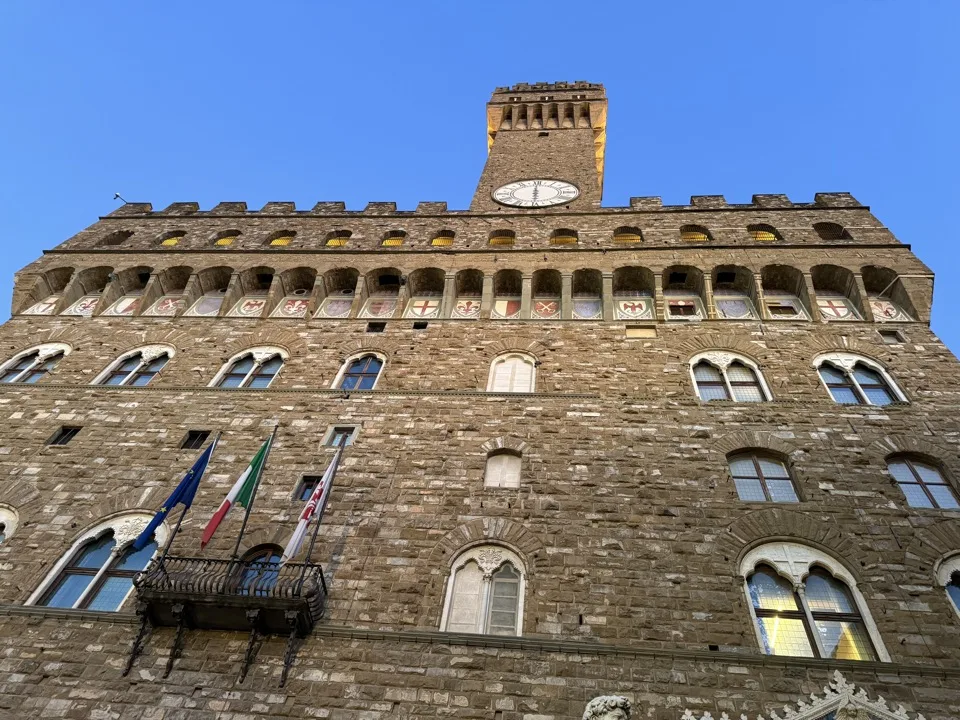
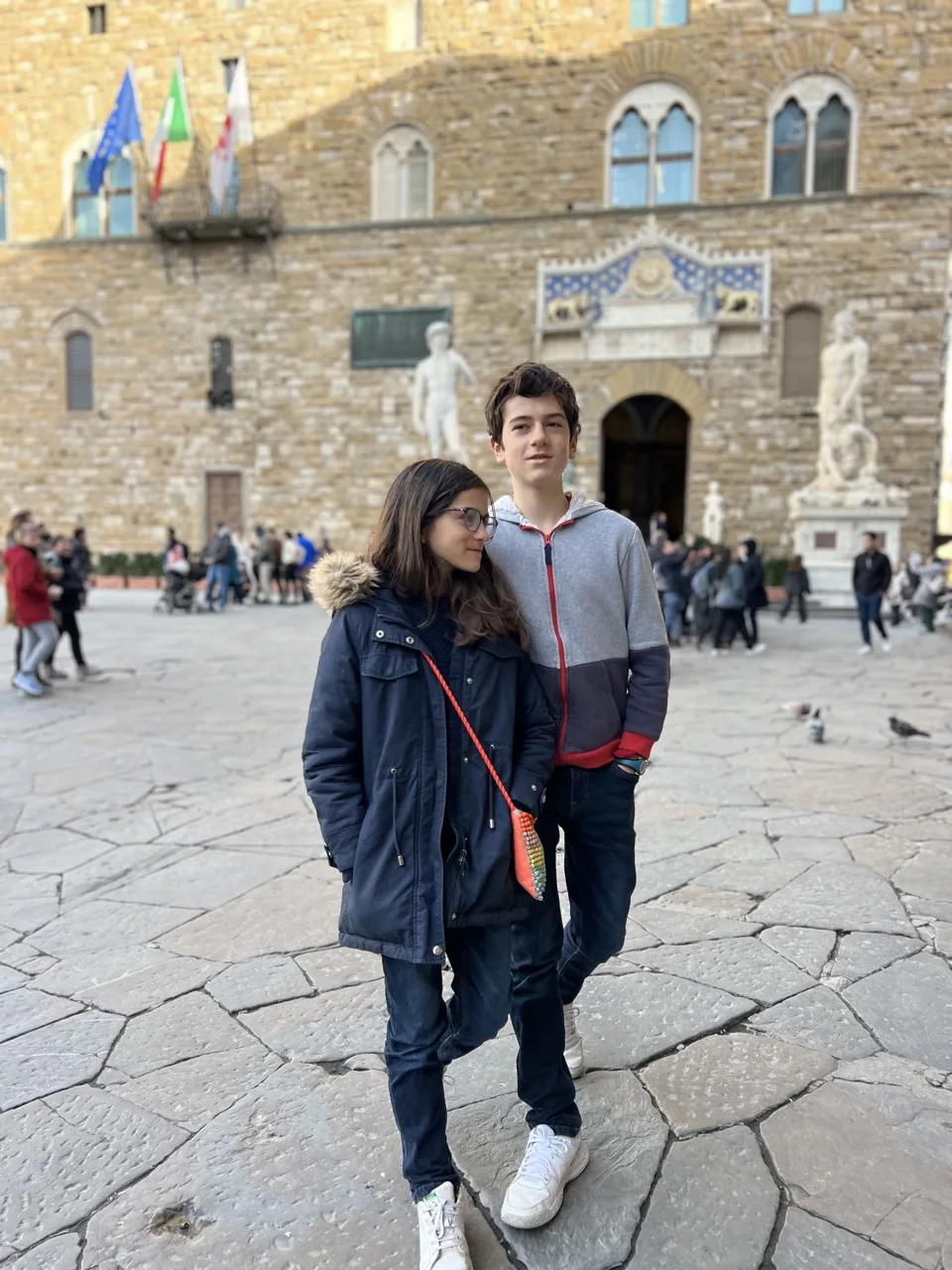
Head to another unmissable place in the city: the Piazza della Signoria where the buildings from the middle ages are concentrated. We enter the courtyard of the Palazzo Vecchio to admire the frescoes and sculpted columns (this part is free).
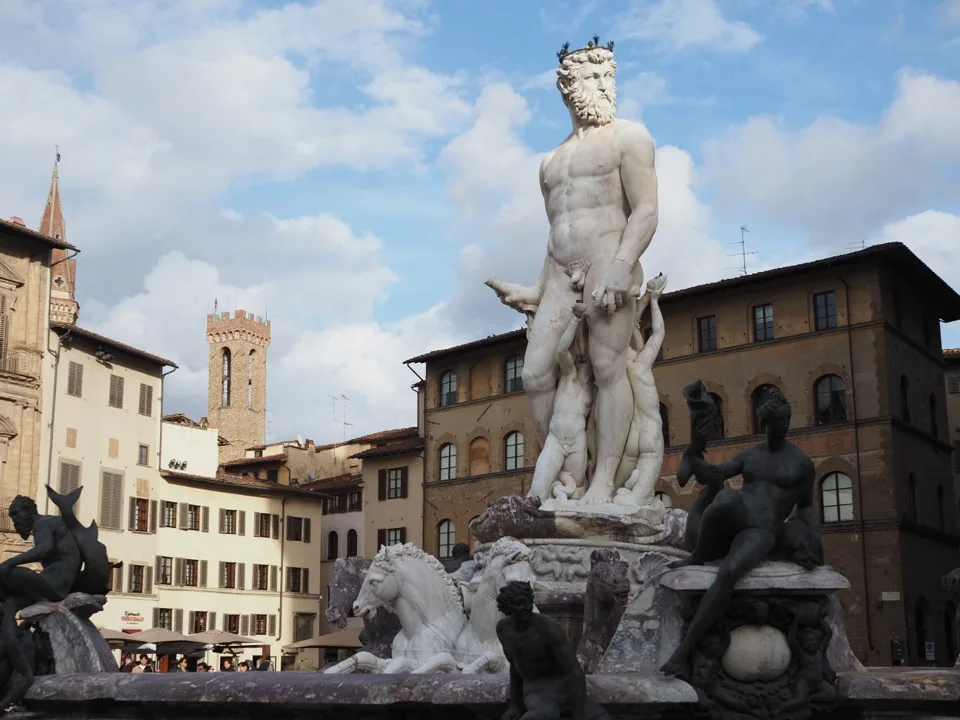
We opt out of taking tickets for the Hall of the 500 because there is already so much to see! In the square, we enjoy the sculptures of the Loggia (it’s also free). We admire the Neptune Fountain, the statue of Cosimo I de’ Medici (the Medici star who had the Uffizi built) and of course Michelangelo’s immense David! In the square, it is a copy of the real sculpture which is in the Accademia Gallery but it really has its effect, especially since we do not plan to visit the Accademia.
Piazzale Michelangelo and the Basilica of San Miniato:
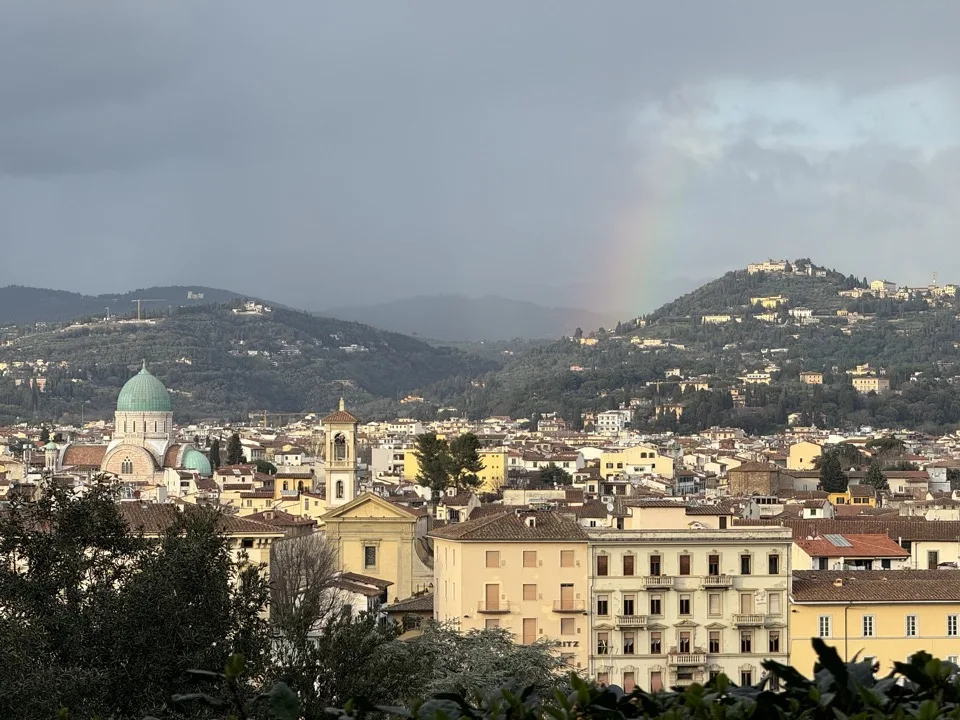
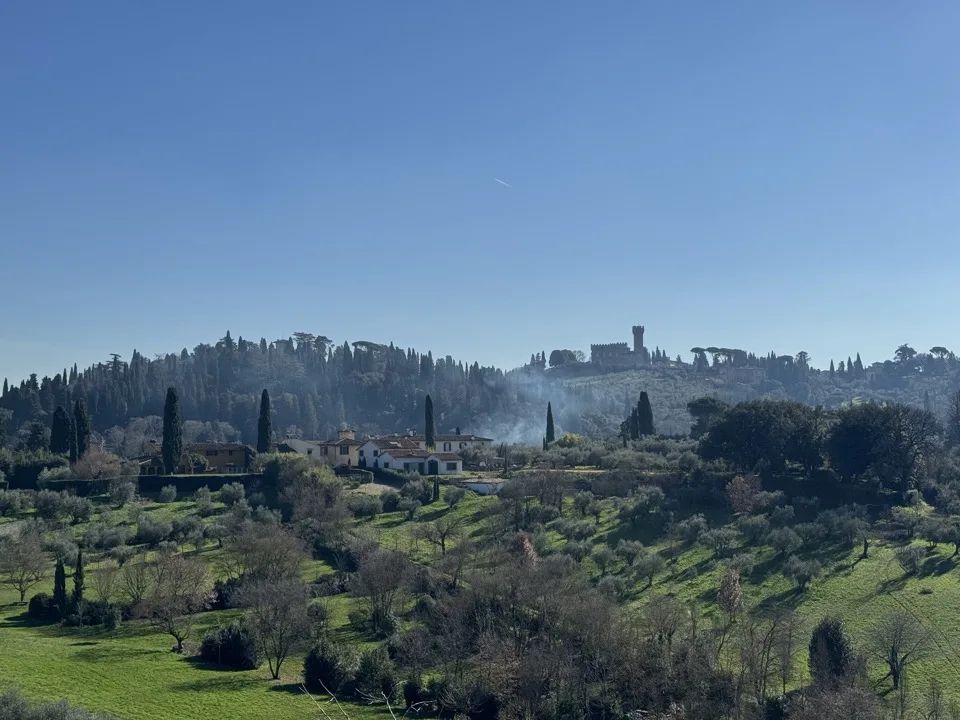
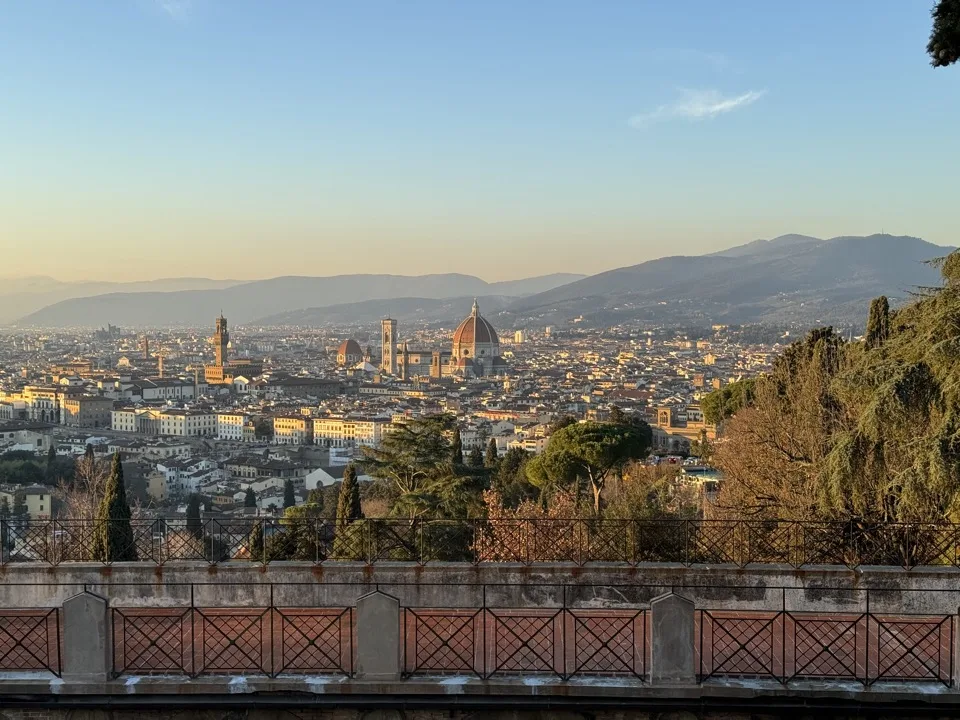
After this artistic and medieval tour, we begin the climb towards Piazzale Michelangelo, famous for its view of Florence. Even though Florence is not very visited in February, everyone present seems to meet in this square to admire the sunset.
But I have a tip for you! You have to go even higher, to the level of the Basilica of San Miniato. Up there, there were very few people: the view is calm and even more romantic in my opinion! We took the opportunity to take some family photos, having learned the lesson from 2023 when we forgot to take photos of the four of us!
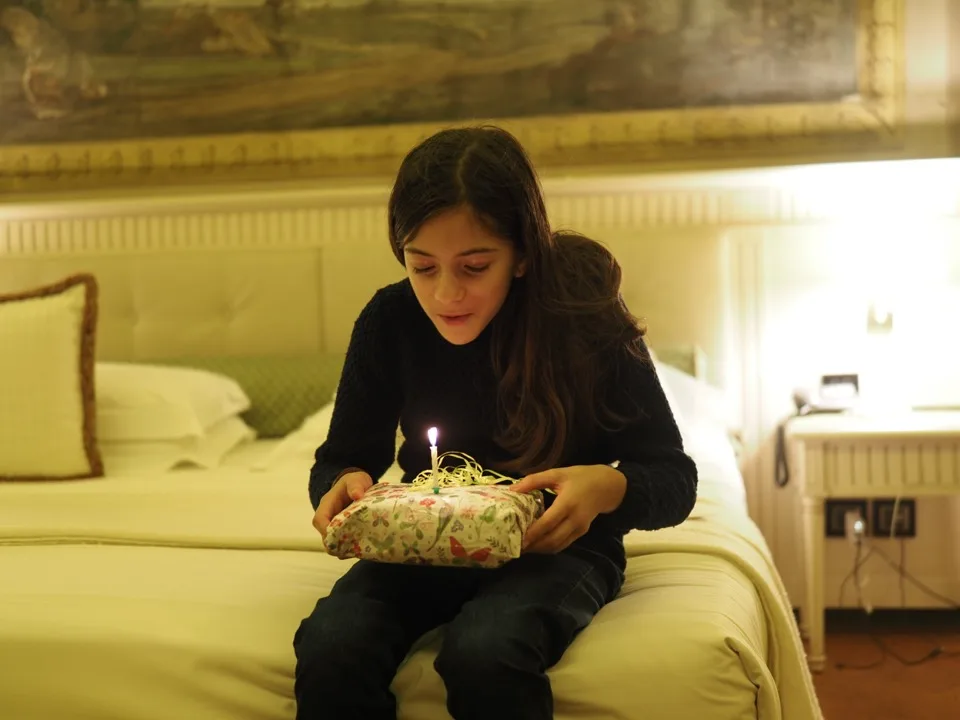
As it is Titpuce’s birthday, we return to the hotel to blow out a candle and open the presents. What class to celebrate your 12th birthday in Florence! We then have dinner in a trattoria in the old town to discover Tuscan pasta recipes (see our good addresses section below).
Day 2: the market, Santa Croce and the Uffizi
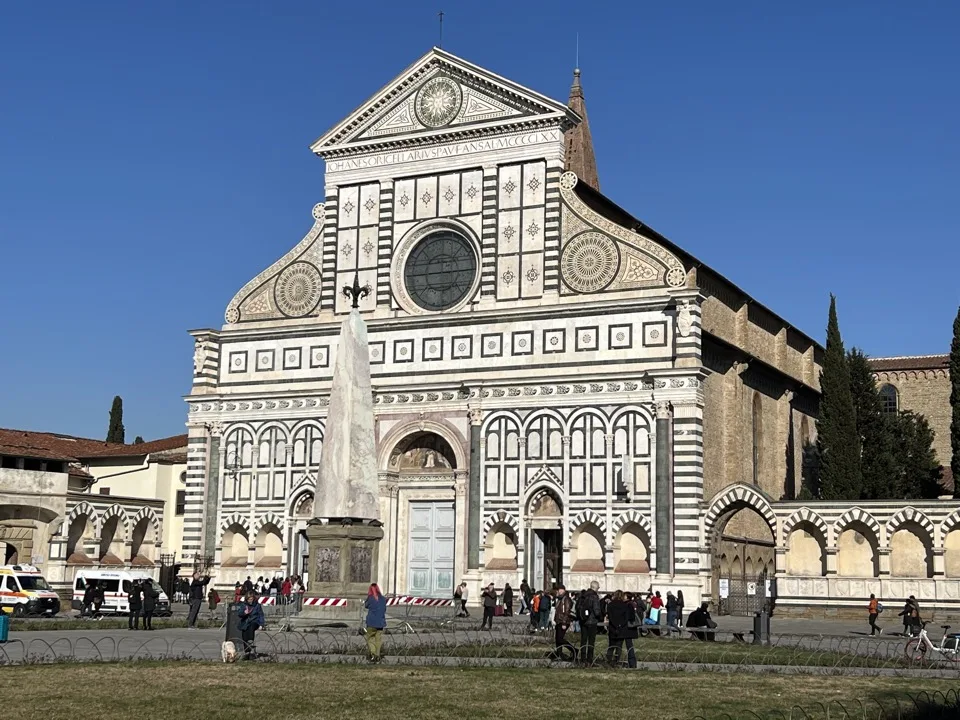
In the morning, we decide to go to the central market by zigzagging through the northwest of the old town: we pass through Republic Square, then in front of the Basilica of Santa Maria Novella with its beautiful colored marble facade:
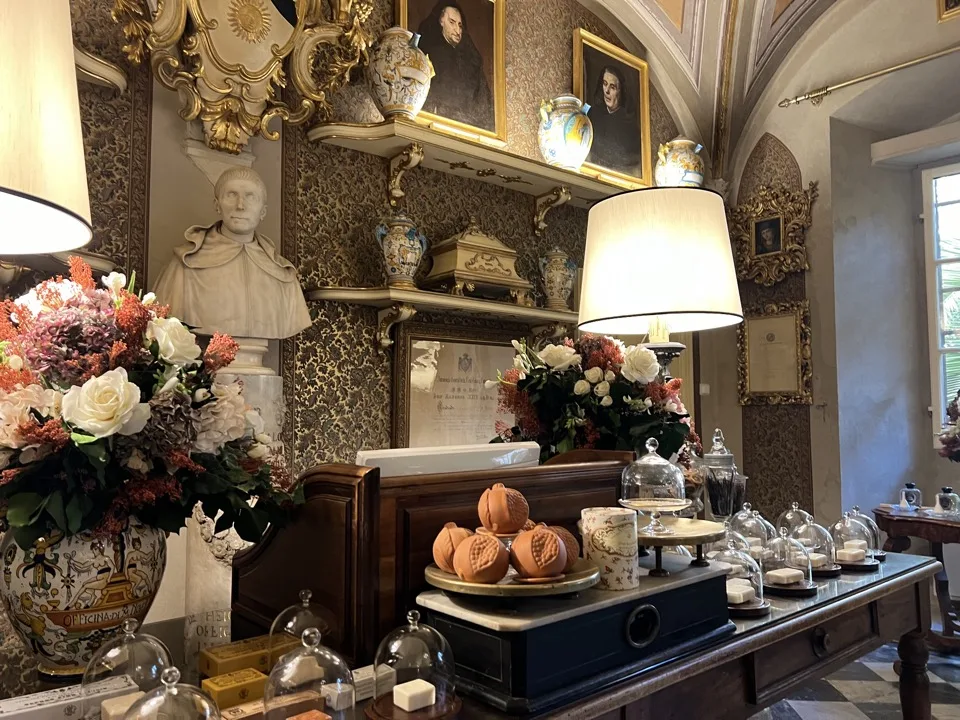
A stone’s throw from the basilica, for the pleasure of the eyes, we enter an old pharmacy, currently a perfumery: the officina profumo, farmaceutica di Santa Maria Novella.
The San Lorenzo district:
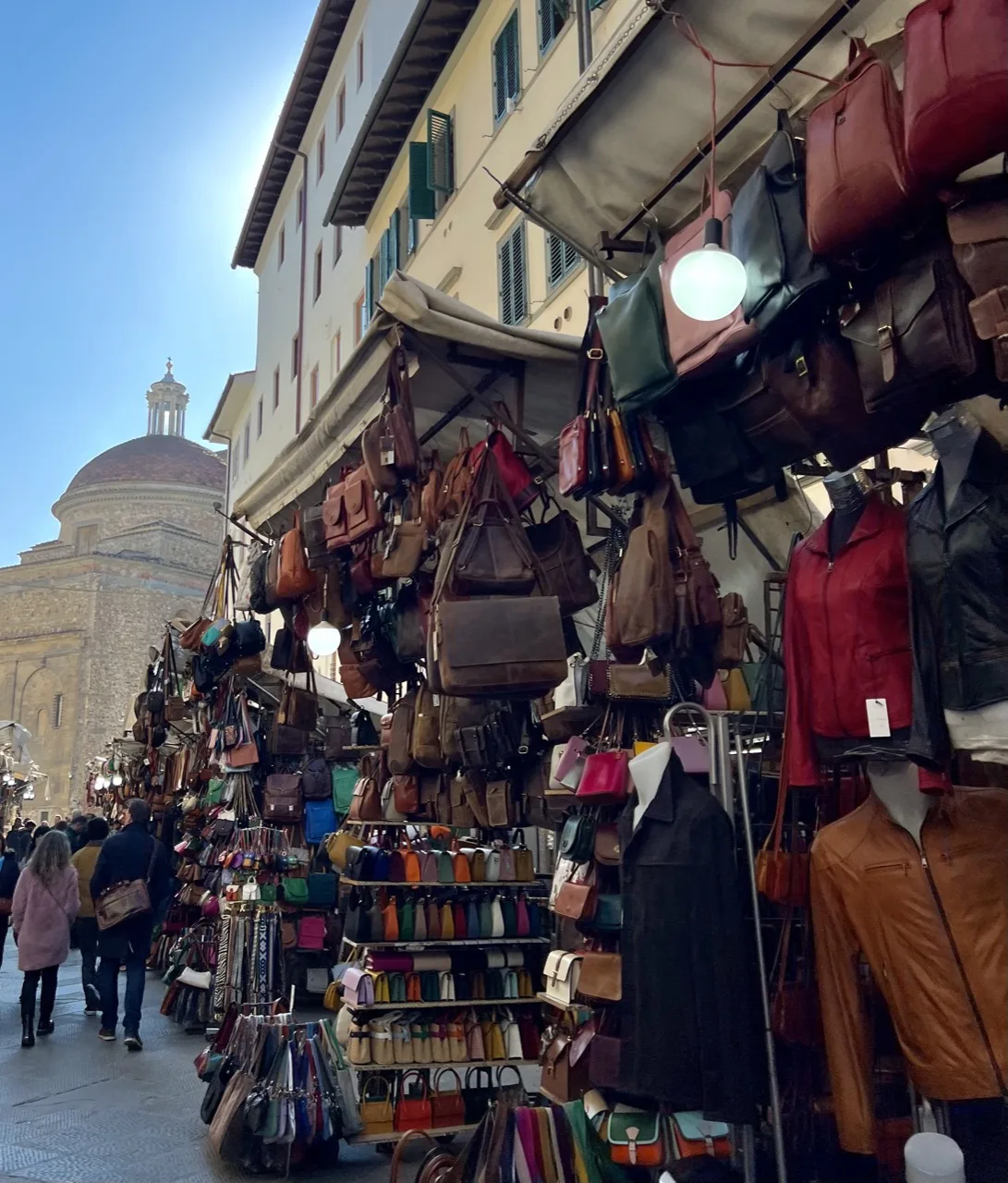
We then go to the San Lorenzo district, stronghold of the Medicis. Next to the San Lorenzo church is the building of the Medici chapel but we did not plan to visit it because the afternoon will already be busy! We just want to enjoy the atmosphere of the central market and the leather market, located in this same area. The leather merchants are outside, all around the central market hall. Inside, we look at the different food stalls. If to your taste, this is a place to try tripe sandwiches, another specialty of Florence.
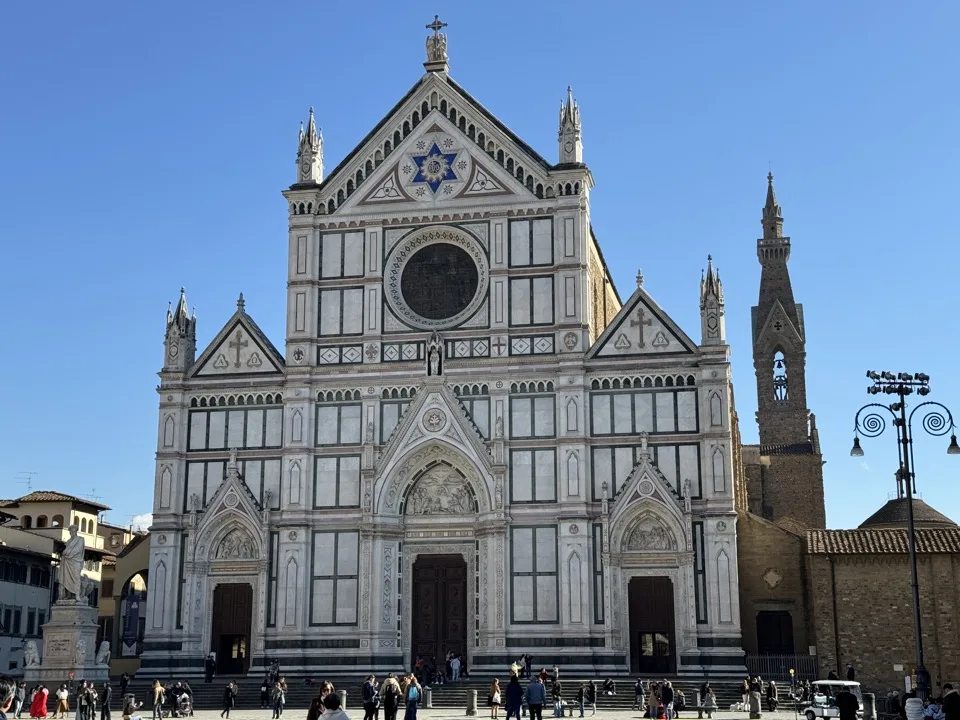
As we still have a little time before our visit to the Uffizi booked for 3 p.m., we make a detour to the Santa Croce church. It is a very pleasant and lively neighborhood.
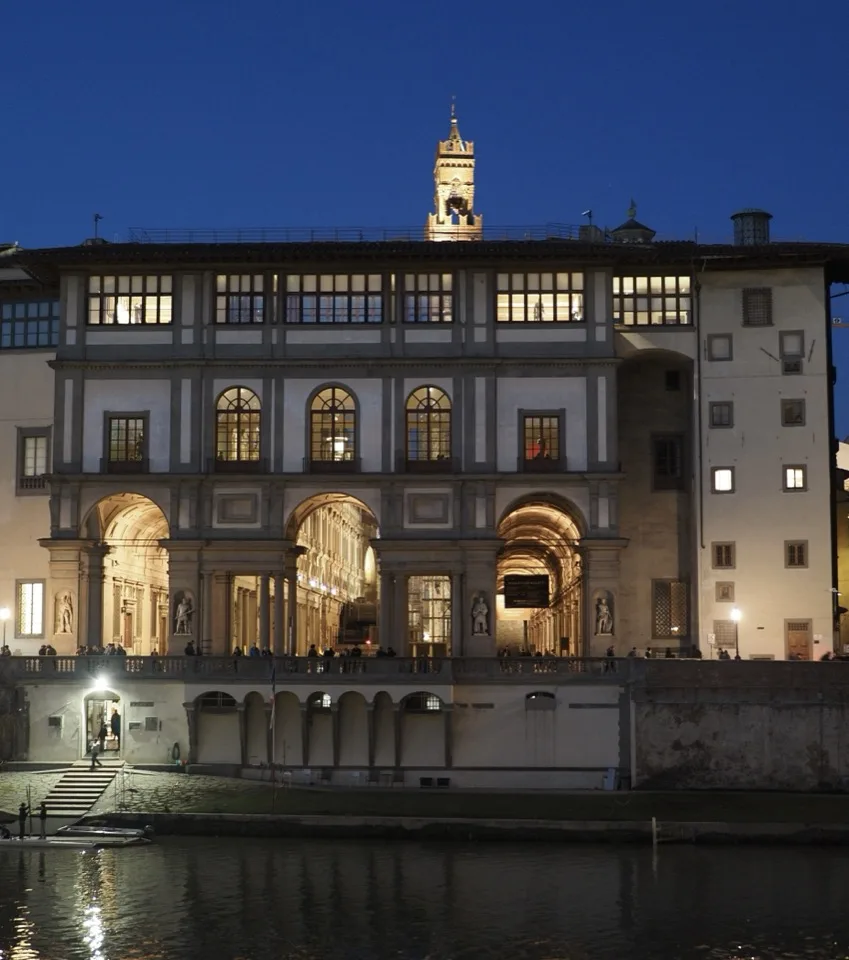
We return to the banks of the Arno to go to the Uffizi for the great artistic visit of our stay!
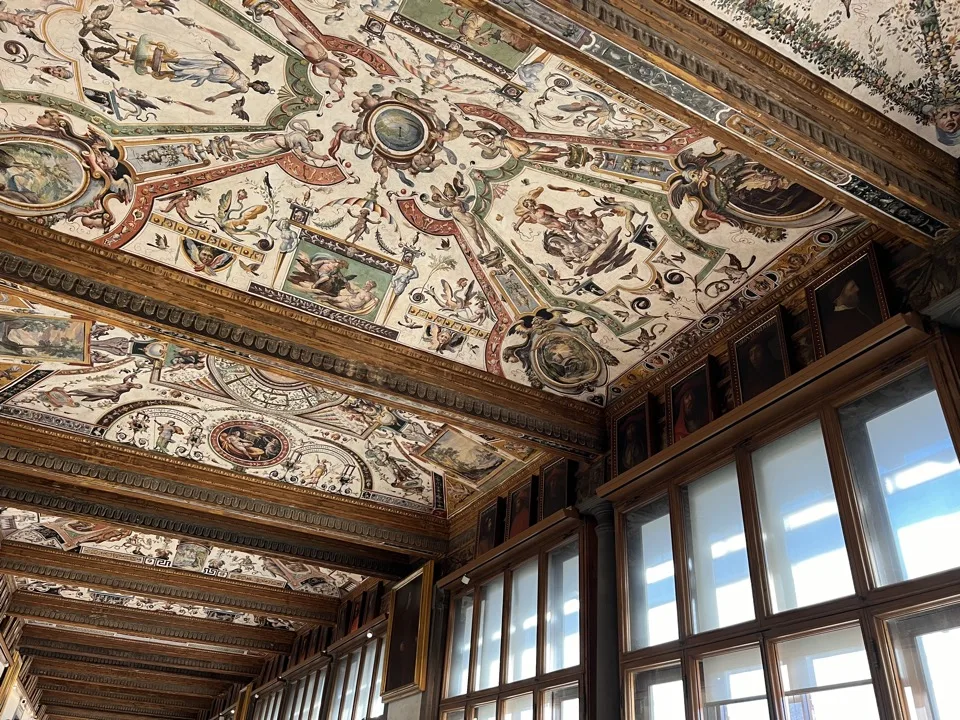
The Uffizi in Florence:
It can be complicated to take children to such a large museum. How to interest them without boring them? Ticoeur and Titpuce love museums and exhibitions and have been used to these kinds of visits since they were little. I still made sure to adapt the visit for them. As a student, I took a course at the Ecole du Louvre and luckily I learned quite a bit about Italian painting. I therefore took it upon myself to comment on the best-known works of the Uffizi in a simplified manner. Therefore, we did not try the audio guide. I played the role of children’s guide!
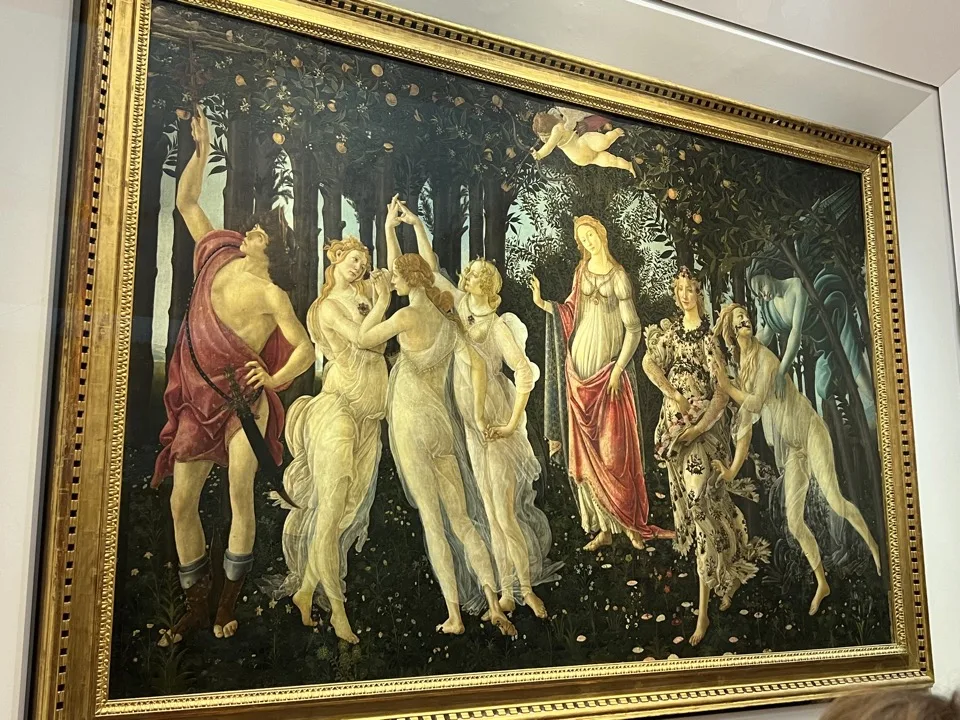
We mainly went from famous painting to famous painting, which already took us 2h30! I think 2 hours in the Uffizi would have been perfect for a family visit. The last half hour, Ticoeur and Titpuce were getting a little tired. For adjusting the visit, I recommend lingering in the rooms of the corridor on the east side where the works of Botticelli can be found. In the west corridor, you can go faster so as not to tire the children but you should definitely not miss Caravaggio ‘s Medusa located at the end of the route.
Practical information for booking Uffizi tickets:
We had purchased our tickets in advance to avoid the queue at the ticket office: see the official Uffizi website. Booking online adds a commission of €4 per person but we were afraid of the queue for this famous museum so we preferred to anticipate and I think it’s a good idea. At least the entrance tickets are not very expensive for such a rich museum! The normal price is €12 per adult and it is free for under 18s (excluding €4 commission). Good deal in February: there was a great special offer out of season for a combined ticket Uffizi + Palazzo Pitti + Boboli Gardens + marquetry museum for €18 per adult and free for children! It was perfect ! Please note that you must visit the Offices first to validate the ticket.
The Uffizi in Florence
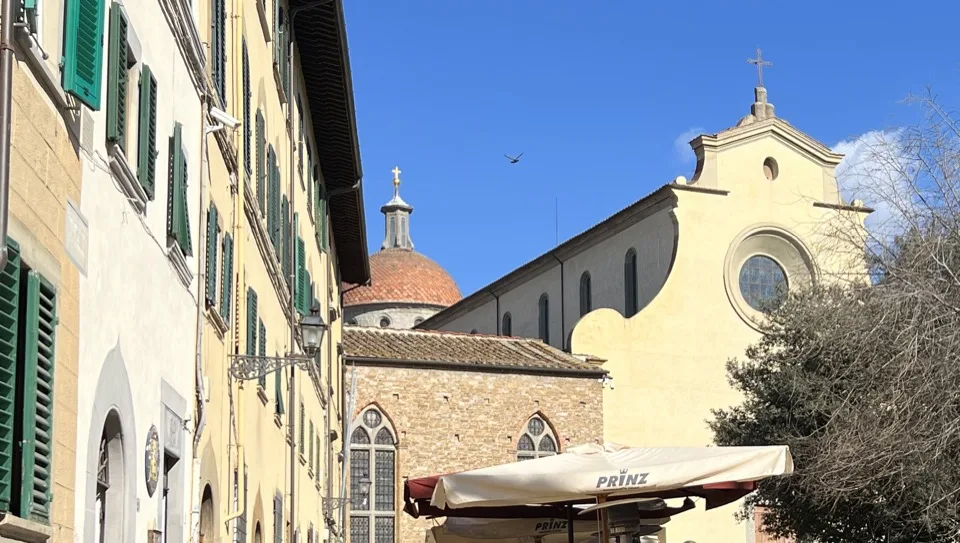
Piazza Santo Spirito:
After leaving the Uffizi, we had a drink on the terrace on Santo Spirito square in Oltrarno. A place whose atmosphere we really liked. We then had dinner in this same area.
Day 3: the marquetry museum and Palazzo Pitti
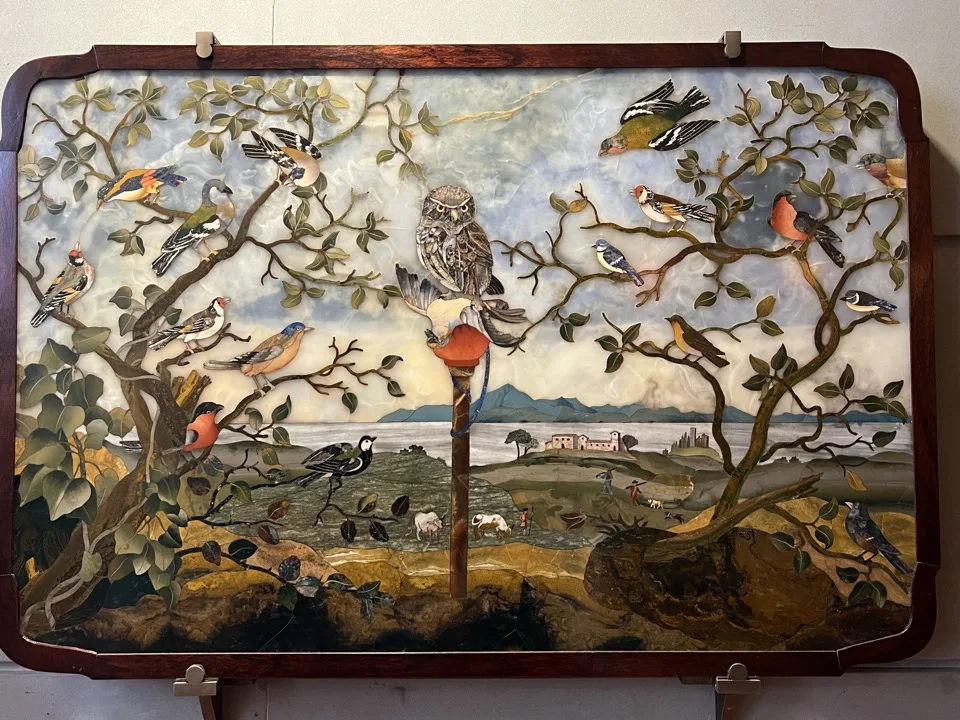
Opificio delle Pietre Dure:
In our combined ticket, there was the possibility of visiting this small marquetry museum. Papa Voyage and Titpuce are particularly fans of this technique and working with stones so it was especially a museum for them! In any case, it’s pretty, sophisticated and the museum is not very big. A pleasant visit for a quiet morning.
As we are in the San Lorenzo district, we return to the market because I had spotted a small handbag that I fell for! After all, it was my birthday!
Palazzo Pitti and its Boboli gardens:
This is the second major visit of our stay. The Pitti Palace, located in Oltrarno, is the great Renaissance castle, home of the Medici.
It is very imposing so not necessarily very elegant seen from the outside but what richness inside! The royal apartments are decorated with pomp, a little too much perhaps ;-).
The part called Modern Art didn’t really appeal that much to us. So we picked up the pace and lingered in two other sections which we really liked. First of all, the costume gallery and its fashion museum:
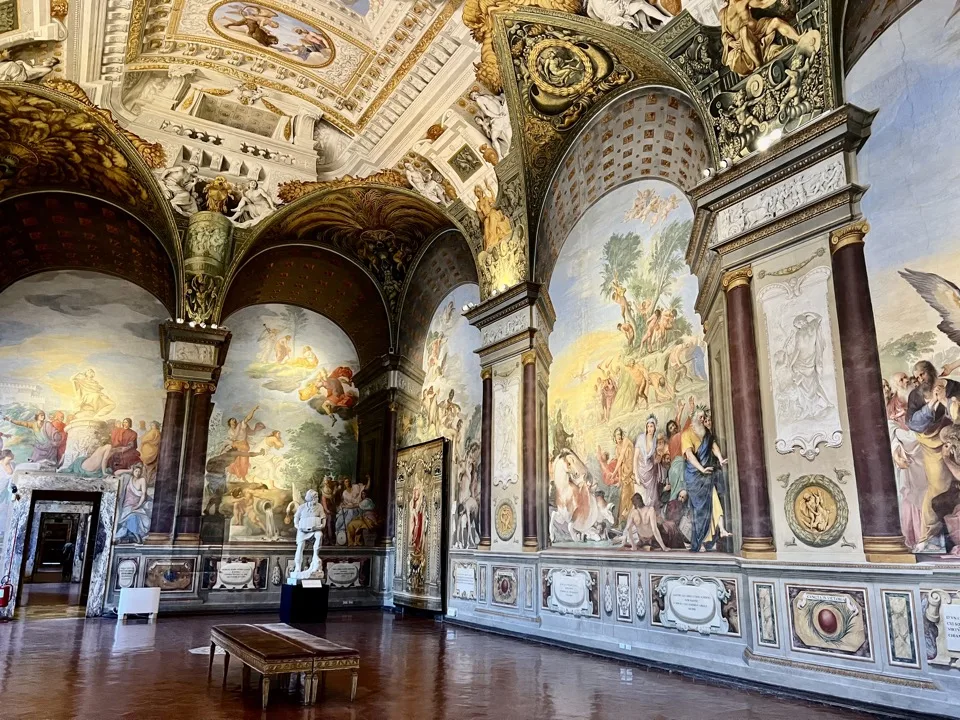
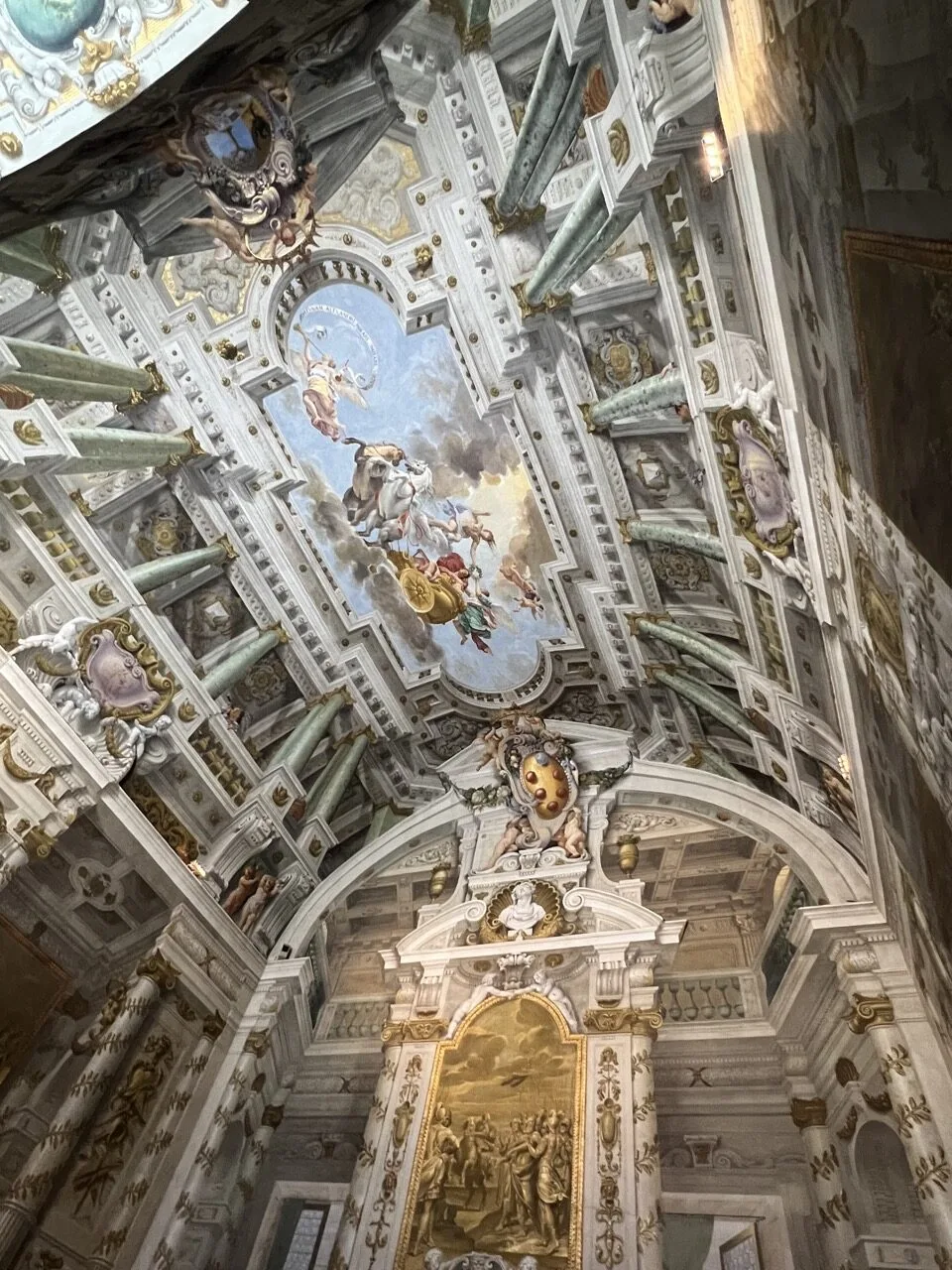
Then, on the ground floor, we were charmed by the immense trompe l’oeil paintings on the walls of the “Treasures of the Grand Dukes” section:
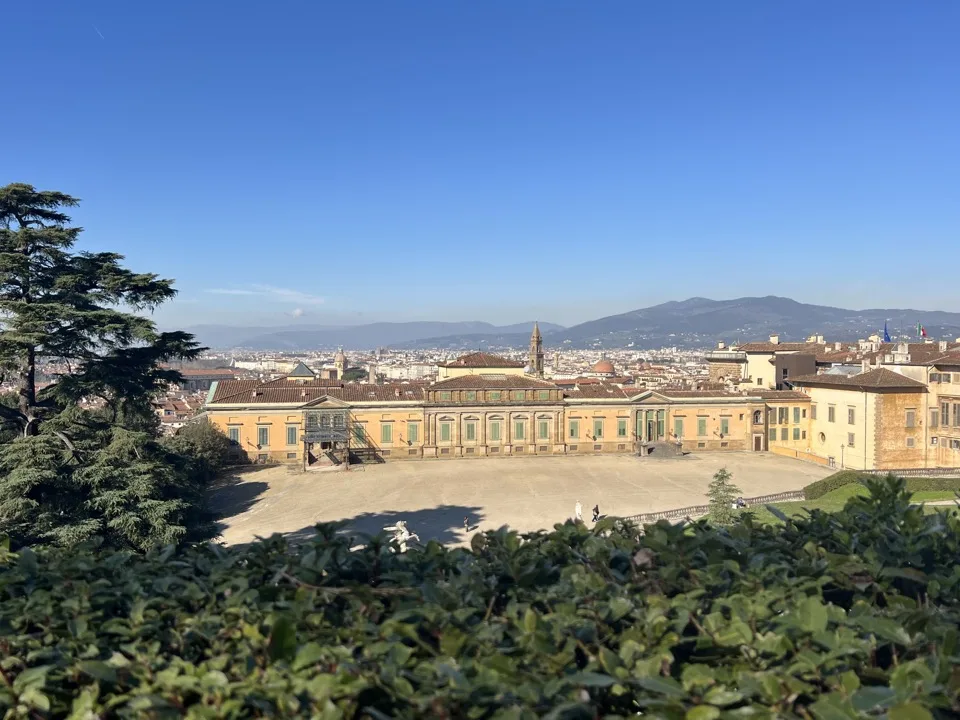
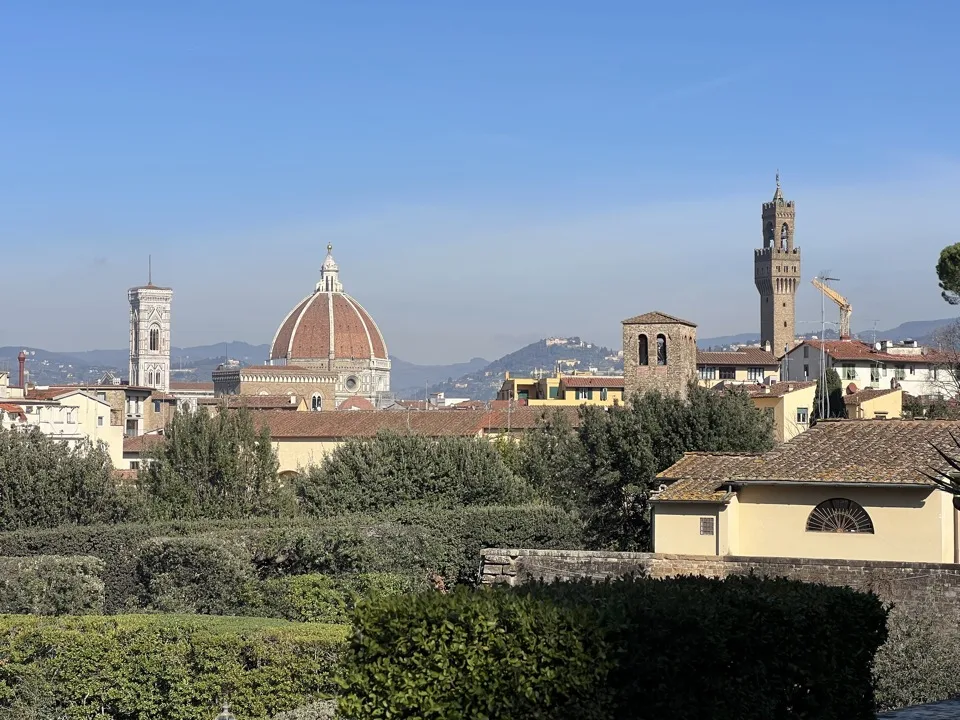
In total, we spent two hours in Palazzo Pitti. We also walked the paths of the Boboli Gardens. These are the palace gardens. It looks more like a large public park than a palace garden but it was nice for the views of Florence:
View from the Boboli Gardens, looking out of town
We were lucky enough to have a combined ticket but if that’s not the case for you, I would say that the gardens are not a must-see and you can just buy the tickets for the palace.
Since we were already on the south side of the Arno and I wanted a beautiful sunset for my birthday, we returned to the viewpoint of the Basilica San Miniato. The light was even more beautiful than the first day!
Florence as a family: our good addresses
Ice cream parlors in Florence:
La Gelateria La Carraia: nice, lots of choice, well located on the river and only €2.50 per cone.
La Sorbettiere: few flavors but it was very good and a stone’s throw from Santo Spirito square which we really like!
Restaurants in Florence:
We mostly ate pasta, so Primi. Fresh pici are a specialty that we particularly appreciated and ate in every variation!
Casalingua: a family and economical trattoria located in Oltrarno.
I’Brindellone: an institution in Florence, also an economical address in Oltrarno (better to reserve a table in advance).
Ristorante Le Cappelle Medicee: a slightly more upscale trattoria located in the San Lorenzo district. Everything was very good but therefore more expensive than the two previous addresses.
To taste the schiacciata :
There are small schiacciata sellers all over the city but I will give you three central and economical addresses. Each time, it is possible to have a glass of Chianti really cheap but we stayed serious for lunch 🙂
I Girone de’ Ghiotti: the most famous spot! The best schiacciata of our stay. At midday, there were few people but just a few minutes later the queue was getting quite long!
I fratellini: right next to the previous one with a little less waiting.
Lo Schiacciavino: in the Santa Croce district
Accommodation in Florence:
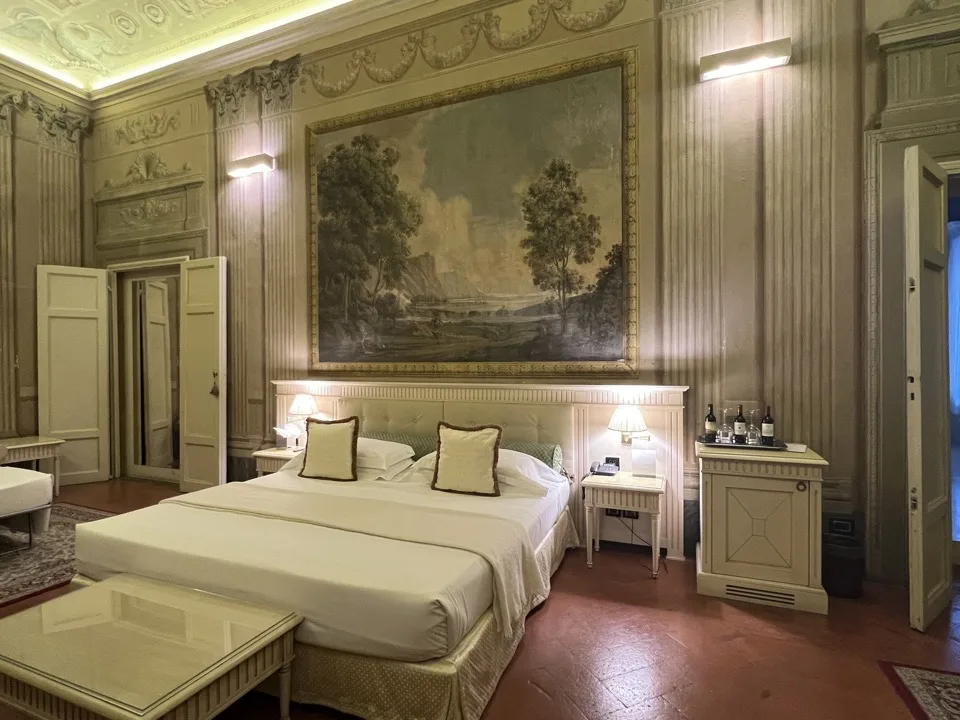
We had booked a quadruple room in an exceptional building, rich in period paintings. The room is very dark because it overlooks a small interior courtyard but what a decor! A very Florentine historical setting! It’s a high-end address, more expensive than what we’re used to booking but we had two birthdays to celebrate so we treated ourselves to this luxury!
I should point out that our quadruple room was €200 per night (the maximum of our usual range) but be careful: by doing a few simulations of dates, I saw that the same room could cost more than double per night! In this case, I really don’t recommend it! It’s beautiful but still! What a budget! It’s not worth double. In short, I let you control the price for your dates and personally I would not spend more than €200 per night: Palazzo Giucciardini quadruple room. Otherwise, generally speaking, Florence is not very big so any location in the center or Oltrarno will be suitable for your stay. I have a preference for the area around Santo Spirito Square, a favorite place! For breakfast, the ideal is to do like the locals and enjoy a coffee and a cornetto in a small bar or a pasticceria. Near our accommodation, we liked the freshness of the croissants at Pasticceria Marino but there are lots of similar little places everywhere!
****
When you book a hotel on Booking by following a link on my articles, it allows me to receive a small commission: it does not change the price for you and it helps me maintain the blog. So thank you very much to those who book the hotels we recommend!
****
The advantages of visiting Florence in February:
There are fewer people in Florence in February! Nothing to do with our previous visits at Easter or in summer. The city quickly becomes too full because it is ultimately small. In February, Venice attracts more people with its carnival. Florence is not deserted, far from it, but it’s just right!
Winter is the best way to avoid the extreme heat that Florentines suffer from. It is a city that regularly experiences heatwaves and lack of water.
In February, it’s cheaper: I told you above about the great promotion on the combined ticket that we bought to visit the Uffizi + Pitti/Boboli.
It is easier to find accommodation and prices are considerably lower than in warmer months.
Even in February, we are not safe from big blue skies! However, weather-wise, we were just lucky. Don’t go to Florence in February if you’re absolutely looking for the sun.
What are the disadvantages of visiting Florence in February? Some sites, monuments or museum rooms may be closed for renovation or maintenance. For example, during our stay, Brunelleschi’s famous dome, which covers the Duomo, could not be visited. Our program was already full without being too busy, but if I had had to choose another paid visit, I would have opted for the dome. I visited it a long time ago and it left an impression on me. Finally, there are also some restaurants and ice cream parlors closed but frankly, there are enough left!
***
And after Florence?
After our three-day stay in Florence as a family, we hired a car at the airport (€23 per day). Then, we continued with two days in Siena and the surrounding area.
***
And you? Are you thinking of visiting Florence as a family?
4 days in Barcelona with our teenagersOur 4 days in Barcelona as a family with our teenagers: itinerary, museum visits and walks neighbourhood by neighbourhood
Choose Les 3 Vallées for a family stay? Les 3 Vallées is the largest ski area in the world! A whole program, a whole promise and a question: which resort to choose to enjoy the 3 Valleys with your family? In December, we spent a week skiing there with the children. Ticoeur and Titpuce have been skiing since they were little. They are now 14 and 11 years old. We thought they had the level to take advantage of the incredible 3 Valleys ski area. However, some resorts in the 3 Valleys are more suitable for families than others. I will therefore share our experience with you to help you enjoy the 3 Valleys during a ski trip with the children. And I hope to enlighten you on the resorts that we found to be more family oriented.
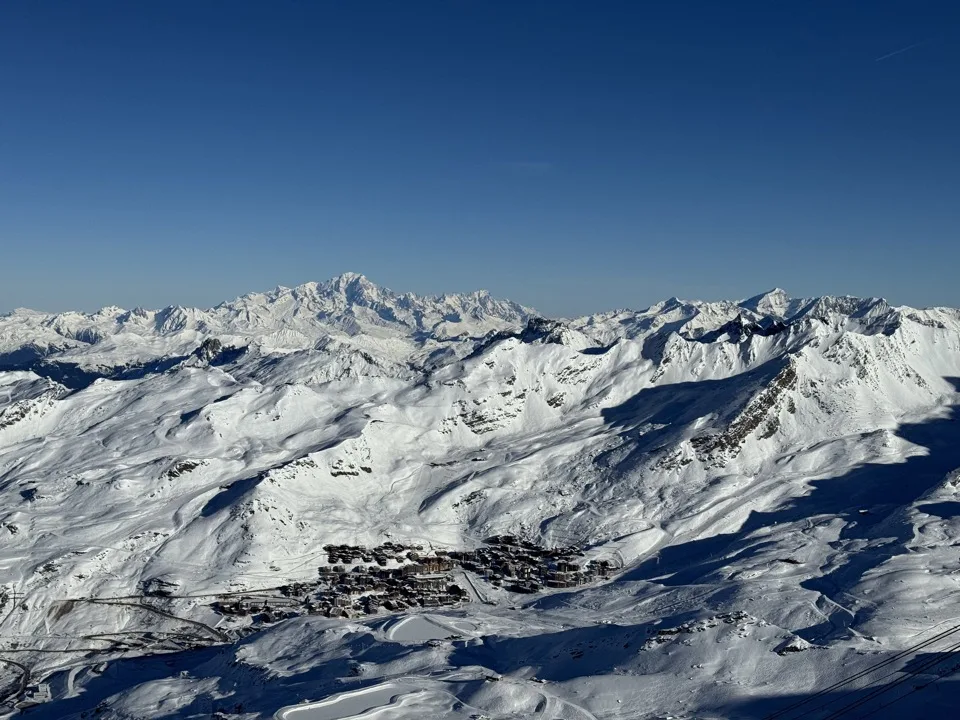
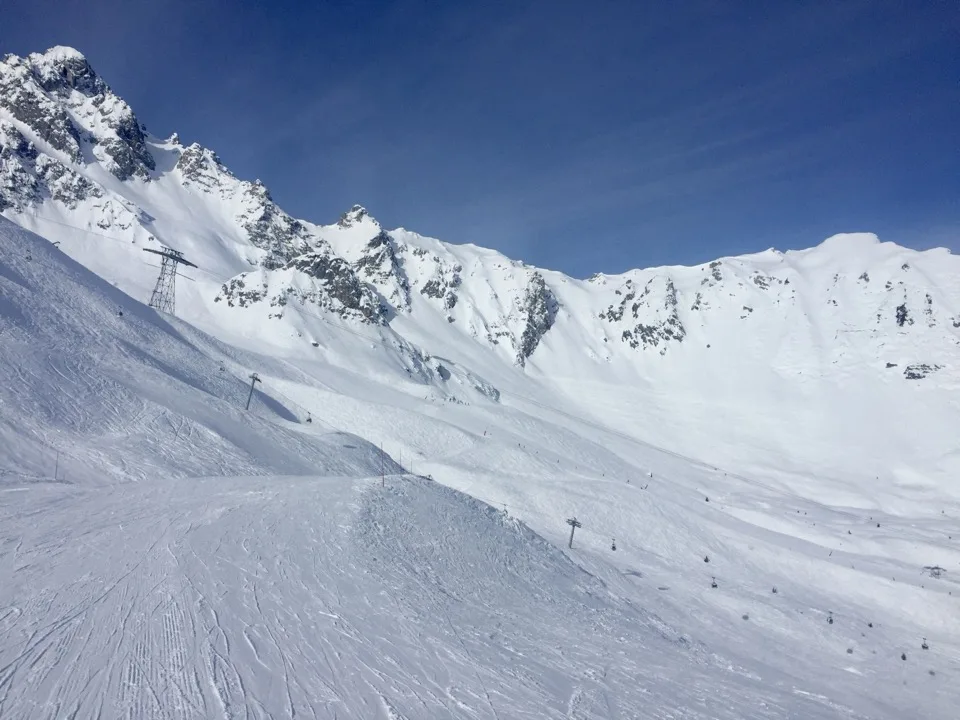
The 3 Vallées are made up of the Courchevel valley, the Méribel valley and the valley which is home to Les Ménuires and Val Thorens. The 4 stations that I have just mentioned are the main resorts. If we add the small resorts of Brides-les-Bains, Saint Martin de Belleville and Orelle, that makes 7 resorts in the ski area. In total, Les 3 Vallées offers 600km of slopes! It is enormous ! We skied from 8:30 a.m. to 5 p.m. with just a quick break for lunch in picnic mode. Suffice to say that we took full advantage of the ski area and the ski pass! Here is our feedback on each of the 3 valleys and the main resorts…
The Méribel valley: the advantages and disadvantages for skiing with the family
The advantages of Méribel:
Méribel is located in the central valley of the area. That’s probably why this station is symbolized by a heart. It is in the heart of the 3 Valleys and this is its greatest asset! This therefore means that if you stay in Méribel, you will have as much ease in going skiing towards the Courchevel valley to the east as towards the Ménuires valley/Val Thorens to the west. The connections are very simple and effective.
The pretty trees! In the Méribel valleys, we see a lot of fir trees. The landscape is therefore particularly beautiful thanks to the vegetation. The other two valleys have few fir trees in comparison and therefore offer whiter and more deserted landscapes.
The family atmosphere: we found that there was a family atmosphere in Méribel and that it was very pleasant.
The slopes we liked in Méribel:
the blue slopes “Fawn”, “Biche”, “Mont Vallon”, “Combe du Vallon”, “Venturon”
the red slopes “Marcassin” and especially “Chamoix”
The green trail of animals. Indeed, even if it is really very easy for good skiers, it offers a beautiful slope, quite long, with animal sculptures to admire along the way.
Note that the “Legends” chairlifts are truly incredible in terms of comfort and efficiency.
The disadvantages of Méribel:
The only downside concerns certain slopes: there are slopes that we did not like on the Méribel-Mottaret side and that we could hardly avoid (for example, the green slope “Perdrix”). Also, we found more icy tracks than in the other two valleys. Perhaps just due to weather conditions we had. Finally, on the main slopes of the “Pas du Lac 2” and “Saulire express 2” lifts there were often a lot of people.
In conclusion, Méribel is a very good choice for a ski trip with children, between its family atmosphere and its central location with a pretty fir tree decor as a bonus!
***
The Ménuires valley/Val Thorens:
Val Thorens is the highest station. Les Ménuires is a resort located in the same valley but lower down. As these two stations are really very different, I will devote a section to each.
Les Ménuires: the advantages and disadvantages for skiing with the family
The advantages of Les Ménuires:
Les Ménuires, great resort for families : we found that Les Ménuires was the most family-friendly resort in the 3 Vallées area. This is where we encountered the most children during our stay. Other people confirmed to us the family spirit of the resort. The resort’s slogan is “friendly Ménuires” and we honestly found that the station deserved its nickname! We felt very good there.
ESF lessons: only Titpuce took ski lessons with the ESF in Les Ménuires and she found that it was her best ESF experience! The ski instructor was great! There is obviously a bit of chance in terms of instructors but I must say that the welcome at the ESF office in Les Ménuires was very warm and the director very friendly!
The proximity of Val Thorens: as Les Ménuires and Val Thorens are in the same valley, it is very easy to go from one to the other. And the peaks of Val Thorens are an experience not to be missed in terms of high altitude landscape and snow quality (see below).
On the slopes: big favorites in Les Ménuires!
the “Pointe de la Masse” in the morning, with the beautiful view of the summits (black, red and blue slopes to vary the pleasures – for example, we liked “Bouquetin” and “Vallons”). At the top you can see how the gondola works, this allows you to take a little informative break when you arrive at the station. There was also a whole Lego model!
the slopes of the “Becca” chairlift: we loved the red “Becca” slope and there were surprisingly few people there! We took this one quite a lot! The blue slope “Lac des Combes” was very good too.
The blue slopes “Grand Lac” and “Pâturage”
Antigel mountain restaurant: really very good! So yes, it’s still expensive (compared to the restaurants we were used to when we eat on the Italian side in Montgenèvre) but for now, all the restaurants are expensive in the 3 Valleys (if you have any good deals, let me know in a comment!). We mainly had a picnic at the bottom of the slopes but our experience of one lunchtime at Antigel was quite positive: very friendly service and good food. I particularly recommend the trout with Beaufort.
Au Petit Rendez-vous (Les Ménuires Reberty): a brasserie-style menu with, of course, local specialities as well. Friendly welcome and a good lunchtime set menu.
The disadvantages of Les Ménuires:
Further from Courchevel: based in Les Ménuires, it will be more difficult to enjoy the Courchevel part of the 3 Vallées area. Let’s say that without the constraints of the ESF courses it is entirely doable. On the other hand, for only half a day it’s tight. Obviously, there is already plenty to do in Val Thorens and Méribel which are quickly accessible.
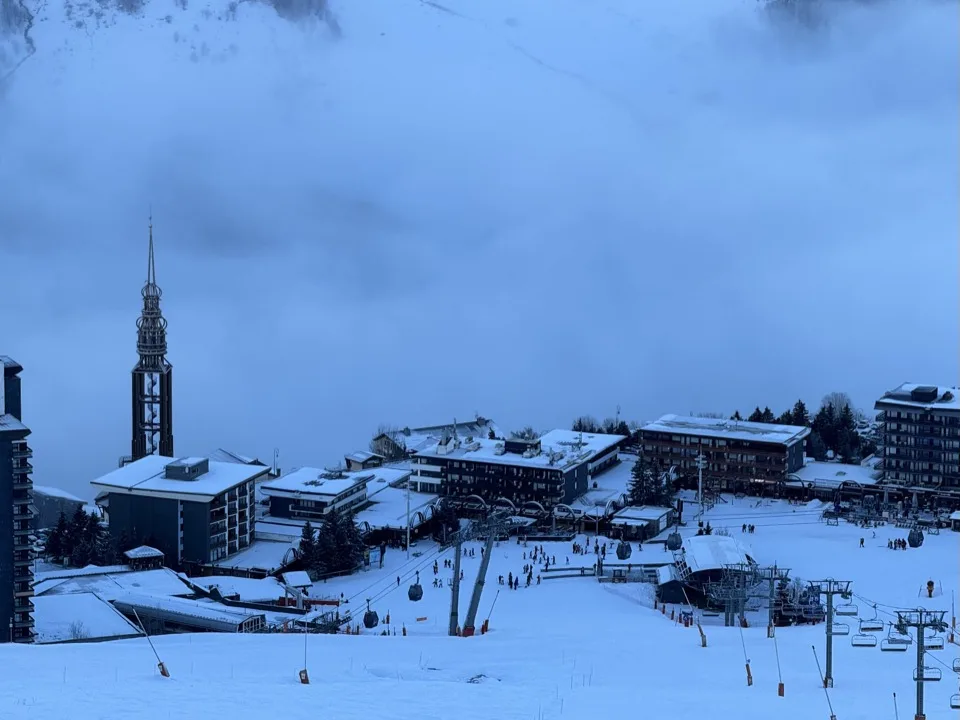
What about architecture then? I had often been told that Les Ménuires was very good skiing but not beautiful at all. Well, in the end, I was pleasantly surprised because yes, there are some residences that are not very elegant but they have held up well over the years. There’s nothing really too naughty and it’s not very dense. I also think that the snow front part was well thought out and I liked the sculpture in the shape of a modern bell tower as well as the charm of the little baskets, very vintage ski lifts!
In conclusion, Les Ménuires is a big favorite for us and therefore a very good choice for a ski trip with children, between its family atmosphere and its slopes!
Val Thorens: the advantages and disadvantages for skiing with the family
Val Thorens is the highest resort in the 3 Valleys. It is located at an altitude of 2300m. Besides, we had a bit of a headache when we arrived all the way from sea level. Val Thorens is the resort where we stayed because we found an economical apartment there. But, as you will see below, I do not recommend staying in Val Thorens. Ski there yes, but not sleep there.
The advantages of Val Thorens:
The quality of the snow thanks to the altitude: the snow at the summits really has a different texture! Velvety cotton that crunches under your skis! It’s divine!
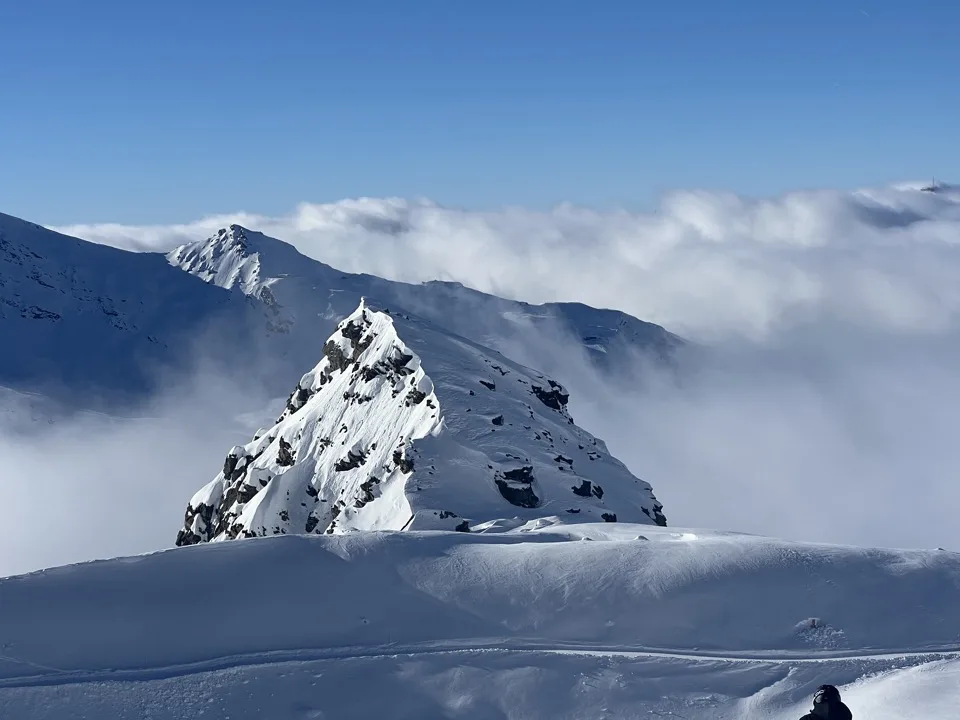
The panoramas from the summits: There are many peaks over 3000 meters. We found that the most dizzying view was at Cime Caron. Just the arrival of the cable car is impressive!
Access to the Orelle slope: a pleasant surprise is this very pleasant resort with very good slopes. You have to allow time to pass over to Orelle and come back but it’s worth it!
The possibility of starting very early: as Val Thorens is located above Les Ménuires, we started at 8:30 a.m., before the ski lifts and we descended to the bottom of Les Ménuires where we showed up for the opening of the lifts at 9 a.m. It was perfect for optimizing our long ski days!
Our favorite slopes in Val Thorens: a lot! With a particular crush on the slopes of the Peclet funitel.
The blue slopes “Hermine”, “Tétras” and “Tête rond”
the red slopes “Boismint”, “Col de l’audzin”, “Lac blanc” and especially “Christine” which was often deserted and yet great (its name is a tribute to the Olympic skier Christine Goitschel).
the slopes of the Orelle resort
The disadvantages of Val Thorens:
Not really a family resort: in Val Thorens, there were mainly young students, often very good skiers but frankly dangerously fast on the slopes. Of the entire 3 valleys area, this is where we encountered the most “crazy people”! Titpuce is not yet fast enough or alert enough to anticipate complicated situations at certain track intersections. We preferred to enjoy Val Thorens and its attractions while Titpuce was in ESF lessons in Les Ménuires. With Ticoeur, it was simpler because he has more experience. Even on the green slopes, there were a lot of young adults on snowboards: I don’t think this is ideal if you have children learning to ski on these same green slopes. Finally, in Val Thorens, the party starts very early and we didn’t like having to return to the resort (because we were staying there) in the company of skiers who had drunk too much at Folie Douce and who were no longer very attentive on the slopes back down. Without even the problem of sobriety, the return to the station at the end of the day is truly chaotic: too high a density of skiers on the slopes which lead to the station. Finally, there was too much noise and parties in the residence where we were staying (and in many other residences I think). Fortunately, our immediate neighbors were calm but we could have really been right next to all night parties! I would like to point out that we were in the 3 Valleys a week before the school holidays in France. No doubt there are more families during school holidays. However, it was clear to us that there was not the same atmosphere in Val Thorens as in the other resorts of the 3 Valleys. In conclusion, Val Thorens offers exceptional ski conditions! If your children are very good skiers, we recommend taking advantage of the 3 Valleys pass. On the other hand, we do not recommend sleeping there during a family stay.
***
The Courchevel valley: the advantages and disadvantages for skiing with the family
The advantages of Courchevel:
Courchevel beyond the clichés: we had already stayed in Courchevel when the children were younger and we really liked it! We only took the Courchevel package (not the 3 Valleys) and it was more than sufficient at the time. Courchevel is the 3 Valleys resort with the most slopes (108 slopes). In any case, we felt that the density of skiers was lower even when, the previous time, we were there in the middle of the February school holidays. Overall, there are fewer people on the slopes than in the other resorts in the area. There are a lot of very wide slopes with a lot of blue slopes. In short, very pleasant ski areas for children whatever their level.
The slopes we liked in Courchevel:
the blue slopes: “biollay”, “creux”, “altiport”, “pralong”, “col de la Loze”
the red slopes: “Marmots”, “Saulire”
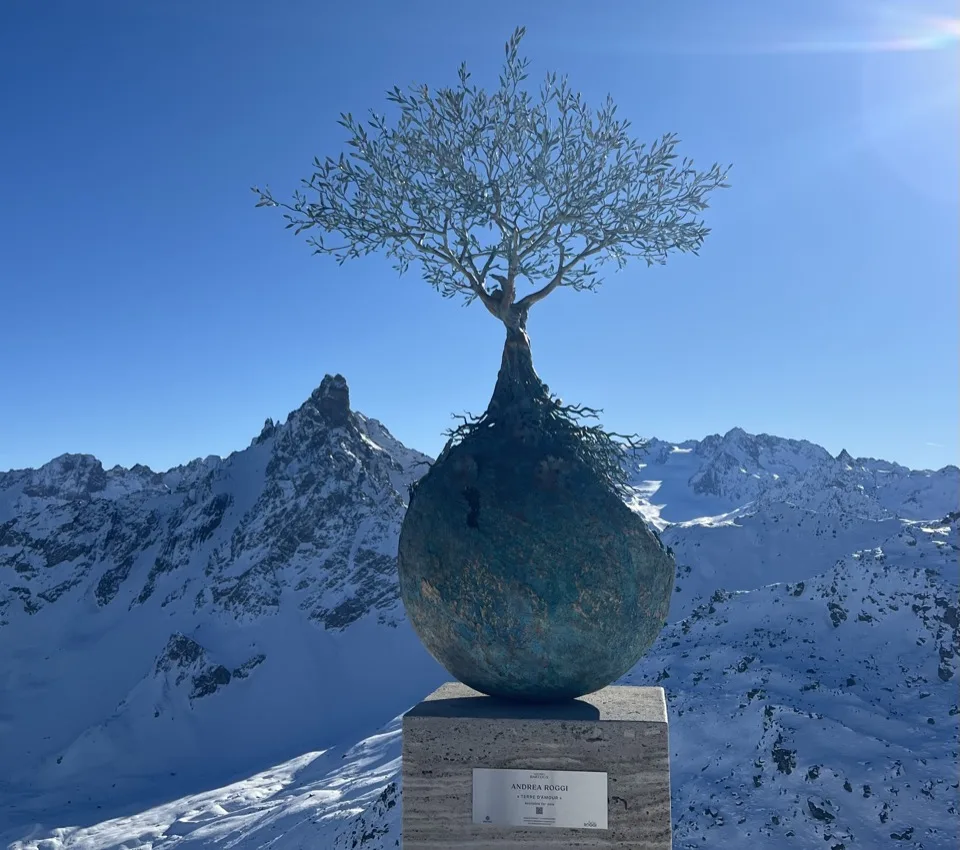
And as always, art makes its way to Courchevel. In 2024 we saw works by Jimenez Deredia, an artist from Costa Rica. In 2026, we have just seen sculptures by Andrea Roggi.
The disadvantages of Courchevel:
As it is the easternmost station, it is very well connected to Méribel. But going skiing in Val Thorens and Les Ménuires would take way too much time if you have to juggle your children’s ESF lessons. Moreover, there are several sites in Courchevel: Courchevel village is central and the connection around 1850 is very fast. Courchevel 1850 is perfectly located but even more unaffordable than the rest of the resort. Courchevel-Morind is really too far away in our opinion and in Courchevel La Tania, we did not have good snow because it is much lower.
The difficulty in finding accommodation: When we stayed for a week in Courchevel, we took advantage of a good deal through my family. Since then, I have often looked at the apartments on offer in Courchevel and I have never found anything within our budget (by far!). But who knows? I’ll keep watching in the future just in case…
In conclusion, Courchevel is a resort that we liked and which offers enough skiing space for the whole week if you don’t want to take the 3 Valleys pass. All you have to do is find affordable accommodation!
The 3 Valleys: which resort to choose for family skiing?
In conclusion, the 3 Valleys is an exceptional ski area to discover with the family! Depending on the age and skiing level of your children, a single resort pass is enough to really enjoy a week of skiing, but the pricing is such that you don’t have to add that much to the family pass to have access to all of Les 3 Vallées. In any case, the extra cost is clearly worth it if your children are good skiers.
Which resort should you stay in in Les 3 Vallées?
To enjoy the 3 Valleys in a family atmosphere, we recommend Les Ménuires (our favorite) then Méribel to be in the center of the area. Finally, Courchevel is the resort that can best be considered without a 3 Valleys package (if you have better luck than us in finding affordable accommodation). As for Val Thorens, it’s a great ski adventure but it’s not ideal with young children.
Our budget:
Below, for information, are our main expenses for a week of skiing in Les 3 Vallées (2024).
Accommodation in Les 3 Vallées:
Small two-bedroom apartment in Val Thorens: €880 (in 2024, the week before the French school holidays!! The UK school holidays fell at different times that year.)
Small two-bedroom apartment in Les Ménuires – Bruyères: €1,300 (the New Year week 2025)
Studio + mezzanine in Les Ménuires – Reberty: €1,600 (the New Year week 2026, by booking at the last minute!)
ESF lessons for 6 mornings: €228 (winter 2026)
Hire of all the equipment for the four of us: €278 (at Ski Republic in Val Thorens, outside school holidays, very friendly), €389 at Ski Republic Les Ménuires Croisette in 2025 and €564 in 2026 at Sport 2000 Les Ménuires Reberty (friendly staff).
Les 3 Vallées family lift pass for the week: €1,340 (New Year week 2026)
***
Finally, and most importantly: we will return! For sure ! Especially since we are often lucky enough to have English school holidays later than those in France. Clearly, this is a major asset for enjoying the 3 Vallées without the crowds and on a smaller budget!
***
And you ? Do you know the 3 Vallées? What is your favorite station?
During the autumn term-break, we went to Mallorca to hike as a family on this Balearic island that we already knew and that we wanted to discover in a different light. Hiking with the kids in Mallorca was a really good idea! There are easy hikes in Mallorca, suitable for children, but also some more difficult hikes for families used to walking. The climate at the end of October was ideal. We had 22-23°C every day. These are seasonal norms. Obviously, weather is not an exact science so we are delighted to have had very good weather during our week of hiking in Mallorca!
Our 7 hikes in Mallorca as a family:
Torrent de Pareis: hiking in a gorge
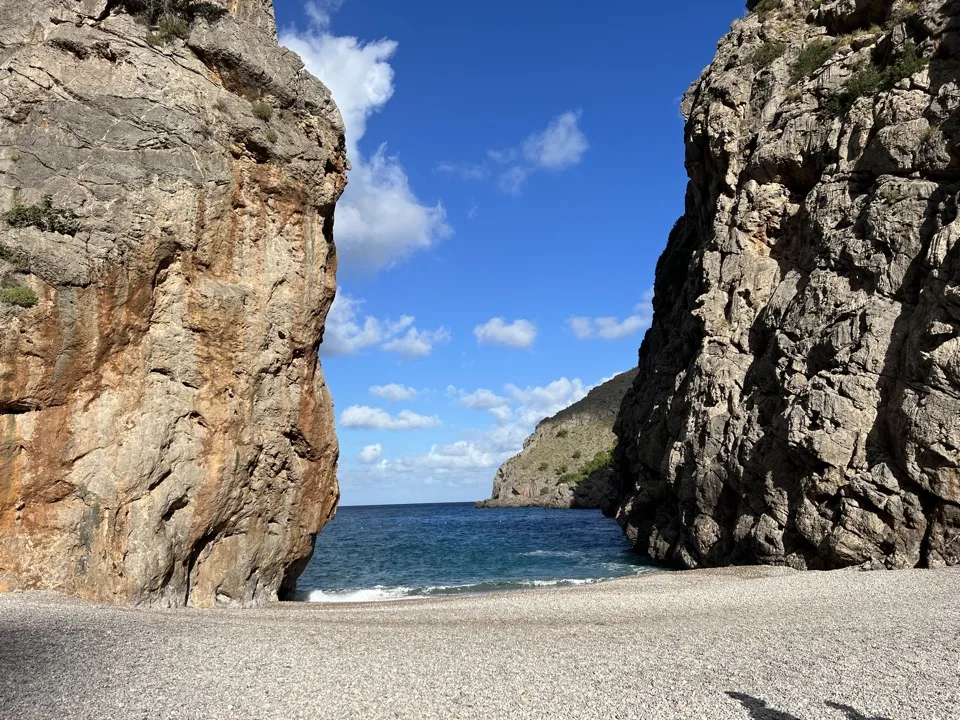
A magnificent hike in a very impressive gorge. To get to the start of the hike, the road which goes down to the sea is quite winding and very beautiful (be careful of travel sickness!). At the bottom, we arrive at the sea at Es Calabra. There is then a small path which leads to this mouth marking the arrival of the Torrent de Pareis riverbed:
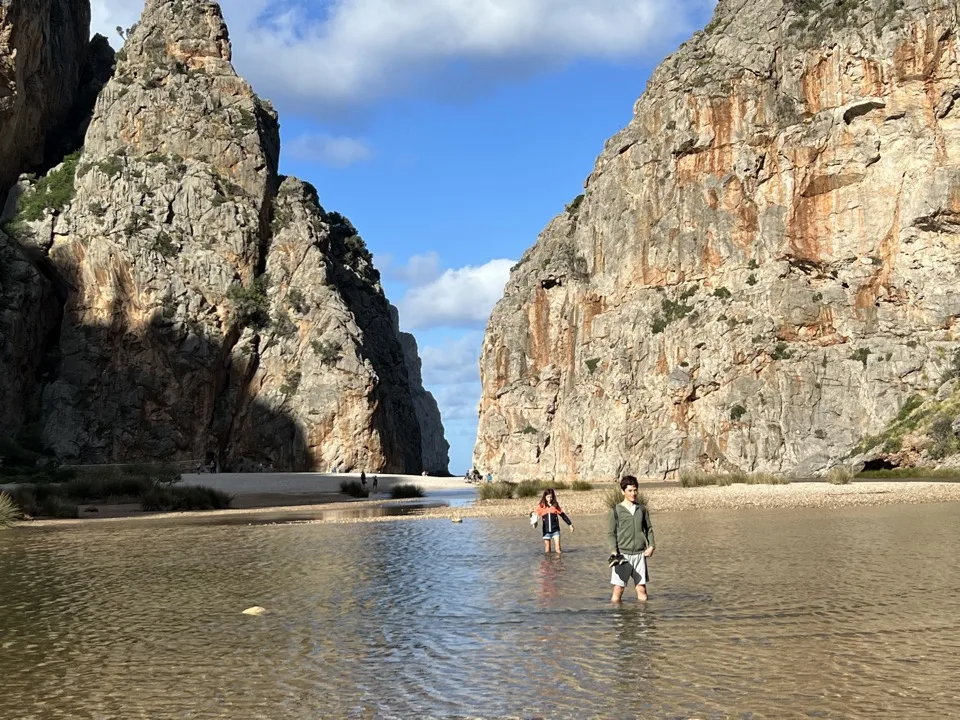
At this location, there are still tourists who come to see this very photogenic beach. They swim, take photos and leave. However, the most beautiful part is at the back, when you start to go up the riverbed, venturing into the gorge. At the beginning, there are two or three passages where you have to take off your shoes. There are lots of small stones at the bottom of the water… it hurts a little so we take it slowly. Ideally, bring swimming slippers for the start of the hike.
This summer we spent a week insouthern Sardinia with the children. We really wanted to return to this island after our two weeks in northern Sardinia a few years ago. Sardinian beaches and gastronomy were what we were looking for before starting the children’s school year! This time, we chose to make a loop from Cagliari, discovering the entire southern half of the island. We turned counterclockwise but it didn’t matter. It was the coincidence of our accommodations. If you too are planning to discover the south of Sardinia during a family road trip, then here is all the information we can give you!
Age of the children during this trip: 13 years old for Ticoeur and 11 years old for Titpuce.
Period of the trip: we left the very last week of August in order to have fewer people because Sardinia is very busy during the first three weeks of August. Early July would also be a good time (see our previous trip to northern Sardinia).
Weather: We arrived just after strong storms in the Mediterranean. Result? Temperatures were barely above 20 degrees and the sea had cooled down quite a bit. We also had a lot of wind. In the end, while we mainly thought we would enjoy the beaches, we changed our plans and we walked more and took advantage of the hiking trails. We adapted and had a great week! Anyway, the weather is always unpredictable and at least we avoided the heatwave!
Our one-week itinerary in southern Sardinia:
Exactly, we spent 8 days in the south of Sardinia. To carry out our roadtrip, we rented a car at Cagliari airport.
At the end of July, we spent a week in the Luberon as a family, with my parents-in-law, as an extended family trip. As you know, we always try to organise at least one week of holiday with the grandparents, and this time we set our sights on the Luberon, a region we already knew — but how could anyone tire of such a beautiful area? At the end of July, we had ideal conditions, which was lucky because we weren’t there during the heatwave. We had already visited several villages in the Luberon during our long family weekend in Avignon, but there were still many others left to discover. We also returned to places we had already visited because we had particularly loved them and wanted to show them to my parents-in-law, as well as let the children rediscover them, as they had been little during our previous stay. So here is our one-week itinerary in the Luberon:
Our 10 family visits in the Luberon:
For each place we visited, I’m also sharing our favourite addresses!
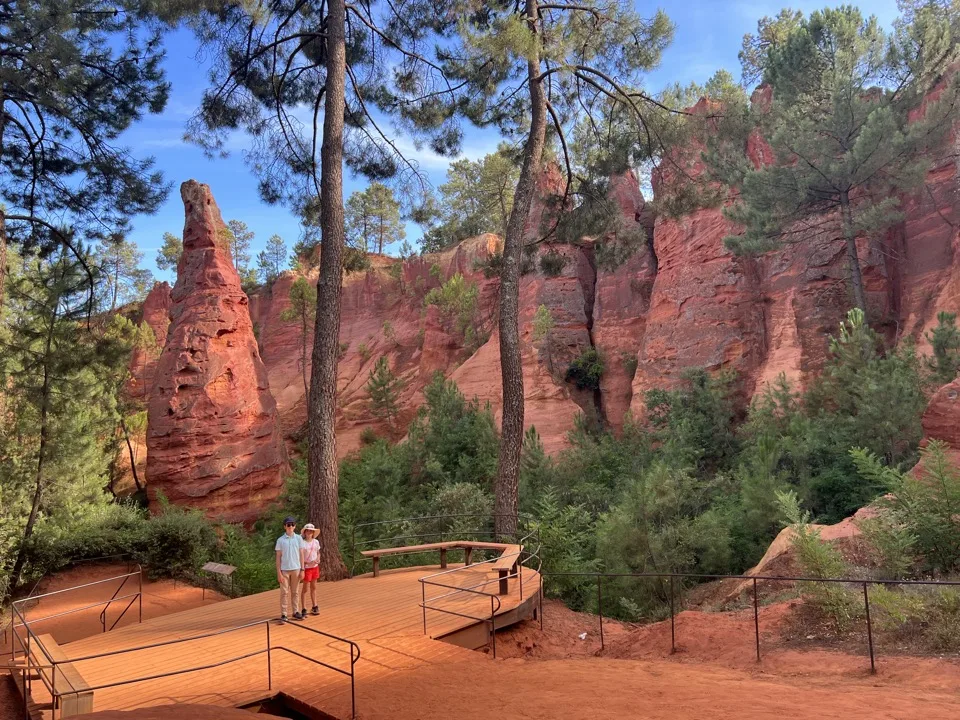
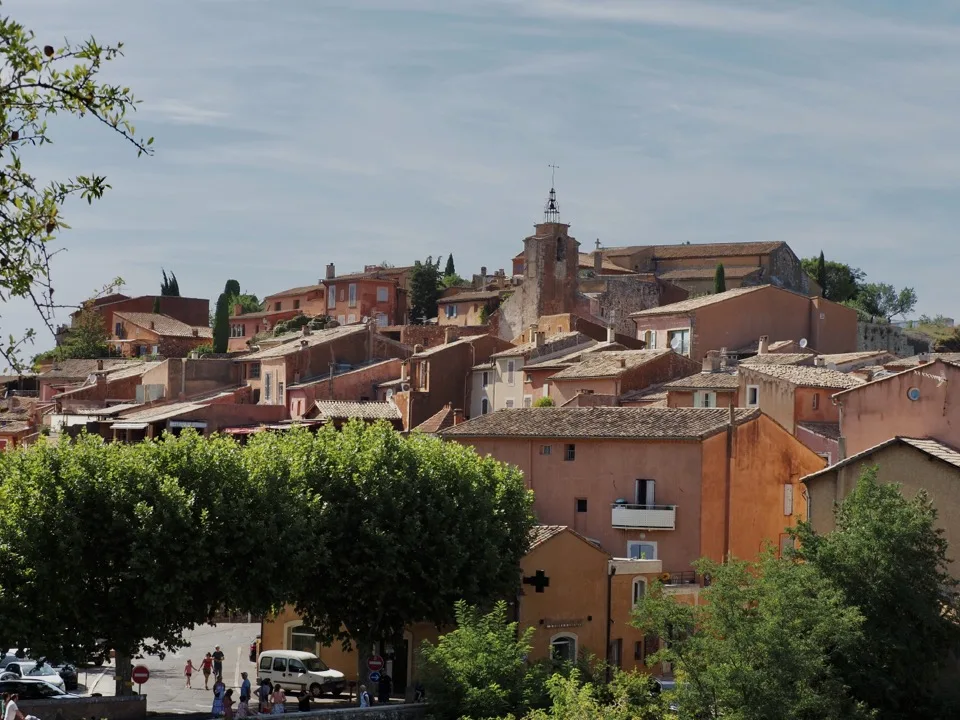
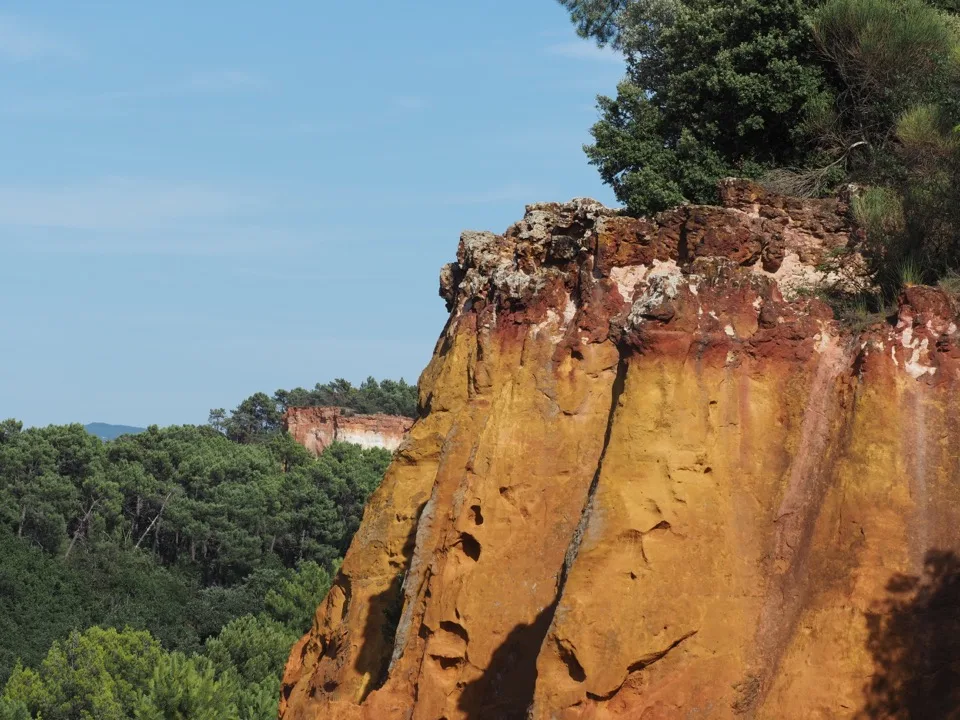
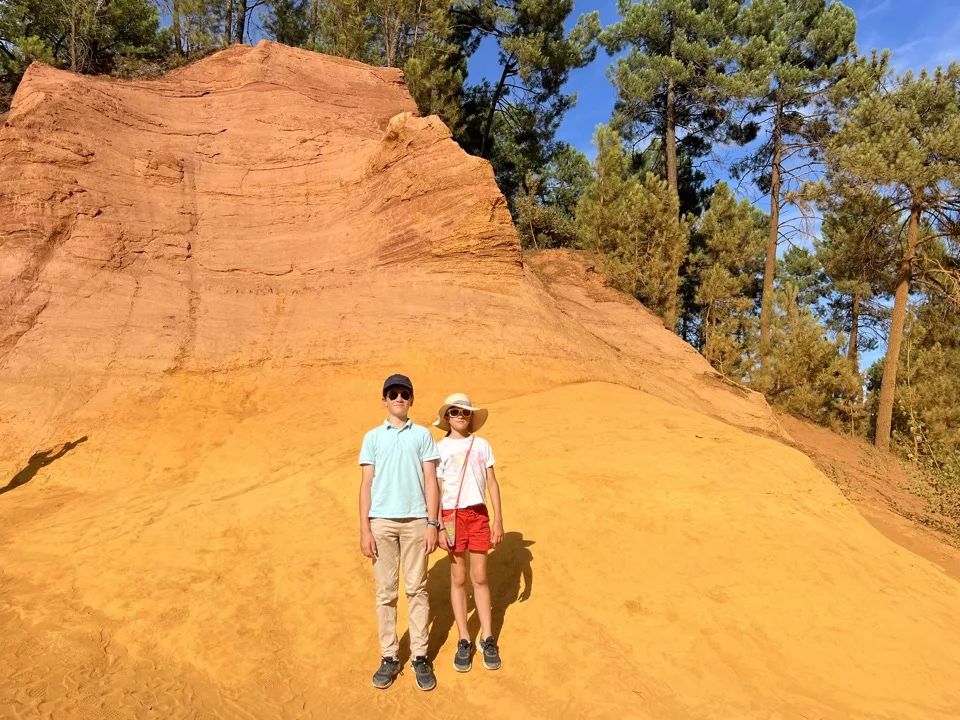
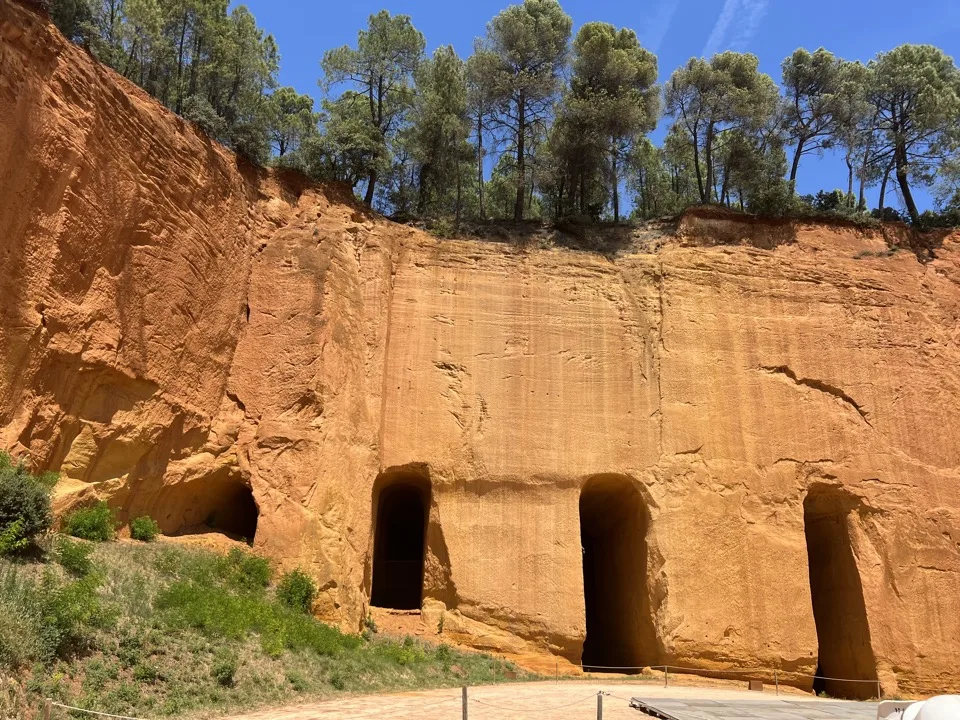
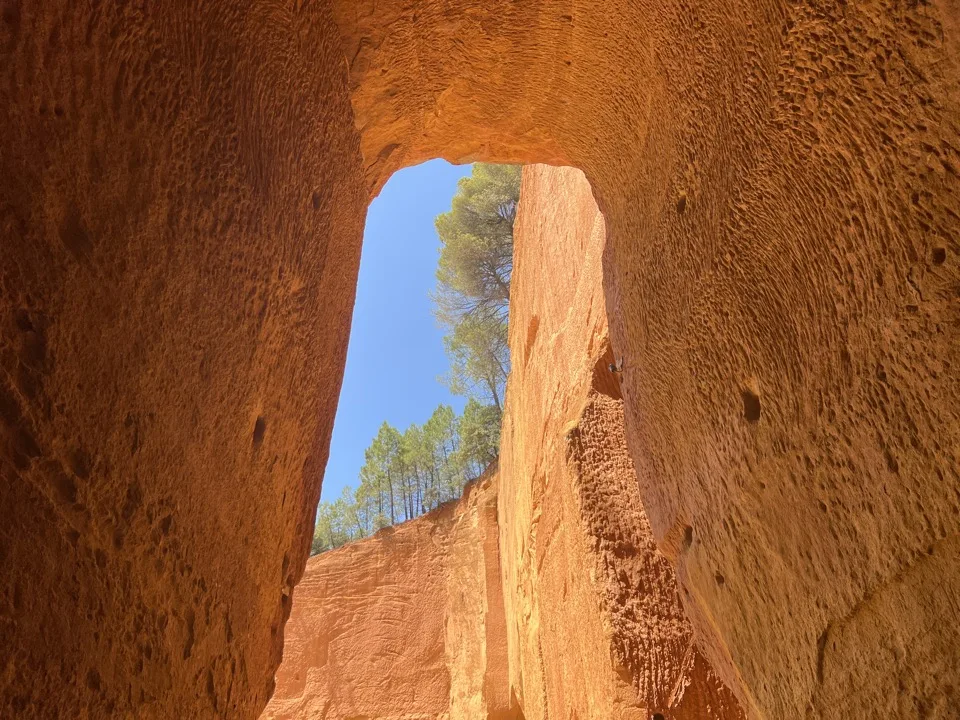
Roussillon and the Sentier des Ocres ❤ :
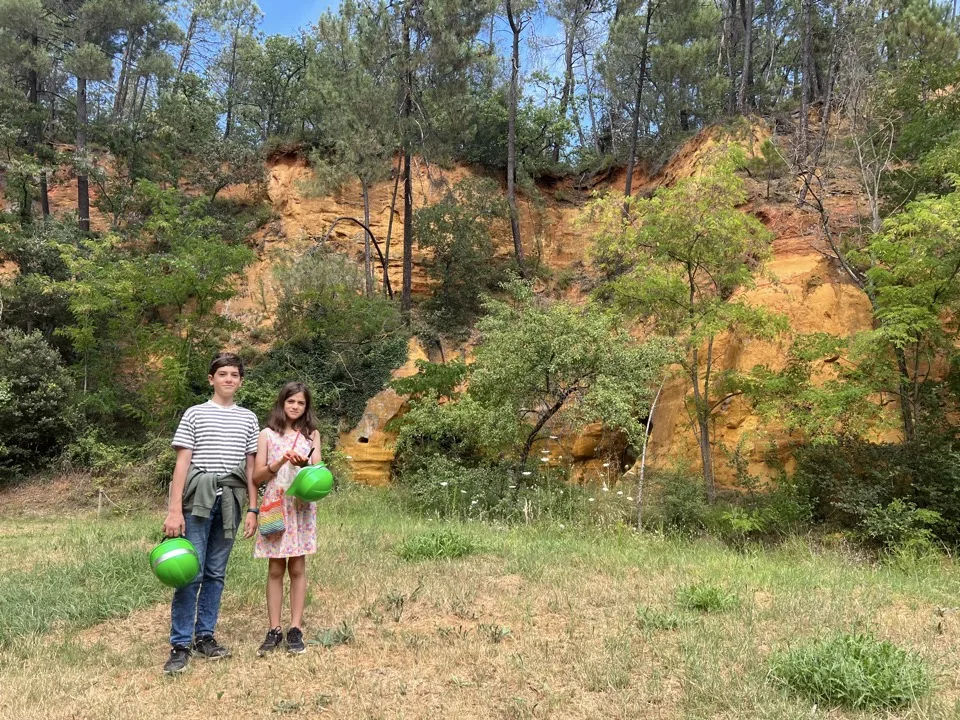
We had already visited this village and its famous ochre trail a few years ago, but we really wanted to go back because Ticoeur and Titpuce didn’t remember it (they were too young). To avoid the crowds, we started our visit at 6pm and it was just perfect! I recommend doing the same, as otherwise it gets busy! It is a truly exotic place: you feel as though you are in an American or Australian national park (on a smaller scale, of course!). It is different from the Colorado Provençal, which is located a little further east and which we still don’t know.
We began with a stroll around the village with its very red façades. There are a few art galleries there. Then we bought our tickets for the trail, which we walked in one hour, almost completely alone! There are plenty of opportunities for beautiful photos! Definitely worth seeing!
The Mines de Bruoux (ochre mines) in Gargas:
This is a good complement to the Sentier des Ocres. The Bruoux mines help you understand how the region’s ochre was extracted and used in the 18th century, and even more so in the 19th century during the Industrial Revolution. The guided tour is very interesting. The guide led us through the galleries dug by humans while explaining the history of ochre. Booking is required. See the information on their website.
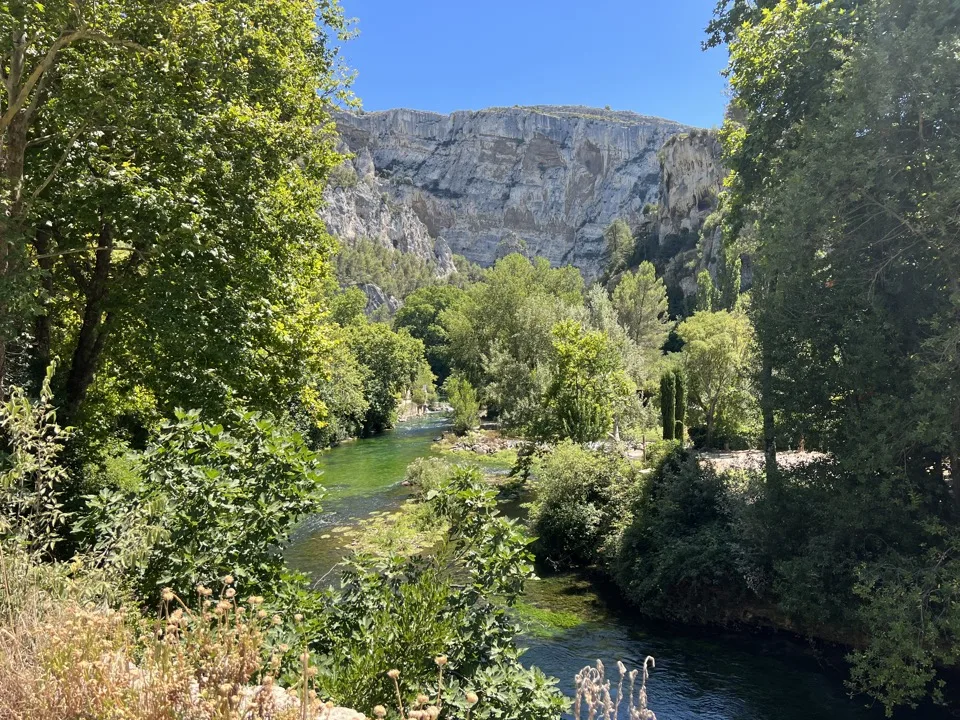
Fontaine-de-Vaucluse❤ :
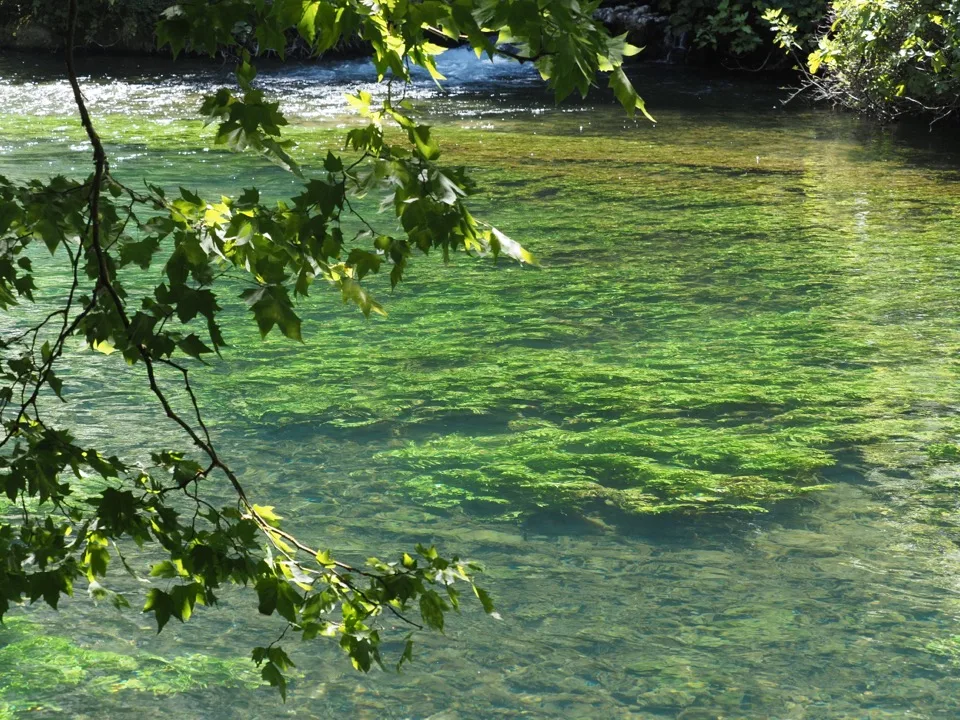
We had already been there, but Omi and Opa didn’t know it, and it is so pretty! So we went back for a lovely out-and-back walk along the water, all the way to the rocky cirque where the underground river emerges. There, in Antiquity and the Middle Ages, people came to make offerings, but not much is known about the rites and beliefs linked to this spring. As a result, many legends circulate. In any case, it is beautiful, and the water really has an incredible emerald-green colour! So intense and clear… On the walk back, we had a drink in the shade, by the water, at Restaurant Philip. The ideal spot!
Oppède-le-Vieux ❤ :
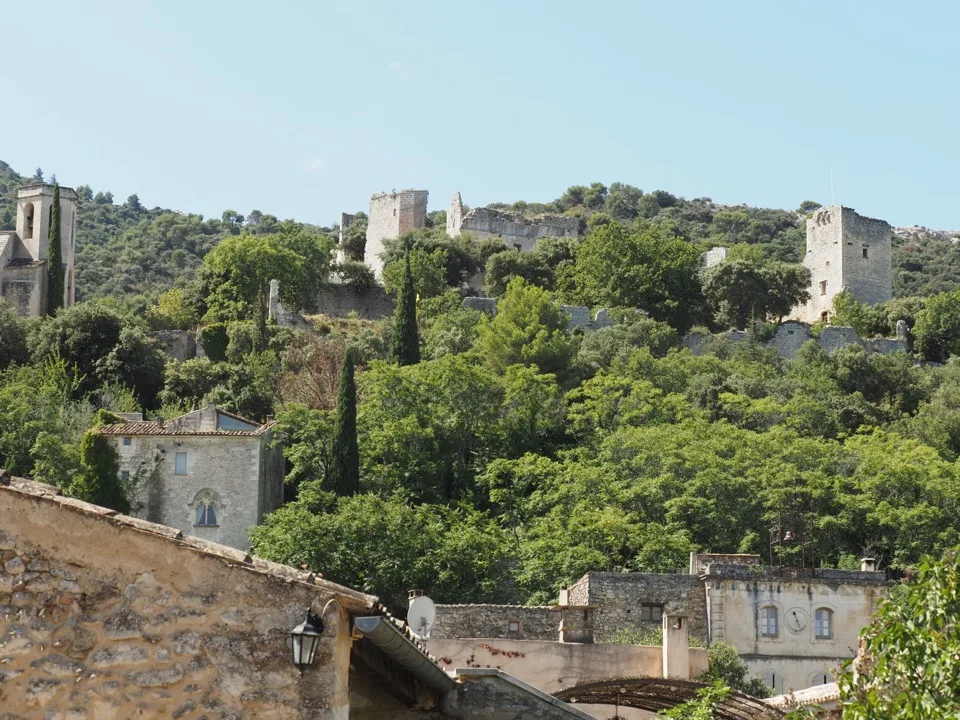
A favourite for the whole family, this hilltop village was one we didn’t yet know! It is really well preserved and very peaceful. We walked up to the top of the 13th-century fortress. Wandering around Oppède-le-Vieux feels like travelling back in time. From the car park, we first crossed a park filled with many plants from the region. In short, a charming, preserved village that we recommend visiting!
Ménerbes:
Another hilltop village. Less impressive than Oppède-le-Vieux, but very photogenic as you arrive by car. We stopped there for a drink and a very good slice of apricot tart at Auzet, a café with a view (slow service, but very good homemade savoury and sweet tarts).
Lacoste:
Between Ménerbes and Bonnieux, we passed through the village of Lacoste, where the Marquis de Sade’s château is located. We didn’t visit the château, so I don’t know whether it’s good. I’m not sure it’s a kid-friendly visit. We’ll see next time! If you know it, feel free to tell me about it in the comments.
Bonnieux:
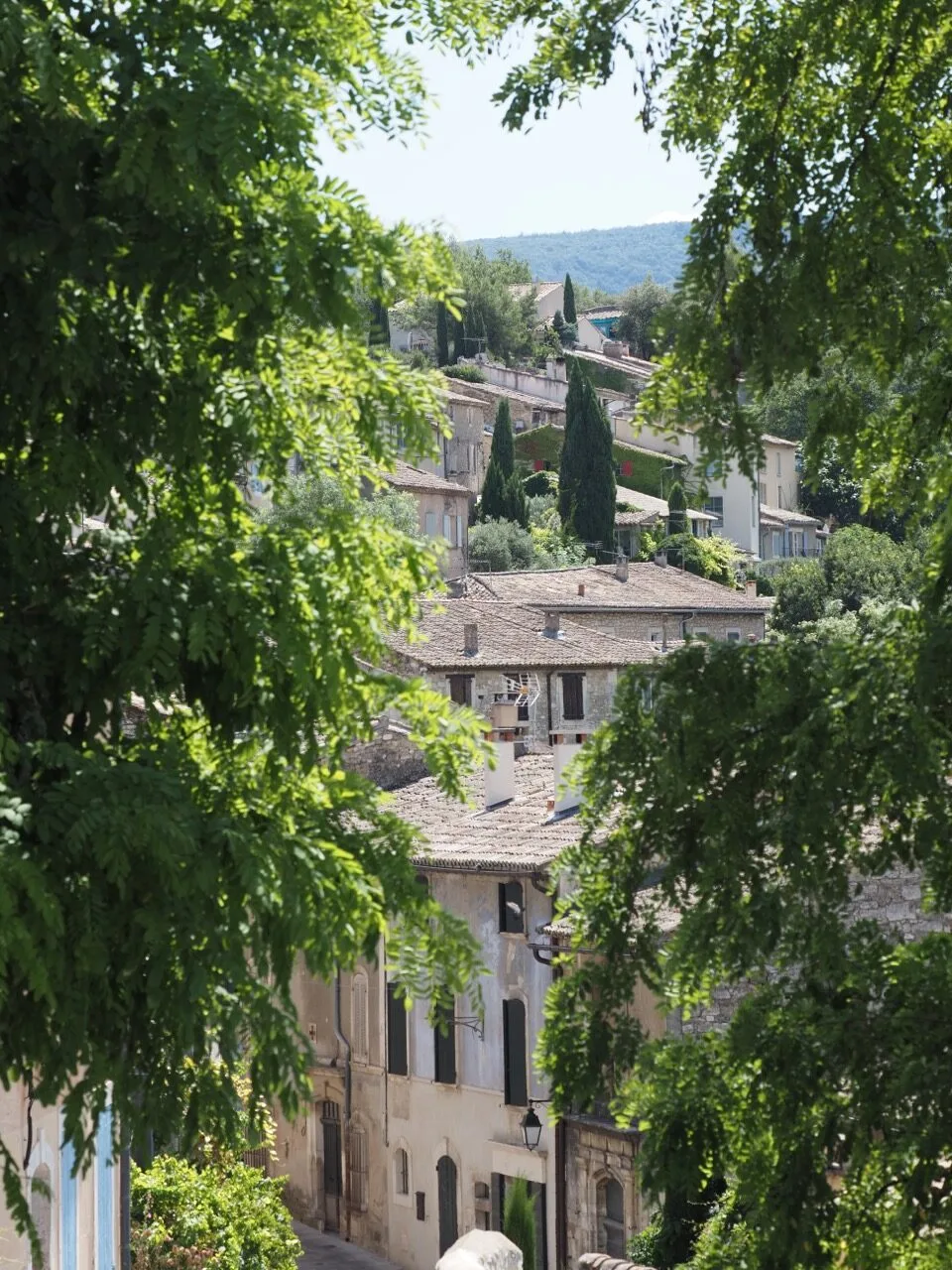
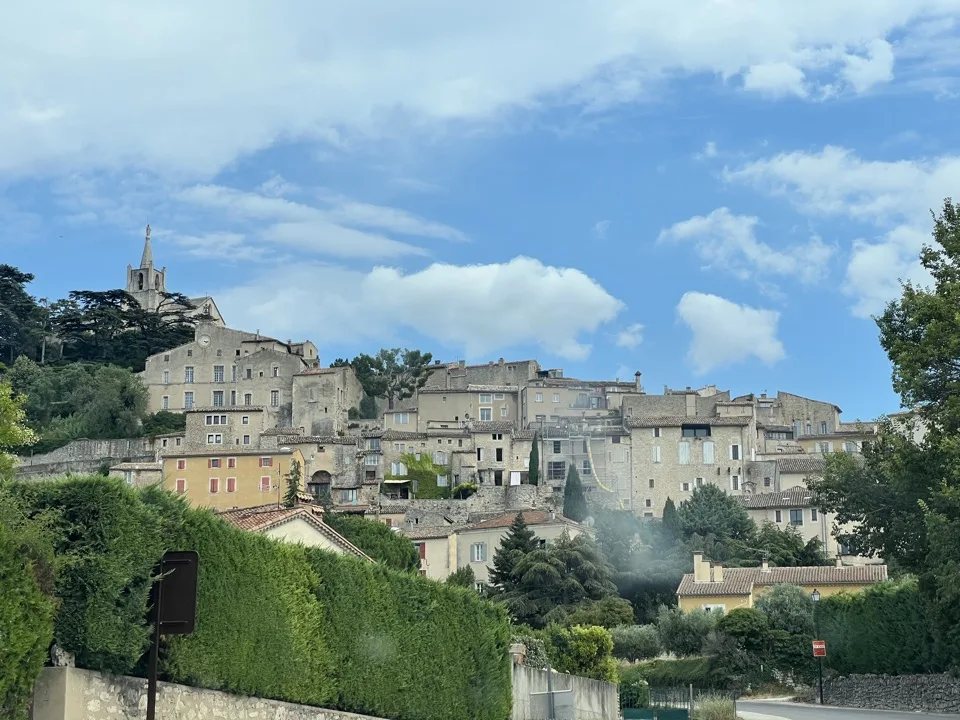
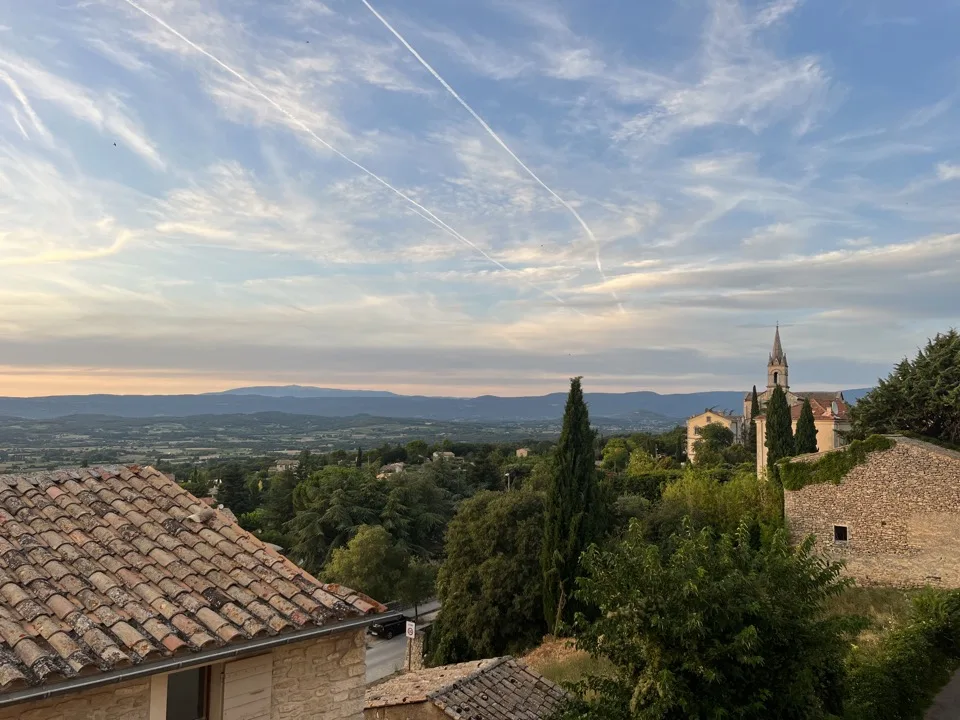
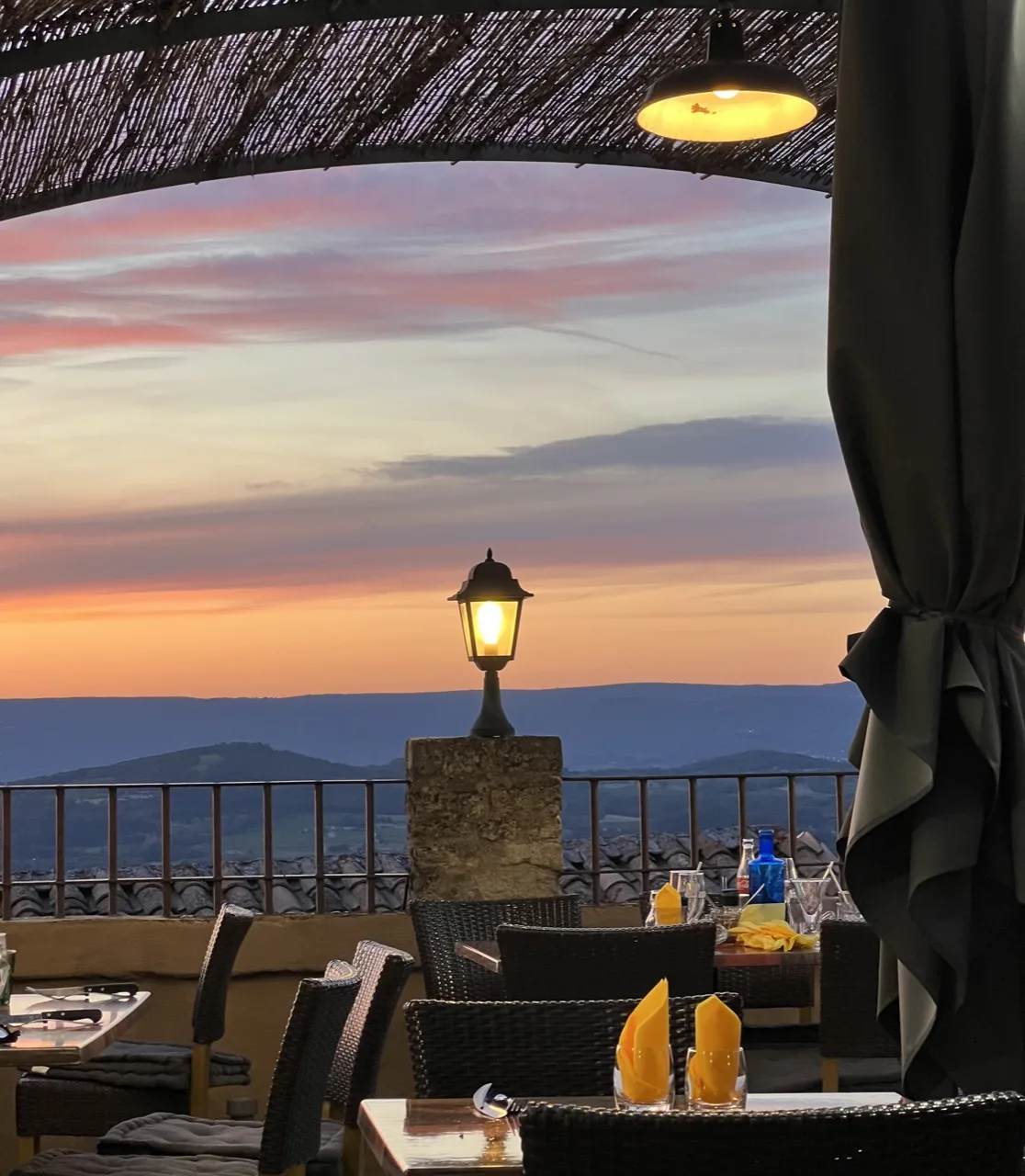
Beautiful old stone houses and very narrow, steep little streets. We admired a gorgeous sunset from the terrace of the restaurant La Flambée… A very good address, welcoming and well located! We had pizzas there.
The Cedar Forest:
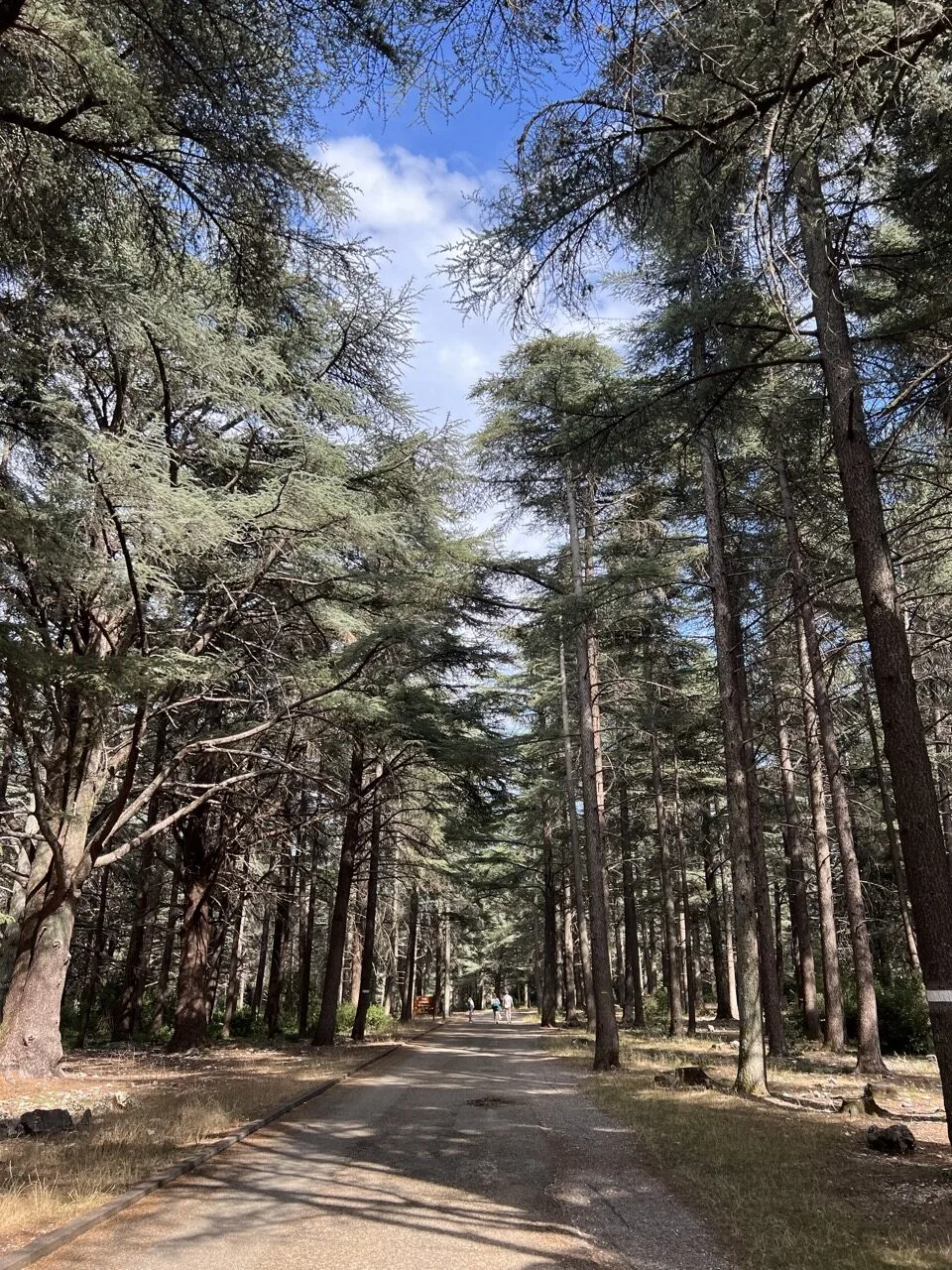
The cedar forest is located in the Petit Luberon, not far from Bonnieux. There are several marked trails on site. We chose the 3km botanical trail. It is very easy and ideal for families, whether with children or grandparents. There were forest rangers there to inform us about fire risks. They were there for prevention. We weren’t there on a high-risk day; otherwise access would have been forbidden. It is best to check the potential fire risk online before going: see here.
Sivergues and the lavender fields
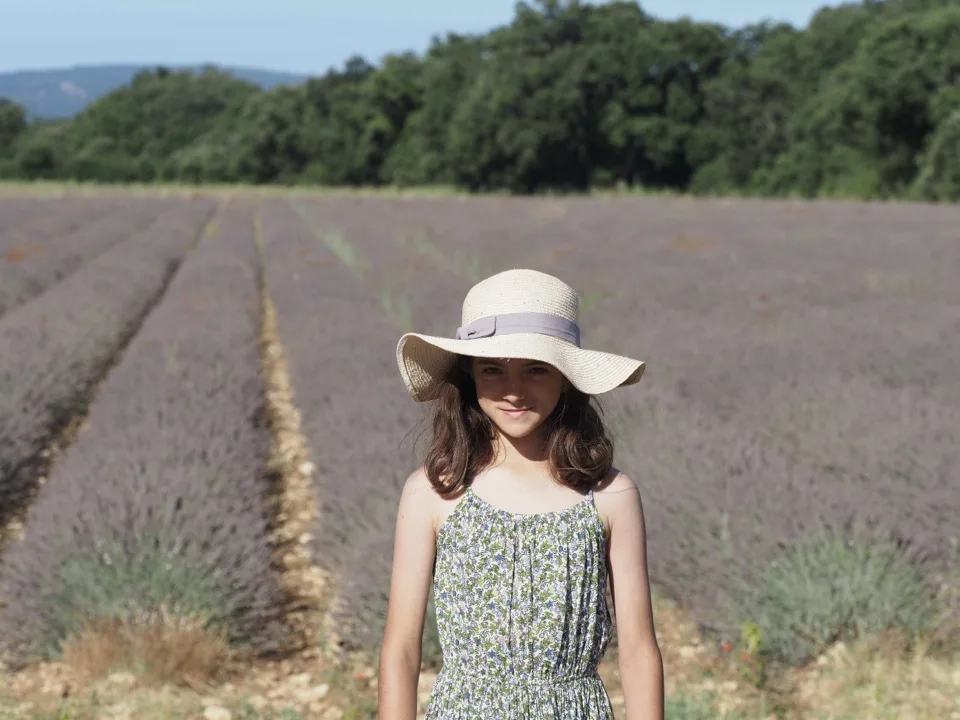
This is an isolated village, located at the end of a road that goes no further than the village. It is a kind of Luberon cul-de-sac :-). We discovered it by chance because we spent the night not far away in our campervan. Right next to it, we saw beautiful lavender fields! The lavender was still in bloom (at the end of July), but the colour had already faded a little. It must be better at the beginning of summer. That said, it is already very beautiful and smells wonderful! There are of course other places with lavender fields in the Luberon (around the Abbaye Notre-Dame de Sénanque, for example), so don’t go to the Sivergues area especially if it isn’t on your route.
Gorges de Régalon ❤:
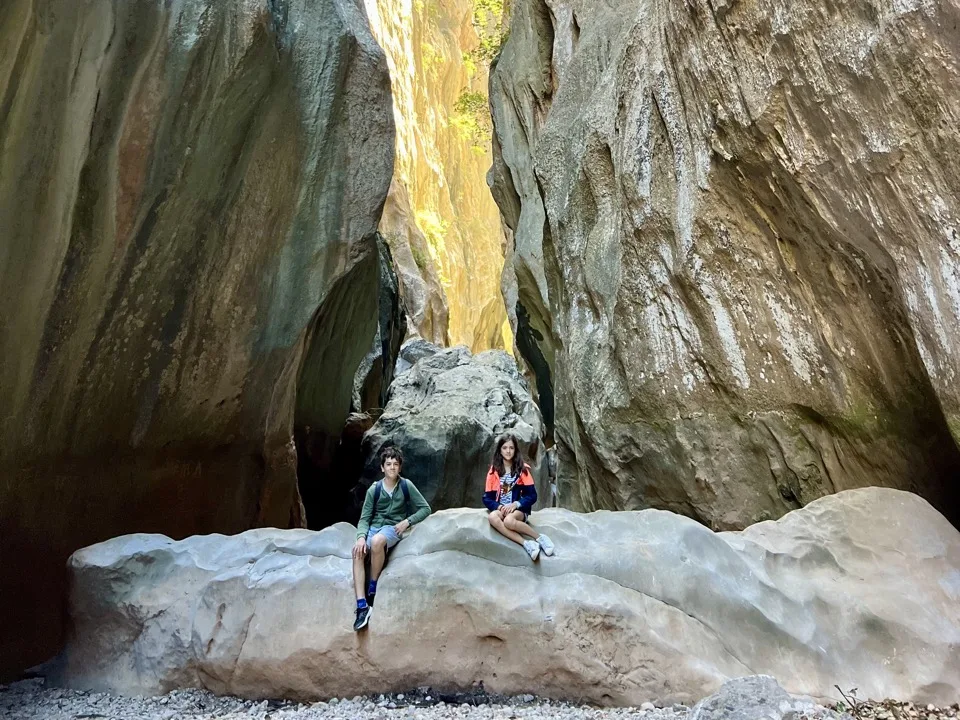
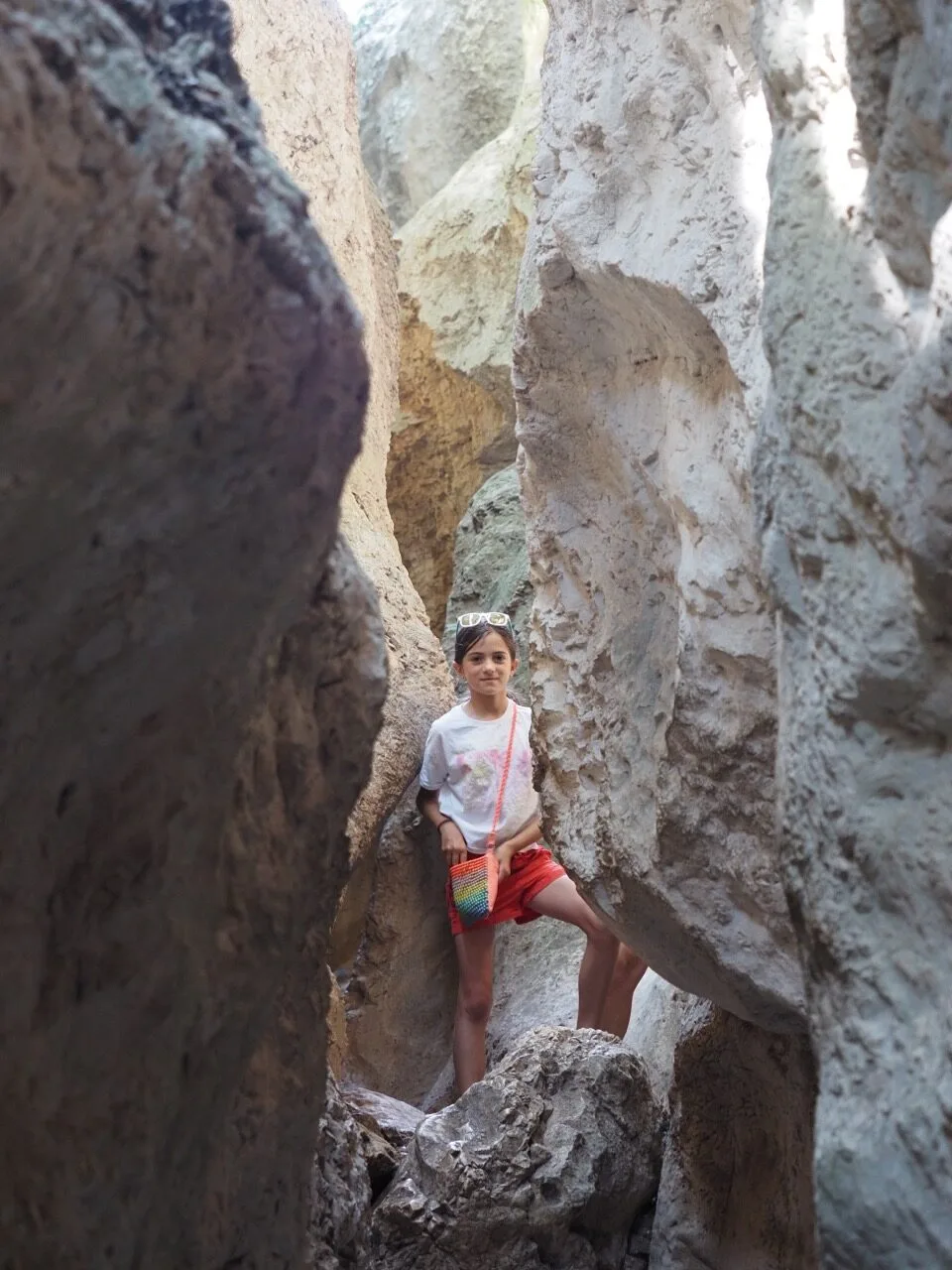
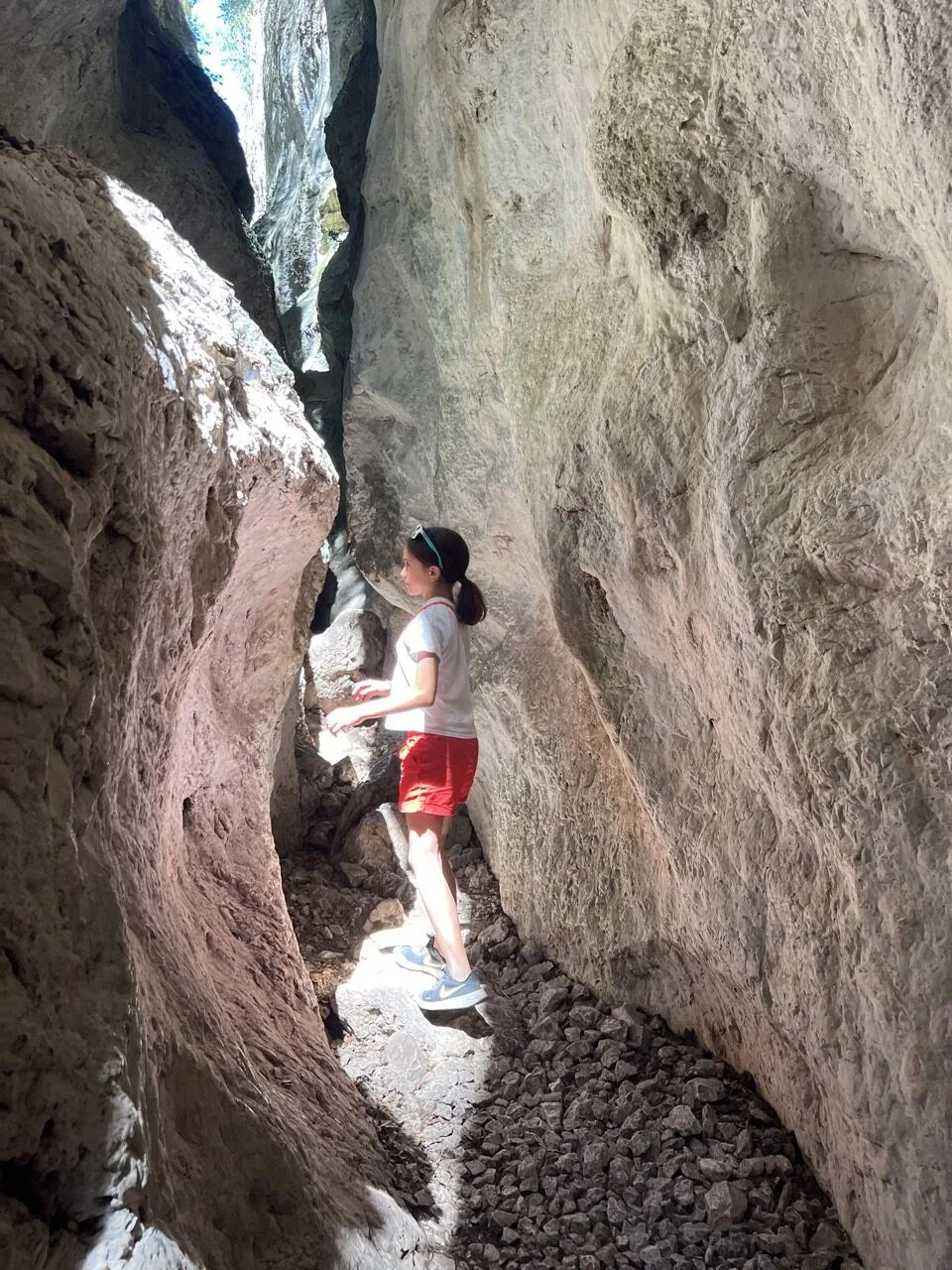
This was a little hike that we really enjoyed and that felt off the beaten track. These gorges offer an interesting landscape, with narrow passages. You find yourself almost wedged between huge rocks. There is even a bit of climbing to do, so don’t go with a pushchair or with very young children. For Ticoeur and Titpuce, it was just the right dose of adventure! We walked for an hour, then turned back (so two hours in total). The trail continues much further, but along the rest of the route there is no longer any gorge scenery. So we limited our hike to the most beautiful part of the trail. What’s more, the advantage of walking through the gorges is that you are in the shade! A big plus in summer!
Other villages in the Luberon:
During our previous stays in the Luberon, we had also visited Gordes and Lourmarin. Both are very beautiful villages, but also more touristy. In any case, we have only explored the western half of the Luberon, so we still have the east to discover next time! Feel free to share your favourite spots in the Luberon in the comments.
Our accommodation for visiting the Luberon as a family:
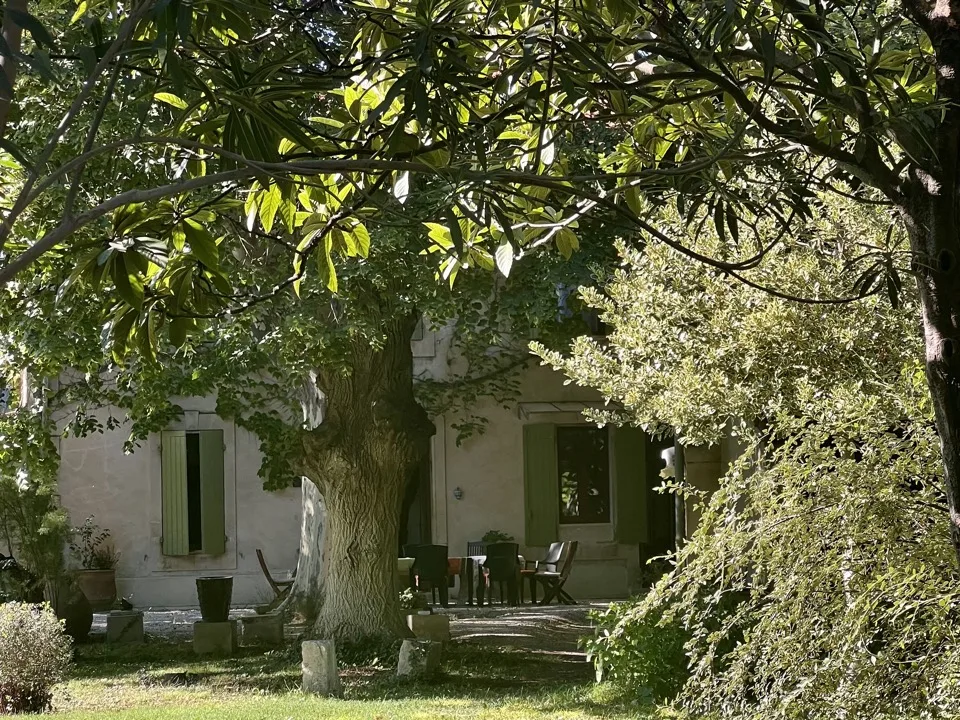
Our accommodation, Le Mas Ferrand, was located at the gateway to the Luberon, in the Alpilles, in the village of Graveson. We were there during St Eloi. So the village centre was very lively in the evenings, with parades in traditional costumes, horse races and evening concerts. A great atmosphere! At Le Mas Ferrand, we had booked two adjoining guest rooms. It was perfect for a stay with the grandparents: they had one room; we had the other, and we could meet up on the terrace and in the garden. The hosts were lovely, very welcoming, and gave us lots of itinerary advice. The breakfast was delicious. A rather comfortable, high-end address, for a treat. We spent half the week there. For our other nights in the Luberon, we slept in our VW campervan (the four of us, I should add! Omi and Opa were staying with friends).
**** When you book a hotel on Booking by following a link on my articles, it allows me to receive a small commission: it does not change the price for you and it helps me maintain the blog. So thank you very much to those who book the hotels we recommend! ****
***
And you? Do you know the Luberon? What’s your favourite village?
Visiting Aix-en-Provence with kidsAix-en-Provence with kids: the old town, museums, markets, calissons and Sainte-Victoire, with ideas for 2 days or more in…
3 days in Edinburgh with my teenagerA long mother-daughter weekend in Edinburgh: Harry Potter, art, history and shopping in the Scottish capital
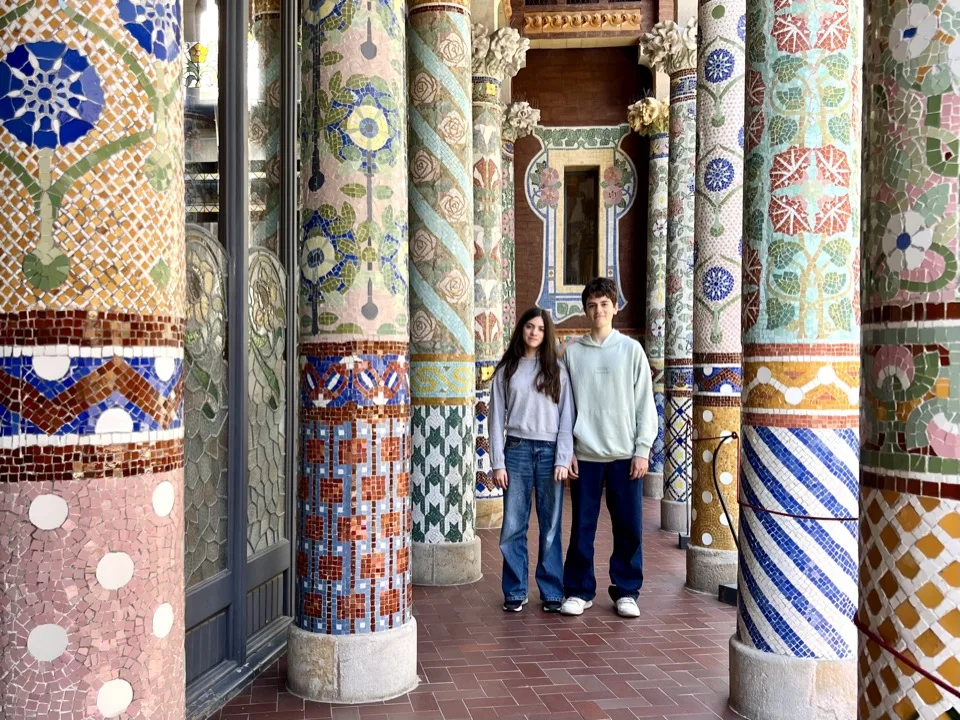
4 days in Barcelona with our teenagersOur 4 days in Barcelona as a family with our teenagers: itinerary, museum visits and walks neighbourhood by neighbourhood
During the Easter holidays, we spent 10 days with the family in Madeira as we were looking for a destination suitable for hiking. So, we did a lot of walking during this holiday! Hikes of all levels that I wanted to describe here to help you choose among the many trails on the island. For those who don’t know us yet, I should mention that our children are good walkers with quite a bit of experience. At the time of this trip to Madeira, our Ticoeur was 13 years old and our Titpuce 11 years old. Here is the detail of our 12 family hikes in Madeira:
Hiking in Madeira: the classics
These hikes are must-dos and real classics because they allow you to discover the island’s most beautiful landscapes and their diversity. They are all quite different in terms of scenery and in terms of the walking level required. They are the most popular hikes with tourists visiting Madeira, so this is where you will encounter the most people. Hence the importance of getting up early or starting them late in the afternoon (I’ll give you the details below). Avoiding peak season is always a good choice as well. We were in Madeira at the beginning of April, which was quieter than during the French Easter holidays and quieter than at the time of the famous Flower Festival in May.
Warning! Since January 2026, you have to pay access fees (from age 12) and book your time slot several days in advance to hike on Madeira’s popular trails. More information and prices on the official website. Book all your hikes at the same time as you will benefit from a better-value package.
1/ From Pico Ariero to Pico Ruivo
Very sporty hike – duration: 4h50 – 1250 meters elevation gain
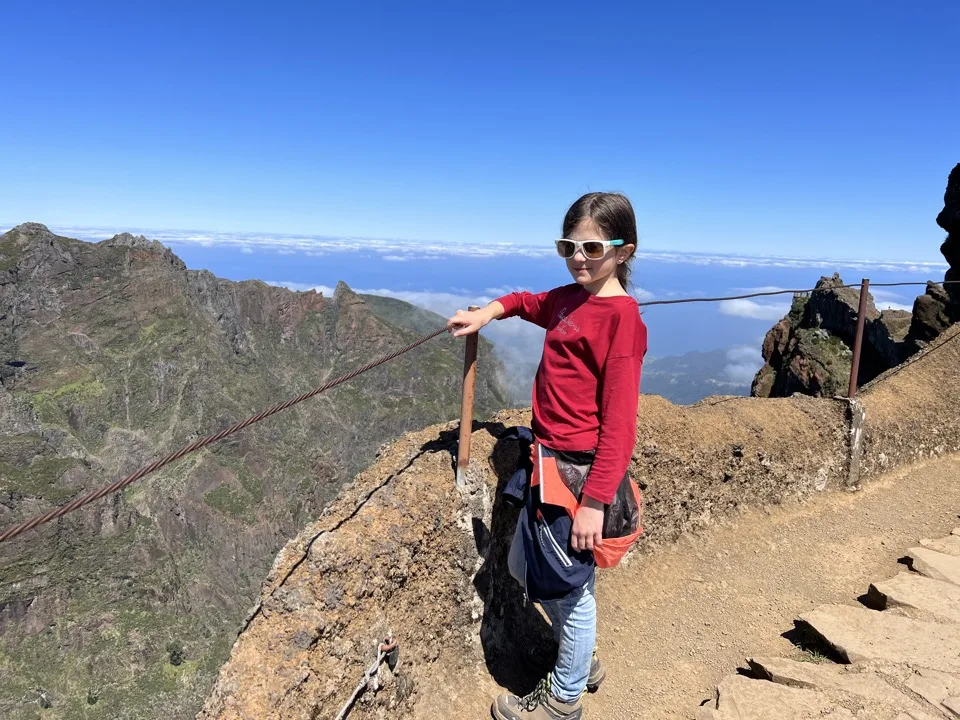
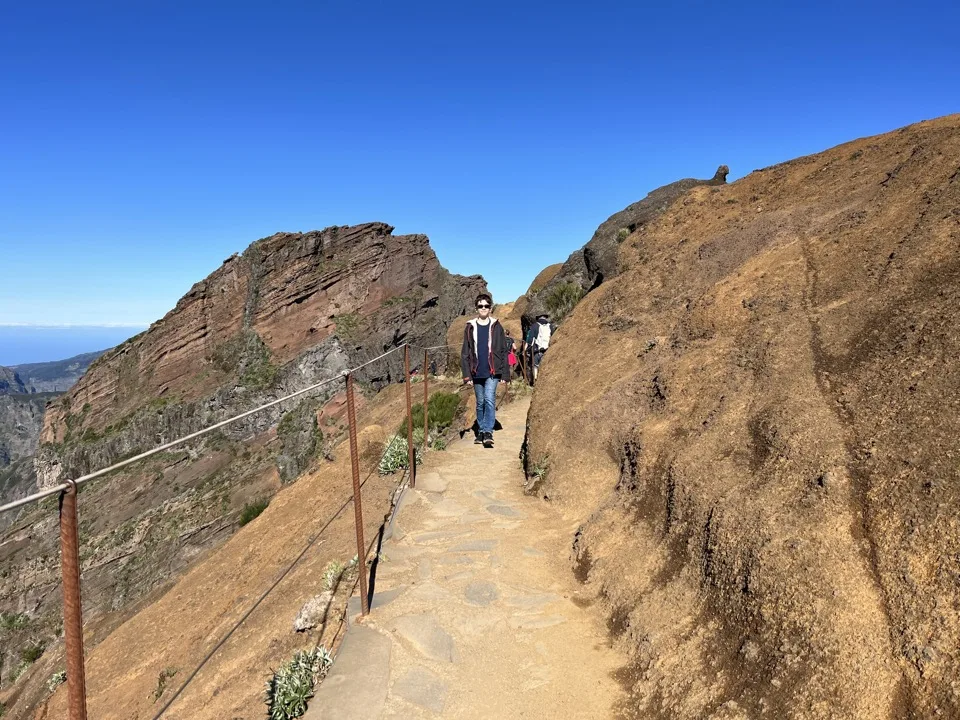
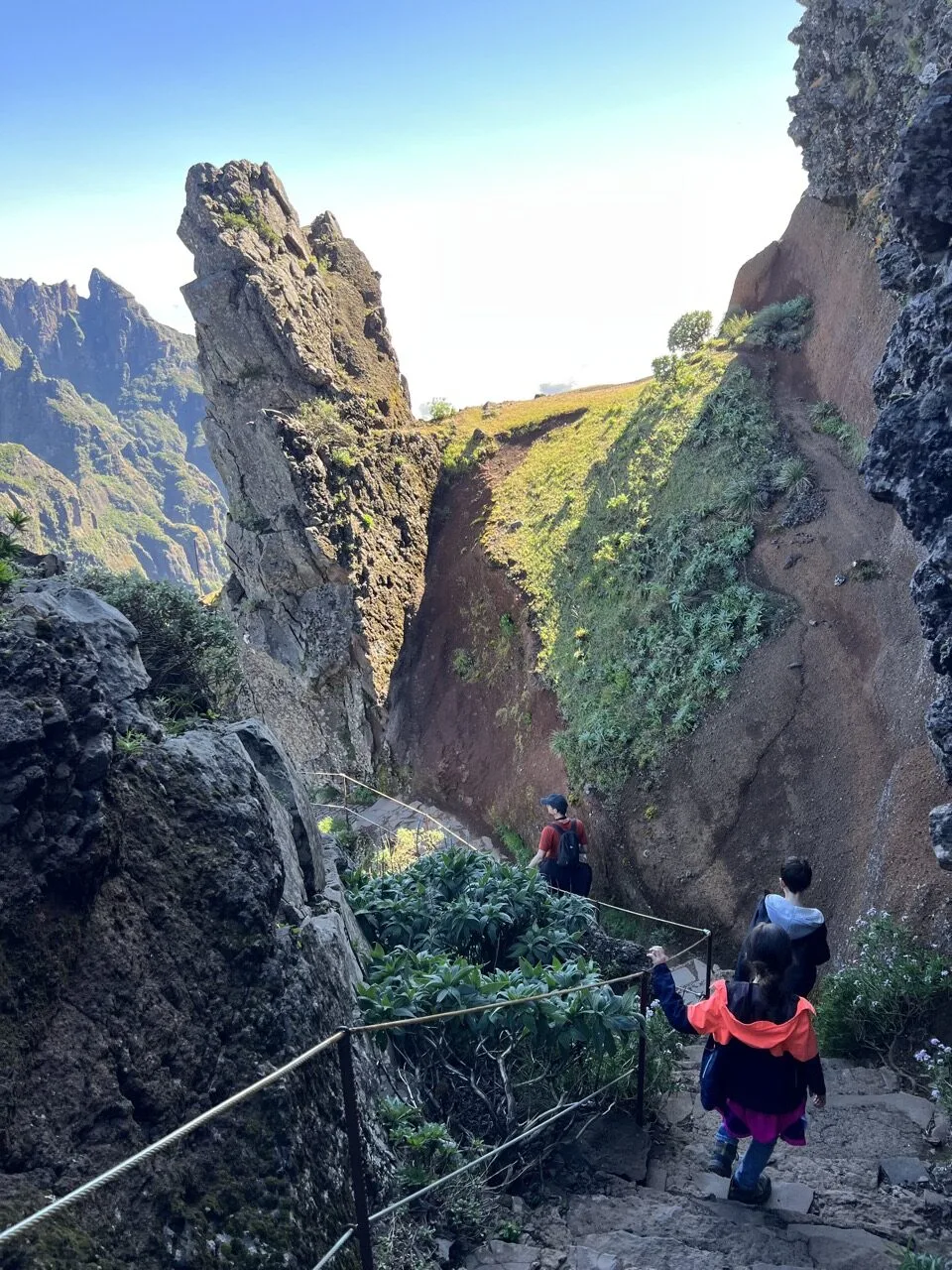
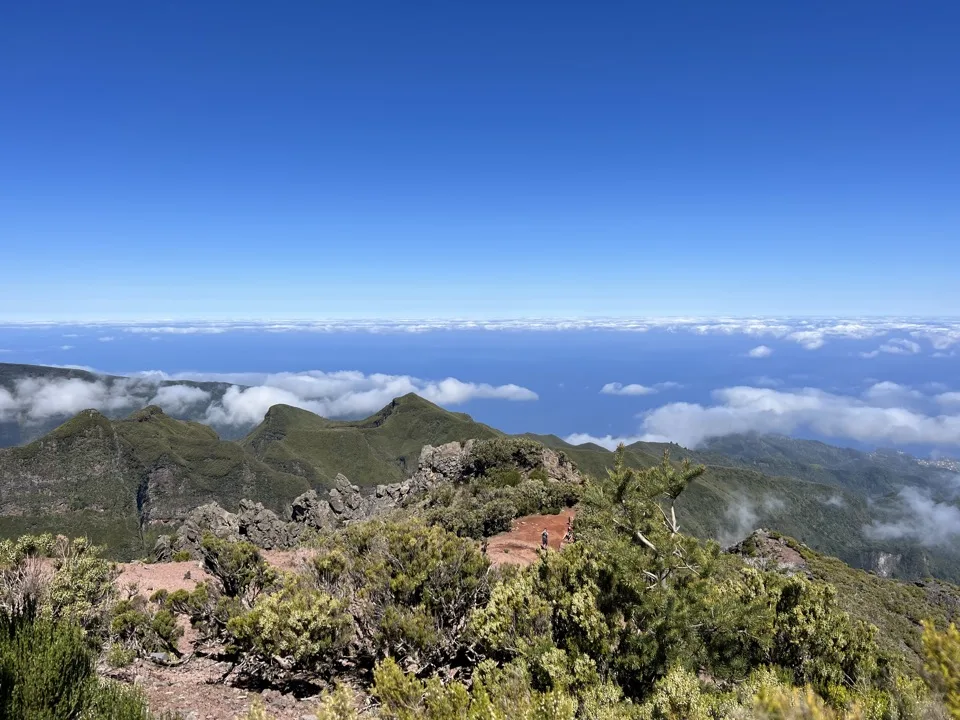
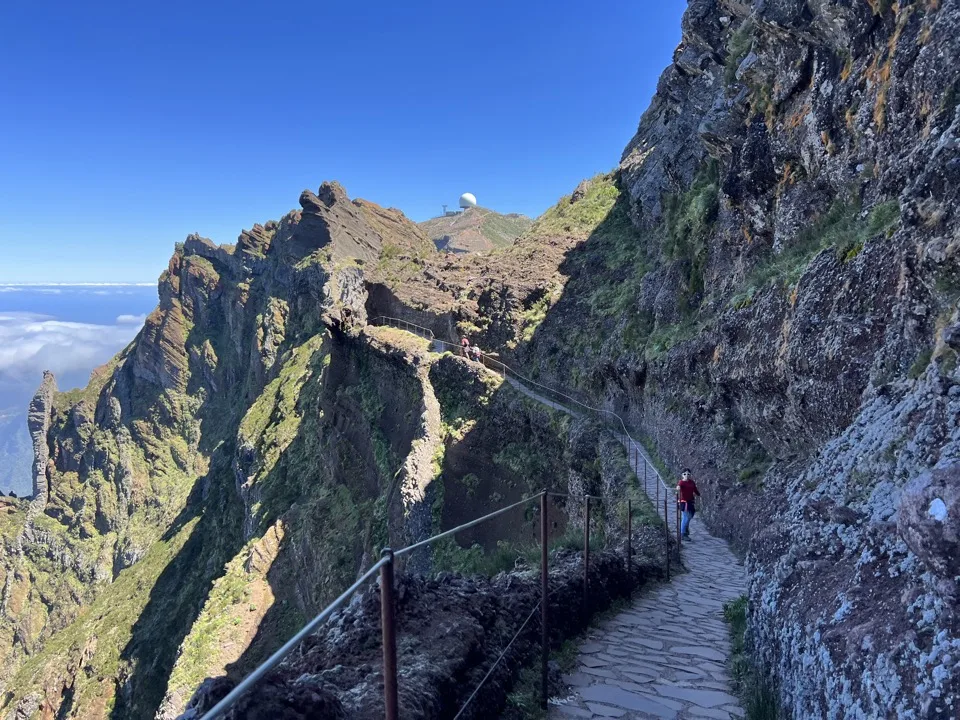
We did this hike at the start of our stay in Madeira because I knew it would require quite a bit of energy. On the first sunny day, we set off for this sporty hike. It is important to check the weather as there can be quite a few clouds and uncertainties around the island’s highest peaks. This is not a loop but an out-and-back between the two peaks. If you get tired along the way, you can turn back before reaching Pico Ruivo. I would say the first half of the route is the most beautiful, and the big climb before Pico Ruivo is long and tiring! We met people who were very exhausted and out of breath. No need to push yourself. Turn back if needed, and you will still enjoy very beautiful scenery. Also, it is possible to go to Pico Ruivo another day with a shorter hike. Returning to the trail from Pico Ariero to Pico Ruivo: it’s the essential hike that will suit families used to hiking without any problem. I classify this hike as sporty because even though the two peaks are roughly at the same altitude (just over 1800m), between the two summits you have to descend and ascend a total of +1250m and -1250m. It’s tough! We took 2h20 to go there, then 1 hour break at Pico Ruivo, then 2h30 for the return. The trail is very well maintained and very safe. You can buy drinks and a few snacks at Pico Ruivo, to recharge your sugar levels and enjoy a cold drink before setting off again.
For parking, we were parked in the large car park below Pico Ariero, about 15 minutes from the start of the hike.
Since 2026: booking required (PR1). And for this one, you need to plan well ahead as it is in high demand (around a week in advance). The access fee is also more expensive than for the others.
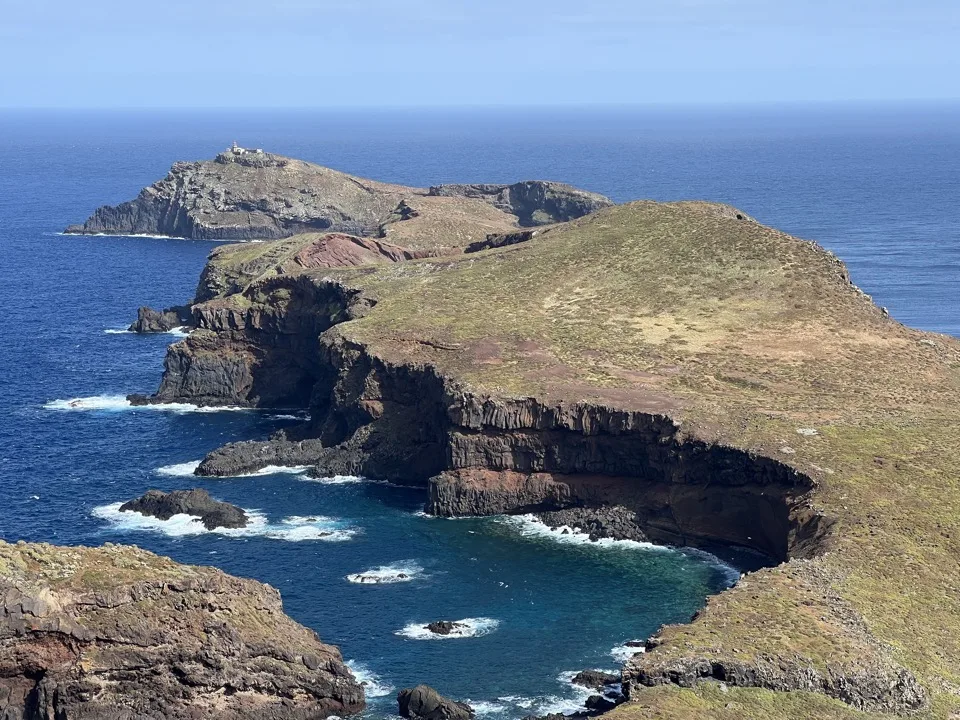
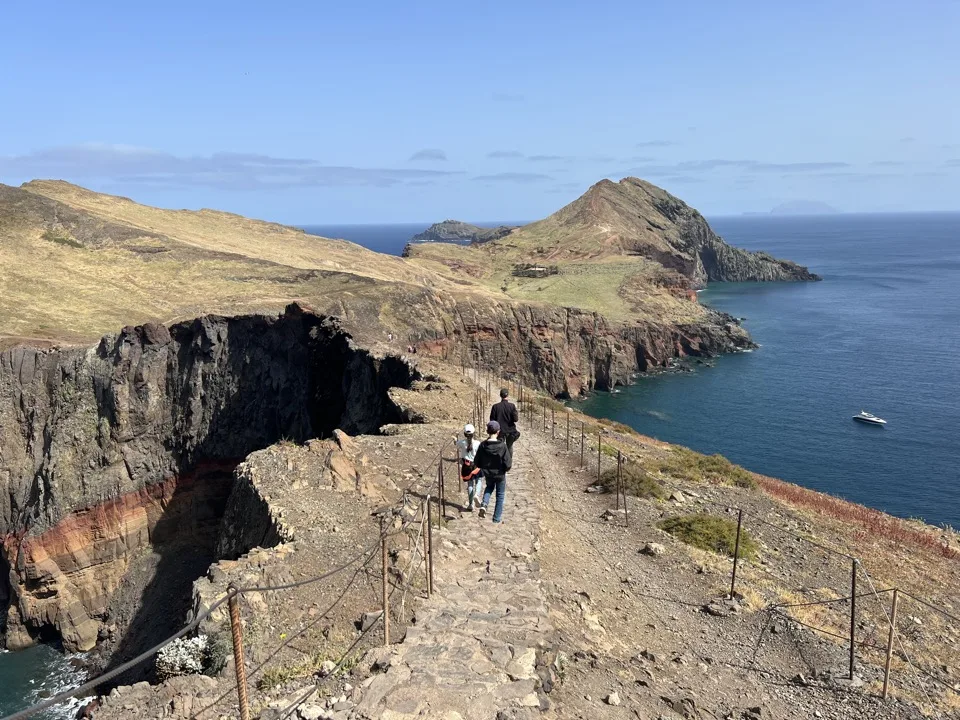
The most beautiful hike in eastern Madeira! A real favourite! We started it late in the afternoon, at 4 p.m., and it was really ideal because the other hikers were finishing, leaving the area deserted. In addition, the light was magnificent. We recommend this time of day. No problem finding a parking space since tourists were leaving. This is an out-and-back hike to the tip of a peninsula. There are numerous stops with panoramic views and a small climb towards the tip. The trail is very well maintained and marked. In summary, it’s an easy hike for families who enjoy walking.
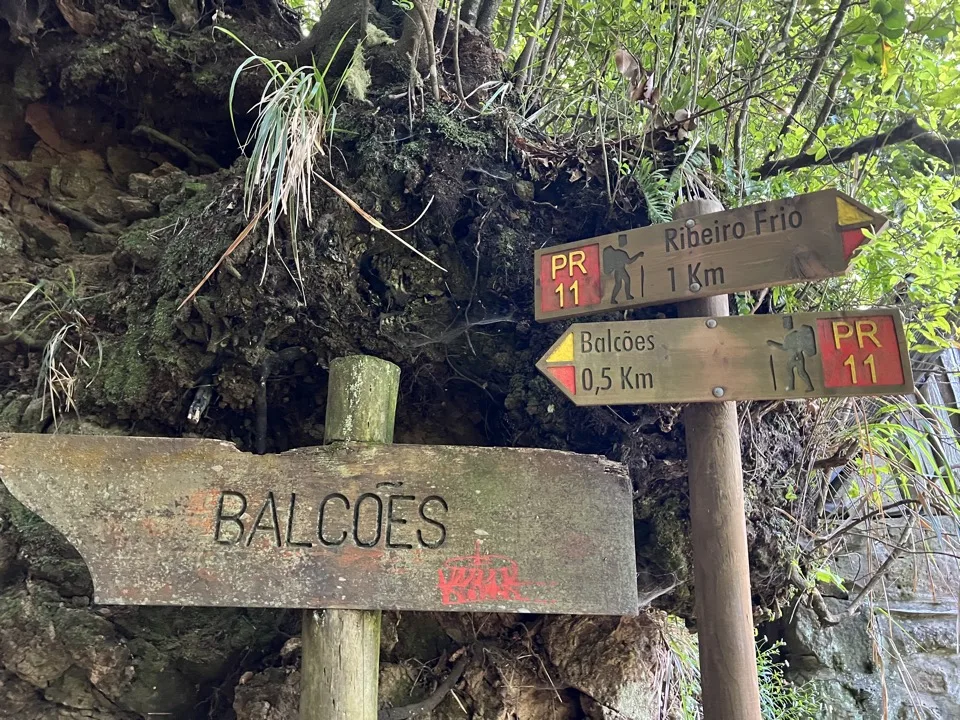
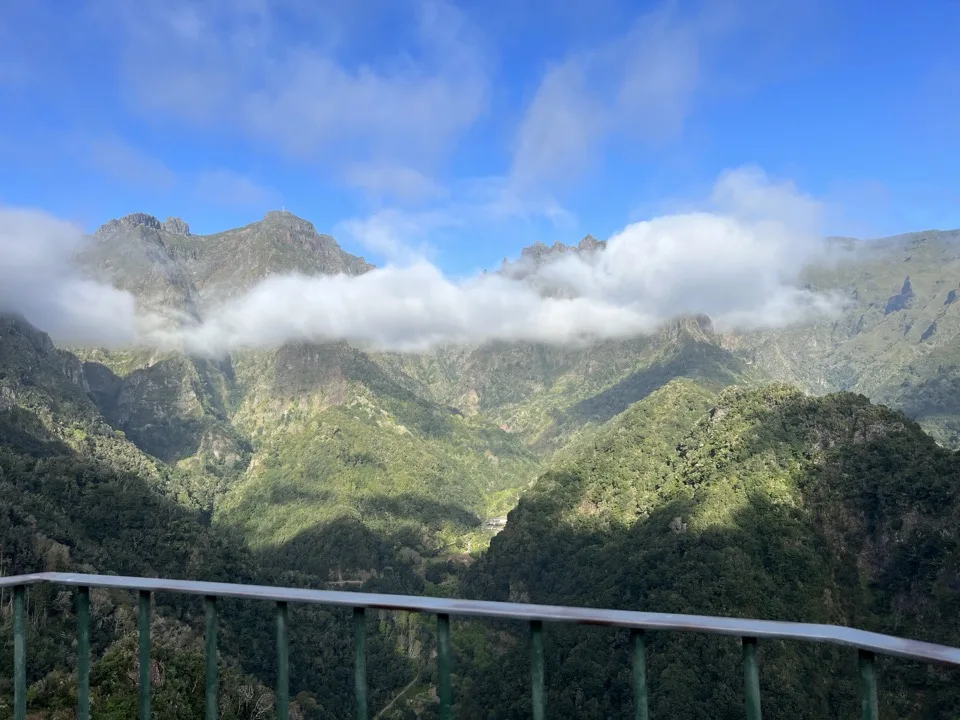
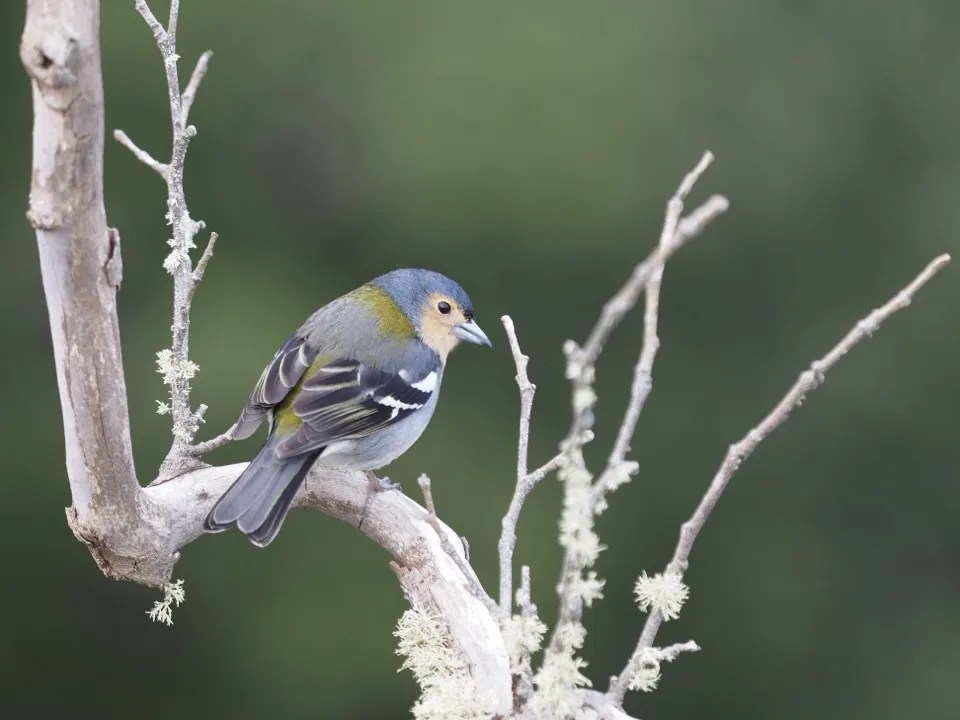
A very popular place but in the early morning, there was almost no one! Walking along an old levada is short and very easy. We were there at 9 a.m. and stayed for an hour, waiting for the clouds to leave the peaks. In the meantime, we were accompanied by Madeira’s blue chaffinches.
We parked at the roadside near John’s Poncha bar.
Since 2026: booking required (PR11).
4/ The Fanal
Very easy – duration variable according to your wishes.
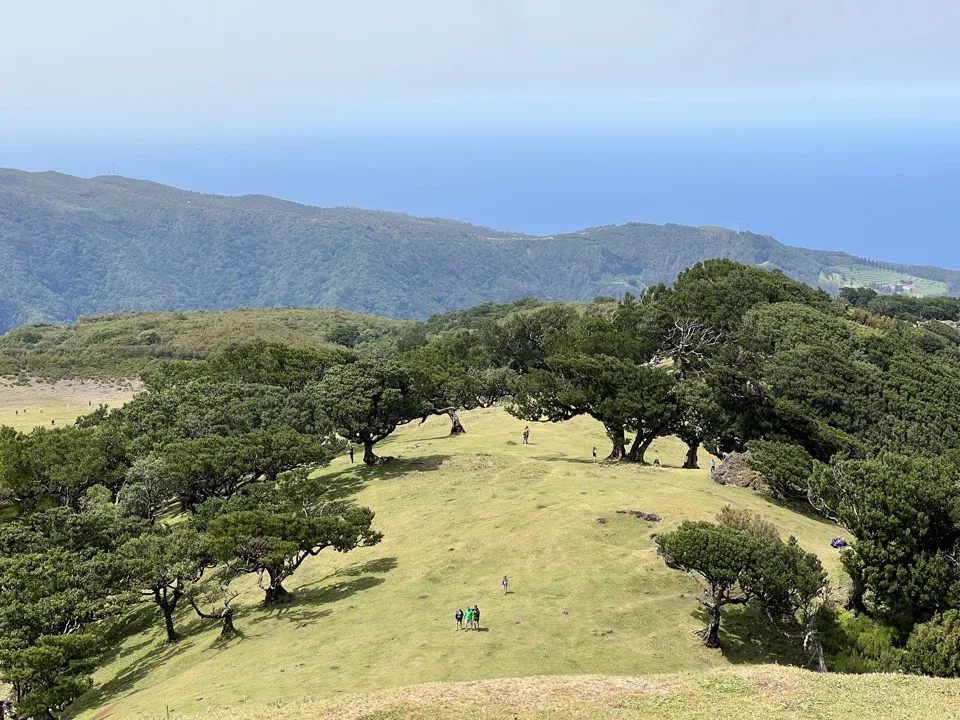
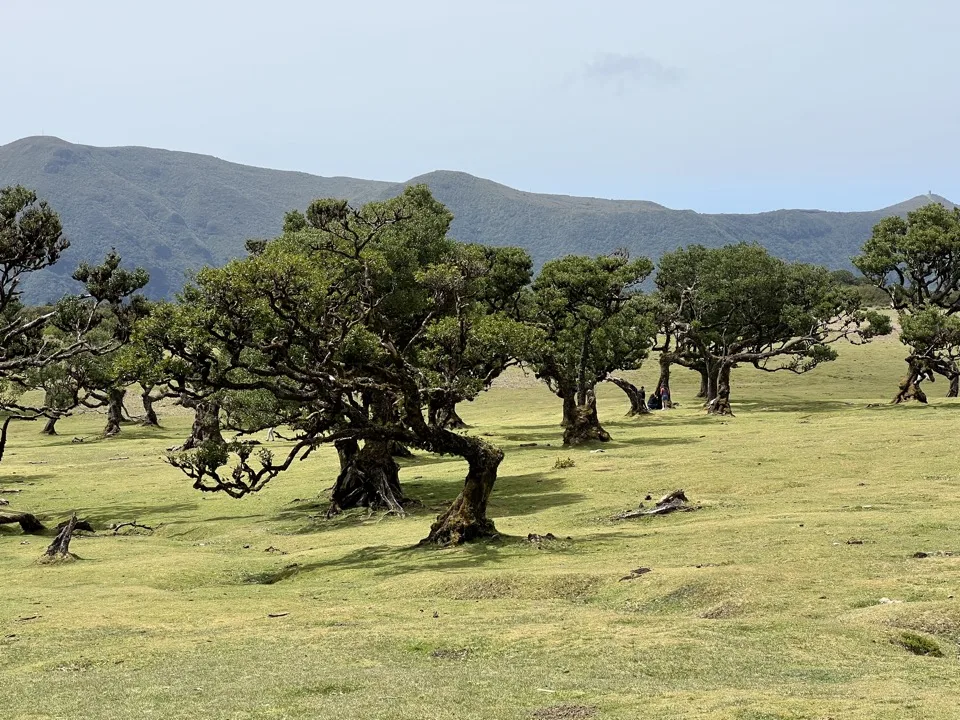
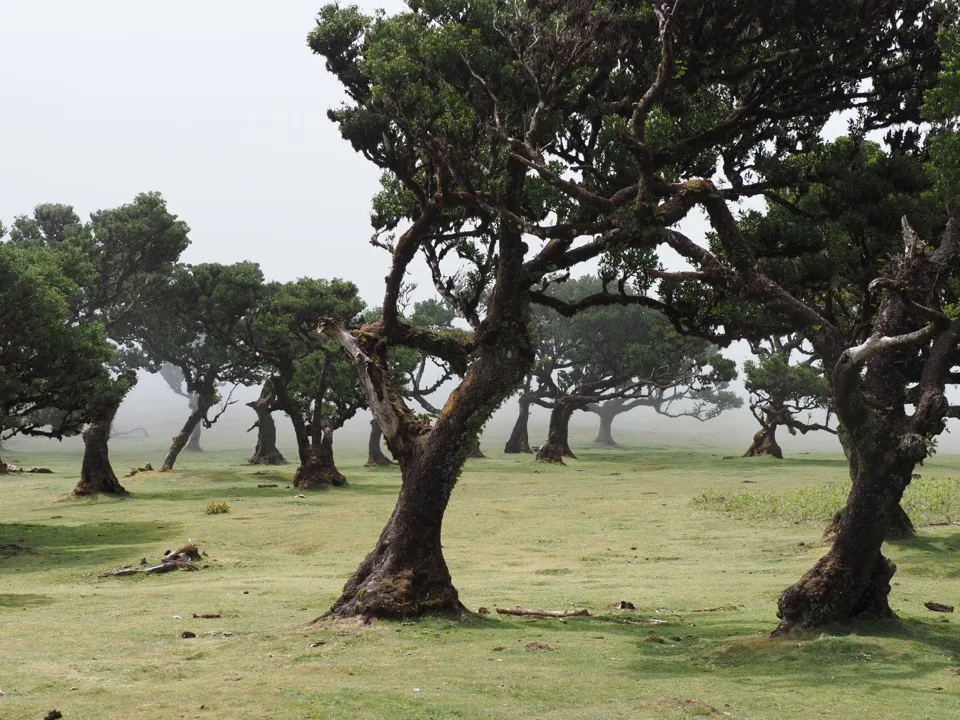
The Fanal is an area located in the highlands in the west of the island, in the heart of the primary forest. There is a group of laurels dating back to prehistoric times. These ancient trees inspire the imagination. This laurel forest is often misty, making it even more mysterious. It is more of a long walk than a hike. In any case, it’s very easy and family-friendly. We stayed there for a good two hours. At weekends, locals come here for picnics. There is a large car park on site.
Since 2026: it is no longer possible to wander freely among the trees. You have to follow a short walking circuit that goes around them.
Be aware of very changeable weather!
5/ Levada das 25 Fontes
Easy, with optional variants adding some elevation – duration: 2h30 round trip to the 25 springs (4h if you include the Alecrim levada variant).
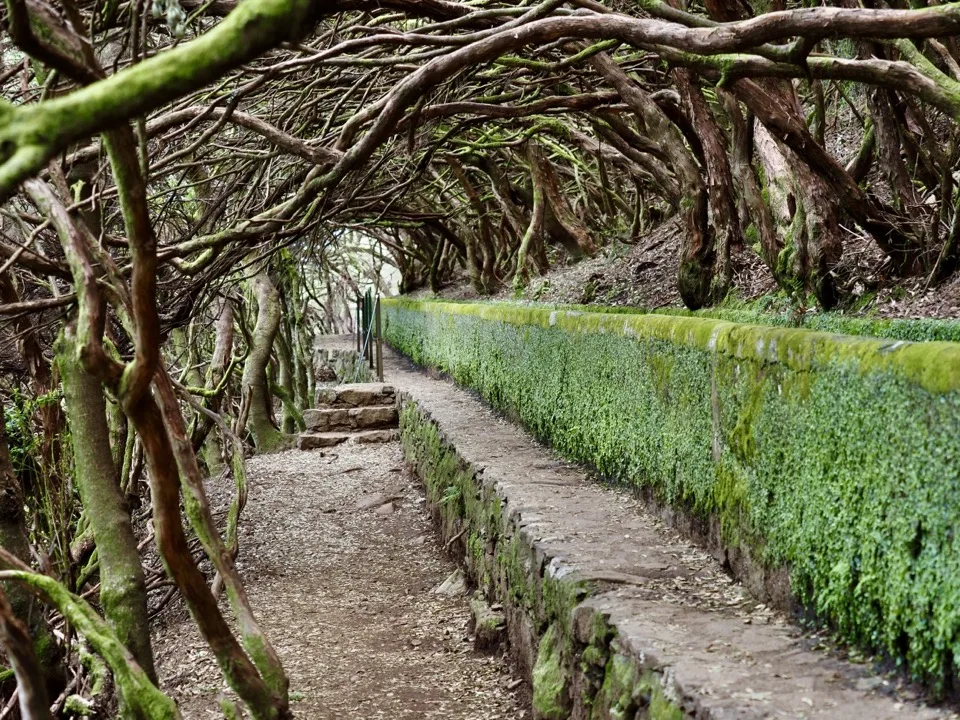
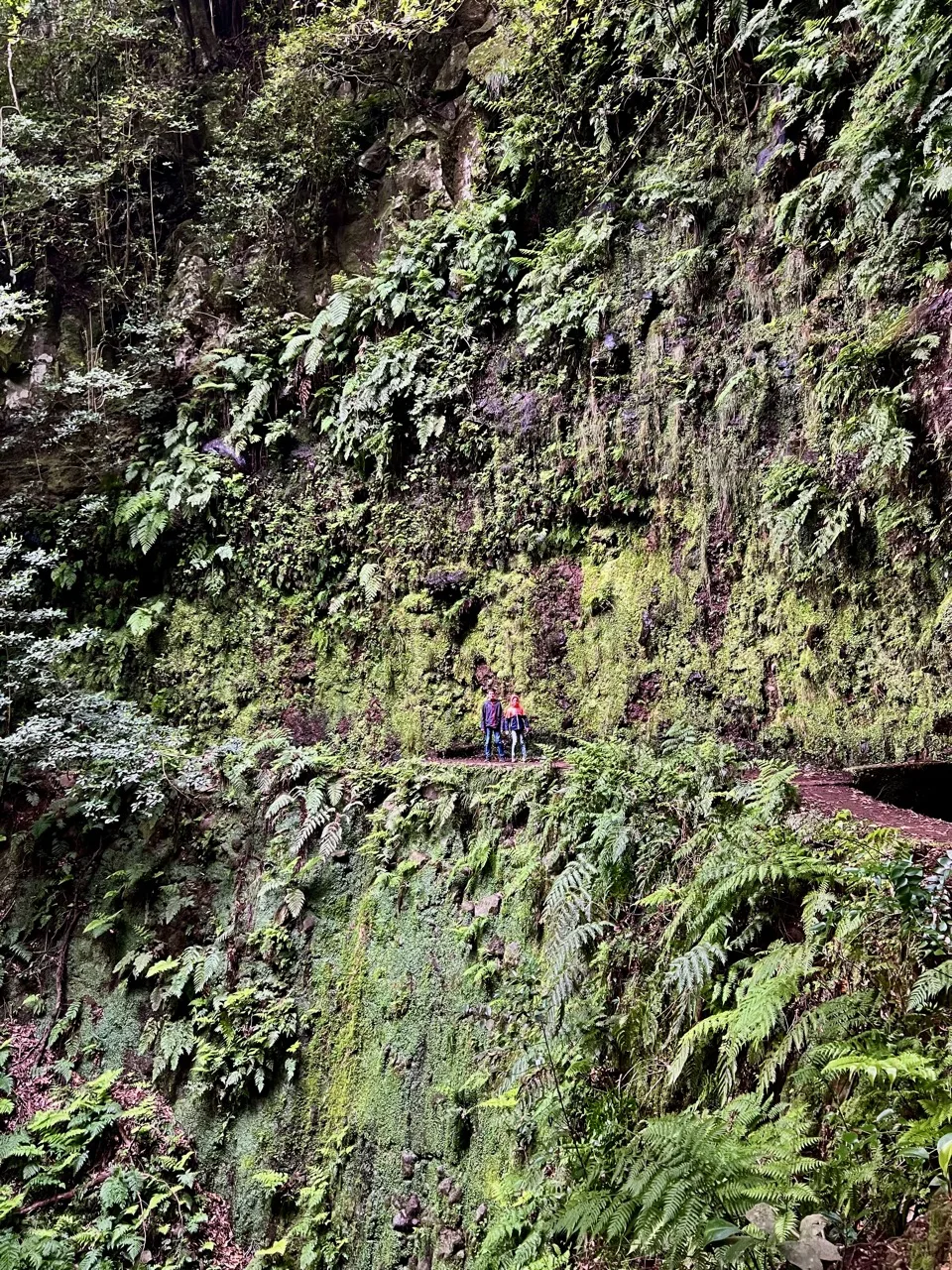
The 25 Springs is the hike I had heard a lot about in terms of crowds. Once again, by arriving at 8:30 a.m. at the car park (on ER 105), we hardly met anyone. However, since it’s an out-and-back along a levada, the risk was passing people on the return leg. To avoid this, Papa Voyage decided to extend the hike by combining it with the Levada do Alecrim via Paul da Serra. This allowed us to see other landscapes and be alone on the link between the two trails. At the end, we looped back to return to the car park at the start of the 25 Springs hike.
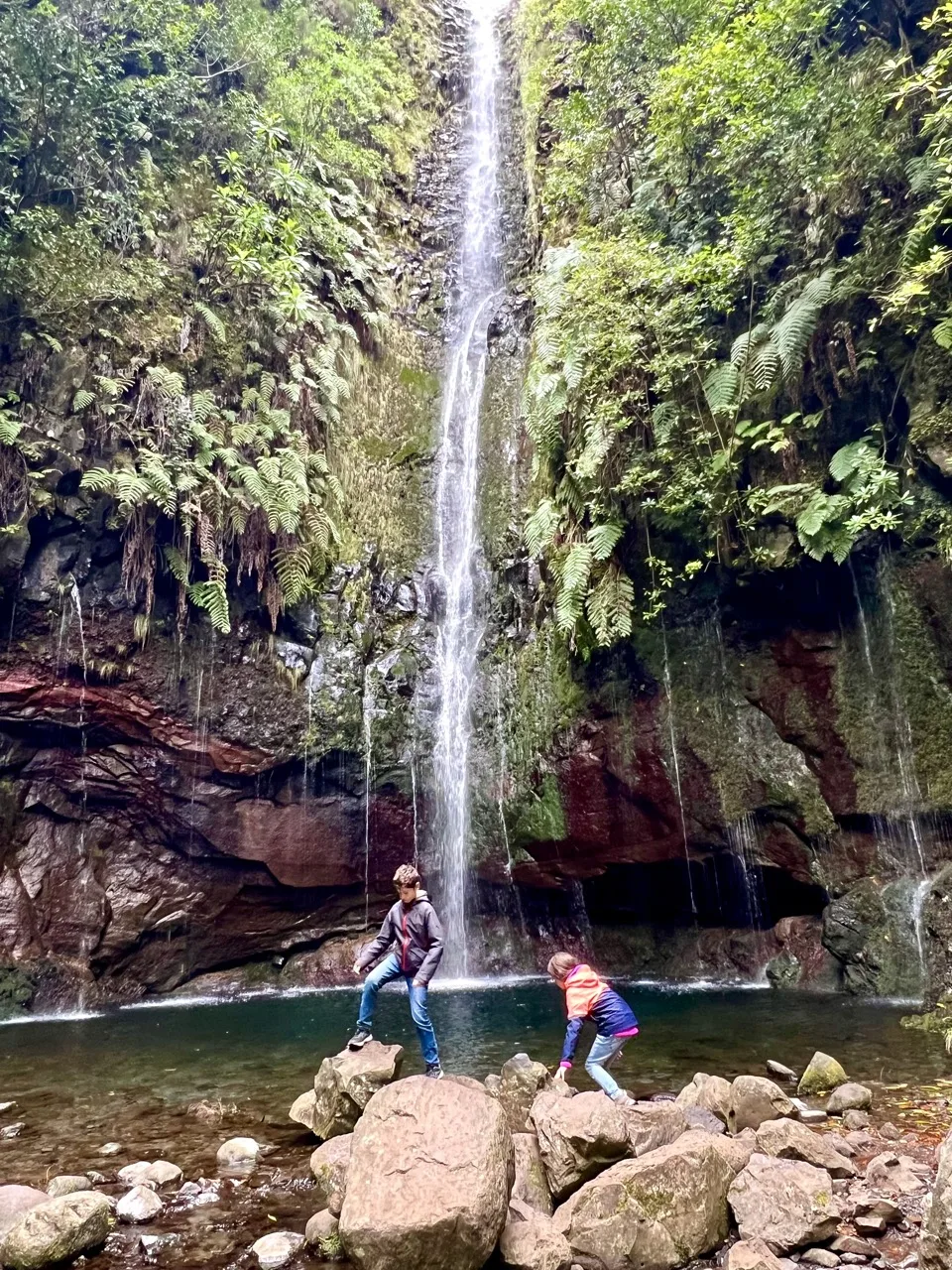
The 25 Springs waterfall, the main goal of the hike, is really very beautiful, surrounded by primary forest. We reached it in 1h15. We stayed to admire the large waterfall for quite some time before the first groups arrived. So clearly, it’s worth it, and we just advise being early risers. From the waterfall, you can simply retrace your steps along the same route or take a variant. There is no difficulty on the 25 Springs levada or the Alecrim levada, but there is a greater elevation gain (400 m steep climb) if you want to link the two.
Since 2026: booking required (PR6).
The path to reach the 25 Springs is very easy:
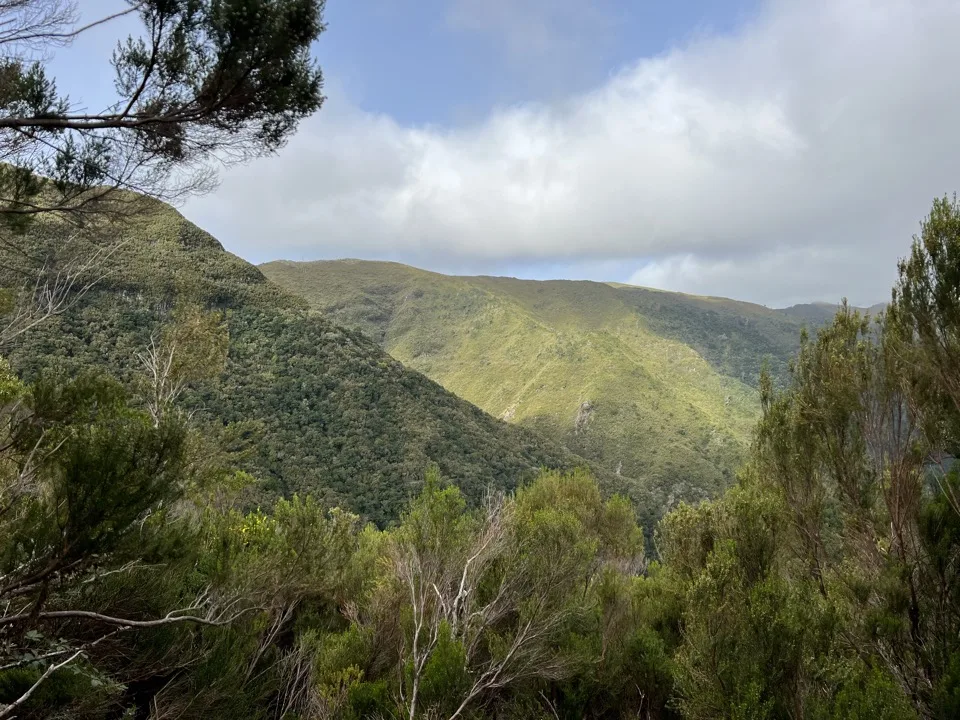
However, on our return variant, we had a good climb to this viewpoint (Paul da Serra) before joining the Alecrim levada.
Easy hikes to continue exploring Madeira with the family:
6/ Levada Ribeira da Janela
Easy – duration: 2h15 round trip.
A typical Madeira hike, flat along a levada with eucalyptus trees. You pass through a few tunnels, but they aren’t too long. Very classic. Not our favourite hike, and the small waterfalls didn’t have much water, but it’s nice if you’re in the area (northeast) and looking for an easy route. There were beautiful green walls. This combines well with a visit to the pools of Porto Moniz.
Since 2026: booking required (PR15).
7/ Lombada da Ponta do Sol: the Nova and Moinho levadas
Easy – duration: 2 hours round trip.
Another very easy and very safe hike, similar to the previous one, with a small waterfall along the way.
8/ Levada Faja do Rodrigues
Moderate difficulty – duration: 2h round trip.
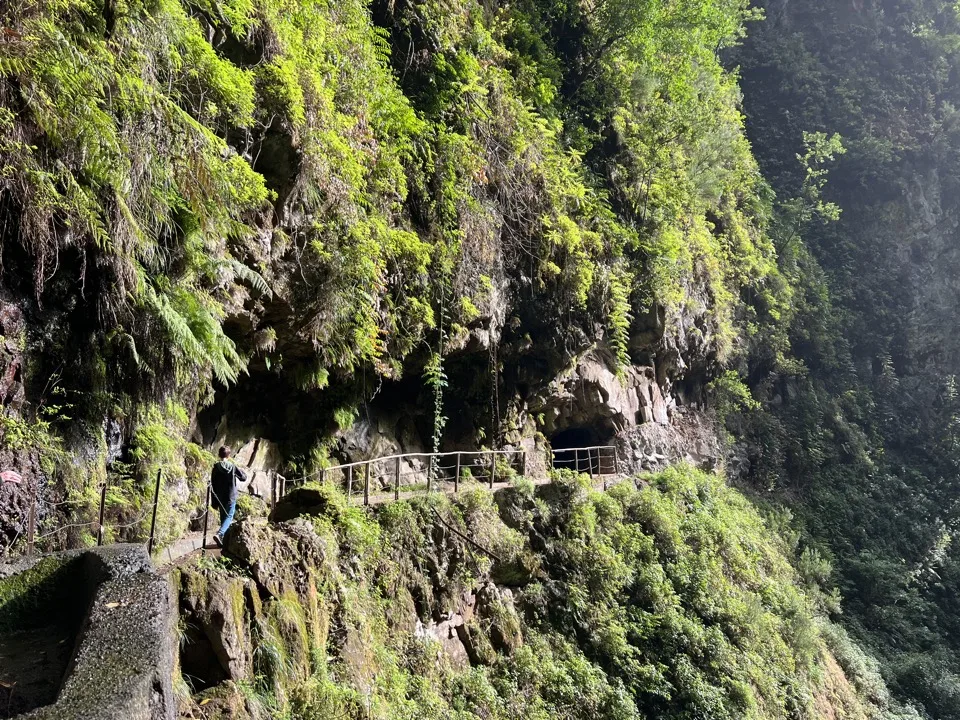
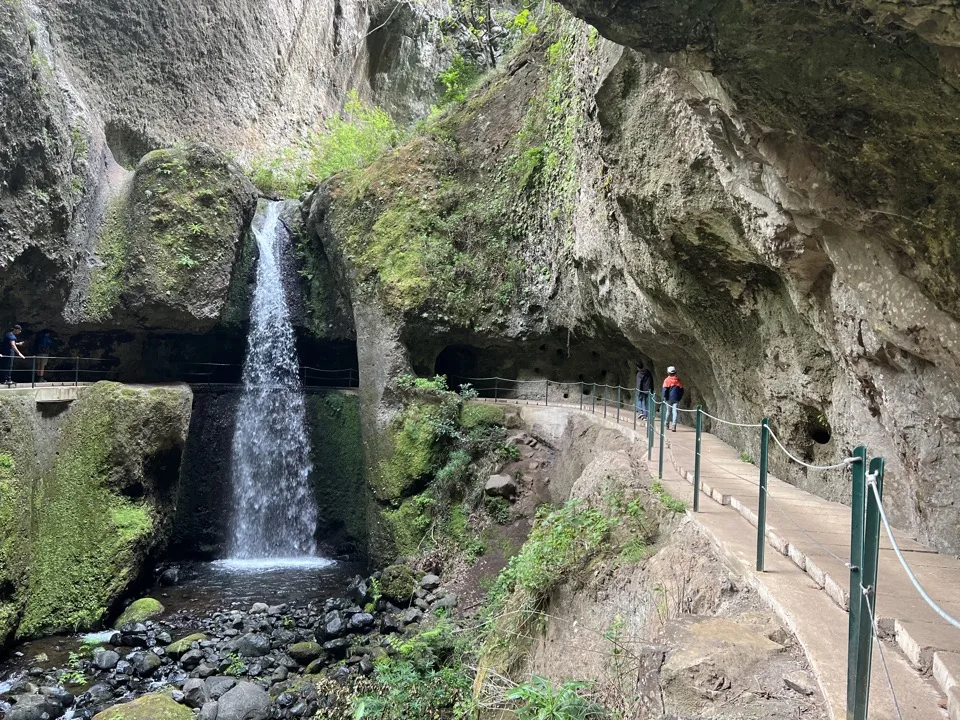
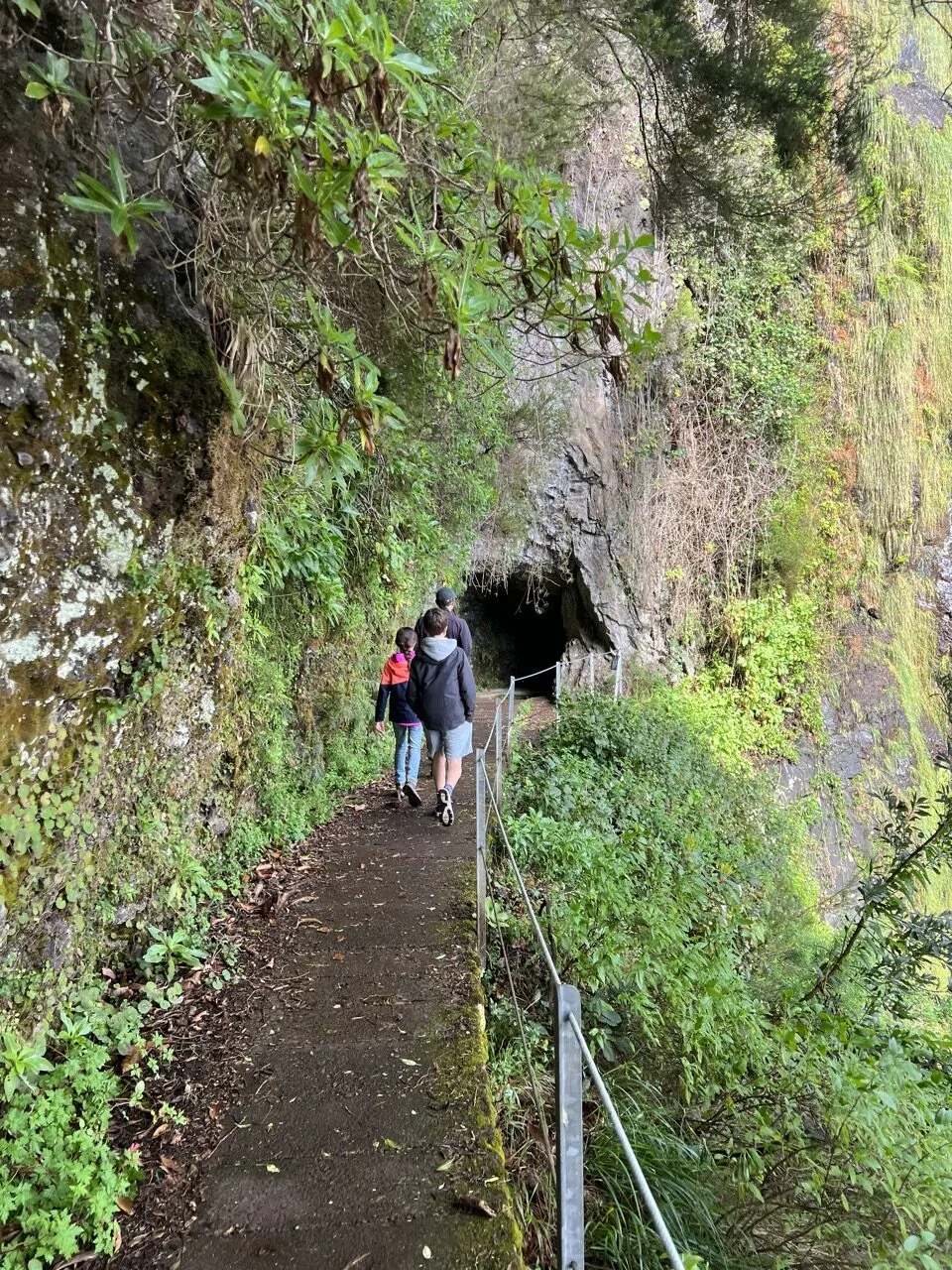
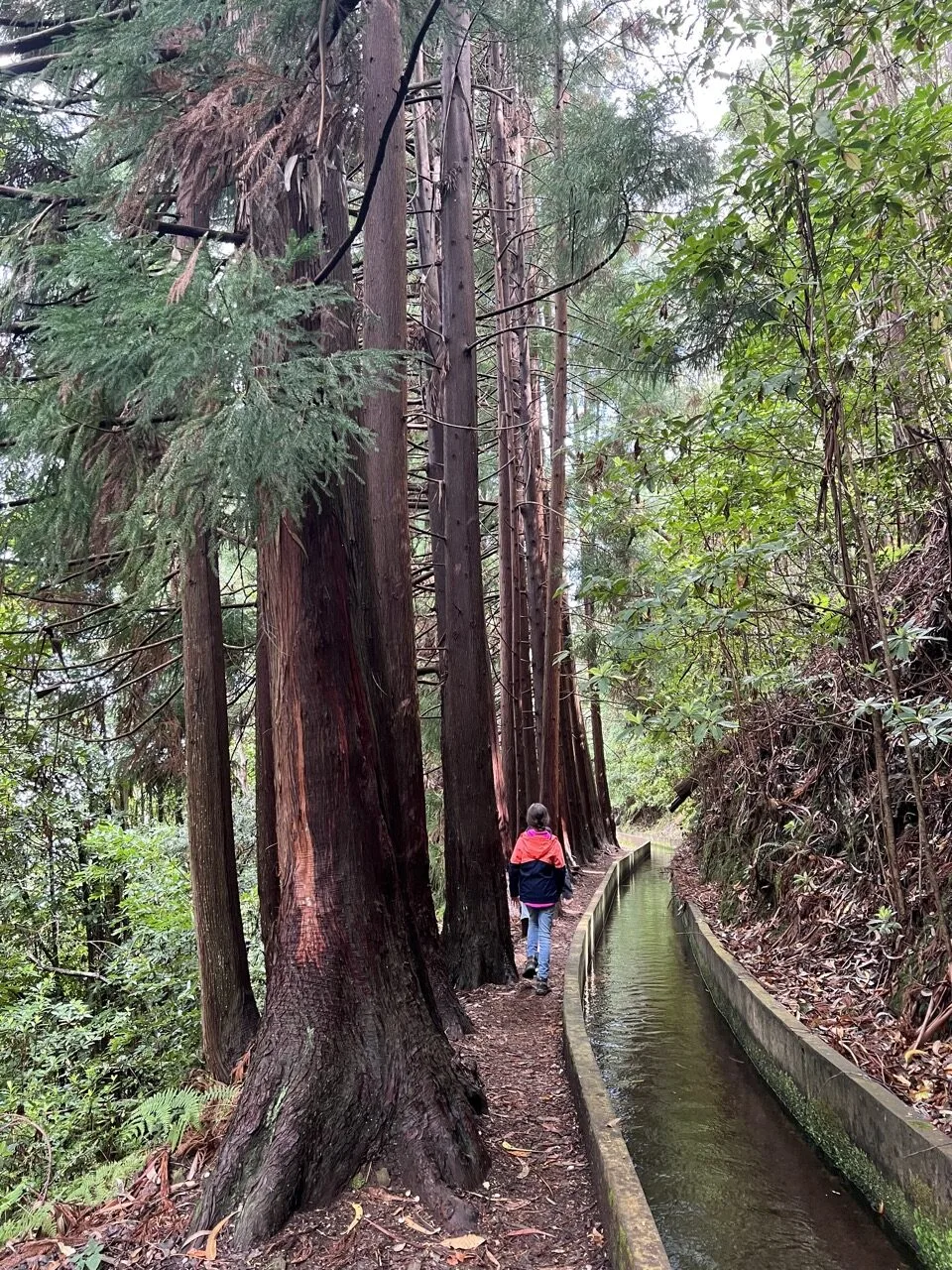
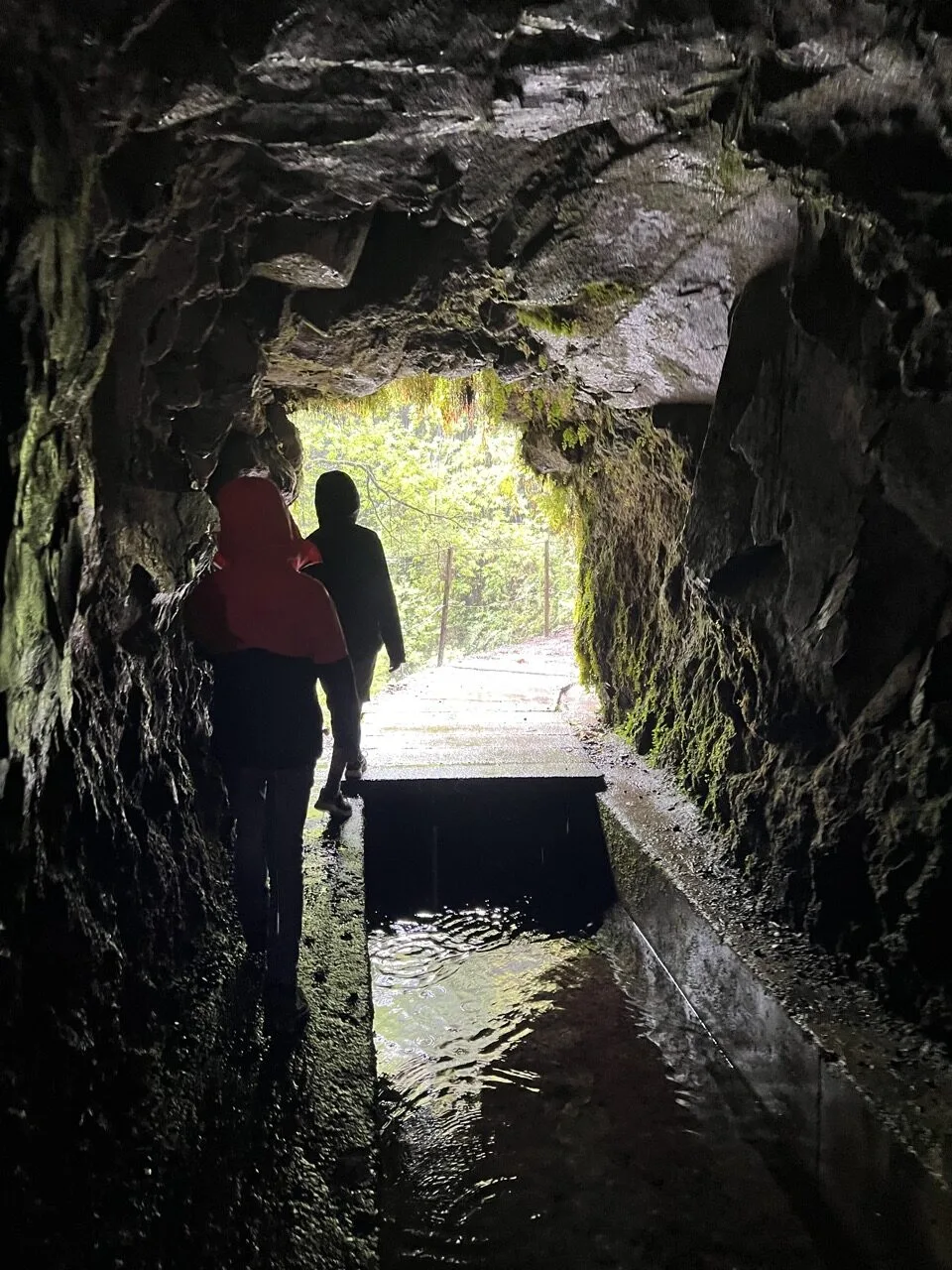
Compared to the previous levadas, I rated this as moderate difficulty because the tunnels are really long, dark, narrow, and damp! You need to concentrate to avoid falling into the canal. And above all, you must not be claustrophobic! Normally, I have no problems, but here I must admit I was really looking forward to seeing the end of the tunnels, especially the one over a kilometer long! Another issue with a long tunnel is that it’s very difficult to pass other people. We only met three couples, but passing each other along the canal edge was tricky!
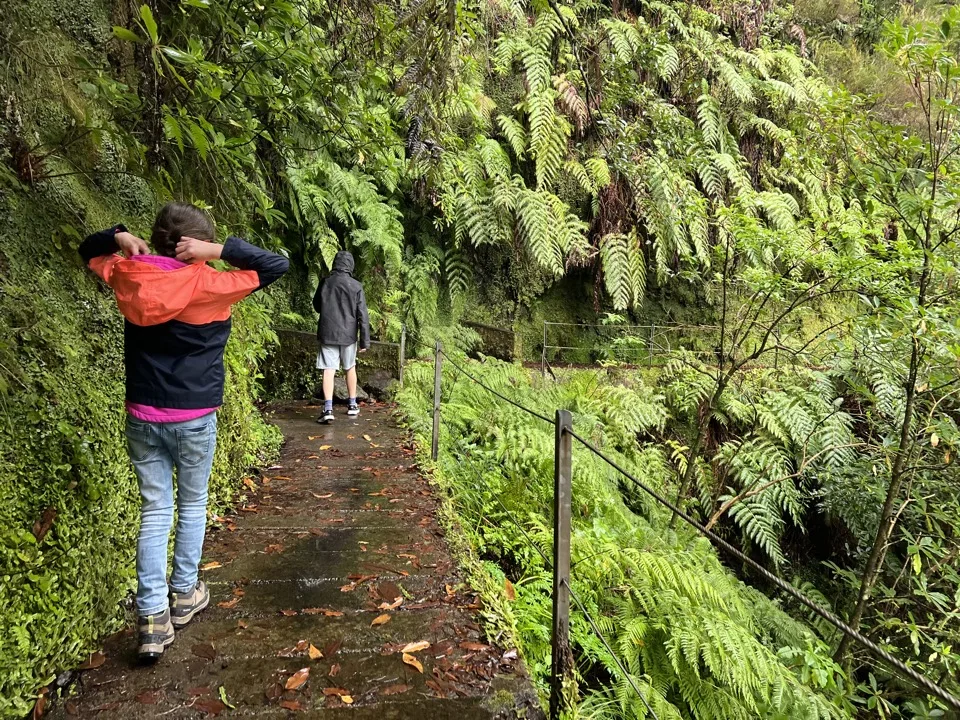
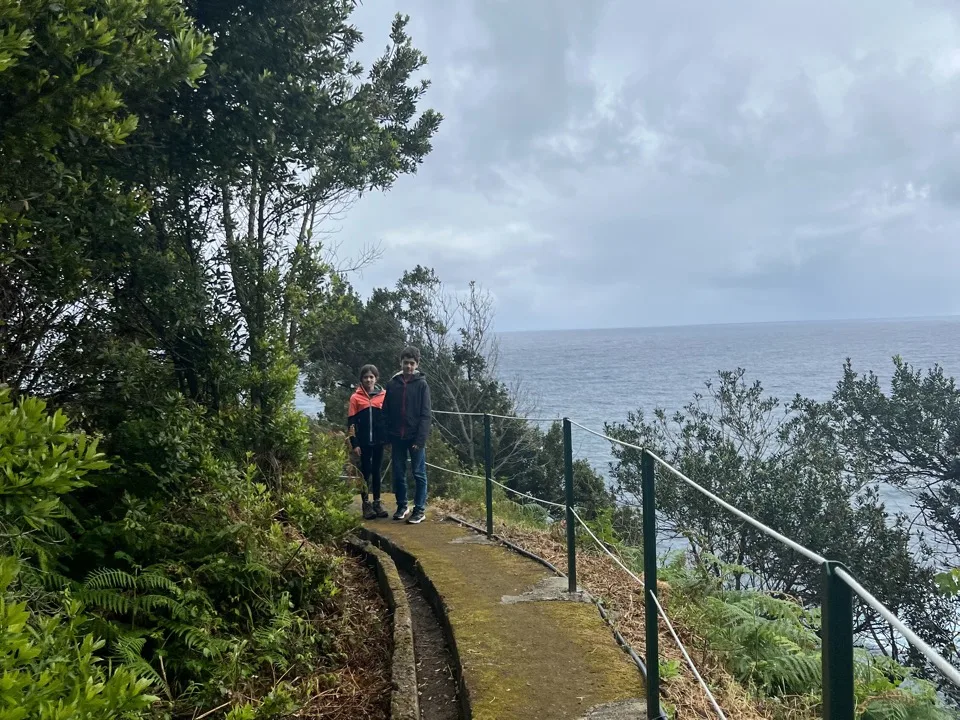
Finally, in this part of Madeira (the north), the climate is wetter, so the weather does not always make this hike easier! In short, it’s more for the adventurous, even if the terrain is flat! The brave will be rewarded with extremely lush vegetation, a jungle-like atmosphere!
Since 2026: booking required (PR16).
As often in Madeira, you walk through eucalyptus forests! They smell so good!
In the next photo, you can get an idea of the inside of a tunnel, and even then, there are passages where the edge is narrower. You need to watch your balance. I sometimes had to steady myself by putting my hand on the opposite wall.
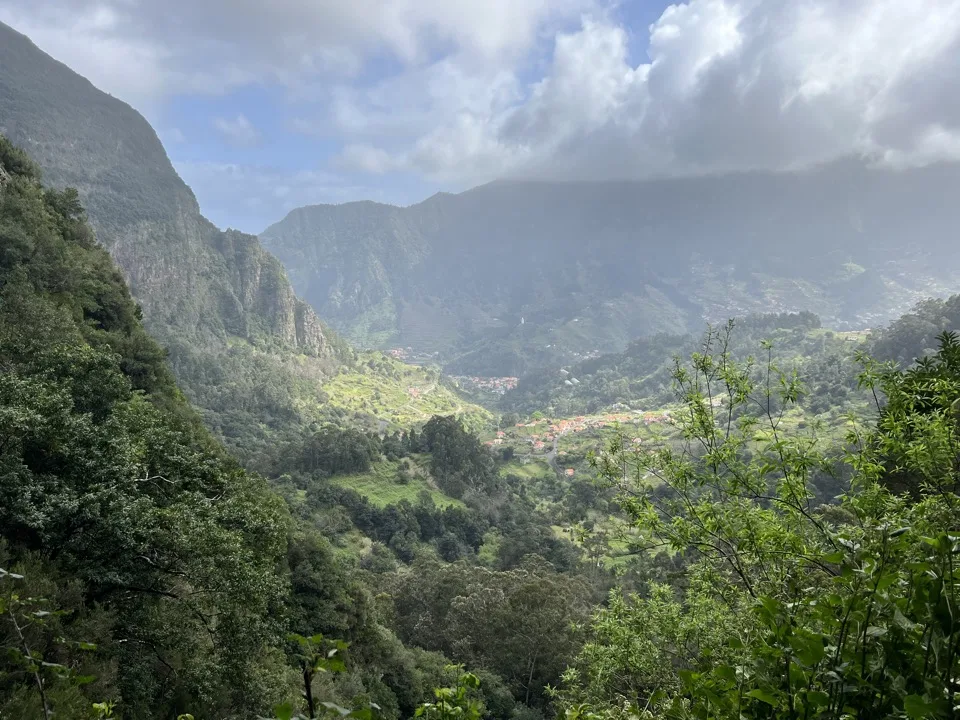
When you’re not in a tunnel, there are beautiful views 🙂
9/ La Ponta do Poiso
Very easy – duration: 30 minutes round trip.
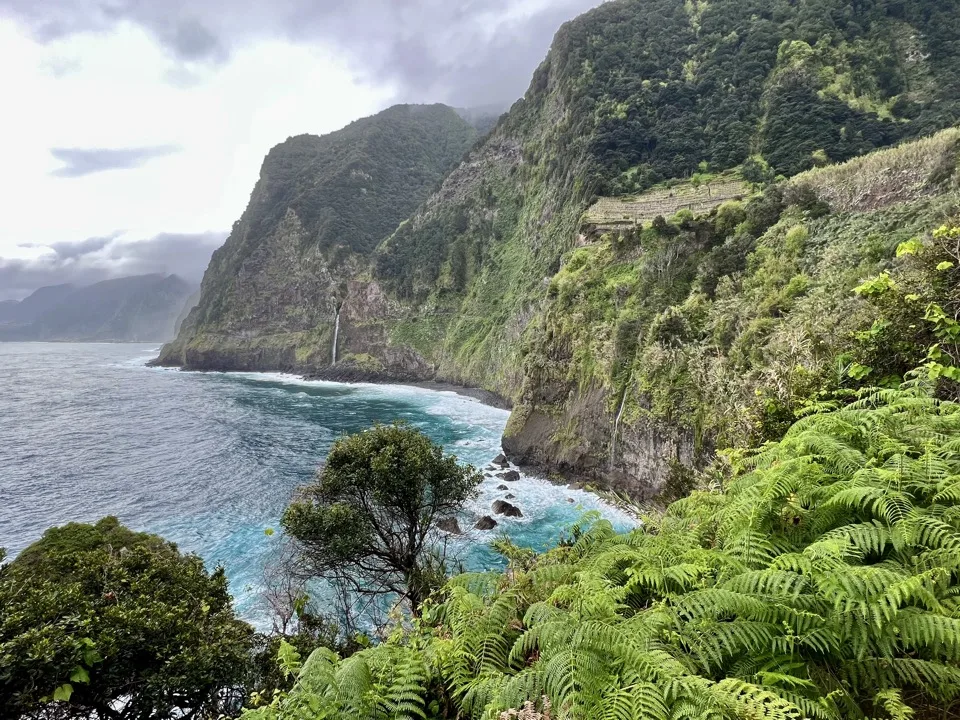
It’s a mini hike on a maintained path offering views of the Veil of the Bride waterfall. Not essential, but if you happen to be nearby along the north coast, why not!
Hiking in Madeira: off the beaten track
10/ Camino Real Mirador de Sao Cristovao Boaventura
Easy to moderate hike – duration: 2 hours round trip.
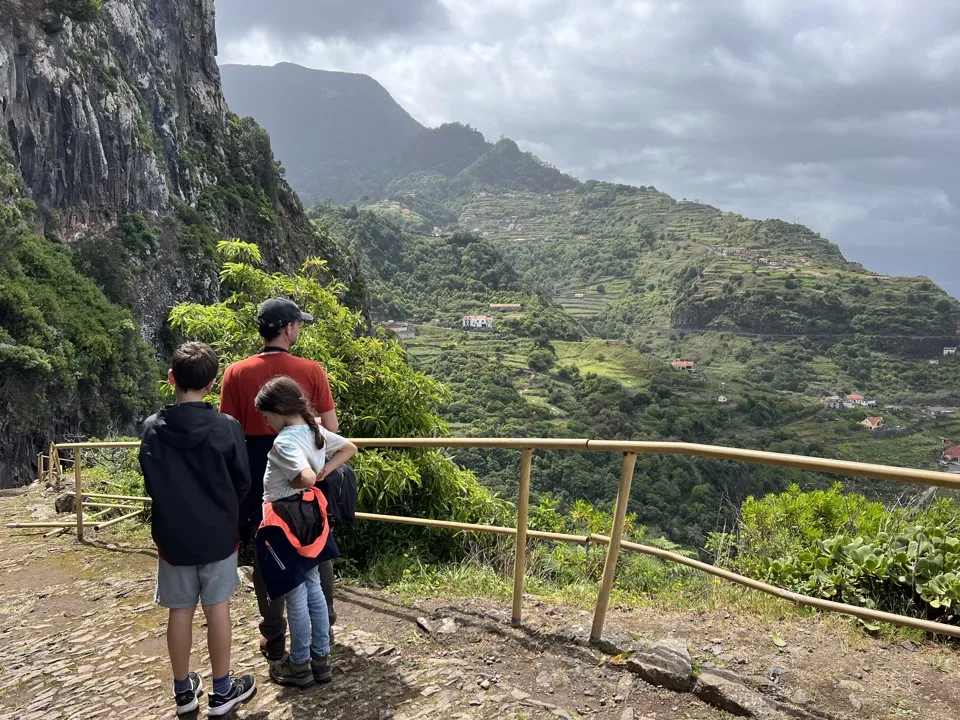
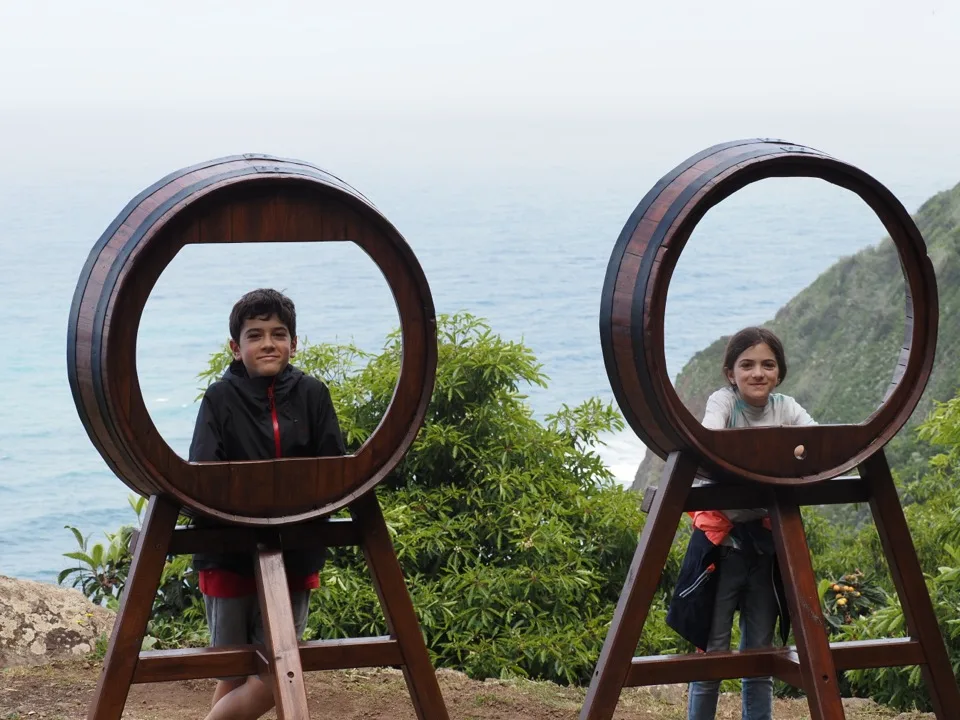
I classify it as “off the beaten track” because we were alone there! Perhaps this hike is further from tourist spots. We started at the Sao Cristovao restaurant, where we had a light lunch and left the car. The view from the restaurant terrace is very beautiful. Then, we climbed onto the trail along the sea, up to the café-restaurant O Arco.
11/ Loop near Paul do Mar
Sporty hike – duration: 5-hour loop.
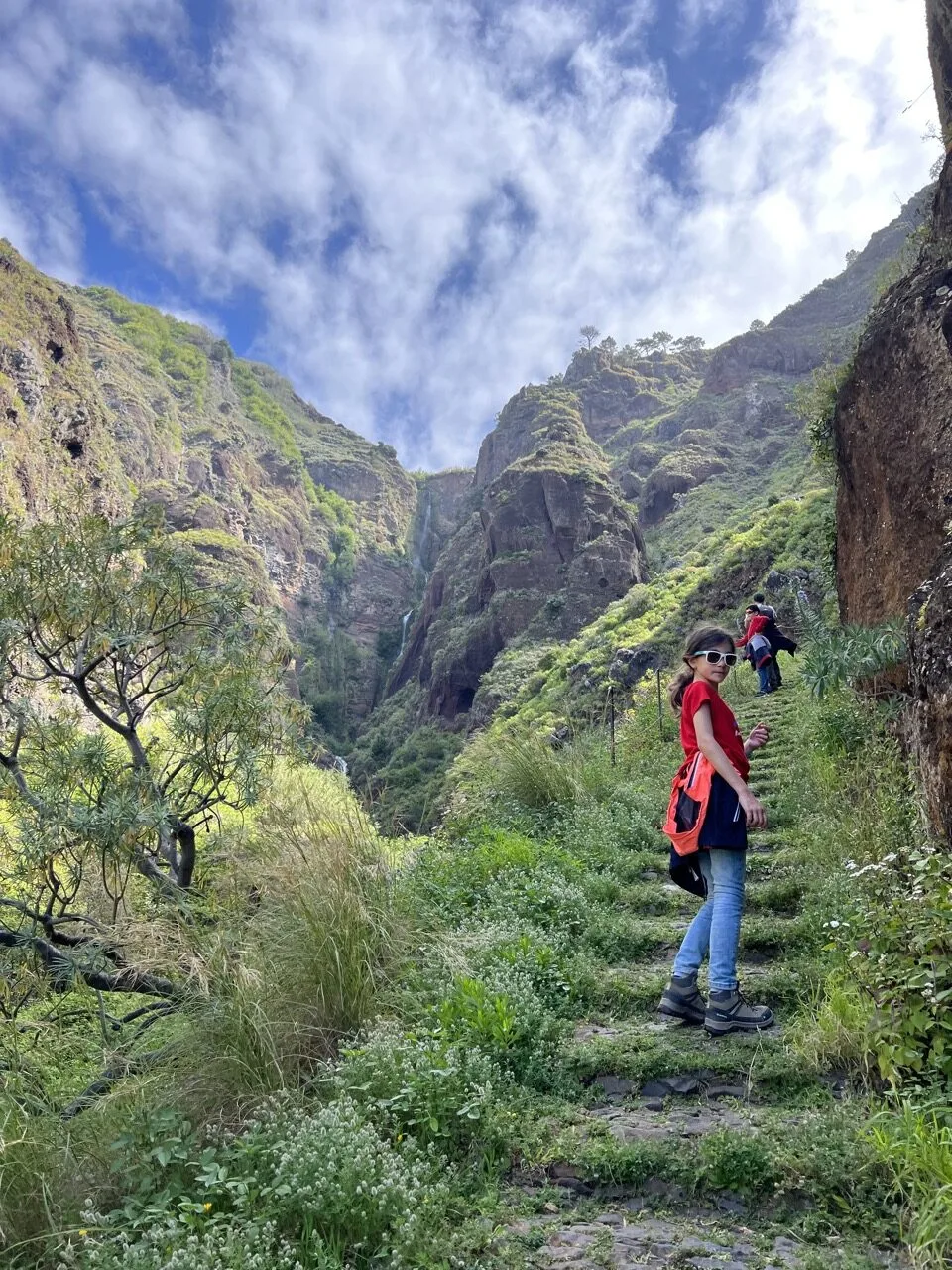
A beautiful hike in southwest Madeira. It was highly recommended by our Airbnb host. The difficulty is the elevation gain and exposure to the sun. Additionally, from our accommodation, we almost started at the highest point (in Faja da Ovelha), so the beginning was easy with a steep descent to Paul do Mar. It’s tricky when you start with the easiest part! Once at Paul do Mar, by the sea, you have a tough, very sporty climb. We didn’t meet anyone on this route. A bit long and exhausting but with varied, beautiful viewpoints. Normally, we would have found snack bars at several points on the route, but we had forgotten that everything was closed on Good Friday!! We had enough water and a few biscuits but were starving at the end!
Since 2026: booking required (PR19).
When it’s time to climb back…
12/ Verada do Lorano hike
Level: moderate – duration: variable round trip.
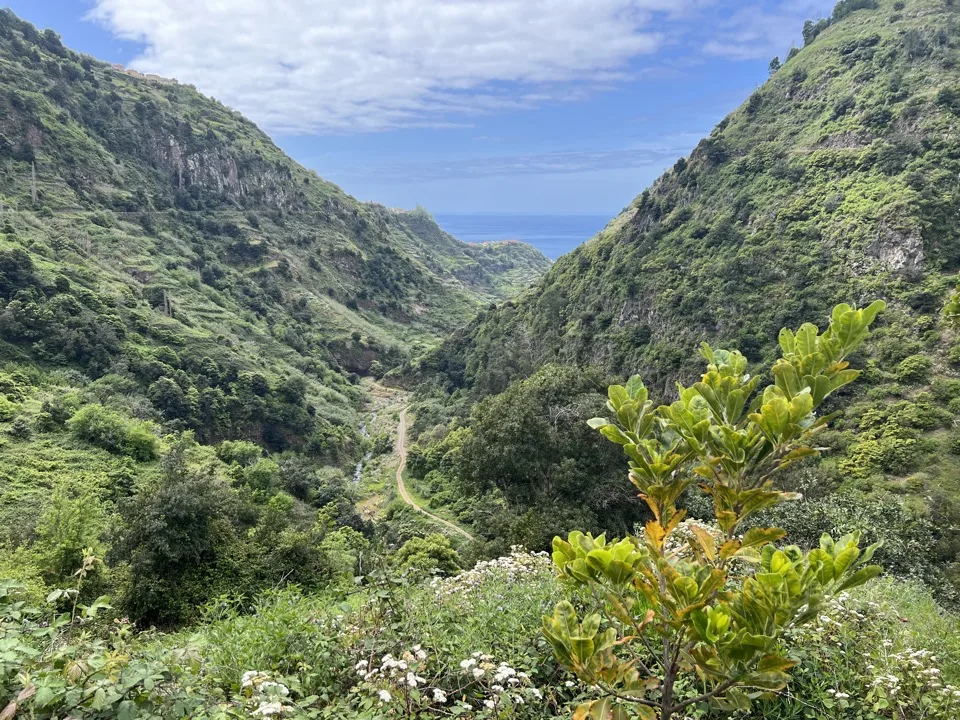
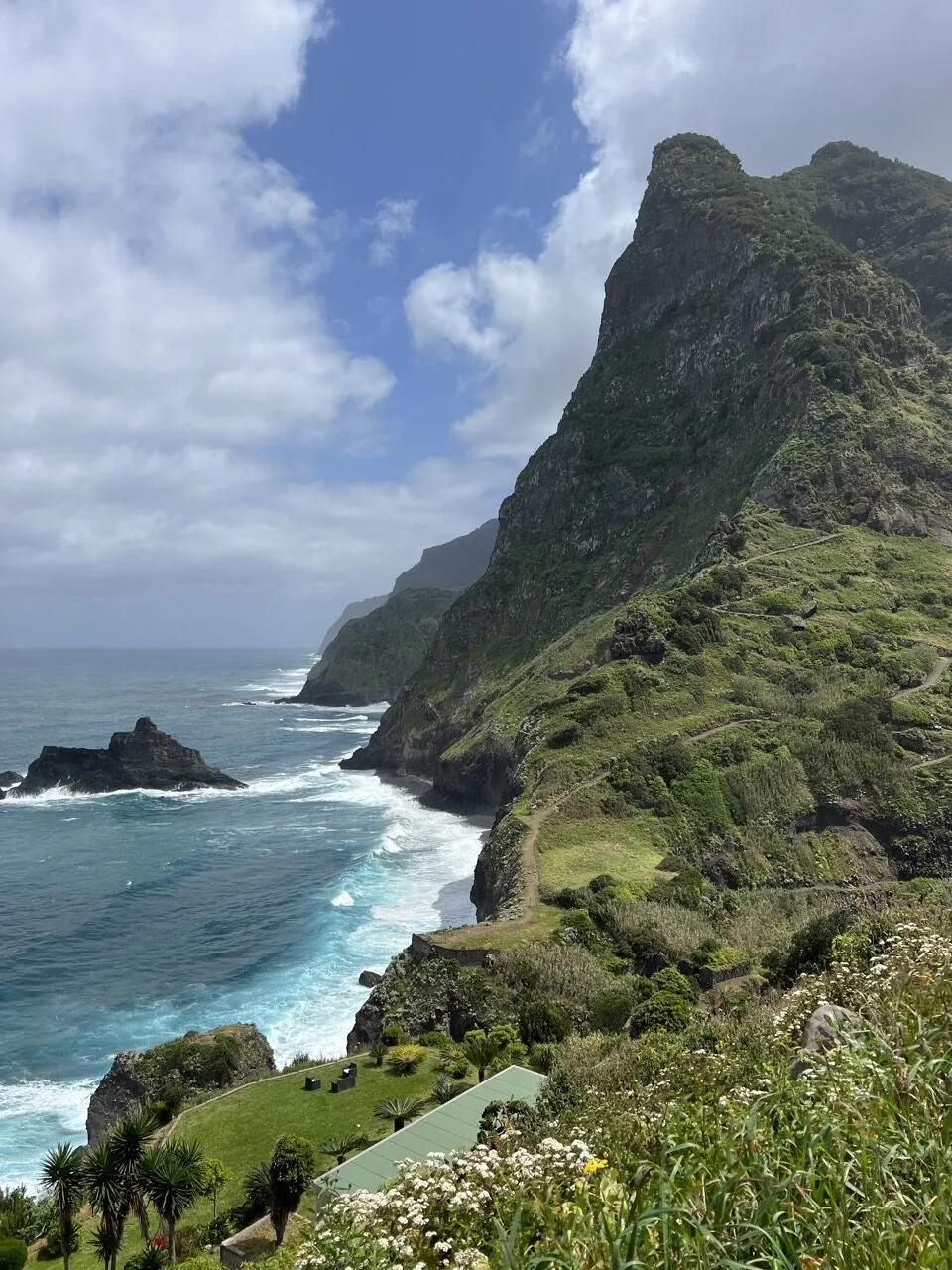
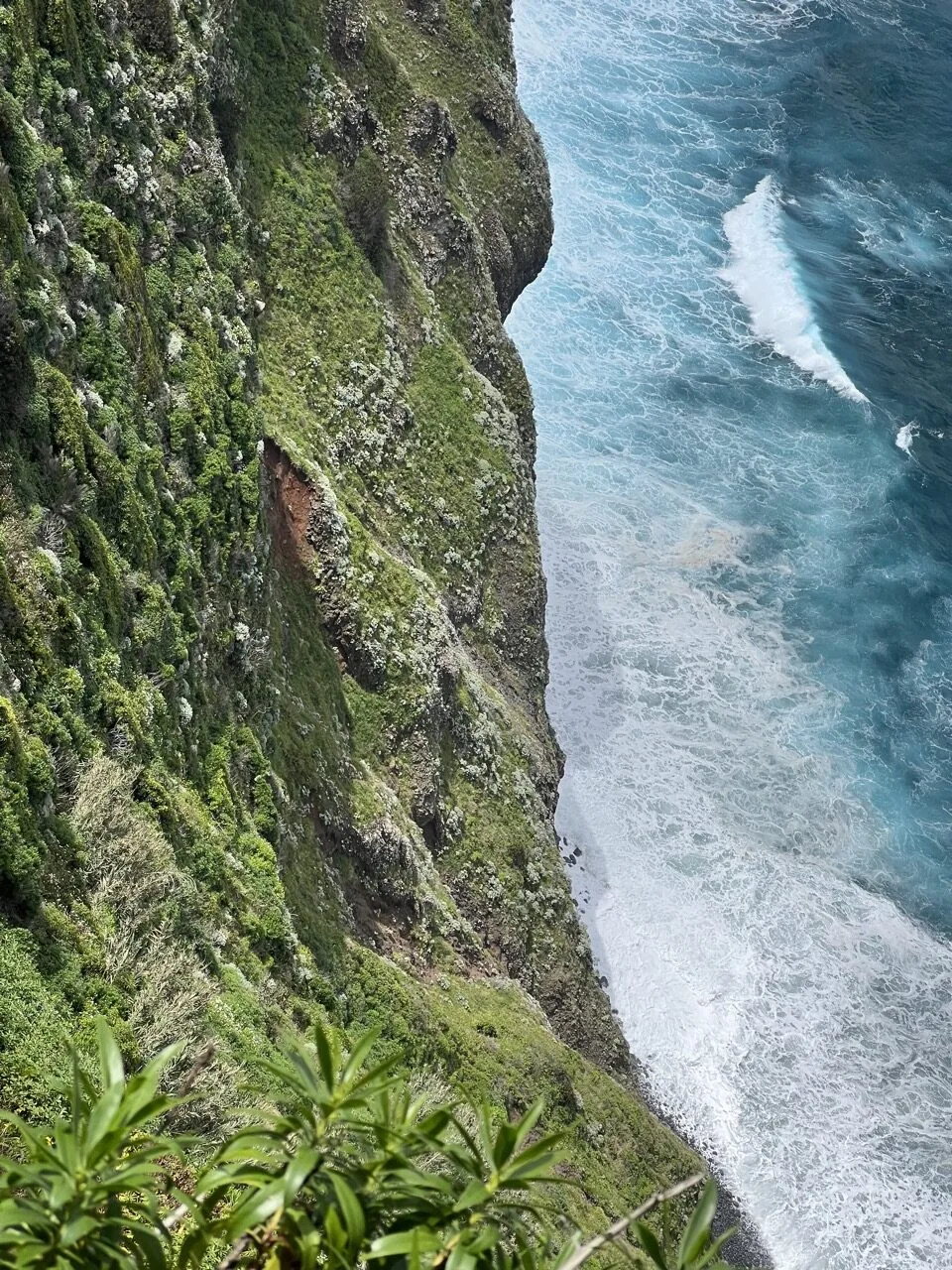
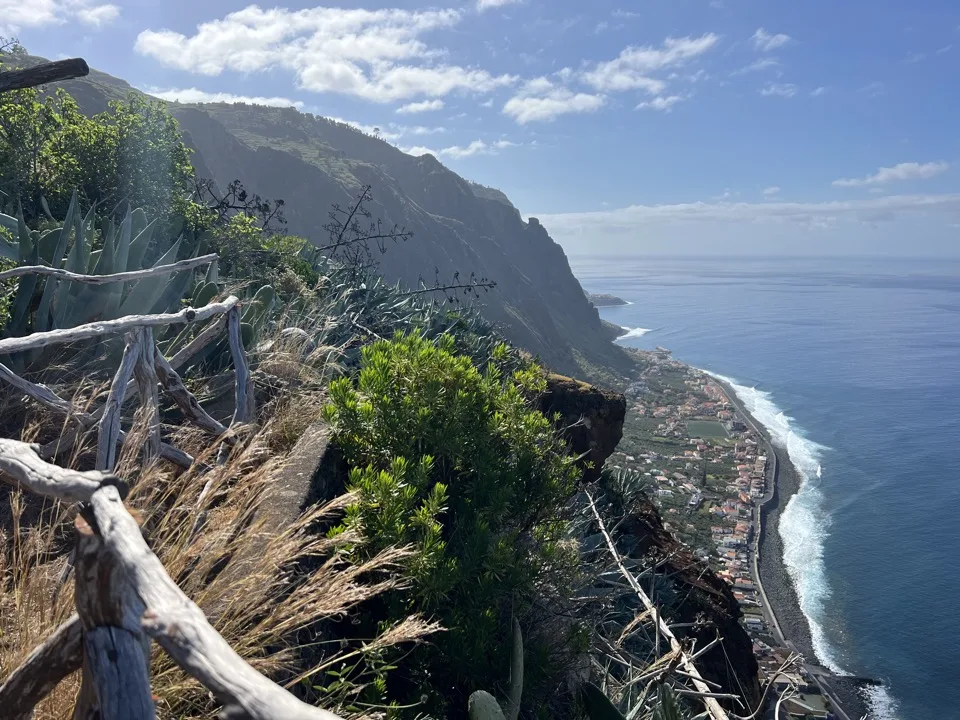
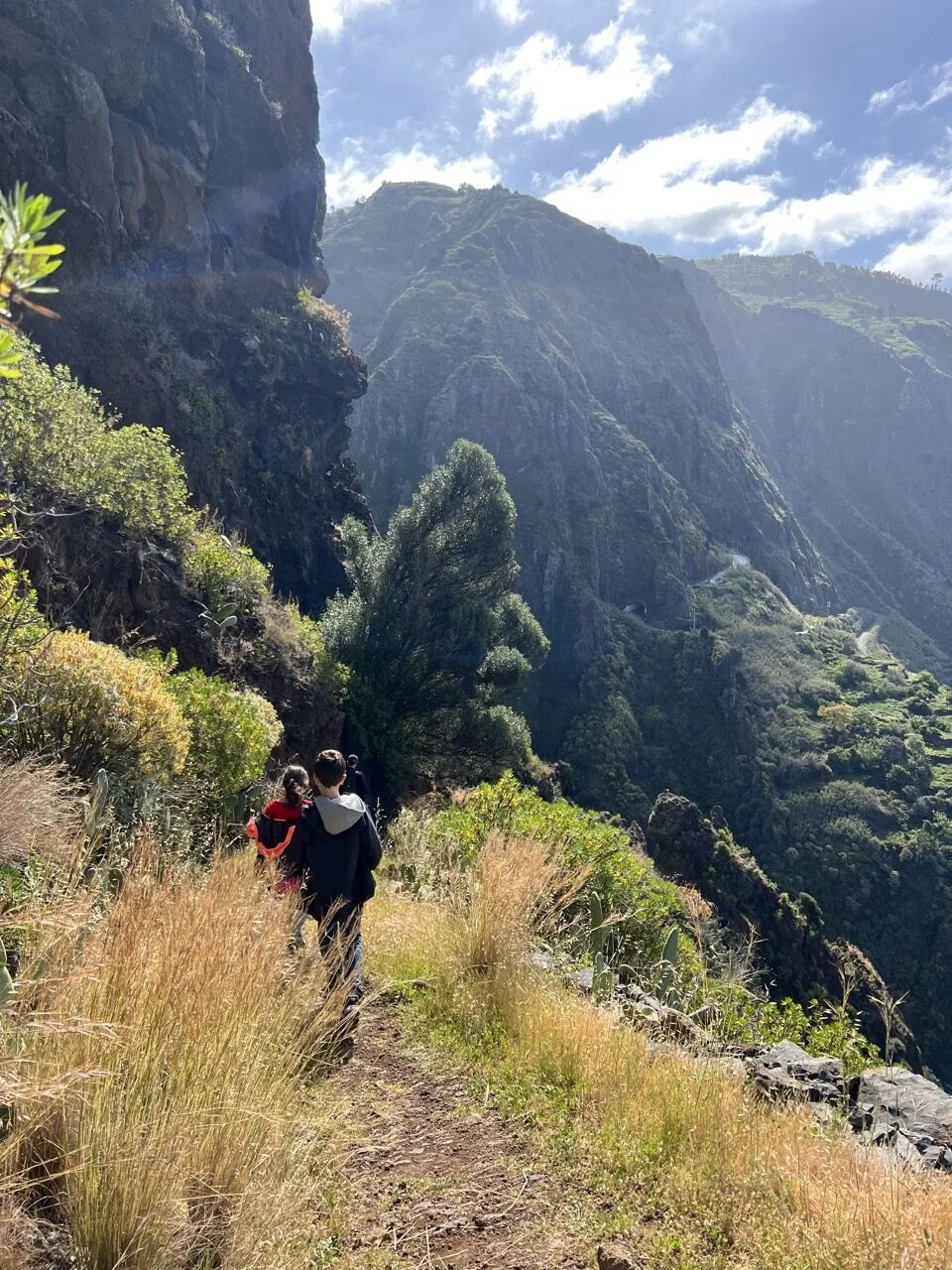
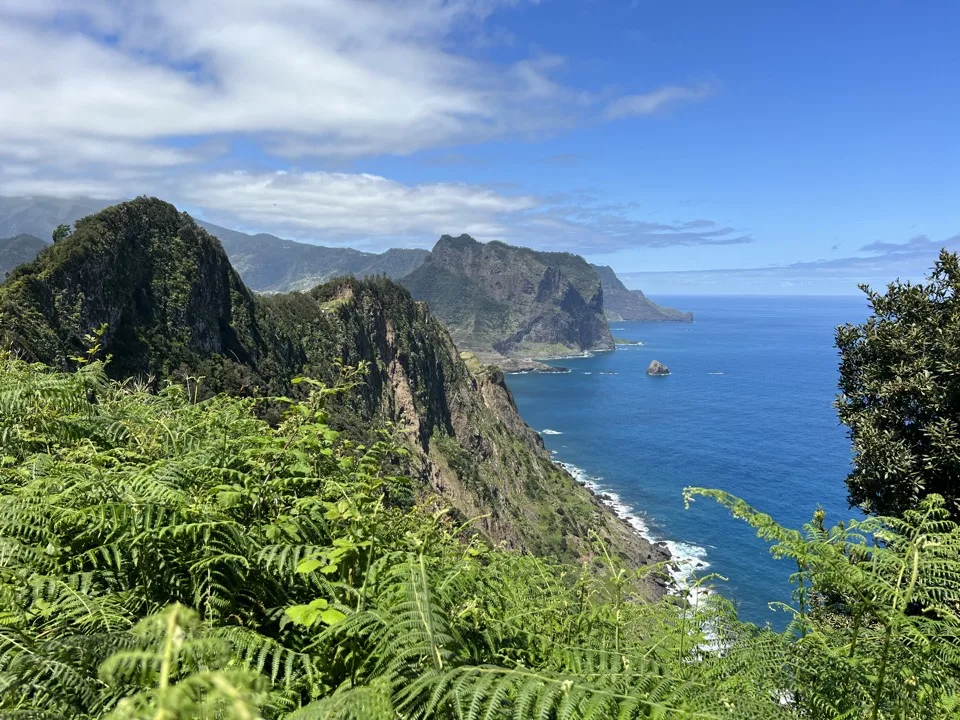
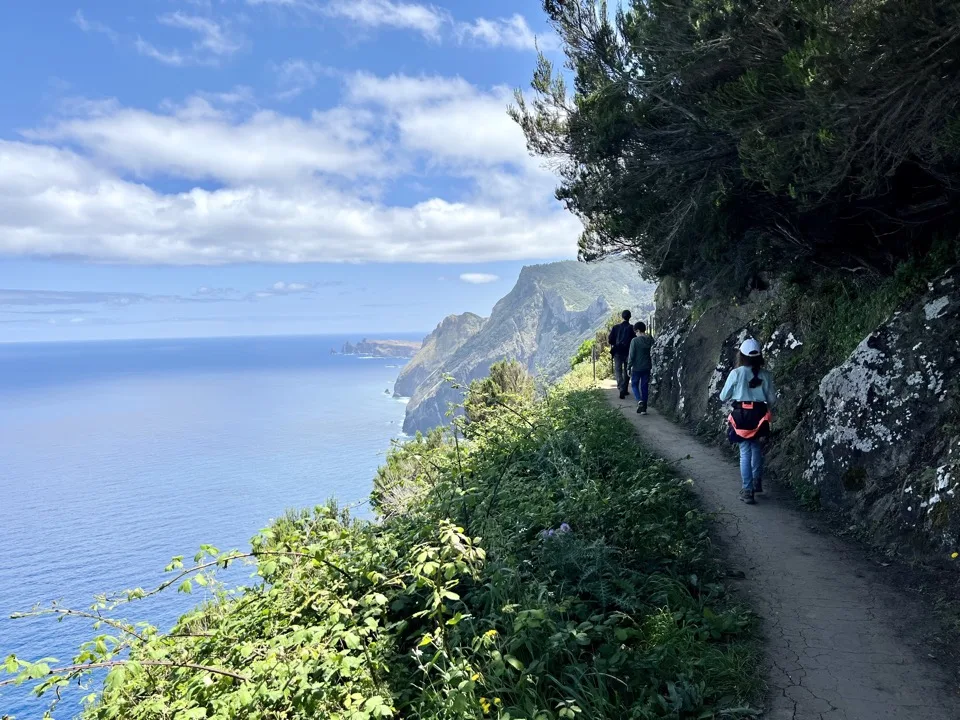
A very beautiful coastal path, perched on a cliff. The views are incredible! But this hike is not that easy and clearly off the beaten track. We started just above Porto da Cruz and followed the fairly narrow and unsecured path for an hour before turning back. It’s not narrow enough to be risky, but you have to watch your step, so it’s not suitable for young children who wouldn’t be careful. Ticoeur and Titpuce are attentive and careful. We mostly walked in single file. The panorama is worth it, but take care! From what I read online, some hikers go much further along the coastal path and take a taxi back to their starting point.
What equipment for hiking in Madeira?
In addition to the usual hats, water bottles, and sunscreen, it is important to have with you:
Head torches: crucial! An essential accessory for hiking in Madeira as there are so many tunnels! For short tunnels, visibility is enough, but for long tunnels, you are in total darkness, and a mobile phone is not enough as it doesn’t illuminate well and could fall into the water if you lose your balance along a canal (which is entirely possible!).
Hiking shoes: trainers are fine; hiking boots are better as they are often more waterproof.
Windbreaker: important as the risk of rain, especially in the north, is significant.
Change of clothes: If caught in a shower, having dry clothes in the car is important and at the very least always have a spare pair of dry socks 🙂
The Rother Madeira guide is really the bible for hiking in Madeira!
Where to stay in Madeira?
We had 3 bases:
Our accommodation in the north of Madeira:
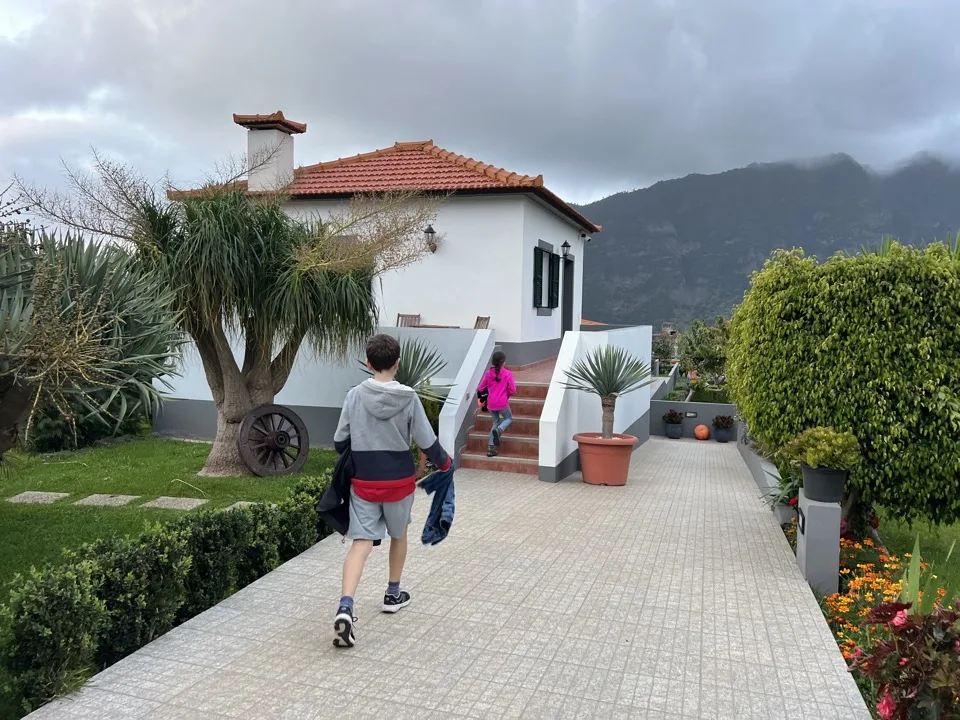
Near Sao Vicente in the north: we stayed at Granny’s Farm in the house with 3 bedrooms. It was perfect, with a lovely garden.
From this accommodation, we did the following hikes:
Levada da Faja do Rodrigues hike
Camino Real hike near the Mirador Sao Cristovao Boa Aventura
Walk at Ponta do Poiso
hike from Pico Ariero to Pico Ruivo
Our accommodation in the south of Madeira:
Near Paul do Mar in the south: we stayed at Quinta Sao Lourenço in a traditional house with sea views.
From this accommodation, we did the following hikes:
loop hike around Paul do Mar
Lombada da Ponta do Sol hike
25 Fontes hike
Ribeira da Janela hike
Fanal
Our accommodation in Funchal:
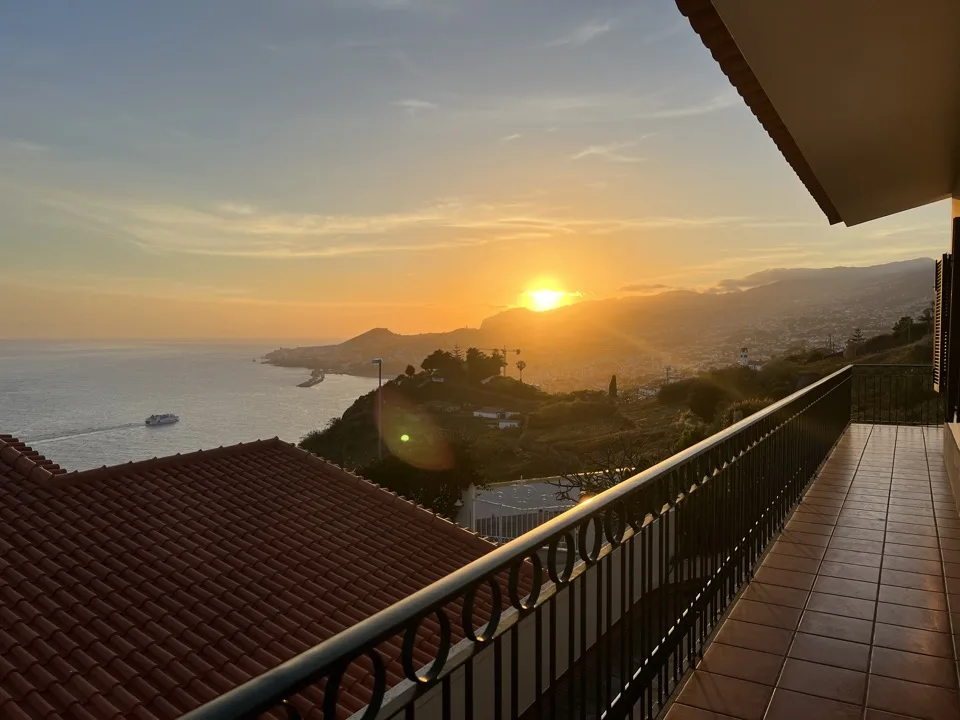
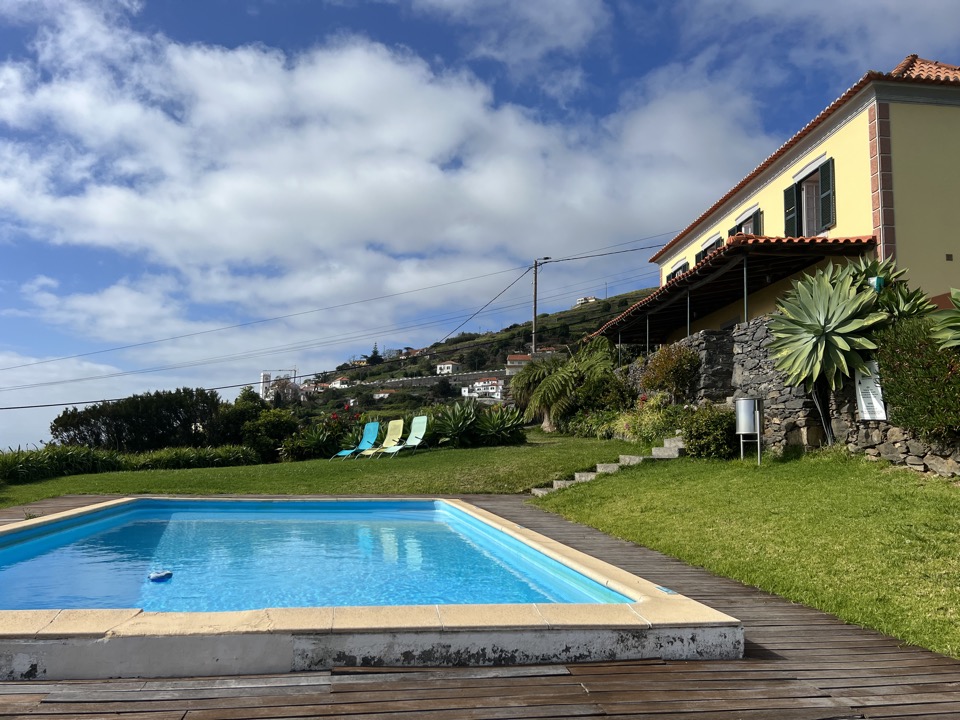
Near the capital, we rented Villa Sao Paulo: a large house with a pool by the sea.
From this accommodation, we visited Funchal and did the following hikes:






)