
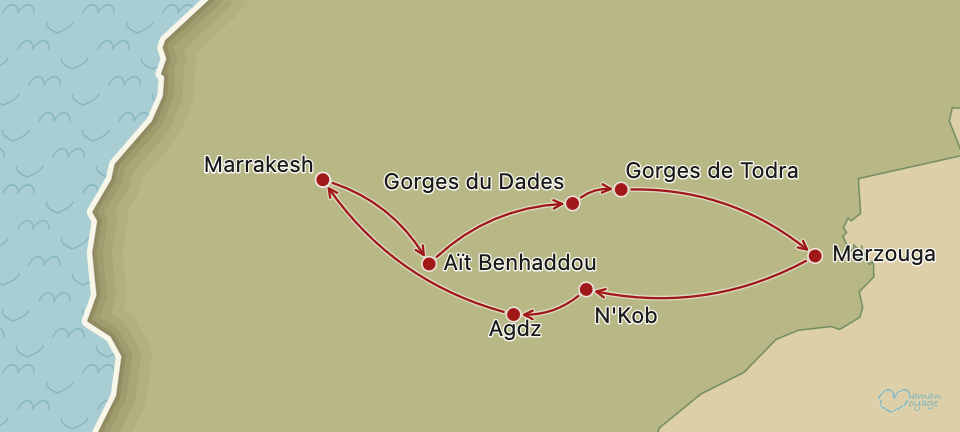
We spent our latest family holiday in southern Morocco, taking an 8-day road trip between Marrakech and the Merzouga desert, through the High Atlas and along the Road of a Thousand Kasbahs on the way out, then returning via the Drâa Valley and the Anti-Atlas. This loop introduced us to varied landscapes, villages that look like sandcastles, palm groves, magnificent gorges and the dunes of the Sahara! It was a sunny, wonderfully different journey, with stops in lovely traditional accommodation at the heart of Berber culture. We covered 1,500 km across Morocco’s wide-open spaces!
Marrakech
Journey: from Marrakech airport to Marrakech : 20 minutes
1 night
Marrakech, the starting point for our road trip
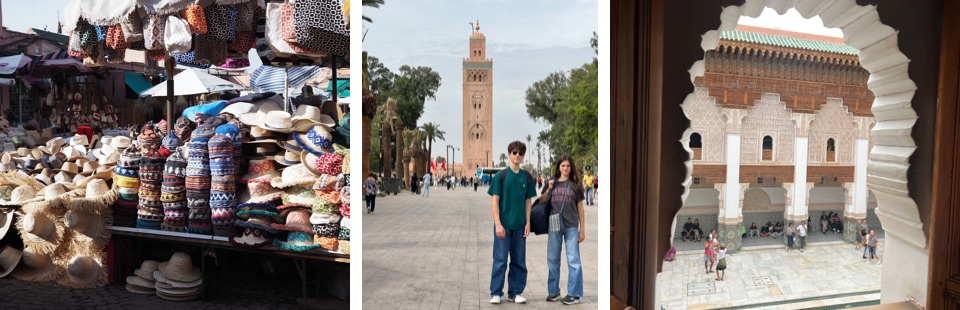
We only spent one evening and a short morning in Marrakech at the beginning of the trip, then a full day there at the end. Marrakech is a great place to get into the spirit of Morocco, but it was not the main focus of our trip, which we wanted to centre more on nature, scenery and walking. Depending on your interests, you can adjust the length of your stay in Marrakech using our sightseeing advice:
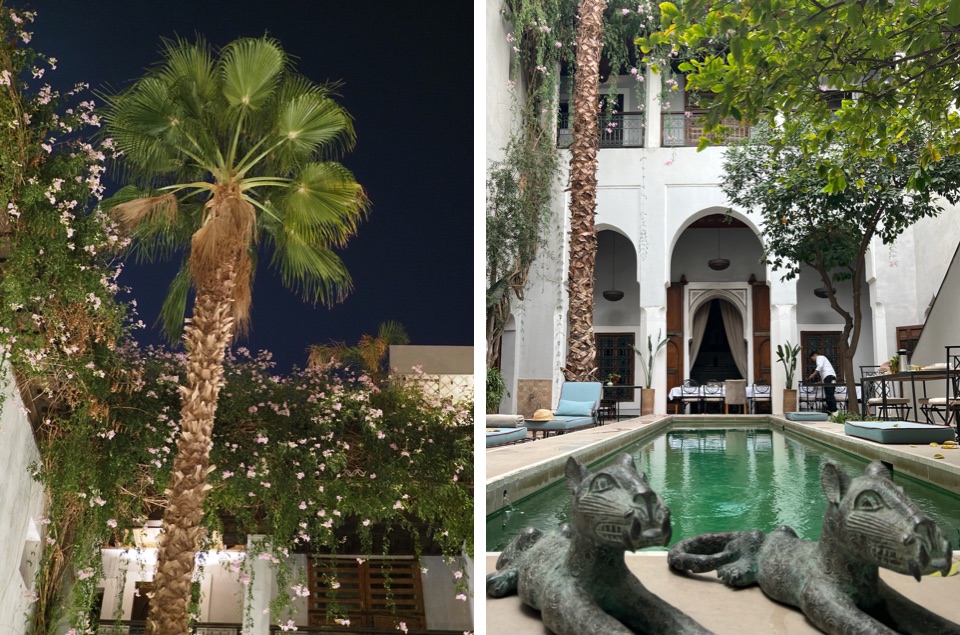
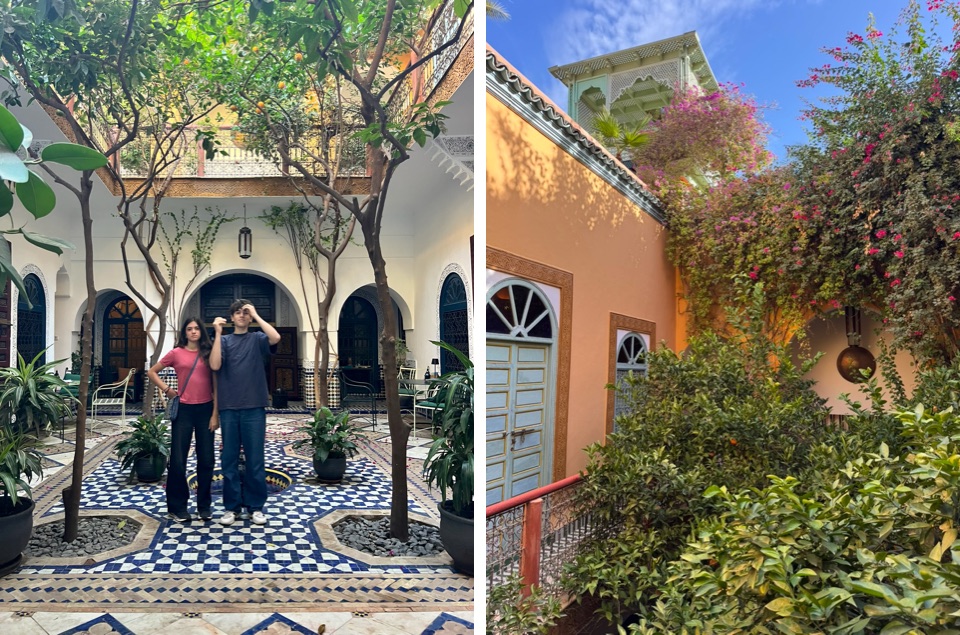
Where we stayed in Marrakech
I had booked a family suite at Riad Le Rihani, a charming riad that made for a gentle start to the trip. We also had dinner there, and it was delicious!
Aït Ben Haddou: the most beautiful village on our road trip
Journey: from Marrakech to Aït Ben Haddou : 3 hours 30 minutes
1 night
The drive through the High Atlas
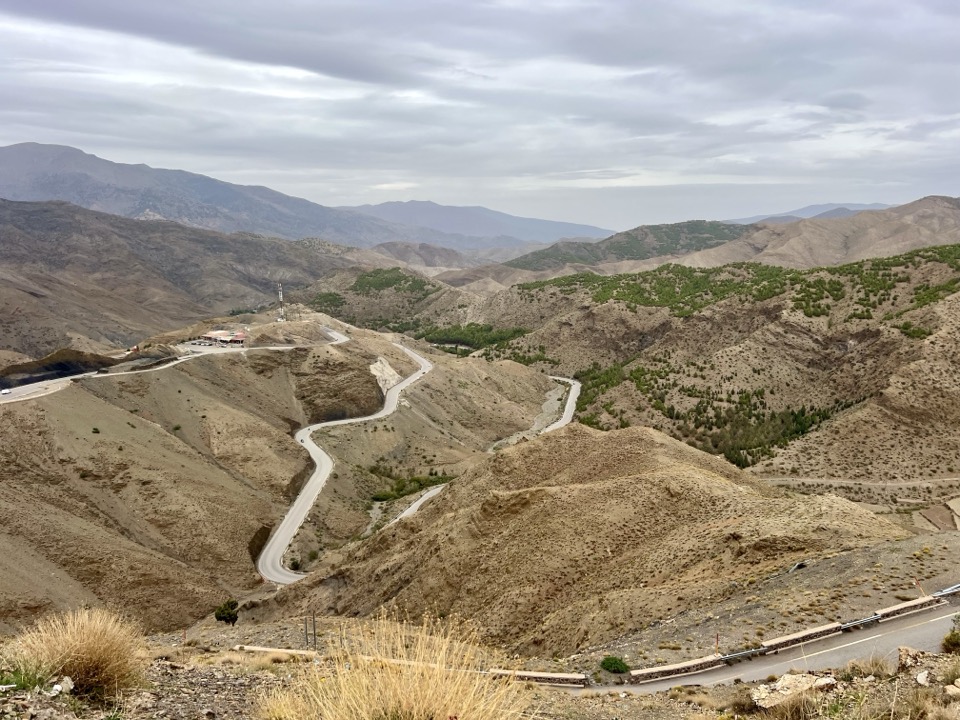
We had already collected our hire car (a Dacia) at Marrakech airport the previous day, so we were ready to leave straight after a morning stroll through the souks. It was 10.30 am when we set off towards the High Atlas mountains. We crossed the Tizi n’Tichka pass and, despite the cloudy sky, were already enjoying the scenery and the ruins of old ksour, fortified villages built from raw earth.
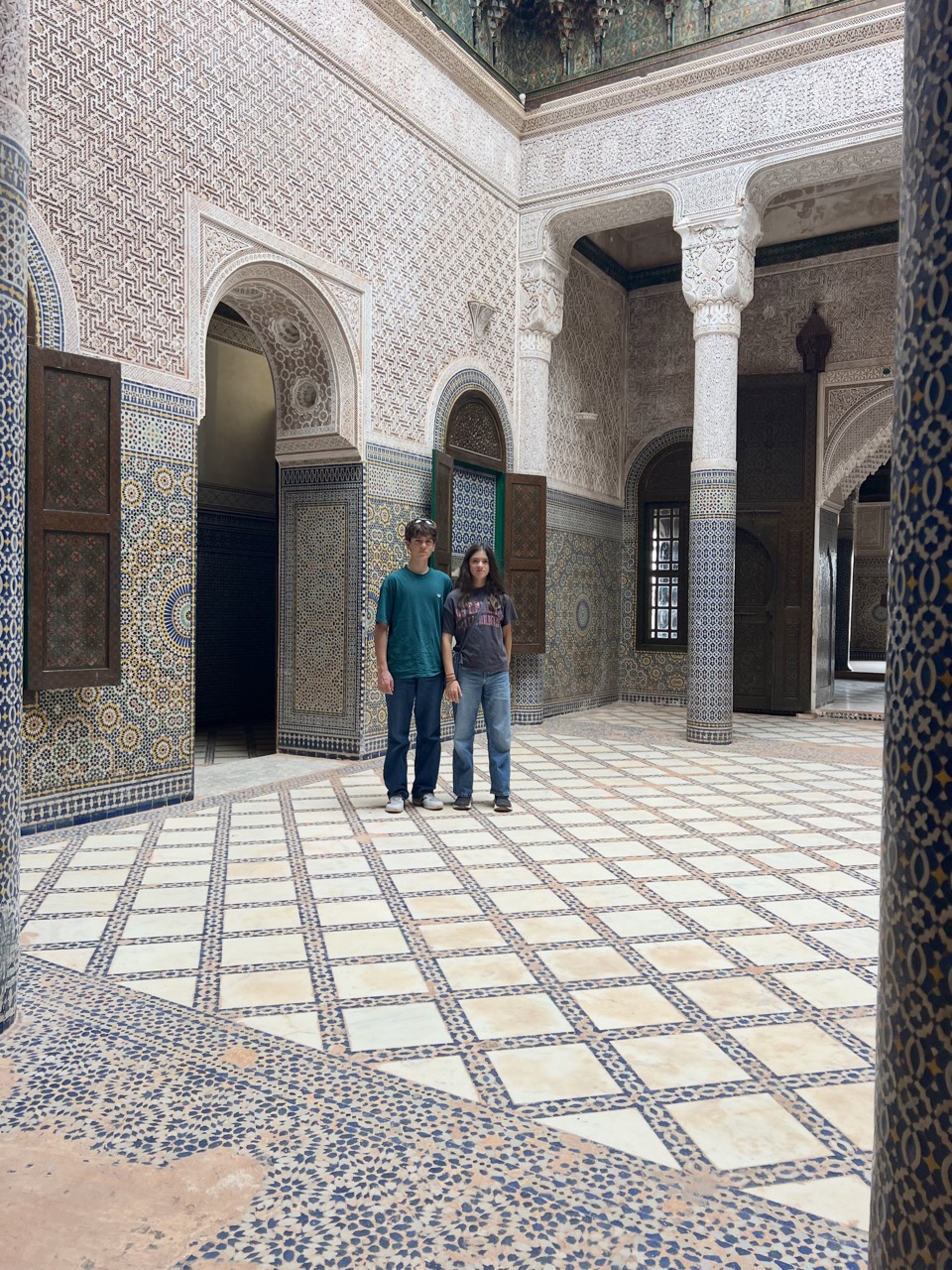
Telouet and its kasbah
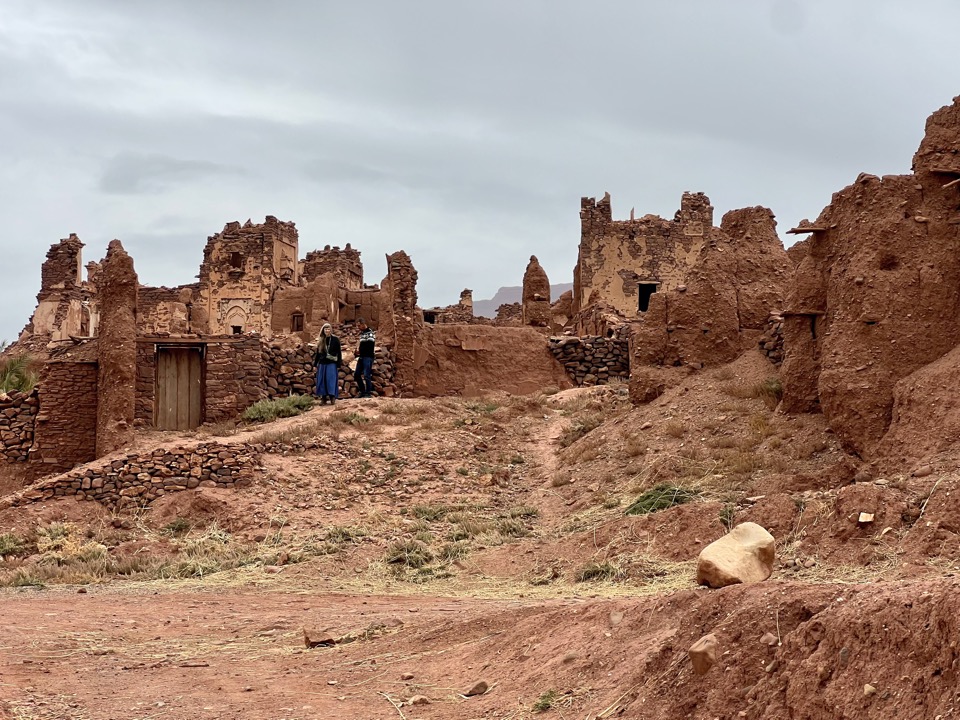
On the way to Aït Ben Haddou, we took a detour via Telouet to visit a 19th-century kasbah (a grand residence), which became the palace of El Glaoui, Pasha of Marrakech, also nicknamed the “King of the Atlas” in the early 20th century. Today, the Kasbah of Telouet lies largely in ruins. It was the first kasbah we visited on the trip, so we enjoyed the discovery. Telouet is a ceremonial kasbah (there are also fortress-like defensive kasbahs). Two large reception rooms remain, decorated with beautiful zellige tiles and carved wood.
See the contrast between the interior and exterior:
Aït Ben Haddou ❤
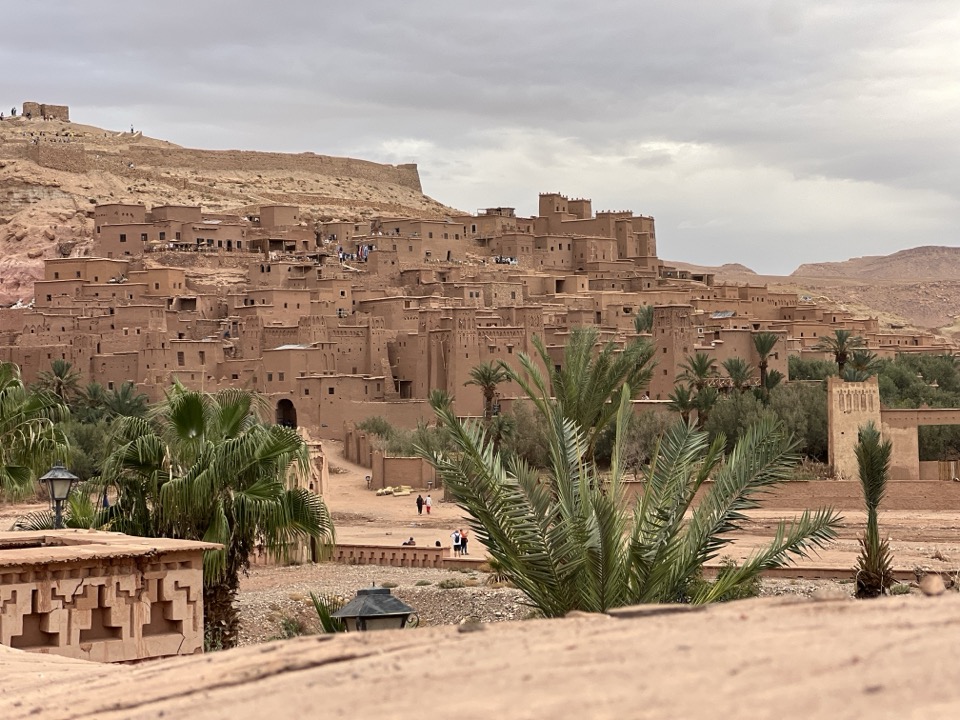
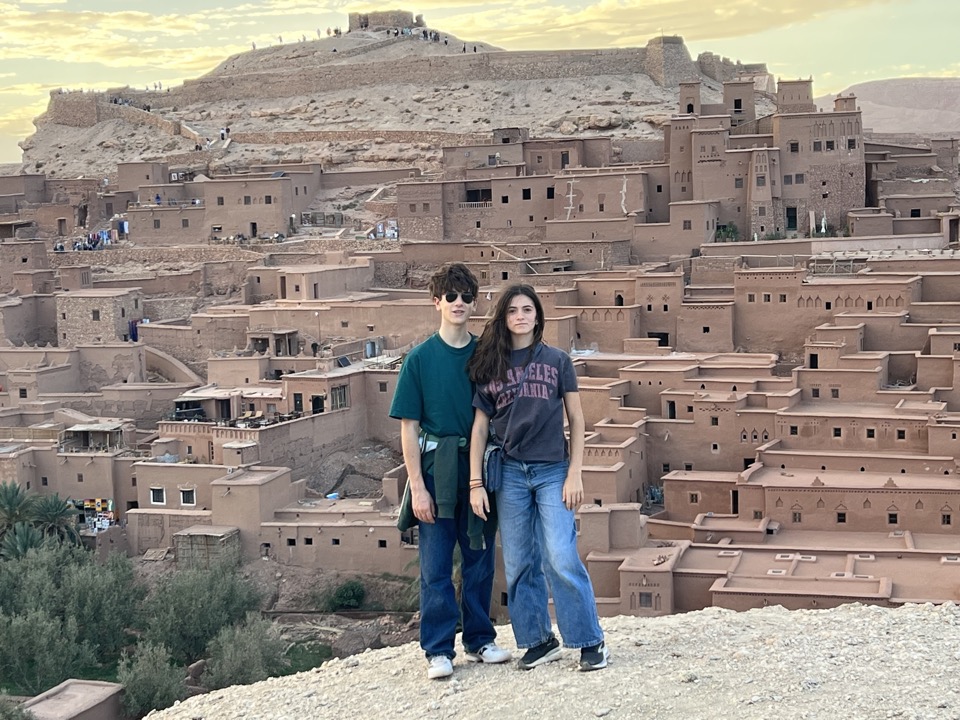
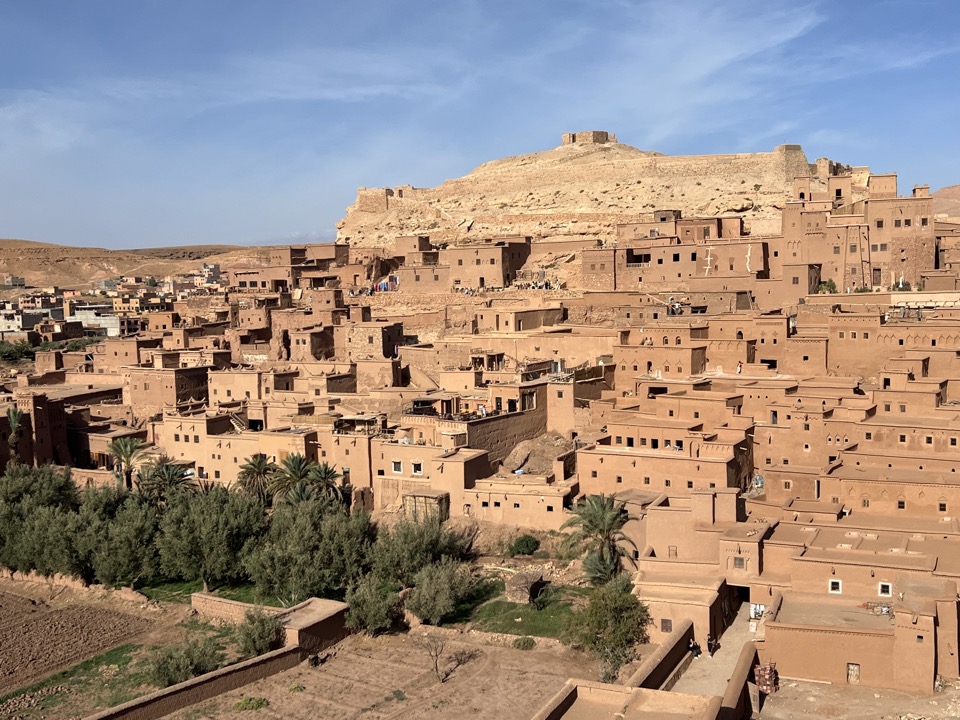
We loved the village of Aït Ben Haddou, the best-preserved ksar in southern Morocco and a UNESCO World Heritage Site. It genuinely looks as though it has come straight out of the Arabian Nights, like an impressive sand construction. All the homes are built from rammed earth: raw earth is compacted and built up in blocks to form the walls. The beauty of Aït Ben Haddou has attracted many film-makers: the village appears in Gladiator, Game of Thrones and, more recently, Christopher Nolan’s The Odyssey, in which it stands in for the city of Troy.
Aït Ben Haddou is undeniably touristy, so expect other visitors and souvenir shops in the narrow streets. Even so, it has enormous charm. We arrived an hour before sunset and found it peaceful. The shops were beginning to close, so the traders were no longer particularly interested in calling out to us.
We walked through the village once, but mostly chose to admire it from outside the walls. In our opinion, the finest view is from the small hill directly opposite the village. We stayed there until sunset and were alone towards the end. It was a magical moment in mysterious light. We also recommend driving to the more distant viewpoint.
Where we stayed in Aït Ben Haddou
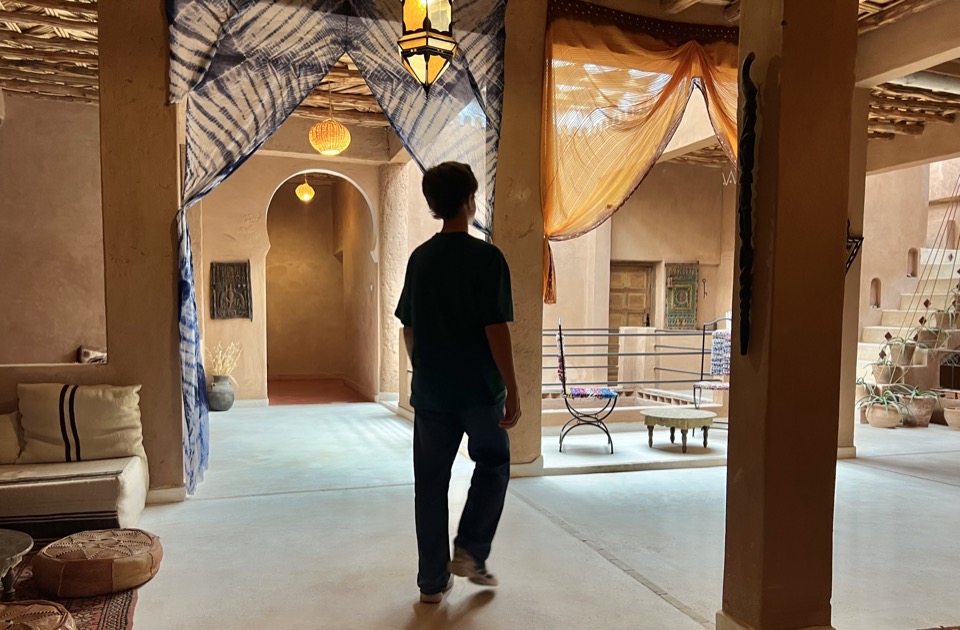
We stayed at the Dar Bilal guest house in Tamdakht, a small village five minutes from Aït Ben Haddou. Our hosts, a father and son, were lovely and served us the best welcome tea of the trip! Their traditionally built guest house is beautifully decorated. We were not especially keen on the dinner, however. As Aït Ben Haddou is only five minutes away by car and has plenty of restaurants, if we did it again we would eat out.
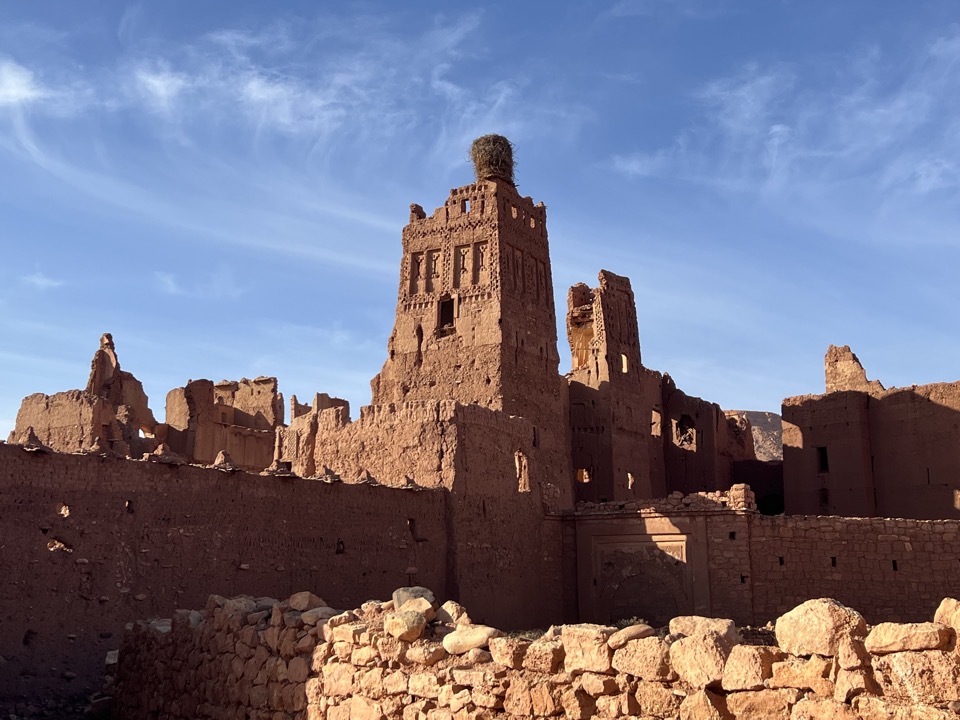
Tamdakht is charming, with the ruins of a large kasbah and other rammed-earth buildings. We walked around the village and ruins the following morning before setting off. Someone asked us for money to guide us through the ruin, but we managed to politely decline his unsolicited services.
Skoura, the Valley of Roses and the Dadès Gorges
Journey: from Aït Ben Haddou to the Dadès Gorges: 3 hours 30 minutes (including a one-hour detour into the Valley of Roses).
1 night
On the way to Skoura
On our way to Skoura, we first revisited Aït Ben Haddou to see everything again in bright sunshine beneath a vast blue sky! We returned to the same two viewpoints as the previous evening.
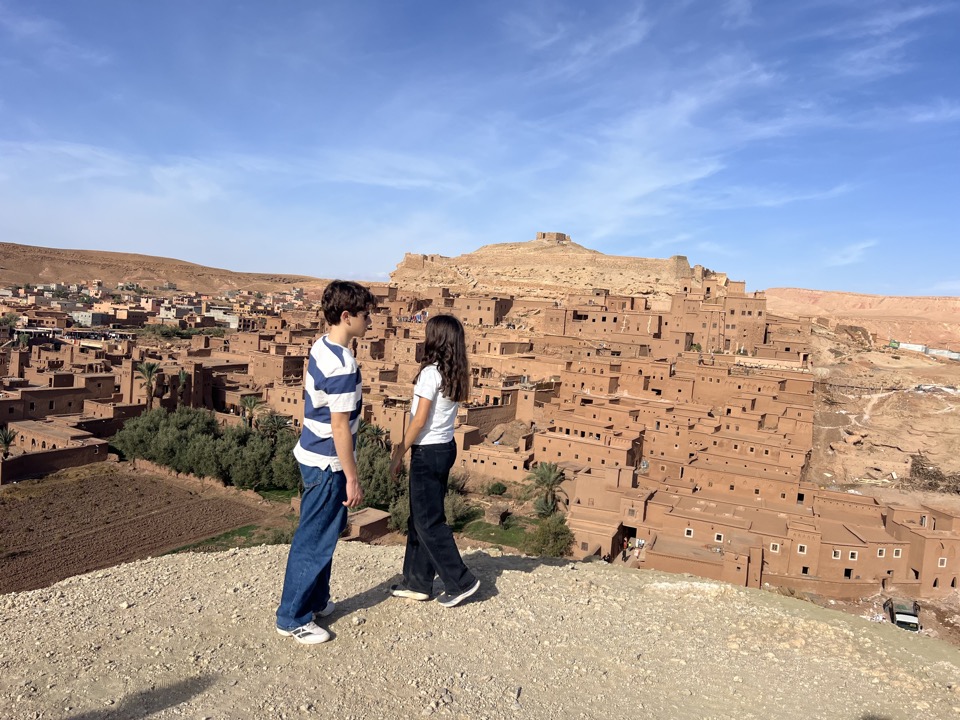
From the hill, you can admire the Salt Valley by looking in the other direction. It is beautiful too!
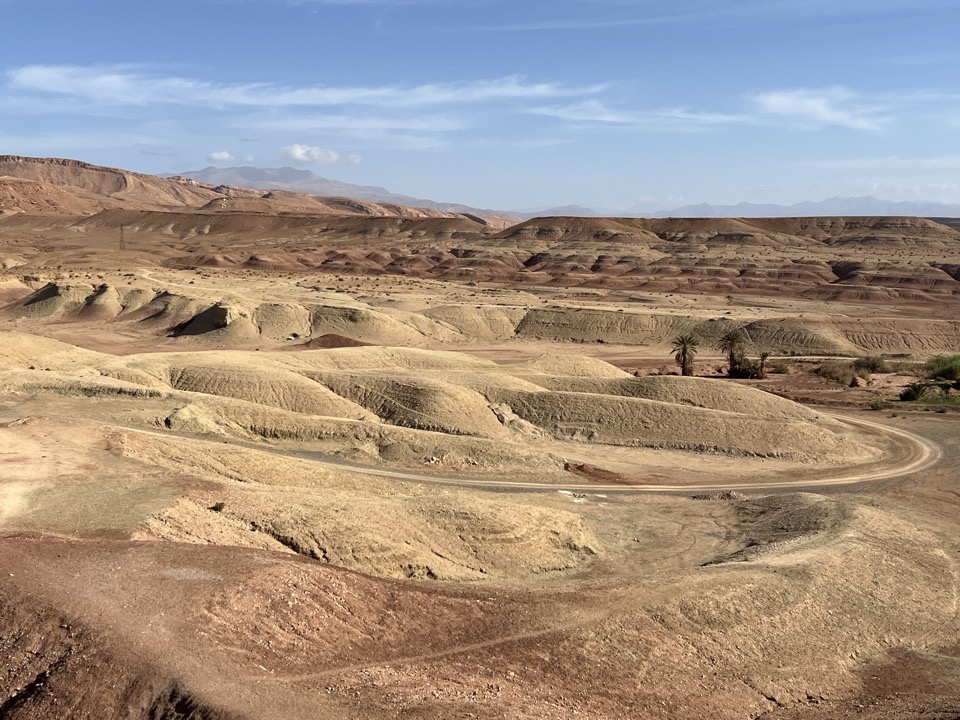
And here is the second, more distant viewpoint, near the road out of Aït Ben Haddou:
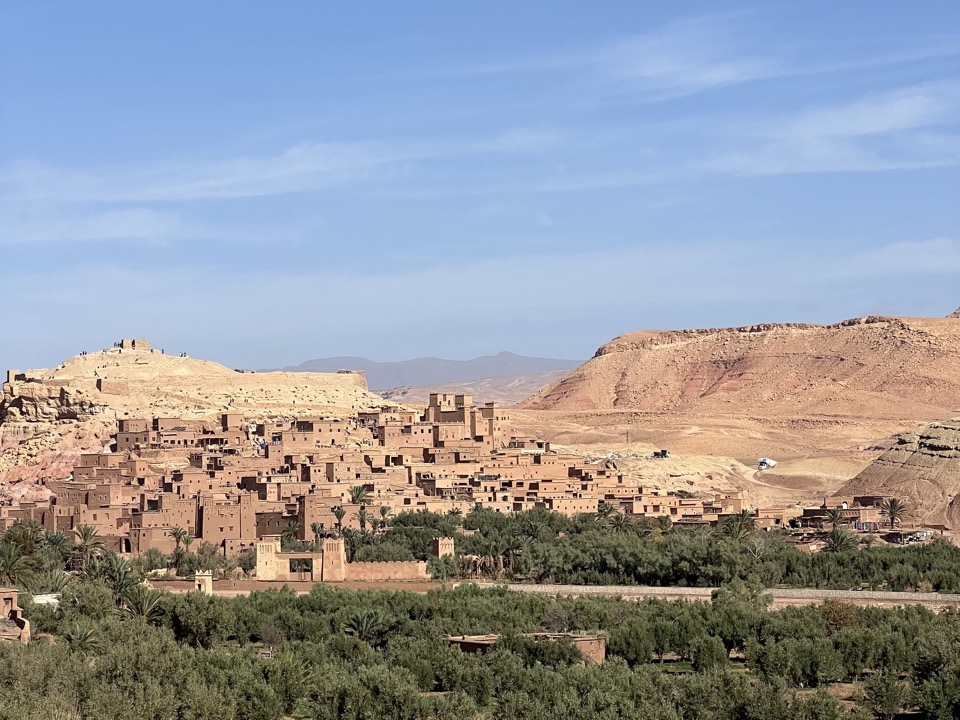
We then stopped for a short walk in Ouarzazate, exploring the lanes around the Taourirt Kasbah, which we only admired from the outside.
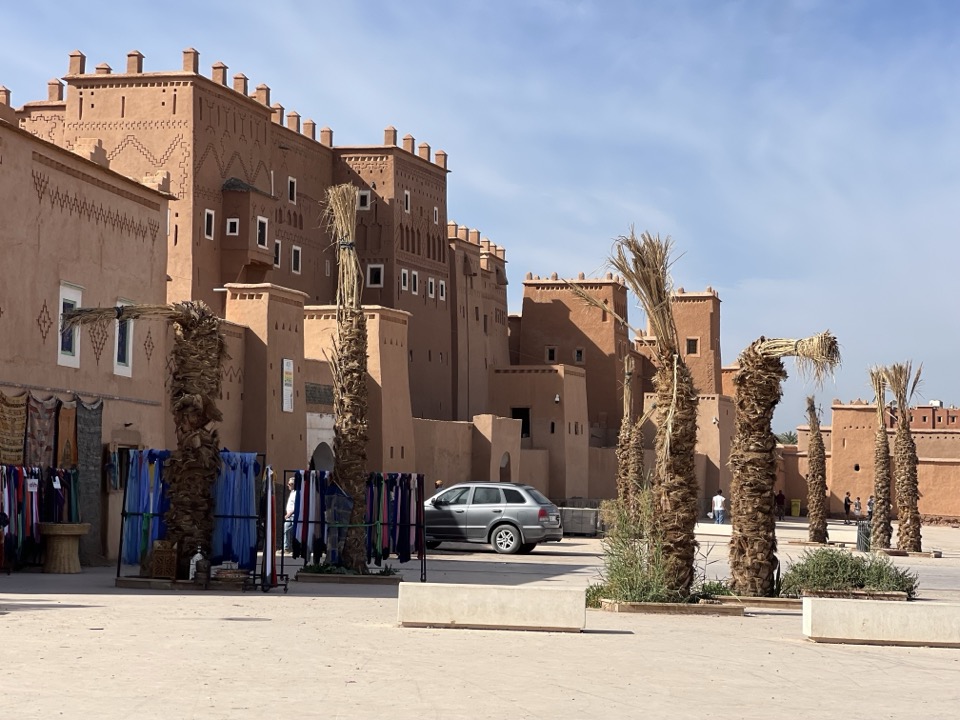
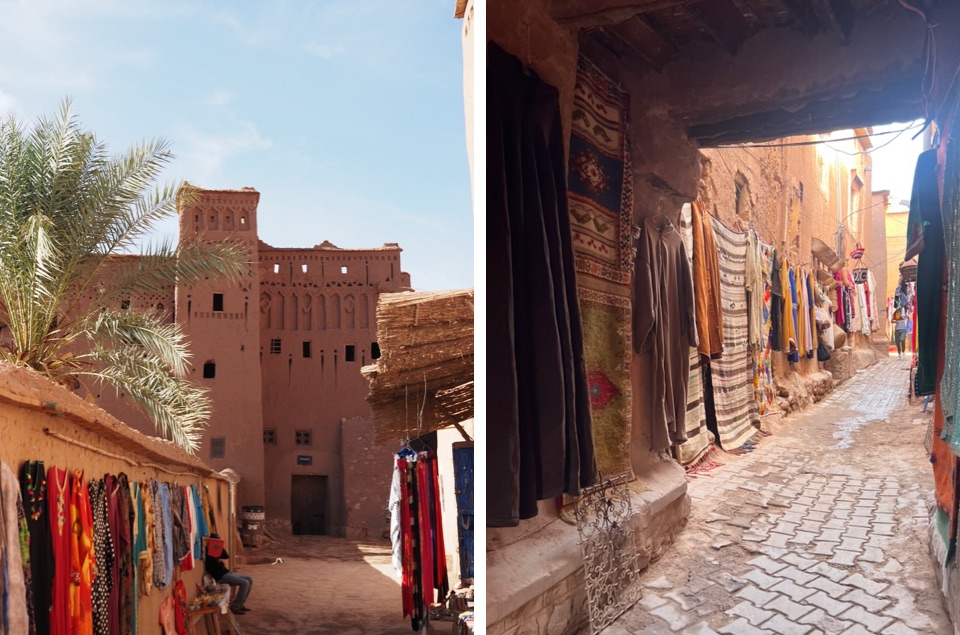
Visiting the Amridil Kasbah and palm grove in Skoura
Continuing along the Road of a Thousand Kasbahs, we arrived in Skoura.
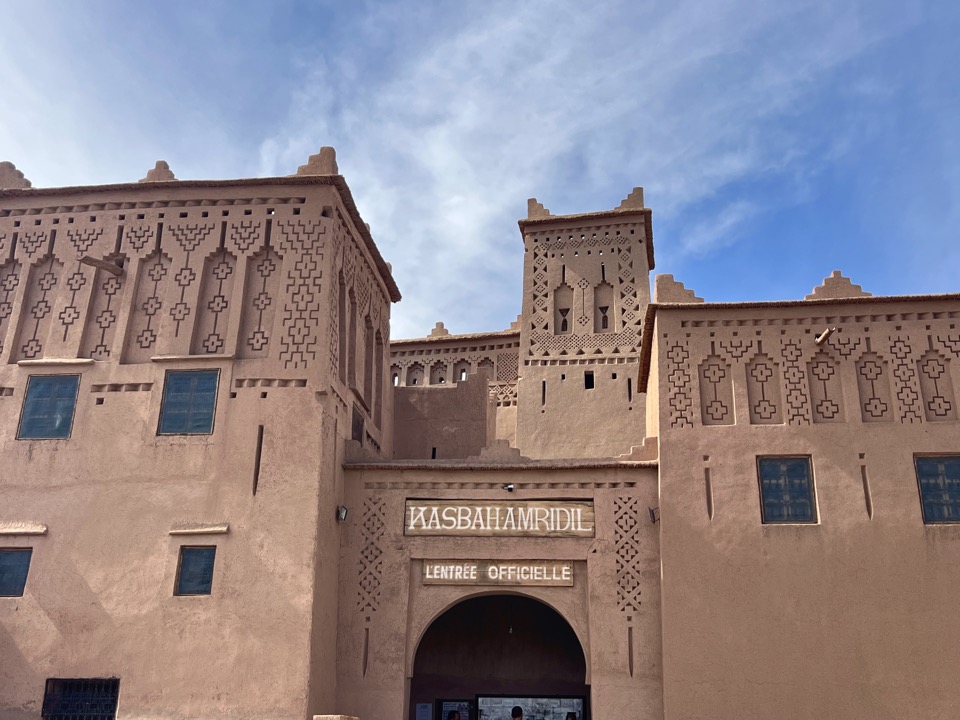
The Amridil Kasbah was the best kasbah visit of the entire road trip for us! It is a well-preserved 17th-century kasbah. Traditionally built from rammed earth, it is arranged over three levels, with a light well in the centre and five towers overlooking the surrounding palm grove. The original kasbah is now divided into two separate, paid sections following an inheritance dispute. We visited the section on the right, marked “official entrance”, rather than the section on the left, marked “main entrance”, because the right-hand part is the best known, with its distinctive five towers. It is also the most faithful to the original architecture and, above all, has the best view over the palm grove.
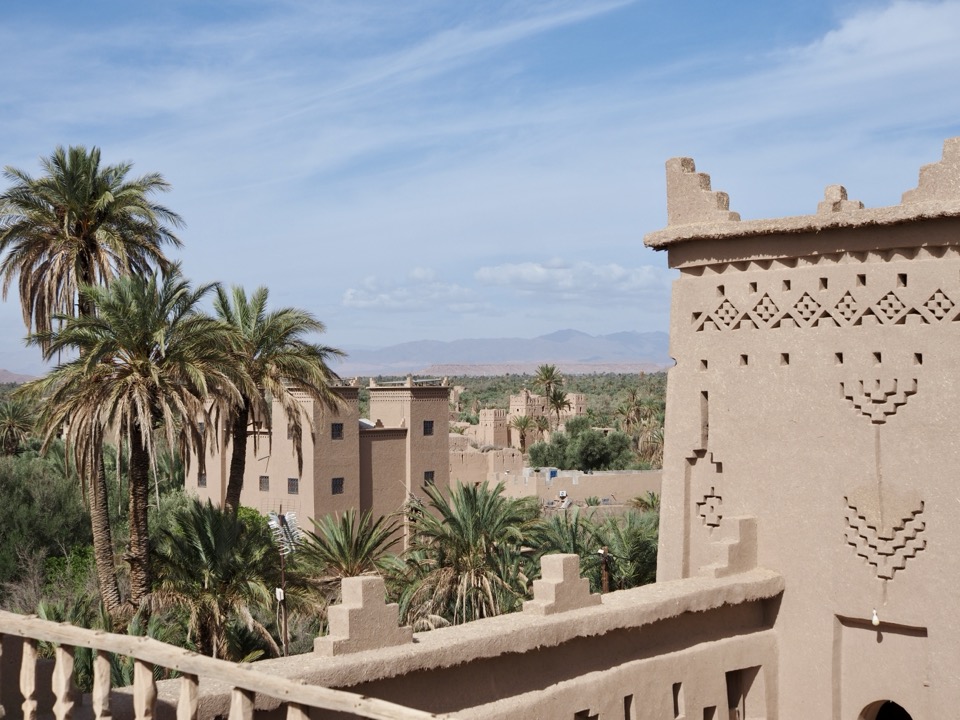
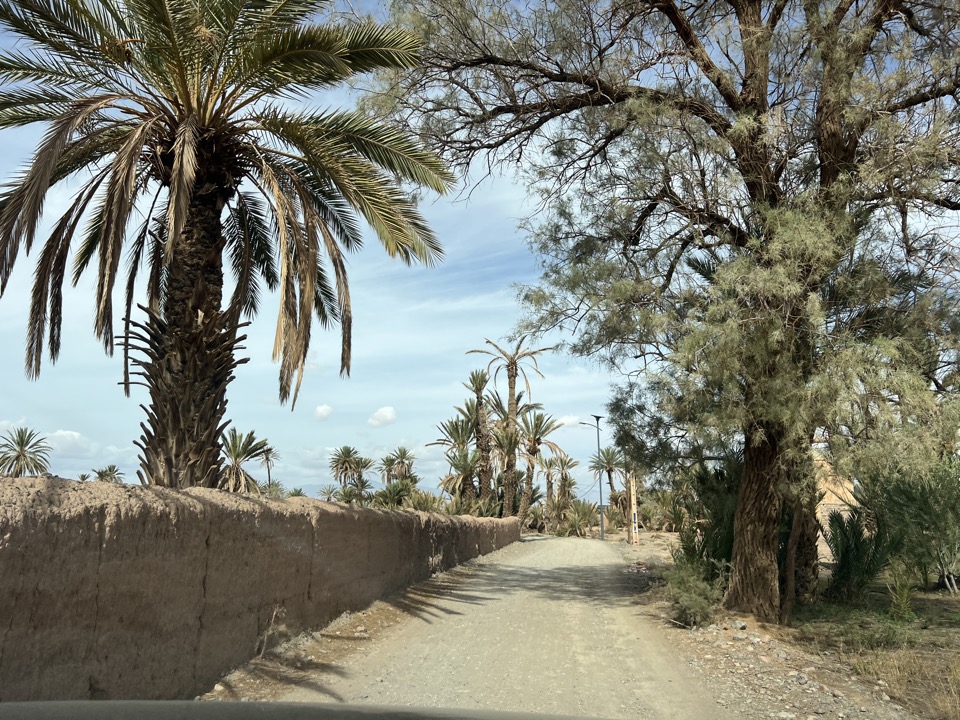
After the visit, we drove through the palm grove along tracks in very good condition. The palms were dry despite being heavy with dates. The Skoura palm grove had suffered from a lack of rain that year.
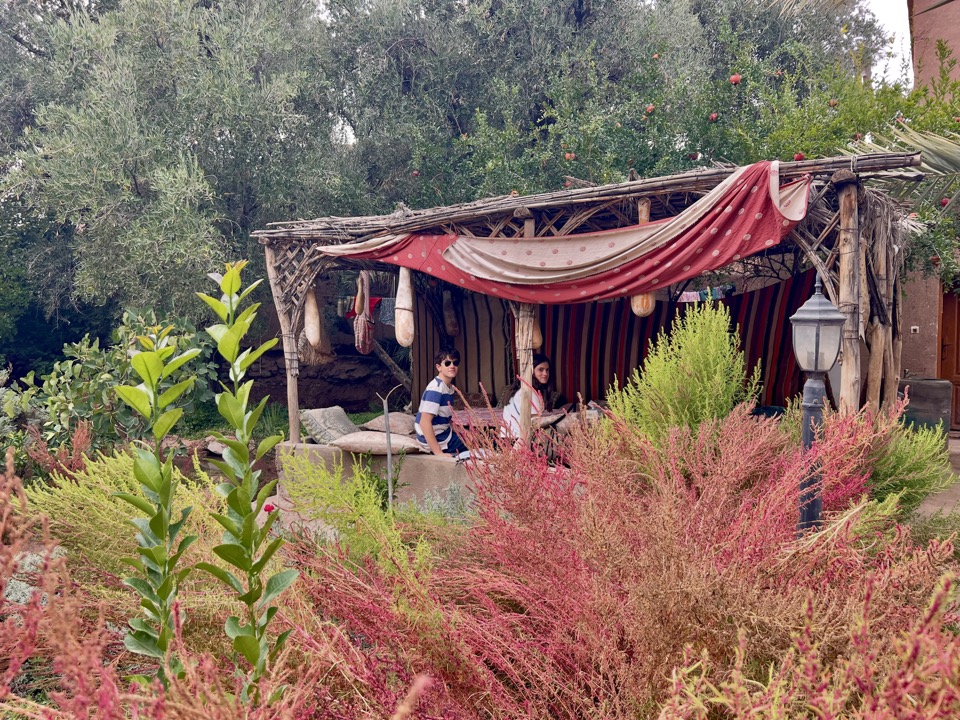
We stopped for mint tea at the Le Jardin des Grenadiers guest house. The owner showed us around his garden and invited us to taste his dates and pomegranates, which were in season. They do not normally serve lunch, so there was no menu. Our host improvised an omelette for us and told us to pay whatever we wished. It was a delightful stop in a refreshing oasis.
The Valley of Roses
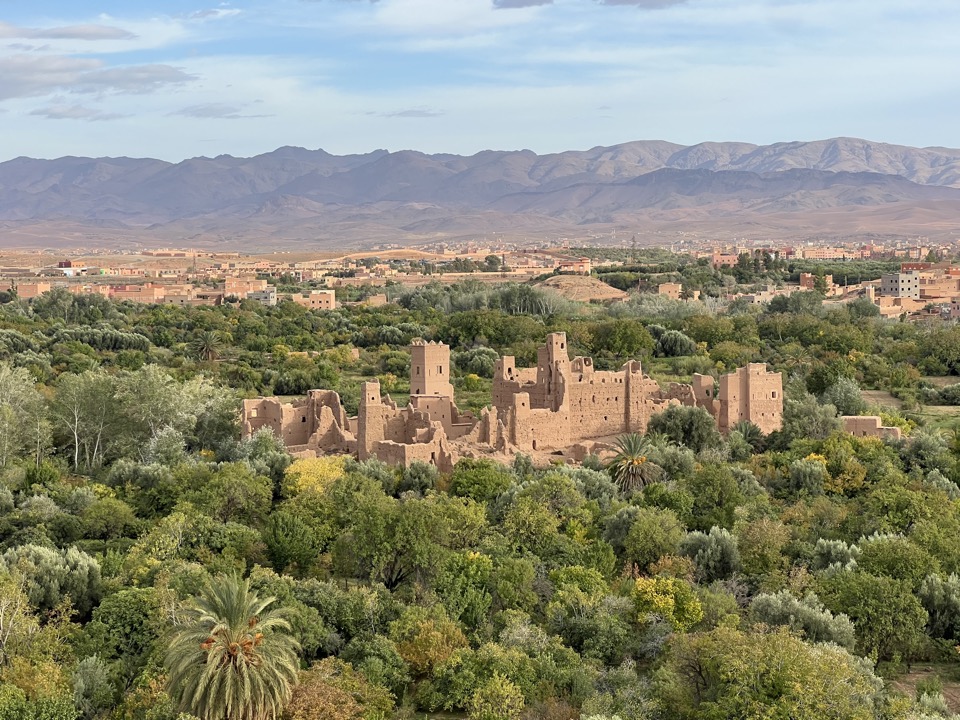
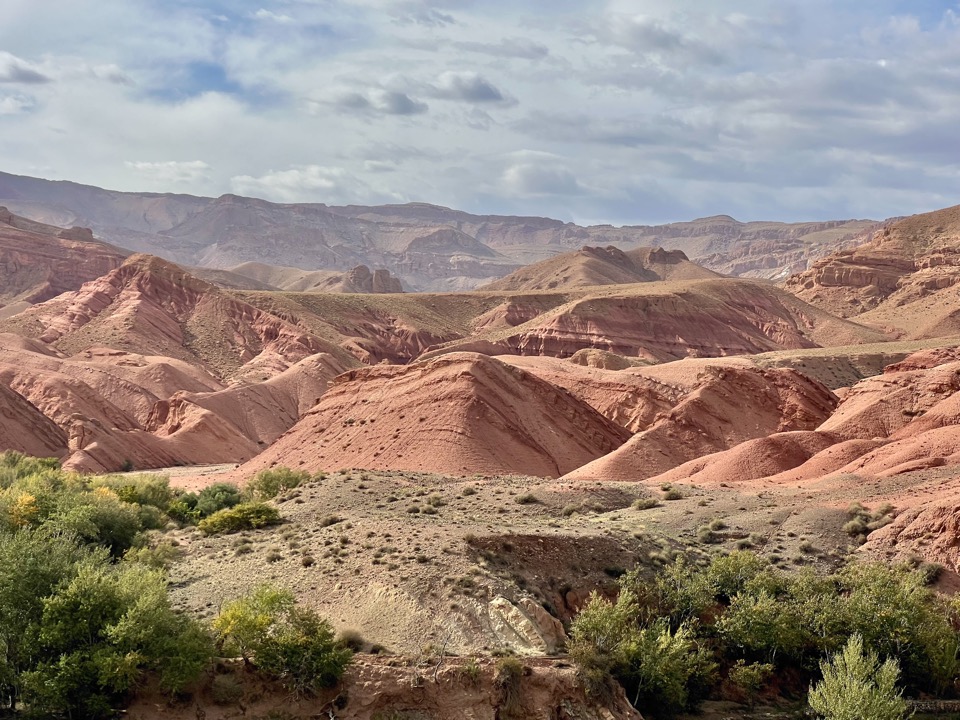
We continued along the N10 and, on reaching the town of Kalaat M’Gouna, turned north into the Valley of Roses. As its name suggests, roses are grown here. The flowers bloom from late April to early May. Although we visited in October, we decided to drive partway into the valley and back again for the beauty of its ochre- and rose-coloured mountain scenery. Strangely, we did not see any rose bushes at all, even without flowers. Where were they hiding? Never mind: the natural scenery itself was very beautiful. We drove for 45 minutes into the valley before turning back.
Arriving in the Dadès Gorges and the Monkey Fingers ❤
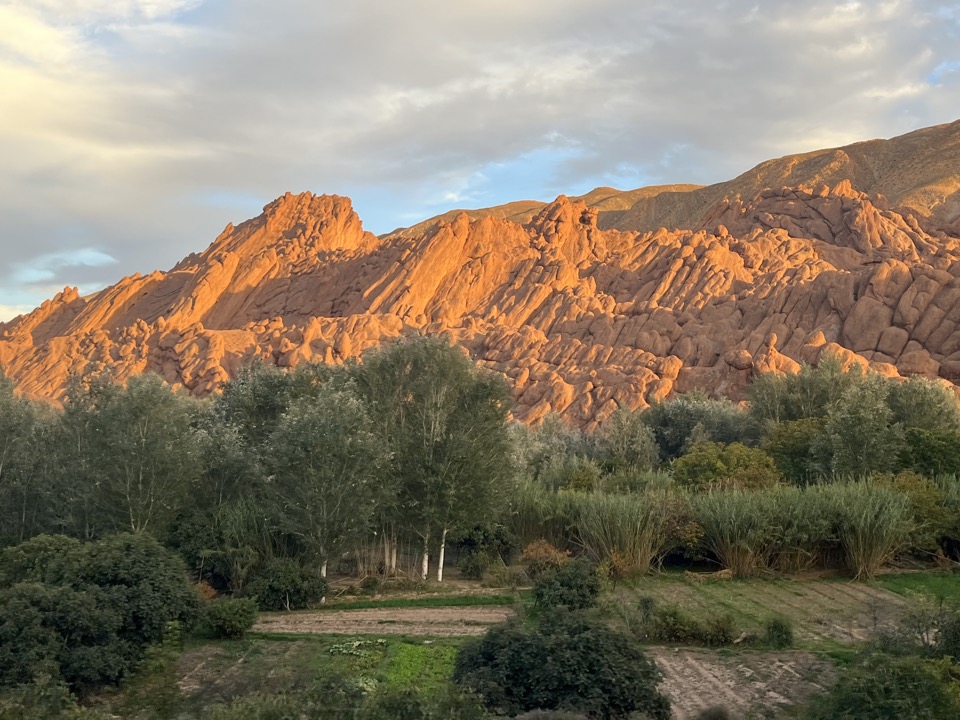
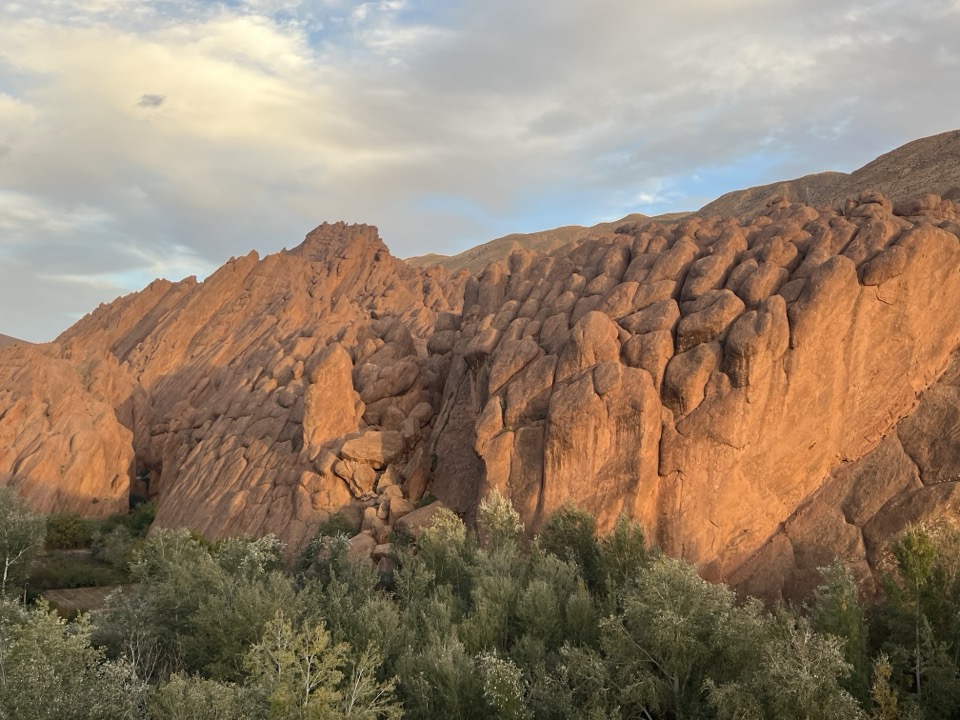
Back on the main road, we continued to the next valley: the Dadès Valley. It was love at first sight! The scenery and colours are even more intense and spectacular than in the Valley of Roses. We reached the viewpoint over the Monkey Fingers at sunset. These magnificent rock formations, sculpted by erosion into the shape of large, rounded fingers, looked even more beautiful in the light of the setting sun.
Where we stayed in the Dadès Gorges
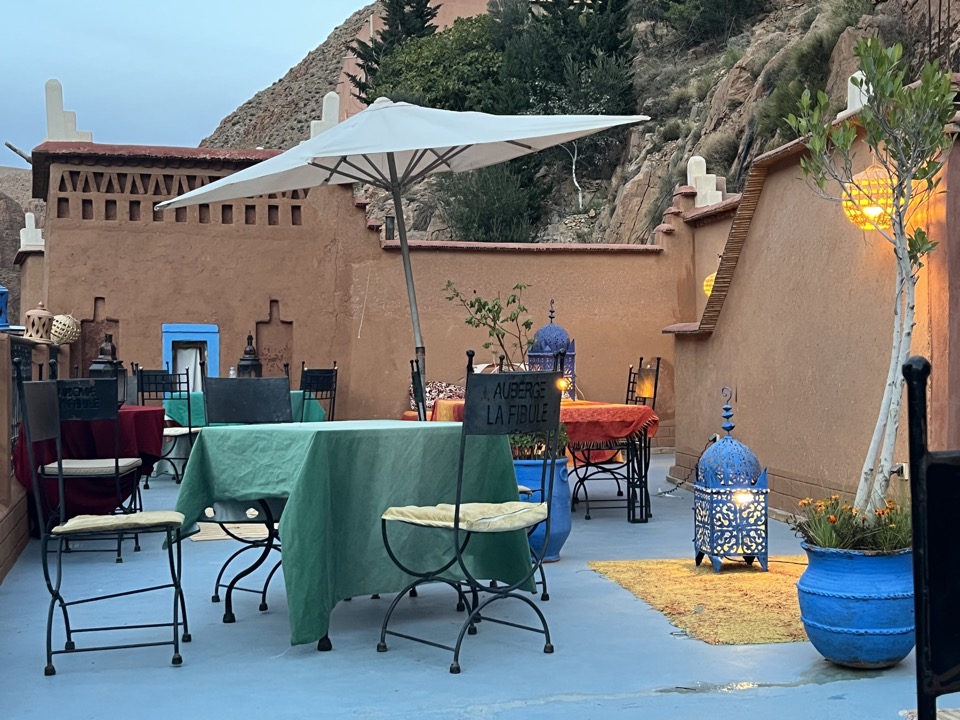
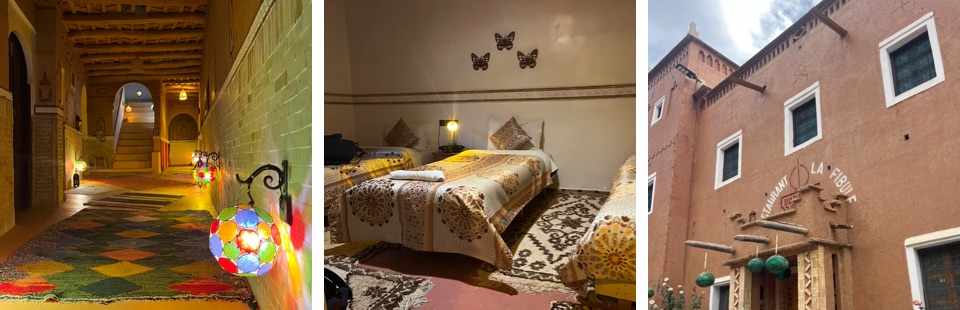
We had dinner and stayed overnight at La Fibule du Dadès, a family-run inn with traditional architecture, where we had a room for four.
From the Dadès Valley to the Todra Valley
Journey: 1 hour 30 minutes
1 night
Hiking through the Monkey Fingers canyon ❤
Allow 3 hours for the circular walk – free parking near the Monkey Fingers viewing platform. A guide is recommended!
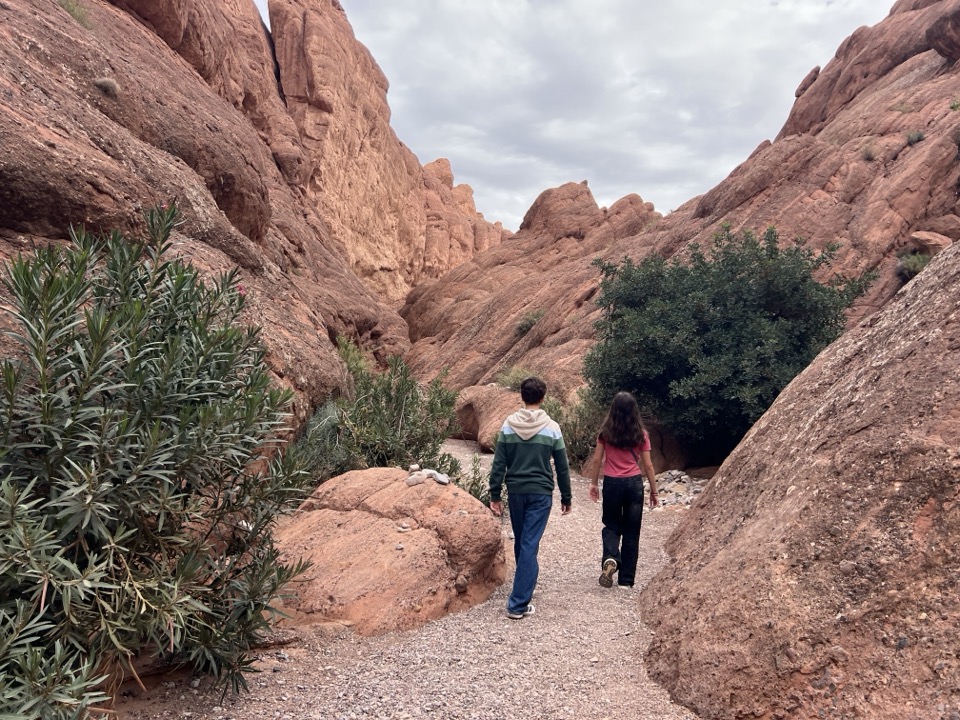
After breakfast, we set off to hike through the Monkey Fingers canyon. This walk is superb and was one of the highlights of our trip!
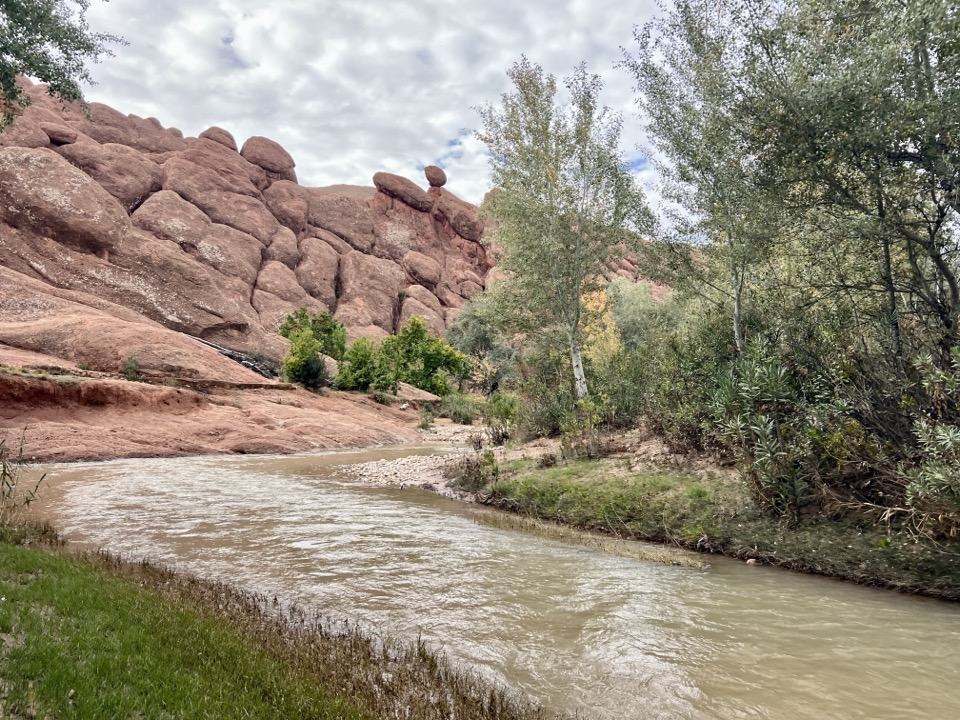
The most common circular route follows the bottom of the canyon beside the river for 1 hour 30 minutes, then returns along the higher ground. The difficult section comes first, in the bottom of the canyon, where enormous boulders in the riverbed block the way and create a succession of obstacles. Squeezing between the rocks is fun and easy, but you often have to climb over them, and some passages are challenging. Most visitors take a guide, which we strongly recommend because we struggled at four points along the route. And yet, as regular readers know, we are used to technical hikes like this and are fairly agile on the scrambling sections our children enjoy so much.
This time, however, we needed help to get over certain rocks and to climb back up beside the fig tree at the end of the canyon. Luckily, a local guide happened to meet us while waiting for his group and kindly helped Titpuce and me through these four difficult passages. I would not say it would have been impossible without him, but it would certainly have been hazardous, especially for Titpuce, who was sometimes not tall enough to reach a secure handhold, and for me, as I currently have an injured finger. Even Papa Voyage and Ticoeur found two of the passages difficult.
The number of obstacles also depends on the river level. There was more water than usual during our visit, so at one point we had to climb quite high because the normal route was covered by the river. A family ahead of us chose to wade through the cold, knee-deep water rather than attempt the climb. It was the cautious option recommended by their guide. That particular passage is easy during the dry season, although there are still other difficult places where a guide’s helping hand is extremely useful!
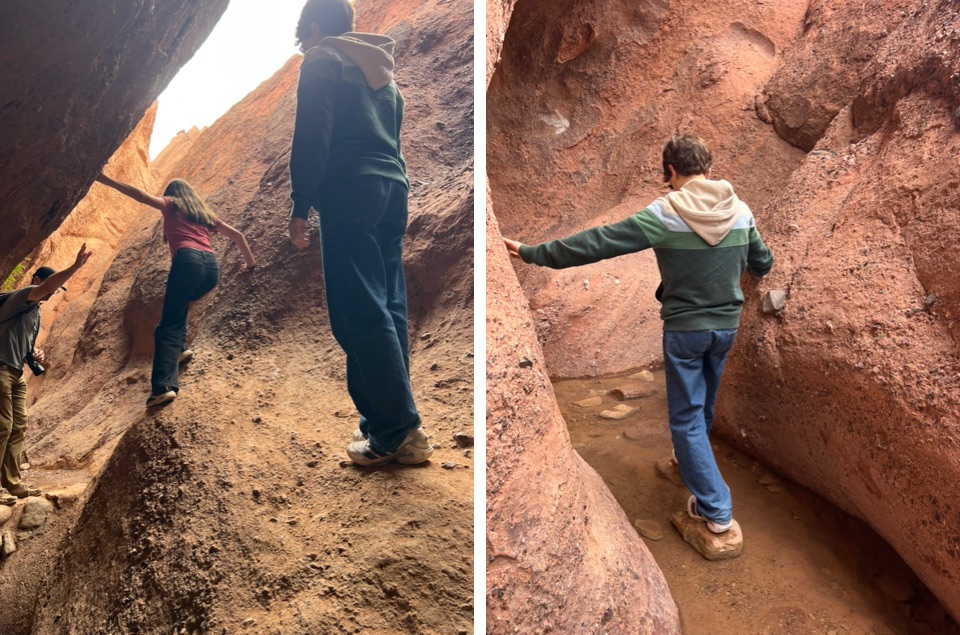
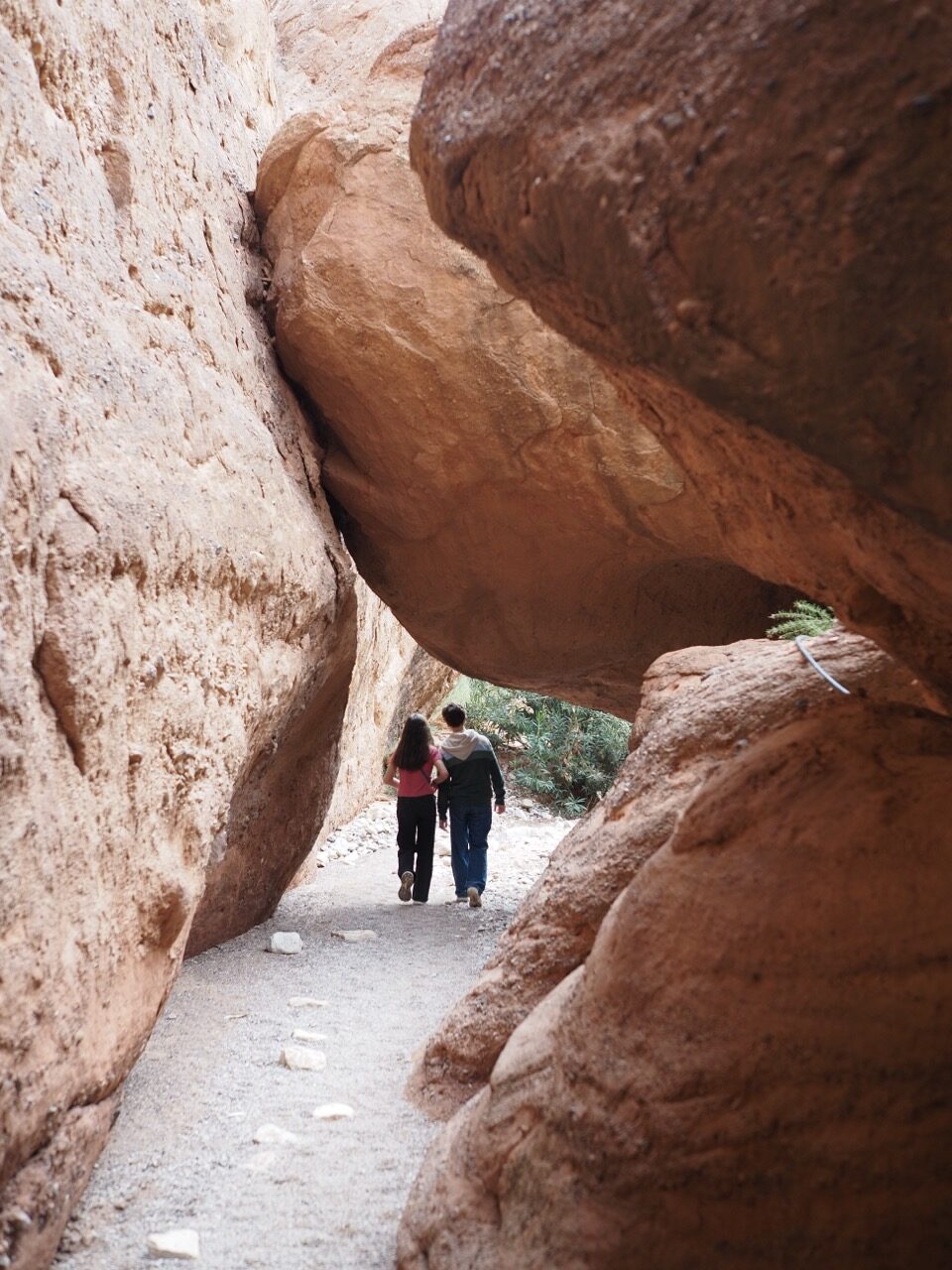
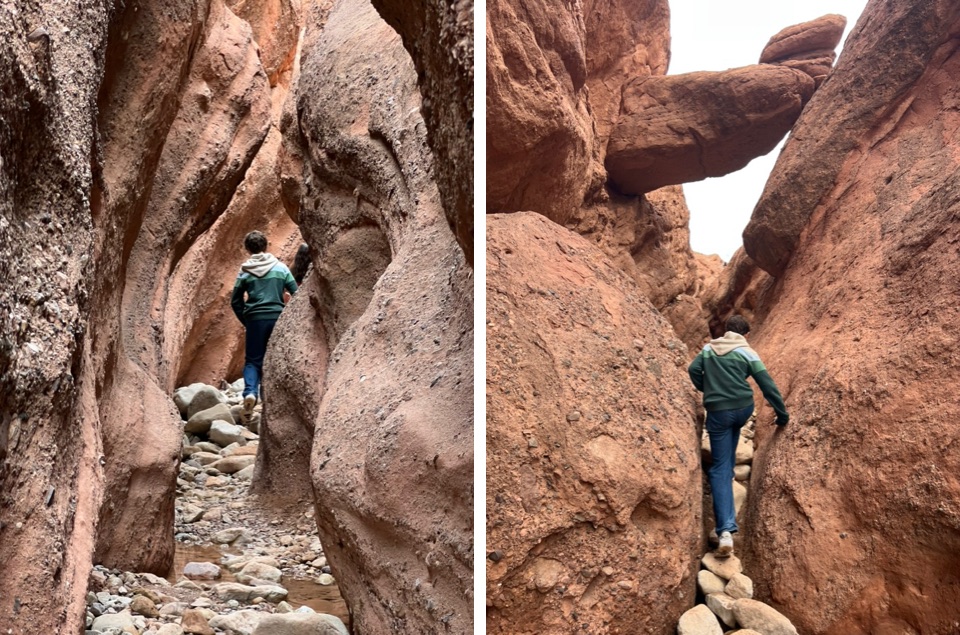
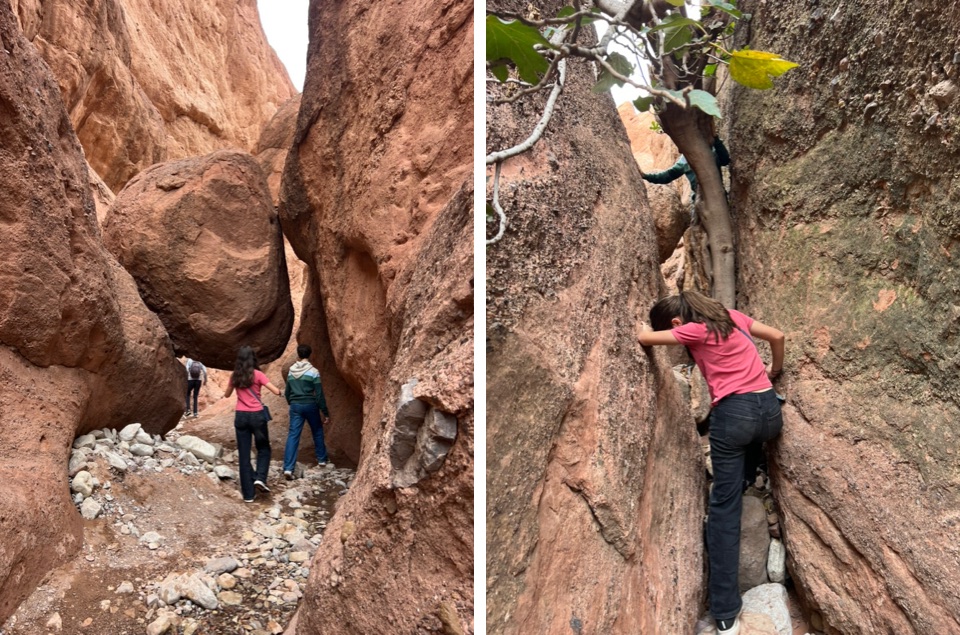
The return route along the top is very easy. With young children or without a guide, you can simply walk out and back along the upper path. You will miss the adventure among the rocks, but can still fully enjoy the Monkey Fingers scenery.
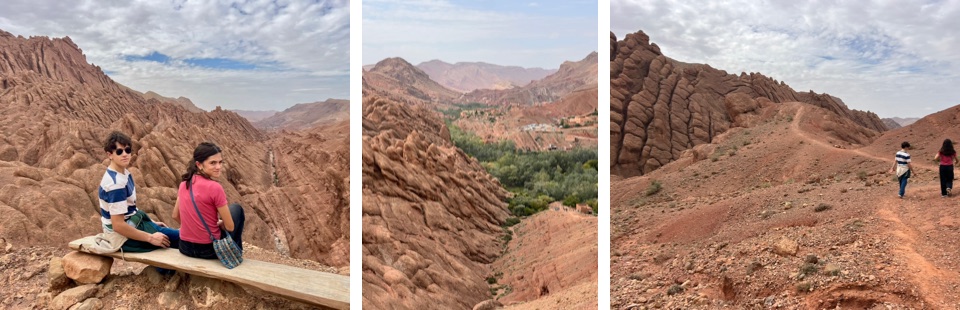
Our advice: Use a trusted guide recommended by your accommodation to avoid being approached by unknown touts at the start of the walk.
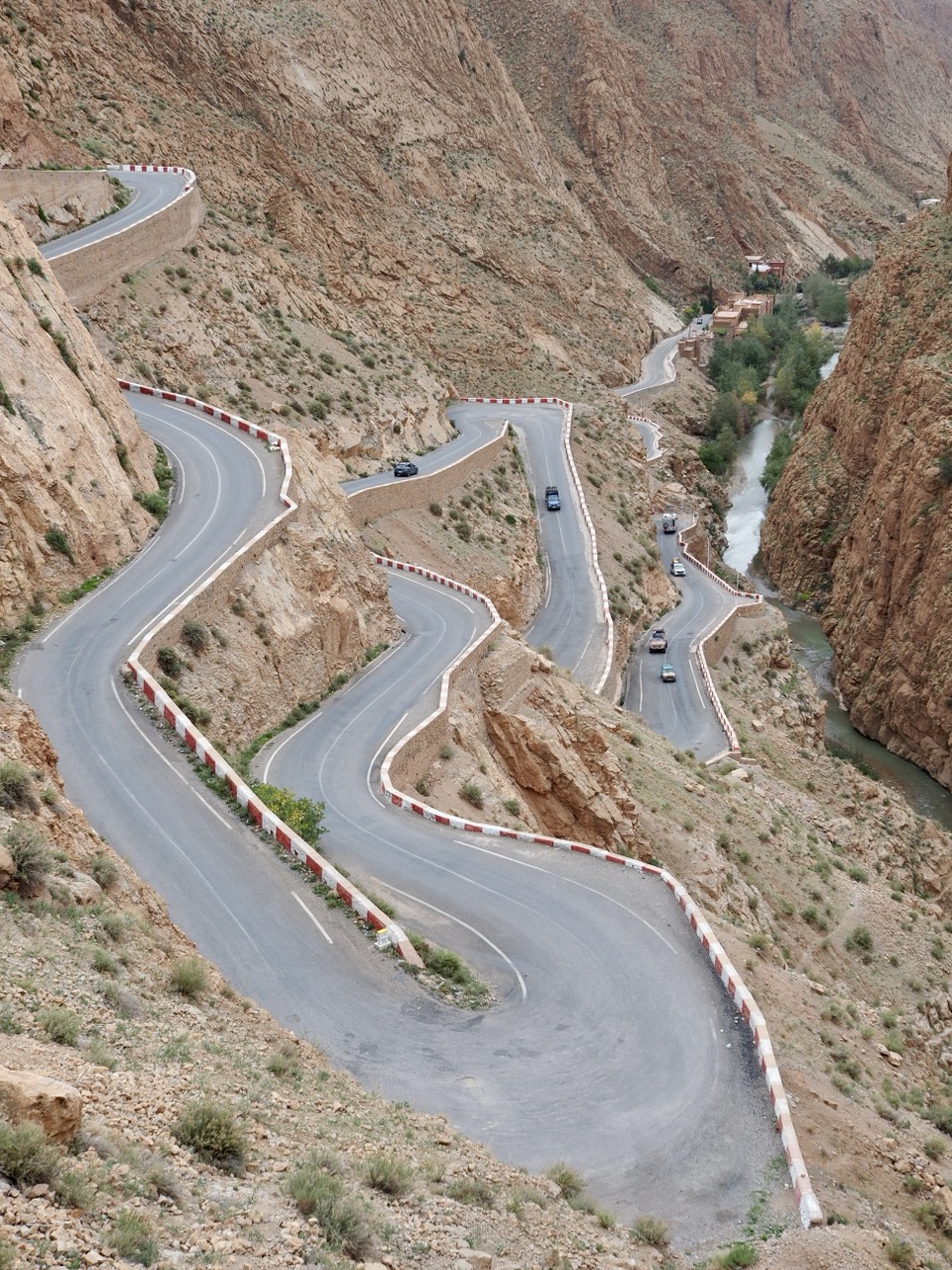
After our lovely morning hike, we got back in the car and continued north through the Dadès Valley:
We then turned towards the Todra Valley (also spelt Toudra).
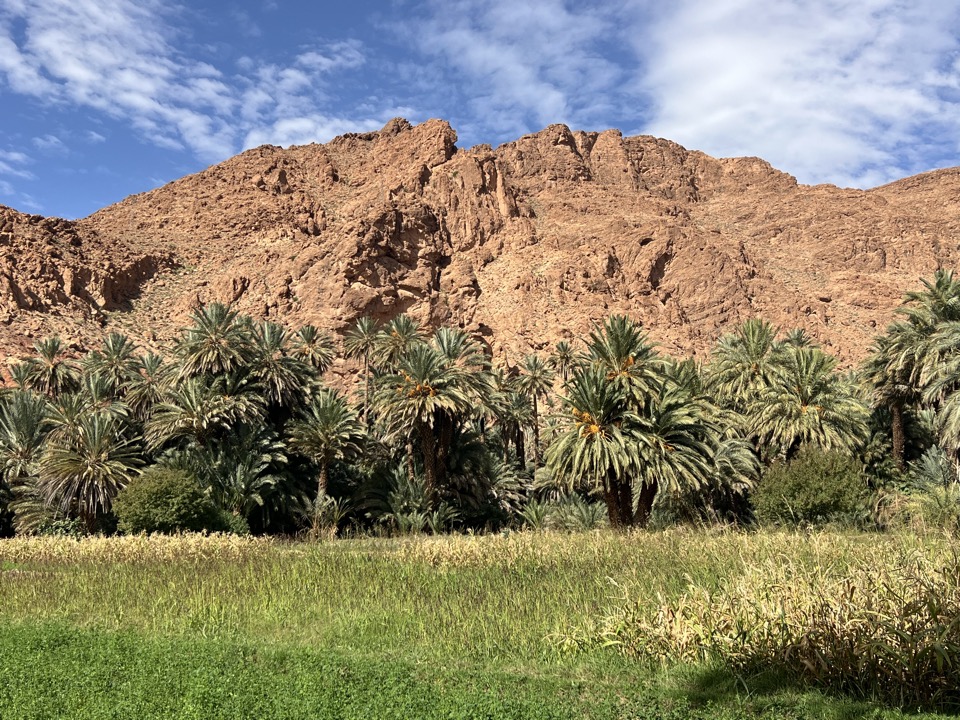
Hiking near the Todra Gorges
3-hour circular walk – moderate – 300 metres of ascent.
A few metres before the most spectacular section of the gorges, we parked to begin another, more conventional hike: a circular route with no technical difficulty. We used the Organic Maps app to find our way. Cairns mark the path. We walked the route anticlockwise, which we recommend because the ascent is better marked. On the descent, we simply aimed roughly for the village below.
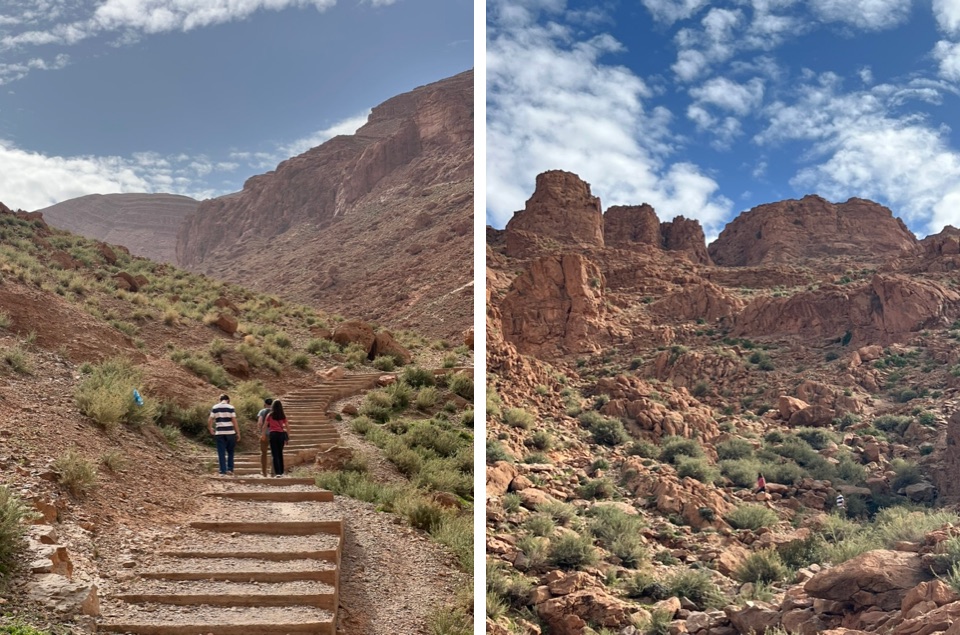
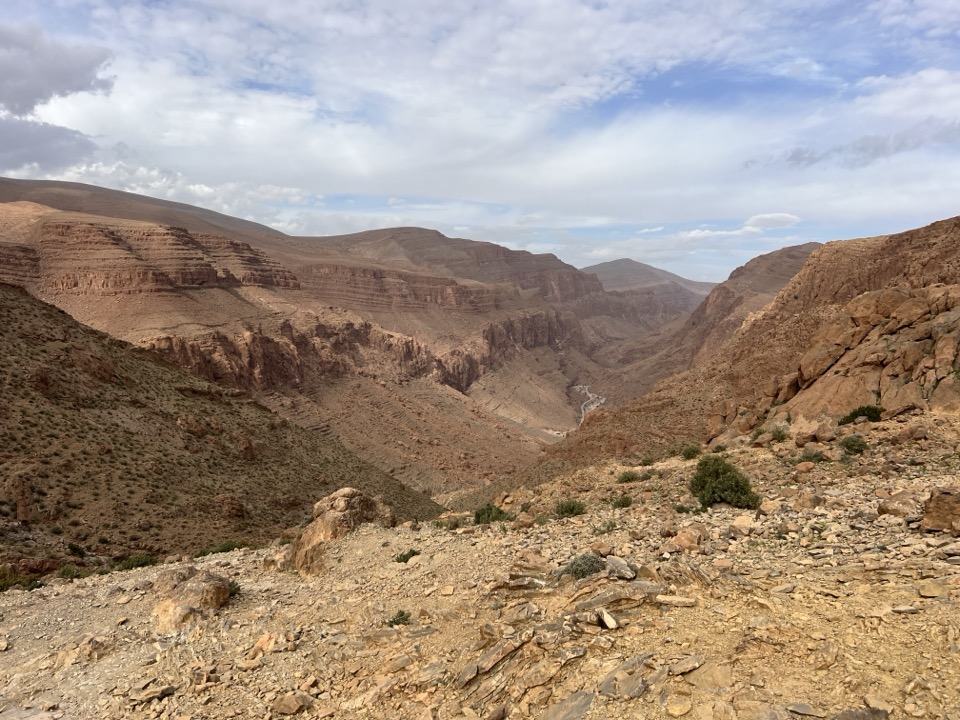
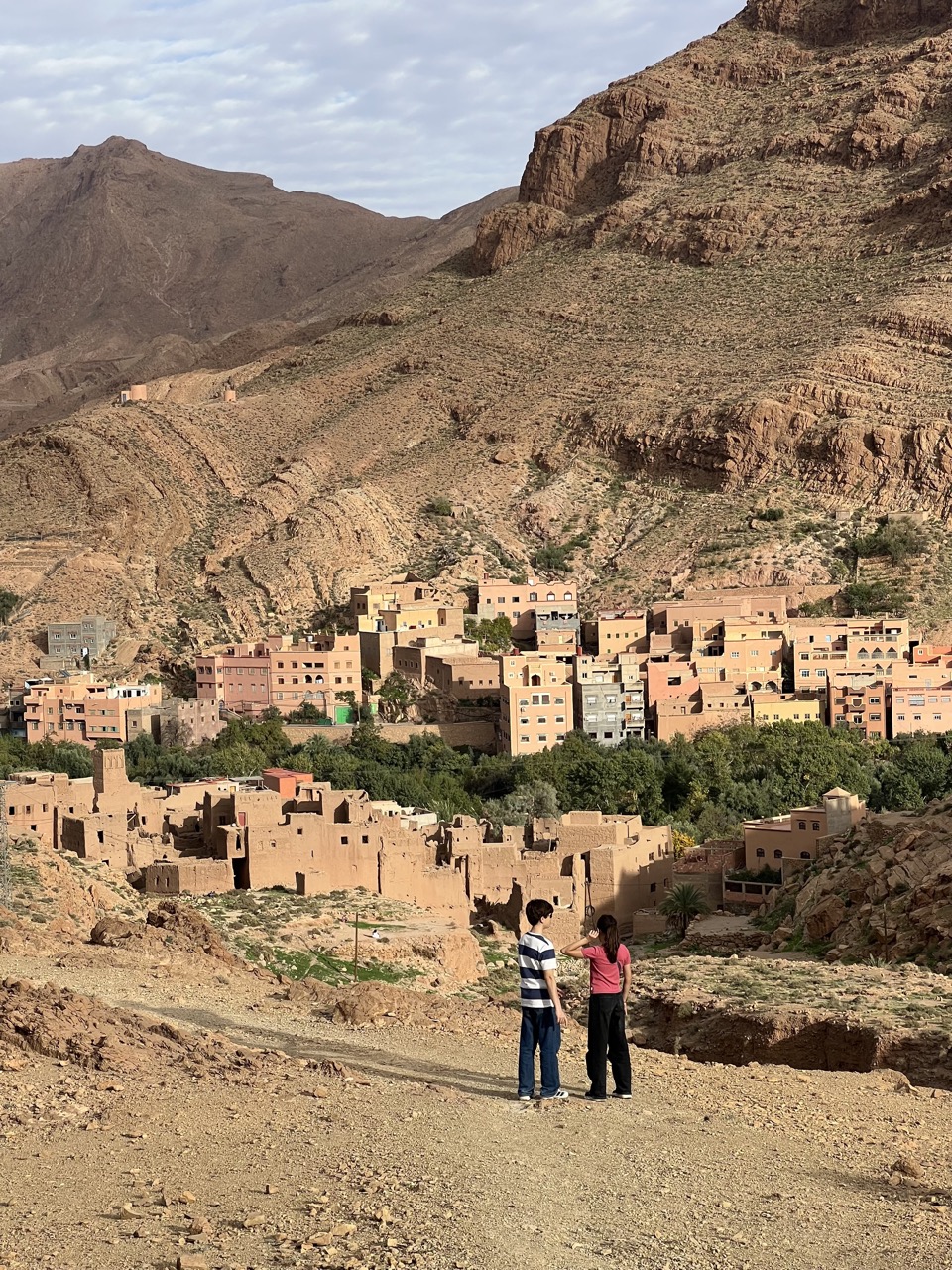
The Todra Gorges ❤
Before returning to the car, we walked through the most spectacular section of the gorges, where towering red walls rise on either side for about 600 metres. Most tourists only visit this short stretch. You can drive through it, but fortunately most people explore on foot, making the experience more enjoyable for everyone. It is a beautiful place!
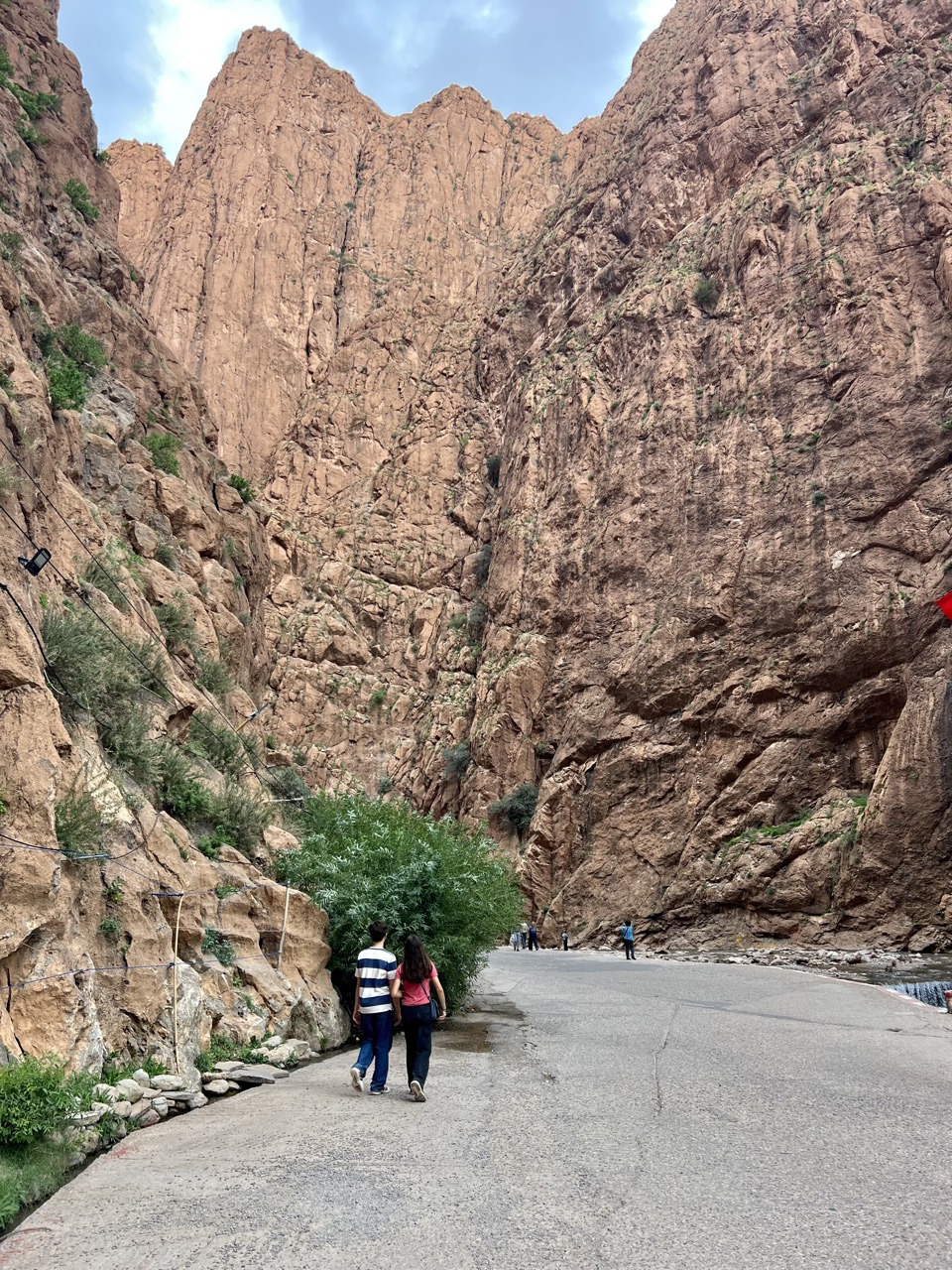
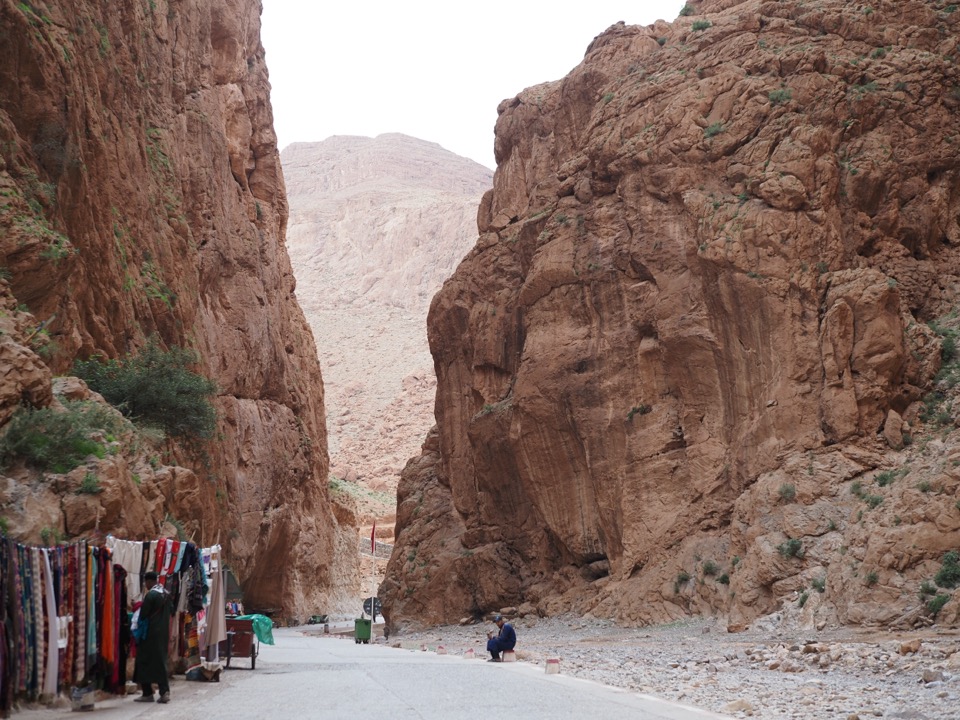
Where we stayed in the Todra Gorges
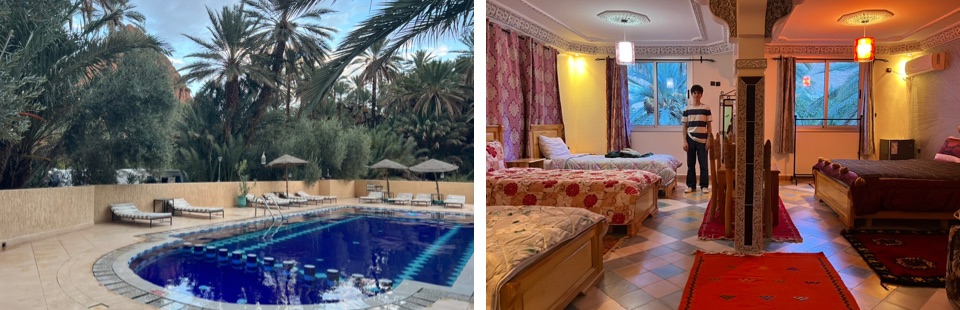
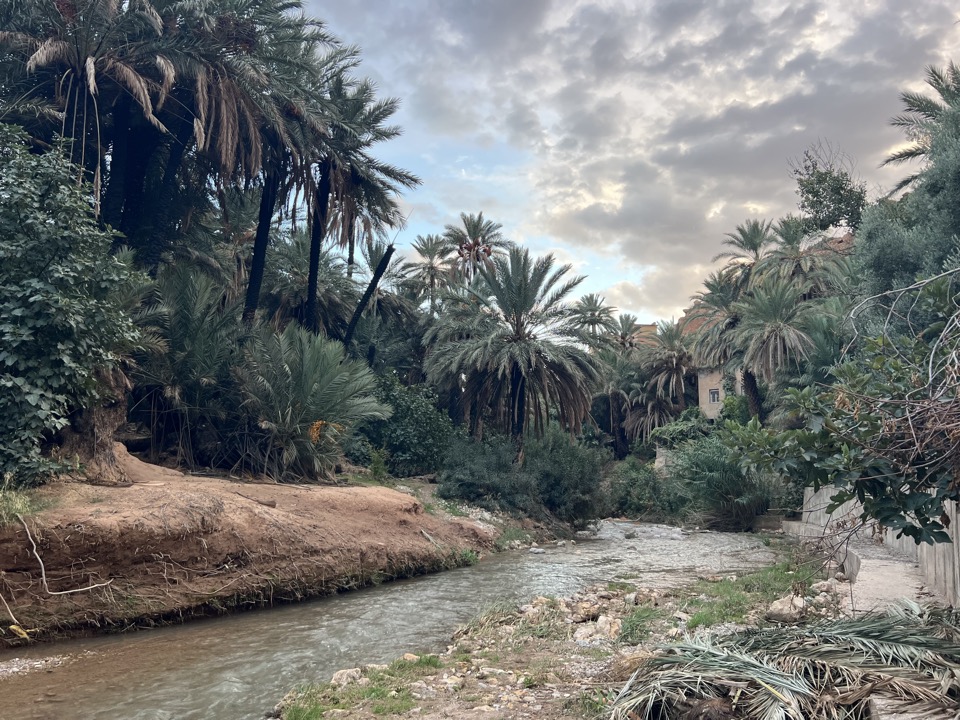
We stayed at Riad Camping Atlas, a small hotel in Tinghir, ten minutes by car from the gorges. It also has a campsite. The accommodation was simple and lacked the charm of our previous places, but it was very affordable, clean and well located. We also enjoyed being on the edge of the palm grove. We loved relaxing beside the pool, although it was too cold to swim at that time of year, and watching the palms at sunset. As usual, we ate dinner there.
From the Todra Gorges to the Merzouga desert
Journey: 3 hours 30 minutes
1 night
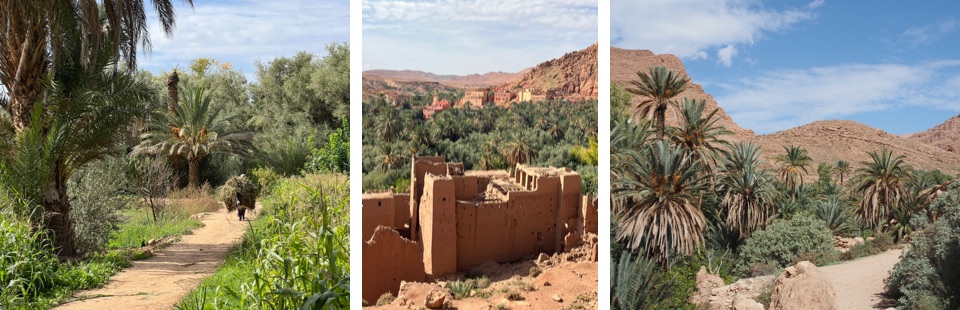
After breakfast, we walked through the palm grove and the riverbed to enjoy the vegetation in Tinghir. Unlike Skoura, this area had apparently not suffered from a lack of rain, so its oases were greener than those in the valleys we had crossed earlier. This is where the Road of a Thousand Kasbahs comes to an end.
Our organised desert excursion ❤
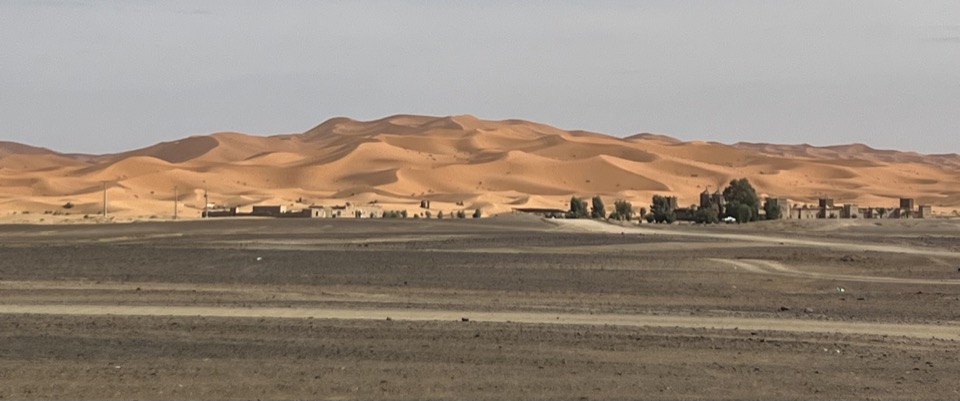
After a beautiful 3-hour 30-minute drive through increasingly desert-like landscapes, we reached the foot of the Merzouga dunes. Even seeing them from a distance is a wonderful sight.
We had arranged to meet an organiser from Sahara Safari Luxury Camp and Activities, where we had booked the night. They offer desert glamping accommodation and organise the surrounding experience. You can choose between a camel ride, quad bike or 4×4. We opted to travel to the camp by camel, much to Papa Voyage’s delight ;-)… although let’s just say that camelback is not his most flattering look! It was certainly the best way to take our time and absorb the scenery, as the journey lasts 1 hour 30 minutes. Our camel handler was quiet but managed our little group very well. Two families shared the excursion. Crossing the dunes was superb! The Merzouga dunes are very high and have a magnificent warm colour. My photographs have not been edited:
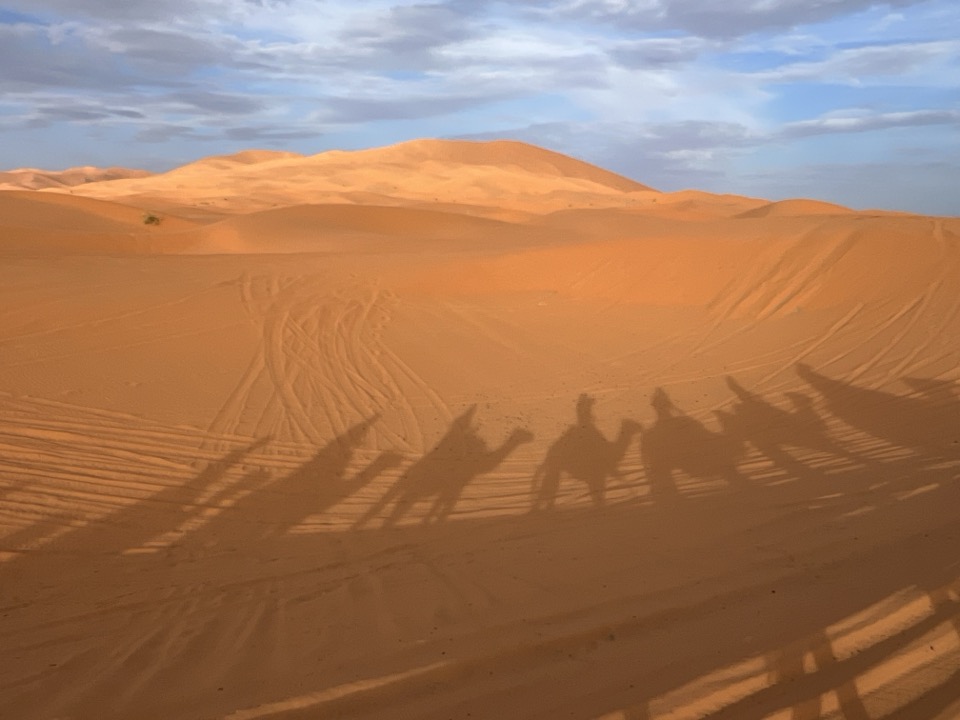
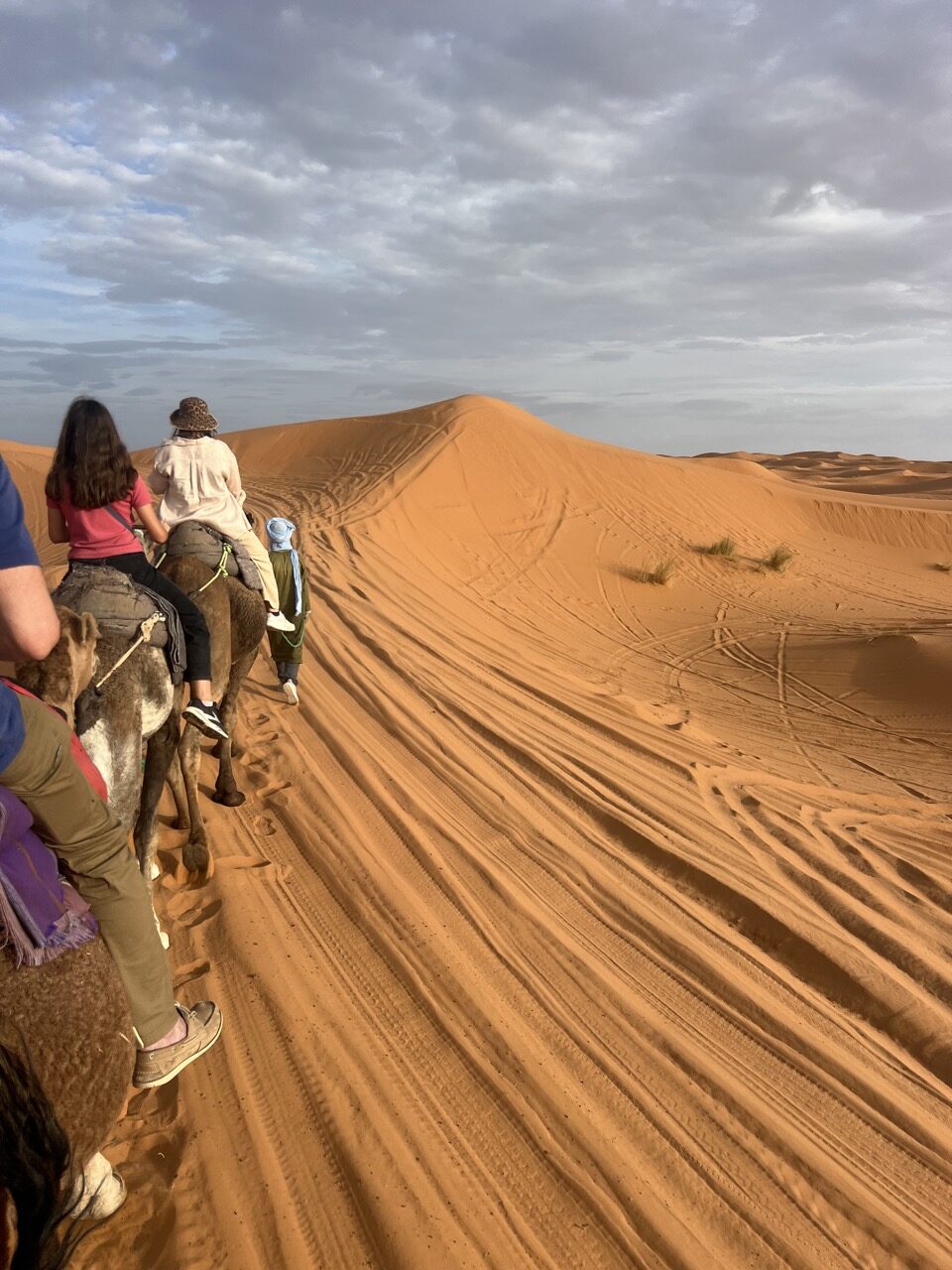
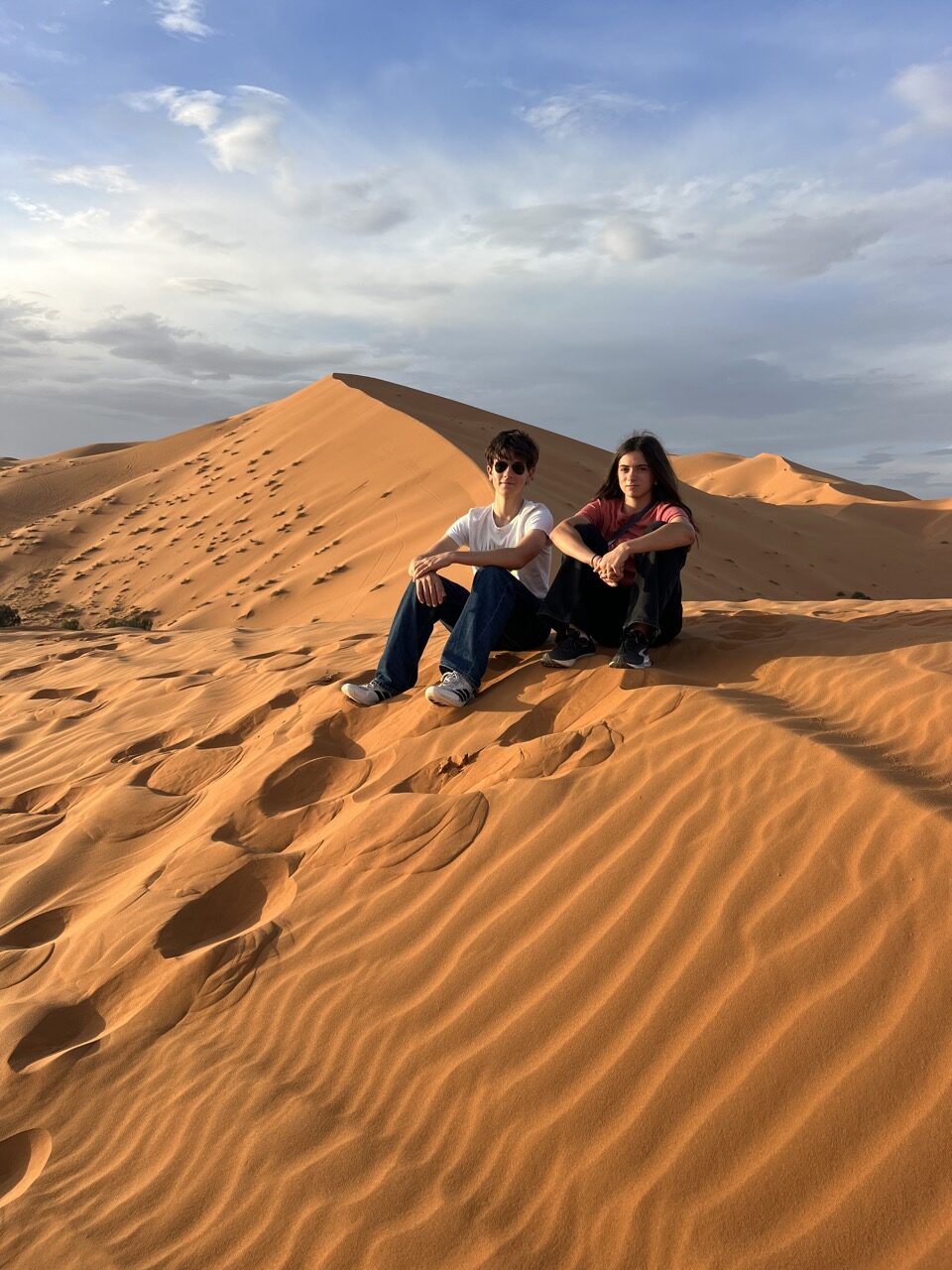
Half an hour before sunset, we paused before descending towards the camp. Unfortunately, this was when the quad-bike and 4×4 excursions set off. Everyone has different tastes, but I prefer my sunsets in silence.
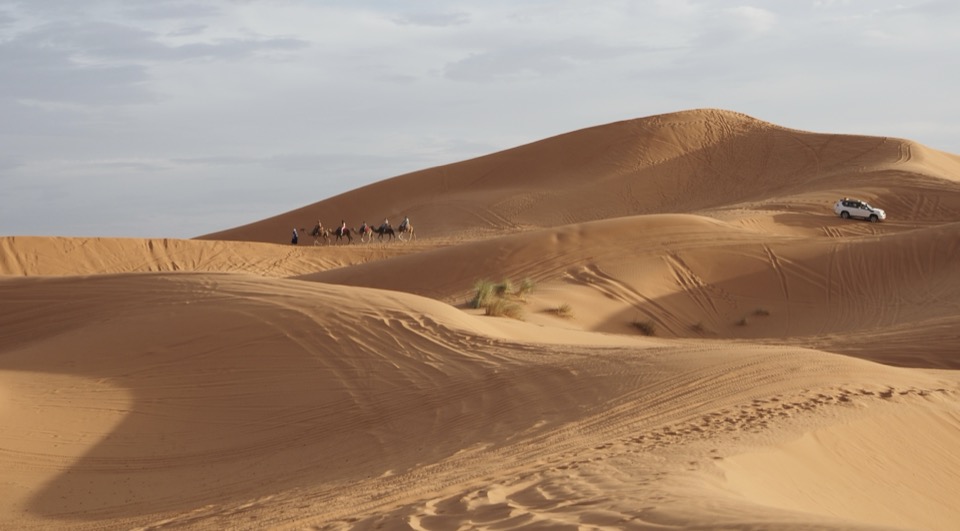
This was not our first experience of a sandy desert. Merzouga is touristy and highly organised, but the scenery is nevertheless well worth it! Ticoeur and Titpuce, who did not remember our desert expedition in Oman, really enjoyed rediscovering the magic of the dunes. Merzouga did not disappoint us: it is a beautiful erg, or sea of dunes!
Our glamping experience in Merzouga
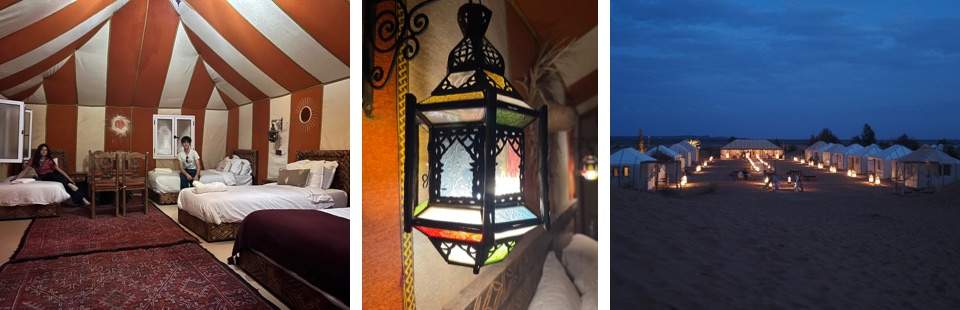
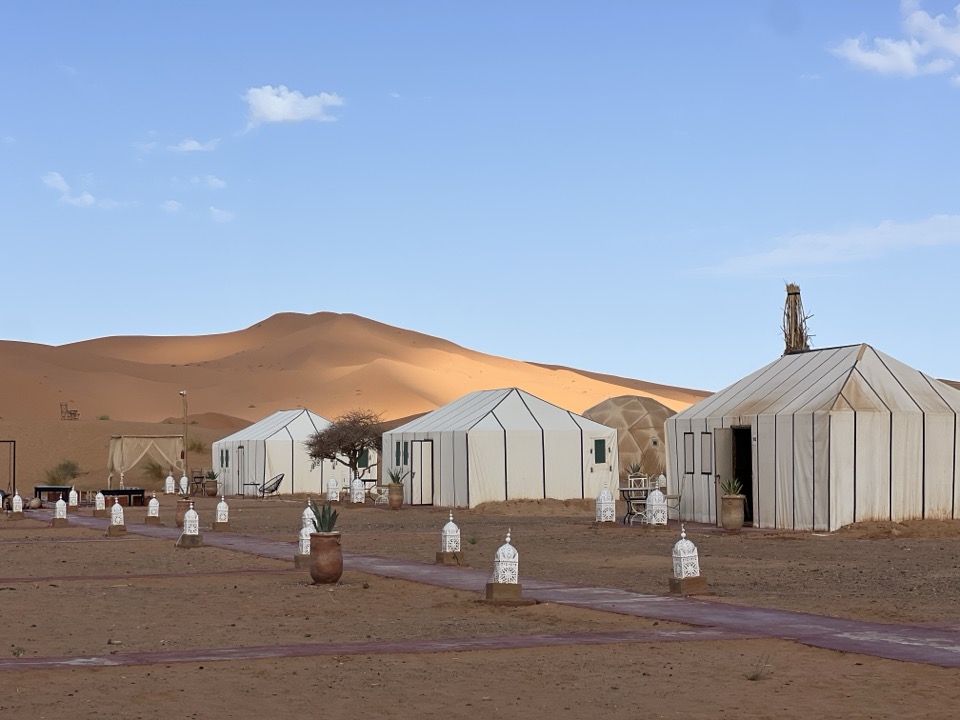
This is what our tent looked like at the Sahara Safari Luxury Camp and Activities:
The tent was as comfortable as a hotel room and the entire organisation ran very smoothly. The price of the night included a good dinner in a large restaurant tent, followed by Berber music outdoors around a fire. Activities and transfers by camel or 4×4 cost extra. There are several camps; this one had excellent reviews. Just do not expect to be alone in the dunes, as there are many tents and camps. It offers very good value for a polished experience that children enjoy!
From the Merzouga desert to Nkob
Journey: 4 hours 30 minutes
1 night
We woke early to see the sunrise, although its colours were not especially intense. After breakfast, however, we set off alone to walk through the dunes and loved it! We climbed to the top of the highest dune near the camp, in complete peace with nobody else around. Pure happiness.
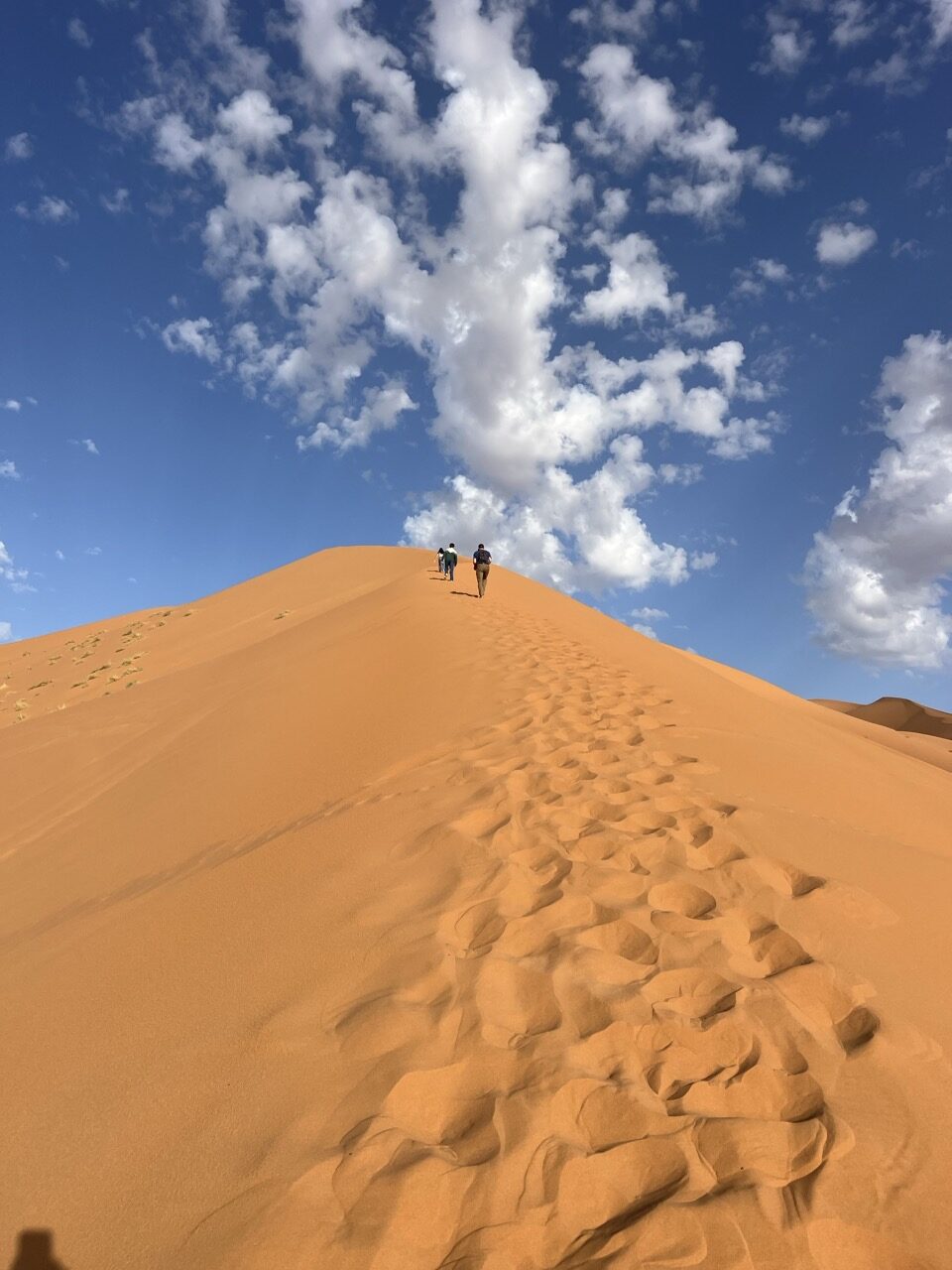
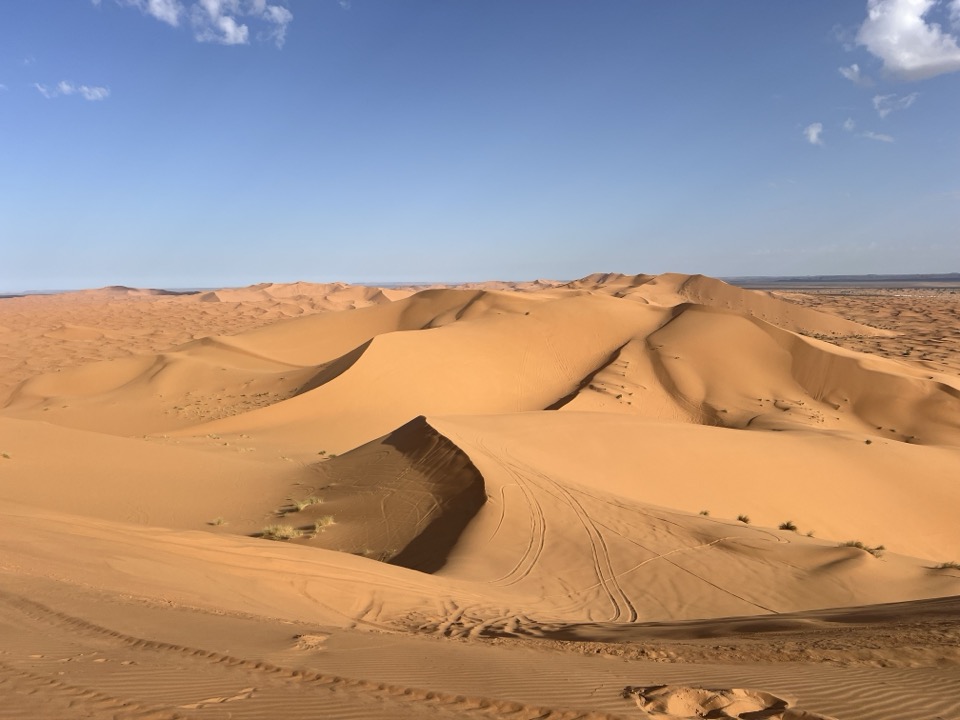
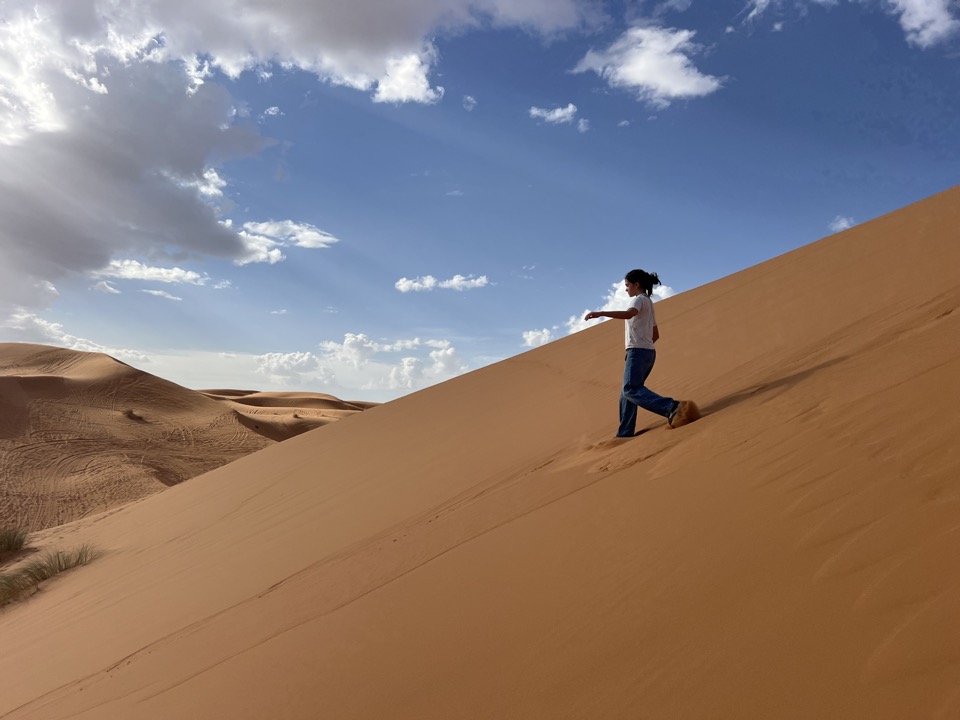
As we could choose the time of our return transfer by 4×4, we opted for late morning. We were the last to leave so that we could spend time walking in the dunes. It is hard work, but so beautiful! Some people asked whether we had been afraid of getting lost. There was no risk: from the higher dunes, we could see the camp.
The 20-minute return transfer by 4×4 was fun. In short, civilisation is never far away!
The drive to N’kob
This journey felt very long to me! In Rissani, we stretched our legs for a few minutes in the souk. We then began the longest drive of our road trip, through desert scenery that was less impressive than on previous days. Overall, I found the regs we crossed, the stony deserts, rather grey and monotonous for much of the route.
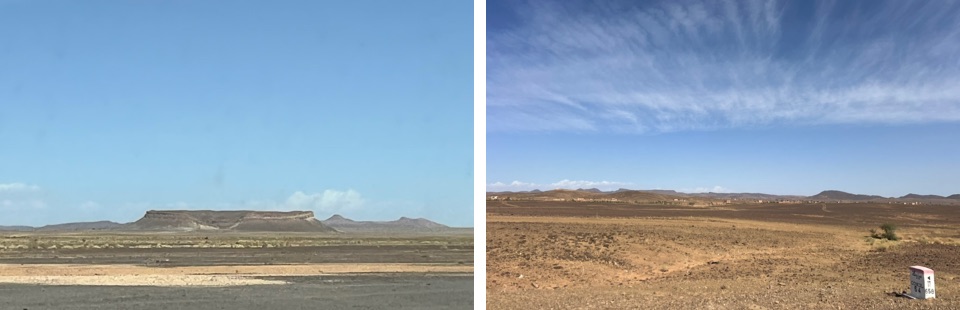
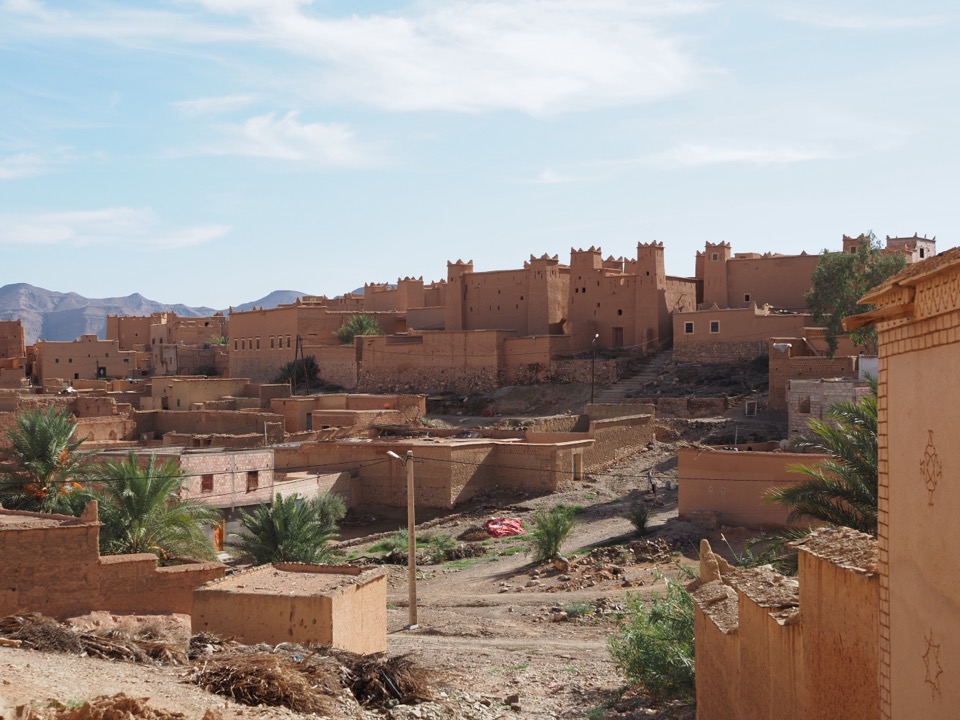
Half an hour before N’kob, the scenery became wild and beautiful again, with a touch of the American West. N’kob is a tiny town consisting mainly of one principal road and a few lanes lined with partly ruined rammed-earth buildings.
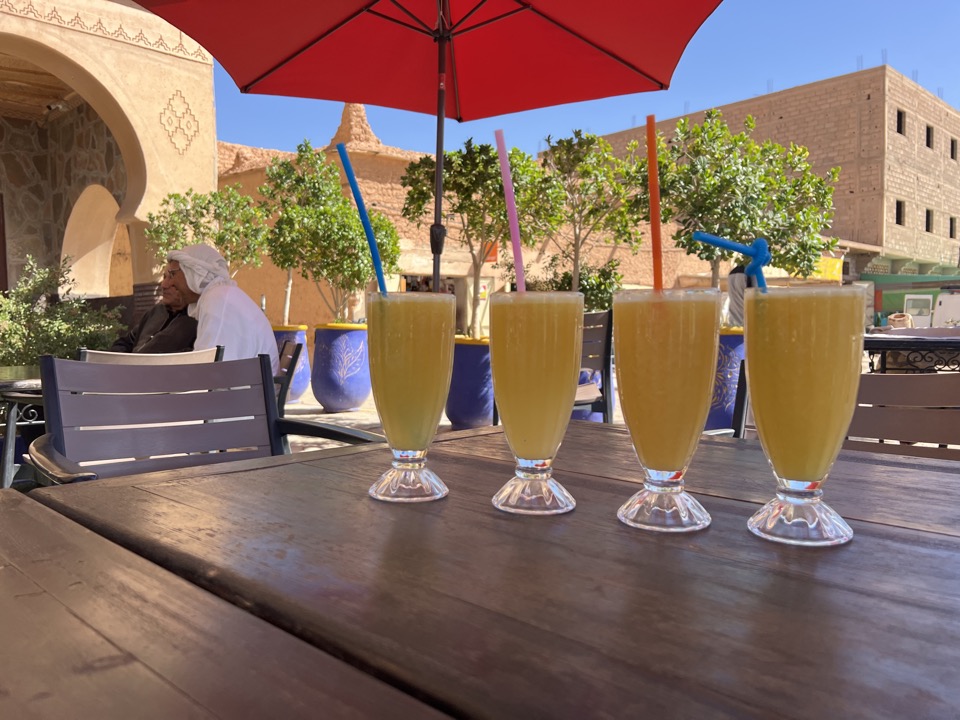
We enjoyed an excellent orange juice on the terrace of the Ennakbe café-restaurant. After dropping off our luggage, we went for an hour’s walk because the day had been far too inactive for us.
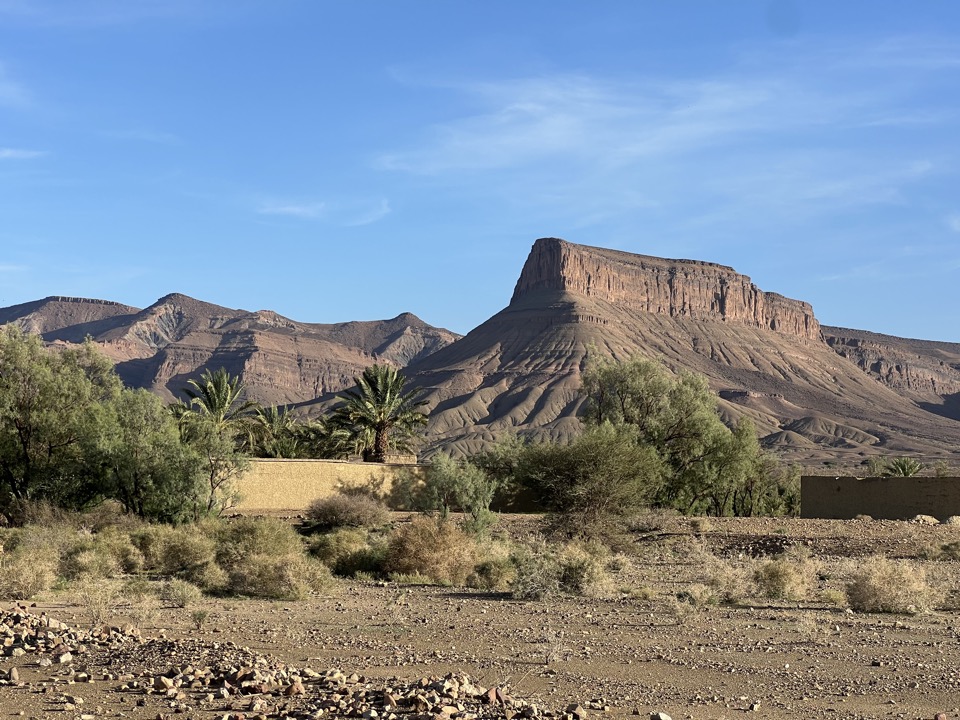
Our night in N’kob
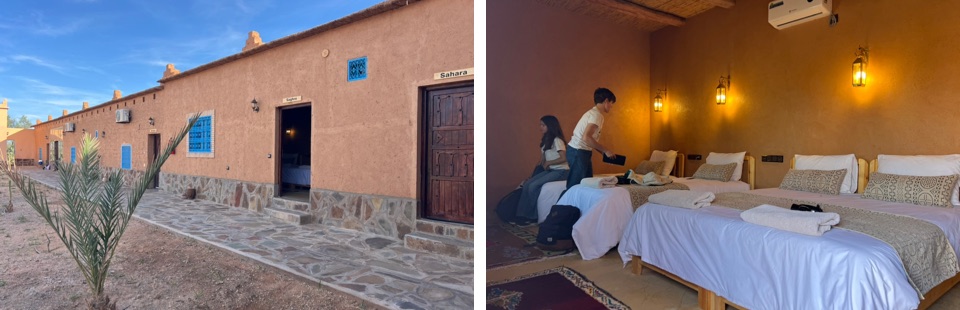
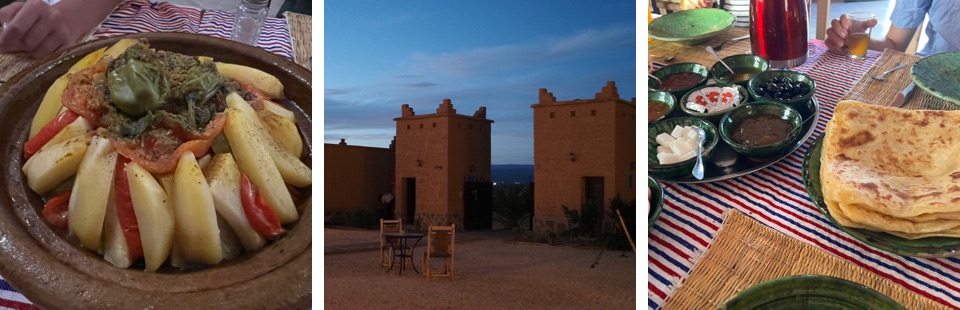
We stayed at Land of Dreams, which offers several guest rooms in a lovely traditional family home on the outskirts of N’kob. It is an excellent, very affordable address. The spiced chicken skewers at dinner were delicious.
The Saghro massif and the Drâa Valley
Journey: 1 hour 30 minutes
1 night
After breakfast, we took a quick look around N’kob’s weekly market, but were disappointed: it mainly consisted of dreadful made-in-China clothes and shoes. There was nothing of interest. We got back in the car and headed towards the Saghro mountains, where another favourite place awaited us!
Our hike in the Saghro: Bab n’Ali ❤
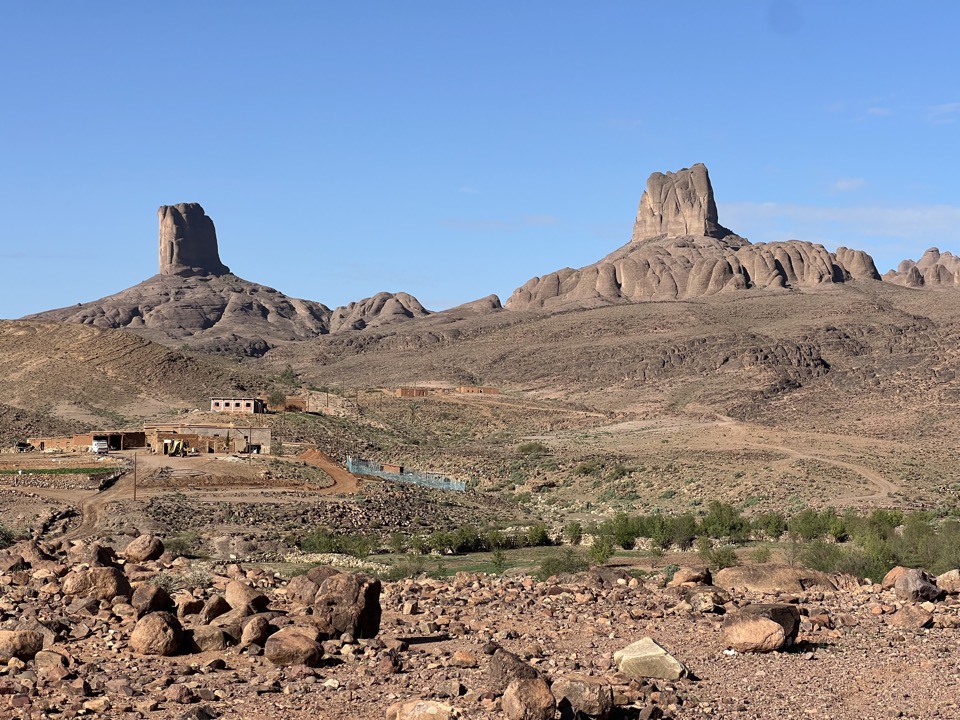
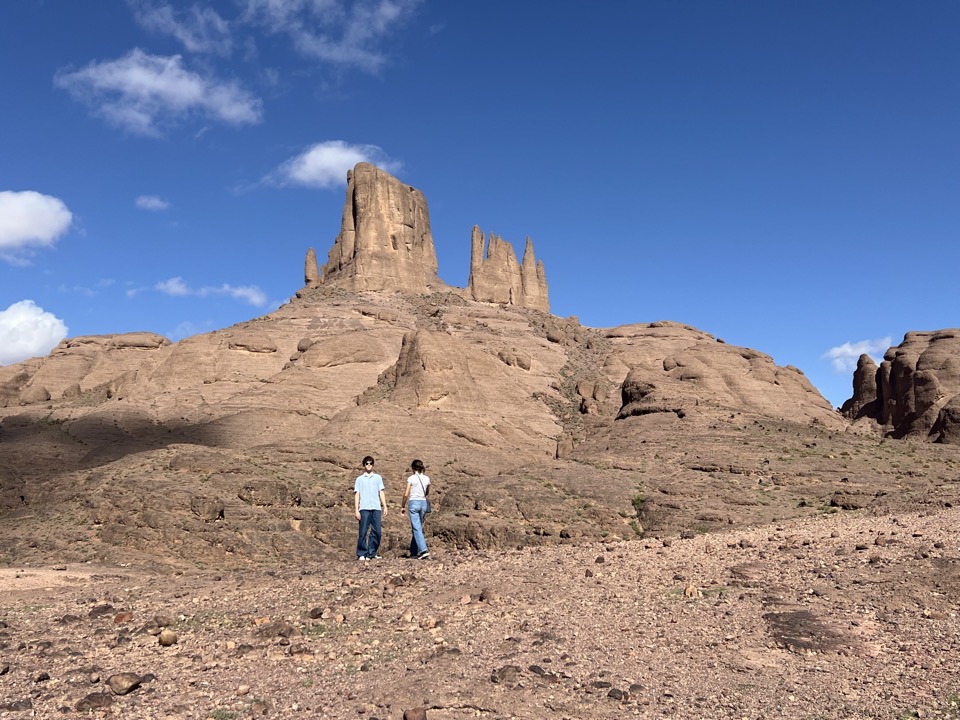
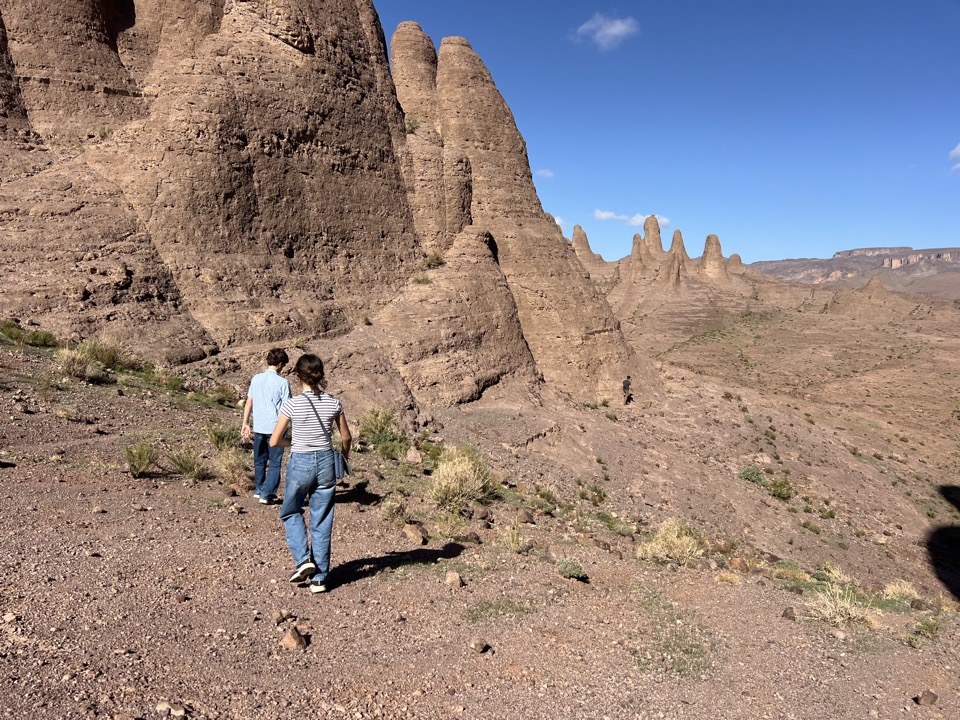
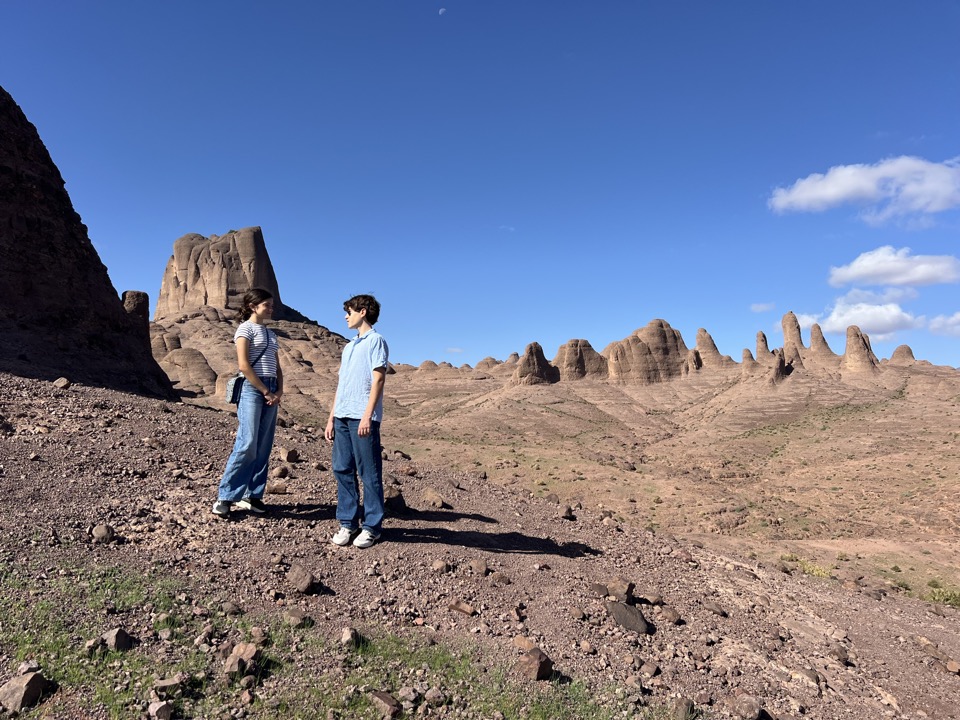
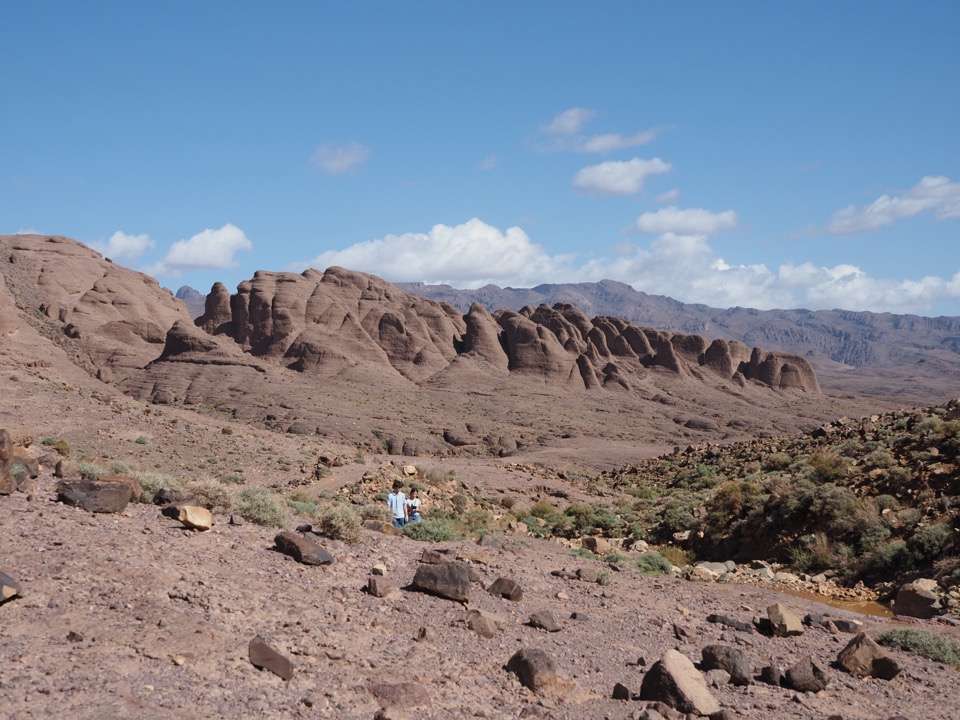
Thirty minutes north of N’kob, in the Saghro, we walked for two hours around the strange and majestic Bab n’Ali formations. Nobody else was there, yet the place is incredible, like a “Moroccan Monument Valley”. There are no paths, but the enormous rocks make it easy to find your bearings. We simply parked beside the road near the Café Pitons. You can use the Organic Maps app for reassurance, but there is no real risk of getting lost.
The palm groves of the Drâa Valley
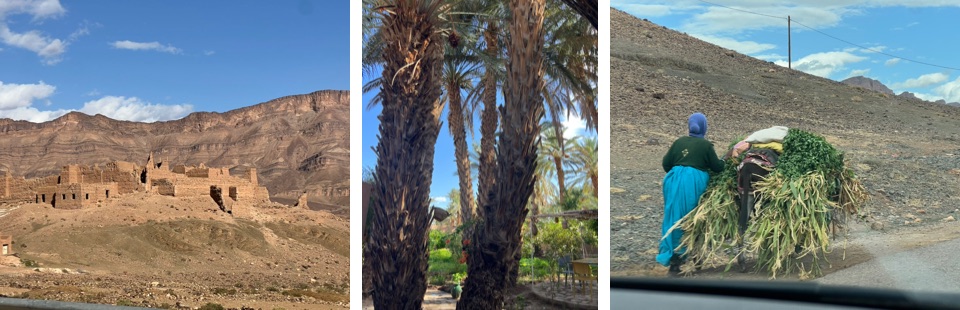
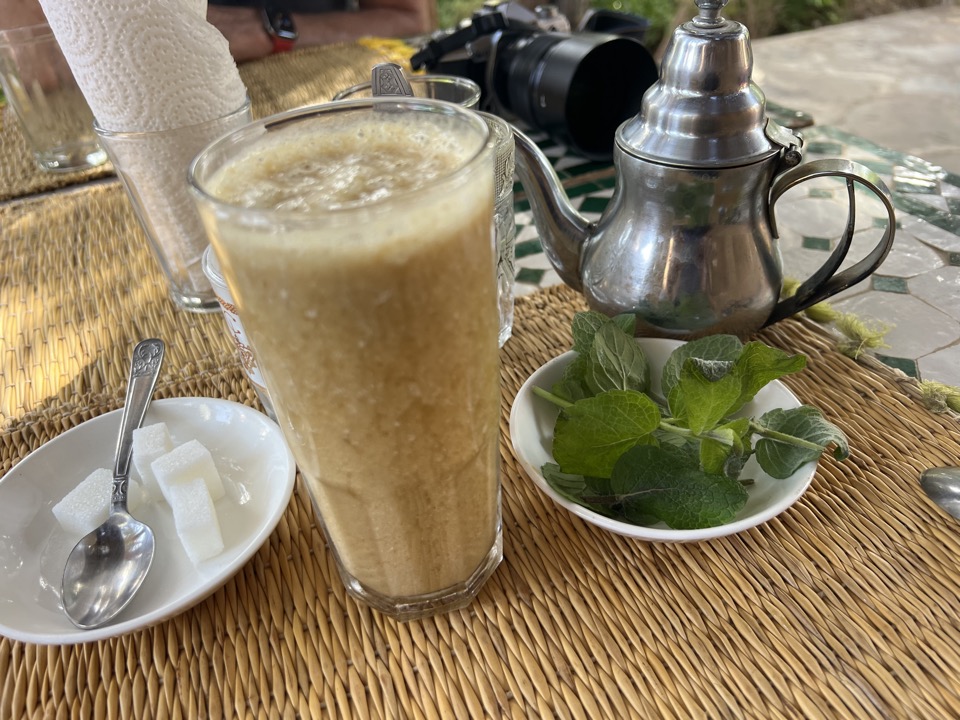
Near Zagora, we drove south along the Drâa Valley and back again to admire its various palm groves. Out of curiosity, we stopped to try some date juice; our verdict was that we prefer orange juice! The dates from the area around Agdz are highly regarded. We are not expert enough to judge, but they tasted good.
Tamnougalt ksar and the Kasbah of the Caïds
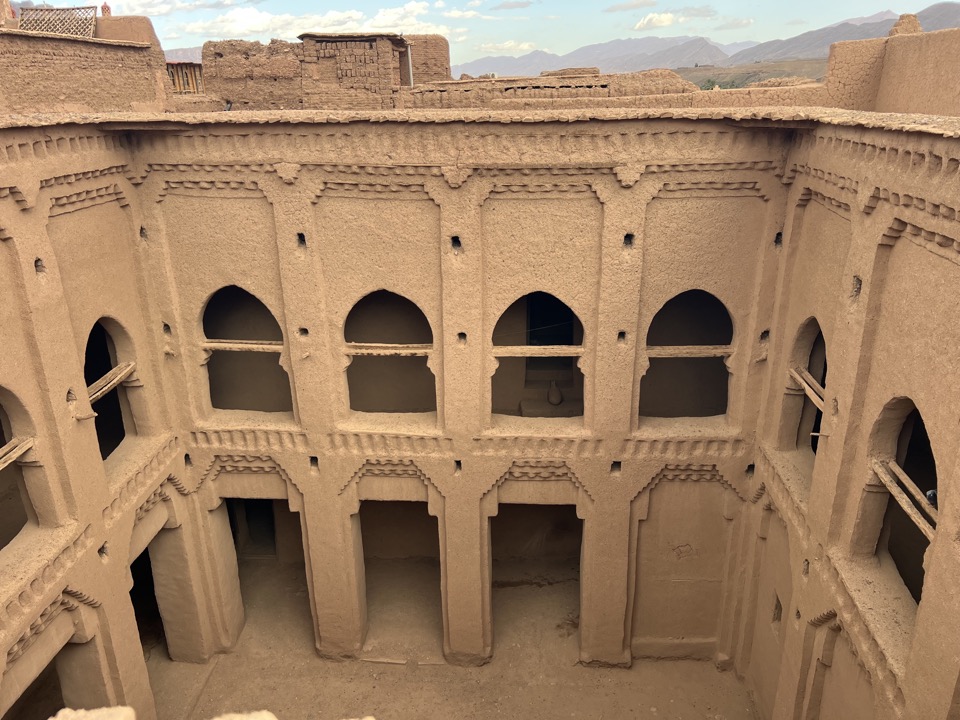
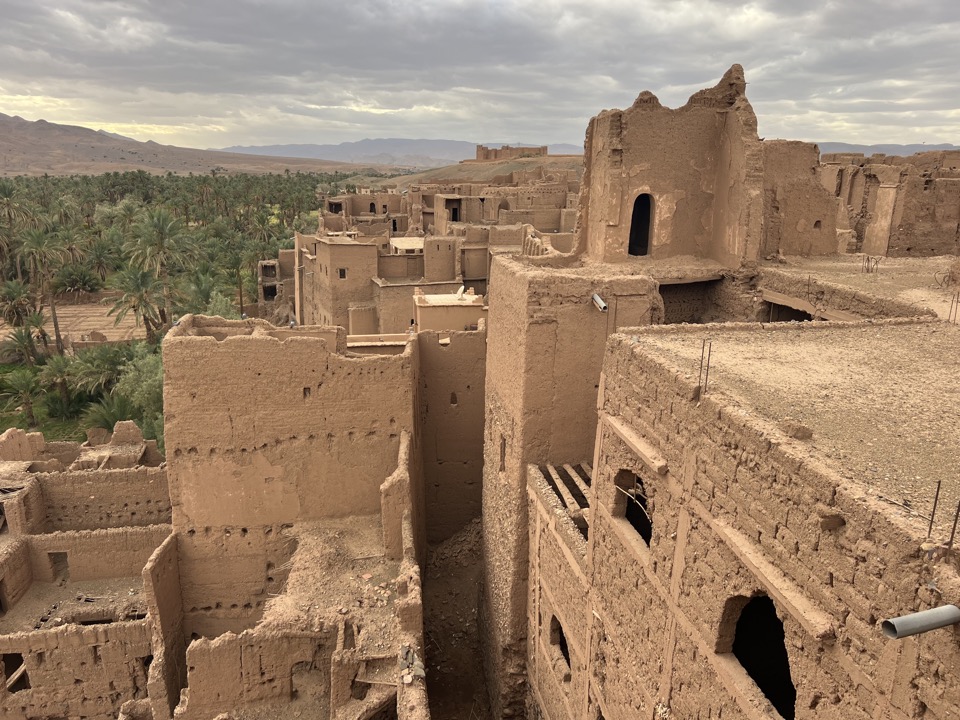
We then headed to Tamnougalt, an old rammed-earth ksar, most of which lies in ruins. We visited its kasbah, also largely ruined. You walk through a maze of rooms that appear abandoned, and we did not enjoy it very much. There is simply not a great deal to see. The site was used as a filming location for The Mummy, but that did not mean much to us.
Our night in Agdz
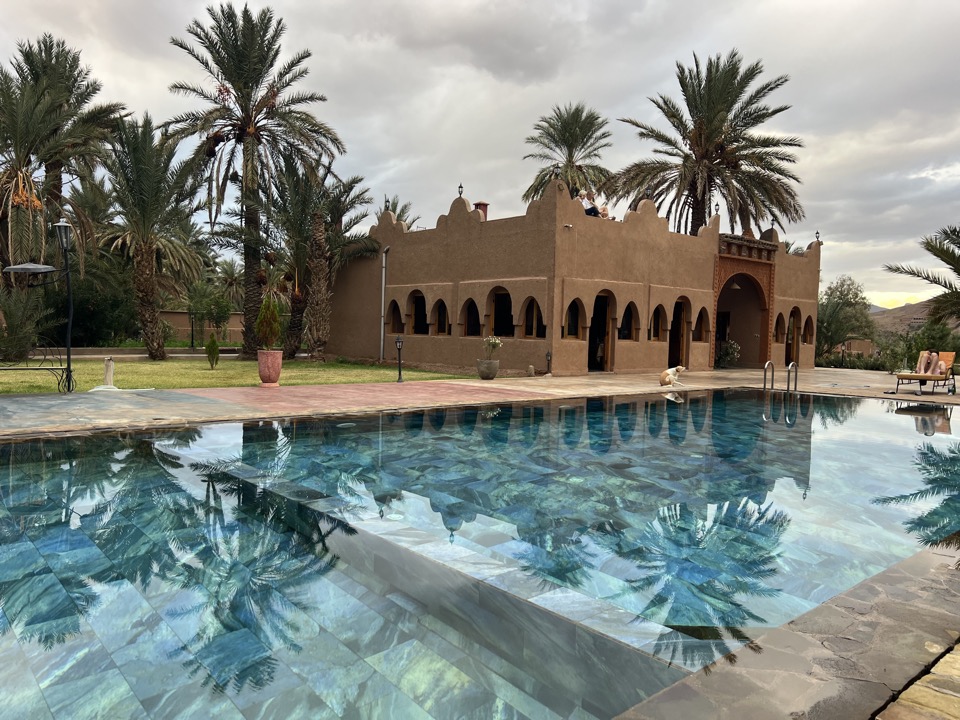
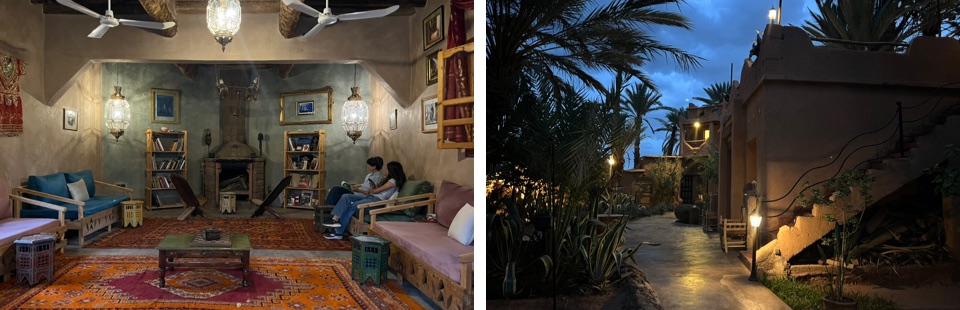
What a dream address! We stayed at Lodge Hara Oasis, a collection of bungalows tucked into an oasis in an elegant natural setting facing the Saghro. The owner has thought carefully about every detail and gave us a complete tour of the various lounges and pergolas. There are plenty of quiet places to sit, read and relax or, in my case, write my travel journal. There is also a large swimming pool, although it was too cold at that time of year. In short, this charming address is a haven of peace, with just a few peacocks crossing your path. Dinner, and especially the breakfast buffet, were very good. Please note that Lodge Hara Oasis only accepts children aged 13 and over.
From Agdz to Marrakech via Ouarzazate
Journey: 3 hours 30 minutes
1 night
The drive
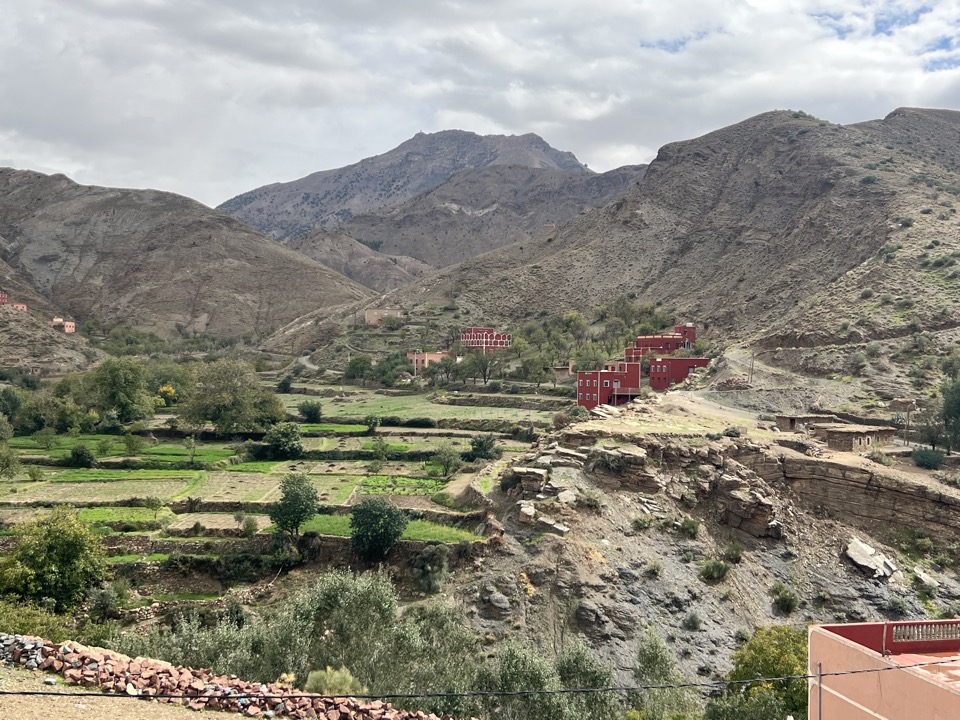
From Agdz, we continued along the Drâa Valley through the Anti-Atlas. The Drâa was extremely dry during our visit. We then reached Ouarzazate, where we considered visiting the Atlas film studios. Mixed reviews and the fact that half the studios were closed put us off, so we continued on our way, retracing the route from our first day without the detour through Telouet. We crossed the Tizi n’Tichka pass again and made several photo stops to admire the ruins of old rammed-earth ksour.
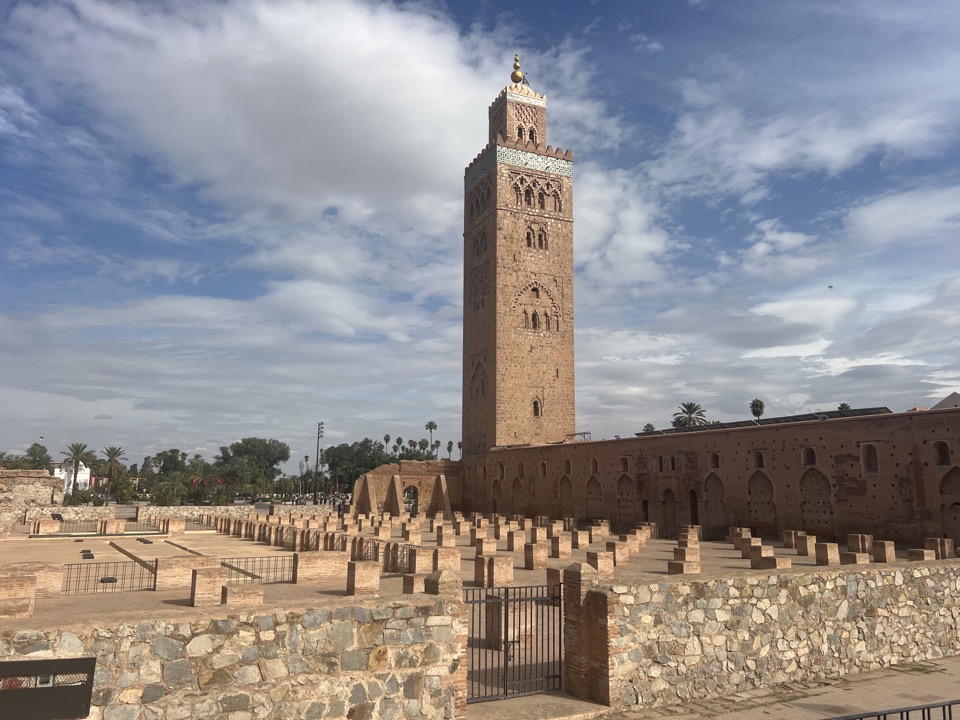
We arrived in Marrakech at 2 pm. Our flight was not until late the following afternoon, so we still had time to enjoy the city. You can read my article about our express visit to Marrakech. The highlights of our programme? Dar El Bacha Palace (Museum of Confluences), Ben Youssef Madrasa and the souks.
Our night in Marrakech
We stayed in the magnificent, enormous family suite at Ryad El Borj, the best accommodation of our entire road trip!
Tips for planning a family road trip in southern Morocco
Driving in southern Morocco
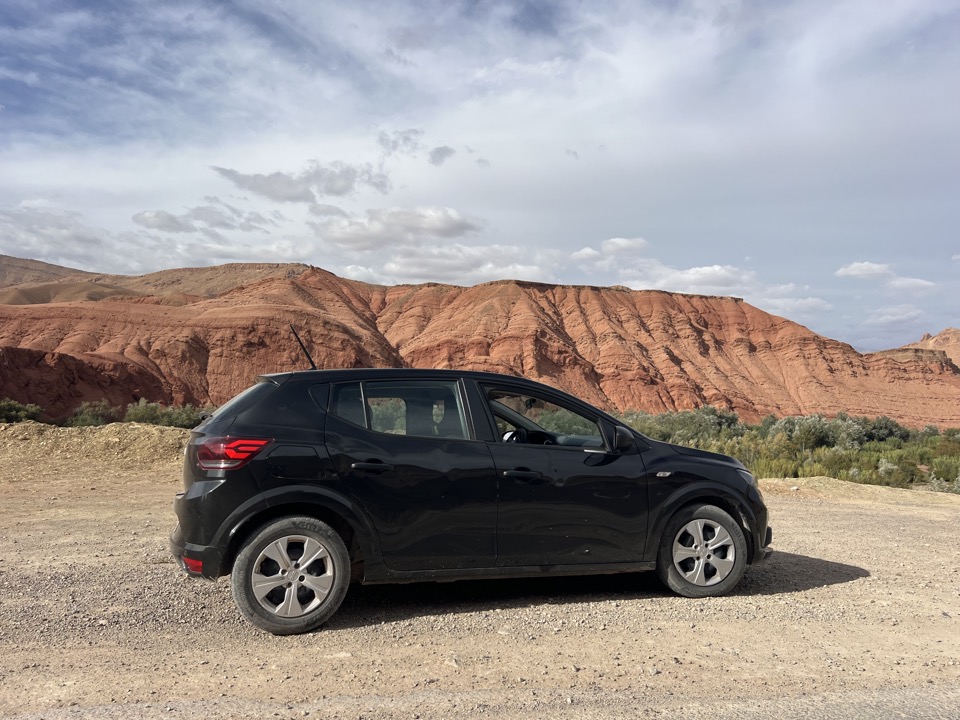
- Our hire car cost €19 per day. See the different offers on DiscoverCars. Like most tourists, we were given a Dacia. You do not need an international driving permit if you have a UK licence.
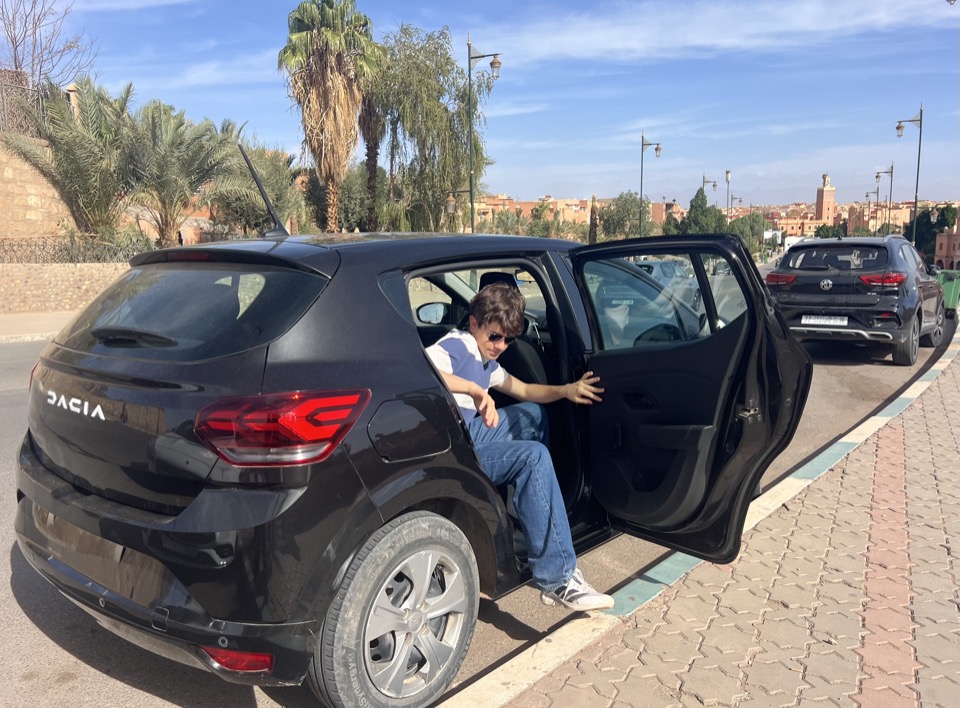
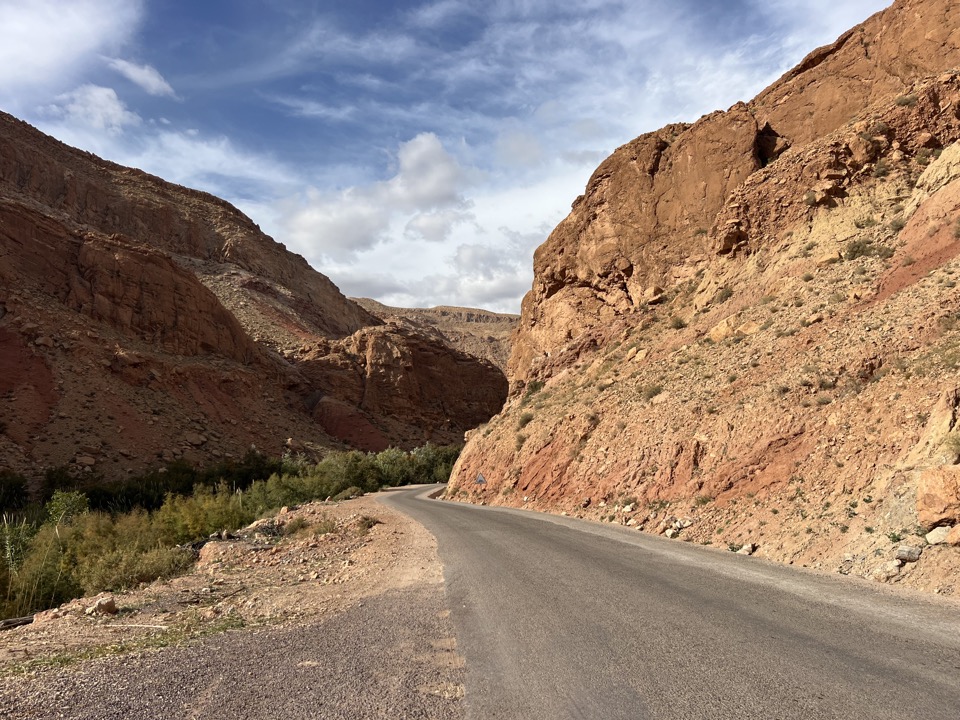
- The roads were in very good condition: driving in southern Morocco was easy and comfortable. They are similar to French national or departmental roads, with very little traffic. Marrakech alone was slightly stressful in my opinion, although Papa Voyage thought it was fine. You can also set off directly from the airport to avoid driving through the city. Over the course of a week, we encountered only a few short sections of roadworks with slightly sandy surfaces. Nothing was dangerous. Most striking was the remarkable number of brand-new or almost-new roads in very remote areas.
- Phone and GPS: fortunately, Papa Voyage’s mobile plan worked in Morocco, so we could use Google Maps on his phone for all our car journeys. We also used Organic Maps for hikes, as it works without mobile data.
- The gendarmes: the gendarmes stopped us three times! Yes, three times in one week! There are many roadside checks. We received a fine outside Marrakech even though we were travelling at 59 km/h in a 60 km/h zone; we suspect their detector was strangely “sensitive”. They stopped many other tourists at the same time. For the remainder of the trip, whenever we saw gendarmes in the distance, we drove about 5 km/h below the limit to be on the safe side. Nevertheless, we were stopped again, supposedly because we should have come to a complete halt in front of them rather than merely slowing down. I had my doubts and the gendarme appeared to share them, because I managed to persuade him not to issue the fine. The third time was simply a friendly check, with no fine involved.
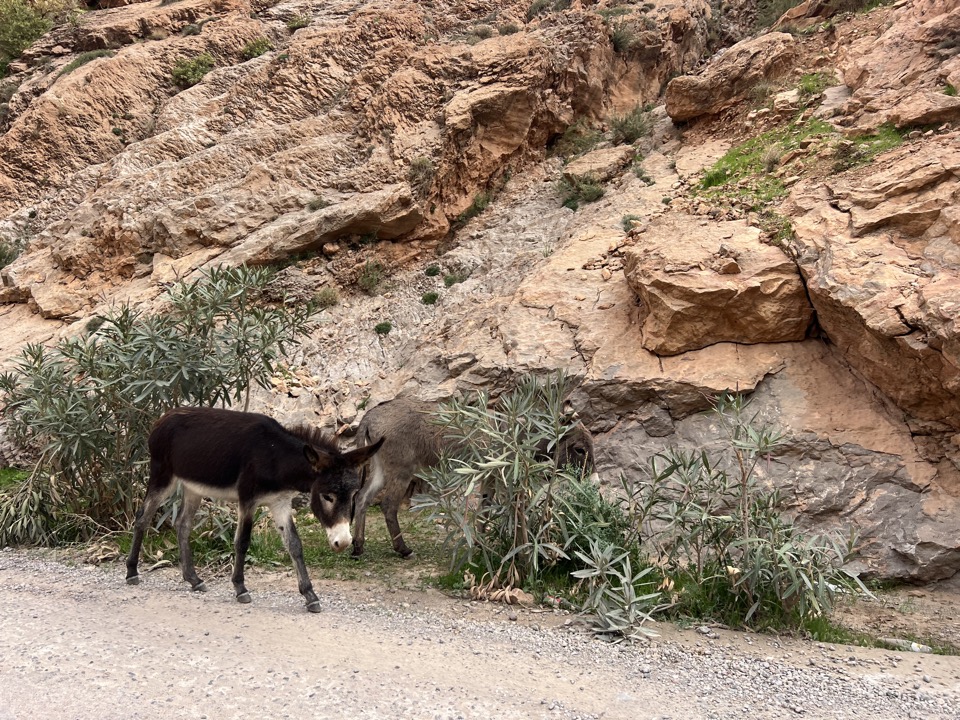
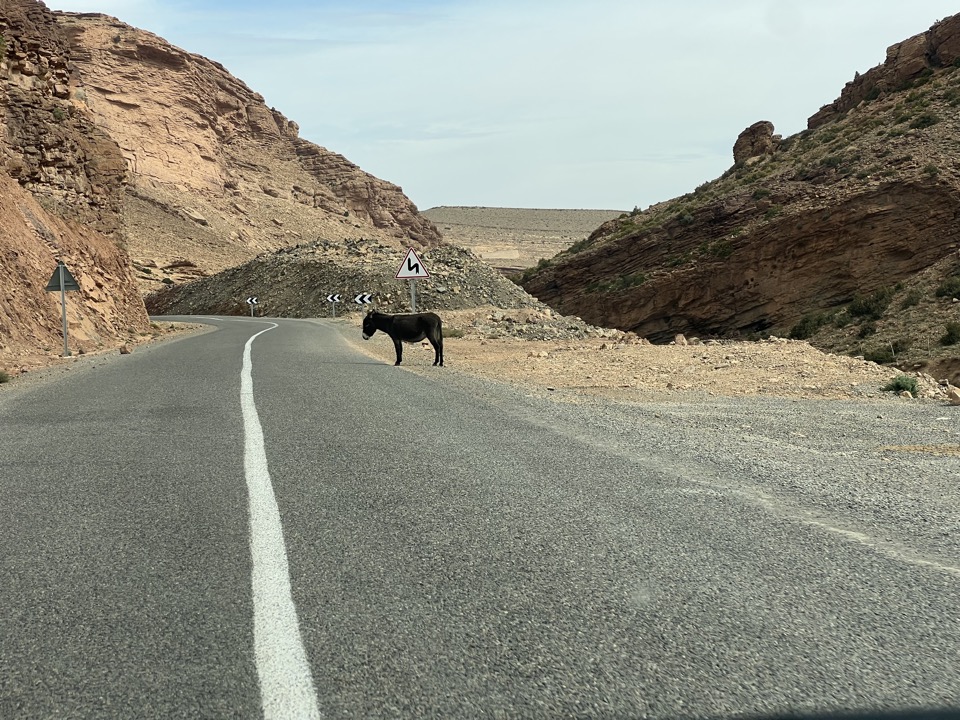
- You also occasionally encounter donkeys. We prefer them 🙂
What is the best time of year to visit Morocco?
- Late October to early November was an excellent time to visit and we recommend it. Temperatures were still around 20 degrees and even reached 26 in Marrakech. Winter and early spring are also good times to travel in this region. Avoid summer, when it is far too hot.
- The time difference: Morocco is one hour behind France in winter and two hours behind in summer.
About the itinerary
- Bear in mind that this itinerary covers a considerable distance (1,500 km), so it involves long car journeys. Take this into account depending on the age of your children. Titpuce read six books during the road trip, alternating between watching the scenery and reading, while Ticoeur simply listened to music and looked out of the window.
- Also, when travelling as a family, changing accommodation every day can be tiring.
A family road trip in southern Morocco: what the children thought
Our children’s favourite experiences
- The Merzouga desert for both teenagers!
- The Monkey Fingers hike for Ticoeur, who loved the adventure, while Titpuce did not feel comfortable.
- The hike near the Todra Gorges for Titpuce, who was completely in her element on this more conventional walk.
- The walk around Bab n’Ali in the Saghro for its “American” scenery.
- The delicious orange juice.
In short, like us, our children particularly enjoy hiking and magnificent natural scenery.
***
In conclusion, we admired a wonderful variety of landscapes on this family road trip through southern Morocco. And what a pleasure it was to see the desert and its dunes again! The villages, valleys and gorges offer a genuine change of scene. Our accommodation was a series of lovely discoveries and prices were low. I only wish there had been more opportunities for hikes or visits at each stop. You know how active and sporty we are! Let’s just say that this was a more contemplative road trip than usual.
***
What about you? Would you like to take a family road trip through southern Morocco?
Also worth reading
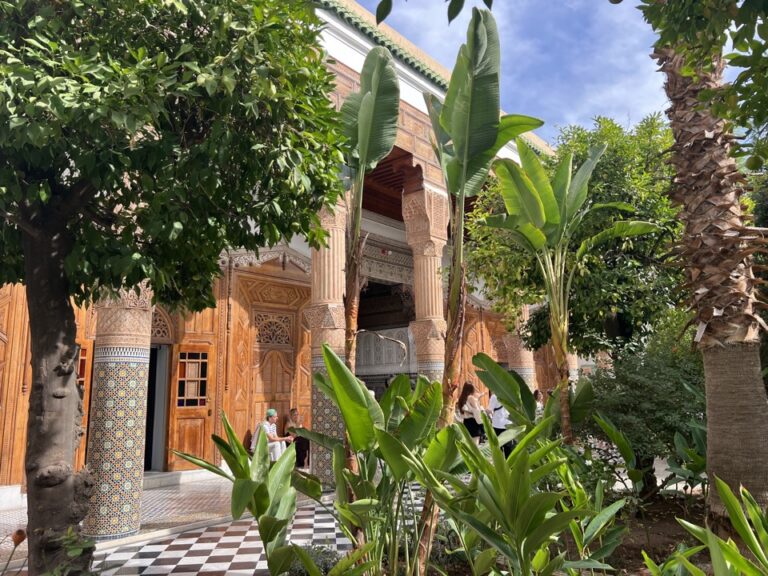 Marrakech in 1 or 2 days: what to see and what to skipOur express Marrakech itinerary: the essential sights, what to skip and practical advice for making the most of one or two days.
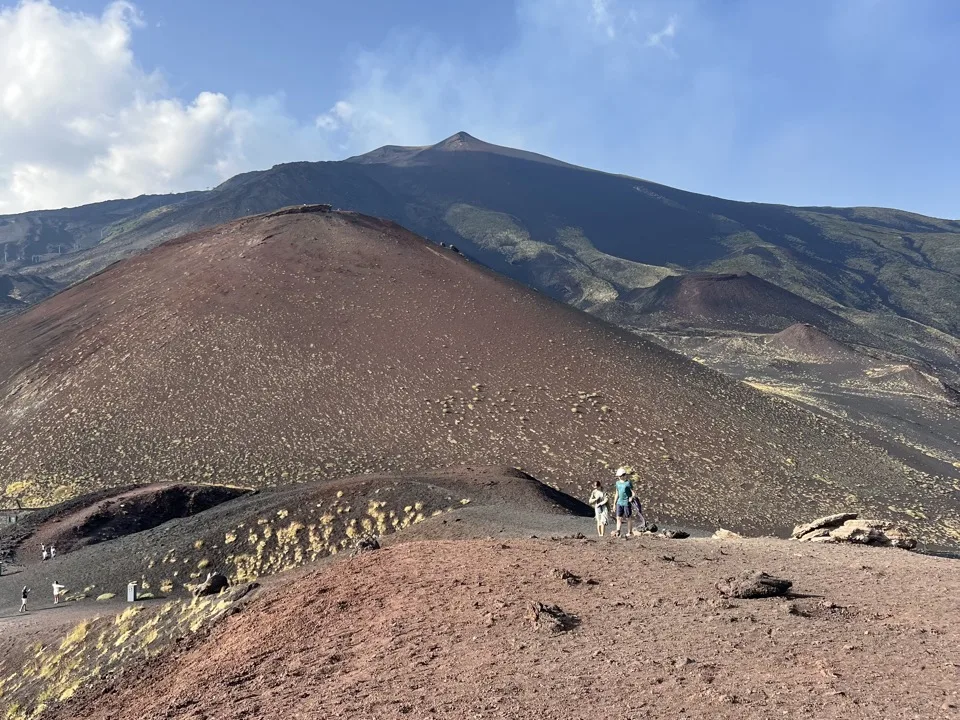 Sicily as a family: 10 days in 3 must-see stopoversSicily with children: Mount Etna, the temples of Agrigento, the Baroque towns and our swims!
 10 days in Madeira: our practical guideMadeira with kids: our trip during the Easter holidays
 7 family hikes in MallorcaOur 7 hikes as a family in Mallorca during the autumn term-break
 12 family hikes in MadeiraAll the details for our numerous hikes with the kids in Madeira
 A week in MenorcaAll you need to know to spend your family holidays in Minorca !

You read this blog — which means you value quality content grounded in real experiences. With Google Preferred Sources, tell Google which publishers you trust. Add us and other sources you love, and Google will surface them more in your future search results.