
Marrakech is a wonderfully different city that I have visited three times. I could not wait to introduce the rest of the family to it. I had therefore prepared a short itinerary for our stay in late October and early November, asking myself: which sights are worth visiting, and which can you skip when you have only 1 or 2 days? Marrakech has changed greatly since my last visit: there are more tourists, so more places are crowded; new venues have opened; other places are closed or partly closed for building work; and some visits have become expensive. I would therefore like to help you make the right choices and see the best of Marrakech. If, like us, you have only one or two days in Marrakech, here is my opinion of the sights that are genuinely worthwhile and those that do not seem essential.
Marrakech in 2026: the sights that are genuinely worthwhile
The entire medina of Marrakech is a UNESCO World Heritage Site because of its historical, cultural and architectural richness. It offers a striking change of scenery and strong contrasts, from exceptionally intricate buildings to simple lanes that seem to belong to another age. Here are the places not to miss — according to me and my own tastes — in Marrakech’s old town:
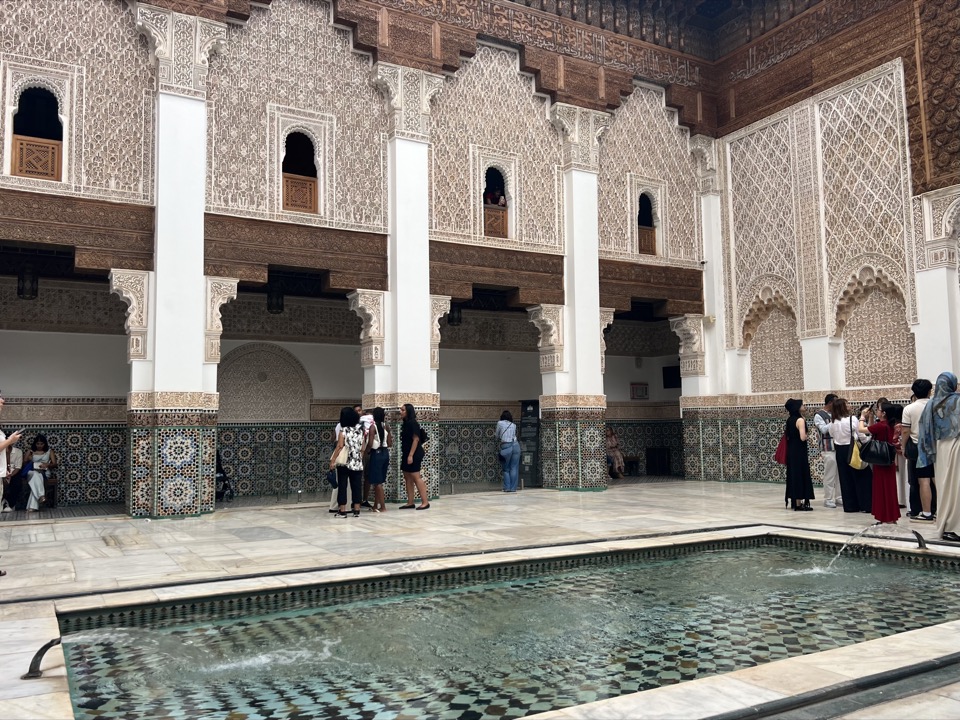
Ben Youssef Madrasa
Ben Youssef Madrasa is worth seeing for its magnificent architecture. This former Quranic school was founded in the 16th century. Since my previous visit, the madrasa has been beautifully restored. We enjoyed admiring its Hispano-Moorish style and the delicate plasterwork, cedar wood and zellige mosaics. The large inner courtyard is the most beautiful part, although it is also interesting to see the students’ rooms around it. The madrasa is in the north of the medina. It was busy, but visitors moved around easily. We went towards the end of the day, shortly before closing, and spent 45 minutes there.
We bought our tickets at the ticket desk (50 DH for adults and 10 DH for children under 12). More information is available on the official Ben Youssef Madrasa website.
Dar El Bacha, Museum of Confluences
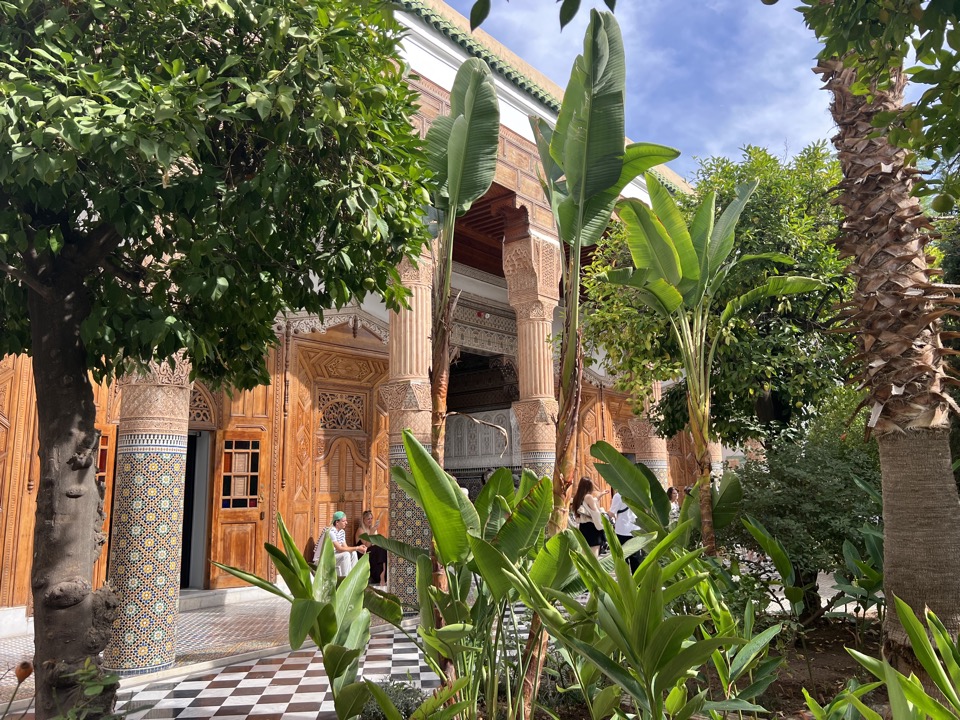
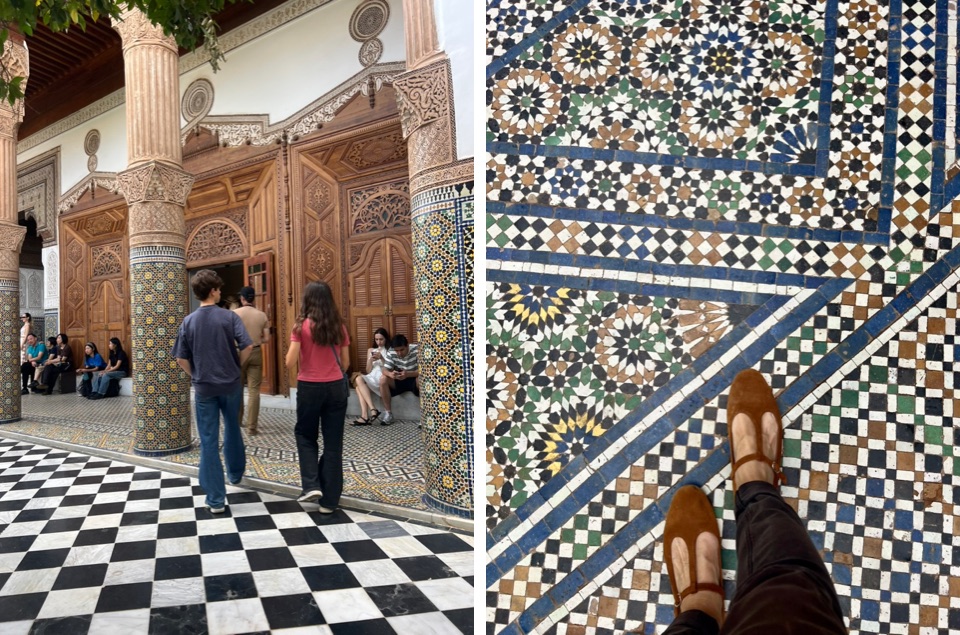
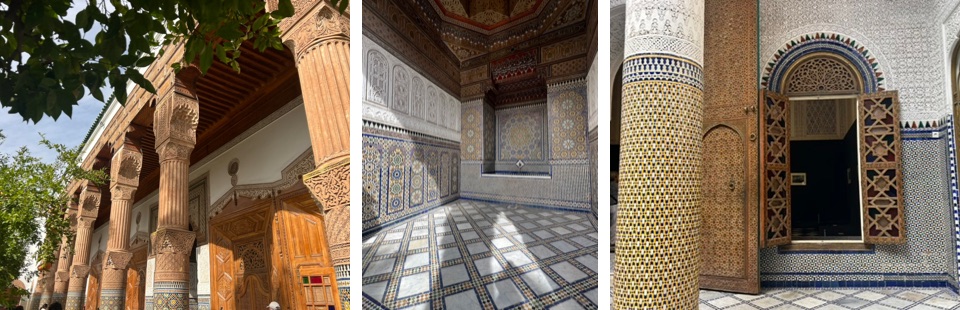
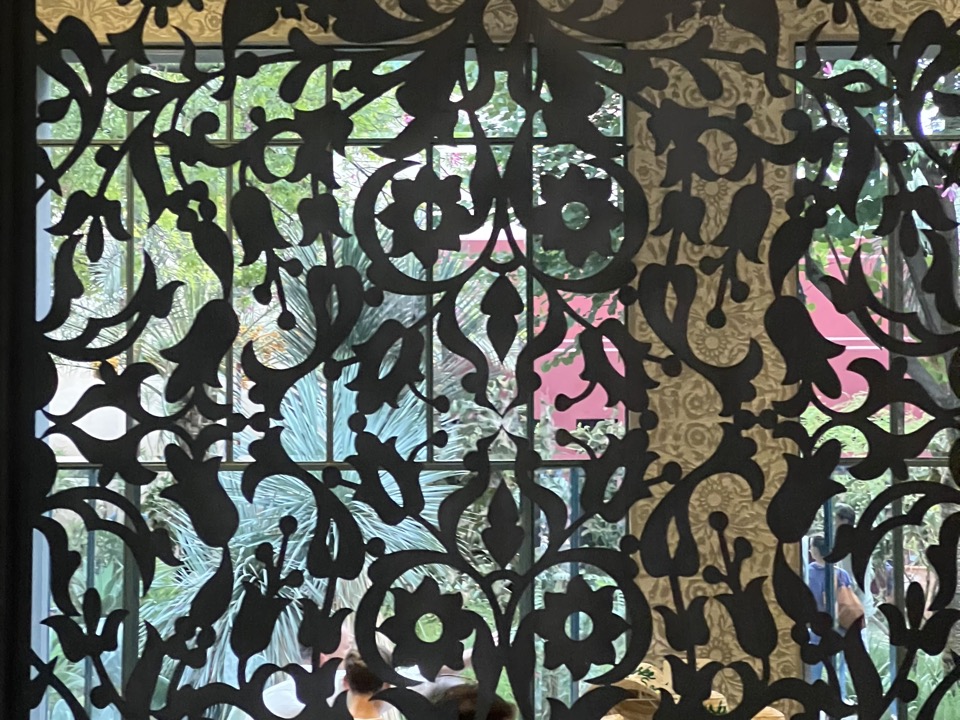
Dar El Bacha Palace was a wonderful discovery! I had not seen it before because it was not open to the public during my previous stay in Marrakech. This 18th-century palace was home to Thami El Glaoui, Pasha of Marrakech. Today, it houses the Museum of Confluences, with a small collection of decorative arts and objects from around the world. I recommend the palace not for its modest museum collection, but for its elegant architecture: the building is superb, with mosaics and rooms opening onto an attractive planted courtyard surrounded by columns.
The palace is currently hosting an Enki Bilal exhibition, which opened on 15 October 2026. It is small but interesting. I love Enki Bilal’s blue, futuristic drawings: they contrast with the palace’s traditional architecture, while their colours echo it beautifully.
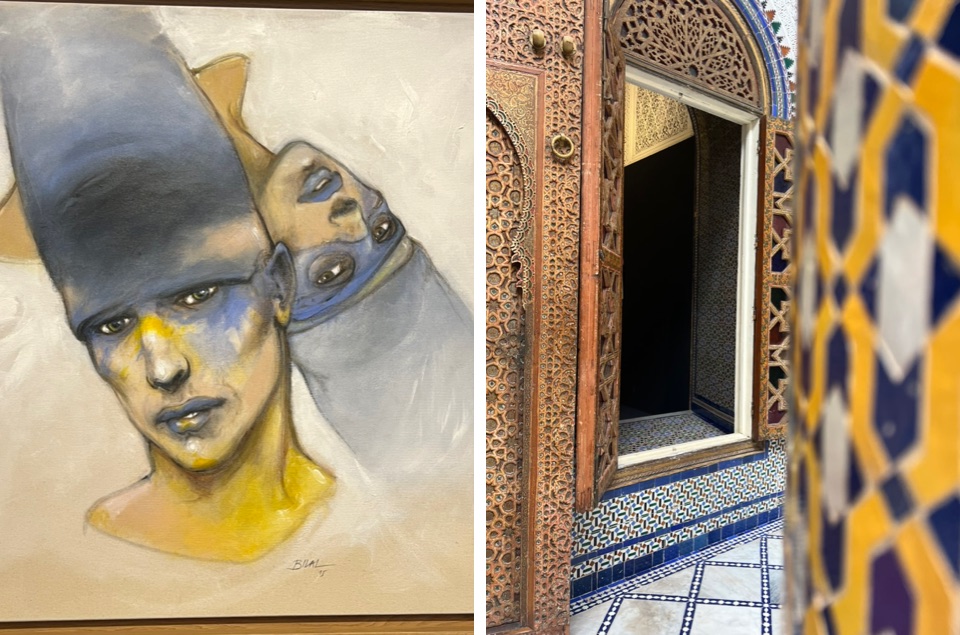
We visited Dar El Bacha Palace in the morning, almost as soon as it opened, and it was extremely busy. The problem is that the museum also houses Bacha Coffee, where everyone seems to want a coffee and an Instagram photograph. Given the crowds and the wait for a table, I cannot see the appeal at all. It spoils the experience! People waiting for the café remain in the courtyard, and the three-hour wait during our visit made the palace feel saturated. Café customers really ought to have a separate entrance from museum visitors. I would ultimately suggest arriving an hour before the palace closes, when fewer people may still be waiting for the café.
We bought our tickets at the ticket desk (60 DH per person). Closed on Mondays.
The souks and fondouks
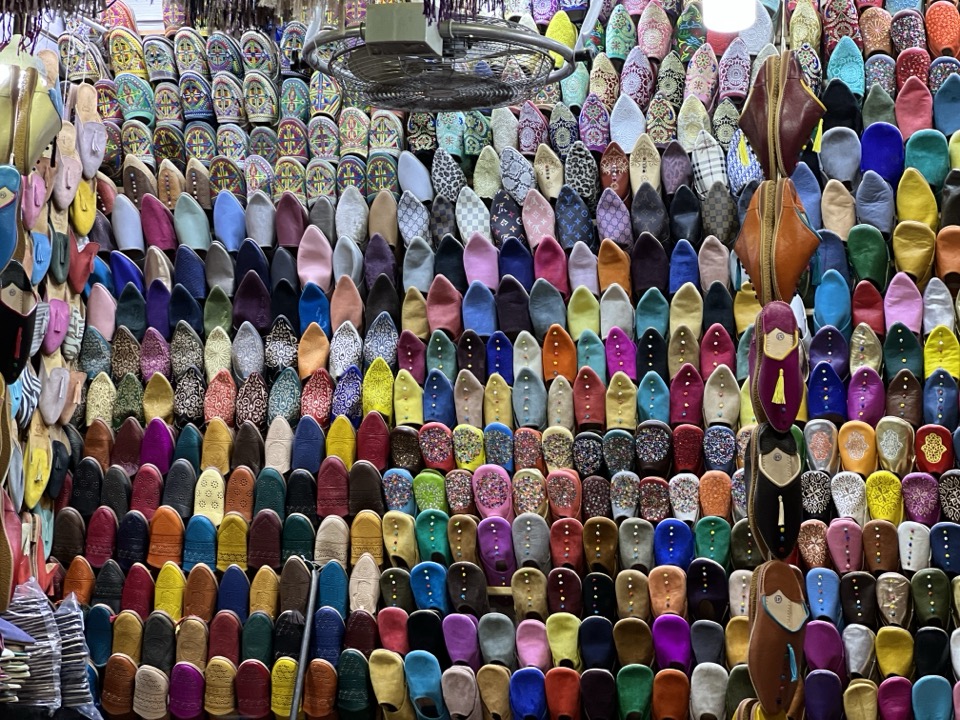
The souks of Marrakech’s medina are impressive in both size and complexity. They are organised by trade: leather, slippers, basketry, dyeing and so on. It is true that they contain plenty of goods and souvenirs aimed at tourists, yet this succession of little markets and lanes still has a distinctive atmosphere. Some lanes are covered by elegant wooden roofs. Compared with my first visits to Marrakech, I found the stallholders much less insistent than before. They did not pressure us and kept their distance. Perhaps that was because we were travelling as a family, or simply because there are now far more tourists. They also speak every language these days, especially English, whereas people always addressed us in French in the past. If, like me, you dislike tourist crowds, the best time to cross the souks is early in the morning.
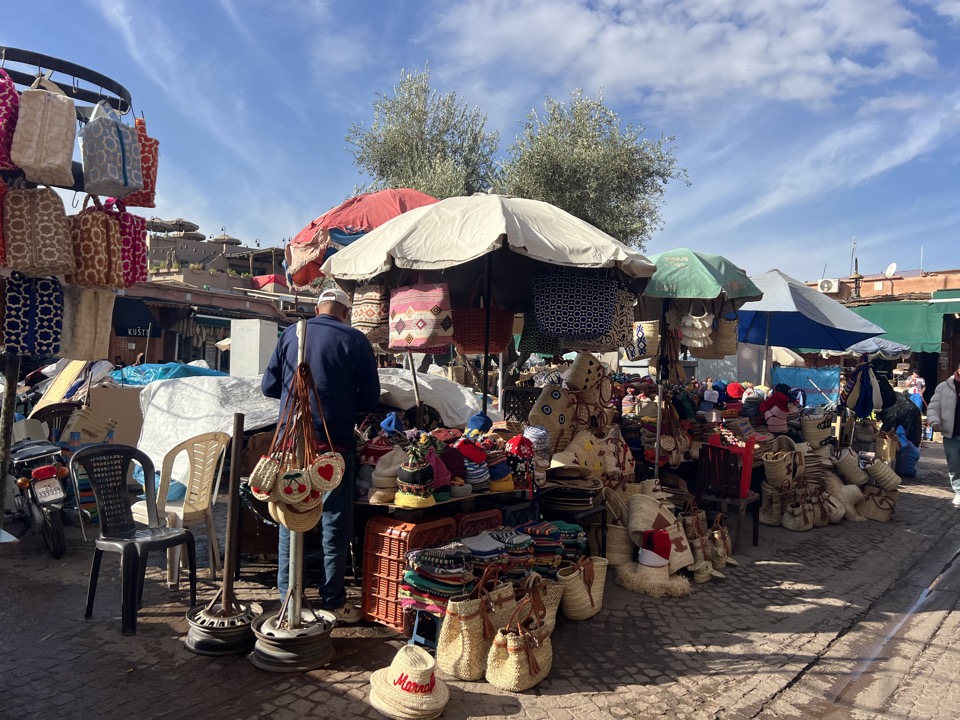
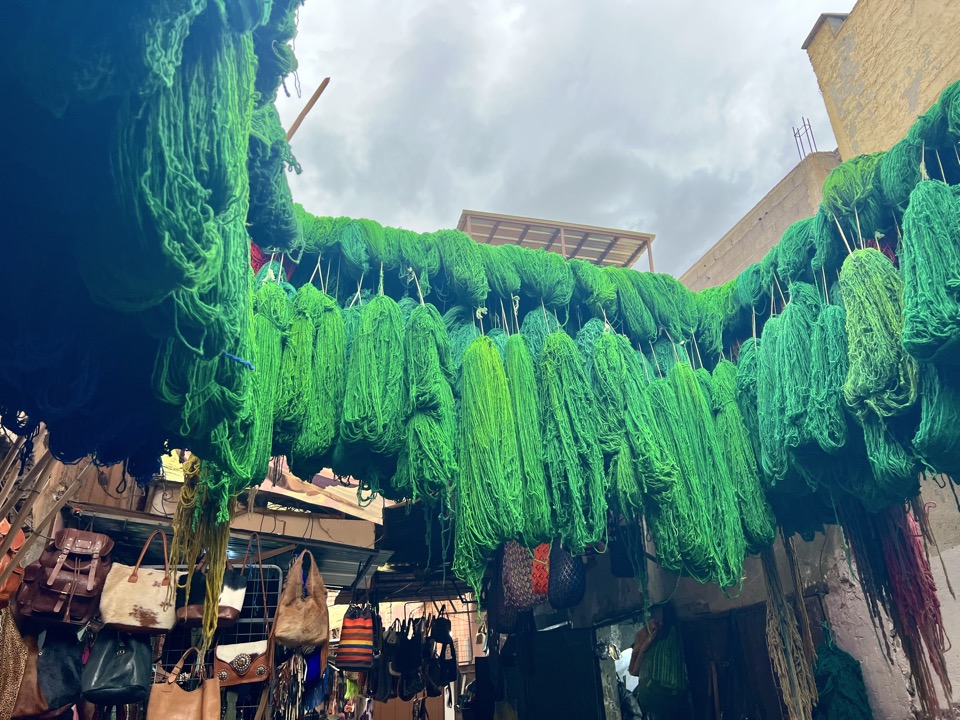
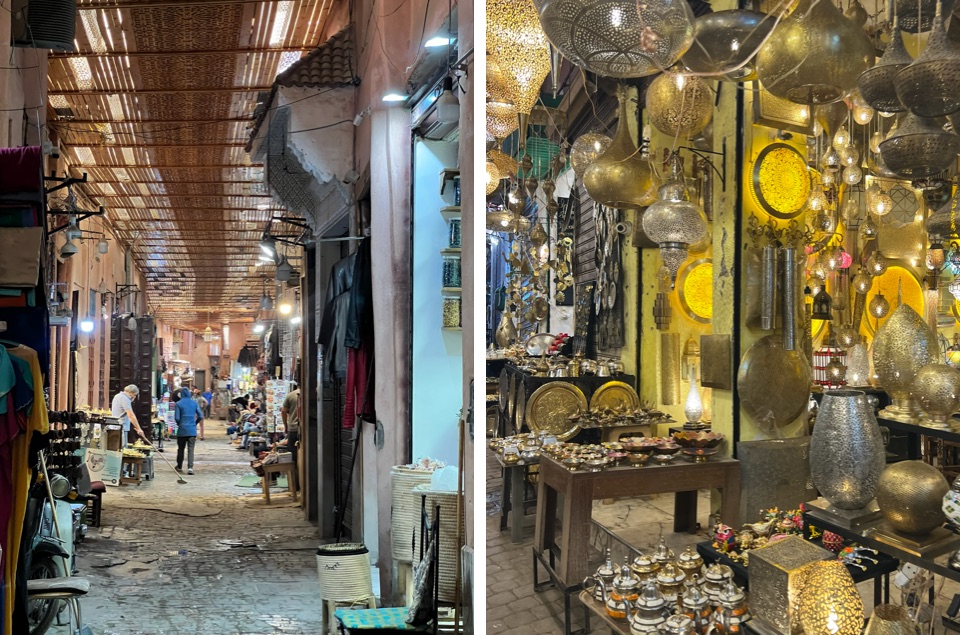
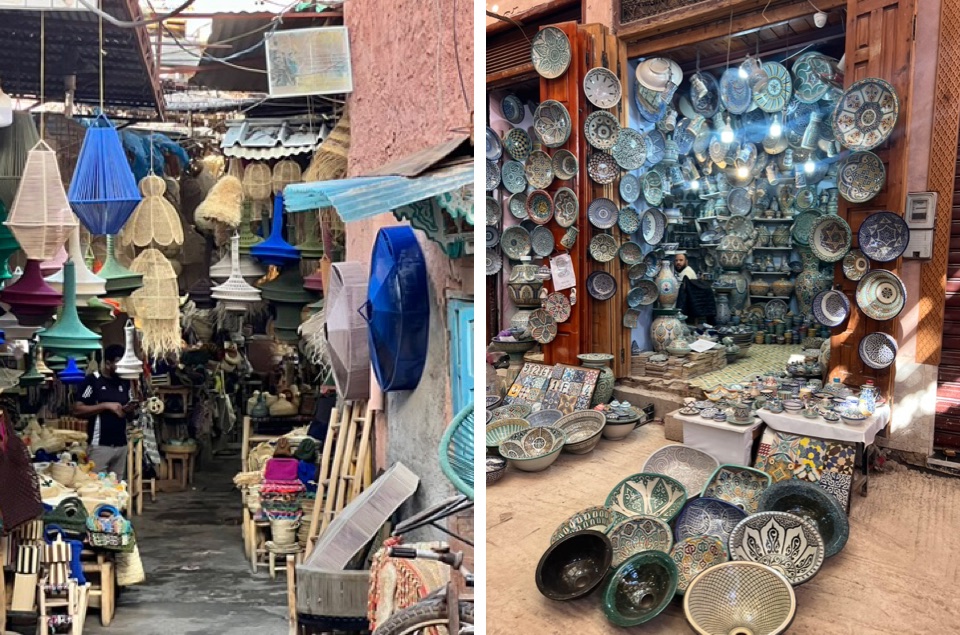
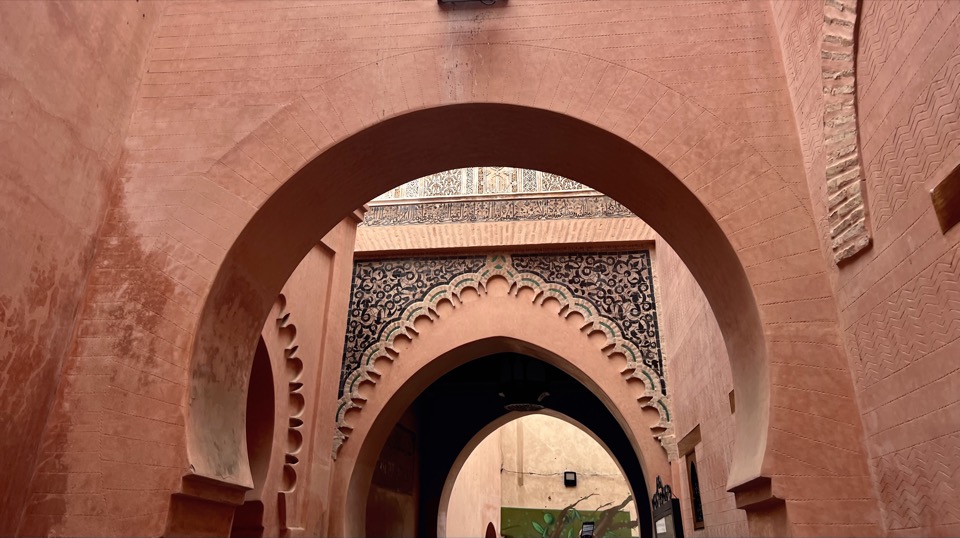
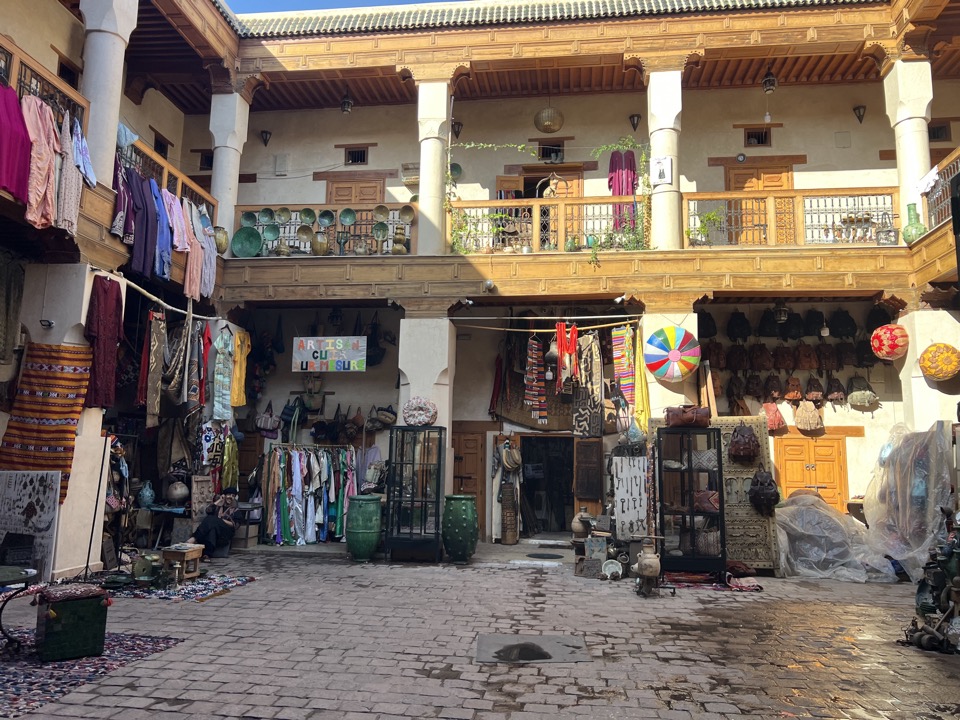
I also find some streets more pleasant than others. I recommend Rue Mouassine with its attractive shops. Do not miss the fondouks either — for example, Fondouk Essarsar 1. These former caravanserais consist of a large courtyard where goods were once traded and an upper floor that served as an inn. Unfortunately, motorised two-wheelers still use some of the medina’s narrow lanes, although we were told this may soon be banned. You also come across donkeys, which is rather charming!
Jemaa el-Fna square
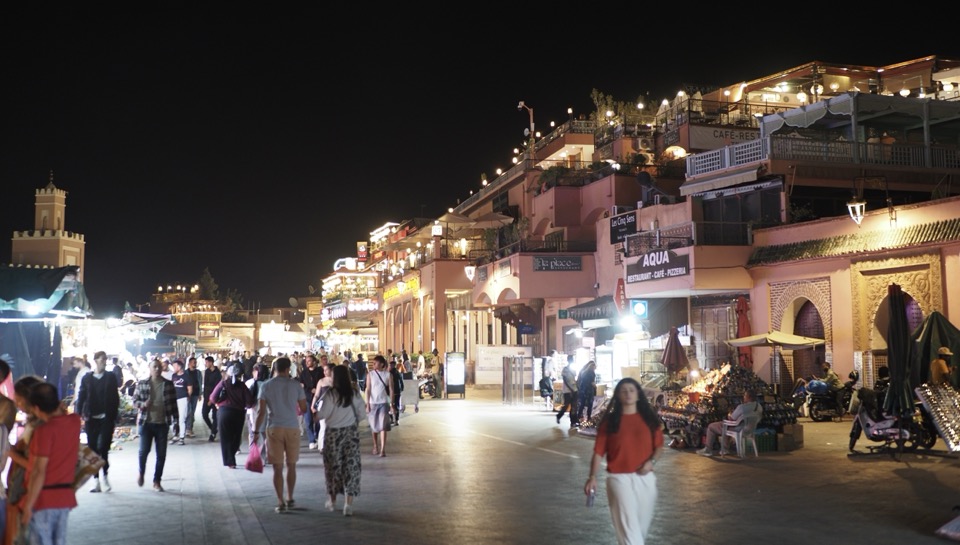
This immense square is the beating heart of the medina. It made a great impression on me the first time I came to Marrakech: as night fell, crowds appeared and smoke from the first grills filled the air. It was actually too busy for me, so I preferred watching the activity from a café terrace above the square. This time, I thought there were fewer people. Even in the evening, it was easy to walk around and observe the local food stalls, groups of musicians and dancers. I again kept as far away as possible from the snake charmers and other animals.
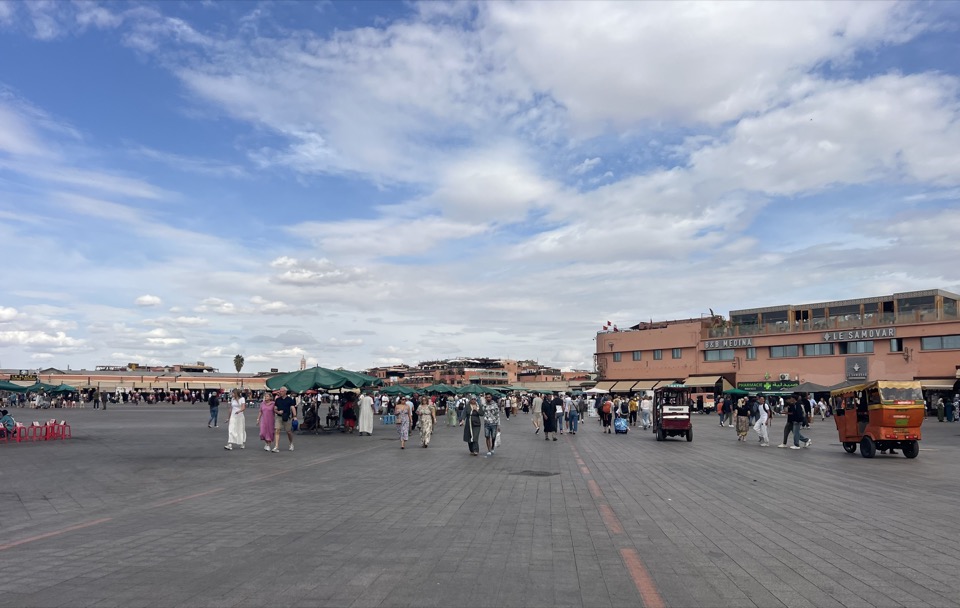
At one end of the square stands the elegant minaret of the Koutoubia, Marrakech’s emblematic mosque.
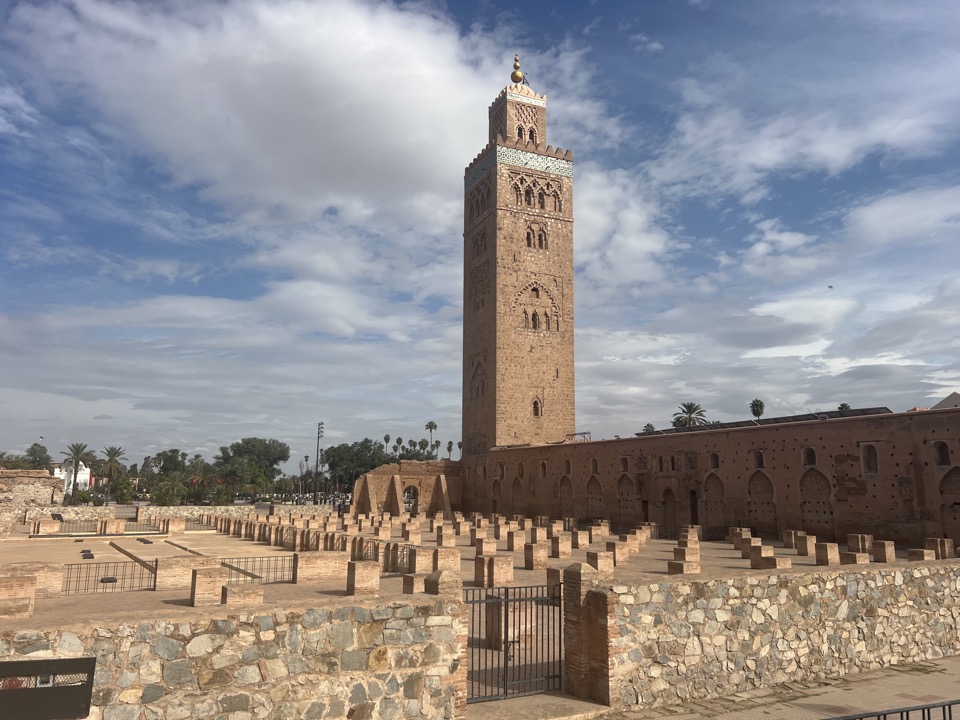
North of the medina
North of the souks, but still inside the medina, some streets have a more local atmosphere. Rue Bab Doukkala, for example, is where residents buy fruit, vegetables and meat. If you leave the medina through Bab Doukkala gate, outside the ramparts, and head towards the new town, there is one final place that belongs among my favourites and must-sees, albeit with a few reservations: Jardin Majorelle.
Jardin Majorelle: yes, but…
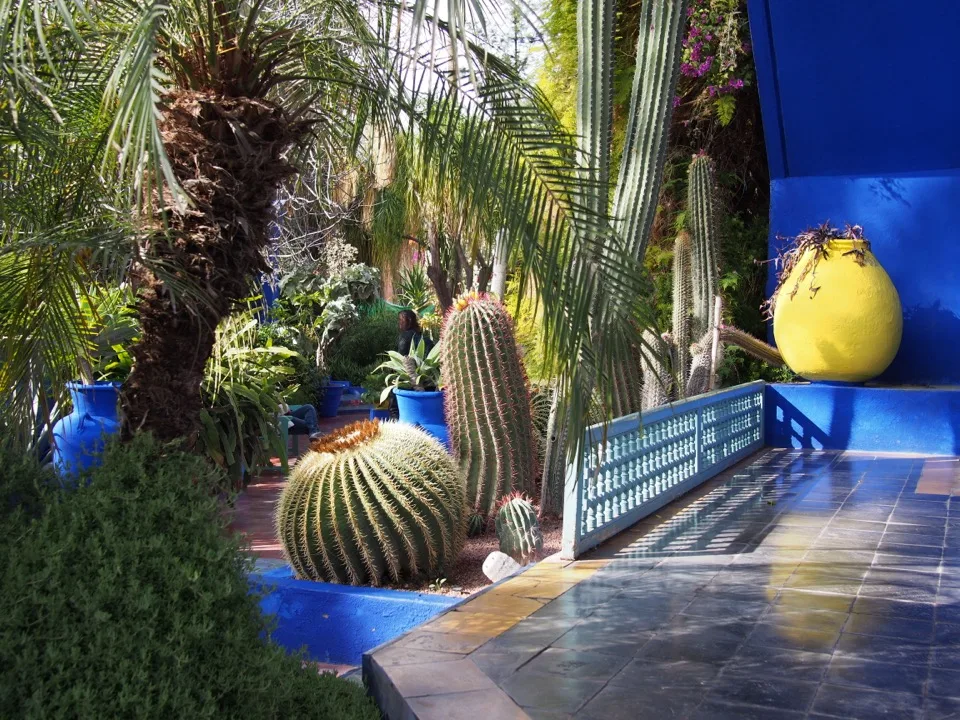
When I visited Jardin Majorelle about 20 years ago, I fell completely under its spell. Created by the painter Jacques Majorelle and later acquired by Yves Saint Laurent and Pierre Bergé, the property includes the famous intensely blue Villa Oasis. The villa interior is not part of the standard garden visit, but you walk through gardens surrounded by that vivid Majorelle blue. I wanted to return with the whole family, even though it has since become an expensive attraction that is often overcrowded. I still included it in our plans because it remains a Marrakech essential in my eyes. But we could not go! We discovered too late that admission now uses capacity-controlled time slots, booked online through the official Jardin Majorelle website. No tickets are sold on site. In late October and early November, every slot for the following four days was taken. It is therefore important to plan ahead. I hope, at least, that the quotas reduce the crowds.
Staying in a Marrakech riad: an experience not to miss
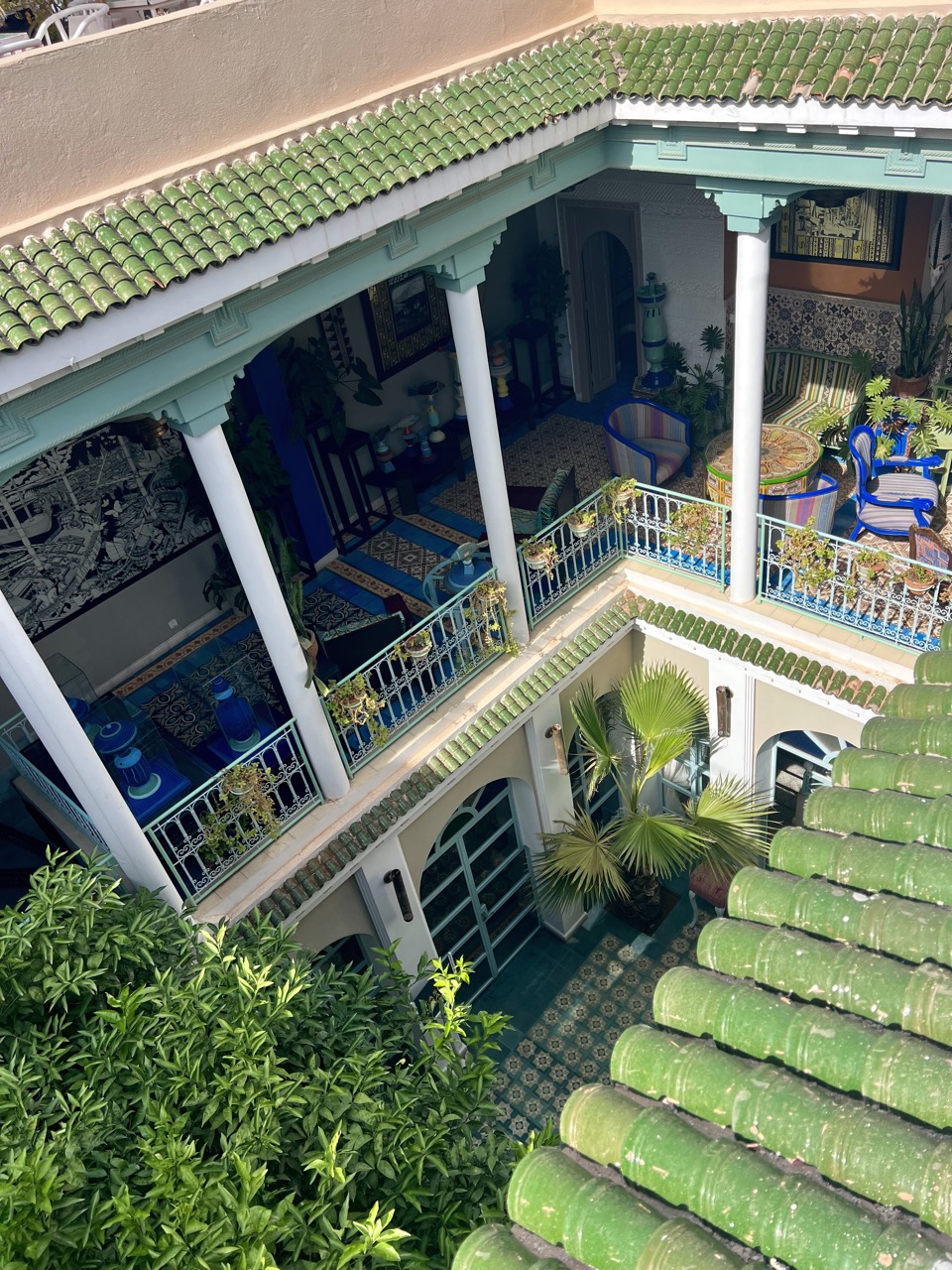
For me, staying in a riad in Marrakech’s medina is an experience in itself: a genuine way to immerse yourself in the local culture and enjoy remarkable architecture. A night in a riad is rather like spending the night in a living museum.
We spent two nights in Marrakech and tried two different riads because neither had availability for both dates. Both are in great demand, so once again you need to plan ahead to secure a room at one of the medina’s finest addresses.
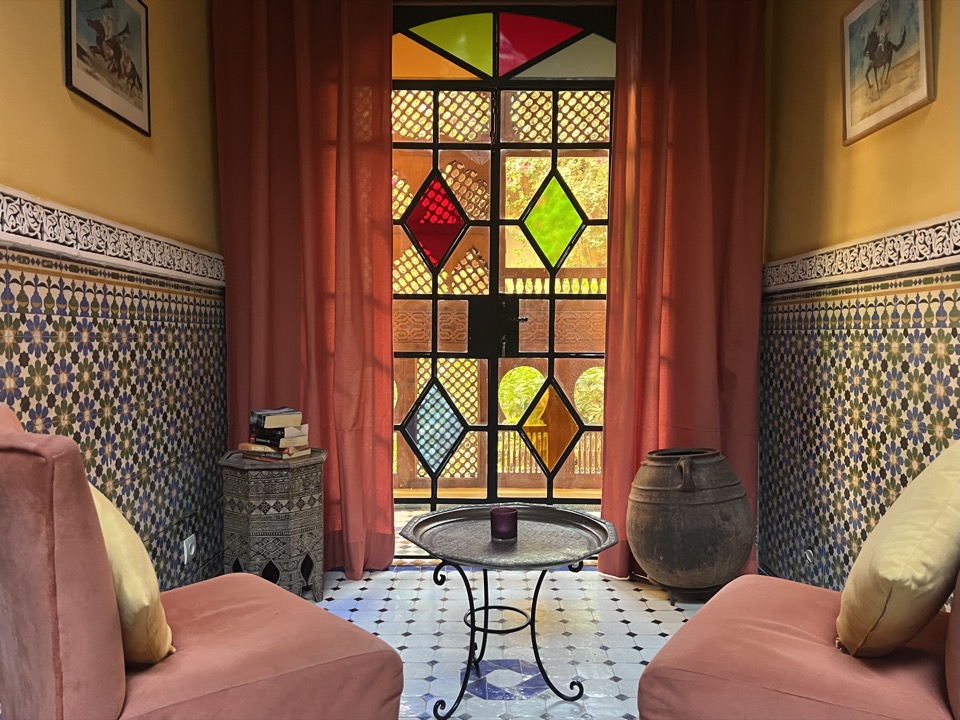
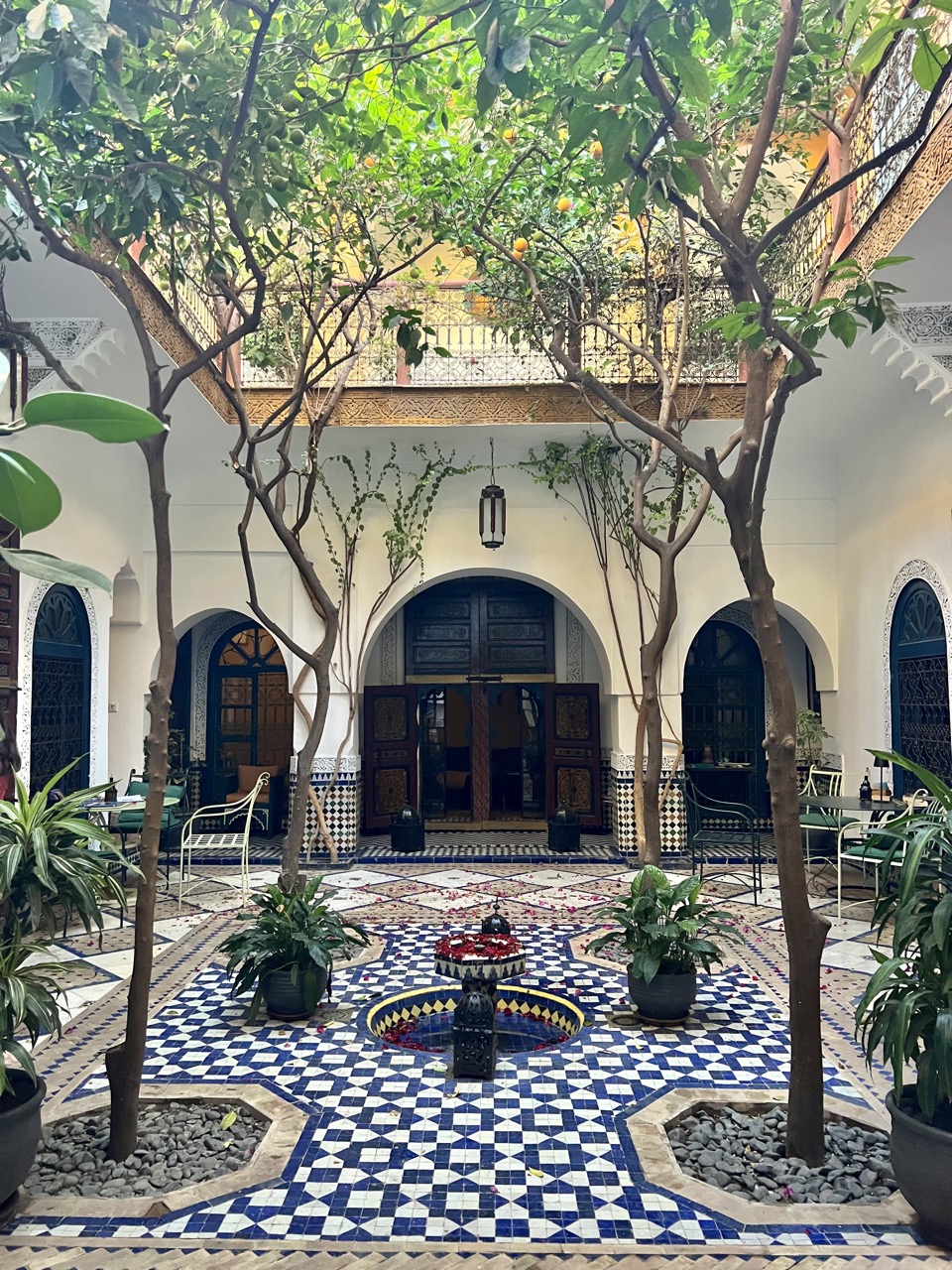
I will begin with our absolute favourite: Ryad El Borj, the best accommodation of our holiday in Morocco and the most impressive family suite we have ever had. It has everything: an authentic riad and a warm, enthusiastic host who loves sharing his passion for Marrakech and his favourite addresses. The family suite is enormous, with two bedrooms and two bathrooms, several sitting areas and an impressive central space. It offers excellent value, full of charm and history. Four orange trees grow in the inner courtyard, making it feel cool and peaceful. Our host explained that a traditional riad has four trees and that, sadly, some owners have felled all theirs to install a swimming pool. We wholeheartedly recommend this address, especially its spectacular family suite. Of the two places, this is the one we would return to!
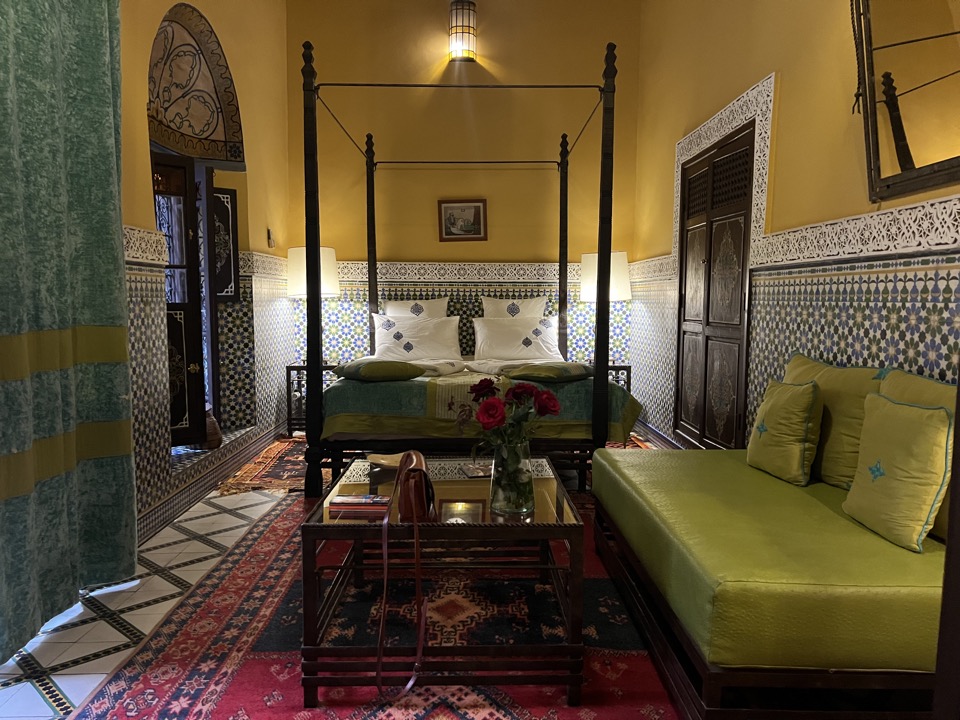
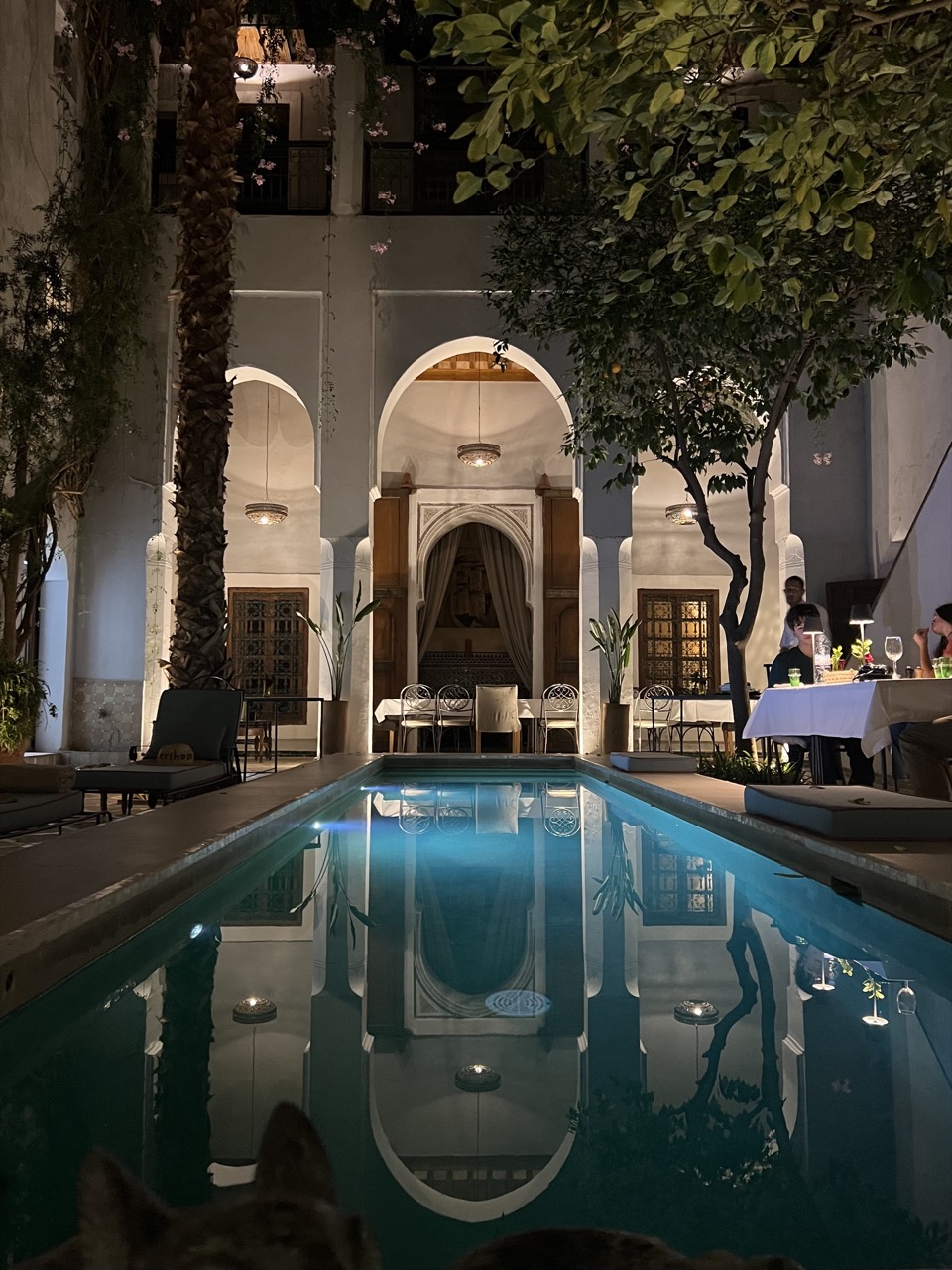
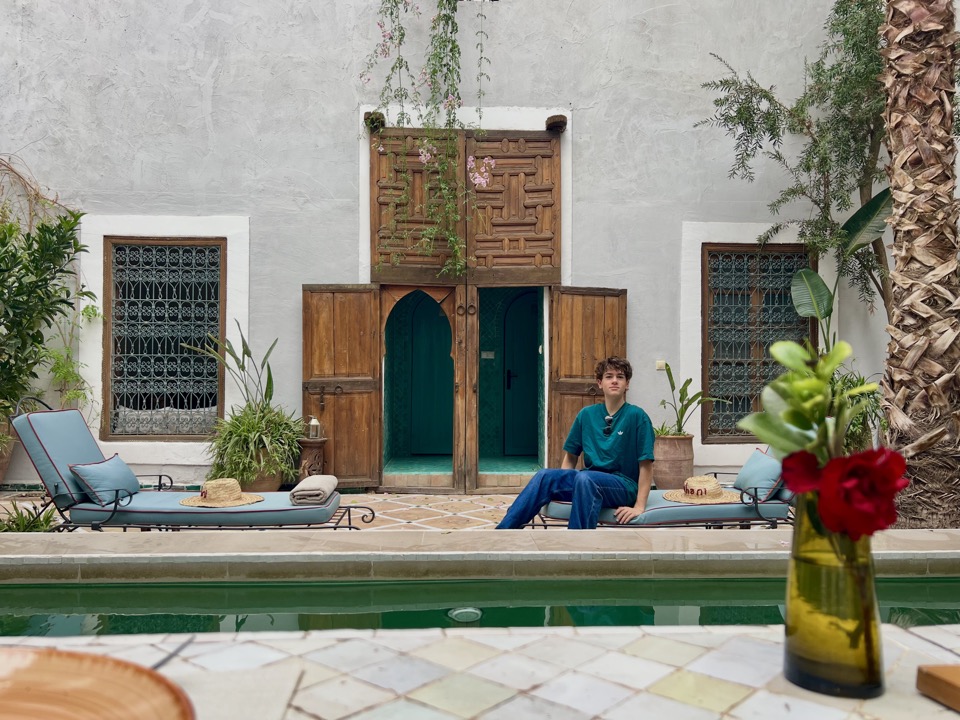
The second place we stayed, Riad Le Rihani, was very beautiful and stylish. It is also in the heart of the medina, not far from the first riad. The courtyard is incredibly charming, with a palm tree and trailing jasmine still providing greenery, although not all the original trees remain — probably to make room for the pool. Our dinner there was the best meal of our entire stay in Morocco by far: the chicken and quince tagine was divine. The family suite was very comfortable, but consisted of two narrow bedrooms with magnificent old painted wooden ceilings. Compared with the other address, the rooms are less spacious and the price is higher, although the property — particularly its courtyard — is very romantic. Which one you prefer will depend on your tastes and budget.
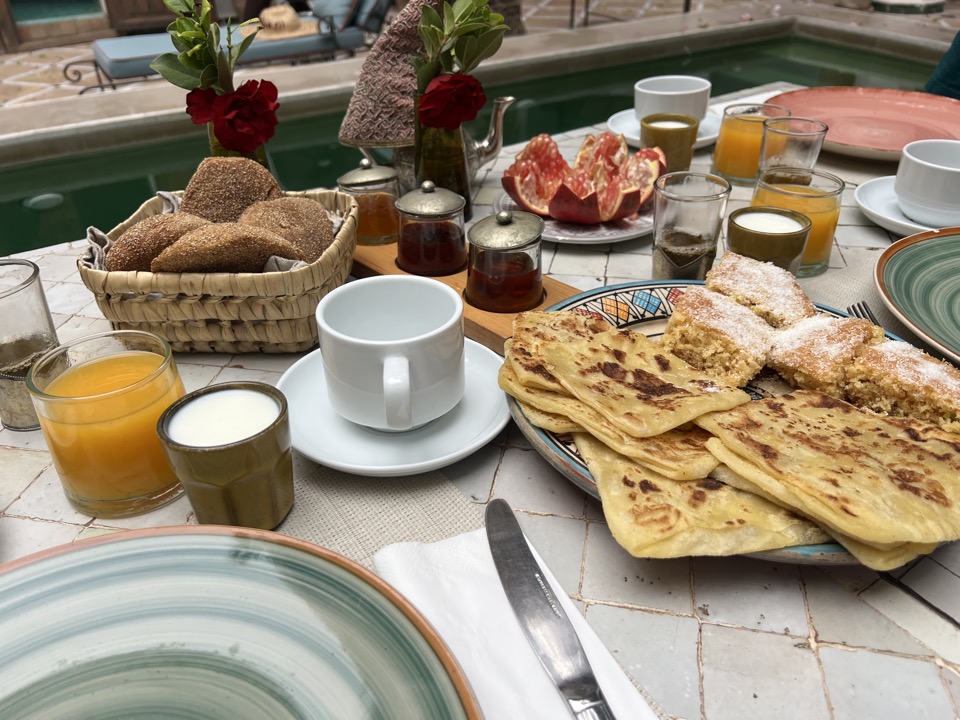
You can also visit riads that welcome non-residents for a drink or a meal.
Marrakech in 2026: closures and building work to check
Several Marrakech attractions were partly or completely affected by building work following the 2023 earthquake, including two important sites: Bahia Palace and El Badi Palace.
Bahia Palace
Bahia Palace was my favourite sight in Marrakech before I discovered Dar El Bacha Palace. I still recommend it as a fine example of 19th-century Moorish architecture. Much of the palace, including the courtyard, remains accessible, although some sections have scaffolding and building work. The price is not reduced (100 DH for an adult and 50 DH for children aged 7–13). It is crowded in high season, so aim for opening time or the hour before closing. Allow no more than one hour. Near Bahia Palace, pass through the large Place des Ferblantiers in the heart of the historic Jewish quarter, the Mellah.
El Badi Palace
It is less essential than Bahia Palace, but has its own charm. A great deal of work was under way, so we did not visit on this occasion. When I saw it many years ago, I loved the ruins, where the light is particularly beautiful in the late afternoon. There is another reason why I do not necessarily recommend it: if, like us, you are taking a road trip along the Route of the Kasbahs, you will see numerous old rammed-earth palaces. In that case, visiting El Badi Palace does not add anything very different. If you are staying only in Marrakech, however, why not?
Dar Si Saïd Museum
The National Museum of Weaving and Carpets is still closed since the earthquake in 2023 (source Google Maps). It occupies a beautiful 19th-century Arabo-Andalusian palace with fountains, zellige and attractive inner courtyards.
Marrakech in 2026: the sights that do not seem essential to me
The Saadian Tombs
The Saadian Tombs, a 16th-century royal necropolis, are historically very important, but I did not enjoy filing through the confined spaces in a line. Perhaps the experience would be more interesting with a guide on a very quiet day, although it remains expensive for what you see.
Musée de la Parure
This modern museum has attractive exhibition design. It is not far from El Badi Palace and displays traditional clothing and jewellery from around the world, primarily Africa and Asia. We particularly liked the delicate Chinese jewellery made with kingfisher feathers. However, the museum is not specifically connected with Morocco. It could be worthwhile if you are interested in adornment and have time. Admission costs 100 DH for adults and 50 DH for visitors aged 13–25.
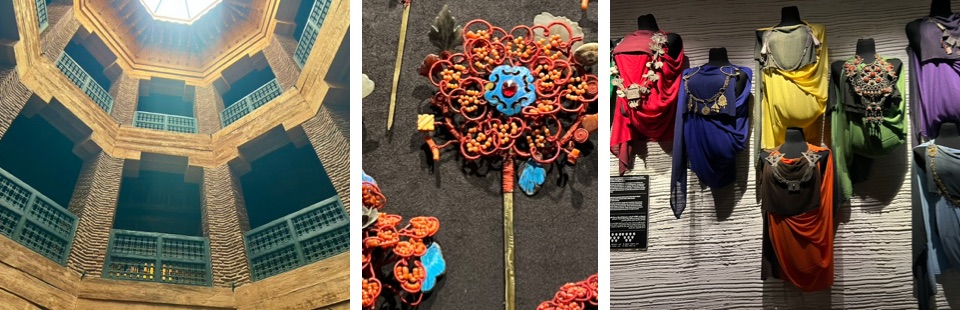
Menara Gardens
They are well outside the centre and not really gardens, but rather a place for an evening walk beside a large pool. On a one- or two-day stay, I do not think they are essential, although I enjoyed a peaceful sunset walk there during my first, longer visit to Marrakech. Admission is free.
Le Jardin Secret
Business is business! This attraction is very expensive for its size, yet still extremely popular. It is a restored garden that once formed part of a ruined 16th-century palace. It offers a haven of peace in the heart of the medina, but is a victim of its own success because it is so Instagrammable. It might be worthwhile out of season if it were cheaper. Perhaps I will go another time. But paying so much for 30 minutes in a small, crowded garden is very expensive for a family. You must also pay extra to climb the tower overlooking the garden. Frankly, you may as well enjoy the peaceful courtyard of a riad.
Prices: 100 DH for adults, 80 DH for visitors aged 12–24, plus 40 DH per person for tower access.
Bacha Coffee
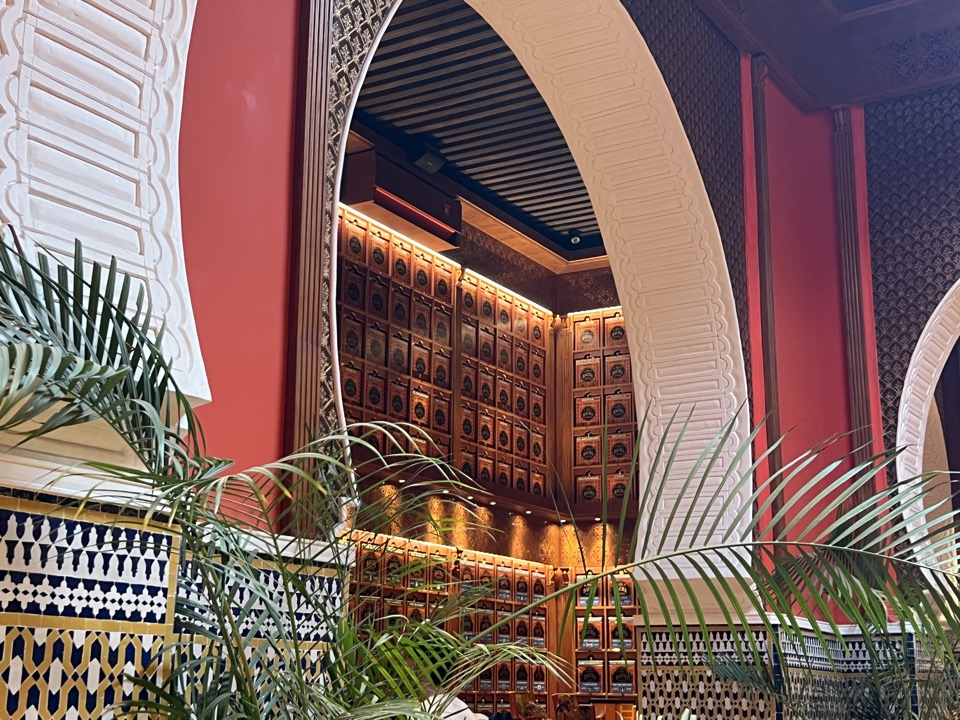
I mentioned it earlier: this is another place that is wildly popular on Instagram. Waiting three hours to sit in a packed café? No, thank you! If you live in or are visiting Paris, there is also a branch on the Champs-Élysées, probably with a shorter wait. The shop, however, is accessible from the Dar El Bacha Museum without queuing. You can shop there if you are a fan of its coffee or famous mocha. In design terms, it is rather like the Fortnum & Mason of coffee, with all those attractive tins from around the world. Prices are very high.
Musée Yves Saint Laurent Marrakech
It is a small museum next to Jardin Majorelle, dedicated to the French fashion designer. A combined ticket is available for both attractions, although I do not particularly recommend the museum — it is expensive for its size — unless you are an especially keen fan.
The tanners’ quarter
This brings back a traumatic memory from my previous trip to Marrakech. I was travelling with my best friend, and we genuinely felt harassed by fake guides offering to show us the tanneries. They demand money to take visitors onto shop roofs overlooking the tanneries, but become very unpleasant if you do not buy anything or do not give them enough. We also struggled to find our way back because everyone tried to steer us towards the shops. Perhaps it does not always happen like this, but I had no desire to feel harassed while travelling with my family. We preferred to preserve our good memories of Marrakech. Be warned, too, that the smell of skins and chemicals is extremely strong and unpleasant.
Marrakech: our 1- or 2-day itinerary
One or two days in Marrakech is, of course, an express visit. It is ideal if, as for us, the city is simply one stop on a Moroccan road trip.
Marrakech in 1 day:
With 24 hours in the city, I suggest:
- Cross the medina souks early in the morning, from south to north, starting at Jemaa el-Fna square and finishing at Ben Youssef Madrasa.
- Visit Ben Youssef Madrasa (allow no more than 1 hour)
- Leave the medina and head to Jardin Majorelle if you booked your tickets several days in advance
- Walk back down through the souks by a different route — there are so many to choose from
- Stop for fruit juice or a late, light lunch on the rooftop of a medina restaurant
- Head back north to Dar El Bacha Palace/Museum of Confluences (allow no more than 1 hour)
- Have dinner at your riad or in a medina restaurant — see our favourite addresses below
- Take an after-dinner walk around Jemaa el-Fna square.
- Spend the night in a riad.
Marrakech in 2 days:
Here is my suggested itinerary for the second day:
- Visit Bahia Palace as soon as it opens (allow no more than 1 hour)
- Perhaps visit Musée de la Parure, which is immediately nearby
- Have lunch on a rooftop
- Visit Jardin Majorelle or Dar El Bacha Palace to make Day 1 less busy
- Visit El Badi Palace during golden hour if you will not have another opportunity to see rammed-earth buildings during your Moroccan trip
- Have dinner at the stalls on Jemaa el-Fna square.
- Spend the night in a riad
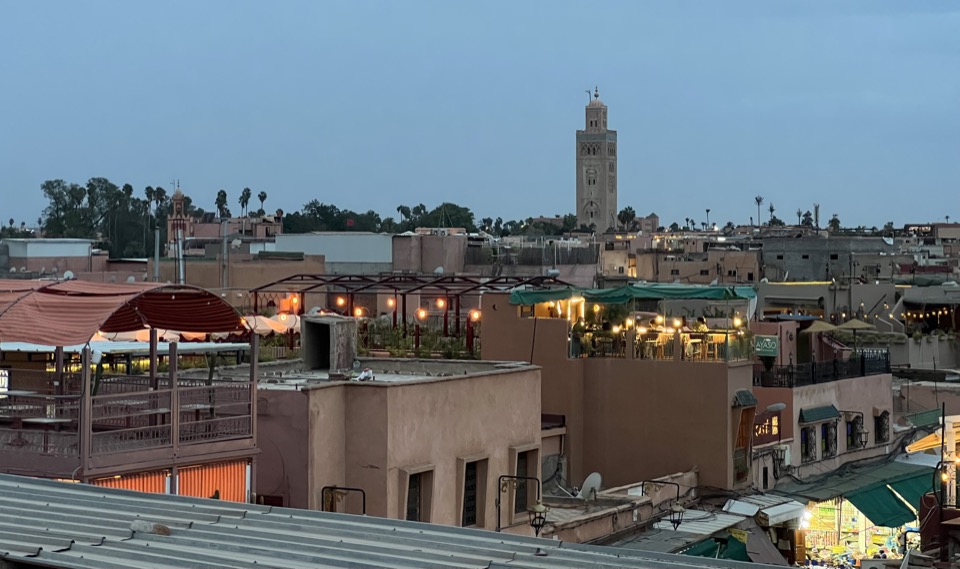
Where to eat and have a drink in Marrakech
These are the places we tried in the medina — a varied selection that lets you discover the city from several angles: a traditional restaurant, rooftops, street food and a beautiful riad.
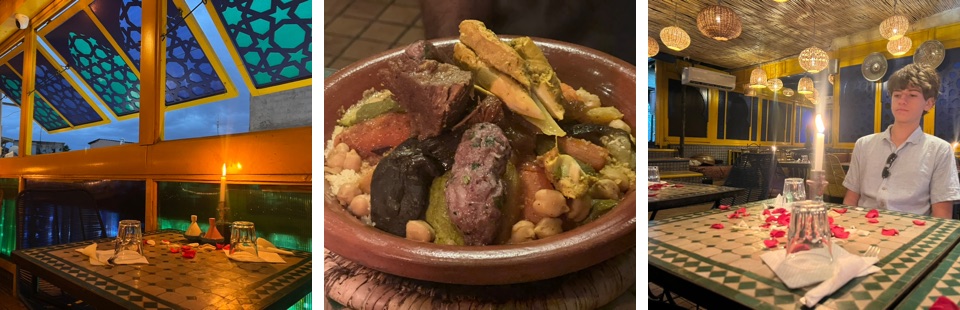
- Restaurant Chez Brahim: our host recommended this restaurant for simple, authentic and inexpensive food. The entrance does not look particularly promising. We ate on the top floor, beside the windows, which is the most pleasant part of the restaurant. We recommend the kefta and vegetable couscous. The chicken and preserved-lemon tagine also looked good. Portions are generous. We enjoyed the Amazigh musicians whose performance added an enjoyable local touch to our meal.
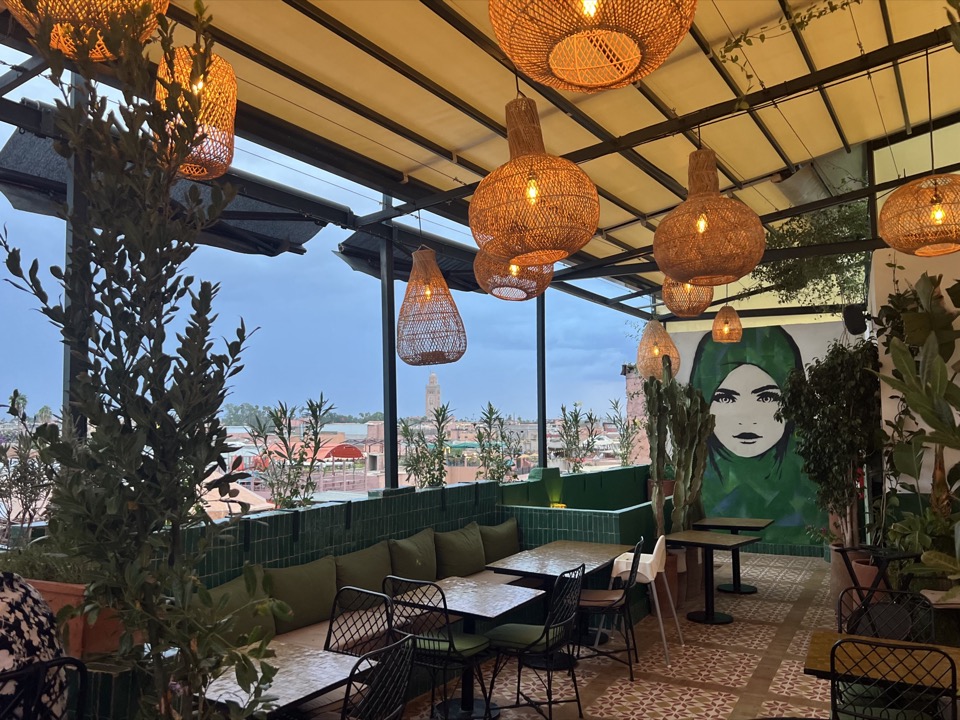
- L’Mida: this rooftop is in great demand because it offers better value than many others in the medina — some charge Paris or even London prices. Book several days ahead for dinner. If, like us, you only want a drink, arrive before dinner service; we went at 6 p.m. It was particularly pleasant and quiet before the first sitting. We recommend the fresh mint lemonade.
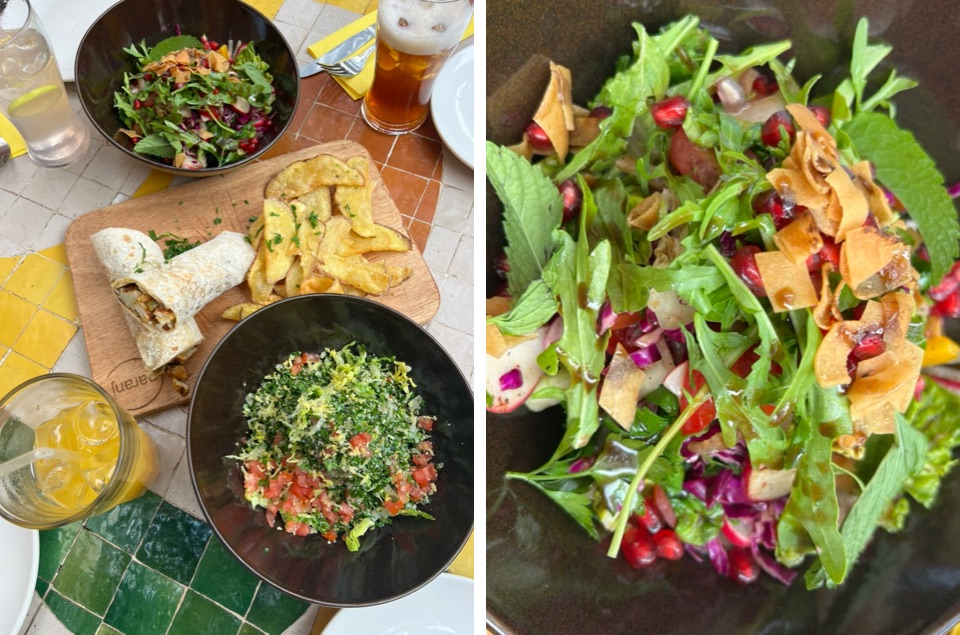
- Naranj: this Lebanese restaurant serves very fresh-tasting dishes. After a week in Morocco, I wanted to eat more greens, and it was perfect. The rooftop is the restaurant’s most pleasant area. We had a light late-afternoon meal there before heading to the airport.
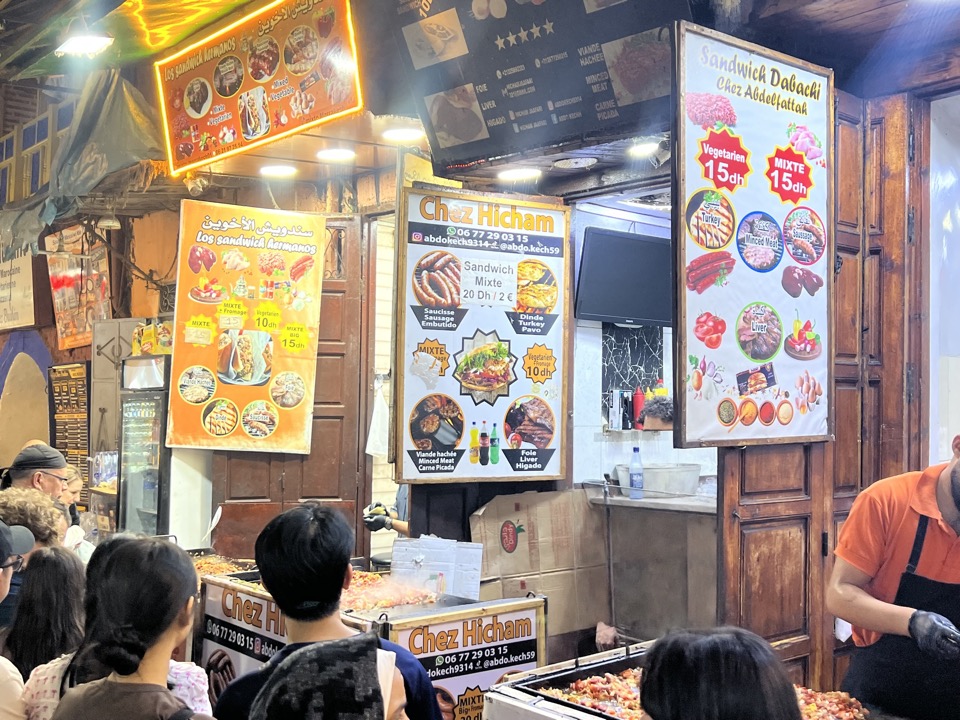
- Try the street food on Derb Dabachi. Our teenagers bought a small local sandwich there and recommend it. Jemaa el-Fna square also offers plenty of street-food options in the evening and is a good alternative to restaurants.
- Riad Dar Saad: astonished by the crowds at Bacha Coffee, we walked only a short distance after leaving Dar El Bacha and happened upon this pretty riad with both a bar and restaurant. We had an orange juice upstairs before continuing our long walk through the souks. More generally, consider stopping at a riad for a break in attractive Moroccan surroundings.
- It is worth noting that Moroccan breakfasts are extremely generous, so we never had lunch. Instead, we recharged with a tea or fruit juice during our breaks.
Practical advice for visiting Marrakech
Getting around Marrakech
We walked a great deal and loved it. Every place mentioned above is accessible on foot. To give you an idea of distance, crossing the whole medina from Bahia Palace in the south to Ben Youssef Madrasa in the north takes about 45 minutes. From Jemaa el-Fna square and its surroundings, most walks take around 30 minutes. You will cover a lot of ground over one or two days, but there are also plenty of rooftop terraces and riads where you can rest. A taxi from the airport costs about €20.
Parking in Marrakech
You do not need a car in Marrakech itself. However, if, like us, you collected a hire car at Marrakech airport for a Moroccan road trip, this is where you can park in the city: we used the Koutoubia car park, which is very well situated and remarkably inexpensive. It is outside the medina, only five minutes from Jemaa el-Fna square.
The best time to visit Marrakech
This time, we travelled in late October and early November during the French autumn school holidays. The weather was perfect, although it was a fairly busy period because of the holidays. Temperatures reached 25°C beneath changeable skies. I have also visited Marrakech in January and April, which were both very pleasant. Ultimately, only summer is best avoided because of the intense heat. We wore jeans and T-shirts and always carried a light cardigan for the cooler evenings.
Booking your visits
The only attraction that needs booking several days ahead is Jardin Majorelle; reserve roughly a week in advance through the official website. You should also book early for dinner on certain rooftops and for rooms in the most beautiful riads.
Beyond Marrakech:
- The surrounding area: after 1 or 2 days in Marrakech, consider exploring places such as Ouzoud Falls, the Ourika Valley or the Agafay Desert. Remember that Agafay is a stony reg desert, not an erg of sand dunes.
- On a previous trip, I visited Essaouira after Marrakech, a 3-hour drive away.
- This time, we spent a week driving the Route of the Kasbahs to the Merzouga desert, returning through the Draa Valley. I will tell you about it soon!
- Beware of organised excursions sold in Marrakech that promise the entire journey we made to Merzouga in only 3 days. We genuinely think that is far too short for so much driving and leaves no time to appreciate the places along the way.
Visiting Marrakech with children
Our advice for a family stay:
- Stay together in the medina. We also made sure our children knew the name of our riad in case we became separated.
- Watch out for two-wheelers in the medina. They do not travel very fast, but it is wise to keep to one side in certain lanes.
- Pushing a buggy through the souks is hard work because the ground is not always smooth or in good condition. If possible, a baby carrier is more suitable.
- As you walk a great deal in Marrakech, remember to take breaks for some delicious fruit juice.
What our children liked best:
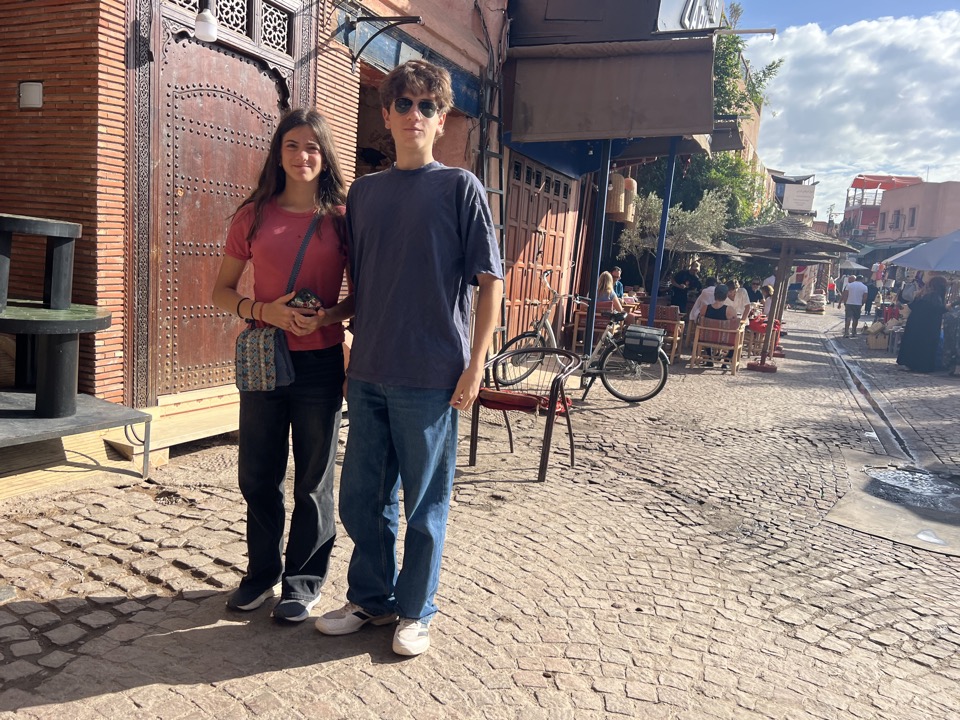
- Titpuce, aged 13, preferred visiting the Ben Youssef Madrasa for its architecture and little student rooms. No surprise there, as she loves artistically refined places.
- Ticoeur, aged 17, preferred our walks through the souks because he found them so different from home.
- Both teenagers enjoyed the street food and fruit juices in the riads and on rooftop terraces.
***
In conclusion, on my third visit to Marrakech I loved sharing the wonderfully different atmosphere of this Moroccan city with the whole family. Dar El Bacha Palace, which I had not seen before, was a particular favourite. I was also delighted that the souks felt more pleasant than in the past. Finally, we adored our wonderful nights in the riads, where we felt as though we had stepped into a tale from One Thousand and One Nights.
***
And you? Would you like to visit Marrakech?

You read this blog — which means you value quality content grounded in real experiences. With Google Preferred Sources, tell Google which publishers you trust. Add us and other sources you love, and Google will surface them more in your future search results.