

One of our most memorable experiences in Mexico was the Day of the Dead, el Día de Muertos. We discovered the beautiful rituals surrounding this celebration on our honeymoon, and ever since we had dreamt of returning to Mexico as a family around All Saints’ Day. In the meantime, the animated film Coco introduced el Día de Muertos to a much wider audience, especially children. I must admit that the film moved me deeply because it truly captures the atmosphere and positive spirit of el Día de Muertos and its unique Mexican customs, which have been recognised as UNESCO Intangible Cultural Heritage.
In this article, I hope to share the different Day of the Dead traditions found across several regions of Mexico, with a particular focus on our experience of Día de Muertos in Yucatán, where we travelled with the children.
What can you expect during Día de Muertos in Mexico?
The customs of Día de Muertos draw on ancient Aztec and Maya traditions, now interwoven with Catholic practices. According to the beliefs surrounding the festival, the souls of the departed return to visit their families during Día de Muertos. What I find so remarkable and moving about the Mexican version of All Saints’ Day is that the dead are celebrated in an atmosphere that honours life.
Throughout the period around Día de Muertos, you will see the following in Mexico:
Altars with offerings (las ofrendas)
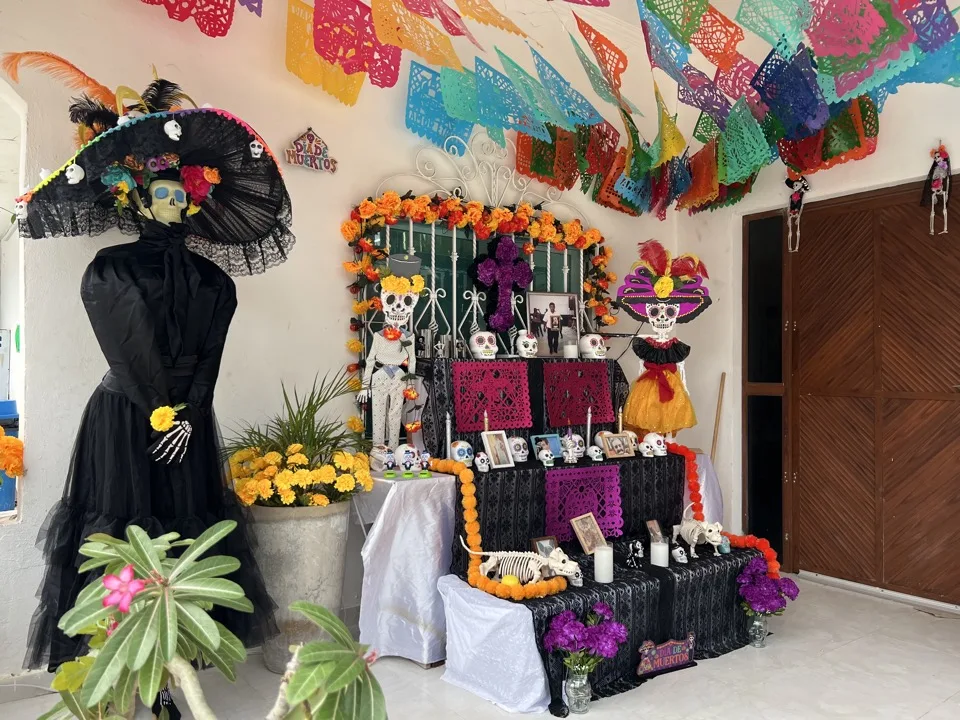
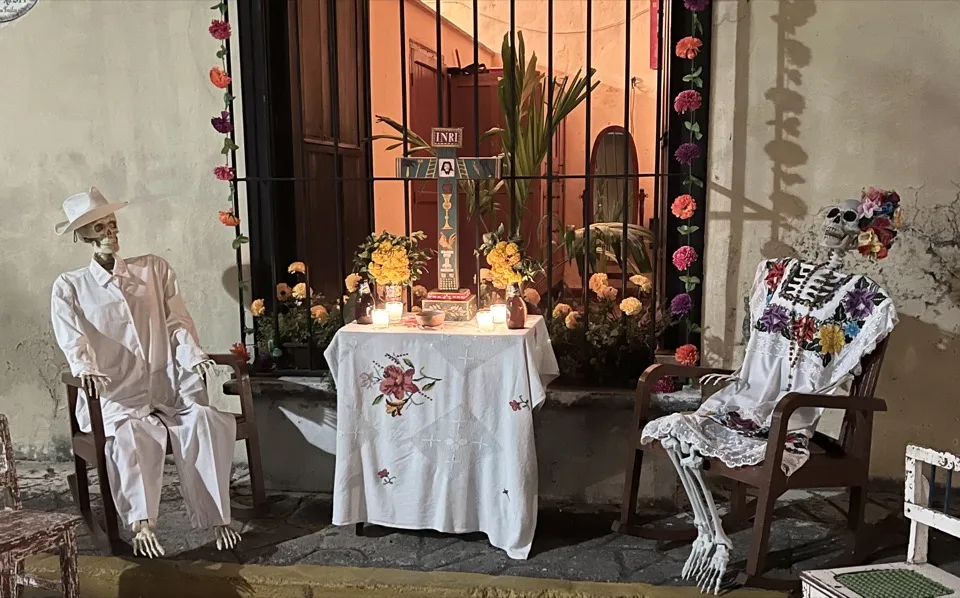
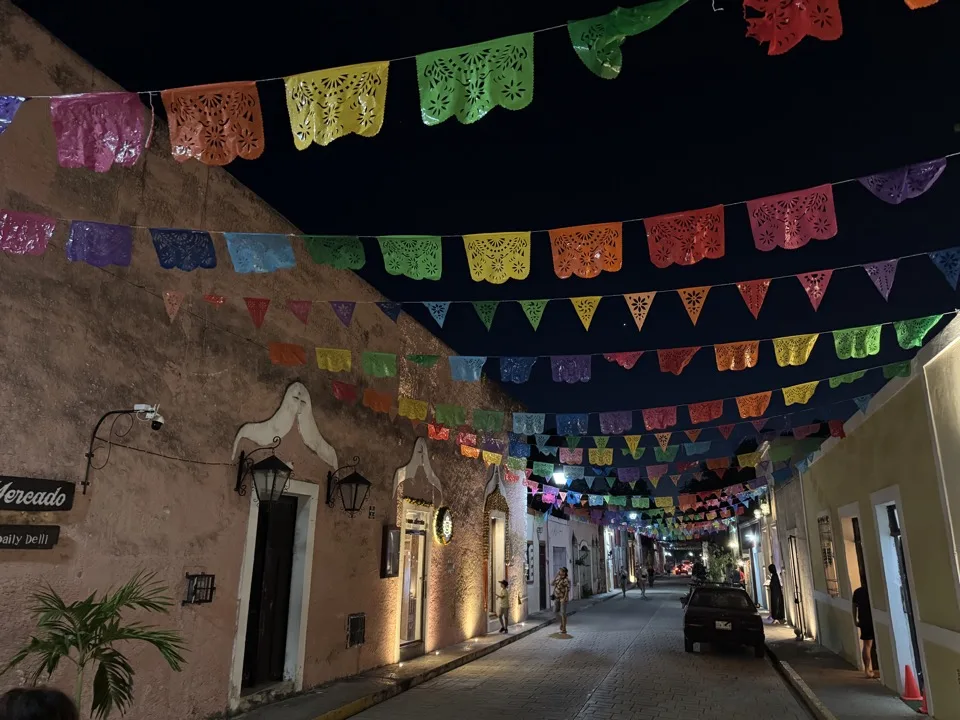
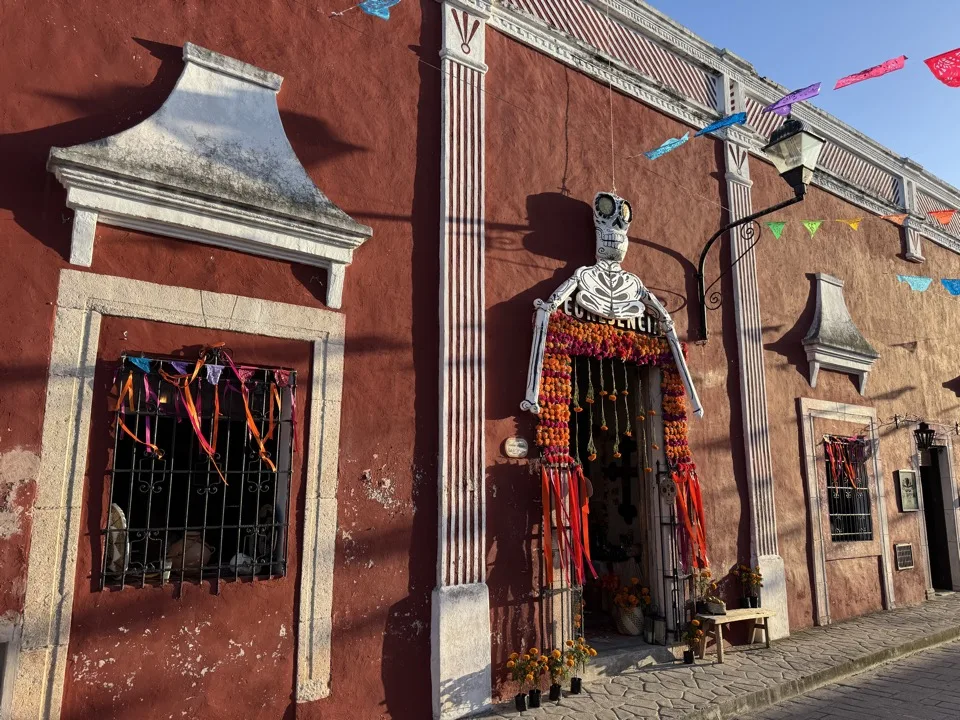
At the end of October, each family prepares a small altar (altar) in memory of their loved ones. These may be placed inside homes or outdoors. They often feature photographs, candles, skulls, pan de muerto (a sweet bread), the deceased person’s favourite food, water and plenty of yellow-orange marigolds known as cempasúchil. Their vivid colour and strong scent guide the spirits who are “visiting” their families. Their rich colour also evokes the sun and the divine. Colourful cut-paper decorations, often depicting skulls, complete the display.
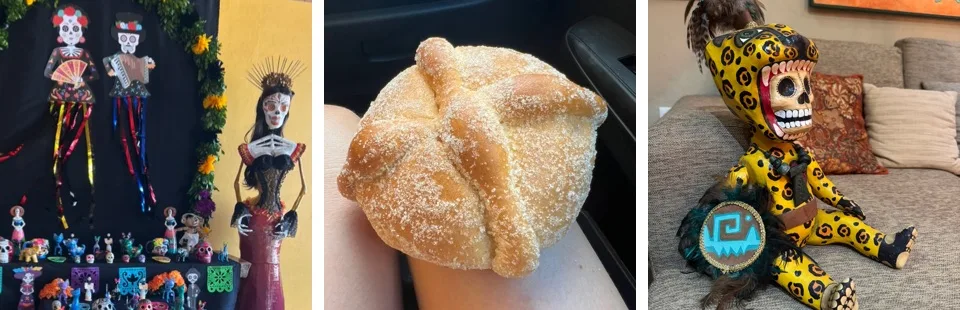
We tried pan de muerto, a delicious little sweet brioche:
Cemetery vigils
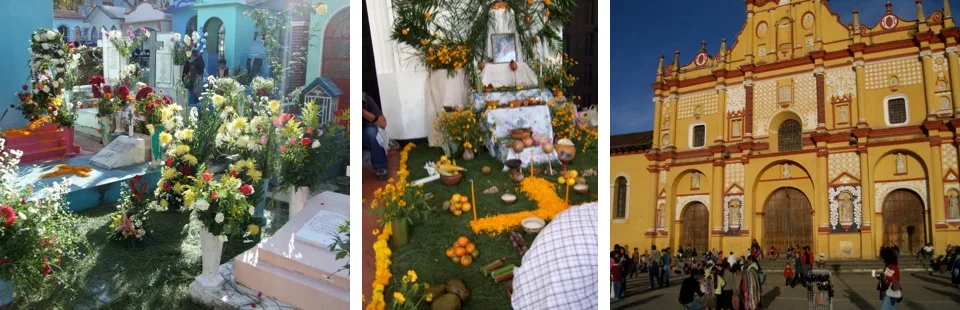
This was what made the greatest impression on us when we were in San Cristóbal de Las Casas for Día de Muertos. I had never experienced such an atmosphere in a cemetery. It is lively and musical, with lots of people, yet also intimate thanks to the candles in the darkness and the gentle singing. Each family gathers at the graves of their loved ones, sometimes bringing a guitar to accompany their songs.
Parades
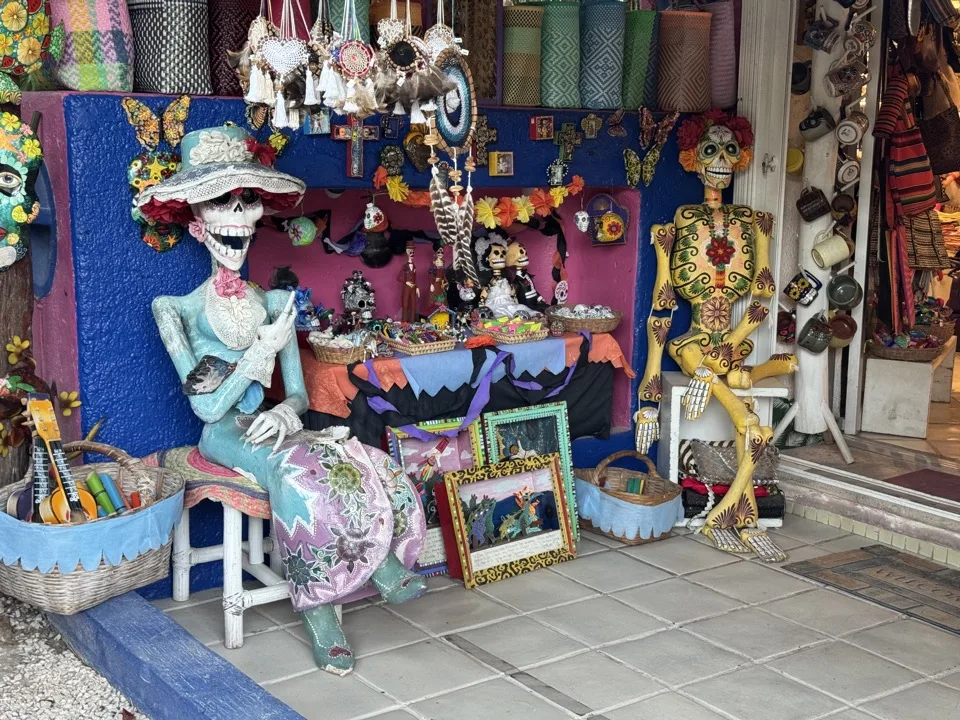
Many Mexican towns and cities hold parades: traditional processions rooted in Maya culture and Catrina parades. A Catrina is an elegantly dressed female skeleton, often adorned with flowers. The character originated in the early 20th century in the work of a politically engaged illustrator, but it was the artist Diego Rivera who depicted her in a mural and made her famous, shaping the costume and appearance we know today. Nowadays, the Catrina symbolises the joy and festive spirit associated with honouring the dead.
Key dates
For exact dates of the various festivities and celebrations, it is best to check each town or city’s website. Broadly speaking:
- From mid-October: Mexicans prepare altars in tribute to their departed loved ones.
- From 30 October to 2 November: parades take place in several cities around the country.
- 1 November: the souls of children (Día de los Angelitos) are the first to return to Earth, arriving at midnight on 31 October to spend the day with their living relatives. In some regions, celebrations for deceased children take place on 30 or 31 October, depending on local customs. In Yucatán, for example, they are held on 31 October.
- 2 November: it is the turn of adult souls, who return among us from midnight on 1 November.
There is also a more recent tradition of commemorating departed pets (el Día de Muertos de las Mascotas) on 27 October, with a small altar and offerings dedicated to them.
Día de Muertos in Yucatán: our family experience
I am starting with Yucatán because it is probably the most visited region. We were there as a family during Día de Muertos. We came across many altars dedicated to the departed, often in the streets and even on beaches. The decorations were beautiful and fascinating. Several towns in Yucatán organise parades. However, we did not find the same magic of the cemetery vigils we had experienced in San Cristóbal de Las Casas in Chiapas.
In Yucatán, Día de Muertos is strongly influenced by the Maya version of the festival: Hanal Pixán, meaning “food for the souls” in Maya and highlighting the spiritual dimension of the celebration. Yucatán’s largest processions are therefore Processions of the Souls, while Catrina parades are more typical of central Mexico. As for food, Yucatán’s traditional Hanal Pixán dish is pib: a large corn tamal stuffed with meat, wrapped in banana leaves and cooked underground.
Valladolid
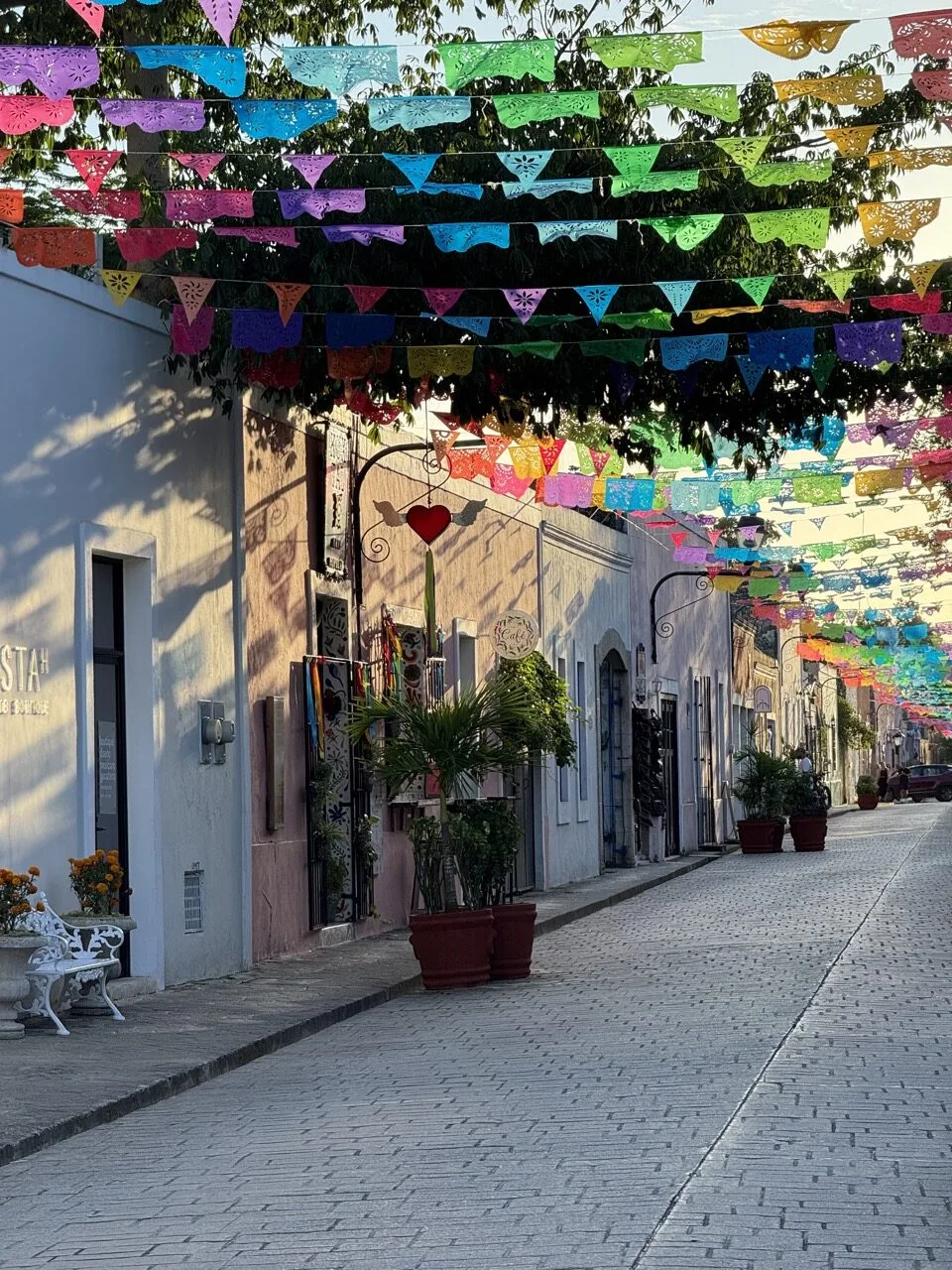
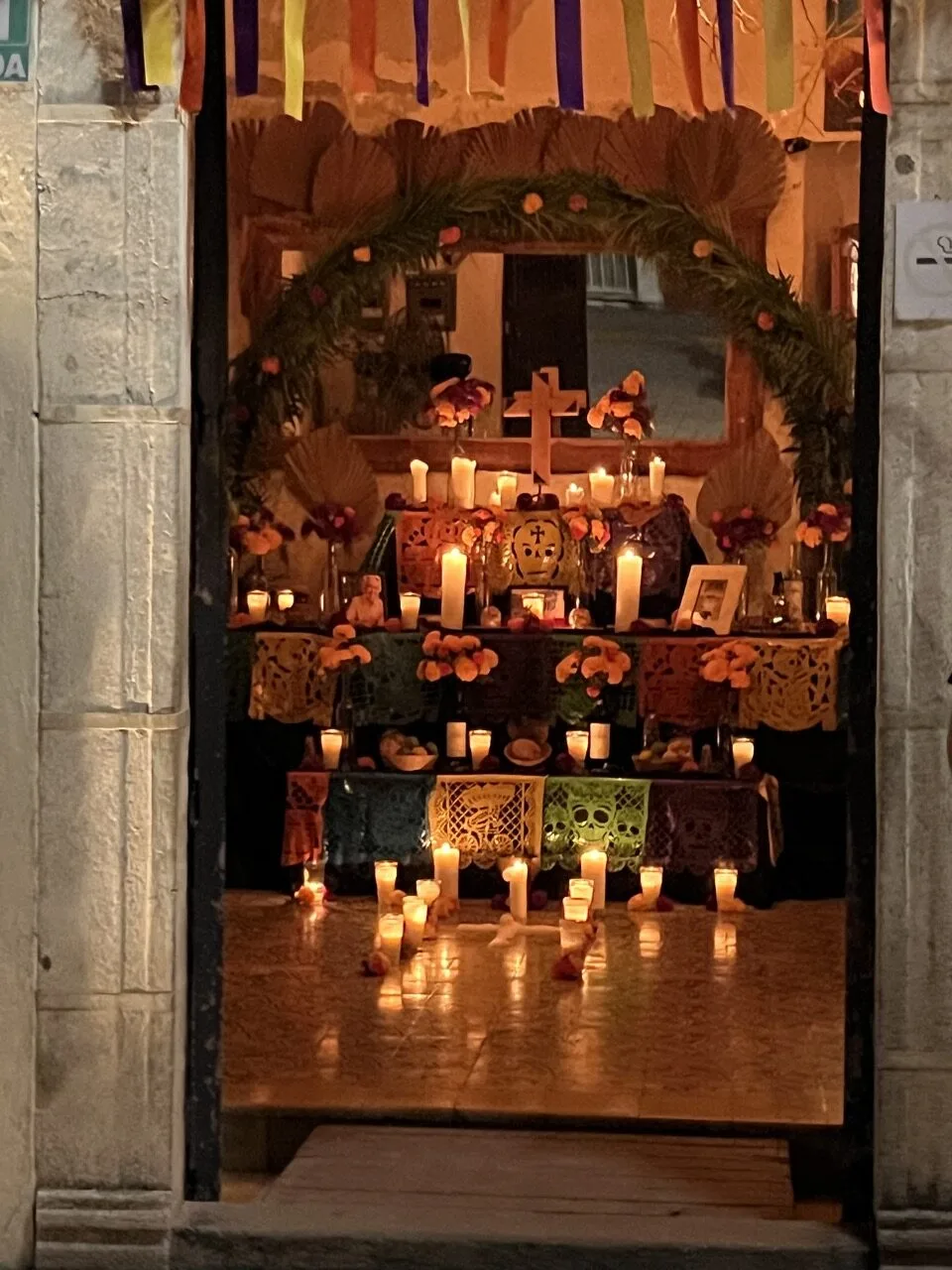
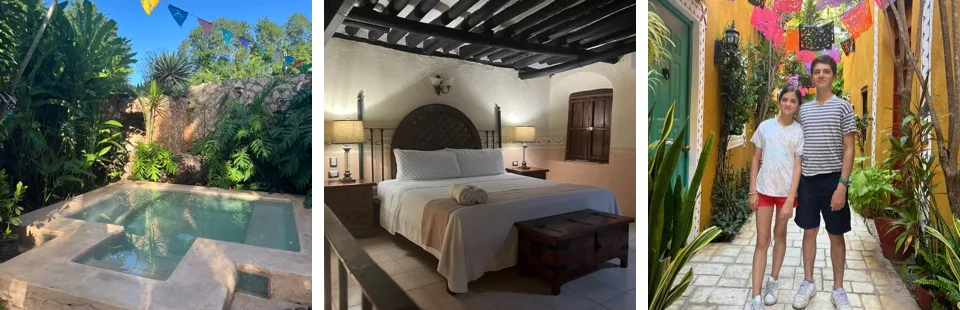
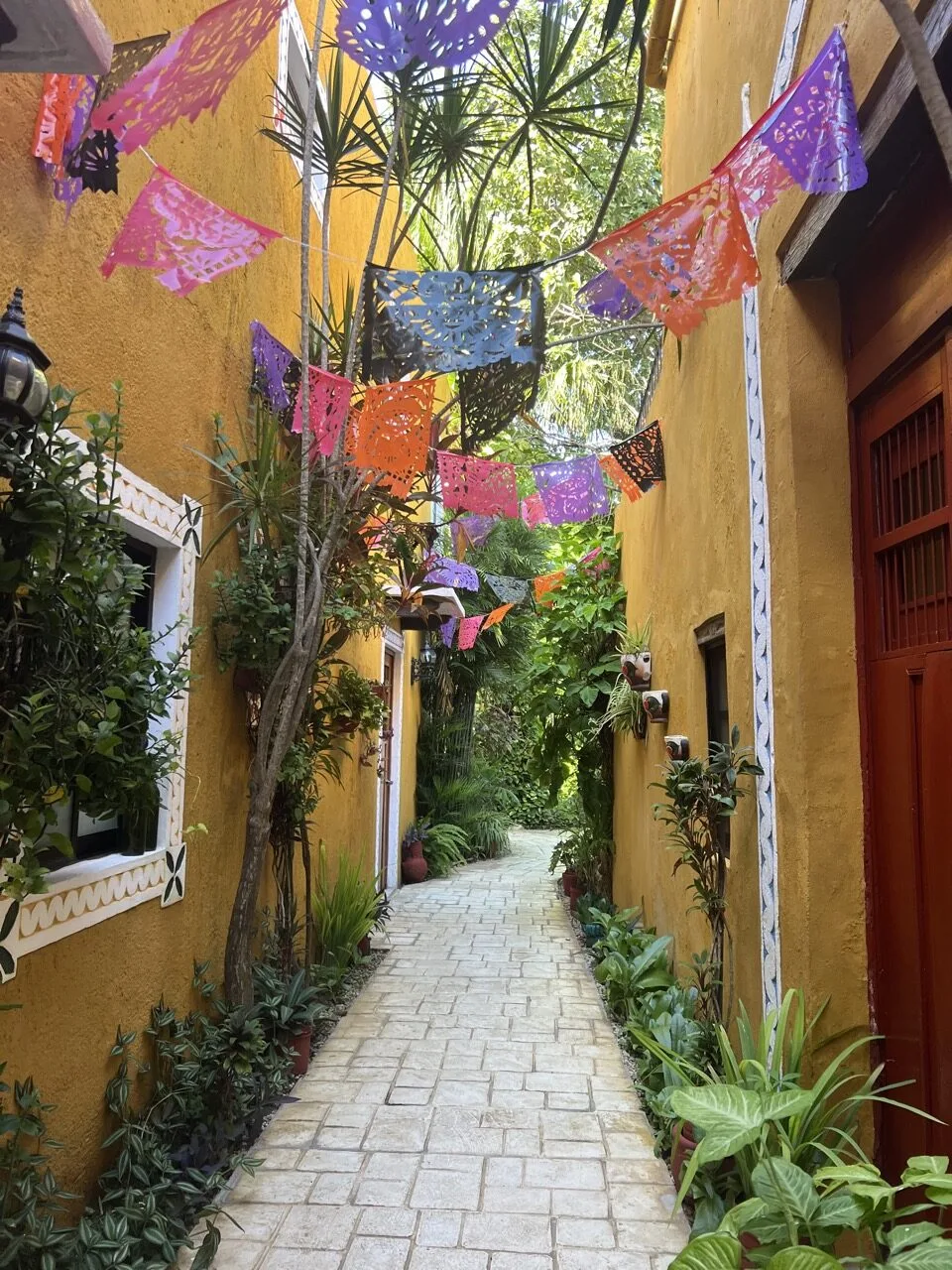
From 1 to 3 November, we stayed with our family in Valladolid, in the heart of Yucatán. This is where we saw the most beautiful altars for the departed, especially along streets in the historic centre such as Calzada de los Frailes.
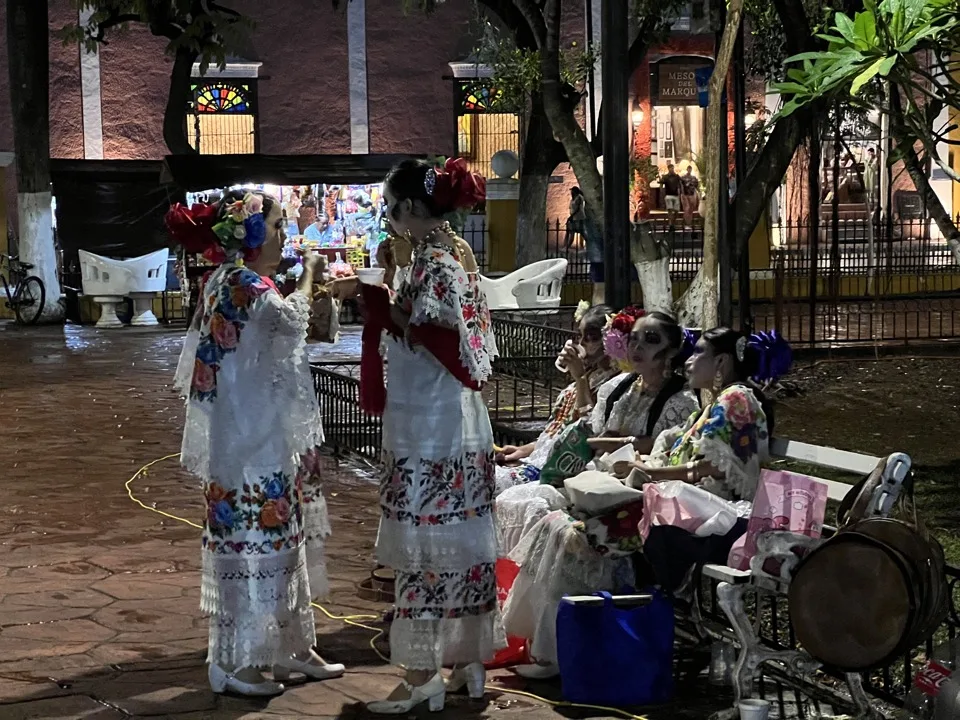
There are also parades, although they are smaller and more intimate than those in Mérida:
- A Procession of the Souls (Paseo de las Ánimas): in 2026, it will take place on 30 October.
- A small Catrina parade, taking place on Monday 2 November at 7 pm from the Cinco Calles crossroads.
More information is available on the Valladolid website.
Mérida
Mérida is the state capital and home to Yucatán’s largest parades:
- The Procession of the Souls (Paseo de las Ánimas): thousands of people in traditional Maya dress form the procession, often with skull-painted faces. In 2026, it will take place on Friday 30 October at 6 pm, departing from the General Cemetery. It is the best-known and most traditional event, attracting around 100,000 people. The mood is mystical and poetic as everyone walks quietly carrying candles.
- The Catrina Parade, with giant puppets, dancers and musicians. In 2026, it will take place on Saturday 31 October at 8 pm, departing from Plaza Grande. This newer parade was inspired by those in Mexico City and is joyful and colourful.
There are many more events on Mérida’s programme.
Valladolid or Mérida for Día de Muertos?
Staying in Mérida during Día de Muertos is an excellent way to experience the atmosphere of the large parades. We liked the city, but it is a large one. On our first trip to Mexico with the children, we preferred Valladolid. If the Día de Muertos celebrations are your priority, plan to be in Mérida on 30 October for the Procession of the Souls, while keeping Valladolid on your itinerary before or afterwards: it is full of charm and its altars are particularly beautiful.
Our other discoveries on the Yucatán Peninsula (Quintana Roo)…
Holbox Island
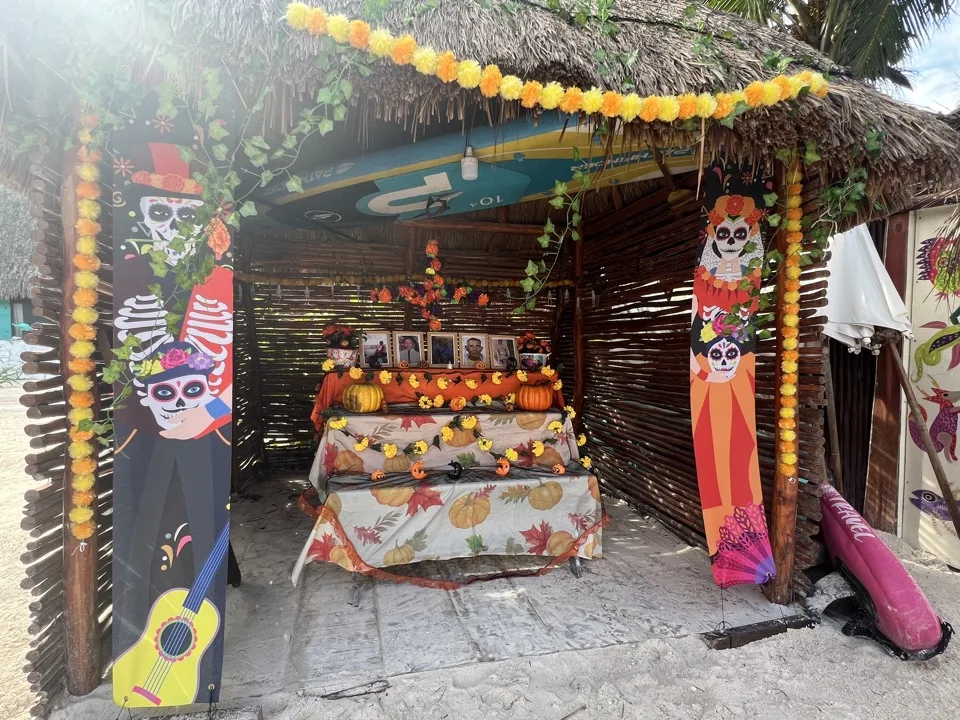
There were beautifully decorated altars everywhere. Seeing them in front of Holbox’s idyllic beaches gives them a very distinctive, exotic setting. As for costumes, the island’s children were more in Halloween mode.
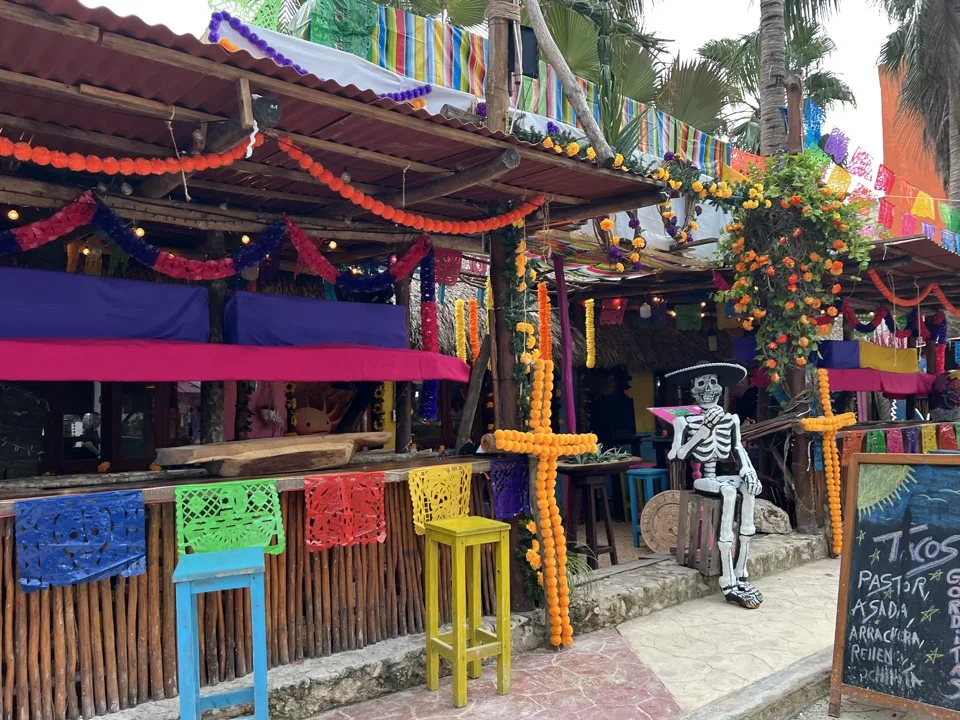
All the restaurants were beautifully decorated in the Día de Muertos theme, and the streets of Holbox had a wonderful atmosphere.
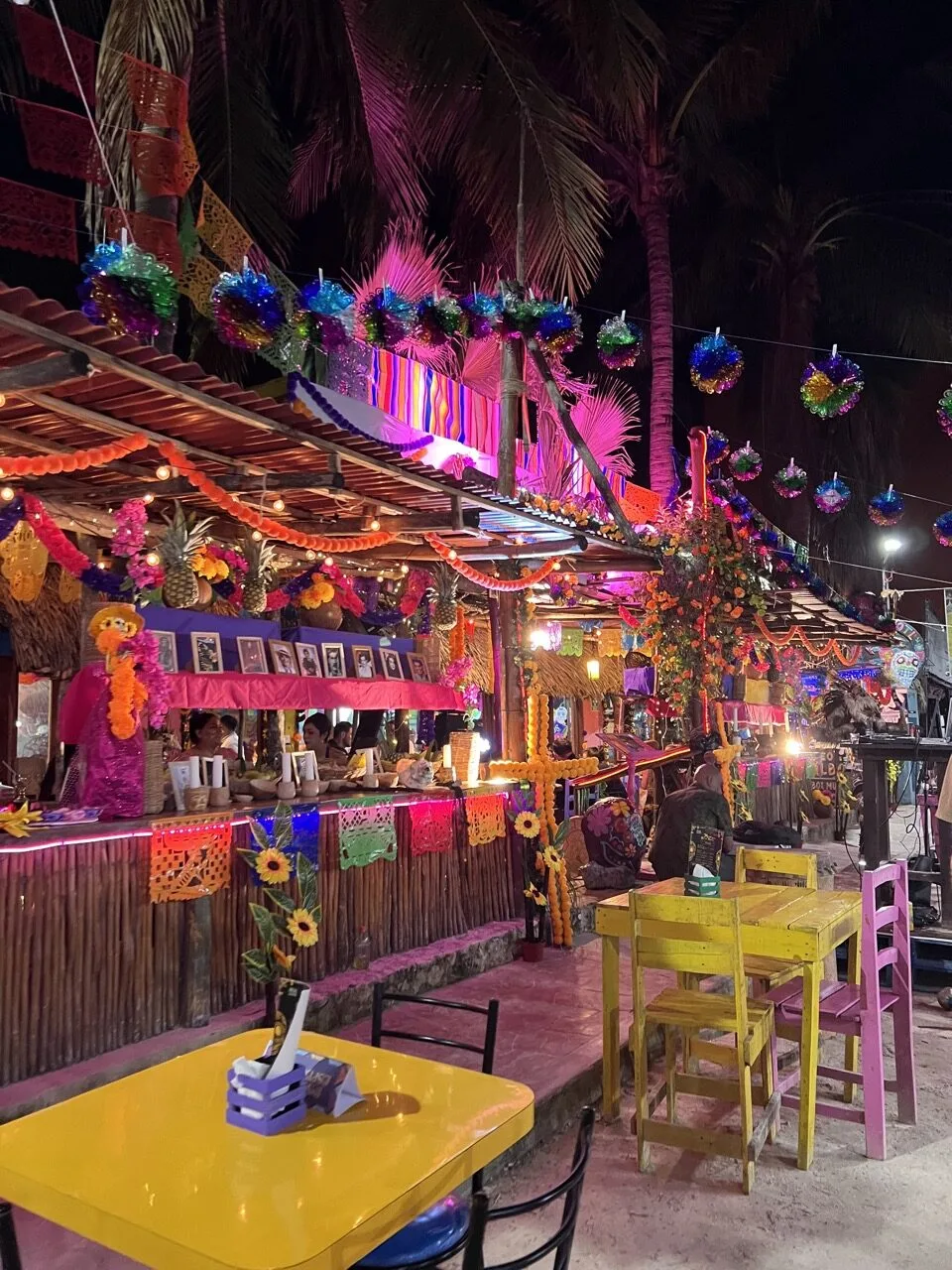
Playa del Carmen
We visited the Frida Kahlo Museum in Playa del Carmen. It was fascinating to see the magnificent altar in Frida’s honour, complete with plenty of tequila ;-). Was it her favourite drink?
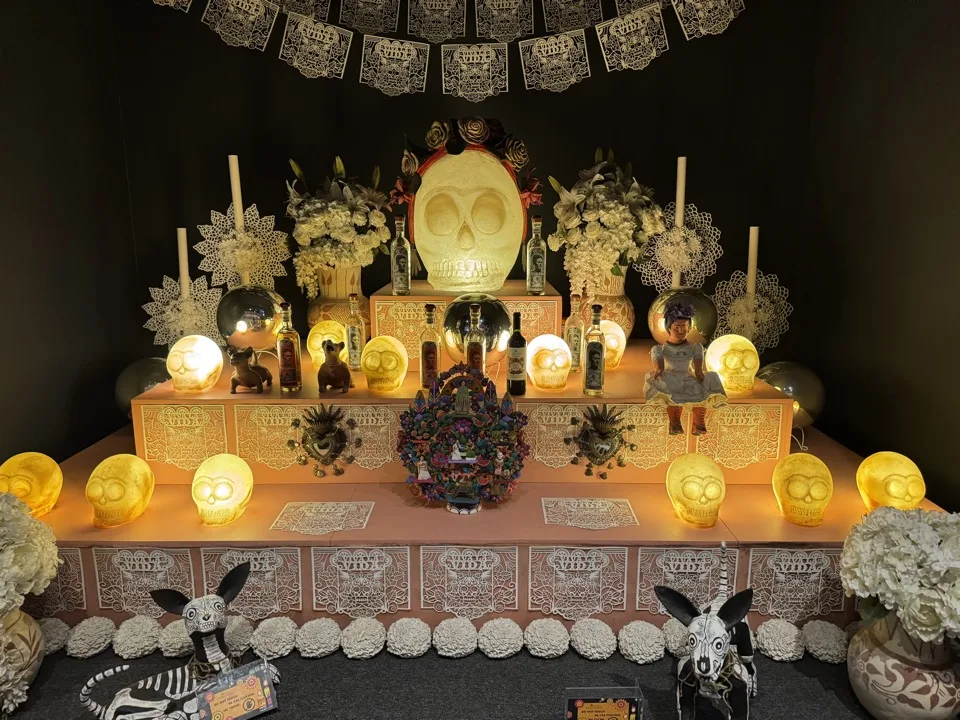
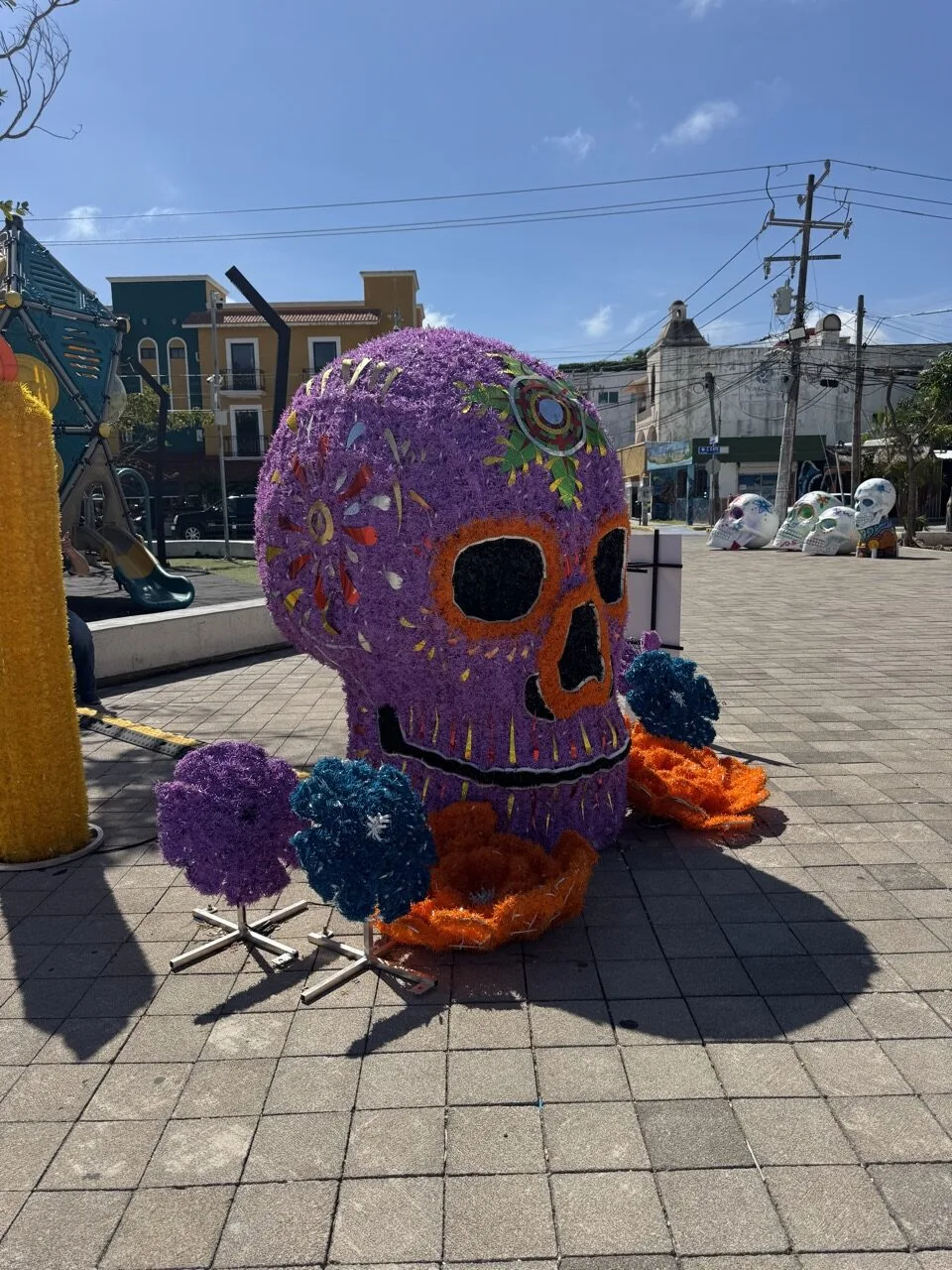
There were also a few decorations in the streets of Playa del Carmen:
Tulum
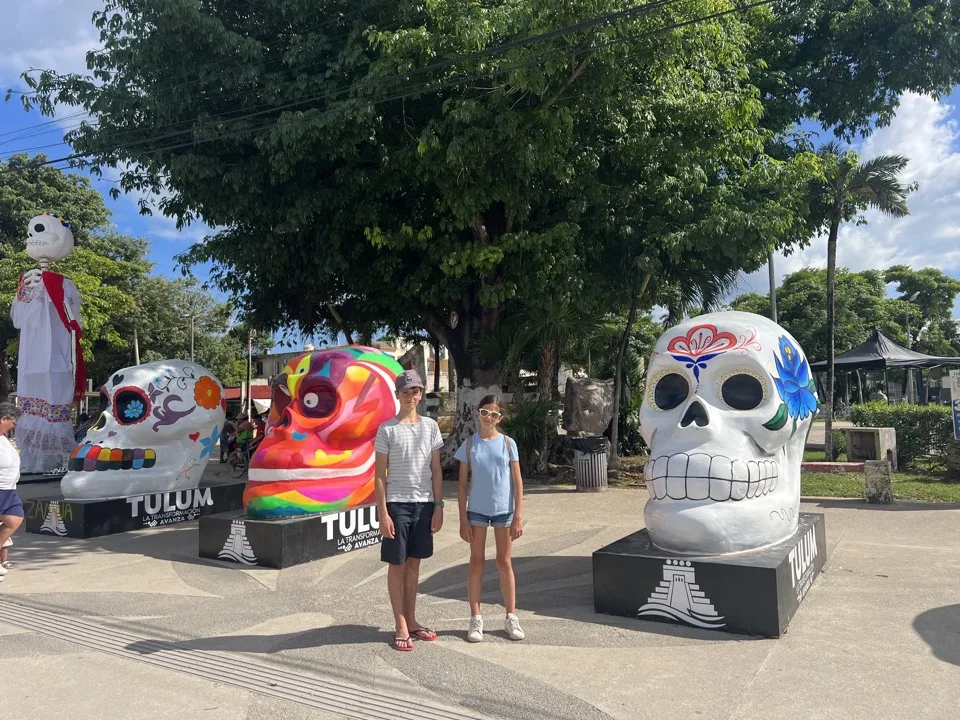
Nothing special apart from a few street decorations:
Elsewhere on the Yucatán Peninsula
Here are some other places known for their Day of the Dead festivities in and around Yucatán. We did not visit them on either of our trips, but perhaps next time!
- The village of Hoctún, between Mérida and Chichén Itzá, is home to Mexico’s most colourful cemetery.
- Xcaret Park on the Riviera Maya near Playa del Carmen is a tourist park combining water attractions with Mexican culture. For Día de Muertos, they go all out with decorations and put on numerous shows, including concerts, Maya processions and dances.
- In Pomuch, in the state of Campeche just beyond Yucatán, residents have an unusual tradition: they clean the bones of their dead.
***
In short, Yucatán is a wonderful place to discover the beauty of altars, decorations and Día de Muertos parades. It is an ideal region for a family holiday: the weather is pleasant around All Saints’ Day, and the area is easy and comfortable to travel around, with more developed tourist infrastructure than many other parts of the country. However, we did not see the magical vigils we had previously experienced in Chiapas (see below).
Día de Muertos in Oaxaca
The city of Oaxaca is reputed to have Mexico’s most beautiful Día de Muertos celebrations. It is particularly known for its large, visually spectacular parades, which attract many visitors every year. The programme in Oaxaca includes:
- Large costumed parades accompanied by music, dancing and mezcal. For the main parade on 1 November, participants wear traditional costumes and impressive Catrina make-up.
- Large, colourful ground murals and sand carpets made by artists in the city’s pedestrian streets.
- Cemetery vigils with candles and orange marigolds: at Panteón General in Oaxaca on 2 November, or in the village of Xoxocotlán for a very traditional vigil.
- Food specialities: the typical Day of the Dead dish is mole negro, a savoury sauce made with chocolate and chilli, accompanied by Oaxaca-style pan de muerto or hot chocolate.
Because Oaxaca is so renowned for Día de Muertos, it is essential to book accommodation well in advance.
On our first trip to Mexico, Oaxaca was a real favourite. We arrived after the Day of the Dead festivities—you cannot be everywhere on the same day!—and we would love to return as a family now that our children are older to see its magnificent parades.
Día de Muertos in San Cristóbal de Las Casas
It was incredible and I will never forget it. It felt timeless: so beautiful and precious to see all those families gathered at their loved ones’ graves to keep vigil, eat and sing. We crossed the cemetery at dusk by candlelight, gradually discovering each small group. The songs accompanied by guitar were magnificent and infinitely gentle.
Where should you go? To the municipal cemetery in San Cristóbal. Unlike Yucatán, it is cool here because San Cristóbal lies at high altitude.
When? 2 November is the main day of celebration for Día de Muertos dedicated to adults, both during the day and in the evening.
Please note: Chiapas regularly experiences security problems. Check the latest advice carefully before travelling there.
Día de Muertos in Mexico City
The capital organises many events for Día de Muertos:
- The Grand Día de Muertos Parade, featuring giant puppets, dancers, Catrinas and music. The opening of the James Bond film Spectre depicts this parade. It attracts millions of spectators. In 2026, it takes place on 31 October at 2 pm.
- A Catrina parade on 25 October.
- Monumental altars in the Zócalo, Mexico City’s main square.
- The Cempasúchil Flower Festival: flower sellers line Paseo de la Reforma, selling the famous orange blooms.
- The candlelit vigil at San Andrés Mixquic cemetery on the evening of 2 November, 45 km south-east of Mexico City.
See the full Día de Muertos programme in Mexico City.
Personally, I would be a little worried about the crowds at these events in Mexico City, although it must be impressive. On our honeymoon, we arrived in the Mexican capital in early December, during a much quieter period. It is a fascinating city to visit, but not my first choice for a family trip.
A family trip for Día de Muertos
We loved introducing Ticoeur and Titpuce to the traditions of Día de Muertos. Here is a summary of our experience:
- Before the trip: we watched the animated film Coco again as an introduction.
- Why we chose Yucatán: its festivities may not be as spectacular as those in Oaxaca, San Cristóbal or Mexico City, but travelling there as a family is easier: we felt safe and it was easy to get around by hire car. Its decorations, altars and parades are already very beautiful, and the region offers a wealth of interesting places to visit.
- Valladolid was perfect because it is peaceful and compact. I felt comfortable returning there as a family, especially as we had visited before.
- Now that Ticoeur and Titpuce are teenagers, I would happily try Mérida, still in Yucatán, or perhaps Oaxaca in the state of the same name. The weather is normally favourable around All Saints’ Day in both places.
- For a family trip, I am less drawn to: Mexico City because of the crowds and the need for greater caution, or Chiapas because of the weather and, sadly, its recurring security problems. Check current conditions before any trip.
- After the trip: inspired by Mexican customs, we created a corner of our home on the upstairs landing with old framed photographs of all our departed relatives, going back to our great-grandparents. It is a modest but heartfelt way to give them a small place in our lives.
***
Would you be tempted to travel to Mexico for Día de Muertos?

You read this blog — which means you value quality content grounded in real experiences. With Google Preferred Sources, tell Google which publishers you trust. Add us and other sources you love, and Google will surface them more in your future search results.